Monday, March 14, 2022

Rant: Once Again, Eat More Seafood!

Please Eat More Seafood! It's delicious, versatile and healthy!

I've said this before, in multiple posts over the years, and it bears repeating as many Americans still haven't stepped up as much as needed. Seafood consumption will significantly lessen your chances of dying from the leading cause of death in the U.S. That's a powerful reason why you should consume more seafood.

The Seafood Expo North America is in full swing, having started yesterday and it will end tomorrow. Once again, I'm walking its myriad aisles, exploring the various booths, tasting samples of seafood, learning about seafood issues, and much more. I'll be writing about my experiences at the Expo in the near future but wanted to begin my coverage with the most important issue, trying to convince more Americans to eat more seafood.

For at least over the last ten years, Americans have fallen short of the USDA recommendations on seafood consumption. It's recommended that you consume at least 26 pounds of seafood each year, essentially meaning you should eat seafood twice a week. However, the average Americans still only eats roughly 14-16 pounds of seafood each year, far less than they should. 

According to the Centers for Disease Control & Prevention (CDC), the leading cause of death in the U.S. is heart disease, killing over 614,000 people each year. We all have had family and friends who have died from heart disease, and we should be doing what we can to reduce our own chances of acquiring heart disease. Do you want to die prematurely, leaving your loved ones without your presence? Do you want to die from heart disease when you could have adopted a small lifestyle change which might have saved you?

Seafood consumption is a significant key to reducing your chances of heart disease. Since the 1970s, over 20,000 research studies have been conducted on the health benefits of seafood and they have concluded that eating seafood twice a week can reduce your chance of dying from heart disease by about 36%. You won't find another single food that has been scientifically proven to reduce heart disease so much. Low seafood consumption is blamed for 84,000 deaths in the U.S. and 1.4 million globally. Besides helping to reduce heart disease, research has also been providing growing evidence of the health benefits to the brain and bones as well as against cancers and inflammatory diseases.  Eating more seafood is such a simple change to your lifestyle and it can bring so many health benefits.

If we want this positive trend to continue, we need to continue to find ways to persuade people, overcoming their objections, to eat seafood more frequently. More outreach is needed. We need more positive articles in the media espousing the health benefits of eating seafood. We need to overcome the obstacles that prevent people from consuming more seafood, such as its high cost and the difficulties many people have cooking seafood at home. It's a formidable goal, but it can be accomplished. You owe it to yourself, and your family, to eat more seafood and benefit your health.

Prior to the pandemic, most consumers ate seafood at restaurants rather than at home. Part of the reason for this was that many Americans worried about how to properly cook seafood at home. During the pandemic, this changed, especially as so many restaurants were closed for a lengthy period of time. About 42% of Americans surveyed claimed that now bought seafood for consumption at home, and only 22% had dined on seafood at a restaurant. 24% of Americans also ordered seafood dishes for take-out or delivery at restaurants. 

These percentages may change as restaurants start to open and rebound, although hopefully people will also realize that cooking seafood at home isn't difficult. The key is increasing seafood consumption, and it would be great of people cooked more seafood at home and ate seafood more often at restaurants too.  

Step up your game and eat more seafood. Try to consume seafood at least twice a week. Seafood is delicious, can be prepared in a myriad of ways, and is extremely healthy. So what's stopping you from reaching your seafood consumption goal?

Friday, March 11, 2022

Chet's Diner in Northboro: A Quick Review

Recently. I spent several days in Marlborough at a conference, so I had a little time to explore some of the culinary offerings in the area. For breakfast one morning, I stopped at Chet's Diner, which was founded in 1934, in Northboro. It's only open for breakfast, serving a variety of traditional breakfast dishes, from bacon and eggs, to Texas french toast, from pancakes to omelets. Prices are very reasonable, and essentially everything costs less than $10. 

Chet's Diner has a homey vibe, with a long counter facing the grill, and it was quite busy when I visited. This is a family operation, and I saw three generations at the diner, although the youngest generation, a small boy, was there just to eat. This is a place of plenty of regular customers, who well know the staff and the other customers. Even though I knew no one, I was treated well too, just like any other customer.

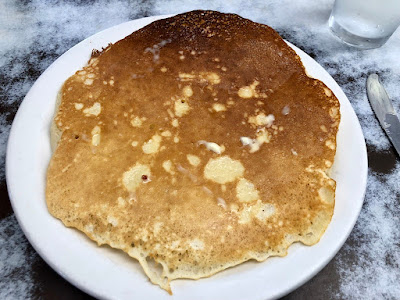
I opted for the Bill K Combo ($9.25), two eggs, bacon (though you could have ham or sausage), hash browns, toast, a pancake, and coffee or tea. Crispy bacon, eggs nicely cooked over easy. A tasty basic breakfast. 

However, the pancake was exceptional. First, it was quite large, covering nearly the entire plate. Second, it was thin, fluffy and light, with a delightful taste. I only slathered butter on my pancake and it was more than sufficient. No need for syrup. It was one of the best pancakes I've enjoyed in quite some time. I would have loved a full stack of these pancakes, and when I return to the area, that is what I'll get. 

If you love breakfast, and are ever in the Northboro area, I recommend you check out t Chet's Diner

Wednesday, March 9, 2022

Yakitori Totto: Initial Impressions (It's Absolutely Delicious!)

The Japanese term "Yakitori" roughly translates as "grilled chicken," and it's said to extend back to at least the 17th century. In general, small pieces of meat, poultry or seafood are placed onto kushi (skewers), seasoned with tare sauce, and grilled over a charcoal fire. 

The first mentions of yakitori in U.S. newspapers occurred in 1953, due to it being served at various functions at local Japanese embassies. The Knoxville News-Sentinel (TN), May 9, 1953, noted, “Yakitori is chicken strung on little skewers that look like knitting needles,..” The Daily Telegram (WI), September 11, 1953, mentioned that Crown Prince Akihito hosted a party at the embassy in Washington and served  “Yakitori—Chicken and green onions broiled over charcoal.” 

A recipe was then provided by the Chicago Tribune (IL), February 15, 1956. The article stated yakitori is “broiled skewered chicken and scallions, and the sauce is made with sake.” It then continued, “Yakitori. The name means broiled chicken, and while the dish usually is prepared over a charcoal fire outdoors, it may be prepared in an oven broiler.” In addition with the basic recipe, a simple recipe for the sauce was also given, mixing ¾ cup soy sauce, ¼ cup sugar and ¾ cup sake.

The first U.S. restaurants to serve yakitori started to appear around the late 1950s. For example, the Honolulu Star-Bulletin (HI), May 10, 1957, printed an advertisement for the Tokyo-Oasis, a café and night club that served yakitori. The San Francisco Chronicle (CA), January 18, 1959, noted that the Nikko restaurant served yakitori.  

Another yakitori recipe, including the sauce, appeared in the Fort Lauderdale News (FL), December 24, 1959. Although the yakitori was generally prepared as in the prior recipe, the sauce was different, requiring a cup chicken soup, ½ cup soy sauce, 2 teaspoons sugar, 2 teaspoons salt, 2 teaspoons vinegar, 1 button of garlic, ginger and red pepper.
 
Today, yakitori is available in a variety of restaurants, including some that specialize in this Japanese treat. One such spot, Yakitori Totto, opened in December 2021 at Assembly Row in Somerville. The original Yakitori Totto opened in New York City in 2003, and the Somerville restaurant is only their 
second location. Over the last few weeks, I've dined twice at Yakitori Totto and both visits were impressive, with amazing food. 

It's a medium-sized restaurant with a variety of tables as well as counter seating, where you can watch the cooks grilling the food. The restaurant is open for both lunch and dinner, and the menu is the same at both times. On my second visit, on a Saturday night, the restaurant was busy but they didn't try to rush us. 

The Drinks menu is relatively small with 6 Beers ($6-$8), 3 Japanese whiskeys ($10-$40), 
4 Wines (2 white, 2 red, $35-$50), and 11 Sakes (from $7.50 for a one-cup to $300 for a high-end bottle), and a variety of non-alcoholic drinks. On one visit, I was intrigued by the Forgotten Fortune Junmai ($75) but unfortunately it was out of stock. So, we opted for the Kaku Rei Junmai Daiginjo ($120), although I strongly suspect it wasn't actually a Junmai. The back label didn't indicate it was a Junmai, and some online research also tends to indicate it probably was a Honjozo rather than a Junmai. 

The Sake was produced by the Aoki Brewery, which was founded in 1717, and made from the famed Yamada Nishika rice, which was milled down to 48%. It was an excellent Sake, with delicious peach and apple flavors, a touch of steamed rice, a nice body, and a lengthy finish. It was smooth and tasty, and went well with the grilled meats.  

The Food menu has plenty of choices, and not just Yakitori. You can begin with Cold Appetizers, 10 choices for $7-$12, like Tako Wasa (marinated raw octopus) and Zaru Tofu (house made organic tofu). Or opt for some Hot Appetizers, 11 choices for $4-$12, such as Nasu Mizore Gaku (deep fried eggplant and mocha) and Fried Nankotsu (deep fried chicken knee bones). 

The Yakitori options include Chicken, Limited Chicken, Pork, Totto Original, Beef, Vegetables, and Seafood, generally priced $3-$11 with many around $4-$5. There are also seven choices for Entrees, priced $12-$29, including items like Oyako Don (chicken and egg over rice), Prime Roasted Beef Don, and Una-Ju (barbecue eel over rice). Finally, there's 6 Sweets options, priced $5.50-$10, including Matcha Tea Affogato, Ice Banana, and Mochi Ice Cream

Overall, there's plenty of variety, and everyone should be able to find dishes that appeal to their preferences, although it's also worthwhile to experiment and try some different dishes, which are more difficult to find elsewhere. How many restaurants do you know that serve Hiza Nankotsu, the soft knee bone of the chicken?

From the Cold Appetizers, the Maguro Zuke ($11) is a dish of tuna sashimi in a garlic infused, soy sauce, with wasabi. Silky and rich tuna slices, enhanced by the garlic and soy. What's not to love?

I also checked out several of the Hot Appetizers, including the Jidori Karaage ($9), Japanese style fried chicken, which comes with your choice of regular or sweet/spicy sauce. I opted for the sweet/spicy sauce, and the dish was excellent, with fresh, crispy pieces of fried chicken, with a well-balanced sauce and a nice touch of heat. These were some of the best karaage I've tasted and I highly recommend them.

The Gyoza ($10) are pork and shiitake dumplings, which are hand made fresh daily. You don't see dumplings with such a crispy coating that often, and they were amply filled with a tasty blend of pork and mushrooms. A fine way to begin your lunch or dinner.

I've always been a fan of Tamago Nigiri, and I've heard that in Japan, some assess the quality of a Sushi restaurant by how well they make their Tamago. The Dashi Maki Tamago ($9), is said to be a "Japanese soft rolled omelette." I wasn't expecting so many pieces of thick tamago, which was fresh, moist, eggy and flavorful. These felt like they were freshly made that day, and not pre-made tamago which you commonly find at many local sushi spots. This may seem like a simple dish, but there's more complexity to it than you realize. 

The Agedashi Tofu ($9) consists of deep fried tofu in a dashi broth. This dish has two large squares of fried tofu, which have a thin fried skin atop them. They were creamy and rich, enhanced by the umami of the dashi broth, giving the tofu more flavor. I'm very picky about tofu, and this was definitely a winner.

One of my favorite appetizers was the Tori Dango ($12), chicken meatballs covered with seasoned mocha rice. I liked the slightly spiky exterior, which provided an excellent crunch, and the meatballs were firm, meaty and flavorful. There was a touch of sweetness to the crispy rice coating and a slight dip of soy sauce, added some umami to the dish. Highly recommended! 

The Buta No Kakuni ($12) presents braised pork belly in soy sauce and dashi, with a hard boiled egg. The silky pork belly provided a nice blend of meat and fat, and again offered plenty of umami. The egg was a tasty addition, making this almost a breakfast dish, one I would enjoy any morning. 

The Miso Soup ($4) was made with miso nameko mushrooms and tofu, and the broth was excellent, complex and flavorful. Even dishes such as this, which you can find at almost any Japanese restaurant, are elevated in quality and flavor here. 

All of the Yakitori was delicious (as well as aesthetically pleasing) and I'm not going to go into detail on all of them, just the ones that especially stood out to me.  

Yaki Nasu Miso Dengaku ($4), eggplant with miso paste

"Onigiri, the rice balls sold from convenience stores and packed for school lunches, become a different kind of treat at the yakitori shop. As cooks rotate skewers of meat and vegetables over hot charcoal, they also throw unwrapped, unfilled onigiri on the grill, basting them with a dead simple sauce until they’re smoky and crispy on the outside. They’re especially tasty after a little too much sake."
--Mastering the Art of Japanese Home Cooking by Masaharu Morimoto

The Yaki Onigiri ($4.50), a grilled rice ball with your choice of soy, miso or yakitori sauce, was superb! I opted for the yakitori sauce, and loved the crispy outer rice, accented with sesame seeds and enhanced by the tare sauce. I ordered this on both visits, and loved it both times. It might be just rice, but it's prepared so well that it delights the palate.

Enoki Bacon ($5), bacon-wrapped mushrooms. Yum!

On the left is the Kalbi ($5.50), short ribs, and on the right is Negima ($4), chicken breast and scallions).

The Kawa ($4), chicken skin, is a pure delight, crispy, chewy, and flavorful. Anthony Bourdain previously raved about this chicken skin, and I understand why.

Wagyu Beef ($11) 

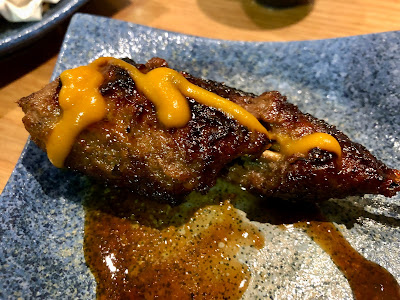
The One And Only ($7) is a Japanese Waygu Beef Meatball, with a great crunchy exterior, seared well, and a moist and meaty interior. Decadent and delicious.

Ton Toro ($4), pork neck.

Tomato ($3), a very simple skewer, but I loved biting into the tomato in my mouth, feeling the hot juices squirt inside. 

The Combo Mambo ($8) has eel, shrimp and scallop, a fine way to taste a few different types of seafood.

 Another simple and tasty skewer. Garlic ($3) with miso.

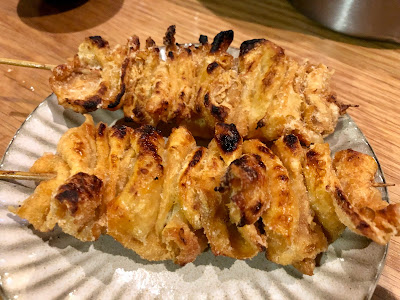
On the left is Bonchiri ($4.50), chicken tail, and on the right is Momo ($4), chicken thigh. Both are excellent, with the thigh being so tender and flavorful. The chicken tail would surprise you with its tender and moist taste. It's not the type of skewer you might consider at first, but it's worthwhile to experiment with some different chicken parts, and I suspect you'll find them delicious. 

Overall, Yakitori Totto has incredible and scrumptious food, from its simplest skewers to its more complex, home-made dishes. It is reasonably priced, especially considering the quality of the dishes, and you can dine there inexpensively if you select only a few skewers, or you can splurge and experience many different dishes. I'd recommend trying something new when you dine there, to expand your culinary palate. I'll be returning there soon, looking forward to trying more of their cuisine. 

Tuesday, March 8, 2022

China Sky: A Stellar Crispy Sesame Chicken


Somewhat hidden in Winchester center, off the main roads and to the back of other businesses, China Sky has been around since 2005, serving an extensive variety of Chinese and Japanese dishes. With over twenty years in business, they're a good-sized restaurant, with multiple dining areas and a bar. They have a full alcohol menu, with many classic cocktails, from Mai Tais to Scorpion Bowls (for one or two). You can dine-in or get take-out/delivery. 

I've dined there many times over the years, although I hadn't been there for a few years, mostly due to the pandemic. I'd always enjoyed my meals there and decided to stop there again a couple times recently and I wasn't disappointed. The quality of the food hadn't diminished, and I acquired a new appreciation for a couple of their dishes. 

I strongly recommend this restaurant and want to highlight a few items from my recent visits. 

I love Sweet Potato Maki ($5.50), and frequently order it whenever it's available. This was a tasty dish; the nice crunch from the tempura, the slight sweetness of the potato, the mild tang of the sauce. A good example of how this maki should be created.

The Chicken Soong ($11.95) is a dish of minced chicken & vegetables served with lettuce leaves and hoisin sauce. With an ample amount of chicken, the mix was flavorful, and the lettuce leaves were fresh and crisp. This may be a more healthy dish, but it's still tasty. 

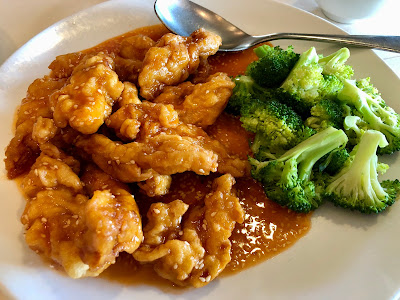
The stellar dish of my visits though was the Crispy Sesame Chicken ($15.65), "white meat chicken with lightly fried lotus flour batter and tossed in bright sweet, smokey and savory sesame sauce." Frankly, this is the best iteration of this dish that I can recall eating in many years. I enjoyed it on both of my recent visits and it was consistently delicious on both occasions. Why was it so damn good?

First, the lotus flour coating was crispy and thin, not the overly thick coating you often encounter with this dish. Sometimes, you find that the coating is thicker than the amount of chicken within. Second, the chicken was moist, tender and ample. There was much more chicken in this dish than you commonly find in similar ones at other Chinese restaurants. Third, the sauce was fresh, flavorful and complex, not the thick, goopy and overly sweet sauce you find at other spots. All three elements combined to create a delicious and compelling dish. Highly Recommended!

Now, I need to return to check out the Crispy Sesame Beef!

Have you dined at China Sky? Your thoughts?

Monday, March 7, 2022

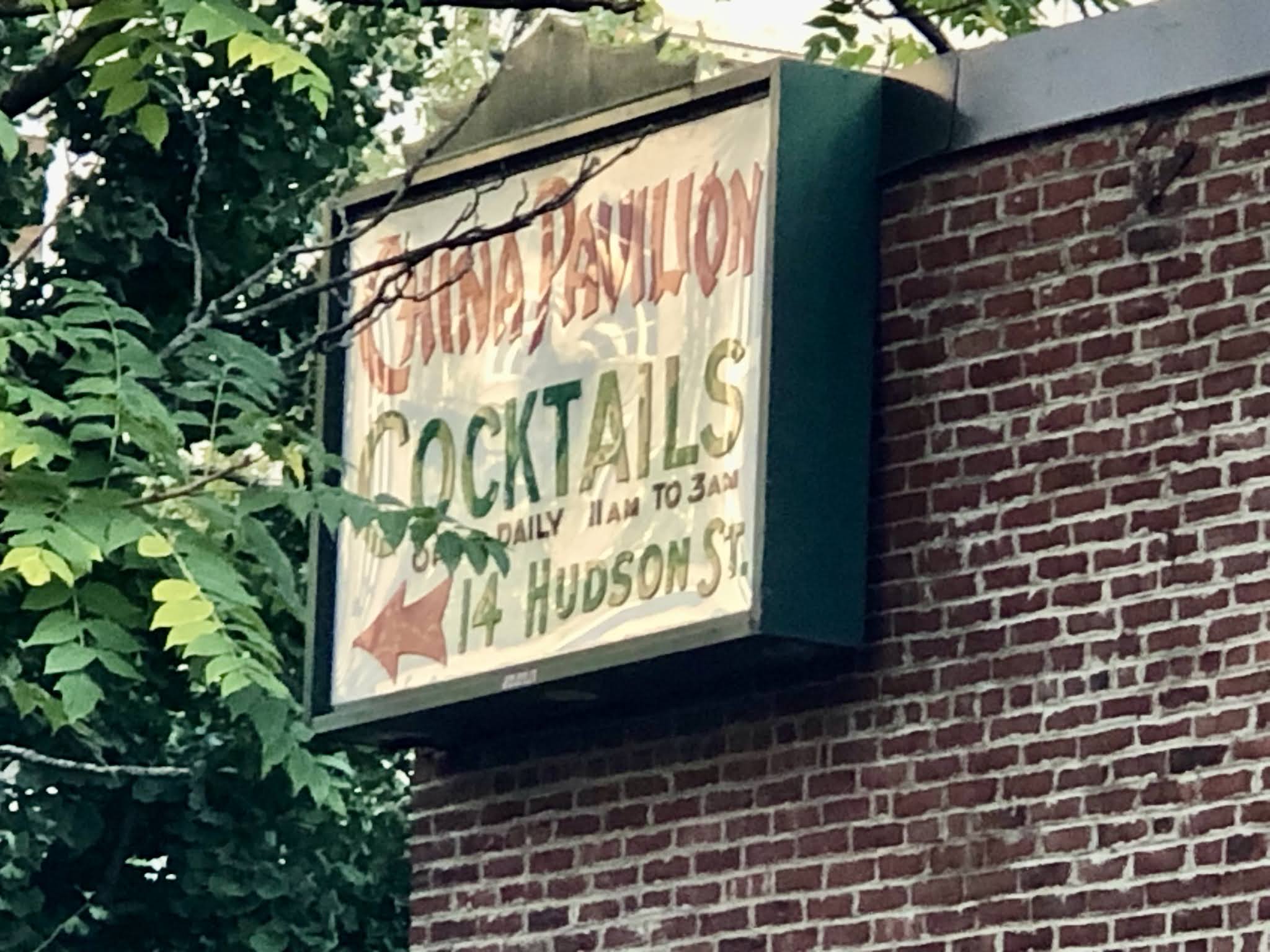
New Sampan Article: The China Pavilion Remembered

The most interesting feature of Chinese life to me was that on board their boats, or sampans, as they are called....Upon these boats live whole families of three and even four generations."
--The Fall River Daily Herald, November 20, 1888

For over a year, I've been contributing to Sampan, the only bilingual Chinese-English newspaper in New England. It is published in print as well as online, available in both Chinese and English. I've previously written thirty articles for Sampan, and you can find links here

My newest article, The China Pavilion Remembered, is now available in the new issue of Sampan. There's an empty lot on Hudson Street in Chinatown, and at the end of the lot is 16 Hudson Street, a building which once housed the Ginza Restaurant. On the exterior wall of this building, facing the empty lot, is a sign for the China Pavilion. This restaurant doesn't exist any longer although their sign remains. It’s an intriguing piece of history which triggers a desire to know more about this former restaurant. Read my full article to learn more about this intriguing sign and restaurant. 

What is a "sampan?" The newspaper's site states, "A sampan is a popular river boat in traditional China. This small but useful vessel, by transporting cargo from large boats to the village ports, creates a channel of communication among villages." And like that type of boat, Sampan delivers news and information all across New England, and "acts a bridge between Asian American community organizations and individuals in the Greater Boston area."

Sampan, which was founded in 1972, is published by the nonprofit Asian American Civic Association, "The newspaper covers topics that are usually overlooked by the mainstream press, such as key immigration legislation, civil rights, housing, education, day-care services and union activities. These issues are crucial to the well-being of Asian immigrants, refugees, low-income families as well as individuals who are not proficient in the English language."

There is plenty of interest in Sampan which will appeal to all types of readers, from restaurant reviews to historical articles, from vital news stories to travel items. In these current days when racism and prejudice against Asians and their restaurants is high, it's more important than ever that accurate information about the Asian community is disseminated and promoted. We need to combat the irrational prejudices that some possess, and support our Asian communities just as we would support any other element of our overall community. We are all important aspects of a whole, and we need to stand together.

Support Sampan!