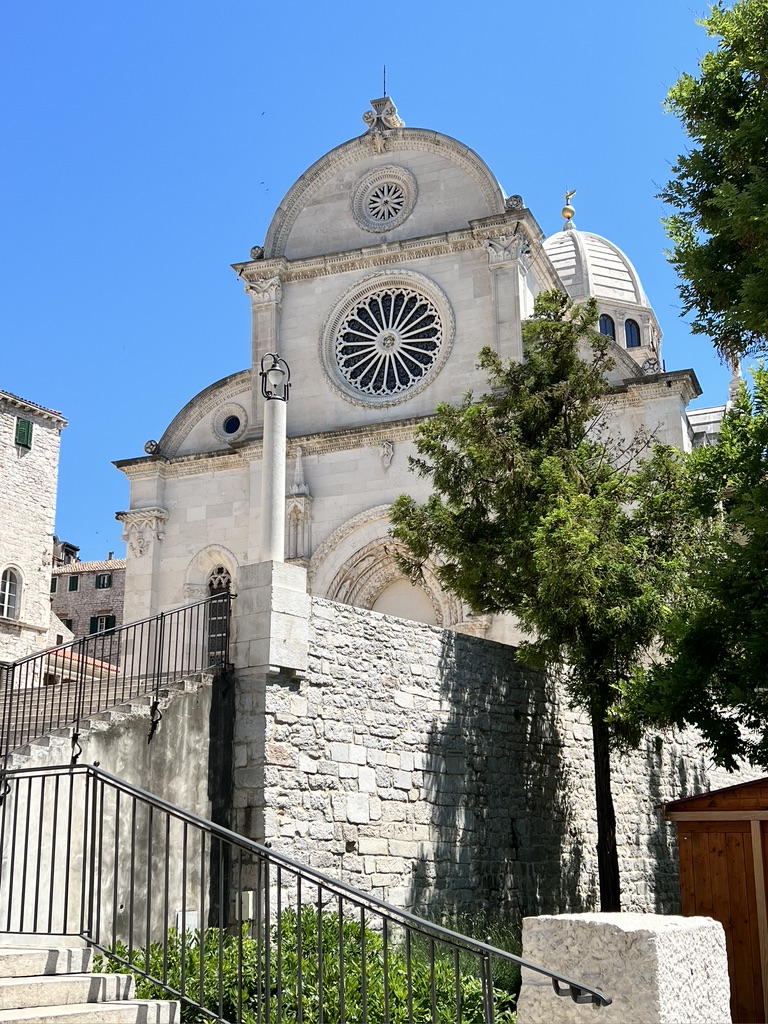
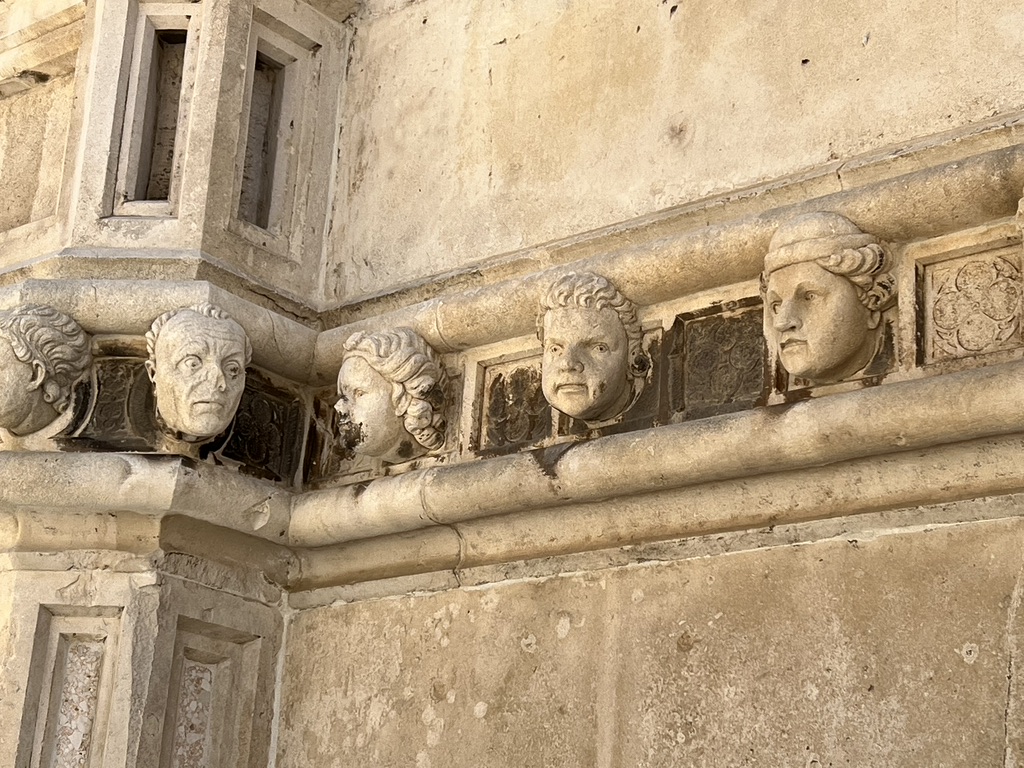
Currently, the largest Roman structure in Pula is the amphitheater, which is also the sixth largest, which still exists, in the world. It was constructed sometime between 27 BC and 68 AD, started during the reign of Emperor Augustus, and later completed during the time of the Flavian dynasty. Initially, it began as a wooden structure, but that was later replaced with limestone from the local area. I was very eager to see this amphitheater and was very pleased I had the chance to visit it.


The amphitheater originally had about 20 entrances, and the exterior wall had 72 arches, on the first floor, and 64 rectangular openings, on the second floor. It was able to hold over 20,000 spectators, who watched a wide variety of events, including gladiatorial battles, hunts, and even naval battles. In comparison, the current population of Pula is about 60,000, so the amphitheater could have held one-third of that population.


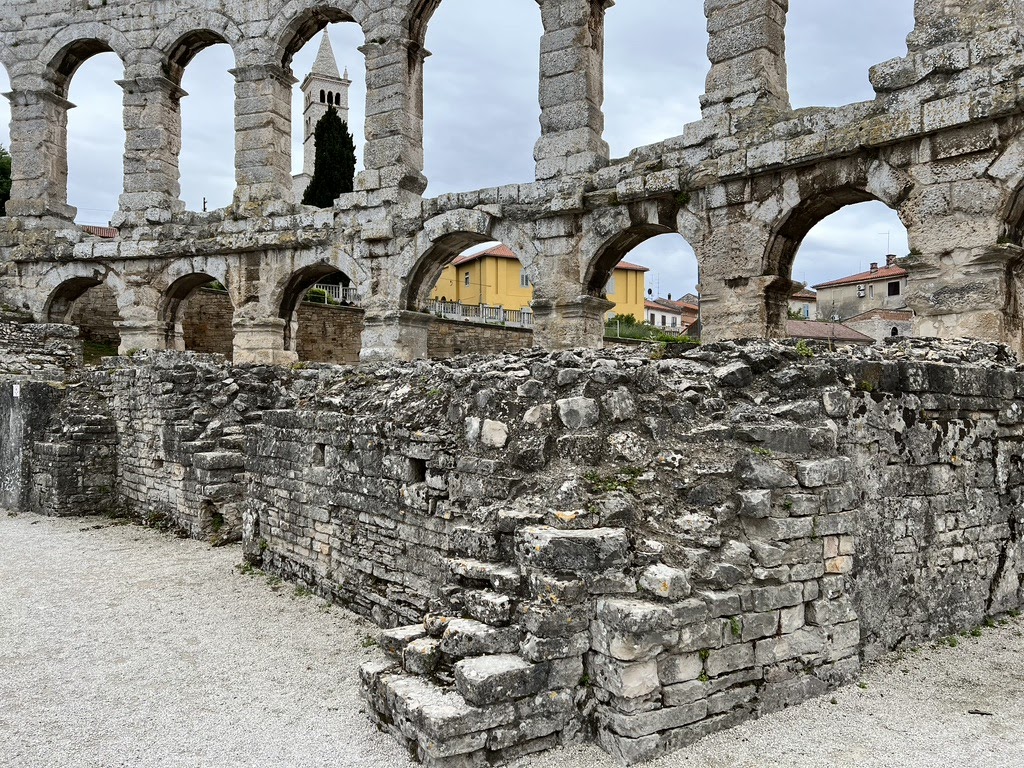
Was this arena actually built by someone else besides the Romans? Well, there are a couple legends about others who allegedly constructed this arena. First, it's claimed that fairies built the stone arena during the course of a single night, but when the sun rose, the fairies hadn't finished their work, leaving the arena without a roof. Second, it's also claimed that a group of giants built the arena, the same giants who allegedly built several fortified towns in Istria like Motovun. As I've mentioned before, Istria was also known as Terra Magica, the land of magic.


From the seating area, you could get a sense of the view for the ancient attendees, and with the distance of some of those seats, there probably was some difficulty seeing all of the details of gladiatorial battles. Although that distance might have granted an element of safety as well, just in case wild beasts might have escaped from the arena into the stands. You can also imagine what those Roman spectators witnessed when part of the arena was flooded, to allow naval battles to take place.

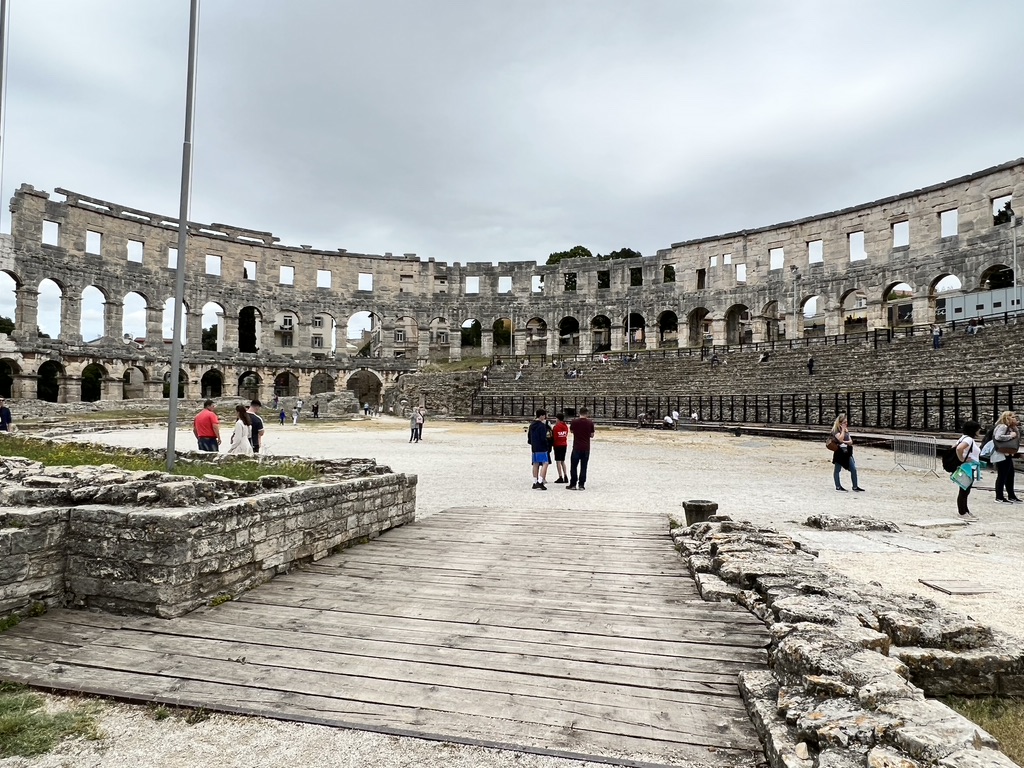

There are four side towers on this amphitheater, and at the top of each one used to be a reservoir for collecting rain water. The top of the walls had gutters where the rain water could collect and flow into the reservoirs. That water was used for a fountain which would help clean the blood on the arena floor, as well as be used to cool the spectators.


The arena remained largely intact until the 15th century when some of the stones were removed and used for construction in other parts of the city.
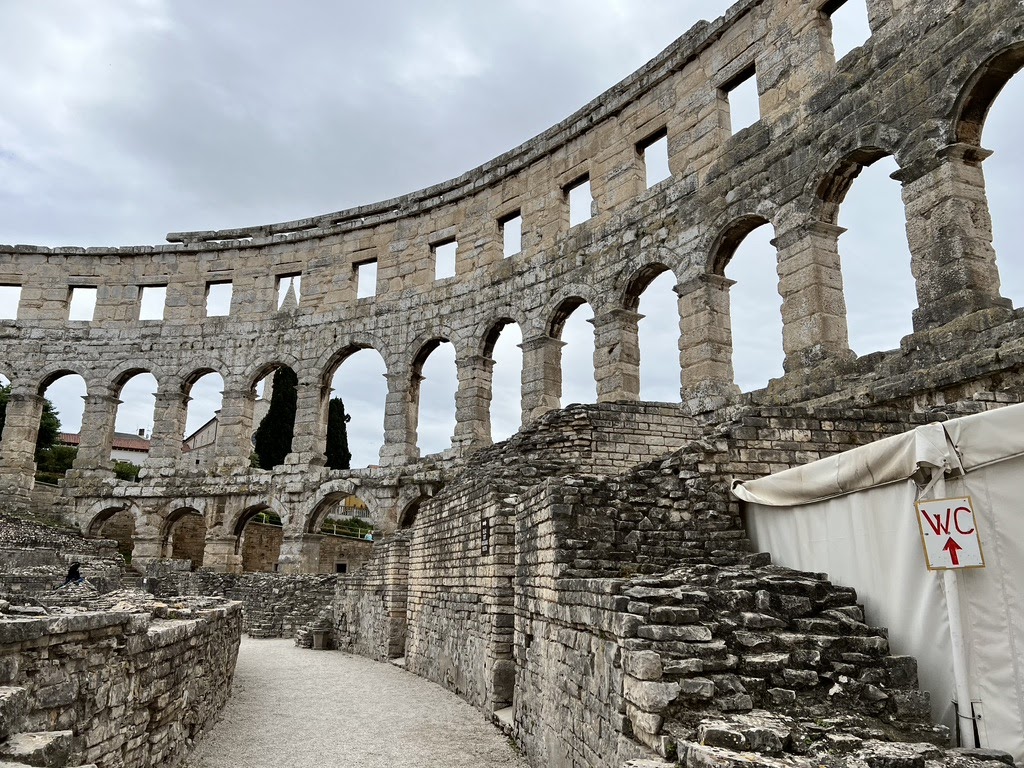


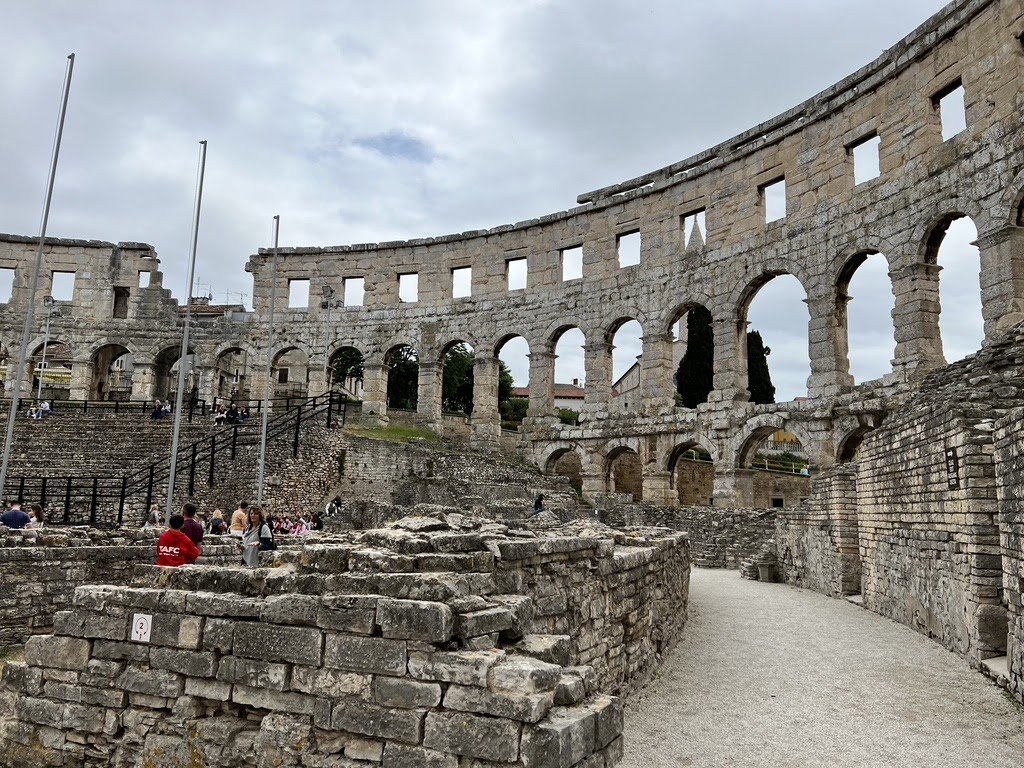
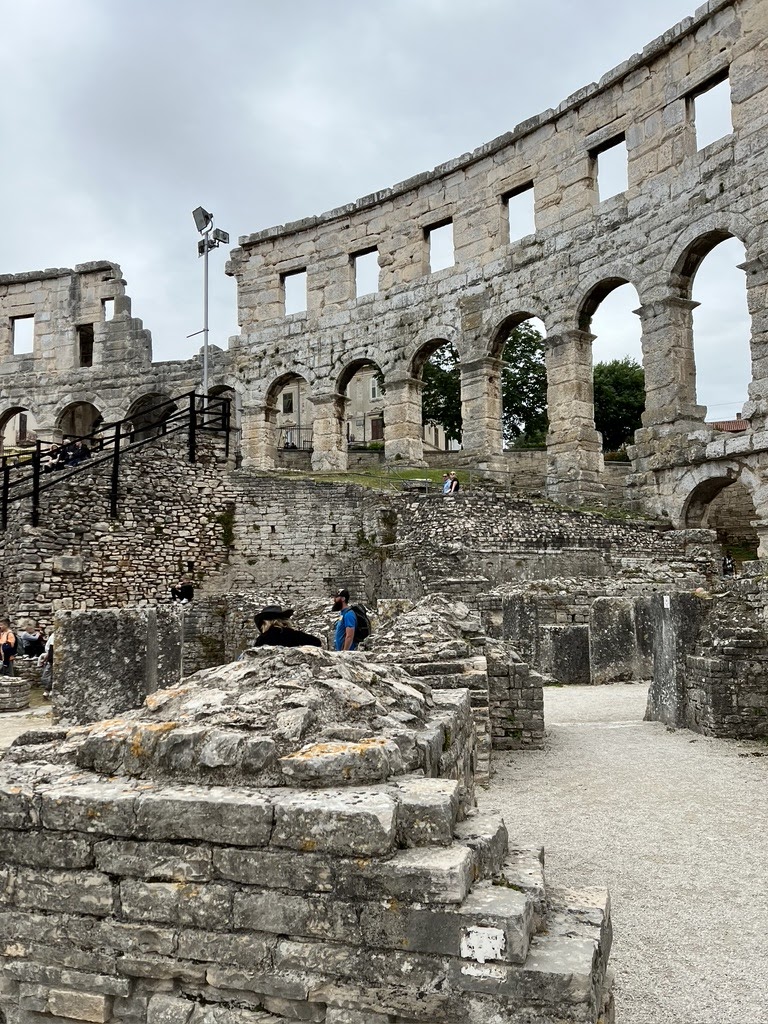


The underground chambers beneath the arena had multiple uses, from housing wild beasts to preparatory rooms for the gladiators. Now, this area is a museum with numerous artifacts, especially a wide variety of amphorae.


Some of the devices within the underground section were used for the production of olive oil. And although we often associate amphorae with wine, most of the amphorae made in Istria were actually used for the storage and transport of olive oil.


************
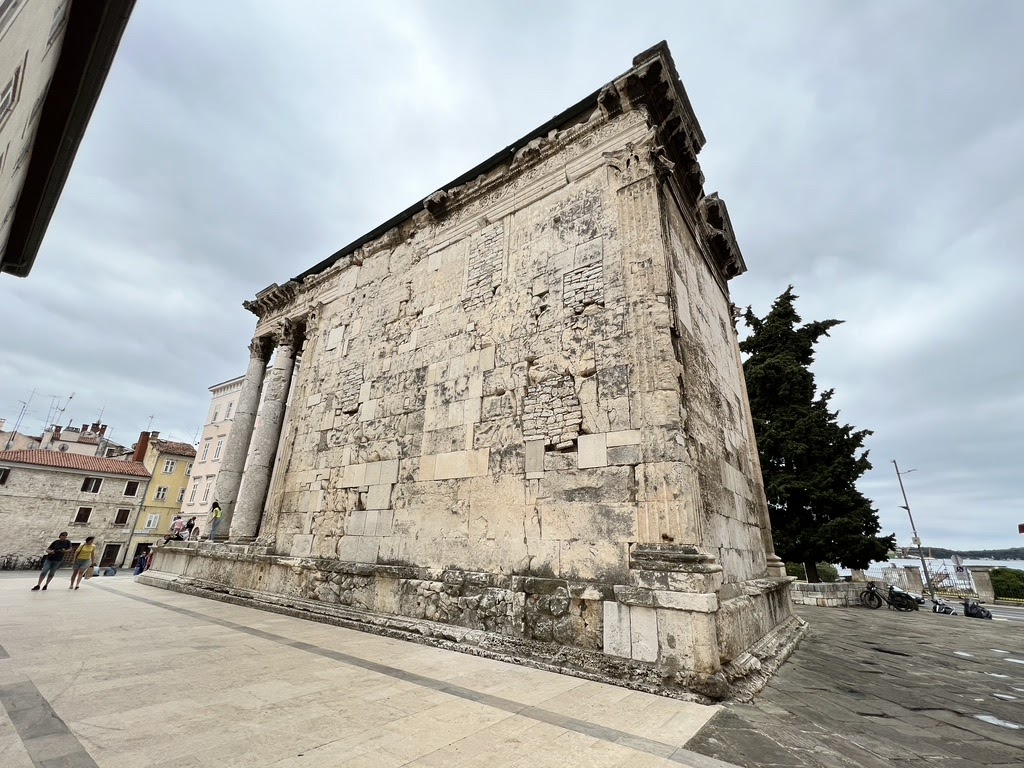


The main square of Pula was once the site of the ancient Roman Forum, one of the busiest sections of the city, and the primary remnant from those ancient times is the Temple of Augustus. The temple, constructed of Istrian limestone sometime between 2-14 BC, was dedicated to the goddess Rome and the emperor Augustus. In the front of the building are six stone columns with Corinthian capitals. The building is about 17.65 meters long, 8.5 meters wide, and height 13.17 high.
On March 3, 1945, the temple was bombed and significantly damaged during an aerial raid. However, Professor Mario Mirabella Roberti, Director of the Royal Museum of Istria in Pula (1935-1947) was instrumental in the restoration of the building, which is now a small museum.


Two sculptures located outside the temple.

An interior wall, giving you some idea of the size of the stones used to construct the walls.

The interior of the temple contains numerous sculptures and statues. This is a fountain panel with the head of Medusa.

The torso of an armor clad Emperor.


Fragment from a sarcophagus depicting the sea battle of the Greek and Persians at Marathon.
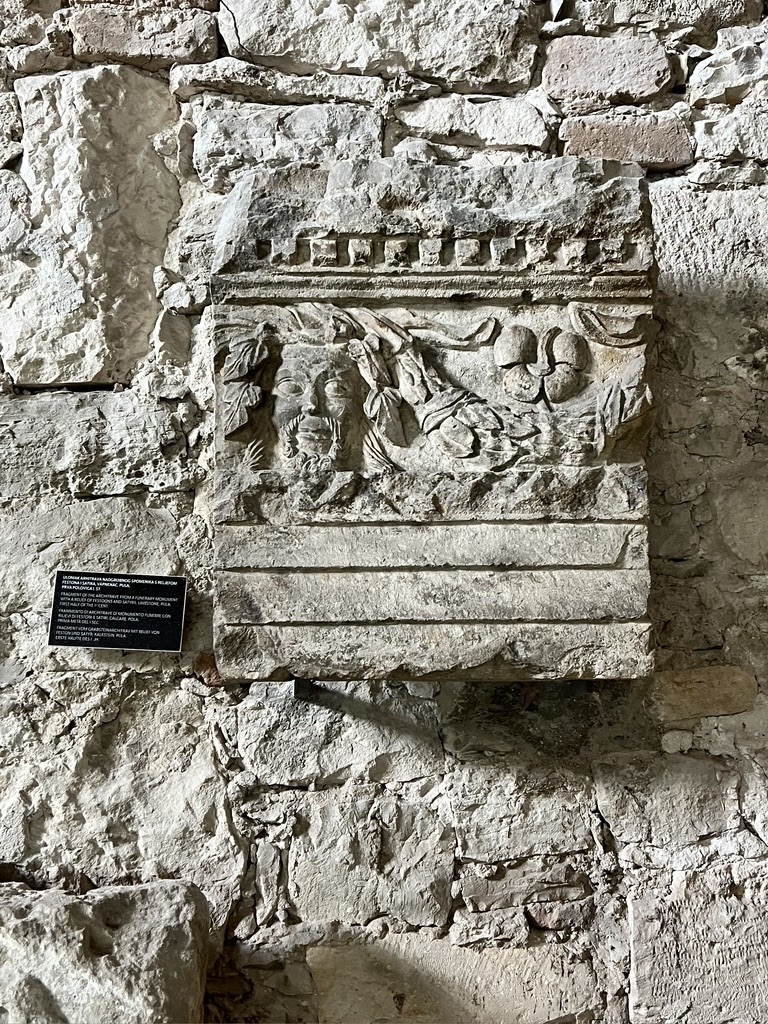
A funerary monument with Satyrs.

A kneeling slave.

The head of Archelous, a Greek god.
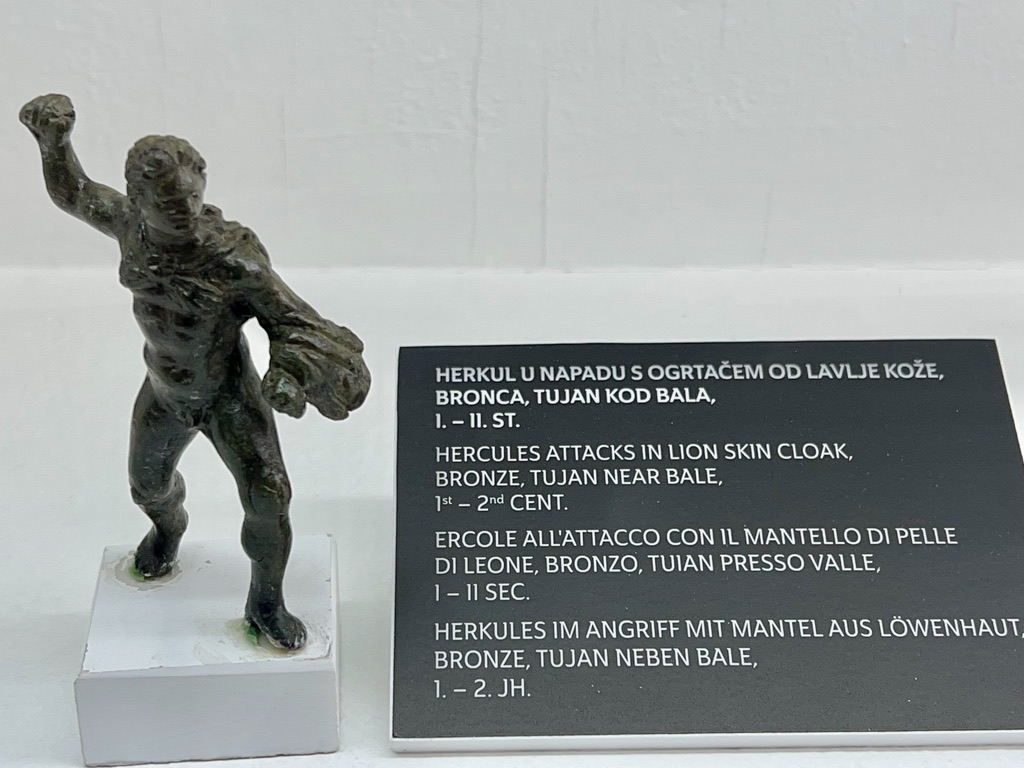
A small statue of Hercules, garbed in a lion skin cloak.

A small statue of a wrestler.

A marble lion
************




This statue, located in a small park near the water, is a World War II memorial, the Fallen National Freedom Fighters and Victims of Fascism, 1941-1945. The memorial was constructed in 1950 by Vanja Radauš.

A statue located on the back side of the World War II memorial.

The Sailor's Monument, which was built by Pavle Peric in 1953, to commemorate the sailors' revolt in 1918, the Cattaro Mutiny.


The menu had Appetizers, Burgers, Salads, Pasta, Seafood, Premium Meat, and Grilled Meat, most items priced about $15-$30 U.S. Plenty of intriguing choices on the menu, such as the Istarski Burger (beef, truffles, rucola, tomatoes & parmesan), Paccheri Tartufo (with a white truffle sauce & fresh black truffles), and Skoljke Mix (seashells in a traditional sauce).

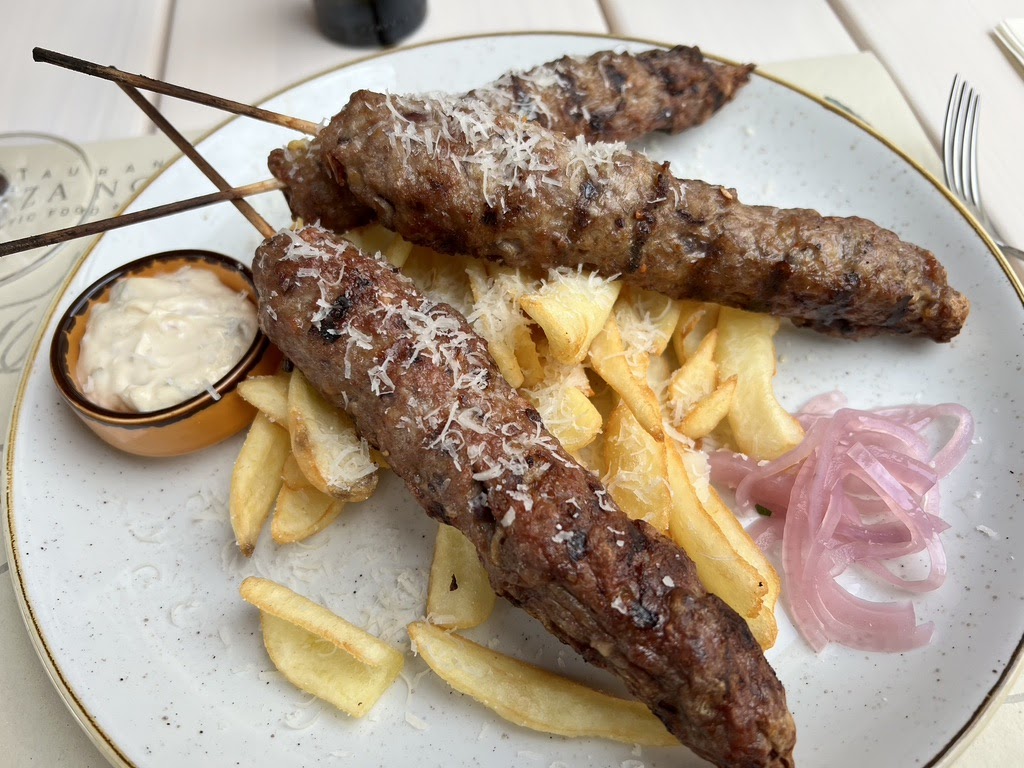
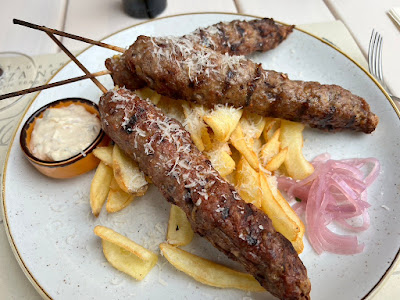 I then chose the Šiš Ćevap, spicy minced beef with French fries. Ćevapi are common in southeast Europe, and the type of meat used varies from country to country. I received three larger skewers of meat, which were moist, tender and flavorful. A hearty lunch for meat lovers. The French fries were almost flat, but nicely crisp, a fine addition to the dish.


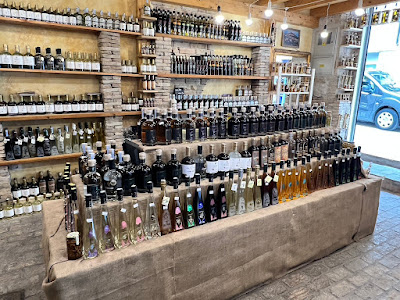

 I bought several bottles to take home with me, and probably could have bought many more, but I knew my suitcase couldn't handle too many bottles. If you're in Pula, you definitely should check out this shop and meet Sasha.
 Pula is a spectacular city, with so much rich history, and well worth a visit if you go to Istria. Fascinating historical sites, lots of restaurants and shops, and it is an easy city to walk around. We only touched the surface of what there is to see in Pula, and I'd love to return again some day to explore further.

I began my lunch with the Panco Kozice, shrimps in tempura with a sweet chili sauce. This was an excellent tempura, with a light and crunchy batter and tender shrimp. The dipping sauce was sweet with a hint of fiery heat.
I was very pleased with the restaurant, and would recommend it to anyone visiting Pula.


While wandering Pula, we decided to check out this Distillery Shop, located at 33 Kandlerov, which sells traditional Istrian liquors and spirits, including Rakija. We learned that the owner, Sasha (pictured above), was from Ukraine and moved to Pula in early 2022, escaping from the war. Sasha was such a personable person, with a fascinating story, and his shop contained a wide variety of intriguing items.


Sasha provided us a tasting of various rakija and Istrian liquors, and it was fascinating to sample the variety offered within Istria, much of which never reaches the shores of the U.S. These are spirits which would be delicious on their own, or make excellent cocktail ingredients. When will such Croatian spirits and liqueurs make their mark in our local cocktail industry?

************