I'm back again with a new edition of Sips & Nibbles, my regular column where I highlight some interesting, upcoming food and drink events. I hope everyone dines out safely, tips well and are nice to their servers.
********************************************************
1) This holiday season, Vermilion invites guests to celebrate with festive dining and beverage experiences. Located on the mezzanine level of Winthrop Center, the programming includes special Thanksgiving, Christmas Eve, and New Year’s Eve menus. Beverage Director and James Beard Award semifinalist Amy has curated wine pairings and special holiday cocktails that highlight Vermilion’s expansive beverage program. At The Lineup, located within The Connector at Winthrop Center, guests can enjoy a festive holiday bar and seasonal treats from Day Shift.
For Thanksgiving, Vermilion will offer a festive three-course prix-fixe menu featuring holiday classics with the restaurant’s signature chop-house approach and elevated with curated wine pairings. Guests can enjoy Roasted Heritage Turkey paired with Merry Edward Pinot Noir, seasonal squash, classic Thanksgiving sides and mini pumpkin pies alongside signature dishes including French Onion Dumplings complimented with Flowers Chardonnay from Sonoma, Glazed Short Rib with Boroli Barolo and Stout Sticky Toffee Pudding with Taylor Fladgate 10 Year Tawny Port. Thanksgiving menu is available November 26 from 11 a.m. to 8 p.m. for $85 per person, $115 with wine pairings. Reservations are available here.
Throughout November, Day Shift, the go-to all-day café at The Lineup within the Connector at Winthrop Center, will feature individual holiday pie slices in flavors including traditional apple, pumpkin and pecan.
The holiday programming will continue at The Lineup at The Connector Bar beginning on December 1, offering a festive menu of seasonal cocktails and bites throughout the month. Drinks will include a Spiced Maple Old Fashioned, Cranberry Ginger Paloma and Spiked Hot Chocolate, alongside shareable dishes such as burrata and prosciutto, filet mignon skewers, shrimp alla vodka pizza and peppermint cream puffs. Also at The Lineup, Day Shift will offer two seasonal Dot Cakes for a festive sweet treat.
On Christmas Eve, Vermilion will present seasonal exclusives alongside à la carte options, with wine pairings and celebratory dishes including: Hamachi Crudo with Granbazan, Albarino, Etiqueta Ambar, Rias Baixas; Truffle Risotto with Prunotto Barolo; Dover Sole with Jean et Sebastien Dauvissat Cru Vaillons Chablis; Lamb Osso Bucco with La Lecciaia Brunello di Montalcino, Manapetra; and Caramelized Hazelnut Yule Log with Royal Tokaji, 5 Puttonyos Red Label. The Christmas Eve menu is available December 24 from 5 to 10 p.m., with reservations available here.
To ring in 2027, Vermilion will host a chic New Year’s Eve celebration featuring a six-course prix-fixe menu highlighting seasonal flavors, elevated dishes and festive touches to welcome the new year. The evening begins with a celebratory Champagne toast paired with Vermilion’s Caviar Sandwich. The New Year’s Eve menu is $225 per guest, with optional wine pairings available for $150 per guest. Seatings begin at 5 p.m. on December 31, with reservations available via OpenTable. More entertainment details to follow.
Thursday, November 19, 2026


Tuesday, November 17, 2026
A Sake Primer: Basic Info for Sake Newbies

I've created a Sake Primer, a short and easy introduction to this fascinating Japanese alcohol, for those who have no or limited knowledge of Sake. Some of what is presented may be oversimplified, and there may also be exceptions to certain items I mention. The objective of this primer is to make it easy for people to learn some Sake basics, and hopefully this interests them to drink some Sake, and maybe even seek out additional details about Sake. If you have any questions about Sake, please feel free to contact me.
************************
What is Sake?
• Pronounced “Sah-Kay” not “Sah-Key”
• In Japanese, the term “Sake” actually refers to "all alcohol." What we call Sake, they call Nihonshu, "Japanese Sake."
• In Japan, the legal term for Sake is Seishu, which means "clear Sake."
• Sake is neither wine nor beer but its own unique alcoholic beverage. It's brewed more like beer but drinks more like wine.
• Sake is neither wine nor beer but its own unique alcoholic beverage. It's brewed more like beer but drinks more like wine.
How does Premium Sake compare to wine?
• 15-17% alcohol, lower acidity, no sulfites, gluten free
• 400 esters (flavor components) vs 200 esters in wine
• 180-240 calories vs 110-130 in wine
• Less chance of hangover
• Has 20 amino acids, seven times more than red wine
• 15-17% alcohol, lower acidity, no sulfites, gluten free
• 400 esters (flavor components) vs 200 esters in wine
• 180-240 calories vs 110-130 in wine
• Less chance of hangover
• Has 20 amino acids, seven times more than red wine
History of Sake
• About 4800 B.C., Sake was invented in China
• Sake came to Japan about 2000 years ago.
• Sake first came to the U.S., to Hawaii, around 1885.
• The first U.S. Sake brewery was established in 1902 in Berkley, California.
• Since World War II, there have been great changes & technological progress in Sake styles & types
Sake Categories
• Futsu-shu=Ordinary Sake. It constitutes about 75% of all Sake. Can possess certain additives, alcohol, and sugars.
• Two main categories of Premium Sake, differentiated by the number of ingredients: Junmai & Honjozo.
• Junmai means “pure rice.” It contains only rice, water, koji-kin, and yeast.
• Honjozo contains those same four ingredients plus some distilled alcohol.
• Rice Polishing requirement. Junmai does not have one though usually the rice is polished at least 30%. Honjozo must be polished at least 30%.
• Two quality grades, Ginjo and Daiginjo, under both categories, give you a total of 6 categories of Premium Sake.
• Ginjo: The rice must be polished at least 40%.
• Dainginjo: The rice must be polished at least 50%.
Sake Ingredients
• There are about 100 varieties of sake rice. Futsu-shu may be made from regular table rice.
• The key to the rice is the Shinpaku, which means “white heart,” the location of the starches in the center of the rice kernel.
• Sake rice most affects the flavor of the Sake. It's also the most expensive ingredient.
• Water constitutes 80% of Sake. Iron is water’s worst enemy
• Koji-kin is a yellow mold which breaks the starch in the rice into sugar.
• There are many types of yeast and their purpose is to turn the sugars into alcohol. Yeast most affects the aroma of Sake.
Sake Breweries
• There are around 1200-1300 Sake breweries in Japan.
• There are about 20 Sake breweries in the U.S., and there are Sake breweries in other regions as well, including Canada, Mexico and Europe.
Brewing Process
• There are at least 10,000 ways of Sake brewing
• Brewing season is usually October to April as colder weather makes better Sake
• About 80% of the quality of Sake is due to the brewing process
• There are at least 10,000 ways of Sake brewing
• Brewing season is usually October to April as colder weather makes better Sake
• About 80% of the quality of Sake is due to the brewing process
Sampling of Other Sake Types
• Genshu: Undiluted Sake so it has a higher alcohol content, around 20%.
• Kimoto/Yamahai: Does not add commercial lactic acid & tends to have an earthier/gamey taste and more umami.
• Koshu: Aged Sake.
• Namazake: Unpasteurized, also known as draft Sake.
• Nigori: “Cloudy” Sake which contains some Sake lees. Often sweet, but dry versions exist.
• Sparkling Sake: Often lightly sweet, fruity and effervescent but dry versions exist too.
• Taru-zake: Sake aged in Japanese cedar
Chilled vs Warmed
• Premium Sake is usually best slightly chilled, to show off its subtle & complex aromas and flavors.
• You can drink some Sake warm though almost never hot.
• Sake was historically drank warm during the winter, as well as for health reasons.
• Premium Sake is usually best slightly chilled, to show off its subtle & complex aromas and flavors.
• You can drink some Sake warm though almost never hot.
• Sake was historically drank warm during the winter, as well as for health reasons.
Sake Bottles & Cups
• Traditional small cups for Sake include Ochoko, Sakazuki and Guinomi. They are differentiated by size and shape. They are small for social reasons.
• Wine glasses make great Sake glasses, as it's usually better to experience the aromas and flavors of Sake.
• Traditional small cups for Sake include Ochoko, Sakazuki and Guinomi. They are differentiated by size and shape. They are small for social reasons.
• Wine glasses make great Sake glasses, as it's usually better to experience the aromas and flavors of Sake.
Tasting Sake
• A Sake tasting is called a Kikishu
• Taste Sake as much like you would wine: See, swirl, sniff, sip, swish, swallow/spit
• Junmai: Fuller, richer body and a higher acidity than average. Aroma not as prominent.
• Honjozo: Generally lighter in body and has a stronger fragrance.
• Ginjo: More delicate and lighter but also more complex.
• Daiginjo: Even more delicate, light and complex than a Ginjo.
Sake Customs
• Cheers=Kanpai. This literally means "empty cup" but traditionally means "let's drain our cups in friendship."
• Custom of Oshaku=You don’t pour your own glass
• International Saké Day is celebrated every year on October 1
• Japanese tradition to toast New Year's Day with a glass of Sake.
• Cheers=Kanpai. This literally means "empty cup" but traditionally means "let's drain our cups in friendship."
• Custom of Oshaku=You don’t pour your own glass
• International Saké Day is celebrated every year on October 1
• Japanese tradition to toast New Year's Day with a glass of Sake.
Sake & Food Pairing
• Sake does not get into fights with food. It can pair well with almost any food.
• Traditional foods to pair with Sake include slices of raw fish, grilled meats, vegetables (often pickled), edamame and tofu.
• Compare Sake to similar wines for food pairing
• Sake has lots of umami.
• Sake does not get into fights with food. It can pair well with almost any food.
• Traditional foods to pair with Sake include slices of raw fish, grilled meats, vegetables (often pickled), edamame and tofu.
• Compare Sake to similar wines for food pairing
• Sake has lots of umami.
Storing Sake
• Store Sake in a cool and dark spot as light is an enemy. You only need to refrigerate Namazake
• Unopened, it will last at least a year or so. Once opened, it will last at least a week
• Store Sake in a cool and dark spot as light is an enemy. You only need to refrigerate Namazake
• Unopened, it will last at least a year or so. Once opened, it will last at least a week
Monday, November 16, 2026
Rant: Where's The Turkey Love?

However, how often do people eat turkey the rest of the year? Does turkey receive the same love during the rest of the year?
Sadly, the poor turkey fares poorly outside of Thanksgiving. In 2025, U.S. per capital turkey consumption was only 13.2 pounds, and such consumption has been on a decline. In the prior five years, turkey consumption had declined by 2.5 pounds, a significant decrease. So, Americans are eating less turkey now, except on Thanksgiving.
In comparison, U.S. per capita consumption of other proteins includes: seafood 16.5 pounds, pork 50 pounds, beef 58.5 pounds, and chicken 102 pounds. So, American eat almost 8 times as much chicken as turkey. Chicken is the king of poultry for Americans while turkey is more like former nobility, which is celebrated but once a year.
Where is the love for turkey outside of Thanksgiving? It can be hard to find turkey dishes at many restaurants, absent sandwiches made with turkey. When is the last time you had turkey at a restaurant outside of Thanksgiving? At grocery stores, there are turkey sausages, turkey burgers, turkey tips, and similar items, but based on the statistics, these aren't very popular.
Why is chicken so much more popular than turkey? Is it price? Versatility? Taste? Or just better marketing?
Turkey needs more love outside of Thanksgiving!
Thursday, November 12, 2026
Thursday Sips & Nibbles
I'm back again with a new edition of Sips & Nibbles, my regular column where I highlight some interesting, upcoming food and drink events. I hope everyone dines out safely, tips well and are nice to their servers.
********************************************************
1) Thanksgiving is right around the corner, and Kane’s Donuts has just the dessert to complete any Thanksgiving dinner this year! Kane’s is now accepting Thanksgiving pie orders online, offering a variety of classic favorites perfect for hosting or bringing dessert to share.
Kane’s will be offering:
Apple – $20
Pumpkin – $20
Blueberry – $24
Custard – $20
Coconut Custard – $24
Lemon Meringue – $24
Boston Cream – $20
Pecan – $25
Orders can be picked up in-store from Friday, November 20th, through Wednesday, November 25th. Please note that all orders are for in-store pickup only, with no delivery or shipping available.
2) Eddie Merlot’s is bringing elevated dining to the holiday season with a limited-time Holiday Menu, available Nov. 3 through Jan. 4 at all locations. The menu features premium cuts of meat, fresh seafood and seasonal wine pairings, offering a special occasion dining experience for holiday gatherings, date nights and celebrations.
Featured entrées include:
Garlic Chili Tomahawk Ribeye – 34 oz. Certified Angus beef long-bone ribeye marinated in fresh garlic chili oil, designed to serve two
Surf & Turf – 6 oz. filet mignon paired with a petite cold water lobster tail
Pan-Roasted Salmon with Crispy Lobster Risotto Cake – Served with passion fruit butter sauce and grilled asparagus
Braised Short Rib – Paired with heirloom carrots, fingerling potatoes, cipollini onions and red wine demi-glace
Elk Chop – Pan-seared double-bone elk chop with sautéed fennel, cremini mushrooms and red wine reduction
Eddie Merlot’s is also making holiday gifting easier. From Nov. 16 through Jan. 3, guests who purchase $100 in gift cards online will receive $25 in bonus cards to use toward a future visit from Jan. 4 through March 6, excluding Feb. 12-14.
Monday, November 9, 2026
Rant: Demand More Breakfast Reviews!

If you look back at the recent archives of some of your favorite restaurant reviewers, you'll probably find that they rarely, if ever, review restaurants that specialize in breakfast. And if they do, the articles are usually compilation pieces, discussing a group of such restaurants, maybe by locale. You might see a list of the top breakfast spots on Cape Cod or the best donut shops on the North Shore. Why is this the case? Why don't breakfast restaurants receive more attention?

However, I have seen few food writers covering this restaurant. Why is that so? In general, many food writers and restaurant reviews rarely cover breakfast restaurants, even though many people love to eat a good breakfast. Nick & Andy's usually seems busy, so there's plenty of people who enjoy their food, but they deserve greater coverage. As do other excellent breakfast restaurants.

I've recently visited and enjoyed the Oasis Breakfast & Coffee in Reading, which also has a bakery with many Brazilian specialties. I love Pão de queijo, Brazilian cheese bread, and the Oasis offers a Pão de queijo waffle, which is quite tasty, and it makes for more of a savory option. And we need more savory waffle dishes. They also have Brazilian donut holes, in a few different flavors, and they are delicious and inexpensive. A good-sized cinnamon & sugar donut hole is only 50 cents! With Thanksgiving coming, you could but some of these Brazilian donuts for your Thanksgiving table, and follow a 200+ year old New England tradition.

I've also recently visited the New Brothers Restaurant & Deli, in Danvers, a cafeteria-style spot with a Greek flair. They have delicious food, such as the Loukaniko Omelet (pictured above), and the restaurant seems like an old-style diner. The plates are plentiful and reasonably priced, and service is excellent.

Let me speculate on some of the reasons why breakfast is covered as much as it deserves.
First, the number of breakfast spots is certainly much fewer than other types of restaurants so it's only natural that more attention is given to other restaurants. When you look at the lists of upcoming restaurants, there are very few breakfast spots in those lists. This is also a reason though why these breakfast spots deserve coverage, because they are more of a niche and can get lost amidst all of the other restaurant types.
Second, people generally look more for advice concerning dinner restaurants than breakfast spots, especially considering how much money they might spend on a dinner as opposed to an inexpensive breakfast. It's much easier to take a risk on an unknown breakfast spot that might only cost you $20 as opposed to a dinner place where you could drop $100 or more.
Third, many breakfast spots offer the usual standard fare, with little to make them stand out from other such places. So, they don't seem as compelling to review as they don't offer something new, different or more unique. Again, this is a reason why the best breakfast restaurants need more coverage, to help them stand out from the rest.

Thursday, November 5, 2026
Thursday Sips & Nibbles
I'm back again with a new edition of Sips & Nibbles, my regular column where I highlight some interesting, upcoming food and drink events. I hope everyone dines out safely, tips well and are nice to their servers.
********************************************************
1) Eddie Merlot’s is bringing elevated dining to the holiday season with a limited-time Holiday Menu, available Nov. 3 through Jan. 4 at all locations. The menu features premium cuts of meat, fresh seafood and seasonal wine pairings, offering a special occasion dining experience for holiday gatherings, date nights and celebrations.
Featured entrées include:
Garlic Chili Tomahawk Ribeye – 34 oz. Certified Angus beef long-bone ribeye marinated in fresh garlic chili oil, designed to serve two
Surf & Turf – 6 oz. filet mignon paired with a petite cold water lobster tail
Pan-Roasted Salmon with Crispy Lobster Risotto Cake – Served with passion fruit butter sauce and grilled asparagus
Braised Short Rib – Paired with heirloom carrots, fingerling potatoes, cipollini onions and red wine demi-glace
Elk Chop – Pan-seared double-bone elk chop with sautéed fennel, cremini mushrooms and red wine reduction
Eddie Merlot’s is also making holiday gifting easier. From Nov. 16 through Jan. 3, guests who purchase $100 in gift cards online will receive $25 in bonus cards to use toward a future visit from Jan. 4 through March 6, excluding Feb. 12-14.
2) Greco Truly Greek (one of my favorite restaurants) is giving one more thing to be thankful for this November, and giving Thanksgiving a little Greek treatment and introducing The Turkey Gyro. The classic Gobbler sandwich has become ubiquitous on menus, so why not switch things up a bit with this new take on a Greek street food favorite? Turkey is spinning on the rotisserie at Greco, ready to be stacked with cranberry. tzatziki, cabbage slaw, fries, all wrapped in their warm pita. Gluten free pita options are available now as well. This is available November 1 to November 30 at all Greco locations: Back Bay (Newbury Street), Downtown (Milk Street), Seaport (Pier 4), TD Garden Hub Hall, and the Burlington Mall.
Monday, November 2, 2026
Rant: Celebrate Sherry, a Neglected Wine

--Jerez saying
What is one of the tastiest, most intriguing, and unique wines that you are probably not drinking? It is most likely Sherry, a fascinating fortified wine from a small region of southern Spain.
Today, November 2, starts the celebration of International Sherry Week, a week-long of Sherry events that will be held all over the world. You can search their website to find if your local area is hosting any Sherry events.
As a long-term lover and fervent advocate of Sherry, I enjoy taking the opportunity, to spread my passion for this wine, to intrigue others to give it a try. Sherry remains a niche beverage in the U.S., and most of the Sherry imported into the U.S. is sweet. As such, many Americans have not encountered the myriad joys of dry Sherry. Even many wine lovers have little experience with dry Sherry. It's dry Sherry which is enjoyed the most in Spain, and there must be a very good reason for that fact. And due to reasons I'll explain in the near future, Sherry has been especially on my mind.
Sadly, Sherry sales have been on a decline in recent years but predications indicate it may be making a comeback. As I've written in my history of Sherry, it's a cyclic wine, which has numerous ups and downs, and has always founds a way back up. So, I can easily understand why Sherry consumption could be on an upward swing.
Sherry education is essential to the promotion of Sherry consumption, to get more Americans exploring this intriguing fortified wine. Here are some items that hopefully will motivate you to discover more about Sherry.
The best place to enjoy Sherry is at Taberna de Haro in Brookline, which has many Sherries on their list. Order a few tapas and get a flight of Sherries to compare and contrast. Whenever I drive by the restaurant, I nearly always have to stop for a glass of Sherry.
Stop missing out on the wonders of Sherry. Take a chance and order a couple dry Sherries, to taste something new. You can thank me later when you find a new favorite.
Sadly, Sherry sales have been on a decline in recent years but predications indicate it may be making a comeback. As I've written in my history of Sherry, it's a cyclic wine, which has numerous ups and downs, and has always founds a way back up. So, I can easily understand why Sherry consumption could be on an upward swing.
Sherry education is essential to the promotion of Sherry consumption, to get more Americans exploring this intriguing fortified wine. Here are some items that hopefully will motivate you to discover more about Sherry.
- The Sherry region has a lengthy, fascinating history, extending back a few thousand years and may even the source of the Atlantis legend.
- Palomino, the primary grape of Sherry, may have been planted by the ancient Phoenicians. Every sip of Sherry is a taste of history.
- Sherry may have been the first wine brought to the New World.
- The Mayflower, before it sailed to the New World by the Puritans, was used to transport Sherry.
- Aged Sherry is one of the best values in the wine world. You could buy 50 year old Sherry for $50-$100, far cheaper than almost any other aged wine on the market.
- Francois Chartier, who has written on the science of food and wine pairings, states that Fino Sherry is the King of Food Pairings.
- A Sherry Bodega is radically different from the average wine cellar, helping to make Sherry possess its distinctive nature.
- Here are 10 Things you should know about Sherry.
- And here are 5 More Things you should know about Sherry.
The best place to enjoy Sherry is at Taberna de Haro in Brookline, which has many Sherries on their list. Order a few tapas and get a flight of Sherries to compare and contrast. Whenever I drive by the restaurant, I nearly always have to stop for a glass of Sherry.
Stop missing out on the wonders of Sherry. Take a chance and order a couple dry Sherries, to taste something new. You can thank me later when you find a new favorite.
Tuesday, October 27, 2026
Easy Thanksgiving Recipes
Let me begin with some general advice, a sentiment you should embrace. Stop worrying that everything needs to be perfect because it will never be perfect and it doesn't have to be perfect. This is a holiday where family and friends gather, to share everything they are thankful for and not to complain and nitpick about silly and irrelevant issues. It's a time for fun and enjoyment, to relax and chat, to eat and drink, to savor the day together. As long as people enjoy themselves, as long as the food and wine is good, no one will complain or even care about whether it was "perfect" or not, whatever that term might mean. Just everyone being together is perfect enough.
If you're cooking at home, or need to bring a dish to someone else's home, then let me suggest some relatively easy, but quite delicious, recipes. I've compiled a list of five such Easy Thanksgiving Recipes, including:
Drink:
- Sangria: Based on the recipe from Dali, a famed Spanish restaurant in Somerville, this is a compelling drink and you'll probably end up with an empty pitcher by the end of the evening. It's fruity and thirst-quenching, and as it can be prepared ahead of time, you won't have to rush around on Thanksgiving making a drink.
Appetizer:
- Buffalo Chicken Dip: This always seems to be popular whenever I bring the dish to a party. Lots of cheese, spicy sauce and chunks of chicken. Get a big bag of tortilla chips and just let your guests scoop up some of this tasty dip. You can make it the day before and just warm it up before it's served.
- Double Corn Pudding: This is an easy substitute for home-made corn bread, and there are never any worries that it'll be too dry. It's very adaptable too, and you could easily add some of your own special ingredients, such as jalapenos or even bacon.
- Special Potato Casserole: Rather than the usual mashed potatoes, or even mashed sweet potatoes, try something which has a little of both. With the addition of goat cheese, these potatoes become especially creamy and tasty.
- Swedish Apple Pie: Making pie crust can be a chore, so why not make a pie which creates its own crust? This recipe is a big time saver, and it does not skimp on taste. Top it with your favorite ice cream, whipped cream or cheese.
Just about anyone can make these easy recipes and your family and friends should really enjoy the results. Plus, these recipes aren't just appropriate for Thanksgiving and you can enjoy them at any time. Buffalo Chicken Dip while tailgating? Sangria for your next wine party? Swedish apple pie for Sunday dessert? We regularly prepare their recipes during the holidays as well as the rest of the year and they always earn raves.
And I have to add that you should bring back a 200+ year old tradition of serving Doughnuts on your Thanksgiving table. Who doesn't love a fresh doughnut? Pick up some cider donuts from your favorite farm stand, or get a dozen or two from your favorite donut shop.
Whatever you do for Thanksgiving, enjoy yourself and appreciate all that you have, rather than worry about what you do not.
Whatever you do for Thanksgiving, enjoy yourself and appreciate all that you have, rather than worry about what you do not.
Monday, October 26, 2026
Rant: Help The Less Fortunate!

It can be a time of gluttony, hedonism and excess.
However, stop and ponder another significant thought: Please help those less fortunate. Let's work together to help those who need some assistance, even if it requires a little sacrifice on our parts. Make this a meaningful holiday season, rather than a selfish one.
Though many of us love and enjoy the holiday season, it can be a very sad and disappointing time for those of little means. Every community has some people who find it difficult merely to pay for basic essentials, let alone to buy holiday gifts or prepare a special holiday feast. We can help though, and try to bring some joy to the less fortunate. Share your largess with others, helping those who truly need it. Don't just think of yourself and loved ones.
I understand that these are tough economic times for many of us, with higher prices for so many items, from gas to food, and we have often been tightening our belts while shopping, restricting our spending in some ways. However, we probably can still help out others, even if only in little ways.
If you cannot spare money, then donate your time, maybe spending it at a food bank or shelter. Or make something to give to others, such as baking a pie, cookies or casserole. Donate old clothes or other durable items which you no longer use. There are many different ways to help out others besides just monetary donations.
Let us share with others during this upcoming holiday season, bringing together everyone in a more united community. There are enough divisions in our world right now and we need more unity, especially at this time. Don't just think of yourself but think of others, think about what you can do to make this world a better place.
During this season, there will be numerous restaurants, chefs, shops and others which will hold special charitable events. Talk about these events, promote them on social media, and spread the word far and wide. Attend those events, encouraging others to do the same. Give to your favorite charities, whatever they might be. Be creative in your efforts, even if your own finances are tight.
Let us share with all during this upcoming holiday season.
(This is an older post which I have reprinted, with some revisions, as the sentiment bears repeating once again.)
Tuesday, October 20, 2026
Yamada Shoten Everlasting Roots Tokubetsu Junmai: A Tiny Sake Brewery

A Sake brewery which is operated primarily by a single person! Usually, a brewery is a united effort, with numerous workers, each with their own assignment, contributing to the production of the Sake. Obviously, the larger the brewery, the more workers that are required. However, some of the smallest of breweries may be operated with a handful of people, if not even a single person.
Their Toji, Sake brewmaster, is Masaki Uno, works almost exclusively alone, producing only a single tank of Sake each week. No mechanization, including no temperature control during fermentation, is used in the production process. Everything is done very traditionally, and the kanji on the label of this Sake translates as “nothing has changed since the beginning,” a recognition of their adherence to the traditional way.
The Yamada Shoten Everlasting Roots Tokubetsu Junmai is produced from local Hida Homare rice, which was cultivated so it would do especially well in high altitudes, such as the mountainous Takayama region. This is also the signature rice of the Gifu Prefecture. It shares a similar taste profile to the famed Yamadanishiki rice, but because of its larger shinpaku, the "white heart" where the starch is located, it cannot be polished down as much as Yamadanishiki. Yamada Shoten also mills the rice at their brewery, which is very unusual for small breweries.
This Sake, with a 15% ABV, is bottled in a 900ml container, which is actually the smallest bottle they use. The standard Sake bottle is 720ml, about 24 ounces, so the 900ml bottle has an additional 6 ounces. As a Junmai, the Sake only contains four ingredients: rice, water, yeast and koji-kin. And as a Tokubetsu, the Sake has been specially brewed in some manner, although there isn't a legal requirement of what that has to be. The rice for this Sake has been polished down to 55%, which would qualify it for a Ginjo level, so this is likely its Tokubetsu aspect. The Sake is also vegan and gluten free.
The "Everlasting Roots" is dry, with high acidity, a medium body, and good umami. It has a savory taste, with a prominent licorice/anise element and subtle aspects of citrus, salted nuts and a touch of smokiness. It's said that it would pair well with seafood and pork, and probably would also go well with barbecue or grilled meats. This Sake was popular at a recent tasting I held, and it's a great way to catch a glimpse into more traditional Sake.
Monday, October 19, 2026
Rant: Candy Apples vs Caramel Apples
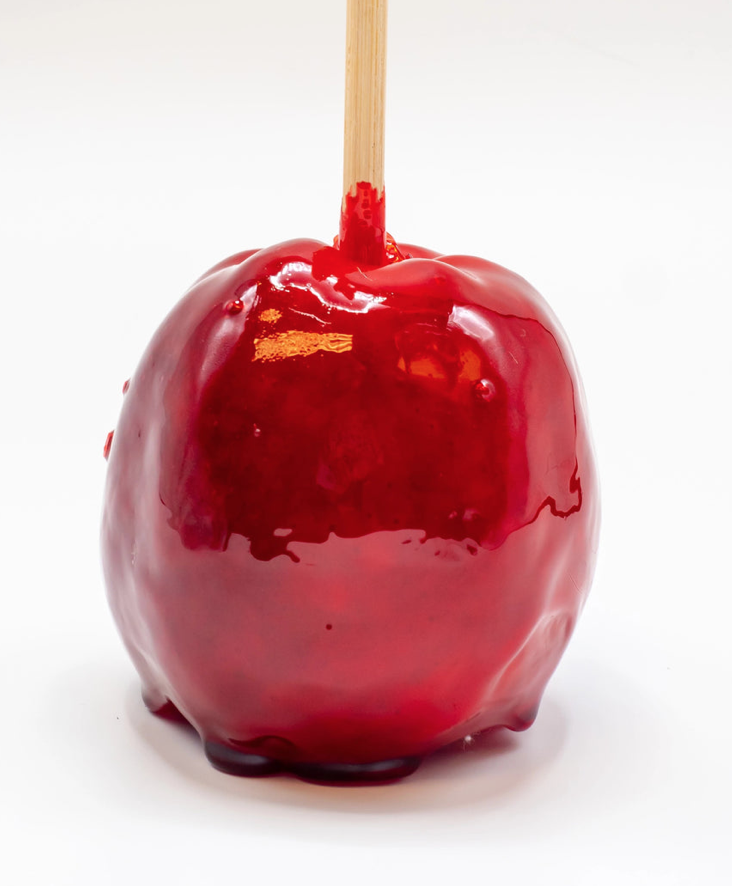
Before we get into a discussion of the merits of each type, let's examine their origins and history.
Most sources claim that red candy apples were invented first, by William Kolb, a candy-maker in Newark, New Jersey around 1908. Based on my own research, that origin tale is false, as candy apples existed prior to 1908, at least as far back as 1898. Sources also claim that caramel apples were first developed by Kraft Foods in the 1950s. That again seems to be false, as they existed as far back as 1904, although Kraft might have helped popularize them.
Although I found multiple references to "candy apples" in 19th century newspapers, the vast majority of the references weren't specific enough to identify their actual nature. Some of the 19th century references also seemed to indicate that a number of the references to "candy apples" were merely a type of candy, and not what we think of when we think "candy apple."
For example, in the Hartford Courant (CT), November 26, 1896, there was a reference to "candy apples" but they were described as "... all of the colors of the rainbow, each was as large as a marble, and all were mounted on sticks." The article seems to indicate they were a type of candy, and didn't include any actual apples.
However, I was able to find multiple, specific and detailed references to candy apples which predated their alleged invention in 1908. The earliest reference I've found so far is from the New York Herald (NY), September 17, 1898, which noted, "In some parts of the town may be found at this season a confection called apple-on-a-stick, a small apple that has been impaled by a stick three or four inches in length and then dipped in candied sugar, the stick serving as a handle to hold the apple by in eating it." The article continues, "The candied sugar is perhaps colored red; it is flavored maybe with cinnamon." They were sold for one cent each. It then concluded, "Standing in rows in a shallow pan in a confectioner's window, they present an inviting appearance, and they meet with a ready sale. Apples-on-a-stick are only sold in the fall."
However, I was able to find multiple, specific and detailed references to candy apples which predated their alleged invention in 1908. The earliest reference I've found so far is from the New York Herald (NY), September 17, 1898, which noted, "In some parts of the town may be found at this season a confection called apple-on-a-stick, a small apple that has been impaled by a stick three or four inches in length and then dipped in candied sugar, the stick serving as a handle to hold the apple by in eating it." The article continues, "The candied sugar is perhaps colored red; it is flavored maybe with cinnamon." They were sold for one cent each. It then concluded, "Standing in rows in a shallow pan in a confectioner's window, they present an inviting appearance, and they meet with a ready sale. Apples-on-a-stick are only sold in the fall."
This article would be reprinted in newspapers in Pennsylvania and West Virginia.
The St. Louis Republican (MO), November 5, 1900, published an article about local candy shops that were lowering their prices. It also mentioned that one of the shops had introduced a "Russian delicacy." The article continued, "The new thing was candied apples on a stick. The apples were raw but the candy was red and sticky, and altogether winning." A competing candy store quickly learned how to create these candied apples, and the price dropped from 3 for a nickel, to one penny each, and finally to 2 for a penny.
Death by candy apple! The Jersey Journal (NJ), August 22, 1903, reported that the Deputy Health Inspector had prepared a report for the Mayor of the current health danger of apples-on-a-stick. These apple sticks, which cost one cent, had been prepared with contaminated milk, leading to a number of infantile diseases, such as dysentary, marasmus, and summer diarrhea. The free dispensaries issued 715 prescriptions in one week due to these tainted candy apples, and all sales of such apples were then prohibited.
As a follow-up, the Jersey Journal (NJ), September 21, 1909, noted that stores were once again selling apples-on-a-stick, and it was said a confectioner shop was selling 300 a day.
The Buffalo Evening News, July 19, 1904, provided a recipe for a "candy apple" that stated "place apples pierce with bits of wood (like skewers) where the stems had been. These are placed in a pan and covered with a common brown taffy." This isn't a red candy apple but seems more similar to the caramel apple, as it was covered with a softer coating.
There was another reference to a red candy apple prior to 1908, in The Times Herald (MI), December 9, 1905, which published an article about the holiday season and mentioned "Red candy apples for the holiday time may be easily made at home by dipping small perfect apples in a bath of hot candy colored a brilliant red."
As for caramel apples, I found a recipe which extends back to 1904, decades earlier than Kraft's alleged invention, although it didn't include a stick. The Kansas Agitator (KS), November 25, 1904, printed a recipe for "Caramel Apples" and stated, "Steam sufficient pared and cored apples, and when cold, pour over them a thick caramel sauce....Whipped cream improve them, but is not necessary."
The Minnesota Journal (MN), January 27, 1908, also had another recipe for Caramel Apples, but again no stick was required. Their recipe though added nuts to the caramel sauce on the apples. The Osawatomie Globe (KS), March 12, 1908, included the same recipe but added some introductory comments, noting "Caramel apples are a dainty dish served at a Boston restaurant which caters to the feminine taste." That recipe, with the introduction, would be reprinted in numerous newspapers across the country.

The stick appears! The Seattle Star (WA), October 2, 1931, provided a recipe for a caramel apple, as a Halloween treat, and the apple was put on a stick. The apple was covered in caramel, without any nuts or other toppings. The Nebraska Farm (NE), October 21, 1931, noted that, due to Halloween, "All over the country, children are making apples-on-a-stick." The article provided a recipe for a caramel apple on a stick, but also covered with shredded coconut. So, it is also clear that caramel apples weren't created by a Kraft employee in the 1950s.
Candy apples, with their distinctive red candy shell, are usually made with a flavored boiled sugar recipe, while Caramel apples are covered with melted caramel. There's a huge textural difference between the two, one with a hard outer shell and the other with a gooey exterior. The popularity of each varies across the country, though I've been noticing over the last several years, to my dismay, an increase in the ubiquity of caramel apples locally.
I love red candy apples, especially covered with coconut. It's often a challenge to take that first crunchy bite into the hard shell, but it's rewarding. With a fresh, crisp apple, the candy, coconut and fruit make for a very appealing treat. For me, the caramel apple fails. I love caramel, from a nice sweet sauce atop ice cream to a salted, gooey center of a dark chocolate. But I don't like its soft gooey texture on a caramel apple. It's too soft, and just doesn't seem complementary to the crisp, juicy apple. Plus, maybe it's also a bit sentimental, as growing up I most often enjoyed red candy apples.
Why has the popularity of red candy apples waned? What is behind the rise of caramel apples? I don't have answers to these questions but I want to be able to more readily find red candy apples. Where are they hiding?
Do you prefer red candy apples or caramel apples? And why?
(This article has been revised/expanded from a prior article)
Tuesday, October 13, 2026
A History of Chinese Fried Rice & Molasses in Massachusetts

Chinese fried rice in the U.S. extends back at least to 1898, and likely prior to that time. The Topeka State Journal (KS), January 5, 1898, noted a multiple-course dinner held in New York City Chinatown, at a restaurant on 14 Mott Street, which included “fried rice.” Maybe the first reference to fried rice in Massachusetts was in 1915. The Transcript-Telegram (MA), April 15, 1915, published a large advertisement for a Chinese & American Restaurant in Holyoke, with a listing for "Fried Rice" for 25 cents. And by 1916, people were already sending inquiries to the newspaper seeking a recipe for making Chinese fried rice.
If you've read any of the articles with a history of New England Chinese Food, you'll usually see the claim that local Chinese restaurants used molasses in their fried rice. This was allegedly because molasses was so prominent in the Boston area, and it made the fried rice darker in color, as well as sweeter. Those claims also seem to indicate molasses was something new to the Chinese. However, none of those articles presented any evidence to support their claim, which has made me question it. Thus, I did some of my own research, to try to get to the truth.
In brief, I didn't find any evidence of a local Chinese restaurant using "molasses" until 1957, and even then, it's not quite what you might think. There's an important distinction which is ignored, and I hope to illuminate the issue for my readers.
********************
Probably the first actual Chinese cookbook, and not just a pamphlet, was self-published in 1911, Chinese Cookery in the Home Kitchen by Jessie Louise Nolton. It included three recipes for Fried Rice, including Fried Rice (Chinese Style), Fried Rice (Canton Style), and Fried Rice With Chicken. This might have been the first printed recipes for Chinese fried rice.


The Boston Herald, June 14, 1942, had a recipe for Chow Fon (Fried Rice with Ham), calling for soy sauce, but no molasses.


The first half of the 1950s continued to see Fried Rice recipes, all without using molasses. Why was this so if local Chinese restaurants were allegedly using molasses in their fried rice? Was the use of molasses more of later addition, and not originally part of the first fried rice dishes?
In 1957, the issue acquired some clarification, and the original claims about the use of molasses in fried rice probably need some revision.

As you can see, the recipe included the use of "1 tablespoon Chinese molasses." Anita also added, “The Chinese molasses may be purchased at any grocery in Chinatown. Don’t substitute molasses from your pantry shelf, Anita cautions. It makes the rice too sweet. Just omit it.” Cathay House was opened in 1945, so their use of Chinese molasses in the fried rice could have started as early as their opening, or it might have started sometime afterwards.
Chinese molasses! That, and not regular molasses, may be the secret to New England Chinese Fried rice. Once you learn more about Chinese molasses, it also makes logical sense. The addition of Chinese molasses in fried rice in the local area might have originated in the late 1940s or 1950s.
We need to understand that China was producing molasses-like products for about two thousand years. So, when Chinese immigrants arrived in the Boston area, they were already familiar with molasses. They were already used to using "Chinese molasses", also called "bead molasses," in their cooking. This is a lighter type of molasses, which is less sweet, and was often used for adding a deeper brown color to dishes such as chow mein and chop suey. It possessed more of a savory taste, with hints of smokiness. The typical Boston molasses was too sweet and heavy for the Chinese cooks.
Chinese molasses was being imported into the U.S. as least as far back as 1850. The Daily Alta California (CA), August 11, 1850, had a brief ad selling 2000 gallons of “Chinese Molasses.” The Daily Pacific News (CA), March 13, 1851, also had a brief advertisement selling “Chinese Molasses,” which it said was a “superior article.” The American Union (WV), October 23, 1857, published a letter from Ohio, discussing Chinese molasses which was now being produced in Ohio, and it retailed for 75 cents per gallon.


********************
Many other recipes, printed in Boston area newspapers, for Chinese fried rice in the 1960s and on still didn't include the use of molasses, although people started believing molasses was used by restaurants. However, it seems unlikely that the heavy molasses produced in the Boston area would be used in fried rice, when the Chinese had a lengthy history of the use of the lighter Chinese molasses. The bead molasses had the benefit of being less sweet, adding a savory and smoky aspect, and providing a darker brown color to the rice. It was also readily available to Chinese restaurants. So, rather than use heavy molasses in your own home Chinese recipes, seek out Chinese molasses instead.

Monday, October 12, 2026
Rant: Choosing Thanksgiving Wines With Ease

Cast your memory back to last year's Thanksgiving. Can you remember which specific wines you had with dinner? Can you remember the specific wines you had with Thanksgiving dinner two years ago?
I'm sure that nearly everyone won't be able to remember except maybe in the most general terms. Maybe they recall having had a Pinot Noir or a Riesling. They're unlikely to recall the specific producer or much else about the wine. What they are more likely to remember is the good (at least hopefully it was good) time they had, the family and friends that shared their table. They might remember that the food and wine was good or bad but the specifics may be foggy.
Generally, it's for a short time after Thanksgiving that people will remember the wines they enjoyed at their dinner. During that time, they are likely to tell other people about what they ate and drank, sharing any special wines they might have discovered. If they especially enjoyed the wines, they might then seek them out for their next holiday feasts. They may rave about their host, complimenting their choice of wines.
Do you really need to worry about specific Thanksgiving wine recommendations? I don't think so. The more I ponder the question, the more I realize that all you need for Thanksgiving are some good wines, the varietals and/or blends being much less important. As long as they do not blatantly clash with the meal, then they should work just fine. And few wines are going to so blatantly clash. Drink wines you'll enjoy and don't worry so much about "perfect pairings."
A Thanksgiving meal is diverse, with many different flavors, from savory to sweet, and many different textures. No single wine is a perfect pairing with all these different dishes. So you need wines that people will enjoy in of their own right. I don't think many hosts are actually seeking the "perfect" wine pairing. They simply want something that people will enjoy and which won't greatly detract from the food.
Plus, who'll remember the wines next year?
We must also remember that any wine shared with good friends and family is likely to taste better, or at least seem that way, than one drank alone. The circumstances of the day, the good feelings, the fond memories, the thanks for the past year, will all lead to your wine seeming better. And it's all those surrounding circumstances that people will most remember about Thanksgiving. The wine will always take the back seat.
The wine is simply an extra, not a necessity. It pales in importance to everything else about the holiday. Like the Whos from "The Grinch Who Stole Xmas," there should still be joy even if all of the food and wine were taken away.
I'll bring a variety of wines to my Thanksgiving feast, a mix of sparkling wine, white, red and dessert wines. In general, I'll pick interesting and delicious wines that I feel people will enjoy. I won't spend much time worrying about pairing them with specific dishes and foods, although I'll consider which wines might clash too much with the various dishes. I want wines that will make people smile, that will enhance the spirit of the day.
If you want some assistance with selecting wines to make your guests smile, then come see me at the Victoria Hill Wine, Spirits & Gourmet shop in Melrose. I can show you plenty of delicious and interesting wines which would work well for your Thanksgiving table. I can show you different wines rather than the traditional pairings. Everyone else might bring the standard wines, so why not stand out by bringing a more unique wine? Give your guests something to talk about once the feast is over.
Consider wines, both whites and reds from Croatia, Greece, Uruguay, Slovenia, Palestine, Lebanon, Hungary, or Georgia. The shop has wines from around 25 different countries. Pick up some Bubbly, such as Cava, Cremant d'Alsace, or Grower Champagne. If you want something different, consider a White Pinot Noir from Oregon, a White Malbec from Argentina, or a White Sangiovese from Italy. Try an Orange Wine, a skin-contact white wine, which goes well with roast turkey. You'll find a couple dozen Orange Wines, from all over the world. You should also consider Sake for your Thanksgiving table, which is actually a very food friendly beverage, and we have a diverse selection from Sparkling Sake to Junmai Daiginjo. If you want more Natural Wines, the store stocks over 350 such wines. For after-dinner consumption, consider Port (Ruby to White), Sherry, Sauternes or Tokaj.
Whatever you do for Thanksgiving, enjoy yourself and appreciate all that you have, rather than worry about what you do not.
(This is an expanded/revised version of a post originally from 2009. My basic sentiment has not changed one iota since that time and I felt it was important enough to raise it once again.)
Thursday, October 8, 2026
Thursday Sips & Nibbles
I'm back again with a new edition of Sips & Nibbles, my regular column where I highlight some interesting, upcoming food and drink events. I hope everyone dines out safely, tips well and are nice to their servers.
********************************************************
1) For Thanksgiving, Margeaux’s Supper Parlor is hosting a Thanksgiving Dinner on Thursday, November 26, from 3–8 p.m. for $80 per person, featuring a choice of starter, primary, and sides, followed by dessert. Options include "Turducken" with Italian sausage and gravy, Halibut with beurre blanc, spinach, caviar, and crab ravioli, Beef Wellington with truffle and spinach, and pumpkin ravioli as a vegetarian option. Check out the full Menu HERE.
2) Aquitaine is also offering its annual Thanksgiving pre-order menu for four for $310, with pickup on Wednesday, November 25, from 11 a.m. 3:30 p.m. The menu includes roast turkey breast and braised turkey leg, Apple & Sage Stuffing, Pommes Robuchon, Roasted Cauliflower Agrodolce, Autumn Butternut Succotash, cranberry sauce, gravy, and French dinner rolls. Guests can also add options including Charcuterie & Cheese, Shrimp Cocktail, Cider Braised Short Ribs, Truffled Mushroom Lasagna, and pies.
3) Seeking a special holiday dinner experience? On Wednesday, December 9, A Tavola, in Winchester (One of my Top Five Favorite Restaurants) will be collaborating Heaven Hill Distillery for an epic dinner: BOURBON. BIRDS. BBQ. This will be a 5 Course dinner, paired with bourbons, and it surely will be an excellent event. I've previously gone to their BBQ dinners, and they have been impressive and delicious. Advance tickets are now on sale, priced at $125 per person. You can call to make a Reservation at 781-729-1040. This event is sure to sell out so I recommend making your reservation as soon as you can. I've already got my reservation and hope to see some of my readers there as well.
Monday, October 5, 2026
Rant: Eliminate Drink Stereotypes!

Over the weekend, I presided over a Sake Tasting, showcasing four different Junmai Sakes, from light & fruity to earthy & umami-dominant. A number of customers were hesitant to try the Sake because of their prior negative experiences. They probably had cheap Sake, mostly hot, and found it too harsh, or it gave them a terrible hangover.
Fortunately, after a little persuasion, pointing out that these were premium Sakes, very different from what they previously tasted, they were willing to give it a try. And they were surprised that they enjoyed the Sake! It was very different from their prior bad experiences, and most of them ended up purchasing a bottle. They realized that their negative stereotype about Sake had been incorrect.
Unfortunately, I have seen too many people stereotype certain categories and types of alcoholic beverages. For example, some claim to hate all Chardonnay, Port, Sherry, or Mezcal, and won't ever drink it, refusing any offers to sample it. When presented with a new bottle, they will refuse to even take a sip, already convinced they will hate it. They wrongfully assume that all the examples of that type of beverage are the same, so they believe they will hate it.
I strongly encourage my readers to avoid such stereotypes and be open to the myriad diversity in alcoholic beverages. I know that even if I dislike 95% of the beers on the market, that still leaves 5% which I may greatly enjoy. I refuse to stop sampling and tasting beers even though I will dislike most of them.
You should be open to tasting new beverages, even if you've disliked others of that beverage in the past. Maybe you actually only dislike oaky Chardoanny but would love an unoaked version. Maybe you've hated hot Sake but would like a fine, chilled Sake. Maybe you hate sweet Sherry, but might enjoy a dry Manzanilla. Be adventurous with your palate and willing to taste new drinks.
Please don't write off an entire category of drinks. The diversity of beverages means you are likely to find something you will enjoy. By denying an entire category, you shut yourself off to a myriad of possibilities, and life is too short to do that. Be open to sampling everything you can, taking a chance on something new and different. Experience all that life has to offer and I'm sure your life will be richer for it. And that applies to many aspects of our lives, not just beverages.
Celebrate diversity in all its forms!
Subscribe to:
Posts (Atom)