Showing posts with label croatia. Show all posts

Monday, July 15, 2024

Birthday Wines: Two Croatian Amber Wines

Over the weekend, as I continued to celebrate my birthday, I opened two special wines, both Croatian Amber wines. In 2022, on my last trip to Croatia, I visited 28 wineries and brought home a number of wines, filling my luggage with as many bottles as I could within the weight limits. I had to carefully choose which wines to choose, which included many of my top favorites. 

While in Croatia, I tasted hundreds of wines and found many fascinating and delicious wines, including Sparkling, White, Rosé, Red, Amber, Dessert and others. Some of those wines are not yet available in the U.S. but the local Croatian Premium Wine Imports has a large portfolio of excellent Croatian wines, and they can ship those wines to most places around the U.S. Croatian wines deserve the attention of all wine lovers.

Saturday night, I decided to open the 2018 Korak Stare Sorte Amber Wine. You can read more about the winery in my article Korak Family Estate: A Return to Plešivica ("Croatia's Champagne"). The winery is also well known for its Sparkling Wines. This wine, inspired by "In Search of Lost Time" by Marcel Proust. The wine was an intriguing field blend of grapes, many old vines, including Šipelj, Belina, Plavac Zuti, Rizvanac, Grasevina, Veltliner, Silvanac, and Traminac. The grapes were macerated for about 60 days, natural yeasts were used, there was no added sulfur, and it was only 12% ABV. Only 500 bottles were produced! 

This was an amazing wine, complex and well balanced, with such a depth of flavor. Tannic, herbal notes, subtle spices, dried fruits, minerality, and much more. Great acidity and a long, lingering finish. Each sip delights the palate, bringing something new with each taste. One of the more unique wines I tasted in Croatia. Highly recommended!

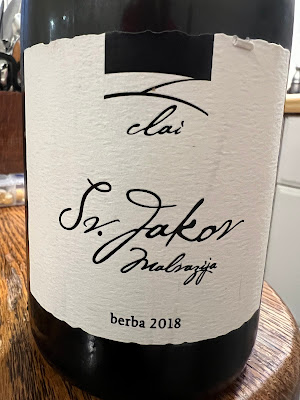
Sunday night, I opted to uncork the 2018 Clai Sv. Jakov Malvazija. You can read more about the winery in my article Clai Winery: Natural Wines in Istria. The Malvazija grapes, which are certified organic, for this wine come from their oldest vineyard, which is about 42 years old. This wine is only bottled in excellent vintages, and the 2016 was the previous vintage bottled before the 2018. The grapes spend two months with skin contact, and later aged for two years in large oak barrels, ending with a 15% ABV. 

It possesses an alluring and complex aroma, and on the palate, the complexity remained, each sip bringing something new and exciting to my palate. Savory, delicious and compelling, a type of wine which is hard to easily describe. Highly recommended!

Concerning Croatian news, I also want to mention that Vinarija Rizman was chosen as the Most Beautiful Vineyard in Europe. I visited the winery in 2019, and I can attest to its picturesqueness. Two other Croatian wineries were also located in the Top Ten, including Kastel Sikuli (at #7) and Vitis Winery (#10). I've also visited the beautiful Kastel Sikuli, but I haven't been to the Vitis Winery. It's fascinating that Croatia has more wineries in this Top Ten than any other country. Italy has two spots on this list, but France, Portugal, Armenia, the UK, Albania, each occupy one spot. 

Wednesday, December 20, 2023

2023: Favorite Wine, Spirit, Sake & Drink-Related Items

What were some of my favorite Wine, Spirit, Sake & Drink-related related items of the past year?

As 2024 approaches, it's time once again to reflect upon the past year, to remember and savor pleasant memories. Previously, I posted three of my food-related Favorites lists as well as my Top Twenty Wines of 2023. It's time now to cover my Favorite Wine, Spirit, Sake and Drink-Related Items of 2023

This is certainly not a complete list but it is more a sampling of compelling and memorable matters I have experienced and posted about over the past year. This is also a purely subjective list, based on my own preferences, and makes no claims about being the "best" of anything. But all of the items here have earned my strong recommendations and I hope you will enjoy them as well. For more wine related items, you can just search my blog posts for the past year.

************

Favorite Discount Wine Stores: Consumers always want bargains, excellent value wines which won't stretch their wallets. You can buy the cheap, mass-produced commercial wines which can be found in almost any wine store or, instead, you can seek out excellent, value wines which put to shame those cheap wines. Certain discount wine stores provide not only excellent prices but also an interesting selection and good service. I want to highlight two such stores which continue, year after year, to do an especially good job, places where I go to seek bargains. Shop at any of those stores and you won't be disappointed.

Favorite Wine Stores: 
This is a small list of wine stores which consistently impress me with their selection and service. Each shop is worthy of your patronage and wine lovers should make the effort to visit these places if you have not done so yet.

Favorite Maine Wine Store: Browne Trading Company sells gourmet foods, including caviar and fresh seafood, but they also have an excellent wine selection. They sell many high-end wines as well as more unique wines, including a very good Sherry selection. It's a place I could easily buy a case of wines, reveling in the finds. Any wine lover who visits Portland should definitely stop here. I also want to note that have an intriguing selection of soy sauces, from Mizunara Whisky Barrel Aged Shoyu to a White Shoyu

Favorite Restaurant Wine Lists: I want to highlight a few restaurants which offer some intriguing and excellent wine lists. 
     Krasi: With the largest Greek wine list in the country, you'll find almost any type of Greek wine you could desire. There are so many excellent options that you might have difficulty selecting a bottle, but the sommelier/wine director, Evan Turner, and staff can help guide you through the intriguing list. Expand your palate and explore the wonders of Greek wine. Plus, Krasi now sells their wines at retail, so if you enjoy a bottle for dinner, you can buy a bottle and take it home with you. This is such a great option, and I bought a couple bottles during my last visit to Krasi. 
    Kosmos: Although their wine list is not as large as Krasi, Kosmos also has an excellent and interesting Greek wine list, which well complements their excellent Greek cuisine. 
    Nightshade Noodle Bar: Their eclectic, well-curated wine list has primarily more natural wines from small producers. There's plenty of interesting options available, and the wines pair very well with their delicious cuisine. The list changes fairly regularly, and there's always something new to tantalize your palate.  

Favorite Wine Dinner: For the second year in a row, my favorite wine dinner was at A Tavola in Winchester. Their Fantasy Fine Wine Dinner was compelling, with excellent wines, two of which made my list of Top Twenty Wines of 2023, and they paired very well with the delicious foods prepared by Chef Carli, from Chatham Scallop Carpaccio to Mortadella Rotolo. A Tavola holds a number of wine dinners each year and you definitely should check them out. For 2024, they have already announced a Bourbon & BBQ dinner to be held on February 28. 

Runner-Up Wine Dinners: There are two other wine dinners in 2023 which are worthy of recognition. First, there was a Greek Wine Dinner with Domaine Costa Lazaridi and Yiannis Distributing at the Ithaki Restaurant. The food was delicious, including Marinated Sardines, Tuna Crudo, Scallops, Beef Kebob, Halibut, and more. The wines were tasty too, including an Assyrtiko which made my list of Top Twenty Wines of 2023,  Second, there was a California wine dinner with Ireland Family Wines at the Coach Grill. From Lobster Bisque to Seared Sirloin, the delectable food paired well with the higher-end California wines. Two of those wines made my list of Top Twenty Wines of 2023,

Favorite Single Country Wine Tasting:  2023 is the 25th Anniversary of the first Uruguayan wines being exported to the U.S. This year, I attended a fascinating media tasting of the Wines of Uruguay, which provided much information about the wine industry in this small South American country. We also got to taste a number of tasty wines, from Albariño to Tannat, including one which made my list of Top Twenty Wines of 2023,  

Favorite Large-Scale Wine Event: In 2023, the Boston Wine Expo returned, under new ownership and at a new venue, the Boston Park Plaza Hotel. It was a smaller more intimate event, and included a Spirits Tasting room and several Wine Classes. I found some excellent wines here, including a number which ended up on my list of Top Twenty Wines of 2023. There were also several food exhibitors, which enhanced the event. I would have liked to see more diversity in the wines, more wines from different countries, and hopefully there will be more in 2024. For example, there was only a single booth of Greek wines and only one of Portugal wines, and I would like to see more such booths. Stay tuned as sooner to the 2024 Expo, I will post an article with my recommendations for booths to visit. 

Historical Drink Articles: Since the start of the pandemic, it's been tough for many food and drink writers and some have simply written sporadically,. For myself, I've continued to devote many hours to researching and writing numerous historical food and drink articles, combing through thousands of newspapers and books. I've especially delved into the origins of numerous foods and drinks, trying to seek out their true origins, and not just accepting the unsubstantiated claims of others. Here are the historical drink articles I completed this past year.

Favorite Whiskey: During the 1850s, Chicken Cock Whiskey was created, and it was a very popular whiskey in the Boston area during the 19th century. However, the distillery burnt to the ground in the 1950s, but the brand was recently resurrected. This new whiskey is made from a mashbill of 70% Corn, 21% Rye, and 9% Malted Barley, and it bottled at 90 proof. With a pleasing golden-brown color, it has an appealing and complex nose, with notes of caramel, vanilla, spice and more. It's smooth on the palate, with only a touch of heat, and isn't as sweet as many bourbons due to its high rye percentage. The taste possesses a complex melange of caramel, vanilla, butterscotch, dried fruit, and more with a lengthy, spicy finish. It's an excellent sipping Bourbon, and each sip will bring something new and delicious to your mouth. 

Favorite Irish Whiskey: I tasted the four whiskey expressions from The Busker Irish Whiskey, and my favorite was The Busker Single Pot Still Irish Whiskey. It was produced in copper pot stills, and then matured in ex-bourbon and sherry casks. This was an impressive whiskey, especially considering the price point ($33), delivering a complex, delicious, and alluring taste. On the palate, there's an intriguing melange of flavors, each sip bringing something new to your mouth. There are floral notes, touches of honey and caramel, hints of nuttiness, and plenty of pepper and spice, especially on the lengthy, satisfying finish. It's rich and smooth, perfect neat or on the rocks. It's a whiskey to slowly sip and enjoy, to savor each intriguing taste

Favorite Main Cocktails: At the Brown Cow in Portland, Maine, a casual burger spot and cocktail bar, I was impressed with two of their cocktails. The Angel Fire was made with mezcal, amaretto, madeira, Jamaican rum, and charred apricot bitters. This was a very well-made and balanced cocktail, with a complex blend of flavors, with the mezcal being the most prominent taste. The Before Sunset was made with cynar, bourbon, averna, lemon, and Islay scotch. Another excellent, complex and well-balanced cocktail, with a nice smokey edge to it. I'd return here just for their cocktails.

Favorite Greek Cocktail: At the opening of Bar Vlaha in Brookline, I was thoroughly impressed with the Ode to Pan, a delicious concoction that will remind you of a Gin Bloody Mary. The Ode to Pan is made with Moletto's Tomato Gin, lemon, celery, mastic cucumber soda, and heirloom tomato cubes. I watched one of the bartenders prepare this cocktail and it was quite an involved process. It was such a refreshing and delicious drink, lighter than the typical Bloody Mary, with a prominent tomato flavor, accented by cucumber and lemon notes. The gin was noticeable without being overpowering, and the tomato ice cubes were visually beautiful, and took a while to melt, leaving you a thicker tomato base once the cocktail was drank. 

Favorite Junmai Sake: The Imada Shuzo Fukucho "Forgotten Fortune" Junmai ($35-$40) is produced by Miho Imada, a female Toji, who is also the owner of the brewery. The sake is produced from Hattanso sake rice, an heirloom breed which was nearly extinct, and it was polished down to 70%. It also has a 15% ABV, a SMV +3, and the label states it is best served slightly chilled. It is said to pair very well with oysters, as the Hiroshima Prefecture has the most amount of oyster beds in Japan. I found this Sake to be complex and pure delicious, with tasty flavors of melon and pear, a dominant earthiness and good acidity. Silky smooth, with a fuller body, and a lengthy, satisfying finish. It paired very well with a variety of foods, from raw octopus to grilled chicken skin. 

Favorite Junmai Ginjo Sake: The Heiwa Shuzou "Kid" Junmai Ginjo Hiyaoroshi ($39) is a type of Sake, hiyaoroshi, which is made specifically for the autumn. This sake is made with Gohyakumangoku rice that was polished down to 55%. They use a natural water source, the Koyasan Nansui, which is said to be "soft and luscious." It also has a 15% ABV, a Sake Meter Value (SMV) of +1.5, and an Acidity of 1.7 (making it more acidic than average). The label states that it can be served chilled, warmed or at room temperature. It was a delicious Sake, with a soft and rich mouth feel, but crisp acidity balancing the richness. It was fruity, with tastes of banana, citrus, apple, and hints of raspberry, and also had some steamed rice flavors. It was rich in umami, especially on the finish, and made for an excellent pairing with the fatty salmon. Definitely a heartier Sake for the cooler Autumn weather, although it would work well in the Winter as well.

Favorite Sake Rant: Especially relevant this winter, I previously ranted that people should Drink Warm Sake! Most premium Sake is best when serve slightly chilled, however there are plenty of exceptions. Sake shouldn't be served as hot as you would drink a glass of tea. It should be more gently warmed, although it can be served at a range of warmer temperatures, with each point in that range presenting a slightly different taste profile. In the winter, warm Sake can be very satisfying, presenting a unique flavor profile, and more people should embrace it. Just remember not to see it too hot, like you unfortunately find at many restaurants.   

Favorite Sake Educational Resource: For some of the latest and most fascinating current information about Sake, you need to read the Sake Industry News by John Gauntner. Each twice-monthly issue contains numerous intriguing news articles, sure to interest all Sake lovers, and with information you would be hard pressed to find elsewhere. I've learned plenty from this newsletter and eagerly look forward to each new issue. There's not enough Sake news available out there, and Gauntner is filling a much-needed niche. If you're interested in Sake, you definitely should subscribe. 

What were some of your favorite Wine, Spirit, Sake & Drink-related items this year?

Friday, December 15, 2023

2023: Favorite Food-Related Items

What were some of my favorite food-related items of the past year?


Let me continue my lists of my best recommendations and favorite restaurants and food items of 2023, addressing my Favorite Food-Related Items of the past year. This is certainly not a complete list but it's more a sampling of memorable food items I've experienced and/or posted about over the past year. This is also a purely subjective list, based on my own preferences, and makes no claims about being the "best" of anything. But all of the items here have earned my strong recommendations and I hope you will enjoy them as well. For more food-related items, you can just search my blog posts for the past year.

Favorite Culinary School:
 NECAT is a local culinary school which trains people from challenging backgrounds, from ex-convicts to recovering addicts, from the homeless to the chronically unemployed. NECAT fills an important need for culinary help while helping numerous people achieve a better life. It is such a worthy school, helping to transform lives, and it really touches my heart. It helps individuals while also helping the community, and I continue, year after year, to try to raise awareness of NECAT so that its good work can continue and even expand. It's one of my favorite causes and is well worthy of your continued support.

Favorite Overall BakeryLulu's Bakery & Pantry, in Salem, offers a wide variety of sweet and savory treats, including a number with a West Virginia connection. The owners, Nikki & Jim, have excellent culinary resumes, and evidence the passion I seek. Pepperoni rolls, corn bread, biscuits, chocolates, cupcakes, muffins, sandwiches, and so much more. Their large Whoopie Pies are some of the best I've ever eaten, with almost a chewy brownie-like cookie filled with a sweet, creamy filling. Any time I visit the Salem area, I try to stop here to pick up something to take home. Highly recommended!

Favorite Bread Bakery: Mamadou's Artisan Bakery, in Winchester, is my favorite spot for fresh, delicious breads, especially their Sesame Semolina. They also produce excellent Croissants and Chocolate Chip cookies. It's a small take-out spot, open Wednesday to Sunday, and run by very nice people. Get there early each day for the best selection.

Favorite Donut Shop: Donuts With A Difference, in Medford, is an old-school donut shop that still makes their donuts in-house. They make more traditional donuts, and not the fancy ones available at some of the newer donut shops. Their donuts are fresh and delicious, and frequently even still warm. They are also very inexpensive. I also love their Coffee Rolls! 

Favorite Japanese Food Market: Maruichi (with locations in Arlington, Brookline and Connecticut) is an excellent Japanese grocery store, and I usually go to their Arlington location. It offers a diverse selection of Japanese foods, fresh and frozen, as well as plenty of fresh vegetables, including some Asian varieties. Their meat selection is compelling and they have a superb selection of sushi-grade fish. You can get sushi meals, onigiri, and other dishes made in-house. Plus, there's a wide range of Japanese foods, from tea to sauces, candy to chips, breads and pastries, and much more. And their prices are generally very reasonable. 

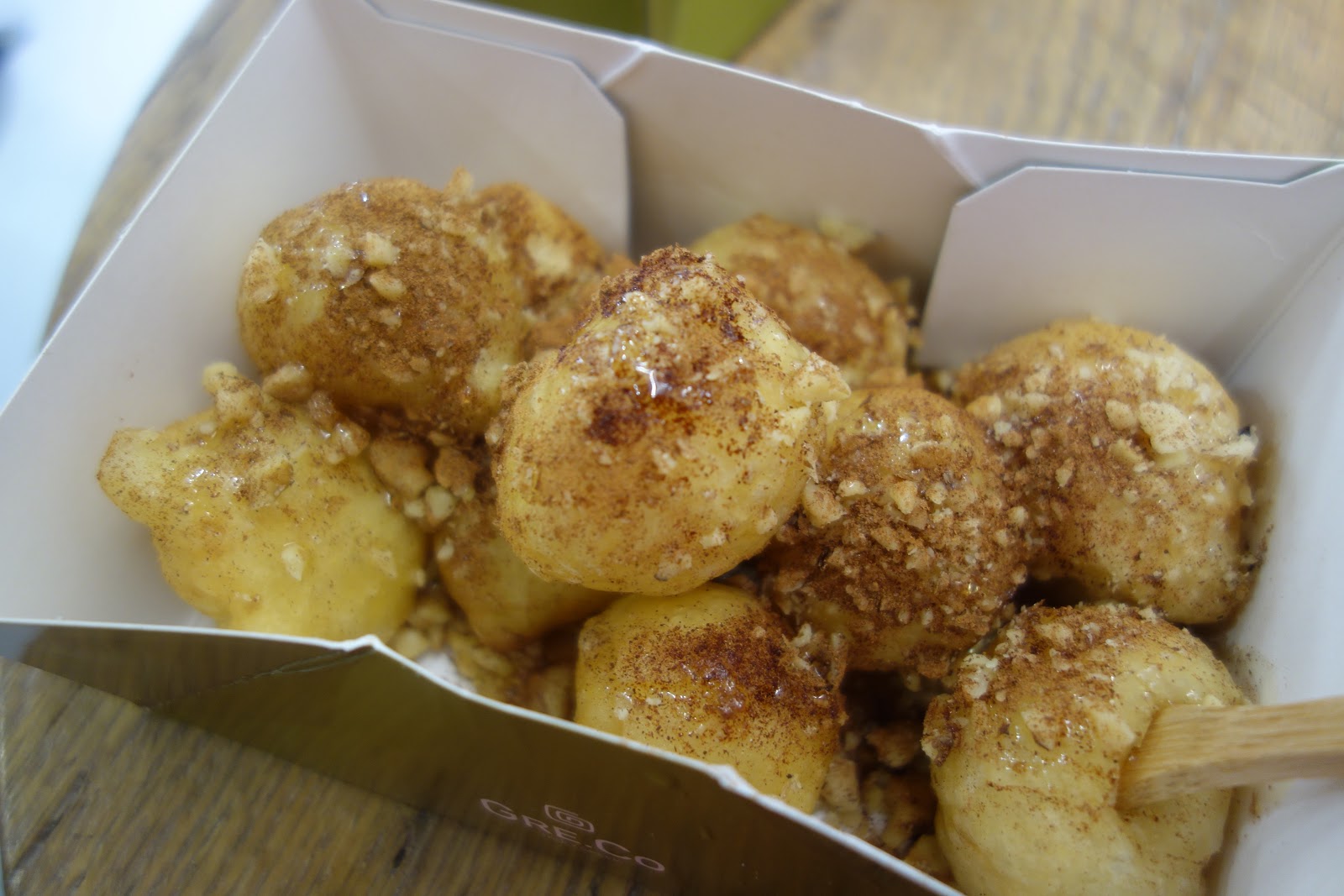
Most Anticipated New Restaurant: From the Xenia Hospitality Group, which is behind Krasi, Bar Vlaha, Greco and Hecate, will be opening a new location of Greco at the Burlington Mall in 2024. Greco is a fast casual restaurant, specializing in gyros and loukoumades (Greek donut holes). I love their food and it will be great to have this option north of Boston. 

Restaurants I Want To Visit in 2024: At the top of my list is Simcha, located in Sharon, which serves modern Israeli cuisine. The menu intrigues me, and I've heard much positive press about the restaurant. I was supposed to dine there recently, but unforeseen circumstances made me have to cancel the reservation. But, I hope to dine there soon. I also want to dine at Bar Vlaha, in Brookline, which serves Greek Vlach cuisine with Greek wines. I attended their opening, which was excellent, but still haven't made it in for dinner. It's also a very popular restaurant, so reservations are highly recommended. And based on some recent comments from friends, I'm intrigued to visit Mahaniyom, in Brookline, a Thai Tapas Bar. Their Drinks and Food menus have made intriguing options. 

Food History Articles: Since the start of the pandemic, it's been tough for many food writers and some have simply written sporadically, especially those who concentrated on restaurant reviews. For myself, I've continued to devote many hours to researching and writing numerous historical food articles, combing through thousands of newspapers and books. I've especially delved into the origins of numerous foods, trying to seek out their true origins, and not just accepting the unsubstantiated claims of others. Here are the historical food articles I completed this past year. 


Favorite Old Tradition (Which Needs a Revival): In 2022, while researching some other items, I stumbled upon a fascinating old Thanksgiving tradition, having donuts on your Thanksgiving table! This tradition extends back at least to the 1830s, and lasted for over 100 years, until the 1940s. It apparently started in New England, but expanded across the entire country, even to Hawaii. It's time to revive this tradition! For the last two Thanksgivings, I've been having donuts as part of my Thanksgiving table and have been encouraging others to do the same, some who have also adopted this tradition. Hopefully in 2024, even more people will embrace this old tradition. Who wouldn't love donuts on Thanksgiving? 

Saddest Restaurant News: The Tasting Counter, which was one of my Top Three Favorite Restaurants, had to close this summer, due to issues with their landlord. As I've said before, Chef Peter Ungár is one of the best chefs in the Boston-area and I eagerly hope that he will open a new endeavor in the near future. The Boston restaurant scene is lesser without his talents. I know he has been considering his options, and it will be great to see what he eventually decides to do.  

**********

Maine Trip: This past year, I traveled to Maine, to the Biddeford/Portland region, for a weekend vacation, and there were a number of culinary highlights, including:
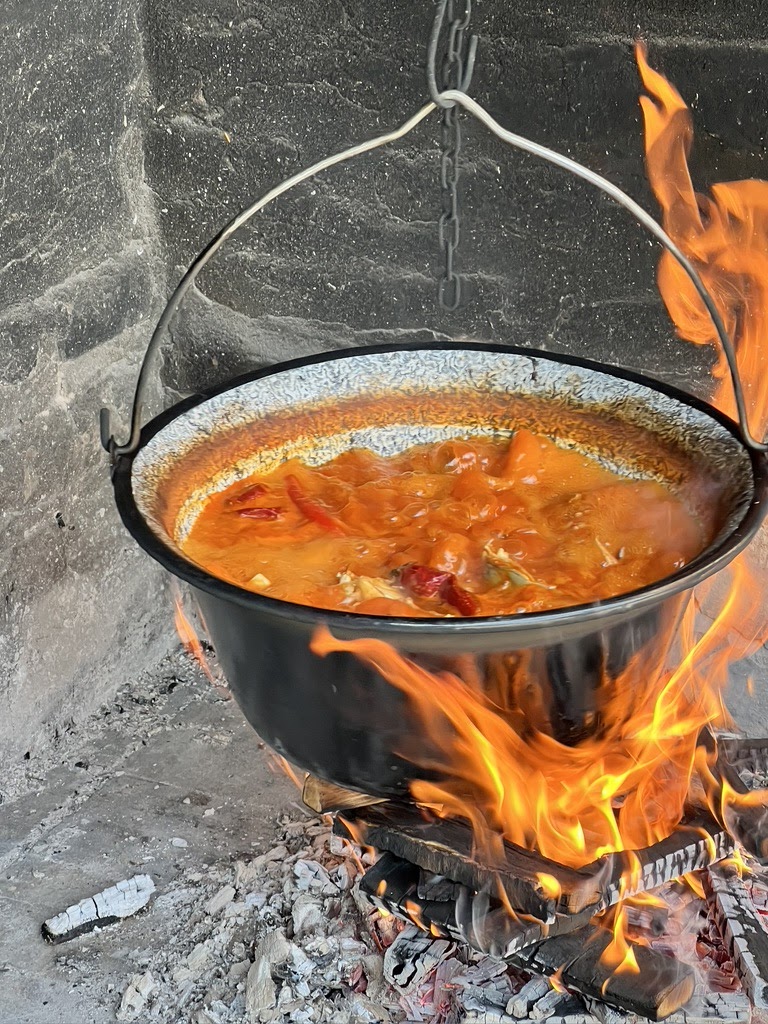
Favorite Croatian Dishes: In the Spring of 2022, I spent two weeks in Croatia, traveling across the country, enjoying its food, wine, spirits, culture, history, and more. I ended up writing about 50 articles about my experiences, and some of those articles were posted in 2023. That included my Top Ten Dishes From My Croatian JourneyFiš paprikaš (pictured above), Mali Ston OystersTruffle Risotto, Samoborska kremšnita, and more. Croatia should be on your short list of countries to visit in 2024. 

Portugal Trip: I traveled to Portugal this past October, spending a week exploring the regions of the Vinho Verde and the Douro, as well as Porto and Vila Nova de Gaia. Although I'm still writing about my experiences on this trip, I'll highlight here some of my favorite culinary experiences which I have already covered.
What were some of your favorite food-related items this year?

Tuesday, February 28, 2023

Rossi Teranino: A Fine Istrian Liqueur

As I previously mentioned, while I was in Zagreb, during my two week tour of Croatia, I stopped at L'Erotic Fruit & Spices Shop, and purchased a couple Istrian liqueurs. One of those was the Rossi Teranino (about $20), which was produced by the Rossi Winery & Distillery, located in the village of Vižinada in Istria, a short distance west of Motovun.

The history of Rossi extends back to 1885, when Federico Rossi, who was born in Friuli, bought some land, planting Teran and Malvazija. His son, Marco, continued to plant vineyards, as well as other fruits and vegetables. In addition to making wine, Federico also produced brandy. When Italy took control of Istria after World War I, they prohibited the production of brandy and other strong alcoholic beverages, but that didn't stop Federico, who continued to make it covertly. Today, the family continues to make wine and liqueurs, although now it is all legal. 

Teranino is a traditional liqueur made in Istria, usually produced from pomace or fruit brandy, as well as red wine made from the indigenous Teran grape. Teranino is also usually sweetened and flavored with various botanicals, each producer using their own unique blend. With a 18-22% ABV, it is commonly served chilled, as either an aperitif or digestive, although it may also go well with chocolate or berry desserts. 

The Rossi Teranino is made with an unknown combination of botanicals, although you might be able to identify some of them from the taste. On the nose, there are elements of blueberry and black cherry, with a hint of spice notes. On the palate, it is smooth and sweet, although well balanced with good acidity, with a complex blend of flavors, including blueberry, black cherry, vanilla, cinnamon, and a touch of clove. There is a mild earthiness as well, especially on the finish. Quite delicious, it would pair well with a variety of desserts, or make for a nice after-dinner drink. 

Don't just explore Croatian wines, but also check out their liqueurs and spirits.

Monday, February 13, 2023

My Top Ten Dishes From My Croatian Journey

During my two week tour of Croatia, I enjoyed plenty of delicious food, in every region that I visited, from regional specialties to exquisite seafood. I created this top ten list to include dishes which I not only enjoyed immensely, but which I also found to be particularly compelling for various reasons. They might be especially delicious or something more unique, but all stand out for some particular reason. These are the type of dishes I would order again and again, and which I would highly recommend.

This is certainly not a complete list of all the delicious food I ate in Croatia but it's more a sampling of memorable dishes I experienced. It is also a purely subjective list, based on my own preferences, and makes no claims about being the "best" of anything. However, all of the items here earn my hearty recommendation. Please also note that this list is not in any order of preference, so all the dishes receive equal accolades. 

At the Bota Šare restaurant in Zagreb, we enjoyed some excellent seafood, including three dishes with the famed Mali Ston Oysters, which are special all on their own. I was especially impressed with their Tempura Oysters, which had a delightfully light and crispy batter, encasing the delicious oysters. I'm very picky about Tempura, and this was an excellent version.

Also while I was in Zagreb, I dined once again at the Agava Restaurant, and was enamored with their Risotto, made with sheep cheese from the island of Pag, thyme and pear. It was such a delectable dish, with perfectly cooked rice, an intriguing, slightly briny taste of cheese, and a little sweetness from the pear. Well balanced and delicious, this was such a satisfying dish. 

The city of Samobor is located about 20 kilometers west of Zagreb, and one of its claim to fame is a local dessert, Samoborska kremšnita. It has a puff pastry top (and bottom), is topped with powdered sugar, and filled with custard cream. It's believed that this kremšnita recipe was created in the 1920s by confectioner Đuro Lukačić, who previously worked in Vienna and Budapest. In January 2021, Samoborska kremšnita received the status of "intangible cultural property" and was entered into the Register of Cultural Goods of the Republic of Croatia. At a cafe in the Kavana Livadić, I enjoyed a good-sized piece of Samoborska kremšnita and it was absolutely delectable. The puff pastry was flaky and crisp, while the custard filling was rich and flavorful, as well as only mildly sweet. It was a lighter dessert than expected, and I easily understand its popularity. The next time I visit Croatia, I want to sample more examples of this delicious dessert.


In the region of Slavonia, one of their regional specialties is Fiš Paprika, a spicy seafood stew made with paprika. At the Josić Winery & Restaurant, I first saw and smelled the aromatic stew cooking at an outside fire. Fortunately, we were able to sample some of the stew as well, which was made with a fish they called smudge, which may be a nickname for some other type of fish, possibly a type of river trout. The broth was amazing, complex, flavorful and spicy. The tender home-made pasta went well with the broth and the fish was tender and delicious. 
 

The Istrian region is well known for Truffles, so while we visited that region, we enjoyed several dishes with added truffles. One of my favorites was at the Konoba Fakin, a Risotto with boletus, black truffles, and Istrian prosciutto chips. What an amazing dish, with perfectly cooked risotto, creamy and flavorful, with earthy notes from the mushrooms and the compelling aromas of the truffles. And those prosciutto chips were crispy, meaty and salty. A well balanced and compelling dish.

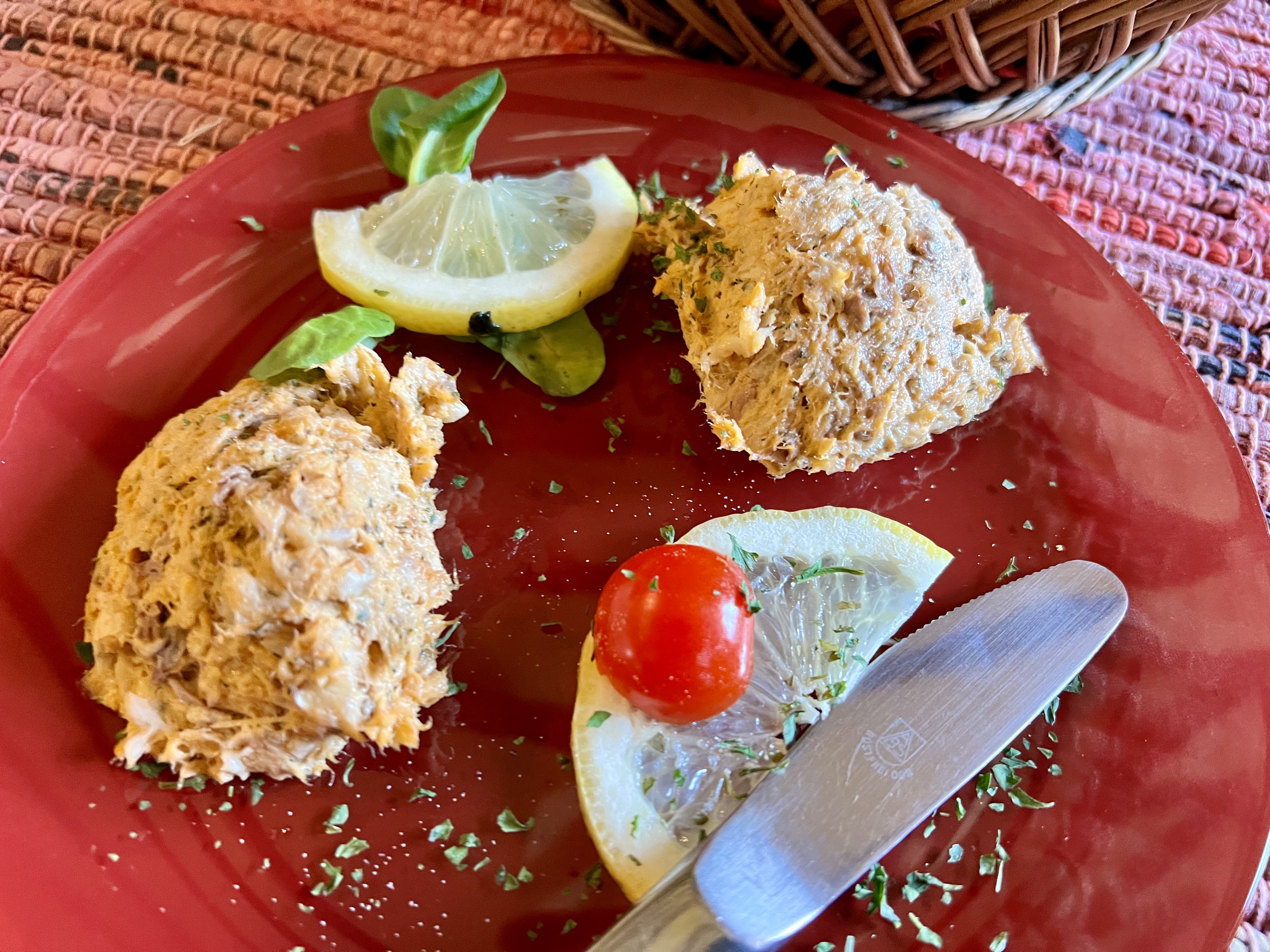
In the region of Slavonia, we visited Vina Antunović for a wine tasting. On the table were plates of home-made Fish Pâté, made with fish from the Danube, and it was delicious, especially smeared on some fresh bread. It was flavorful, spiced well, and with a pleasing taste of the river. It was just a small snack to accompany the wine tasting, but it certainly made an impression. 

Also at the Josić Winery & Restaurant, I have to give special kudos to one of the desserts we enjoyed,  a traditional Slavonian dish known as Tačkrle. These are Ravioli, filled with jam, in a walnut sauce with hibiscus. Pasta for dessert? This was such a unique and delicious dessert, with all of the flavors and textures working so well together. We need more dessert ravioli. 

In Istria, we spent a little time in the town of Poreč, and I stopped for a bite at Fora Le Parte. In Istria, you'll find Boškarin, an ancient breed of cattle that originated in Istria. Like Waygu, Boškarin began as draft animals, but when tractors eventually took over, there was little need for Boškarin. The breed nearly died out until some dedicated breeders brought the population back from extinction. Now, it's a gourmet delicacy. I sampled the restaurant's Boškarin Carpaccio, which was exquisite, silky and flavorful, with a rich, beefy taste. And the cheese was a nice addition. 

In the town of Skradin, in the region of Dalmatia, we dined at the Zlatne Skoljke Restaurant and our first course was Skampi, Mussels and Noah's Ark Clams, in a scrumptious white wine and garlic broth. The seafood was fresh and delicious, and the broth was excellent, as well as the perfect place to dip bread. I could have been satisfied with simply enjoying lots of this shellfish. 

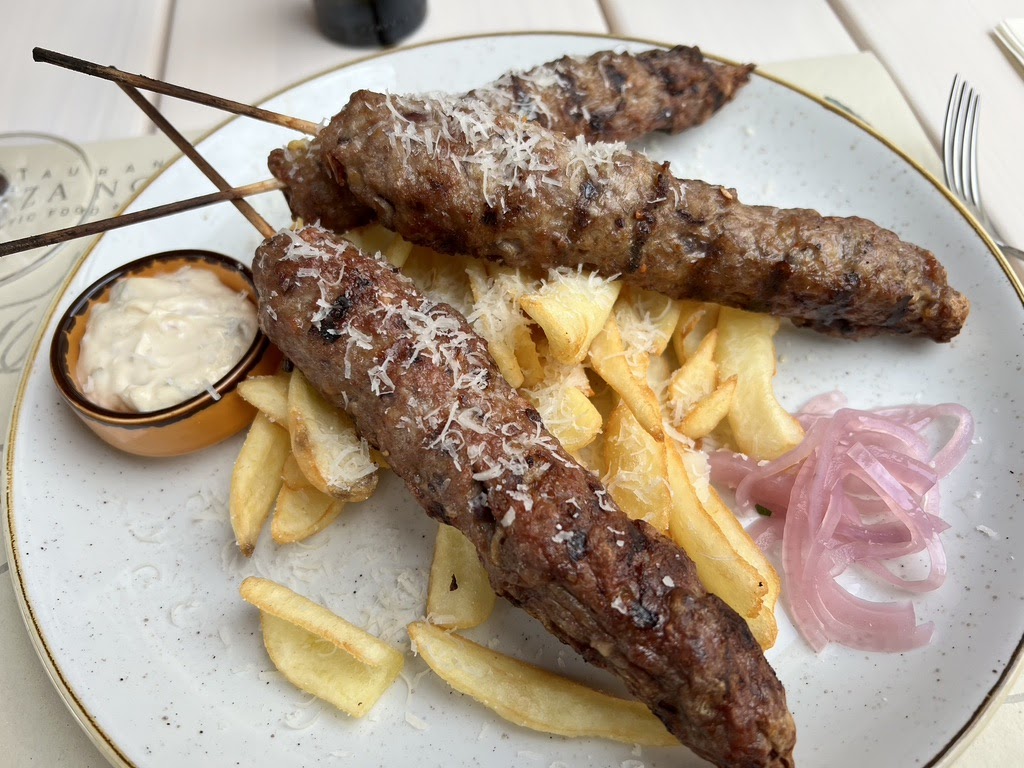
Finally, in the city of Pula in Istria, I had lunch at Piazza Nova, delighted by the Šiš Ćevap, spicy minced beef with French fries. Ćevapi are common in southeast Europe, and the type of meat used varies from country to country. I received three larger skewers of meat, which were moist, tender and flavorful. A hearty lunch for meat lovers. And the French fries were almost flat, but nicely crisp, a fine addition to the dish.

Do you have any favorite Croatian dishes?

Wednesday, February 8, 2023

Korak Family Estate: A Return to Plešivica ("Croatia's Champagne")

Near the start of my two-week tour of Croatia, we spent some time exploring the wine region of Plešivica, which is located less than an hour from the city of Zagreb. Plešivica is a very small, continental wine region comprised of about 2,300 hectares of vineyards and around 35-40 wineries. Most of the wineries in this region are small, family-owned, almost all possessing less than 10 hectares of vineyards. 

Plešivica is sometimes referred to as "Croatia's Champagne," as the region is famed for its sparkling wines and its calcareous soils resembling those found in the Champagne region. The vineyards are mostly planted with international varieties, such as Chardonnay, Pinot Noir, Riesling, Sauvignon Blanc, and Syrah. About 70% of their vineyards are planted with white grapes, and the grapes commonly have high acidity. 

We made a stop at the Korak Winery, which is well known for its quality Sparkling Wines. Back in 2019, on my first trip to Croatia, I visited this winery, so you should check out my prior article, Korak Family Estate: Plešivica, Sparkling Wine & Riesling, for more information and background about this winery. 

As we started our tour, we enjoyed a glass of the Korak Sparkling Rosé Nature, made from 100% Pinot Noir, which I loved back in 2019 and I was equally as enamored this time. This wine was aged on the lees for 3 years and has no dosage. I previously referred to it as a "hedonistic pleasure" and I'll stand by that characterization. Highly recommended!


We sat inside at their tasting bar, sampling a number of their wines and enjoying some home-made snacks. There was sausage with garlic, speck, and smoked pork shoulder, all of the meats having been made on the premises by the father. There was also homemade cultured butter, 2 goat cheeses (1 year and 2 years old), and fresh sourdough bread. Everything was quite delicious. 

The 2016 Korak Blanc de Blancs Sparkling Wine was produced from 100% Chardonnay, which underwent a quick pressing and fermentation, and spent about 4.5 years on the less, without any dosage. It was very dry, with crisp acidity, fresh flavors of apple, a yeasty element and a backbone of minerality. Delicious, with tiny bubbles, a lengthy finish, and a refreshing taste. This is serious sparkling wine.

The 2021 Korak Sauvignon Blanc Klemenka, at 12.5% ABV, spent about six months in the barrel. It was very similar to my previous tasting of the 2017 vintage, being fresh and dry, with bright citrus and grapefruit flavors, and a minerality backbone. The style was more akin to French rather than New Zealand Sauvignon Blanc. 

The 2020 Korak Laškorec Rajnski Riezling ("Rhine Riesling), from an organic vineyard, spent about six months in large barrels of Slavonian oak. I previously tasted the 2018 vintage, and believe this vintage is even better. The nose was very aromatic, and on the palate it was dry, complex and intriguing, with spice notes, flavors of citrus, a strong minerality, and a lingering finish. This vintage was more complex than the 2018, and an example of how Croatian wineries can produce excellent Riesling.

The 2019 Korak Laškorec Chardonnay Sur Lie was fermented in small French barrels, sat on the lees for a year, and then was aged in large oak barrels. I previously enjoyed the 2017 vintage, and once again the wine presented citrus and apple flavors, with a hint of smoke, and a pleasant richness. Definitely one of the better Chardonnays I tasted while in Croatia. 

The 2019 Korak Križevac & Cimbuščak Pinot Crni, with a 13.5% ABV, is made from 100% Pinot Noir. Most of their Pinot is used to make Sparkling Wines but we were told it has great potential for still wines as well. They have two vineyards of Pinot, from 1998 and 2003. This wines was aged for 1 year in small French oak and then 1 year in Slovenian oak. I previously tasted the 2017 vintage, and found the 2019 vintage to be even better. It was elegant and delicious, light-bodied and with a complex melange of cherry, raspberry, subtle spices, and a hint of earth. Well balanced, good acidity, and a lengthy finish. Highly recommended. 

The final wine was unique, a 2018 Amber wine inspired by "In Search of Lost Time" by Marcel Proust. The wine was an intriguing field blend of grapes, many old vines, including Šipelj, Belina, Plavac Zuti, Rizvanac, Grasevina, Veltliner, Silvanac, and Traminac. The grapes were macerated for about 60 days, natural yeasts were used, and there was no added sulfur. Only 500 bottles were produced. This was an amazing wine, complex and well balanced, with such a depth of flavor. Tannic, herbal notes, subtle spices, dried fruits, minerality, and much more. Great acidity and a long, lingering finish. Each sip delights the palate, bringing something new with each taste. One of the more unique wines I tasted in Croatia. Highly recommended!

My return visit to Korak was as impressive as my prior trip, and some of their wines were even better this time. Their Sparkling Wines are excellent, quality bubbly which would please any wine lover. And their Amber wine was amazing. This winery should definitely be one of your destinations if you visit Croatia. 

(Please Note: All of these Photos are courtesy of Todd Godbout.)

Tuesday, February 7, 2023

Ten Reasons To Drink Croatian Wine (Updated)

"The wines of Croatia...are very good and justly prized."
--The Evening Sun (MD), August 19, 1965

Wine is integral to the culture of Croatia, and they consume much of what they produce, exporting only about 6% of their total production. In addition, they import about four times as much wine as they export, as they obviously desire even more wine to drink. Indicative of their great love for wine, Croatians drink about 22 liters of wine per capita, making them the third largest consumer in the world.

The history of wine in the region of Croatia extends back about 2500 years, even before the time of the ancient Greeks colonists, but its modern wine industry is relatively young, still recovering from when they achieved their independence from Yugoslavia in 1995. The Croatian wine industry has accomplished much in the past approximately 25 years, and they are currently producing plenty of excellent wines, and have much potential. Although Croatia has become a hugely popular tourist destination, its wines still need much more recognition around the world.

Croatian wines, primarily Dalmatian wines, were first exported to the U.S. over 140 years ago. Currently, based on some of the latest statistics I have seen, Croatian wine exports to the U.S. are small, generally under 10,000 cases annually, but that is slowly changing. Thus, it's likely difficult for many people to find Croatian wines at their local wine store, but you should ask them to carry some. 

There are some positive changes that have been occurring. In the Boston area, we're fortunate to have Croatian Premium Wine Imports (CPWI), a company which in the last several years has been bringing numerous Croatian wines to local wine shops and restaurants. There are over 80 Croatian wines available on their website and they also ship to most states across the U.S. Thus, even if your local shop doesn't carry Croatian wine, you can still acquire their wines from CPWI. There are also a couple smaller U.S. importers of Croatian wine. 

Prior to my first journey to the Republic of Croatia, to the region of Dalmatia, in September 2019, I had little familiarity with Croatian wines, having previously tasted only a couple, though I enjoyed those I did. During my visit, I had the opportunity to taste close to 150 Croatian wines, and I found many reasons to enjoy these fascinating, diverse and delicious wines. After that trip, I continued to taste other Croatian wines as well. 

In May/June 2022, I made my second visit to Croatia, exploring Dalmatia, Slavonia and Istria, touring 28 wineries and tasting about 350 wines, as well as some Croatian spirits and liqueurs. Overall, I've now tasted approximately 600 different Croatian wines, so I have a very good foundation for understanding these wines. It's clear to me that all wine lovers, no matter what their preferences, will find something to love in Croatian wines.

Let me provide you a list of Ten Reasons (actually Eleven) why you should experience and drink Croatian wines, why you should seek out these compelling wines. I often encourage people to be adventurous with their palates and I'm doing so again, asking you to sample Croatian wines, to give them a chance. Once you taste them, I strongly suspect you'll understand why I find them to be so compelling and you will become a convert as well.

In addition, if you desire more information about Croatia and their wines, if you want specific wine reviews, check out my compilation page, All About Croatia. That page has links to over 80 articles I've written about Croatia, covering wine to travel, food to history. And if you have any specific questions about Croatian wines, feel free to email or message me. 

Now, onto the Ten Reasons To Drink Croatian Wine.....

First, Croatian wine has a lengthy and fascinating history.
Wine making in Croatia extends back at least 2,500 years, prior to even Greek colonization, and wine was an integral element of ancient Croatian civilization. Agatharchides of Cnidus, a Greek historian and geographer from the 2nd century BC, claimed that the best wine in the world was from Vis, a Croatian island in the Adriatic Sea that had been settled by the Greeks. The Stari Grad Plain, on the island of Hvar, was colonized by Greeks during the 4th century B.C. Vineyards have been continuously planted here for over 2400 consecutive years and it's now a UNESCO World Heritage site. Ancient Romans contributed significantly to wine production in Croatia. 

Over the centuries, Croatia has also been invaded numerous times, by various conquering nations, yet they have somehow always found a way to continue their traditions of viniculture. In addition, some of the 130 or so indigenous grapes of Croatia may have even been around since the days of ancient Greece. Thus, each sip of Croatian wine brings with it a sense of history, a connection to the ancient past. Their modern wine industry may be young, but its roots extend back over two millennia.

Second, Croatia has many unique, indigenous grapes.
There are over 130 indigenous grapes in Croatia, though only about 40 are used regularly on a commercial basis. White grapes such as Bogdanuša, Debit, Graševina, Grk, Malvazija Istarska, Malvasia Dubrovačk, Maraština, Pošip, and Vugava. Red grapes like Babić, Dobričić, Plavac Mali, Teran, and Tribidag. They present unique flavors and aromas, though commonly offering some familiarity. Different regions showcase different grapes, such as Dalmatia (the home of Plavac Mali and Pošip), Slavonia (where Graševina dominates), and Istria (the home of Malvazija Istarska and Teran)

I've had the opportunity to taste many of their indigenous grapes, and have been impressed. Any wine lover seeking to broaden their palate, to experience something new, should seek out such unusual grapes which are often found only in Croatian wines. You never know when you might find a new favorite grape. I love exploring unusual grapes and Croatian wines allow me to further enhance my experiences. 

Third, Croatian grows international grapes as well.
Besides their native grapes, Croatia grows a wide variety of other grapes as well, including the most popular international grapes (from Cabernet Sauvignon to Chardonnay). Many regions grow these international grapes to appeal to a certain consumer segment who prefers to drink only what they know. Although I prefer Croatian wines produced from native grapes, I found numerous examples of excellent wines made from non-native grapes, especially Pinot Noir, Cabernet Franc and Riesling. 

In addition, in Croatia you can find some less common grapes from Italy, Austria, and elsewhere. For example, in Slavonia, Blaufränkisch is known as Frankovka, and produces delicious Rosé and Red wines. At Pink Day, a large Rosé tasting event, The Frankovka Rosé really impressed me. You can also find Austrian grapes in Croatia such as Rotgipfler (known as Zelenac) and Roter Veltliner. You can even find Italian Nebbiolo in Croatia! A number of winemakers have been experimenting with a variety of grapes from other countries, seeking which ones perform best in Croatian soil.

Fourth, you're probably already familiar with one important Croatian grape.
In Croatia, where the grape originated, it's known as Crljenak Kaštelanski, Pribidrag, and Tribidag. However, the grape has traveled from its place of origin, and in Italy it became known as Primitivo while in California it became known as Zinfandel. Yes, Zinfandel which is often seen as an "All American" grape, actually originated in Croatia!

It wasn't until 2001 that DNA testing confirmed these facts, though many had long suspected a Croatian connection. Within Croatia, Tribidag, which derives from Greek words meaning "early ripening," was first mentioned as early as the 15th century. Tribidag has been seeing a renewed renaissance within Croatia, especially in Dalmatia, and more and more wineries are starting to produce wines from this grape. Wouldn't you love to try a wine made from the original "Zinfandel?"

Fifth, Croatian wines are diverse.
Croatian wineries produce a myriad of different types of wines, including Sparkling, White, Skin-Contact Whites, Rosé, Red, Amphora, Amarone-Style, Dessert wines and more. These wines come in a wide variety of flavor profiles and styles so there is something available to appeal to any personal preference. You'll find plenty of easy drinking wines as well as more serious and complex wines, and so much more between these two. You'll also find some ultra-geeky and experimental wines, which will tantalize your mind and palate. 

In addition, there are a number of different terroirs in Croatia which further leads to the diversity in their wines. I had the opportunity to sample so many of these different styles of wine, and they were comparable in quality to wines from all over the world. For example, some of their Sparkling Wines will remind you of Champagne while some of their Amber wines are as good as any found in Georgia or elsewhere. Croatian wines are multi-dimensional and there is much to discover in that multitude. No matter what kind of wine you enjoy, you'll find a Croatian wine that will satisfy you and might even become a new favorite.  

Sixth, Croatian wines can age well
.
Most wine, from anywhere in the world, is not produced to be aged, and most consumers drink their wine within days of its purchase. However, some wines can age quite well, sitting in your cellar for years, slowly evolving over time. That aging potential is one of the reasons that certain grapes, like Cabernet Sauvignon, Chardonnay, and Nebbiolo, are so revered. Such wines evolve over time, acquiring different aromas and flavors from when they are first bottled. It can be an amazing experience to taste a wine at different aspects in its evolution, over the course of a number of years.  

In Croatia, some of their native grapes possess that potential as well, such as red grapes like Plavac Mali, Teran, Tribidag, and Babić, and white grapes like Graševina, Malvazija Istarska, and Pošip. I've tasted stellar examples of these wines, including some older vintages, which were created to be age-worthy. Some wineries had wines in their cellar that were produced in the 1940s, and which were still drinkable. Croatia can make serious, age-worthy wines which will impress. 

Seventh, Croatian wines are made for food.

As Croatian wine is such an integral aspect of their culture, it is obviously a natural pairing for food, possessing a versatility that extends into many cuisines. Croatians commonly drink wine with food so it is produced specifically to be accompanied by food. At basically every wine tasting I went to in Croatia, food was offered with the wine. If you purchase a Croatian wine, you can be almost assured that it will pair well with some type of food. Dependent on the type of food, there is also probably a type of Croatian wine which will work well with that dish, from seafood to steak, pasta to chicken. 

For example, you could enjoy an easy drinking Plavac Mali or Teran with a burger or pizza, or a more powerful Plavac Mali or Teran with a ribeye steak. You could enjoy a Pošip or Graševina, with raw oysters or fried haddock. Croatian cuisine is diverse, from pasta and truffles in Istria to fresh seafood in Dalmatia, and so is their need for diverse wines to accompany their different foods. The wines of each region pair wonderfully with the local cuisine. 

Eighth, buying Croatian wines improves lives. 
As I've written previously, it can be important to be a Wine Activist. Peter Weltman, a sommelier and writer in San Francisco, summed it up well by writing, "With our wine purchases, I believe, we can help advance regional peace, provide support for farmers in war-torn regions, have a voice in geopolitics, and aid in economic recoveries." In addition, he stated, "Wine transcends borders and bridges cultures, and it can be used to improve lives if we make the right purchases." 

It's only been about 25 years since Croatia prevailed in a terrible war, and attained its independence. Its young wine industry certainly needs support, as does the entire country, and buying Croatian wines is one way to help them. It's probably not something you normally think about when buying a bottle of wine. but maybe you should consider it more often. Buy Croatian wine, give your support to Croatia and drink some excellent wine. Everyone wins.

Ninth, nearly everyone will enjoy Croatian wines.
There is no reason why anyone couldn't find a Croatian wine that they enjoy. Many of their wines are often easy drinking, absent of strange and off-putting flavors. They will seem familiar in some respects, with just enough pleasant differences to make them intriguing. The main reason Croatian wines don't sell as well as they should is due to lack of availability and unfamiliarity. Most consumers, and many wine shop owners, know little about Croatian wines so they gravitate instead to what they already know. That can be overcome with greater education and more tastings. People need to be shown they are missing out on Croatian wines.

Tenth, and most importantly, Croatian wines are delicious.
It's a simple thought but sometimes gets forgotten amidst everything else. In the end, the most significant aspect of wine is that it tastes good. No matter what else a wine has going for it, if it does not taste good then it has failed. I have tasted many well-produced Croatian wines, of all types, and at the root of it all, they are delicious. I may appreciate Croatian wines for many different reasons, but first and foremost, taste remains the most compelling reason to drink Croatian wines. No matter what your level of wine knowledge, I think we can all agree that first and foremost, a wine needs to taste good. On that level, Croatian wines deliver.

And here's a bonus reason to embrace Croatian wine! 

Eleventh, Croatian wines are also used to make intriguing spirits and liqueurs.
Croatian has a lengthy history of Rakija (Croatian brandy) production, which is made from a wide variety of different wines, fruits, herbs, and botanicals. Home production used to be very common, and some Croatians still make their own at home. When a guest comes to a Croatia home, it's a tradition to offer them Rakija. Rakija can be delicious, and the wide variety of different flavors make it a versatile product as well. 

There are a number of other intriguing wine-based drinks in Croatia. For example, Bermet is an interesting and tasty aromatized wine, flavored with wormwood and other ingredients. It is reminiscent in some ways to Vermouth. but is its own special alcohol. Istrian Epulon is another wine and wormwood flavored liqueur, while Istrian Teranino is a liqueur made from Teran wine. All of these are even harder to find in the U.S. rather than Croatian wine, but are well worth seeking out.

So, are you convinced to give Croatian wines a try? I hope so. However, if not, why not?

(Note: This is a revised and expanded version, based on additional Croatian wine experiences, of a prior article.)