Showing posts with label Moldova. Show all posts

Thursday, May 11, 2023

Join Me For A Croatian Wine Tasting at Moldova Restaurant: May 17

On Wednesday, May 17, from 6pm-8pm, please join me for an educational wine tasting, with Croatian wines, at the Moldova Restaurant in Newton. I'll be joined by Mirena and (and maybe Win) of Croatian Premium Wine Imports. We'll be tasting 6 wines from the Komarna wine region of Croatia, a region I've previously visited and wrote about. This new wine region is exciting, with all organic wines, and specializing in indigenous Croatian grapes. 

This is a great time to learn more about Croatian wines. I've visited Croatia twice, tasted hundreds of their wines, and have written 85 articles about Croatia. Plus, Croatian Premium Wine Imports, which is based in the Boston area, imports about 80 different Croatian wines. Boston is an epicenter for a passion for Croatian wines. Come to this event and learn more about these fascinating and delicious wines. 

The wines we will be tasting include: 
- Terra Madre Posip
- Volarevic Rosé, from Plavac Mali
- Rizman Tribidrag (aka Zinfandel)
- Terra Madre Plavac Mali Premium
- Komarna 7 Plavac Mali
- Volarevic Syrtis Blue Label
 

Bites will be provided (and the food at Moldova is excellent!). Guests will be able to order food from dinner menu, but you're encouraged to have dinner before the event and enjoy the tasting with the bites pairings provided. Note: This is a 21+ only event.

And if you enjoy the wines, you will also have the ability to purchase the Croatian wines to take home with you. 

Tickets cost $85 per person and can be purchased at Eventbrite. However, I can offer a 20% Discount to four of my readers if you enter the Promo Code: FOODIE20. This code will expire on May 14, and as only four people can use the code, then I recommend using it sooner than later so you don't miss out. 

Friday, December 6, 2019

Moldova Restaurant: Their First Wine Dinner

"Wine costs about 400 Moldovan roubles a bottle in Kishinev shops. Moldovans drink it the way Russians drink vodka, downing an average-sized glass in a single gulp."
--The Age (Australian newspaper), August 31, 1993

The Republic of Moldova has been producing wine for about 5,000 years and currently exports about 67 million bottles annually. In Massachusetts, we are fortunate to have access to some of their wines through Vins Distributors, a local importer and distributor of Moldovan wines. In addition, we can experience Moldovan cuisine, paired with their wines, at the compelling Moldova Restaurant in Newton. And now, the Moldova Restaurant has started holding special Wine Dinner events, and I attended their first wine dinner as a media guest.

For some background on Moldovan wine and the Moldova restaurant, please check out my prior articles, Exploring Moldova Restaurant & Moldovan Wine: Part 1 and Part 2. Since those articles were written, the restaurant has expanded, roughly doubling in size, and adding a small bar. It still retains its homey vibe, and it's great that they have more seating so customers won't have to wait so long to get a seat on a busy evening.

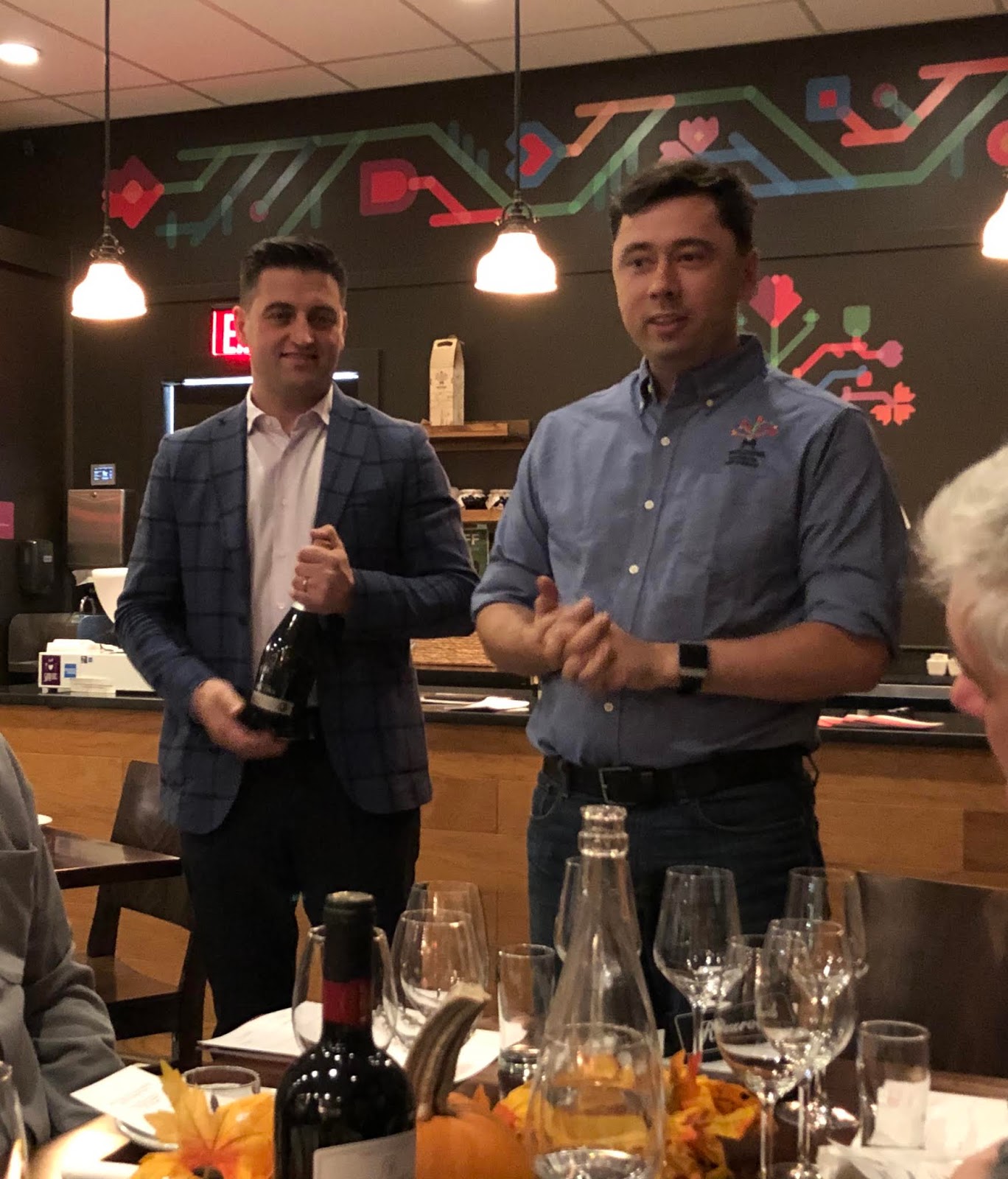
About 12 people attended their first wine dinner last month, a fun group of diverse people including someone from Croatia and another person from the country of Georgia. We had plenty of laughs, excellent conversation, and enjoyed plenty of tasty food and wine. Artur Andronic (pictured above on the right), owns the restaurant with his wife Sandra, and both are natives of Moldova. Artur, who is very personable, introduced the wine dinner, helping to serve the dishes throughout the meal, and answering questions.

Andrei Birsan (on the left side), is the owner of Vins Distributors, and he presided over the dinner, explaining about the various dishes and wines, as well as expounding upon the country of Moldova and its wine industry. Andrei is charming and knowledgeable, regaling us with plenty of tales of Moldova, such as its world record wine tunnels. The guests were inquisitive, asking plenty of questions, which Andrei eagerly answered, sharing his passion for Moldovan wine.

"Noroc" is a Moldovan word which basically means "cheers," and is used when toasting with wine. This sign hangs inside the restaurant, over one of their doors.

The food menu, prepared by Chef Victor Sorici, was a selection of some of the restaurant's classic Moldovan dishes. I've enjoyed most of these dishes before, so I'll repeat some of my same, relevant comments from my prior articles. Future wine dinners will offer different menus, other enticing dishes to keep things fresh and new. I'd also recommend that don't need to wait for their next wine dinner to dine at the Moldova restaurant. You can go at any time, for lunch or dinner, and order from their intriguing menu. They'll help you with Moldovan wine pairings.

We began the evening with a traditional PLĂCINTĂ CU BRÎNZĂ ȘI VERDEAȚĂ,  a thin, pan-fried pie filled with cow cheese and herbs, which was served family style. The term "plăcinte" derives from the Latin "placenta," which means "cake." Traditionally, they use sheep's milk cheese but that is difficult for them to source locally so they chose to go with cow's cheese instead. The filling is made with egg whites, local feta, cottage cheese, dill and parsley, but they don't add any salt. The pie is thin, flaky and crisp, reminding me a little of a scallion pancake (without the scallions), and the cheese filling is creamy and lightly salty.

On their menu, there are other variations of PLĂCINTĂ, savory versions with cabbage or potatoes and sweet versions with cherries or apples.

This dish was paired with the Cricova Crisecco Vin Spumant Alb Brut, produced by a winery which was founded in 1952. The winery is located in the town of the same name and their extensive (miles upon miles) wine cellars are the second largest in Moldova. This Sparkling Wine is a blend of 90% Fetească Albă (an indigenous grape) and 10% Muscat, and is produced by the Charmat method (like most Italian Prosecco). Fetească Albă (which translates as "white maiden") is a white grape, the most widely planted indigenous grape in Moldova.

At 12.5% ABV, this bubbly is aromatic, with a distinctive Muscat nose enhanced by some citrus notes. On the palate, it is dry, crisp and tasty, with flavors of apple, pear and subtle citrus. A very pleasant and easy-drinking Sparkling Wine, priced at about $11.99, making it an excellent value.

Next up was a Rucola Salad, with chunks of beet and pumpkin. A pleasant salad, bringing some crisp freshness after the crunchy and creamy first course.

Our second wine of the evening was the 2018 Gogu Winery Blanc de Merlot ($14.99), produced by a very small winery which started selling their wine in 2014, though the family has been making wine for four generations. This is a wine white, made from Merlot, and it is aromatic, with a fresh and tasty palate of citrus, herbal accents, and a floral element. Easy drinking and food friendly, this is something different for your table.

The third course was the SARMALE, cabbage and grape leaves, stuffed with rice, chicken, tomatoes, carrots, fried onions and herbs, and served with a side of sour cream. The rice plays the prominent role in this dish, and with the chicken it is a very traditional and inexpensive Moldovan dish, especially prepared by the women in the household, and always served at Moldovan parties. These were delicious, with a slight crunch to the grape leaves, and less crunch from the cabbage, and plenty of flavorful filling, with lots of rice and finely chopped chicken and veggies. They make for a tasty snack.

The 2016 Fautor Merlot-Rara Neagra ($12.99) is produced by a winery which was purchased in 1997, though their first commercial release wasn't until 2010. A mother & daughter team run the winery, and they have an intriguing deal with a local prison, providing work release opportunities for prisoners. This wine is a blend of Merlot and Rara Neagra (an indigenous grape grown only about 200 acres around the world), made in a more international style. It is fresh and fruit forward, with plenty of red fruit flavors, especially cherry, and spice notes. It is smooth and easy drinking, a wine that would go well with pizza to burgers.

The final savory course was the FRIPTURĂ DE MIEL ($24.95), roasted lamb, stewed in special wine and rosemary sauce, which was served with polenta, feta cheese and sour cream. The lamb is cooked for over four hours, braised and then roasted in the oven. All that slow cooking has made the lamb extremely tender, and you certainly don't need to knife to cut it. Your fork will suffice. The lamb also is superb, with a hint of rosemary, and plenty of juicy, tender meat, lacking that gaminess which turns off some people to lamb. As a lamb lover, this dish impressed me immensely and I highly recommend it.

I loved the label of the 2015 Gitana Winery Lupi Reserve ($27.99), with its wolf paw print, as "Lupi" means "wolf," and it's named after a pack of wolves that wander through the vineyard. The small, family owned and operated winery was purchased in 1999 and it took a number of years to renovate the property and plant vineyards. This wine is a blend of Cabernet Sauvignon, Merlot and Saperavi, which was aged for two years in big, used oak barrels and then for another year in new barrique. This is a complex and delicious wine, with plenty of rich, black fruit flavors, mild spices, some vanilla notes, and hints of chocolate. It is full bodied and powerful, yet with well-integrated tannins, and paired beautifully with the lamb. This was my favorite wine of the evening.

For dessert, we enjoyed the CUȘMA LUI GUGUȚĂ ($9.45), sour cherries crepes with home-made whipped cream and chocolate. This is an extremely popular item on their menu, and they have even run out some nights when many customers ordered it. It was certainly a hedonistic pleasure, plenty of creaminess, tart sour cherries, and that spongy texture of the crepes, with a chocolate accent. It's easy to understand the popularity of this dessert and it was a great way to end a compelling Moldovan dinner.

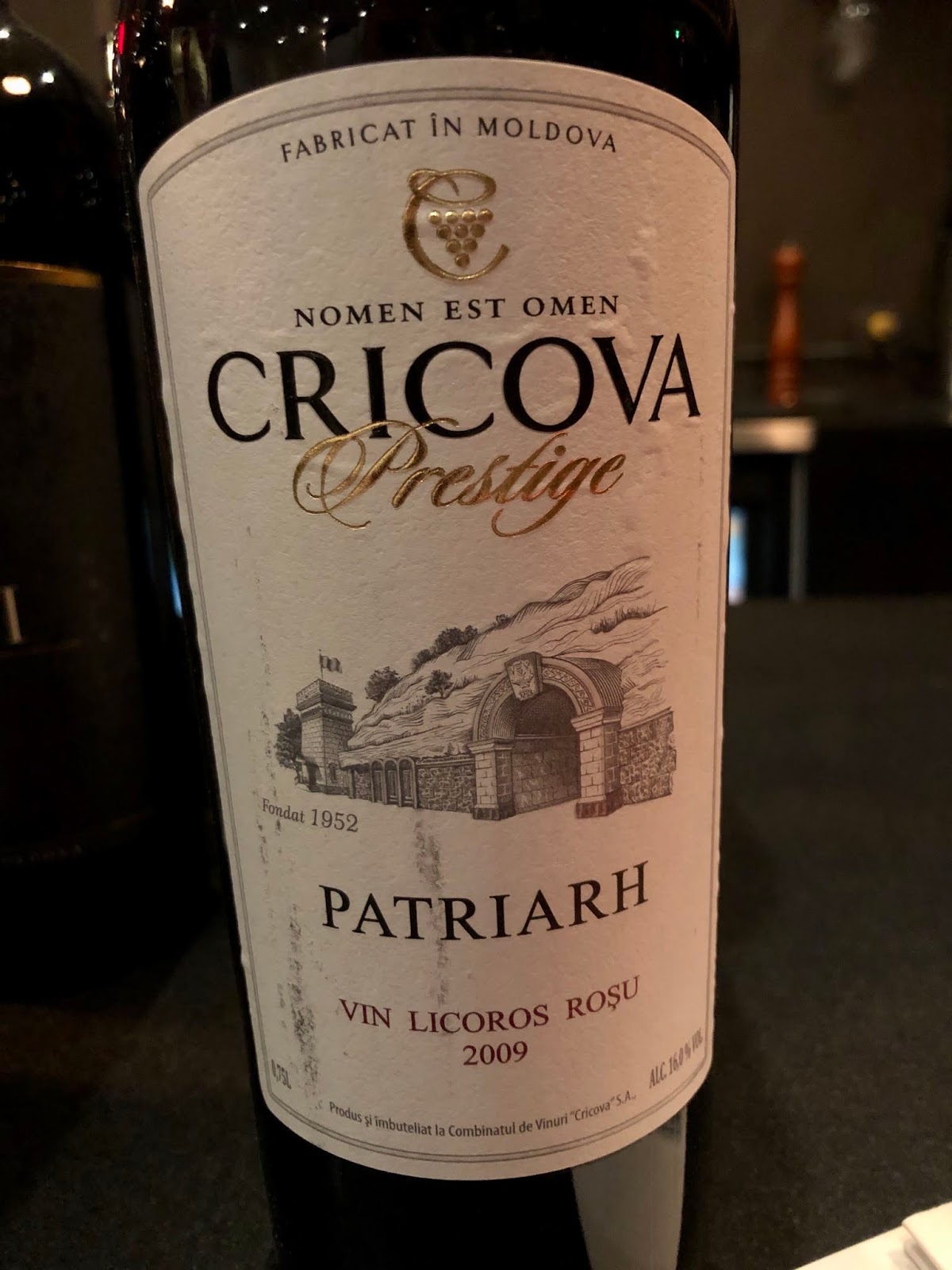
Our final drink was the 2009 Cricova Patriarh, a vin rosu licoros, a red dessert wine that is made from Cabernet Sauvignon and has a 16% ABV. I was expecting a heavy, sweet wine but that was far from the case. Instead, it had a lighter body, with intense ripe plum and fig flavors and only a moderate sweetness, balanced by some nice acidity. It was silky and delicious, an enticing wine which made for an excellent after-dinner drink.

A representative of Marty's Liquor Store also attended the dinner, and all of the wines were available for pre-order, at am approximate 20% discount. Not only could you enjoy the wines at the restaurant, but you could buy some to enjoy at home, at a nice discount.

The Moldova Restaurant is a unique destination, offering a cuisine not readily available elsewhere in Massachusetts. Plus, you can check out a number of delicious and diverse Moldovan wines. You definitely should attend one of their wine dinners in 2020, so keep an eye on their website or social media to learn about the next event. For now, you also might want to consider attending their New Year Eve Dinner.

Wednesday, October 18, 2017

Exploring Moldova Restaurant & Moldovan Wine: Part 2

As I wrote yesterday, I was recently invited by Andrei Birsan, the owner of Vins Distributors, a wholesaler of Moldovan wines, as a media guest to taste some of his portfolio, as well as to experience Moldovan cuisine at the Moldova Restaurant in Newton. At the dinner, we were joined by Artur Andronic, who owns the restaurant with his wife Sandra.

Artur and Sandra are natives of Moldovas and they initially opened an Italian restaurant in Newton but quickly realized it just wasn't for them. They decided instead to open a Moldovan restaurant, celebrating their heritage, which would also be the only such restaurant in Massachusetts. Hiring a Moldovan chef, they also received much input from their families about the cuisine and recipes, and finally opened in April 2016. It turned out to be an excellent decision as this is a restaurant you need to experience, to enjoy Moldovan cuisine and the warm hospitality of Artur and Sandra.

Moldovan cuisine consists of numerous traditional European foods, from beef to pork, potatoes to cabbage. It also draws influences from Romania, Greece, Poland, Ukraine, and Russian, as well as the former Ottoman Empire. Thus, many of the dishes will look familiar to the average person, though the names may look inscrutable.

The restaurant is open for both lunch and dinner, and is a relatively small, but comfortable spot. The bright colors and designs on the walls are aesthetically pleasing, and include a map to give you a better idea of the geography of Moldova. Artur was a gracious host, personable and knowledgeable, and it was a pleasure to dine with him and learn more about Moldovan cuisine. Though I've previously enjoyed Moldovan wines, I'd never before had their cuisine so this was a welcome experience.

I've already mentioned the wine list at Moldova Restaurant, but I'll also note they have a full bar, serving various cocktails, and a small beer list. In the future, they hope to add some Moldovan beers to that list. You'll also find some non-alcoholic choices including Compot, a home-made, traditional Eastern European fruit punch. Next time I dine here, I'll have to try the Compot.

The Dinner Menu has a compact range of diverse choices, including: Appetizers (5 choices, $7.95-$11.45), such as CLĂTITE CU GĂINĂ ȘI CIUPERCI (Chicken and mushrooms crepes) and FASOLIȚĂ (Bean paste with caramelized onions); Soup & Salad ($6.45-$8.95), such as ZEAMĂ (Heart warming chicken soup with homemade noodles) and SALATĂ DE VARZĂ (Fresh cabbage salad with scallions, parsley and olive oil); Placinte La Tiger (5 choices, $7.95-$8.95), a traditional pan-fried pie with various fillings); Entrees (3 choices $16.45-$17.95), such as FRIPTURĂ DE GĂINĂ (Roasted chicken, stewed in broth with onions and garlic, served with pickled vegetables and traditional polenta with feta cheese and sour cream on the side); and Chef's Specials, (3 choices $18.95-$24.95), such as CÂRNĂCIORI DE GĂINĂ (Grilled chicken sausages, served with fresh cabbage salad, baked potato topped with sour cream and scallions, pickles and home made hot sauce on the side); Sides (5 choices at $5.45-$8.95), such as CARTOFI ȚĂRĂNEȘTI (Country style pan fried potatoes with onions and herb); and Desserts (2 choices at $8.95-$9.45).

Though the full menu is also available for Lunch, there is a Lunch Special ($10.95) which includes: Soup or Salad, plus a Side & Entree or a Pie, with a nonalcoholic drink.

We began with a traditional Plăcinte la Tigaie, a thin, pan-fried pie with various fillings, and I'll note that the term "plăcinte" derives from the Latin "placenta," which means "cake." They serve five different types, filled with items such as potatoes, cabbage, apples, and cherries. I opted for the PLĂCINTĂ CU BRÎNZĂ ȘI VERDEAȚĂ ($8.95), which is filled with cow cheese and herbs. Traditionally, they use sheep's milk cheese but that is difficult for them to source locally so they chose to go with cow's cheese instead. The filling is made with egg whites, local feta, cottage cheese, dill and parsley, but they don't add any salt. The pie is thin, flaky and crisp, reminding me a little of a scallion pancake (without the scallions), and the cheese filling is creamy and lightly salty. A tasty start to dinner, it is an excellent comfort food and I would love to try it with some of their other fillings. And the PLĂCINTĂ paired very well with the Sparkling Wine!

Artur wants to add a sampler platter to the menu, showcasing several of the different dishes so patrons can experience a range of different items. As such, he had his chef put together a sampler for my visit and I was glad to have the opportunity to try a number of different items rather than just a single dish. In the near future, you'll probably see a similar platter available on the menu.

The first dish was the SARMALE ($16.45), cabbage and grape leaves, stuffed with rice, chicken, tomatoes, carrots, fried onions and herbs, and served with sour cream. Please note that the above Sarmale was only made with grape leaves and not cabbage. The rice plays the prominent role in this dish, and with the chicken it is a very traditional and inexpensive Moldovan dish, especially prepared by the women in the household, and they are always served at Moldovan parties. These were delicious, with a slight crunch to the grape leaves and plenty of flavorful filling, with lots of rice and finely chopped chicken and veggies. They make for a tasty snack and pair well with white wine.

The second sample were the MITITEI MOLDOVENEȘTI ($19.45), grilled minced beef and pork rolls that are normally served with fresh cabbage salad, baked potato topped with sour cream and scallions, pickles and a home made hot sauce on the side. "Mititei" means "little ones." This is not as much a traditional Moldovan dish as it is more of a traditional Romanian one, however it has become one of their most popular items at the restaurant. This is a meaty and well-spiced "sausage," with a nice char, and it was enhanced by the compelling and flavorful hot sauce, though I didn't find it especially hot.

The final sample was the FRIPTURĂ DE MIEL ($24.95), roasted lamb, stewed in special wine and rosemary sauce, and normal served with roasted vegetables. The lamb is cooked for over four hours, braised and then roasted in the oven. All that slow cooking has made the lamb extremely tender, and you certainly don't need to knife to cut it. Your fork will suffice. The lamb also is superb, with a hint of rosemary, and plenty of juicy, tender meat, lacking that gaminess which turns off some people to lamb. As a lamb lover, this dish impressed me immensely and I highly recommend it.

Artur mentioned that Moldovans don't like to let any food go to waste, so they will use bread to sop up any leftover sauce in a dish. At his restaurant, they make their own country-style bread, which has a soft but thick consistency, just right for dipping into sauce.

One of their sides is TĂIEȚEI ($5.45), home made noodles topped with butter and served with feta cheese. These are very traditional, hand-cut noodles, made from scratch, that are commonly used in soups. They are served with feta to add more flavor to them. The noodles had a nice consistency, not too soft or too hard, and with the salty feta, they made for a nice side. I could easily see these noodles used in other dishes too, such as soup or topped by the lamb stew.

Another side was the MĂMĂLIGĂ ($5.45), a very traditional dish of polenta served with feta cheese and sour cream. They use a different type of corn flour which makes it more yellow as well as a bit harder than other polenta. Commonly, you mix the polenta with both feta and sour cream. It certainly had a firmer texture and the feta gave it a nice salty and creamy kick.

Dessert was CUȘMA LUI GUGUȚĂ ($9.45), sour cherries crepes with home-made whipped cream and chocolate. This is an extremely popular item on their menu, and they have even run out some nights when many customers ordered it. It was certainly a hedonistic pleasure, plenty of creaminess, tart sour cherries, and that spongy texture of the crepes, with a chocolate accent. It's easy to understand the popularity of this dessert and it was a great way to end a compelling Moldovan dinner.

The Moldova Restaurant is unique and interesting, with plenty of diverse and delicious food. Much of it is comfort food, sure to please your palate and belly. The welcoming vibe of the spot is also a compelling reason to visit. Plus, the fact they carry Moldovan wine makes a visit more of a total Moldovan experience. Kudos to Artur and Sandra Andronic for opening this restaurant, indicative of their passion for Moldova. I strongly encourage my readers to check out the Moldova Restaurant for lunch or dinner.

Tuesday, October 17, 2017

Exploring Moldova Restaurant & Moldovan Wine: Part 1

The Republic of Moldova is the least visited country in Europe as well as the poorest country in Europe. However, Moldova has been producing wine for about 5,000 years and currently exports about 67 million bottles annually. I recently wrote an article encouraging people to be wine activists, to buy and drink wines from certain countries, to help their economies thrive. "Financial support of a country’s wines contributes to the well-being of regions, countries, and producers." Considering Moldova's economic situation, then supporting their wine industry is more than warranted, especially considering they are producing some delicious and interesting wines.

Recently, I was contacted by Andrei Birsan, the owner of Vins Distributors, a wholesaler of Moldovan wines, and invited as a media guest to taste some of his portfolio, as well as to experience Moldovan cuisine at the Moldova Restaurant in Newton. I've previously tasted only a handful of Moldovan wines but my experience had been very positive. And I'd never previously enjoyed Moldovan cuisine so I was eager for this meeting.

Andrei grew up in Moldova, leaving the country when he was 21, and came to the U.S. He underwent some training in the law and never thought about a career in the wine industry. However, in 2014, on a trip to Moldova, he tasted an ice wine, falling in love with it. When he returned to the U.S., he wanted to import it but knew he couldn't make a career out of a single wine. So, he decided to import a number of Moldovan wines, to showcase his home country in Massachusetts, and received his first shipment of wine in July 2015. His portfolio currently has about 40 Moldovan wines, which should increase soon by about 10 more.

During the course of our dinner, I tasted eight different wines and found Andrei to be a charming, knowledgeable and interesting person. It was clear that he was passionate about the wines of Moldova and it was infectious. These were wines that would please most any wine lover, and several of them were excellent values as well. They were also excellent food wines, though some could easily be enjoyed on their own too.

As I mentioned earlier, wine originated in the region of what is now Moldova about 5,000 years ago. The area became the Principality of Moldavia in the late 14th century, remaining dominant until 1812 when Russia seized control. Russia later subsidized French colonists to come to the region, and they uprooted most of the indigenous grapes, replanting them with French varieties. Who knows how many indigenous grapes might have been lost due to this uprooting. Once the Soviet Union dissolved, Moldova, which is located between Ukraine and Romania, declared its independence, similar to what occurred in Georgia.

Currently, Moldova has about 150,000 hectares of vineyards, growing over 30 different grapes, about 10% being indigenous varieties, such as Fetească albă, Fetească regală, Fetească neagră, and Rară Neagră. About 70% of their production are white wines and they export about 67 Million bottles of wine annually. One of their biggest trends currently is creating blends with both indigenous and international grapes. Though only about 5% of their vineyards are organic, Moldovan wine law prohibits the addition of any chemicals into wine.

There are four different wine regions in Moldova, including Balti (northern zone), Codru (central zone), Purcari (south-eastern zone) and Cahul (southern zone). According to a new law enacted in 2016, producers must place the regional designation on the label. Some of these regions also have micro-regions. For example, in Cahul there are micro-regions including Taraclia, Ciumai, Comrat, Ceadir-Lunga, Baurci, Cazaiac, Tomai, and Cimislia.

A traditional Moldovan home has a cellar where food and wine is stored, including the wine the homeowner made on their own. The importance of such wine cellars may be part of the reason why Moldova, according to the Guinness Book of World Records, has the world's largest wine collection, over 1.5 million bottles, which is called the Golden Collection. This wine cellar, located in the town of Milestii Mici, has over 34 miles of gothic style shelves, with about 70% red wines.

Let's highlight a few indigenous grapes from Moldova.

Fetească Albă (which translates as "white maiden") is a white grape, the most widely planted indigenous grape in Moldova, occupying about 4,334 hectares. When you consider the country has about 150,000 hectares of vineyards, plantings of the Albă constitute only a tiny percentage, less than 3%. Albă is also found in Romania and Hungary. In Moldova, Albă is commonly used for producing sparkling wine, as well as still wine, which posses medium acidity, as well as citrus and floral flavors.

Fetească Regală (which translates as "royal maiden") is also a white grape and allegedly acquired its name when the grape was dedicated at a birthday celebration for Queen Elena of Romania and thus acquired its "royal" status. The grape is more commonly found in Romania, with some also found in Hungary and Austria. However, in Moldova, the grape is sometimes blended with Fetească Albă and a distinction between the two isn't always made clear. Regală can make aromatic wines with good acidity.

Fetească Neagră (which translates as "black maiden") is a red grape that early vanished during the Soviet era but which has been making a comeback since Moldova gained its independence. The grape can be found in part of Romania too. It is commonly used to make dry, sweet and semi-sweet wines, which typically have a deep red color and a black currant flavor.

Rară Neagră (which translates as "black grandmother"), also known in Romania as Băbească Neagră, is a red grape which typically makes wines with high acidity, a lighter red color, and red fruit flavors, especially sour cherry. There are only about 170 hectares of this grape grown in Moldova, and a little is grown in other places, including Romania, Ukraine and even in the Finger Lakes region of New York (where it is known as Sereksia).

All of the Moldovan wines I tasted from the Vins Distributors portfolio are available at the Moldova Restaurant in Newton, as well as a number of wine stores in the Boston area and elsewhere. At the Moldova Restaurant, all but one of the wines they carry are from Moldova, the outlier being a French Champagne. I'm always supportive of restaurants that choose to stock primarily wines from the country of their cuisine. First, those wines go well with the traditional cuisine of their country. Second, it helps customers expand their palates and try something different. Third, it gives a market to wines that might otherwise have difficulty getting on wine lists elsewhere.

Their wine list has wines available by the glass, carafe and bottle, though not all selections are available by the glass or carafe. There are 4 White wines available by the glass/carafe with an additional white wine available only by the bottle. There is one Rosé wine available by the glass, carafe and bottle. There are 6 Red wines available by the glass/carafe with 2 additional Red wines available only by the bottle. There are 2 Sparkling wines available by the glass/carafe with 2 additional Sparkling wines available by the bottle. Prices per glass range from $6-$13 with prices by the bottle ranging from $23-$90, with most priced $50 and under. You can also order a Wine Sampler of three different wines.

I began my tasting with some Moldovan Sparkling Wine. The Cricova Winery, founded in 1952, is located in the town of the same name and their wine cellars are the second largest in Moldova. About 62% of the wines they produce are Sparkling. The Cricova Crisecco Vin Spumant Alb Brut, a blend of 90% Fetească Albă and 10% Muscat, is produced by the Charmat method (like most Italian Prosecco). At 12.5% ABV, this bubbly is aromatic, with a distinctive Muscat nose enhanced by some citrus notes. On the palate, it is dry, crisp and tasty, with flavors of apple, pear and subtle citrus. A very pleasant and easy-drinking Sparkling Wine, priced under $15, it is also an excellent value. I definitely want to explore more of Cricova's Sparkling Wines.

Chateau Vartely is a newer winery and "Vartley" means "city-fortress." Their 2015 D'Or Fetească Regală is made from 100% Fetească Regală, from vineyards in the Orhei region. The wine, with a 14% ABV, is vinified in stainless steel and then spends up to six months aging in oak barrels. It possesses an intriguing aroma, a combination of fruit and savory notes, both which come out on the palate too. It is a full-bodied white wine, with an intriguing sour apple element, accompanied by notes of lemon, herbs and a hint of fresh mowed grass. A more unique and delicious white wine.

The Purcari Winery, founded in 1827, has a storied history. It was in 1827 that the Emperor of Russia, Nicholas I, issued a special decree which granted Purcari the status of the first specialized winery in Bessarabia. By 1878, the winery was receiving international attention and had been served to kings and queens across Europe. At the turn of the century, the winery replanted about 250 hectares of their vineyards, and installed state-of-the-art technology at the winery. The 2014 Rosé de Purcari is a blend of Cabernet Sauvignon, Merlot and 10% Rară Neagră, with a 13% ABV. The wine is dry and crisp, with subdued red fruit flavors, a bit of peach, and a hint of herbal notes.

The 2016 Rară Neagră de Purcari was impressive, luring me in from my first sniff of its compelling aroma. The wine is made from 100% Rară Neagră, was fermented in stainless steel, aged in French oak barriques and has a 14% ABV. The aroma is very savory, with black fruit accents and subtle spicy notes. On the palate, it is medium-bodied, with soft tannins and good acidity. It presents an intriguing melange of bold flavors, ripe black fruit, spicy notes, hints of vanilla, and an almost meaty undertone. A lengthy finish completes this well balanced and delicious wine. At around $22-$23, this is a very good value for such a tasty and interesting wine. I also got to taste the 2014 vintage, and it was not as big and bold as the 2016, though it contained a similar flavor profile, just in a more subtle way.

The 2010 Negru de Purcari ("black of Purcari") is the signature wine of Purcari and it is sometimes called the "Queen's Wine" as it was a favorite of Queen Elizabeth II. The wine is a blend of 70% Cabernet Sauvignon, 25% Saperavi, and 5% Rară Neagră. It has been aged for about 18 months in French oak and has a 14% ABV. With a dark red color, it has an alluring nose of black fruit, spice, and earthiness. On the palate, the ripe plum and black cherry flavors dominate, supported by a rich spiciness, and a mild earthiness. It is full-bodied, with well-integrated tannins, a silky mouthfeel and a lingering and satisfying finish. This is a well-made blend which is sure to impress any wine lover. Highly recommended.

The 2015 Chateau Vartely Individo is an interesting blend of 42% Rară Neagră, 30% Malbec, and 28% Syrah, which spent about 12 months in French oak barrels. The aroma combined red and flack fruits with a spicy undertone. On the palate, the red and black fruit flavors shone, supported by spicy accents, and hints of vanilla and chocolate. Restrained tannins, a supple mouthfeel and a lengthy, pleasing finish.

Finally, we ended the tasting with the 2009 Cricova Prestige Patriarh, a vin rosu licoros, a red dessert wine that is made from Cabernet Sauvignon and has a 16% ABV. I was expecting a heavy, sweet wine but that was far from the case. Instead, it had a lighter body, with intense ripe plum and fig flavors and only a moderate sweetness, balanced by some nice acidity. It was silky and delicious, an enticing wine which made for an excellent after-dinner drink.

Overall, the Moldovan wines were delicious and interesting, pairing well with the various foods we enjoyed. I strongly encourage all wine lovers to explore the wines of Moldova, especially those with indigenous grapes. The Moldova Restaurant is a great place to sample these wines, especially paired with Moldovan cuisine. Those wines though will work well with many other cuisines too, from simple pizza and burgers, from oysters to pasta, from pork to steak. And by buying & consuming Moldovan wines, you will help the overall well-being of that small country.