Showing posts with label farm. Show all posts

Wednesday, July 30, 2025

A Culinary Road Trip To Ipswich+

Are you looking for a day trip idea, especially one with a culinary theme? One of my favorites is to drive up to Ipswich, and the surrounding communities of Rowley, Salisbury, and Newbury, visiting farms, bakeries, butcher shops, a clam shack, a candy shop, wine shop, and more. I've had a number of people ask me for a list of the places I visit, as they too would like to check out those places when they visit the Ipswich area. 

So, I'm now offering a curated list of my favorite places, but please note that this isn't a complete list of all of the potential stops, and you might find something else that appeals to you while you're driving around the area. There is much to explore in this area, so keep your eye out while you're in the area in case something catches your eye. 

I believe Friday is the best day for this Ipswich trip, with Saturday a close second, for two reasons, which I'll explain below. You can go on any other day if you wish, but a couple of excellent options won't be available. 

********************

Sandpiper Bakery: When I visit Ipswich, one of my first stops is usually this bakery, to have a breakfast snack. It's a bit hidden, in a building next to the Public Library, and it doesn't have a large sign indicating its presence. Inside, there's two small counters where you can sit, and they have multiple tables outside on their patio. They are open for breakfast and lunch, offering sandwiches and salads, and have a full case of bakery treats. 

I usually get a Ham & Cheese Croissant, which is flaky and buttery, and often slightly warm. This is definitely one of top favorite croissants, and highly recommended. It's a great way to start the day before exploring Ipswich.

Some of the other tasty items you can purchase include Scones, Banana Bread. Cardamom Muffins, Coconut Macaroons, and more, 

One of my other favorites is their Whoopie Pies! They appear to be seasonally available, and now is that season. The light chocolate cake is soft and tasty, with a satisfying creamy filling, and the entirety is not overly sweet. This is one of my Top Favorite Whoopie Pies and I always get some when I stop here and they're available.

Russell Orchards:
On my day trip, I usually visit about four farms in the Ipswich area, each with its own special attractions, but I'll note there are even more farms in the area that you can visit. Russell Orchards sells its own produce, some kitchen supplies, books, ice cream, baked goods, gourmet foods, wine and cider. You can pick your own fruit, dependent on the season, such as blueberries, raspberries, apples, and more. Plus, they have some farm animals which you can see, which is a popular attraction for children.   

My favorite Cider Donuts are made here, a light and flavorful donut with such a delicious apple flavor. They don't need a dusting of cinnamon/sugar, and are much better than the heavy, cake cider donuts you find elsewhere. If you're lucky, you'll get some when they are still warm. I'll usually eat a donut or two before I even reach my car in the parking lot. You can even get a Cider Donut Sundae at their ice cream booth. 

And if you enjoy wine and/or cider, you can check out their tasting room and sample some of the variety of the wines and hard ciders they produce.

Northern Lights Farm Stand:
Located diagonally across from the Clam Box, Northern Lights has a small farm stand with produce, including Duck Eggs (which I enjoy), and a variety of jarred fruits and vegetables produced by the Mennonites (also a good choice). 

One of their main attractions is also all the animals they have on their property, including donkeys, a pot-bellied pig, turkeys, ducks, geese, rabbits, and more. 


One of the stars is Samson, a HUGE rabbit, and this photo doesn't do justice to his great size. Samson usually wanders free on the property, is fairly friendly, and can be petted. Children will love all the animals. 

Marini Farmstand: This farmstead has lots of produce, including some of their own grown fruits and vegetables, as well as a bakery, and some chilled cases with meats, dairy products, beverages and more. At Christmas time, this farmstead has a beautiful display, with lots of decorations and ornaments for sale.  


This is one of the only local farms where I've found Purple Peppers, which have a spicy heat to them. They currently also have Sicilian Eggplant, which certainly looks different from the usual eggplant. 

And if you want Cider Donuts, covered with cinnamon/sugar, you can find them here.

Tendercrop Farm:
This local farm has farmstands in Newbury, Wenham, and Dover, and I usually stop at either the Newbury or Wenham location on my Ipswich journey. Both are fairly similar, offering lots of fruits and veggies (many of their own grown), as well as flowers and plants. They also sell dairy products, baked goods, frozen foods and snacks. 

In addition, they have a butcher shop, offering meat from the many animals on their farm, including beef, chicken, turkey, and pork. Their meats are excellent quality and reasonably priced, and I've never been let down. Their Boneless Pork Chops ($6.99/lb) are thick cut, very tender and flavorful. Such a great deal and I usually get some when I stop here. I've seen other butcher shops offering the same thing for twice the price. I've also enjoyed their grass-fed Filet Mignon, Marinated Steak Tips, Duck Breast, Turkey Tips, Sausages, and more. Definitely a great stop to satisfy your carnivore cravings.

Clam Box of Ipswich: For lunch, I can't consider going any place else except the Clam Box. It's my favorite clam shack and never disappoints. It's celebrating its 90th Anniversary this year! Their fried seafood is superb, from the fried clams to the fried scallops, and their service is top notch. They are very customer-driven and have impressed me multiple times in the past. You can dine inside or outside, and during the summer you might have to wait in line as it is very popular.  

On Fridays only, they commonly offer Fried Lobster Tails, which are difficult to find elsewhere. Each lobster piece is basically half a lobster tail, and you can see above the plentiful portion you receive. The lobster is delicious, with a nice, light and crispy batter, sweet lobster, and some melted butter for dipping. The dish comes with two sides, and I always opt for French fries and onion rings. This is one reason why I recommend making an Ipswich road trip on Fridays.

The Fried Clams and Scallops Combo plate is also delicious, with plenty of fried seafood, and some of the sweetest fried scallops you'll find. You can get the clams with or without the bellies, although I prefer with the bellies. Plus, the Clam Box nows offers Steamed Clams, which I recently enjoyed and would recommend. 

Dairy Queen: After you leave the Clam Box, you'll probably be too full for dessert, but you might still be able to drink something else. Just down the road from the Clam Box is a Dairy Queen, and it serves the Orange Julius, a frothy orange drink. I've been drinking them since I was young, and still enjoy an occasional one. 


Ipswich Shellfish Fish Market: Once you've enjoyed lunch at the Clam Box, you might still have a hankering for some seafood, but which you can prepare at home. So, only on Fridays and Saturdays, you can check out this seafood pop-up, which is my favorite seafood market. This is the second reason why journeying to Ipswich on Friday is a good idea.

They have plenty of fresh, local seafood, as well as some excellent frozen fish. Quality is high but prices are reasonable, and the service is excellent. The staff can cut the fish to any size you need, and can offer suggestions for preparation as well.  

They also sell a variety of prepared foods, from tinned seafood to pasta, to their owns soups, sauces, and seafood entrees. Their house-made Corned Bread is delicious, moist and flavorful.


Every Thursday, they post a menu for their Friday and Saturday offerings. For instance, they currently stock local Halibut, Swordfish, Striped bass, and Bluefish. You'll also find seafood from Alaska, Canada, Norway, Iceland, and more. You can find frozen Lobster Tails, split for the grill, as well as live lobsters. So many choices! In the past week, I've dined at home on their King Salmon and local Halibut, and both were absolutely delicious. Highly recommended!

********************

Winfrey's Fudge & Chocolates (Rowley):  Just a few miles from the Clam Box, you can find U.S. Route 1, also known as the Newburyport Turnpike. At 42 Newburyport Turnpike, you can check out the chocolates and candies at this large store. They have stores at four other locations. I especially enjoy their Chocolate Turtles. 

Agawam Diner (Rowley)At 166 Newburyport Turnpike, in Rowley, you'll find the famed Agawam Diner, which is celebrating its 85th Anniversary this year.  They serve breakfast, lunch and dinner. 


They have an excellent breakfast menu, with delicious pancakes, homemade hash, breakfast sandwiches, and more.  

They also have a bakery in their basement where they produce numerous pies and pastries. If you just stop by the diner, they have some whole pies and pastries available for purchase, but if you want to ensure you get a specific type of pie, you should order ahead of time. Over the last few months, I've stopped by the diner a few times and purchased their three cream pies: Coconut, Banana and Chocolate. They were all delicious, quite amply sized, and not overly sweet. They generally cost $30 each. 

Herrick Farm
(Rowley): At 77 Dodge Road, not far from the Agawam Diner, Herrick has a small Farm Store, stocked with some of their own products, including frozen meats, fresh milk, eggs, and some vegetables, such as squash. Behind the store, there is a large chicken coop and an enclosure for goats. Seasonally, they also operate a small produce stand on Route 133. I've purchased several different meats here, from grass fed Shaved Steak to Ground Pork, and they have been excellent and tasty products. Their Shaved Steak is tender and flavorful, great for stir fry or sandwiches. Also love their eggs and milk. 

Market Basket (Rowley): At 231 Newburyport Turnpike, there's a Market Basket, which I think is one of their best locations. It's very clean and has a greater variety of products than many of their other locations. And prices are very good compared to many other supermarkets.  

Nancy's Marshview Cafe & Bakery
(Salisbury): If you continue to follow U.S. Route 1, about 8 miles from Market Basket, you'll cross a bridge into Salisbury. You'll soon come to Nancy's Marshview Cafe, which serves breakfast and lunch, and also has a bakery. I haven't yet eaten breakfast here, but the menu looks enticing, and I've enjoy their baked goods very much.


Doughnuts, muffins, cinnamon rolls, chocolate desserts, and more can be found here. They also sell a variety of pies, and their Banana Cream Pie is excellent, and the price was only about $20. It's worth coming here just for the pies. I plan to have breakfast here in the near future, and will report back then. 

Bucciarelli's Butcher Shop & Deli (Salisbury): Very close to Nancy's Cafe is this butcher shop, which also sells gourmet foods and wine. It's worth checking out, although their meat prices seem to be higher than at Tendercrop. 

Annarosa's Bakery (Salisbury)
: At 175 Elm Street (Route 110), this bakery produces plenty of different breads, as well as cookies, croissants, scones and other pastries. Plus, they make their own delicious pizzas, including cheese, pepperoni and goat cheese. You can get a small individual-sized pizza or a larger one, for 2-3 people to share. 

*******************
 
Cellar Door Culinary Shop: Back in Ipswich, check out the Cellar Door, a place for gourmet food, wine and beer. You'll find cheese, cured meats, sauce, olive oil, noodles, chocolates, and much more. 


The wine selection is well curated, with wines from all over the world, including many natural wines. These are not your usual suspects, but less commonly known wines, and well worth checking out. 

*******************
Some other spots you might want to check out, which aren't on my usual route, in the Ipswich+ area include:


If you have any other suggestions in the area, feel free to send them on to me. 

(Updated as of 12/16/25, adding a couple new destinations)

Monday, June 16, 2025

Rant: The "Best" Cider Donuts

Cider Donuts! To me, they are a pleasure year-round, although some feel they are best during the fall. They can be found at supermarkets, small food shops, and even restaurants, although it's difficult to surpass buying them at a local farm, where they have their own apple orchards. And this past Friday, I stopped at one such farm, and purchased what I consider to be the "best" cider donuts. 

Whenever I'm in the Ipswich area, I stop at Russell Orchards to pick up a dozen or so cider donuts. Sometimes, when I'm lucky, they are fresh off the line, still warm. Pure gustatory bliss. At Russell Orchards, they make their donuts from scratch, using their own special recipe as well as their own apples. During this time, you often can see their staff making the donuts, dropping the dough into the fryer and then seeing the fried donuts moving down a conveyor belt where they will be bagged. It's said that Russell Orchards sells approximately 200,000 cider donuts each year and it's easy to understand why.

For me, their donuts are the best: soft and moist, with a slightly crusty exterior, and the right balance of apple and spice flavors. Each bite is pure pleasure. And when they are warm or even hot, it's hard not to eat several on your way from the cash register to your car. I'm glad that I don't live closer or I'd stop by more frequently and devour far too many cider donuts.

However, not all cider donuts are like that. There are basically two types of cider donuts, the soft ones like at Russell, and heavier, more cakey cider donuts that you can find at plenty of other places. To me, the softer. lighter donuts at Russell Orchard easily defeat the more cakey ones. It's not even a real contest to me. However, there are some people who prefer the cakier donuts though I don't understand why.

I think that the heavier style tend to be more dry, less moist, and you need to have a drink with them to help wash down each bite of the dry donut. They also feel heavier in your stomach so that you rarely want more than one. Even warm, they still feel heavy and dry, and just don't satisfy like the lighter style. Why would anyone prefer the heavier style?

If you prefer the heavier, more cakey cider donuts, please tell me why. Try to persuade me as to the allure of that style of cider donut.

The cider donuts are Russell Orchards are also plain, without a dusting of cinnamon & sugar. Though I do enjoy those sweeter donuts at times, I still prefer the Russell's plain ones. There is a more subtle sweetness to their donuts, from the apples themselves, and the taste doesn't need to be enhanced by the addition of cinnamon and sugar. 

If you want more sweetness to their cider donuts, you could always order one of their Cider Donut Sundaes! 

What's your favorite place to obtain cider donuts

Tuesday, April 1, 2025

Working For A Camel Farm?

Should I work for a new Camel farm?

Last week, I wrote about my first experience eating ground camel, enjoying a camel burger with Berbere spices. I never expected my article would lead to an intriguing job offer, one I'm seriously considering. 

I received an email from Frank Abagnale, desirous of hiring my writing services for his newest endeavor.  My camel article had triggered his interest and he perused the rest of my blog, impressed with my writing style and passion. We then spoke on the phone and he made me an interesting offer.

Mr. Abagnale, a former doctor and pilot, wants to establish a camel farm in the Midwest, possibly in Kansas, which will produce camel milk and camel meat. Other camel farms already exist in the U.S., such as Juba Farms in Missouri and the Oasis Camel Dairy in California. Mr. Abagnale believes he has a business plan which will differentiate his farm from the others that already exist.

He would like to hire me to write about his process, to detail everything which occurs with this new endeavor, whether good or bad. I will be considered an independent consultant, so he won't be able to dictate what I write. He wants me to write the unvarnished truth, not just be a sycophant to his ideas. 

The contract would be for one year, and would include significant travel. Initially, I would journey, for at least two months, with Mr. Abagnale to North Africa, to visit various countries and conduct research at various camel farms in that region. We would also visit numerous restaurants known for camel dishes. 

After North Africa, we would return to the U.S., traveling across the Midwest, seeking the best location for the new camel farm. Once a site was chosen, I would remain there while the farm was established, chronicling the process, and continue while the farm began operation. Once my year contract was over, there would be an option for a six-month extension, dependent on the status of the camel farm. 

Obviously a year commitment is significant, and this offer is still so very new, but I've been carefully considering it. It's a fairly lucrative offer, so that will obviously play a role in my decision. But then I would also be away from family and friends for at least a year. I'm doing my due diligence and there is so much to think about.

Should I become the Passionate Camel Foodie for a year! 

Friday, November 19, 2021

New Sampan Article: Vermont Wagyu: Pure Breed, Pure Deliciousness

"The most interesting feature of Chinese life to me was that on board their boats, or sampans, as they are called....Upon these boats live whole families of three and even four generations."
--The Fall River Daily Herald, November 20, 1888

For over a year, I've been contributing to Sampan, the only bilingual Chinese-English newspaper in New England. It is published in print as well as online, available in both Chinese and English. I've previously written thirty articles for Sampan, and you can find links here

My newest article, Vermont Wagyu: Pure Breed, pure Deliciousness, is now available in the new issue of Sampan. Wagyu is a breed of Japanese cattle, and there's a small place in Southern Vermont, the Spring Rock Farm, which raises pure-breed Wagyu. This artisan operation produces some amazing beef, highly marbled and healthier for you than the beef produced by the huge factory farms. You can get their Wagyu beef products shipped to you, and it's well worth doing so. You should support small, local farms, especially when they produce a superior and more flavorful product. Learn much more in my latest Sampan article.

What is a "sampan?" The newspaper's site states, "A sampan is a popular river boat in traditional China. This small but useful vessel, by transporting cargo from large boats to the village ports, creates a channel of communication among villages." And like that type of boat, Sampan delivers news and information all across New England, and "acts a bridge between Asian American community organizations and individuals in the Greater Boston area."

Sampan, which was founded in 1972, is published by the nonprofit Asian American Civic Association, "The newspaper covers topics that are usually overlooked by the mainstream press, such as key immigration legislation, civil rights, housing, education, day-care services and union activities. These issues are crucial to the well-being of Asian immigrants, refugees, low-income families as well as individuals who are not proficient in the English language."

There is plenty of interest in Sampan which will appeal to all types of readers, from restaurant reviews to historical articles, from vital news stories to travel items. In these current days when racism and prejudice against Asians and their restaurants is high, it's more important than ever that accurate information about the Asian community is disseminated and promoted. We need to combat the irrational prejudices that some possess, and support our Asian communities just as we would support any other element of our overall community. We are all important aspects of a whole, and we need to stand together.

Support Sampan!

Wednesday, October 6, 2021

Vermont Waygu: Pure Breed, Pure Deliciousness

For many people, they mainly know that Waygu beef originated in Japan and is expensive. They may also believe some of the myths about Waygu, such as that the cows must be fed beer or sake, and get regular massages. Although that might happen in some isolated cases, there are actually no regulations that mandate such matters. And the vast majority of Waygu cows are never massaged or fed beer or sake. Waygu is also sometimes confused with the term Kobe, which actually refers to a type of Waygu raised in a specific geographical area under strict regulations. 

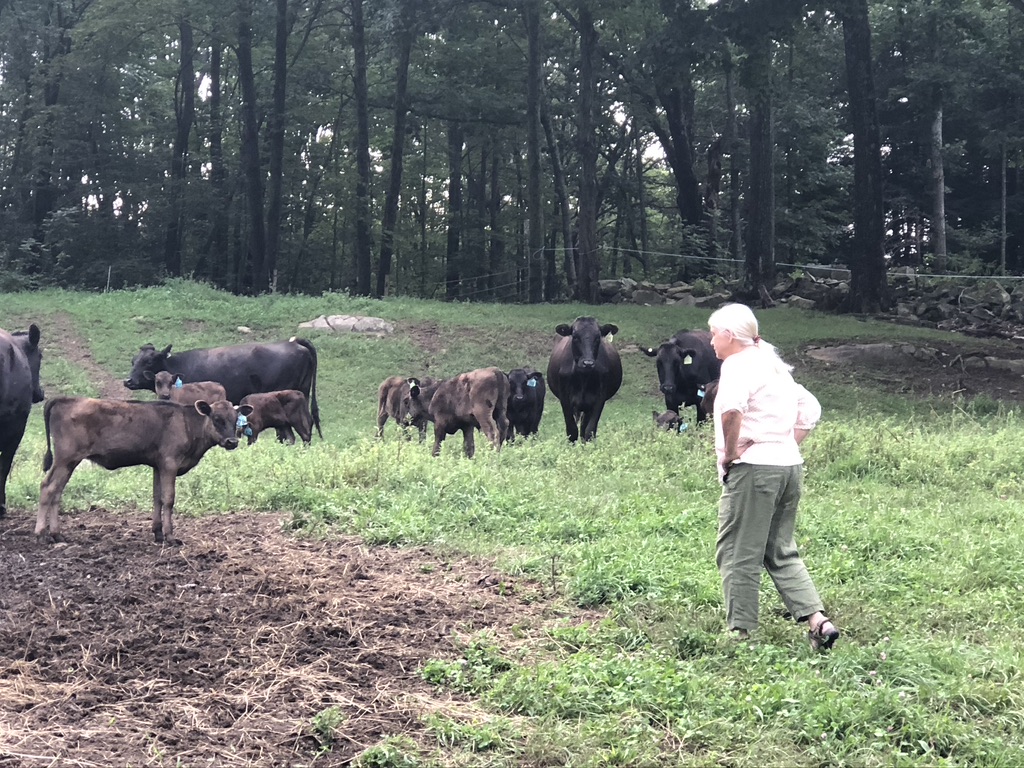
In August, I traveled to southern Vermont, visiting a few different farms with a couple friends. One of our stops was at the Vermont Waygu Farm at Spring Fork Farm in Springfield. The owner is Dr. Sheila Patinkin, a Vermont native, who spent a significant period of her life working as a pediatrician in Chicago. Around 2006, she returned to Vermont, and purchased the 350-acre, Spring-Rock farm, whose origins extend back to 1790. What would Sheila decide to do with the farm?

In 2006, Sheila also went to visit her cousin in Montana, and he primarily raised Angus cattle. However, he served Sheila some Waygu beef burgers and it was a transformative event. Sheila loved the incredible taste of the Waygu, and that led to her deciding to raise Waygu on her new farm. The farm first needed to be reconstructed and renovated, made ready for her new endeavor, so it wasn't until 2008, that she started raising 20 Waygu calves, and never looked back.

Since then, Sheila has become a mini-expert on Waygu. She stated that many of the other small farmers in Vermont have become mini-experts in their respective fields as well, part of the nature of the artisan operations in Vermont. Sheila also made the significant decision to raise only 100% purebred Waygu, certified by the American Waygu Association, and not the hybrids which are common throughout the U.S. 

I found Sheila to be extremely hospitable, intelligent, down-to-earth, and clearly passionate about her farm and Waygu. Not only did she provide us a fascinating tour of the farm, but she also provided us a delicious Waygu dinner. It was a superb experience, and I also ended up purchasing a variety of Waygu products. 

Let's begin our exploration of this farm with a couple important questions. What exactly is Waygu? And what is its history in the U.S.? 

The term "Waygu" simply translates as "Japanese cow" and refers to four breeds, including the Japanese Black (Kuroge Washu), which constitutes about 90% of all Waygu. There is also the Japanese Brown (Akage Washu), which is called Red Waygu in the U.S. There are also the Japanese Polled (Mukaku Washu) and Japanese Shorthorn (Nihon Tankakushu). In the U.S., you'll obviously find primarily Japanese Black with a few Red Wagyu as well. 

Historically, Waygu cattle were originally agricultural draft animals, bred for physical endurance. This breeding led to animals which possessed greater muscular fat, which comprised an important source of available energy for the cattle. As such, Waygu beef has extensive marbling, more fat than other cattle breeds, and this greater marbling makes their meat more unique, more rich and silky.  

Although you might think the higher proportion of fat in Waygu beef is unhealthy, that isn't true at all and it is probably even healthier than other breeds of cattle. For example, the saturated fat in Waygu contains about 40% stearic acid, which does little to raise cholesterol. Wagyu beef also contains a higher proportion to a fatty acid called conjugated linoleic acid (CLA), which is known to be an anti-carcinogen, an anti-inflammatory, and helped in reducing heart disease and diabetes. Wagyu beef contains more CLA than any other food, and about 30% more than any other cattle breed. So, consuming Waygu is healthier than probably any other type of beef. 

There is some ambiguity as to when and how the first Waygu cattle were exported to the U.S., with differing sources stating the year was 1975 or 1976. One of the more prevalent stories is that four Waygu bulls were brought to the U.S. by Texas cattleman Morris Whitney and an unidentified Japanese investor. These cattle were named Mt. Fuji, Judo, Mazda and Rueshaw, but the endeavor ended as a financial failure, and the cattle were sold. As the U.S. didn't possesse any Waygu females, they needed to crossbreed the Waygu with other cattle breeds like Angus and Holstein. 

About 14 years later, The Pantagraph (IL), May 28, 1991, noted that there were currently about 300 Waygu cattle (all male) in the U.S., mostly in Texas. It was also mentioned that a single Waygu commonly sold for $50K-$100K, and in Japan, their meat sold for an average of $68 per pound. In addition, the article stated that 12 black Wagyu cattle had recently been born from Holstein mothers on a farm in Illinois. 

The Fort Worth Star-Telegram (TX), April 6, 1992, reported that no purebreed Wagyu existed in the U.S. There were about 60 Waygu crossbreeds, ranging from ratios of 7/8 to 15/16; as well as several thousand half-breed Waygu. There still weren't any female Waygu in the U.S. but that would soon change.

Everything changed in 1993, when the first female Waygu were permitted to be exported to the U.S. The Des Moines Register (IA), September 12, 1993, reported that 3 purebreed Waygu cows and 2 bulls were delivered to Iowa. The cattle had initially spent several months of quarantine in Japan and then New York, before finally arriving in Iowa. The Waygu were owned by two Japanese investors, under the corporate name of New Era Genetics Limited, who spent two years trying to make this happen. 

There had been multiple previous attempts to import Waygu cows into the U.S. but they all had failed, primarily because they lacked Japanese investors or consultant who would have been able to better cut through the bureaucracy in Japan. So why did these Japanese investors get involved in this endeavor?

One of the two investors owned a restaurant in Japan, and he wanted to raise Waygu in the U.S. as production costs were much lower than in Japan. Japan had also recently lowered their tariffs on imported beef, making Waygu production in the U.S. even more attractive and financially lucrative. Once those tariffs were lowered, beef exports from the U.S. to Japan started increasing. About 42% of the beef that Japan imported came from the U.S. The article also finally noted that there were only about 1500 Waygu in the U.S. which were half-blood or greater. 

The Great Falls Tribune (MT), November 6, 1994, noted that the three purebred Waygu cows had given birth during the summer to the first purebred Waygu born in the U.S. More Waygu cows were soon be imported into the U.S.  For example, the Miami Herald (FL), February 22, 2004, reported on Gary Yamamato, a Texan who owned the BK Ranch and one of world’s largest herds of full-blooded Waygu. In 1999, six years after the first three Waygu cows were imported to the U.S., Yamamato purchased 88 Waygu cows and 12 bulls, as well as hiring a Waygu expert, Shogo Takeda, a Japanese veterinarian.

Sheila started her farm with 20 Waygu but has now become one of the country's top breeders of purebred Waygu cattle. She conducts a very scientific approach to raising the Waygu, undoubtedly due to her prior medical training, which "...uses live ultrasound results, DNA information, and phenotypic growth data to make in-time decisions that prioritize the health of the mother and calf. Our on-farm lab,..., gathers statistics on, steer frame size, hip height, rump fat thickness, birth weight, weaning weight, yearling weight, average daily weight gain, basic marbling scores, all to ensure a best-of-the-best breeding program generation after generation.

All this is done to protect the health of her Waygu as well as to improve each new generation. In addition, Sheila sells some of her cattle at auction, so all of the genetic and medical information she obtains helps in that regard. Although Sheila has previously owned over 500 Waygu cattle, she presently owns about 260 breeding cows, although she will selling about 65 in the near future at a live auction.

Sheila held her first cattle auction in 2018, and stated that her farm is actually best known for its livestock, not its beef. At her next auction, which will be held live and online on October 23, she will sell off about 65 cows and 15 bulls. Check out the Auction Catalog and you'll see the extensive and comprehensive information that Sheila has gathered on each of her Waygu. When Sheila states her farm is "data-driven," the auction catalog gives you a great insight into what they entails.  
 
The Waygu cattle are raised naturally, without antibiotics or hormones, and there's about 1-2 acres of pasture for each cow-calf pair. A special Waygu feed is given to the calves, which constitutes about 70% roughage and 30% grain. One of the most important aspects of raising the Waygu is to present them with a low stress environment, as low stress leads to better marbling. Fortunately, Waygu have a good temperament and calve easily, making raising them easier. Although Red Wagyu technically make better cows, their marbling isn't as good. 

The Waygu are raised for about 25-30 months before they are slaughtered. At that point, they typically weigh around 1400 pounds, having gained about 1.7 pounds per day. That will yield an 850 pound carcass, and about half the meat will end up as ground burger. Their breeding Waygu live long lives, and they still have a few from back in 2007, making them about fourteen years old. Sheila also mentioned that it's more expensive to raise Waygu in Vermont rather than places like Texas and Iowa. 

Prior to Covid, Sheila sold about 95% of her Waygu beef to restaurants, but just prior to the pandemic, she instituted an e-commerce site, with the help of two of her children, making the meat available to consumers, and that greatly helped when all the restaurants had to close. Now, about 80% of her business is through e-commerce and only 20% for restaurants and food service. 

Through her e-commerce site, Sheila offers a wide variety of Waygu meats and she ships all across the U.S. You'll find plenty of typical cuts of beef, from New York Strip to Ribeye, as well as some of which you might not be familiar, like Coulotte and Denver Chuck. The cuts generally come in several different sizes, and everything ships in vacuum sealed packages. Waygu is more expensive than other beef, but it's worth the extra cost. And for those in Massachusetts, the base shipping cost is only $14.99, which is very reasonable. 

<

I got a glimpse inside her refrigerated storage area, which was packed with Waygu beef, separated by specific cuts and types. Some of the boxes and containers were empty, as she was out of stock of those particular meats. There was also a section of Misfits, meat that didn't meet her aesthetic standards, which Sheila wouldn't sell because she only wants to sell quality Waygu. As Sheila said, "You have to be the best of the best." 

In the future, Sheila wants to acquire more cattle, to increase her supply, as her meats sell out quickly. She can't currently meet all the demands for her products. After tasting a number of her Waygu products I fully understand why they sell out so fast. I've already eaten nearly all of the Waygu products I purchased, and I'm ready to buy more.

 
Her Waygu beef has won numerous awards as well at various competitions.


After our tour, Sheila provided us a special Waygu beef dinner, including several different cuts and types of beef. We first began with a cheese and meat platter, which contained a phenomenal Bresaola, made from Sheila's Waygu, from bottom round. Bresaola is basically an air-dried, salted beef that is also aged for 2-3 months. This Bresaola possessed such an alluring aroma, and was tender and flavorful, with nutty notes. What a compelling product and could be one of the best Bresaola that I've ever eaten. 

The Bresaola was produced by Oliver Perkins, of A Small Good, in Rockport, Maine, as part of an experiment, to determine whether Sheila would like more produced so she could sell it. Perkins makes "salumi with terroir," using wild fermentation, and they are the only facility in the U.S. doing so. Perkins also uses many local ingredients to craft his salumi, such as northern spice bush which he uses to spice his Bresaola. I think this experiment was a smashing success as that Bresaola was amazing, and it makes me want to seek out more of Perkin's products.


For the main course, there were a variety of different Waygu cuts and types, including Ribeye, Denver Chuck, and A5 Kobe (not from her farm). You can see all the compelling marbling in the Waygu. We certainly weren't expecting such an amazing dinner, but it was a very generous treat.


As Sheila prepared the rest of the dinner, we cooked the meat on the grill. As Sheila has said, cooking Waygu can be very simple, just adding a bit of salt and pepper and then cooking the meat on the grill. She wants the meat to speak for itself, and not be concealed beneath any sauce. You just need to be careful not to overcook the meat, so timing on the grill, oven or stovetop, is very important.

I was very pleased with how the Waygu was cooked on the grill, and it was an intriguing comparison test to assess the different cuts and types. We were disappointed with the A5 Kobe, as it just wasn't as tender and flavorful as it should have been, and didn't compare to previous such samples I've tasted. However, the other cuts were all delicious, tender and very flavorful. I had brought some wine and we had a fine feast, with great conversation as well. 

My favorite was the Denver Chuck, a cut that is lesser known but worthy of more recognition. It comes from the shoulder, and is commonly well-marbled and tender, with a rich, meat flavor. A skilled butcher is required to obtain the Denver cut, which is one reason why this cut isn't as well known. When it is available though, it is commonly less expensive than other cuts, making it an excellent value too. It is a fine steak for the grill, and only needs salt and pepper.


In the weeks that followed my visit to the farm, I've enjoyed several Waygu products that I purchased there. I got a package of two 8-ounce Waygu Burgers, and prepared them simply, without any cheese or other toppings, to experience the ground beef. And it was quite juicy and tender, with lots of meaty flavor. An excellent burger which possessed greater flavor than many other regular beef burgers.


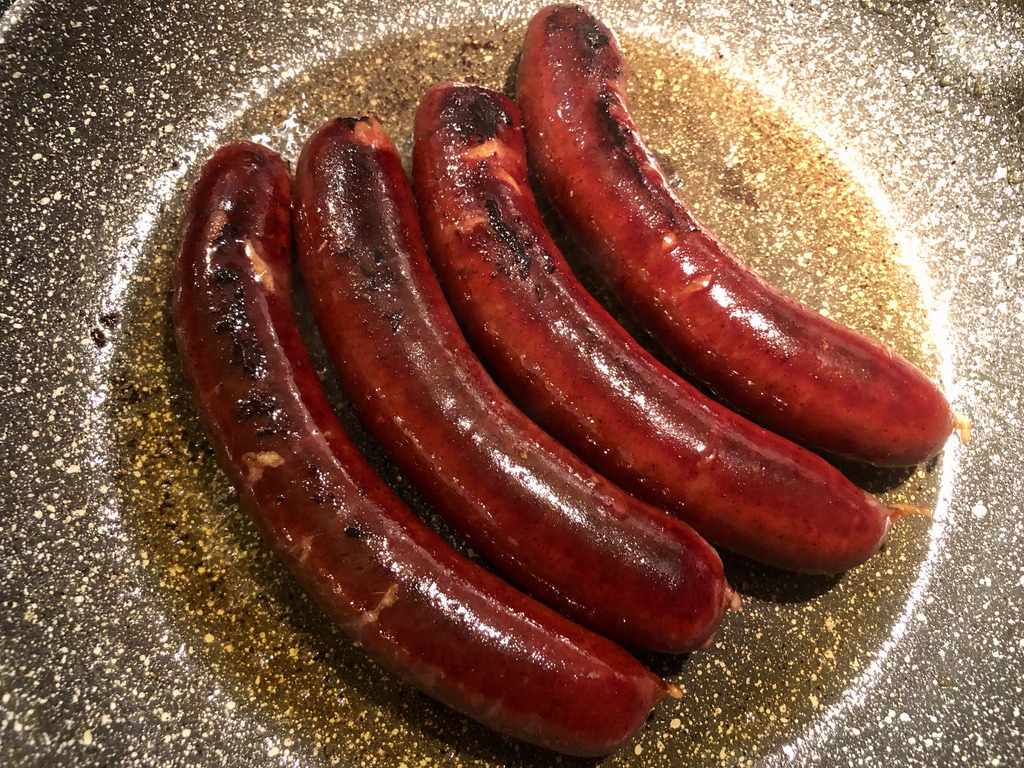
The Waygu Smoked Beef Chorizo was amazing! First, it too was juicy and tender, with a meaty flavor enhanced by the spices. There was a pleasing spicy heat to the Chorizo and they were juicier than many other Chorizo I've previously eaten. I highly recommend these Chorizo and I'll definitely pick up more in the near future.


The Waygu Smoked Beef Kielbasa were also juicy and tender, a commonality to these Waygu products. They definitely taste like a finely made kielbasa.


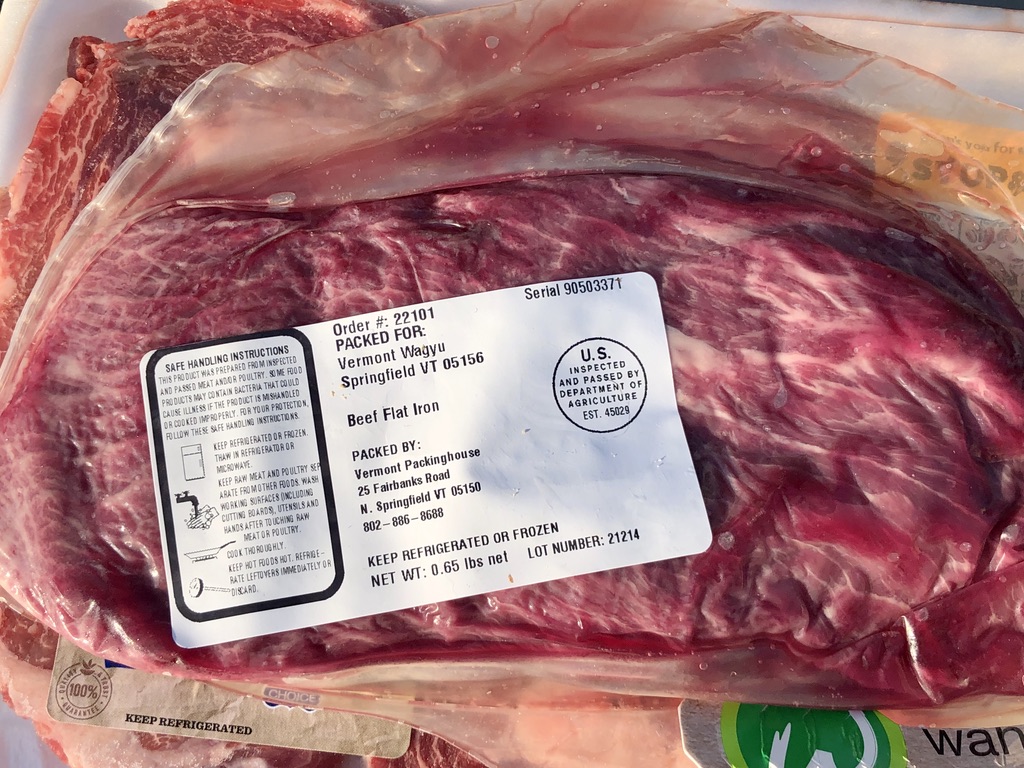
The Waygu Flat Iron is a less expensive cut, which sometimes can be tough, but that wasn't the case with this steak. We cooked it simply on the grill and it was tender and juicy, with plenty of flavor. It was thin so didn't take long to cook on the grill. 


Most recently, I had some more of the Denver Chuck, with Shitake mushrooms, which was nicely marbled, tender and flavorful with a rich, silky mouthfeel. For a lower cost cut, this packs an excellent value and is highly recommended.

Rather than purchase cheap, factory-farm beef, a better option would be to purchase locally grown beef, raised on small, artisan farms, like the Vermont Waygu Farm. Sheila raises purebred Waygu cattle, a rarity in the U.S., and does so both naturally and with a strong scientific foundation. She sells a wide variety of Waygu cuts and products, and they possess great flavor, much better than some of the beef you find at the chain grocery stores. Yes, they are more expensive, but you are paying for the high quality and taste of the beef, and they are certainly worth the price. It's easy to order the Waygu online, and I strongly encourage you to give it a try.