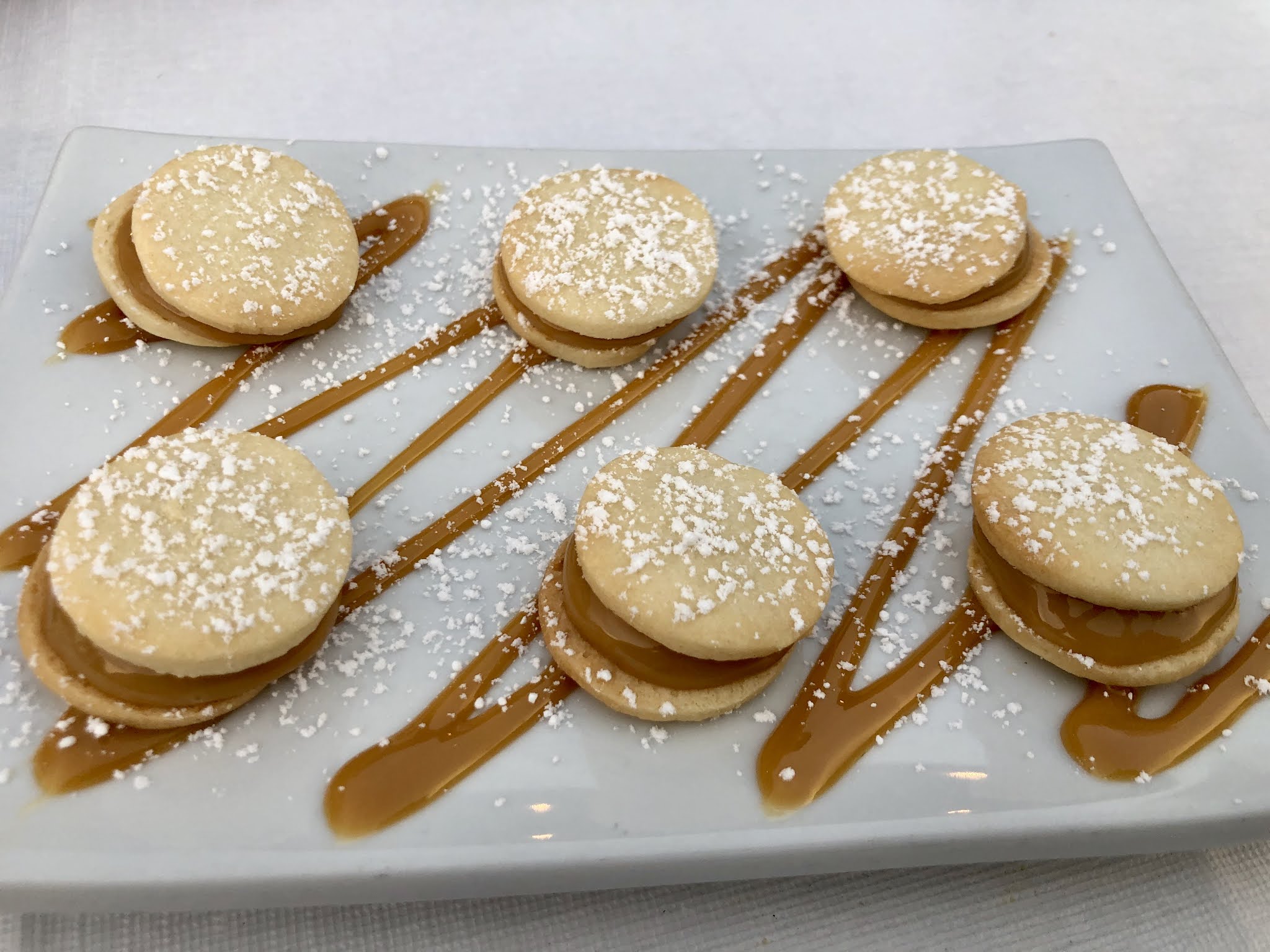
Have you ever tasted Chifa cuisine?
Let’s delve into the history of Peruvian restaurants in the U.S., as well as Chifa cuisine. We should begin with a little information about Peruvian cuisine itself. It’s a fascinating cuisine with numerous influences, a melting pot of cultural influences. There’s the influence of the Incas and other indigenous peoples, as well as the Spanish conquistadors. There’s the influence of African slaves who were brought to Peru to work on plantations. Chinese and Japanese influences are very strong as well, and there’s even Italian influences. And all those are only the main influences, omitting some of the other, more minor cultural influences.
The country of Peru is also home to a bounty of fresh and native ingredients, from thousands of potato varieties to numerous unique peppers, from a number of indigenous fruits to abundant seafood from the Pacific Ocean and inland waterways. Such a wondrous palette of ingredients from which Peruvian cooks can create a myriad of appetizing dishes. This palette was complemented by an assortment of ingredients, from soy sauce to ginger, brought by the cultural influences mentioned above.

The article also offered a recipe for Estafado a la Arequipena, a type of stew made with beef, lamb, chicken, bacon, sausage, vegetables, and more. That might have been one of the first Peruvian recipes presented in an American newspaper.
The San Bernardino County Sun (CA), June 4, 1950, described one woman’s travels in Peru, where she was impressed by two dishes. “One called ‘antecucho’ is almost as characteristic as the American hot dog for it too, can be purchased at roadside stands and carnivals. On investigation, ‘antecucho’proves to be a beef heart barbecued with a sauce…” The article continued, “Another delicacy that pleased her was ‘ceviche,’ raw fish cut in small pieces and covered with lemon juice and served with raw onion which is not as strong as ours, and with diced pepper.”
The San Bernardino County Sun (CA), June 4, 1950, described one woman’s travels in Peru, where she was impressed by two dishes. “One called ‘antecucho’ is almost as characteristic as the American hot dog for it too, can be purchased at roadside stands and carnivals. On investigation, ‘antecucho’proves to be a beef heart barbecued with a sauce…” The article continued, “Another delicacy that pleased her was ‘ceviche,’ raw fish cut in small pieces and covered with lemon juice and served with raw onion which is not as strong as ours, and with diced pepper.”
Both of these dishes are still popular Peruvian foods, and ceviche has become popular even in numerous non-Peruvian spots. In some respects, it's a relatively simple dish, but it can be prepared in a variety of manners and can be absolutely delicious. And with warm weather returning, its an excellent dish to enjoy on a fine summer day.
An interesting bit of trivia was presented in the Pittsburgh Sun-Telegraph (PA), November 5, 1959, which noted, “Peruvian restaurants serve a dish called ‘Mothers-in-law Eyes’ which consists of stuffed prunes. This is the ultimate insult we think.” In Spanish, this dish is called Olhos de Sogra and the prunes appear to be stuffed with a coconut mixture.
In an article titled, titled Picturesque Peru Features Good Eating, the Chicago Tribune (IL), May 21, 1961, mentioned “…anticuchos—bits of hotly spiced beef heart grilled over an open fire—that are hawked at the bullfights here like hotdogs at a United States baseball game.” It continued, “Anticuchos are as characteristic of Peru as the native brandy that comes from the city of Pisco and bears its name. But both should be approached for the first time with caution. Pisco sours are stronger than you think. And anticuchos are made with fiery little peppers, so strong that their juice on your fingers can sting the skin.”

 Although these restaurants brought Peruvian cuisine to the attention of their communities, there was an event in October 1967 which brought it to the attention of people all across the country. In addition, this event led to the spread of a number of Peruvian recipes which newspaper readers could prepare at home.
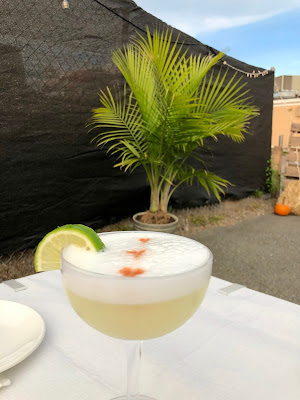 The drinks also had a Peruvian or South American flair. With the initial appetizers, three cocktails were served, including Pisco Sours, Margaritas and Algarrobina (another type of Pisco cocktail). With the Corvina, a Chilean white wine, Sauvignon Semillion, was served while a Chilean red, Santa Emiliana, was served with the Chifa Duck. A Chilean Sparkling wine from Valdivieso was served with dessert. Also with dessert, there was coffee and cappuccino, flavored with powdered chocolate and a healthy amount of Pisco.
 Back to the term Chifa. This word refers to both a fusion of Peruvian/Chinese cuisine as well as the restaurants which serve this intriguing cuisine. And the newspaper articles that detailed the Flight to Peru dinner probably were the first to introduce the term to most Americans.
 In the late 1960s and early 1970s, some Americans started getting curious about Chifa. For example, the Atlanta Constitution (GA), February 3, 1972, briefly noted that a reader has requested a recipe for “…Chifa, a rice dish, or for Chaufi (if the spelling is correct) which it becomes when prepared with chicken.”
 Restaurants specializing in Chifa cuisine in the U.S. generally didn’t appear until the 1990s, although some Peruvian restaurants likely served a few Chifa dishes before this time. However, Peruvian restaurants are still relatively uncommon in the U.S. as there are only roughly 400-500 such restaurants and the number serving Chifa is obviously even smaller. As comparison, there are said to be over 40,000 Chinese restaurants in the U.S. So why isn't Peruvian cuisine, and especially Chifa, more popular in the U.S.?
An interesting bit of trivia was presented in the Pittsburgh Sun-Telegraph (PA), November 5, 1959, which noted, “Peruvian restaurants serve a dish called ‘Mothers-in-law Eyes’ which consists of stuffed prunes. This is the ultimate insult we think.” In Spanish, this dish is called Olhos de Sogra and the prunes appear to be stuffed with a coconut mixture.
In an article titled, titled Picturesque Peru Features Good Eating, the Chicago Tribune (IL), May 21, 1961, mentioned “…anticuchos—bits of hotly spiced beef heart grilled over an open fire—that are hawked at the bullfights here like hotdogs at a United States baseball game.” It continued, “Anticuchos are as characteristic of Peru as the native brandy that comes from the city of Pisco and bears its name. But both should be approached for the first time with caution. Pisco sours are stronger than you think. And anticuchos are made with fiery little peppers, so strong that their juice on your fingers can sting the skin.”

The first Peruvian restaurant to open in the United States was Inca’s, located in Los Angeles, and established in 1963. This also might be the first Peruvian restaurant in the world, located outside of Peru. There is little information online about this restaurant, and the main reference was in the Los Angeles Times (CA), October 22, 1967, which stated, “Inca’s was the first Peruvian restaurant in this country (four years ago) and is probably still the only one making a serious effort to introduce the authentic dishes. It is in an old Berendo St. House, comfortably converted into a red table-clothed restaurant. Carlos and Ofelia Binasa are in charge of the kitchens; son Gabriel manages.”
The article also noted that they were open only for dinner and “The menu is a la carte but prices are moderate.” The original Incas’s was located at 301 North Berendo, and was advertised as serving South American cuisine, and specializing in Peruvian dishes.
Near the end of 2022, I was contacted by Gabriel Garciamendez, the former owner of Inca's and he provided me more information about his restaurant. Gabriel was personable and talkative, a fine storyteller, and someone I could have spoken to for hours. Gabriel is a native of Peru and when he was 18-19 years old, he came to the U.S., to Los Angeles, to attend college. At that time, he was an athlete and one of his heroes was William Patrick "Parry" O'Brien, a famed American shotputting champion.
Gabriel wanted to return one day to Peru as a "big fish," as somebody of note. However, he found it difficult supporting himself so he ended up joining the Air Force. He was able to travel all over the world, and was also stationed in Germany for four years. During this time, he tasted food from many different countries, always comparing it to Peruvian cuisine, and he never found an actual Peruvian restaurant anywhere else. After leaving the Air Force, he returned to Los Angeles and attended UCLA.
One day, when he was 23-24 years old, he drove down North Berendo with his girlfriend and saw that there was a restaurant available for rent. He immediately stopped there and inquired, as he had a desire to open his own restaurant, despite not knowing how to cook or having any business experience. It was clear that he wanted to showcase Peruvian cuisine, which seemed to be lacking outside of Peru. He spoke to the owners and was persuasive enough to reach an agreement with them about the restaurant.
Fortunately, Gabriel had support from some of his family, including his mother, Ofelia, his stepfather, Carlos, and his Uncle Julio. The restaurant opened in 1963, and Ofelia did much of the cooking. During the first few years, Gabriel hired several professional chefs to help instruct her in cooking and running a restaurant, although none of those chefs were conversant in Peruvian cuisine.
Gabriel stated that many Peruvian dishes resemble "leftovers" so they had to be redesigned, to be more visually appealing, for an American audience. Initially, the restaurant labeled their cuisine as "South American," choosing not to call it "Peruvian" because Gabriel didn't want it to have a negative impact on Peruvian cuisine. In time, after his customers loved the food, did Gabriel feel more confident about what they served and started calling the dishes "Peruvian" cuisine.
Some of their dishes included Ceviche, Chifa, and Anticuchos (made with beef hearts although many customers thought it was filet mignon). The restaurant had a beer & wine license, but couldn't afford a spirits license, so they weren't able to sell Pisco, the famed Peruvian spirit. How could you serve the classic Pisco Sours if you couldn't sell Pisco?
I was fascinated to learn that Gabriel had an answer to that dilemma, as he improvised, creating his own version of a Pisco Sour which he called an Inca Sour. Instead of Pisco, he used Sake! What a fascinating idea, and at that time, Sake cocktails were a rarity so this was revolutionary. They were purchasing Sake by the box, so it wasn't a high quality Sake, but the cocktails were immensely popular, including with celebrities from John Wayne to Ida Lupino.
Inca's was located in a predominantly Jewish neighborhood and there were few Peruvians in the area. However, the restaurant became a prominent landmark for those Peruvians who did live in the region, and they would often describe their location in regard to the location of Inca's. In time, Gabriel would generously help other Peruvians, some who once worked for him, establish their own Peruvian restaurants. He would also open three other locations of Incas's, including in Beverly Hills, at 1712 Sunset Boulevard, and downtown. Incas's would last for about 20-21 years.
Gabriel is now a restaurant/small business consultant and life coach, as well as the founder and CEO of Perceptions Unlimited International. He is also working on publishing a book, sharing his experiences to assist others in improving their lives. His hobby is now cooking, especially Chifa. He is the pioneer who first brought Peruvian cuisine to the U.S. and 2023 is the 60th Anniversary of the establishment of Inca's.
Other Peruvian restaurants opened in the 1960s as well, primarily in California, Florida and Illinois. In May 1964, Rosita’s, a Peruvian & Mexican restaurant opened on 941 Kearny in San Francisco, and it was the first Peruvian restaurant in that city. The San Francisco Examiner (CA), May 30, 1964, published an advertisement for Rosita’s, which noted they served dishes including Anticucho, Papas Rellenas, Papas a la Huancayma, Seco de Carnero, Ceviche, and Peruvian Tamales. It was also noted that entrees cost 90 cents to $3.
Sometime thereafter, The Times (CA), May 6, 1966, mentioned that Frank Torres, owned a Peruvian restaurant on Montara Beach. This was known as the Frank Torres Beach Hotel.
The Miami News (FL), January 2, 1964, mentioned that the Machu Picchu del Peru restaurant and lounge had opened, in late December 1963, tat 732 Biscayne Boulevard. And around October 1969, a Peruvian spot opened in Chicago. The Chicago Tribune (IL), October 10 & 19, 1969, stated Piqueo, the first Peruvian restaurant in Chicago, opened at 5427 North Clark Street. It was operated by Moises Asturrizaga, who sang opera, and his sister, Juana, who did most of the cooking.
The 25th Annual Newspaper Food Editors Conference was held in Chicago in early October 1967. During this event, Braniff International hosted a “Flight to Peru,” a special Peruvian dinner that was held in the Drake’s Gold Coast Room. Over 150 food editors attended this dinner, many unfamiliar with Peruvian cuisine, and the dinner earned many raves. The Tampa Tribune (FL), October 7, 1967, noted that 155 food editors gave a standing ovation at the conclusion of this Peruvian dinner.
The Daytona Beach Morning Journal (FL), November 14, 1967, also stated, “It has been said that the food of Peru is the most interesting in Latin America, combining elements of ancient Incan and even earlier Indian civilizations with later Spanish and oriental influences.” The Evansville Press (IN), October 6, 1967, stated that “The Peruvian cuisine was selected because it is different, sophisticated and almost unknown in the United States,..” The article also noted that Braniff had started making changes to their service in 1965, including their food service, and were going to introduce some Latin American dishes on their domestic flights.
The menu for this dinner was extensive, with a number of appetizers, an entrée, and dessert. The appetizers included Ceviche Peruano de Pescado, “raw Corvina fish (flown from Peru) ‘cooked’ in lemon juice” and served with very thin, onion rings, sweet potatoes and corn on the cob, served at room temperature. The Tampa Tribune (FL), October 7, 1967, stated “the chef who prepared it said he prefers marinating the fish only 10 minutes.”
There were also Anticuchos Mixtos, skewered cubes of beef, broiled over charcoal, speared with tiny squares of green and red peppers on a skewer, and served with a hot sauce. The Empanaditas were tiny turnovers, “filled with ground meat, finely chopped onion, green pepper, tomato, nuts, raisins, stuffed olives and hard cooked eggs.” The Alcachofa Limena were artichoke hearts, served Lima style, with one article stating they had a Bernaise sauce.
The Conchitas Pavillon were small, very sweet scallops baked with butter and garlic in Conchita shells. The Sopa de Calabaza Fria, chilled pumpkin soup, was made with fresh pumpkin, cream and a dash of curry, garnished with tiny croutons atop dollops of sour cream. There was also Corvina Paracas, filets of corvina, the “great fish of Peru.”
For the entrée, there was Arroz con Pato Chifa, duckling marinated in soy sauce, salt and seasoned pepper, then air dried before roasting. It was served with rice and a date, rice and walnut dressing, as well as cantaloupe and watercress. In the Plain Dealer (OH), March 8, 1968, it was said that, “The garnish, we were told, was supposed to be mango slices, which proved unavailable in Chicago in the fall. So the chef experimented with hot cantaloupe—and it was good!” The writer also started, this was “The best duckling we ever tasted…the duckling was superb! The skin was dark, but crisp, the meat moist and flavorful. And the accompanying Rice Date Dressing was marvelous too.”
The ‘Chifa’ aspect of this dish is important, and I’ll explain more shortly.
A Salad course was served after the entrée, and it was said to be, in the Tampa Tribune (FL), October 7, 1967, “…simply the most beautiful Bibb lettuce you can imagine dressed only with oil and vinegar blended with herbs and pimento bits.”
Dessert consisted of Guayaba Machu Picchu that was described in the Tampa Tribune (FL), October 7, 1967, as “Guava shells filled with a mixture of cream cheese, cream, lemon and orange juice, grated rind and chopped bits, were served in stemmed sherbet glasses. Divine.” Pistachios may also have been added to this dish. Dessert also included a many-layered, flaky filled pastry, though little information was given about it.

Several recipes for these various dishes showed up in a number of newspapers across the country, helping to give more publicity to Peruvian cuisine, making it accessible to home cooks too.
The Chicago Tribune (IL), October 6, 1967, provided a recipe for the Peruvian Chifa Duckling while the Tampa Tribune (FL), October 7, 1967, gave the recipe for the Ceviche with its sides. In the Greensboro Daily News (NC), October 16, 1967, there were recipes for the Chifa Duckling and Rice-Date Dressing. The San Antonio Light (TX), October 19, 1967, also provided the same recipe for Peruvian Chifa Duckling.
The Daytona Beach Morning Journal (FL), November 14, 1967, published recipes for the Sopa de Calabaza Fria, Conchitas Pavillon, Ceviche, Anticuchos, and Guava con Queso. The Augusta Chronicle (GA), January 11, 1968, printed recipes for the Chifa Duckling, Rice Date Dressing, Watercress with Mango, Alcachofa Con Conchitas, and Anticuchos.
With all of these recipes, the Braniff Peruvian dinner could have almost been completely replicated.

Around the 1850s, as many Chinese left China for the Americas, some traveled to Peru, many working on sugar and cotton plantations although a number moved to the cities, especially Lima. And as they did in the U.S., some of the Chinese opened their own restaurants. The Glasgow Herald (Scotland), July 15, 1868, reprinting a New York Times article of unknown date, printed, “Nearly all the families in Peru live from fondas. Fondas are Chinese eating houses, where meals are cooked and sent out. If a family has no ‘small servant,’ one of the Chinamen from the fonda carries the meals to the houses of his patrons.”
Sometime during the 1920s or 1930s, these fondas became known as Chifas. It's alleged this word derives from the Cantonese words “chi” and “fan”, which may translate as “to cook or eat rice” or to “cook or enjoy a good meal.” The article La pasión por el «chifa» by Humberto Rodríguez Pastor (May-June 2006) stated, “Peruvians heard the Chinese pronounce the expression "chi-fan", which means to go eat rice, or simply a call to come to the table to have a snack, and that was the origin of the word that is used today.”
A related term is Chaufa, which refers to fried rice, derived from the Chinese term chau fan. Interestingly, Americans might have been exposed to the term Chaufa before hearing about Chifa. The Daily News (NY), July 17, 1947, reported on the winner of their recipe contest. Margaret E. Randels, of Manhattan, won the $5 prize for her recipe for Chaufa. There wasn't any explanation about this dish, or reference to its Peruvian origins. The recipe was simply presented without any context or background. The main ingredients included rice, bacon, ham, green pepper, onion, and eggs.

A week later, the newspaper stated that the answer has been found in an article by Elizabeth Lambert Ortiz in Gourmet Magazine in October 1969. “The cooking is known as Chifa, perhaps a corruption of chao fan—fried rice—which Peruvians always call “aroz chaufa” as if to say ‘rice fried rice.’ The main differences between this and classical Chinese cooking is the use of potato starch to thicken a dish and the employing of local ingredients.
And another week later, the Atlanta Constitution (GA), February 17, 1972, actually provided a recipe for Arroz Chaufa, and the basic ingredients includeed eggs (made like a tortilla), chicken, pork, green onions, and soy sauce.
And another week later, the Atlanta Constitution (GA), February 17, 1972, actually provided a recipe for Arroz Chaufa, and the basic ingredients includeed eggs (made like a tortilla), chicken, pork, green onions, and soy sauce.
The San Antonio Light (TX), January 25, 1970, discussed their contest where a reader could win trip to Lima, Peru. The article stated, “No visit to Lima would be complete without a meal at a Chinese restaurant, called a ‘chifa’ by Limenos.” Continuing, it was noted, “The exuberant combination of the Cantonese cuisine, the art and delicacy of its preparation and the Oriental atmosphere are so popular with the Limenos that there is hardly a family that does not have a weekly reunion in a favorite ‘chifa.’” Plus, “There is a chifa for every budget. A good meal for a family of five, consisting of seven different dishes, will cost from four to ten dollars, depending upon the luxury of the establishment—or lack of it.” Finally, it was said, “The chifas vary from tiny, family ‘joints’ to big restaurants that can accommodate up to 400 guests.”
Chifas expanded outside of Peru. The San Francisco Chronicle (CA), January 17, 1971, printed an article on travel to Ecuador, stating that the largest Chinese colony in Ecuador was in the city of Quevedo. “The chifa (Chinese restaurant) in Quevedo…The food is a marriage of Chinese and Ecuadorian cuisines, ..”
Supply issues plagued the Chifas! The Arkansas Gazette (AR), March 13, 1971, reported that “Peru’s military government Friday banned the importation of bamboo shoots, water chestnuts, bean sprouts, snow peas and black mushrooms. If Chinese food—known as ‘Chifa’ in Peru—is to continue a national favorite, the government said, restaurant owners will have to buy the prime materials in Peru. All the ingredients are available in domestic markets, it said.”
More details were provided by the State Times Advocate (LA), March 23, 1971. Besides what was mentioned above, there was also a ban on importation of canned and prepared fish, crustaceans, and shellfish used in Chinese food. There wree over 200 Chifas in Lima, and “…the city’s better chifas import up to 30% of the food they serve.”
The article also noted, “Lima boasts Latin America’s largest and oldest Chinese community. Most are descendants of Cantonese laborers who began arriving in 1849 to help build the port of Callao and the central railroad which crosses the Andes.” As was also noted, “Peruvians of Chinese descent today total an estimated 50,000. Almost half live in this capital city. They hold respected positions in many professions, particularly medicine and law.”
In another article about Lima, Peru, the Los Angeles Times (CA), June 24, 1973, described Chifas in some detail, noting there were about 58 major Chinese restaurants in Lima, as well as another 100 or so minor eateries, “…ranging from five-table family operations to back-of-the-store wok-suey joints. They are called ‘chifas.” The article continued, “Once you get onto the chifa trail, of course you cannot stop.” In addition, it was mentioned, “If you want to start a real controversy in Peru, imply that one single chifa is superior to all the rest. For while everybody has a favorite, they’re all willing to concede that the next-best isn’t very far behind.” Finally, the article noted, “.., chifas are very much a part of the culture. Any big celebration—birthday parties, retirement dinners—just automatically takes place in a chifa.”
The Lubbock Avalanche-Journal (TX), July 12, 1974, offered some Peruvian recipes, including Ceviche, Papas a la Huancaina, Anticuchos, and Arroz Chaufa (which was made with rice, bacon, cooked ham--or chicken, turkey, or pork--, green onions, eggs, and soy sauce.

In the Boston+ region, there’s a small number of Peruvian restaurants, including Tambo 22 (Chelsea), Peruvian Taste Restaurant (Charlestown), Rincon Limeño (East Boston), Machu Picchu (Somerville), Machu Chicken (Somerville), Ruka (Boston), Celeste (Somerville), Pollos a la Brasa El Chalan (East Boston and Lynn), and Pollos a la Brasa Beto’s (East Boston).
Of these restaurants, several have a couple Chifa dishes on their menus, mainly Lomo Saltado and Arroz Chaufa, with Peruvian Taste Restaurant having the most extensive Chifa menu of all of them, with easily over a dozen dishes available.
Peruvian cuisine is diverse and delicious, and more Peruvian restaurants should open in the U.S., allowing more Americans to experience this fascinating cuisine. Chifa cuisine, that delightful fusion of Peruvian/Chinese food, also needs more attention, especially as it should appeal to most Americans. In the Boston area, we're fortunate to have the number of Peruvian restaurants that we do, but we could use more as well.
What's your favorite Peruvian restaurants? What's your favorite Peruvian dishes? Have you tried any Chifa dishes? If so, which ones? And if you haven't experienced Peruvian cuisine yet, then now is the time to do so, to explore the myriad of culinary pleasures that can be found.
(As of 2/20/2023, I've updated this article with an expanded history of Inca's, the first Peruvian restaurant in the U.S.)