Showing posts with label beauty. Show all posts

Tuesday, November 7, 2023

Amarante: São Gonçalo, His Church & Phallic Cakes

As I previously mentioned, after we left the Monverde Wine Hotel Experience, we traveled to the town of Amarante, still in the Vinho Verde region. After lunch at Zé da Calçada, we did a little sightseeing, crossing the Ponte de São Gonçalo to visit the Church of São Gonçalo. Some believe the town might have been originally founded by Amarantus, a Roman centurion.


The Ponte de São Gonçalo (Saint Gonçalo) crosses over the Tâmega River, a tributary of the Douro River, which extends from Spain into Portugal. The original bridge over the river was constructed in the 13th century, but around 1763, it was washed away in a flood. So, a new granite bridge was built in 1790, with three arches and a pair of Baroque spires. 

In 1809, this bridge was the site of a battle between the forces of Napoleon and Portuguese troops. The Portuguese were able to hold off the French troops for nearly two weeks, allowing British troops in Portugal to attack other areas. However, once the French troops were finally able to capture the bridge, they pillaged and vandalized Amarante, making the Portuguese pay for their resistance. The photo above shows a sign commemorating the 100th anniversary of the battle.

As you walk down the bridge, the Church of São Gonçalo is in front of you. Saint Gonçalo is the patron saint of Amarante. Gonçalo Pereira was born around 1187 in Vizela, Portugal, and began his religious training as a child. After his ordination, he was placed in charge of the parish of Saint Pelagius, which he governed well. Eventually, he turned the parish over to his nephew so he could make a pilgrimage to the Holy Land, visiting Rome and Jerusalem. After fourteen years in the Holy Land, the archbishop commanded that Gonçalo return to the parish. 


Gonçalo quickly learned that his nephew had abused his position in the parish, using the money that was supposed to go to the poor to purchase himself fine horses and hounds. The nephew wasn't happy to see Gonçalo and had his dogs attack him. Before they could kill his uncle, they were called off and Gonçalo chose to leave the area, eventually settling in the hills of Amarante, living as a hermit. Over time, pilgrims came to see him, to hear him preach. 


Through prayer, Gonçalo saw a new future for himself, which led him to joining the Dominican Order. He then returned to Amarante, to establish a church, and the people, many who had heard him preach before, eagerly flocked to him. He also became known as a miracle worker, and at least one of those miracles involved wine from an unlikely source. 

Gonçalo was said to be the impetus for constructing a bridge over the Tâmega River. Legend claims that the bridge workers once ran out of wine, and were quite thirsty. So, Gonçalo split open his own head, from which wine poured out to slake the thirst of the workers. Another version of the legend claims that he only split open a rock, and wine poured out. When the workers were hungry, it's also claimed that Gonçalo called out to the fish in the river, who leapt onto the river bank, sacrificing themselves for the workers. 


Gonçalo died on January 10, 1259, and he allegedly predicted the exact date of his death. Even after his death, people felt he still performed miracles, including appearing to various people. Pope Pius IV made him a Saint in 1561, and his feast day is January 10th. 


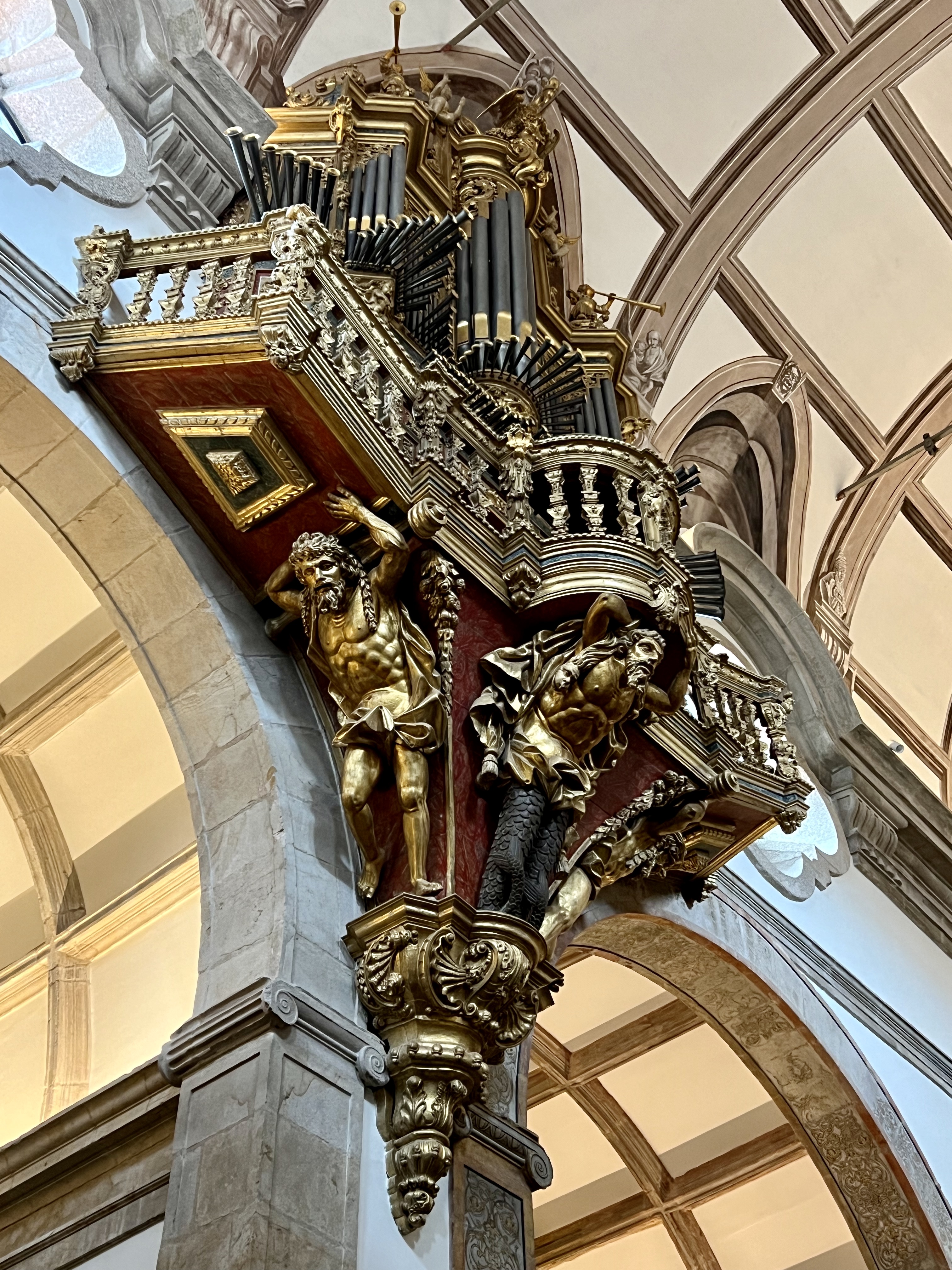
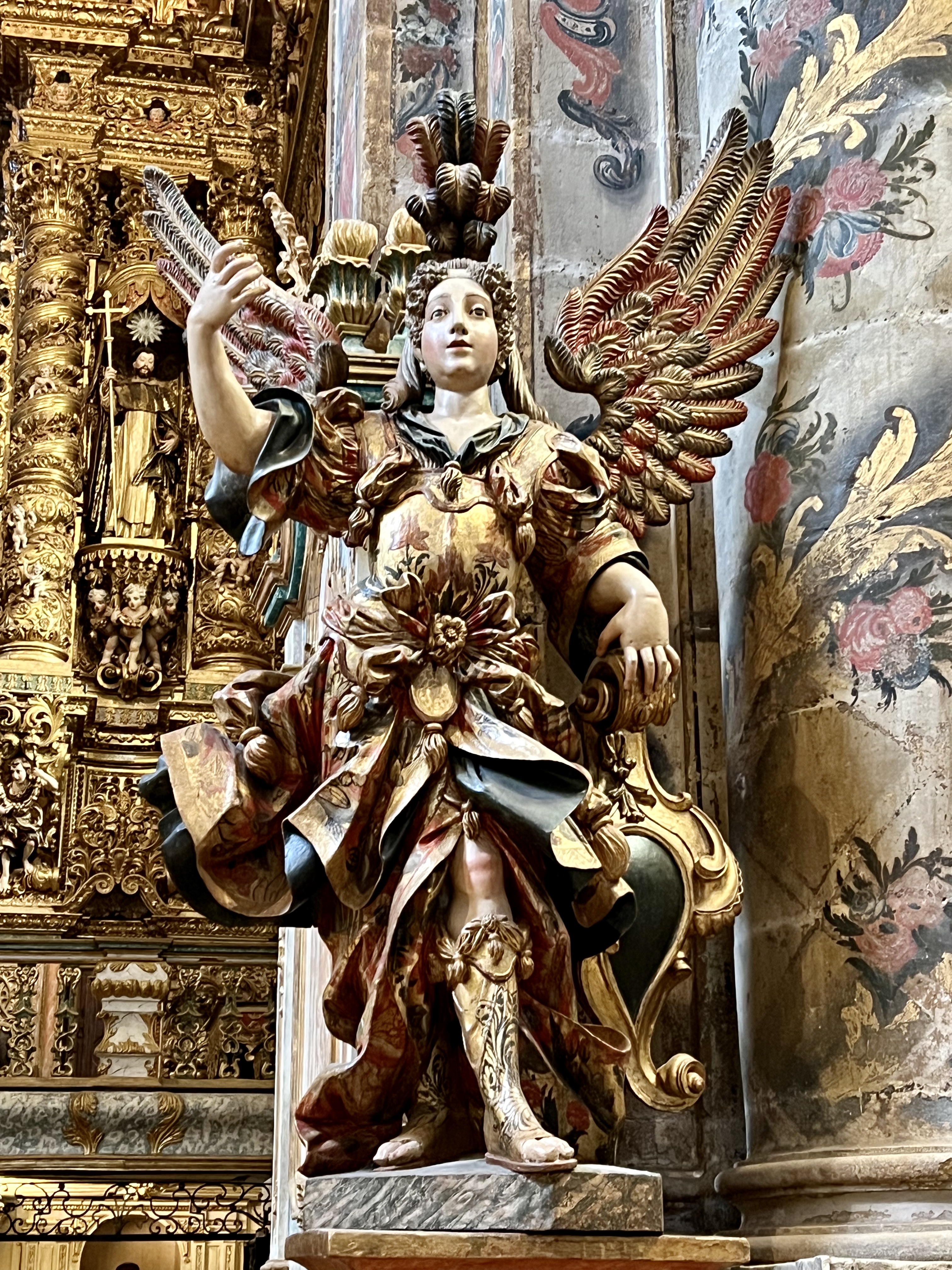
The Church is gorgeous, and once again I'm amazed at the quality, intricate work done by the artists during the 16th century. You don't have to be religious to appreciate the great beauty of the artwork and architecture. 


For unknown reasons, Saint Gonçalo became associated with love and fertility, and women still pray to him to secure a husband, and to have children.


The bottom photo shows an effigy of Gonçalo on his tomb, and it is often here that women come seeking his assistance for their love lives. Some leave flowers atop the effigy. It's also said that if a single woman pulls on the rope belt of the statue of Gonçalo, in the second picture above, they will find a husband. 


Another famous symbol of Saint Gonçalo is the Bolos de São Gonçalo, the cakes of Saint Gonçalo, which are also known as Doces Fálicos, "phallic sweets." These penis-shaped cakes can be found throughout Amarante, from its bakeries to wooden stalls managed by elderly women. These cakes are supposed to promote fertility, but also are given to single woman as a charm to help them attract a husband. No one knows the origins of these cakes, and many suspect they extend back to ancient pagan practices. By some unknown twist of fate, the cakes became associated with Saint Gonçalo. 

Initially, the cakes were created only on a couple religious holidays, in January and June, but eventually they started being made year-round. Around 1926, the cakes were declared obscene by the government and thus prohibited, although people still made them secretly. It wasn't until 1974 that the laws changed, and people could once again openly produce these cakes. 

Amarante is worth a stop if you visit the Vinho Verde region. A delicious lunch, tasty convent sweets, fascinating history, medieval architecture, great beauty and more. 

Monday, August 20, 2018

Rant: Beauty, Wine & The Beast

"Wine is, at its best, an agent of beauty, and the writer does well to engage with it on that level."
--What Makes A Wine Worth Drinking by Terry Theise

I've begun reading an advance copy of Terry Theise's new book, which is due out in November. The Introduction, which many people commonly skip when reading a book, is a fascinating read, full of intriguing ideas and poetic language. The above quote is in the introduction, and I suspect it will be elaborated further within the book. However, it is a concept which Theise touched on in his prior book, and which others have advanced as well.

The quote brought to mind one of my old posts too, which dealt with beauty, and I felt it was warranted to bring it back as the ideas are timeless and worthy of reflection. What are your thoughts on beauty and wine?


******
Everything has beauty, but not everyone sees it.
--Confucius

The tale of Beauty and the Beast is well known, and its theme and basic framework have been used many times, in books, movies, television shows, plays and more. It teaches us to look past the shallow surface, to find the beauty within, and it would not have had such an impact if beauty were not an important value. There is probably not a single human culture which does not possess a concept of beauty, though what they consider to fit their definition of beauty can vary widely. In the end, it boils down to cherishing what we find to be aesthetically pleasing.

Beauty, of whatever kind, invariably excites the human soul to tears.
--Edgar Allan Poe

The appreciation for beauty often seems to get lost in discussions of food and wine, though its importance there should not be underestimated. I am talking about beauty in all its aspects, not solely the visual, which can touch any of our senses. And I am not discussing any particular definition of beauty either, but merely the aesthetic concept which can encompass all of the diverse definitions. We need to embrace beauty, to praise it, to savor it, to share it.

Beauty in things lies in the mind which contemplates them.
--David Hume

Last week, I mentioned Ernesto Catena who possesses a Japanese aesthetic, which influenced the creation of his Alma Negra winery. An appreciation of beauty is one of his primary motivations, and his passion for that beauty is infectious. He relishes the beauty of nature, of simplicity, of balance. Fred Minnick, a friend of mine, is an accomplished photographer, often taking wine and food related pictures. He has an excellent sense of aesthetics, drawing out the beauty of his subjects, whether they are people or inanimate objects. Even the most grotesque of subjects can be transformed into a beauty through a skilled photographer's eye. Terry Theise, wine importer and author, wrote Reading Between the Wines, which contains many beautiful phrases and sentences, showcasing the aesthetics of language.  

A thing of beauty is a joy forever.
--John Keats

Writers understand the beauty of language, and how a special turn of phrase can elevate a story to another level of aesthetic appreciation. A wine bottle may possess an ugly label, yet the wine within might be indescribably beautiful, a sublime sensory pleasure. A plate of food which is presented beautifully will often seem to taste better than a messy, unappealing looking plate. It is often said we eat through our eyes, and there is some truth to that. There is no endeavor where beauty does not play some role, and we should endeavor to cherish beauty where ever we encounter it.

Those who contemplate the beauty of the earth find reserves of strength that will endure as long as life lasts.
--Rachel Carson

To that end, I would like to see more food and wine writers embrace the beauty, in what they experience as well as how they present themselves. Let your writing highlight beauty while you also attempt to make your words beautiful. Eaters and drinkers, don't just swallow and guzzle, but take time to appreciate the beauty of what is on your plate and in your glass. Take time to allow your senses to properly savor everything. Beauty elevates our experiences so we should be eager to seek it out.

Beauty awakens the soul to act.
--Dante Alighieri

Monday, December 3, 2012

Rant: Beauty, Wine & Food

"It is the beauty of the thing that is important to me."
--Bernard Portet

Once again, I encountered someone with a deep appreciation for beauty, this time at a lunch with Bernard Portet, the former wine maker of Clos du Val and current wine maker for Polaris Wines. With forty years of experience in wine making, Bernard has had ample time to hone his philosophy, yet much of what he believes remains consistent to what his father once taught him. For Bernard, beauty is an essential element in wine making and his words struck my soul, touching upon one of my own strong beliefs. I thought it was time to once again raise this issue, to spread a passion for aesthetic pleasure.   

"Everything has beauty, but not everyone sees it."
 --Confucius

The concept of beauty is universal. There is not a single human culture which does not possess a concept of beauty, though their definition of what actually constitutes beauty can vary widely. Beauty is about far more than how a person or object looks, extending deep into their personality and inner nature. It also extends to all our activities, to each and every item you can consider. It is an integral aspect of everything in our lives, even though we might not think about it all, or even most, of the time. In the end, beauty boils down to cherishing what we find to be aesthetically pleasing.

"Beauty, of whatever kind, invariably excites the human soul to tears."
--Edgar Allan Poe

Despite its significance, an appreciation for beauty does not seem to get sufficient coverage in discussions of food and wine. We must not underestimate or forget its importance and relevance in these arenas. To be clear, I am referring to beauty in all its aspects, not solely the visual, which can touch all of our senses. In addition, I am not referring to any particular and limited definition of beauty but merely the general aesthetic concept which encompasses all of the diverse definitions. We need to embrace beauty, to understand it, to praise it, to savor it, to share it, and more.

"Beauty in things lies in the mind which contemplates them."
--David Hume

Who are some people who seem to exemplify this love of aesthetics, whose work reflects this passion for all that is beautiful? Let me provide several examples, many of whom I have met and experienced their infatuation with the nature of beauty.

Like Bernard Portet, Ernesto Catena, the owner and winemaker at Alma Negra winery in Argentina, is also driven by the concept and philosophy of beauty. Ernesto seems to possess a more Japanese-style aesthetic and it influences his life, including the creation of his winery. An appreciation of beauty is one of his primary motivations and his passion for such beauty is infectious. He relishes the beauty of nature, of simplicity and balance. It was his love of aesthetics which led him to embracing Biodynamics, as he felt it coincided with his aesthetic philosophy.

"What voice might we lend to illuminate wine’s strange beauty?"
--Randall Grahm

One example that I have not met is Terry Theise, wine importer and author of a fascinating book, Reading Between the Wines. It is clear from reading this book, which contains many beautiful phrases and sentences that showcase the aesthetics of language, that Terry is a devotee of beauty. Even if you don't agree with all of the strong opinions of Thiese, you will be drawn into his writing by the sheer beauty and poetry of his words. It is such a pleasure to read a book such as this one. Randall Grahm, wine maker and author, is another whose writings reflect well the beauty of language. Randall is keenly aware of the importance of aesthetics and it seems to be a guiding principle of his life as well.

"Those who contemplate the beauty of the earth find reserves of strength that will endure as long as life lasts."
--Rachel Carson

Fred Minnick, a friend of mine, is an accomplished photographer, often concentrating on wine and food related pictures. Anyone can take a photo of what is commonly considered a beautiful image. But a professional photographer, with a true sense of aesthetics, can draw out the beauty of any subject, whether living or inanimate. Even the most grotesque of subjects can be transformed into a beauty through a skilled photographer's eye. When you look through Fred's portfolio, his skill at finding the beauty in all his subjects is more than evident. David Dadekian, another friend of mine, is also a food photographer who grasps the concept of aesthetics and whose photography excels for that reason. Such excellence is more than a skill and must derive from a true passion for beauty.

"Beauty awakens the soul to act."
--Dante Alighieri

The best of writers fully understand the beauty of language, how a special turn of phrase can elevate a story to another level of aesthetic appreciation. It is not an easy skill, but one honed over time and with experience. A wine bottle may possess a plain or even ugly label, yet the wine within might be indescribably beautiful, a sublime sensory pleasure. That can work in reverse though, that a wine with a beautiful and compelling label may contain a less than appealing wine. A plate of food which is presented beautifully will often seem to taste better than a messy looking plate. It is often said we eat through our eyes, and there is some truth to that. We cannot forget are other senses too, from smell to touch, all of which impact our aesthetic feelings.

"Beauty is worse than wine, it intoxicates both the holder and beholder."
--Aldous Huxley

There is no endeavor where beauty does not play some role and we should endeavor to cherish beauty where ever we encounter it. To that end, I call on all food and wine writers to embrace the beauty in what they experience as well as how they present themselves. Let your writing and photography highlight beauty while you also attempt to make your words and pictures beautiful in their own right. Eaters and drinkers, don't just swallow and guzzle, but take time to appreciate the beauty of what is on your plate and in your glass. Take time to allow your senses to properly savor every bite and sip. Beauty elevates our experiences so we should be eager to seek it out.

"'Beauty is truth, truth beauty, - that is all Ye know on earth, and all ye need to know."
--John Keats

Who do you know whom possesses a strong passion for aesthetics, who is a true lover of beauty? How do they express this passion? Writing, photography, art? What are your own experiences with beauty?

Monday, August 22, 2011

Rant: Beauty & The Beast

Everything has beauty, but not everyone sees it.
--Confucius

The tale of Beauty and the Beast is well known, and its theme and basic framework have been used many times, in books, movies, television shows, plays and more. It teaches us to look past the shallow surface, to find the beauty within, and it would not have had such an impact if beauty were not an important value. There is probably not a single human culture which does not possess a concept of beauty, though what they consider to fit their definition of beauty can vary widely. In the end, it boils down to cherishing what we find to be aesthetically pleasing.

Beauty, of whatever kind, invariably excites the human soul to tears.
--Edgar Allan Poe

The appreciation for beauty often seems to get lost in discussions of food and wine, though its importance there should not be underestimated. I am talking about beauty in all its aspects, not solely the visual, which can touch any of our senses. And I am not discussing any particular definition of beauty either, but merely the aesthetic concept which can encompass all of the diverse definitions. We need to embrace beauty, to praise it, to savor it, to share it.

Beauty in things lies in the mind which contemplates them.
--David Hume

Last week, I mentioned Ernesto Catena who possesses a Japanese aesthetic, which influenced the creation of his Alma Negra winery. An appreciation of beauty is one of his primary motivations, and his passion for that beauty is infectious. He relishes the beauty of nature, of simplicity, of balance. Fred Minnick, a friend of mine, is an accomplished photographer, often taking wine and food related pictures. He has an excellent sense of aesthetics, drawing out the beauty of his subjects, whether they are people or inanimate objects. Even the most grotesque of subjects can be transformed into a beauty through a skilled photographer's eye. Terry Theise, wine importer and author, wrote Reading Between the Wines, which contains many beautiful phrases and sentences, showcasing the aesthetics of language.  

A thing of beauty is a joy forever.
--John Keats

Writers understand the beauty of language, and how a special turn of phrase can elevate a story to another level of aesthetic appreciation. A wine bottle may possess an ugly label, yet the wine within might be indescribably beautiful, a sublime sensory pleasure. A plate of food which is presented beautifully will often seem to taste better than a messy, unappealing looking plate. It is often said we eat through our eyes, and there is some truth to that. There is no endeavor where beauty does not play some role, and we should endeavor to cherish beauty where ever we encounter it.

Those who contemplate the beauty of the earth find reserves of strength that will endure as long as life lasts.
--Rachel Carson

To that end, I would like to see more food and wine writers embrace the beauty, in what they experience as well as how they present themselves. Let your writing highlight beauty while you also attempt to make your words beautiful. Eaters and drinkers, don't just swallow and guzzle, but take time to appreciate the beauty of what is on your plate and in your glass. Take time to allow your senses to properly savor everything. Beauty elevates our experiences so we should be eager to seek it out.

Beauty awakens the soul to act.
--Dante Alighieri

Thursday, February 25, 2010

Saké: Not Just For Drinking

Sure, Saké is delicious to drink. But it has uses beyond that of which you may not be aware. And women especially might want to take notice.

Ever hear of a saké-buro? It is a Saké bath, and they have been popular in Japan for a very long time. There is even a special Saké sold for that purpose, tama no hada Saké, or “skin like a gleaming jewel” Saké. Many cosmetic stores sell pre-made Saké bath solutions, or you can just add some Saké of your own to your bath. Add about 8-12 ounces to your bath.

Why would you take a Saké bath? First, it is thought that it warms your body for a longer time than a normal bath. Second, it may help to stabilize your blood pressure. Third, it is great for your skin.

The Japanese say, “The skin is the mirror of the internal organs.” This means that your skin reflects your overall health, so good skin means you likely are in good health. Saké is thought to be good for your skin because it contains so many amino acids. Saké has the most amino acids of any alcohol, and seven times as many as red wine. For example, Saké contains amino acids such as glutamic acid (which creates protein), alanine (which is found in collagen), leucine (important for growth during infancy and maintaining muscle), and arginine (important in cell division, wound healing, and the immune function). The Japanese also use Saké in other cosmetic products, such as skin moisturizers and cleansers.

So even if you don't like to drink Saké, you still might want to buy some to add to your next bath.