I am back again with a new edition of Thursday Sips & Nibbles, my regular column where I briefly highlight some interesting wine and food items that I have encountered recently.
**********************************************************
1) On Tuesday, July 9, at 6:30pm, BOKX 109 American Prime, located on the grounds of Hotel Indigo in Newton, will host a special Five-Course Tequila Dinner on their outdoor patio. In addition to sampling various forms of this famous summer spirit, guests will be treated to a special prix fixe menu prepared by Executive Chef Stephen Coe himself. Boasting an assortment of exotic dishes, the evening’s culinary component promises to enhance the intricate flavors of each paired tequila-based libation.
The Menu:
Amuse
Yellow Watermelon Ceviche (carbonated tuna sashimi, cilantro fluid gel, lime pop rocks)
*Paired with Ultimat Elderflower cocktail
First course
Adobo Rubbed Diver Scallops (sweet corn and chorizo humitas, saffron espuma)
*Paired with Gran Patron
Second course
Grilled Cactus and Drunken Mushroom Salad (agave and green garlic purée, truffled sherry vinaigrette)
*Paired with Patron Reposado
Third course
Sous Vide Halibut (creamed maze pudding, crab escabeche ravioli, corn emulsion)
*Paired with Patron Anejo
Fourth course
Confit Pork Belly and In-House Porchetta (garbanzo bean purée , white nectarines, sherry lacquer, rhubarb lattice)
*Paired Gran Patron Burdeos
Dessert
Xo Cafe Gelato (cumin lace cookie)
COST: $65 (excludes tax)
Reservations are required. Please call 617-454-3399
2) Get a peek behind the closed kitchen doors of an award-winning restaurant during the new ”Off the Menu” cooking demonstration at 62 Restaurant & Wine Bar located in Salem, on Thursday, July 14 at 6pm. Guests will experience how to create some of the restaurants most popular dishes while watching Chef/Owner Antonio Bettencourt slice and dice the freshest local cuisine.
Cooking aficionados are invited to this behind-the-scenes opportunity to learn how to create some of the restaurant’s unique Italian dishes, as they listen to anecdotal tales from the kitchen of both mishaps and strokes of genius.
Highlighting some of the most delectable foods and flavors of the season, Chef Bettencourt will prepare a 3-course meal beginning with Seared Sea Scallops with spicy pickled grapefruit, avocado & crispy prosciutto. Diners can watch as a giant Raviolo al'Uovo stuffed with ricotta, a poached egg, wild mushrooms, black truffle and pancetta is prepared right before their eyes. And if that isn’t mouthwatering enough, the presentations will end on a sweet note with a Toffee Pudding.
Tickets are available for $45 per person, with an optional wine pairing for an additional $20. Tax and gratuity not included.
Reservations are necessary and can be done by calling 62 at (978) 744-0062
3) To celebrate the Fourth of July, Beacon Hill Hotel & Bistro (BHHB) is exercising its independence and going all-American this Thursday, July 4. From 5:30pm-1pm, the BHHB is celebrating all things “4” by offering a 4-course seasonally inspired meal for $44 per person (tax and gratuity not included). Space is limited and reservations are recommended. Regular menu also available. For reservations please call Beacon Hill Hotel & Bistro at 617-723-7575
SPECIAL MENU:
--Grilled Asparagus, Gremolata, Sauce Gribiche
--Fresh Pasta, Woodbury's Clams, Peas, House Made Ham
--Spiced Lamb Sausage, Potato Turnip Salad, Sourdough Crumb
--Mixed Berry Shortcake
4) At Michael Schlow’s Tico in the Back Bay, they are going to hold an All-American BBQ on Sunday, July 14, from 2pm-8pm. The Summer BBQ features tastings and giveaways from Patron and Corona, including two tix to a harbor cruise.
The $25 all-you-can-eat BBQ menu includes:
· Bacon cheeseburger sliders
· Homemade pork bratwurst with spicy mustard pickles
· St. Louis style ribs
· Grilled paprika chicken wings with aji verde
· Smoked cola-crusted brisket
· Marinated vegetable skewers
· Grilled corn on the cob with chipotle aioli and cotija
· Watermelon salad with queso fresco
· Tomato and cucumber salad (dill, mint and > cilantro)
· Green beans and Serrano ham with pickled red jalapeno
· Chilled pasta and egg salad
· Traditional and cheesy broccoli corn bread
· Assorted homemade pickles
· Ray's kettle chips
Thursday, June 27, 2013


Wednesday, June 26, 2013
Vacationing In Provincetown: Land's End to John Randall (Part 2)


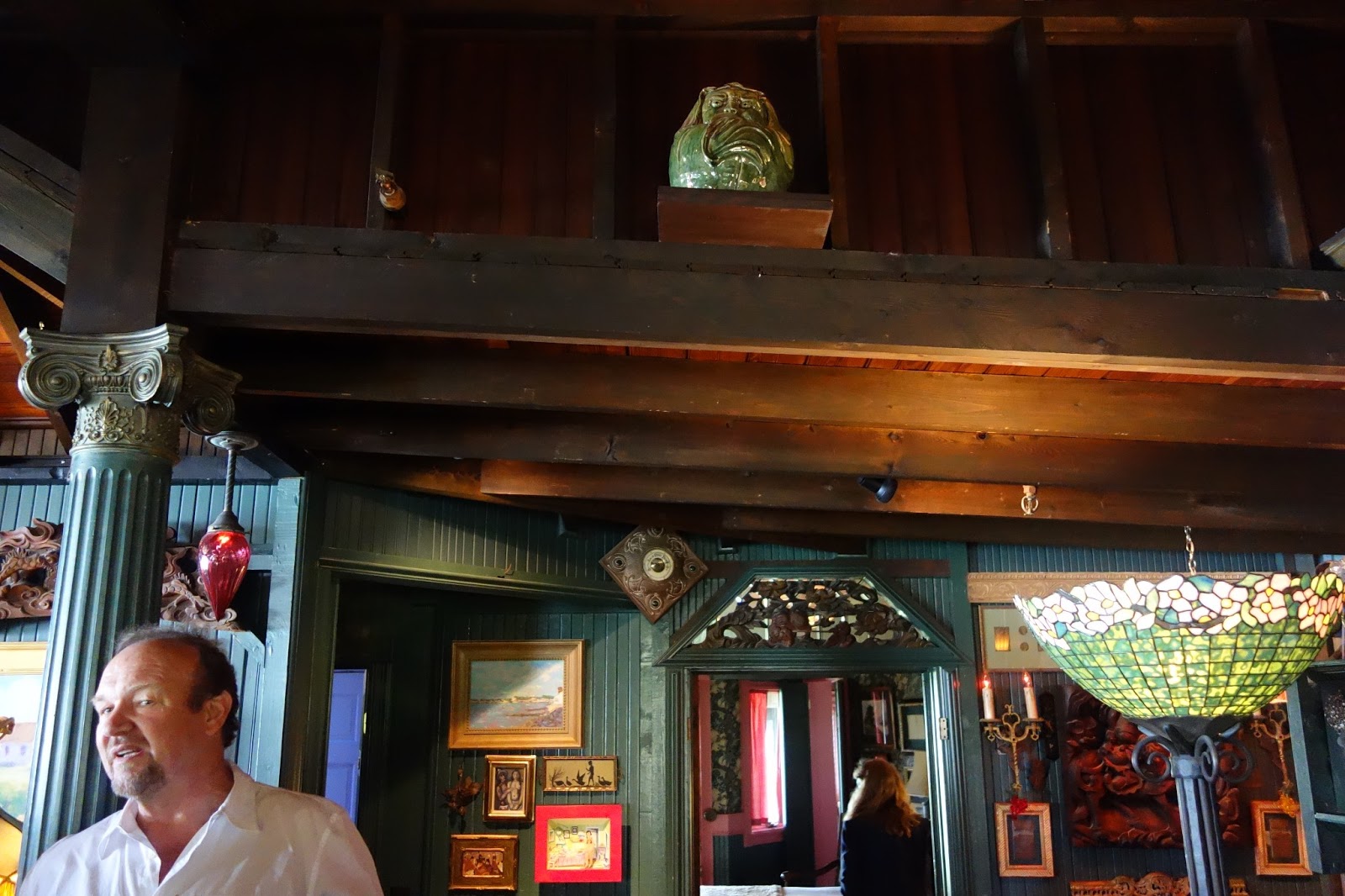
Back in the later 1800s, the main road ended at this point, the rest of the land being primarily tidal flats and marshes. So this location was then known as the "land's end." Since that time, the surrounding area has been built up so that now roads and land extend beyond this region. It may not longer be the literal land's end, but it still is fairly close to the end. This neighborhood is more a residential area, a quieter region, with a few inns scattered around.




Tuesday, June 25, 2013
Vacationing In Provincetown: Ferry to Pedicab (Part 1)

--Agnes Edwards, Cape Cod: New and Old
When you think of Provincetown, the furthermost town on Cape Cod, what first comes to mind? Asking this question online, I received a wide array of responses, clearly indicating that there is no single view of Provincetown. However, unless you have traveled there recently, your thoughts about this Cape Cod town may not be accurate or complete. You might not realize all that Provincetown has to offer, and that it is a destination that will appeal to a broad range of people, young and old, married and single, straight and gay. If you have not visited recently, then it is worth considering as a destination for your next vacation.

Earlier this month, I was invited by the Provincetown Tourism Office to participate in a Media Familiarization Tour. This four day, three night trip was intended to provide us a sampling of what Provincetown has to offer tourists. My fellow writers included: Rebecca Caro, Lukas CorVatta, Sophia Dembling, Eric Jansen, Thomas Routzong and Steven Skelley. Overall, it was a fun and interesting exploration of Provincetown, making me desirous of a return trip, like maybe during the Food & Wine Festival in October.

--Agnes Edwards, Cape Cod: New and Old
Some of the first inhabitants of Cape Cod and the Provincetown region were the Nauset, a Native American people, who bore some similarities to the neighboring Wampanoag peoples. They spoke a dialect of the Algonquian language, and they referred to the Provincetown region by two different names: meeshaum and chequocket. Meeshaum might be related to the word mushauwomuk, which means “where there is going-by-boat” while chequocket is related to chauquaquock, which means “Englishman.” The later term obviously came to be used after the Nauset's first encounters with Europeans.
Potentially the first Europeans to visit Provincetown were the Norse, and there is a theory that Thorwald Eriksson, brother to the more famous Leif Erikkson, came to Provincetown around 1004. In 1853, during an excavation, remnants of a wall were found in Provincetown and it was thought to be connected to Thorwald, possibly ballast stones from his ship. During the 1500s, a few different explorers passed by Cape Cod, some who might have stopped in the Provincetown area. It would not be until the early 1600s that the Provincetown region would get major attention.

Before the Pilgrims landed in Plymouth, they first stopped at Provincetown. In fact, on November 11, 1620, while anchored in Provincetown Harbor, they signed the Mayflower Compact, a charter establishing their government for the new lands they had found. This is a vital document in U.S. history, and helped pave for the way for the Declaration of Independence and Constitution. After signing the document, the Pilgrims landed in Provincetown, and spent about five weeks exploring the land.

The Provincetown region eventually became popular with fishermen because of the abundance of seafood available offshore. On June 14, 1727, it was incorporated as a town called Provinctown, though the residents actually wanted to call it Herrington. The name Provincetown came from a provision in its charter referring to the Province of Massachusetts. After the Revolutionary War, the town saw a population boom of fishermen, whalers and Portuguese sailors. The next two hundred years would see many changes come to Provincetown, a rich and diverse history which is well worth investigating. If you love history, then visiting Provincetown would help cater to that interest.

--Agnes Edwards, Cape Cod: New and Old
Today, Provincetown is nearly 4 miles long and more than 2 miles wide, occupying about 8.35 square miles of land. It is roughly divided into the West and East Ends, with the Fisherman’s Wharf acting as the dividing line between the two sections. The West End was once considered mainly the Portuguese section while the East End was more for the wealthy as well as tourists and artists. Those divisions have largely been erased, though it should be noted that high real estate costs are still a problem. Fortunately, efforts are being made to construct more affordable housing.
There are two main streets in Provincetown, which roughly parallel each other, called Commercial Street and Bradford Street, though they were once known as Front Street and Back Street. The name change essentially occurred when the town's industry changed from an emphasis on the sea to an emphasis on tourism. The average year round population is now only about 3500, down from a high of 4642 back in 1890. However, with the seasonal influx of tourism, the island's population can rise up to 100,000 or more. Tourism provides a huge economic benefit to Provincetown.

A better option, which I used to reach Provincetown, is the ferry and there are a couple ferry companies in Boston which you can use. I went through the Bay State Cruise Company, located on Seaport Boulevard next to the World Trade Center. They run several ferries each day and I recommend that you make a reservation rather than just show up to buy a ticket. Try to get someone to drop you off at the ferry as overnight parking in the area can be expensive. An adult round trip ferry ticket costs $85 and the trip itself only takes about 90 minutes. There is a small galley on board where you can buy food and drink.

--Agnes Edwards, Cape Cod: New and Old
My ferry ride to Provincetown was very pleasant, especially as the weather was beautiful that day. It certainly beats sitting in my car in traffic trying to get over the Sagamore bridge. As it was such a clear day, it was pleasant to watch the approach to Provincetown as you curve around its hook and come into the harbor. Unfortunately, my ferry ride back to Boston did not go as well. There were rough seas, and let us just say that it was quite rough on the stomachs of many of the passengers. You might want to carry some Dramamine just in case you encounter rough seas.
Once landing in Provincetown, I took a Ptown Pedicab to the Land's End Inn, allowing me an opportunity to check out the town as the pedicab pedaled down the streets. My driver was from Lithuania, and I would later learn that many Eastern Europeans come to work in Provincetown during the summer. This was actually my driver's first day operating a pedicab and he had been in Provincetown for only about three weeks. You can walk to most places in Provincetown, though sometimes you might want a pedicab or taxi.

Monday, June 24, 2013
Rant: Teens, Binge Drinking & Irresponsible Parents
Parents, do you care that you may be causing brain damage to your children? Do you care whether you get arrested and maybe face prison? Do you care that you might have to pay millions of dollars in compensation? This is your wake-up call so pay close attention or otherwise face the consequences of your reckless behavior.
During this season of high school graduations, proms, and other related occasions, why do some parents allow alcohol-fueled parties at their homes for underage teenagers? I am not talking about letting your children drink a glass or two of wine or beer with dinner. I am talking about parties where cases of beer, bottles of hard liquor and other alcohol are available to teenagers and where they generally can drink as much as they like. What the hell are these parents thinking?
The most common reason given seems to be that the parents would rather their children drank in front, or near them, rather than sneak it outside somewhere. I think that is a weak argument, and the situation can cause far more harm than good.
It is extremely doubtful that the only time those teenagers are drinking is at a home sanctioned party. They are doing so in the woods, at homes where the parents are away, in parks, and elsewhere. There are parties every weekend somewhere. Many of these teens are not just sipping a beer or two. They are getting drunk, swigging down beer after beer, or shot after shot. Letting those children drink at a house sanctioned party only tells them that is it ok to drink at other times as well.
Compounding this matter is that when those drunken teens stumble home from their unsanctioned parties, their overly permissive parents might gently chide them, if even that, and the scene will get repeated time and time again. The teens know their parents won't really do anything about their drunkenness, so they have no incentive to curb their behavior. And that behavior comes with a cost those parents are not even considering.
Even at a house sanctioned, I think parents are deluding themselves if they think they have it under control. Do they personally ensure that each and every underage child at their party does not drink too much? How do they monitor that? Do they personally monitor and inspect each and every child as they enter and leave the party? Or are the parents off in another room of the house, allowing the children their freedom? It seems likely the parents are not in the main room with all of the teenagers. How many children want their parents hovering around their party, watching everything? I generally believe that any monitoring is lax, and fails to accomplish its intended purpose.
What harms could result from the action of these parents?
First, such behavior is illegal, a violation of Massachusetts General Law, Chapter 138, Section 34, which states in part: "whoever furnishes any such beverage or alcohol for a person under 21 years of age shall be punished by a fine of not more than $2,000 or by imprisonment for not more than one year or both. For the purpose of this section the word “furnish” shall mean to knowingly or intentionally supply, give, or provide to or allow a person under 21 years of age except for the children and grandchildren of the person being charged to possess alcoholic beverages on premises or property owned or controlled by the person charged." By allowing an alcohol-fueled party for your underage children's friends, you could be fined or even go to prison. Is it worth the risk?
As an example this year, there was an arrest of parents in Connecticut for hosting an underage drinking party as well as an arrest of an adult in Hingham for the same. And every year, there seems to be other parents and adults arrested for allowing parties at their homes where alcohol is served to minors. Do you really want to be in the news, maybe even on the front page, for such an arrest? What example does that serve to your children?
Second, you open yourself up to potential civil liability if one of the drunk, underage teenagers at your party injures themselves or others. Every year we read about a deadly drunk driving accident involving a teenager. In 2010, according to statistics from the National Highway Traffic Safety Administration, about 30% of the 15-20 year olds that were killed in automobile crashes had a blood alcohol content of .01 or higher while 25% had a blood alcohol content of 08 or higher. That doesn't consider all of the other drunk driving accidents that occur where there is serious injury, but not loss of life.
No matter how many times teenagers are warned about the dangers of drunk driving, some of them still do it each year. Some parents like to think that their children are smart enough not to drink and drive, but teenagers don't always make the best decisions. They think they are invulnerable, that bad things happen to other people, not themselves. They screw up, cause they are teenagers and sometimes don't choose the right thing to do.
Do you really want to be partially responsible for a death or serious injury of one of those children you claim you want to protect? Do you really want to open yourself up to potential liability, which could be in the millions? If you can't guarantee 100% monitoring of any such underage party, and it is probably impossible to do, then there is a possibility one of those drunk teenagers could injure or kill themselves, or someone else. I certainly wouldn't want that on my conscience. Would you?
Third, and a point that most parents don't seem to realize, is that binge alcohol drinking by teenagers can permanently harm their developing brains. In the latest issue of Scientific American Mind (Juy/August 2013), there is a disturbing article, Bad Mix For the Teen Brain by Janet Hopson. It discusses the effect of binge drinking on teenage brains and the results should scare any parent who allows their children to have alcohol-fueled parties at their homes, or who does little to curb their teen's drinking away from the house.
Approximately 24% of high school seniors and 44% of college students binge drink, which means they consume at least 4-5 drinks at a single occurrence at least once every two weeks. Just consider how many weekly alcohol parties occur with teenagers, and it is easy to see that binge drinking for some of them can occur every week, and not even every other one.
What is the harm in that? A very serious one. "An emerging body of data indicates that alcohol damages specific regions of the maturing brain." (p.68) It gets even worse. "Periodic heavy drinking is more damaging to both body and brain than smaller amounts of alcohol consumed more often because extremely high blood alcohol levels are toxic to organs, severely impair sensory and cognitive functions, and encourage habit formation of addiction." (p.68) Teenage brains are still developing and binge drinking can wreak havoc with that development, especially in cognitive abilities. It is currently unknown whether that damage is permanent, or whether there may be a way to fix the damage. The key obviously is to protect your child from sustaining that damage in the first place, and allowing underage children to binge drink at your home is part of the problem, not the solution.
And don't expect your children to be able to control their alcohol consumption. "In addition, a youthful brain has weaker controls that would stop a person from drinking too much." (p.68) If they have access to alcohol at a party, their psychological ability to control their drinking is far less than it would be in an adult. They often make poor choices in regarding to drinking, which can cause additional damage to their maturing brains. Those weaker controls also contribute to why such teenagers may drive while they are drunk.
Stop allowing your teenage children to drink alcohol. You are not doing them any favors. Instead, you are opening yourself up to arrest, civil liability, endangering the lives of those children and you could be contributing to damaging their maturing brain. Being the cool or permissive parent is an insufficient reason to allow underage drinking. Parents, wake up and start acting like a responsible adult and do the proper thing for your children.
During this season of high school graduations, proms, and other related occasions, why do some parents allow alcohol-fueled parties at their homes for underage teenagers? I am not talking about letting your children drink a glass or two of wine or beer with dinner. I am talking about parties where cases of beer, bottles of hard liquor and other alcohol are available to teenagers and where they generally can drink as much as they like. What the hell are these parents thinking?
The most common reason given seems to be that the parents would rather their children drank in front, or near them, rather than sneak it outside somewhere. I think that is a weak argument, and the situation can cause far more harm than good.
It is extremely doubtful that the only time those teenagers are drinking is at a home sanctioned party. They are doing so in the woods, at homes where the parents are away, in parks, and elsewhere. There are parties every weekend somewhere. Many of these teens are not just sipping a beer or two. They are getting drunk, swigging down beer after beer, or shot after shot. Letting those children drink at a house sanctioned party only tells them that is it ok to drink at other times as well.
Compounding this matter is that when those drunken teens stumble home from their unsanctioned parties, their overly permissive parents might gently chide them, if even that, and the scene will get repeated time and time again. The teens know their parents won't really do anything about their drunkenness, so they have no incentive to curb their behavior. And that behavior comes with a cost those parents are not even considering.
Even at a house sanctioned, I think parents are deluding themselves if they think they have it under control. Do they personally ensure that each and every underage child at their party does not drink too much? How do they monitor that? Do they personally monitor and inspect each and every child as they enter and leave the party? Or are the parents off in another room of the house, allowing the children their freedom? It seems likely the parents are not in the main room with all of the teenagers. How many children want their parents hovering around their party, watching everything? I generally believe that any monitoring is lax, and fails to accomplish its intended purpose.
What harms could result from the action of these parents?
First, such behavior is illegal, a violation of Massachusetts General Law, Chapter 138, Section 34, which states in part: "whoever furnishes any such beverage or alcohol for a person under 21 years of age shall be punished by a fine of not more than $2,000 or by imprisonment for not more than one year or both. For the purpose of this section the word “furnish” shall mean to knowingly or intentionally supply, give, or provide to or allow a person under 21 years of age except for the children and grandchildren of the person being charged to possess alcoholic beverages on premises or property owned or controlled by the person charged." By allowing an alcohol-fueled party for your underage children's friends, you could be fined or even go to prison. Is it worth the risk?
As an example this year, there was an arrest of parents in Connecticut for hosting an underage drinking party as well as an arrest of an adult in Hingham for the same. And every year, there seems to be other parents and adults arrested for allowing parties at their homes where alcohol is served to minors. Do you really want to be in the news, maybe even on the front page, for such an arrest? What example does that serve to your children?
Second, you open yourself up to potential civil liability if one of the drunk, underage teenagers at your party injures themselves or others. Every year we read about a deadly drunk driving accident involving a teenager. In 2010, according to statistics from the National Highway Traffic Safety Administration, about 30% of the 15-20 year olds that were killed in automobile crashes had a blood alcohol content of .01 or higher while 25% had a blood alcohol content of 08 or higher. That doesn't consider all of the other drunk driving accidents that occur where there is serious injury, but not loss of life.
No matter how many times teenagers are warned about the dangers of drunk driving, some of them still do it each year. Some parents like to think that their children are smart enough not to drink and drive, but teenagers don't always make the best decisions. They think they are invulnerable, that bad things happen to other people, not themselves. They screw up, cause they are teenagers and sometimes don't choose the right thing to do.
Do you really want to be partially responsible for a death or serious injury of one of those children you claim you want to protect? Do you really want to open yourself up to potential liability, which could be in the millions? If you can't guarantee 100% monitoring of any such underage party, and it is probably impossible to do, then there is a possibility one of those drunk teenagers could injure or kill themselves, or someone else. I certainly wouldn't want that on my conscience. Would you?
Third, and a point that most parents don't seem to realize, is that binge alcohol drinking by teenagers can permanently harm their developing brains. In the latest issue of Scientific American Mind (Juy/August 2013), there is a disturbing article, Bad Mix For the Teen Brain by Janet Hopson. It discusses the effect of binge drinking on teenage brains and the results should scare any parent who allows their children to have alcohol-fueled parties at their homes, or who does little to curb their teen's drinking away from the house.
Approximately 24% of high school seniors and 44% of college students binge drink, which means they consume at least 4-5 drinks at a single occurrence at least once every two weeks. Just consider how many weekly alcohol parties occur with teenagers, and it is easy to see that binge drinking for some of them can occur every week, and not even every other one.
What is the harm in that? A very serious one. "An emerging body of data indicates that alcohol damages specific regions of the maturing brain." (p.68) It gets even worse. "Periodic heavy drinking is more damaging to both body and brain than smaller amounts of alcohol consumed more often because extremely high blood alcohol levels are toxic to organs, severely impair sensory and cognitive functions, and encourage habit formation of addiction." (p.68) Teenage brains are still developing and binge drinking can wreak havoc with that development, especially in cognitive abilities. It is currently unknown whether that damage is permanent, or whether there may be a way to fix the damage. The key obviously is to protect your child from sustaining that damage in the first place, and allowing underage children to binge drink at your home is part of the problem, not the solution.
And don't expect your children to be able to control their alcohol consumption. "In addition, a youthful brain has weaker controls that would stop a person from drinking too much." (p.68) If they have access to alcohol at a party, their psychological ability to control their drinking is far less than it would be in an adult. They often make poor choices in regarding to drinking, which can cause additional damage to their maturing brains. Those weaker controls also contribute to why such teenagers may drive while they are drunk.
Stop allowing your teenage children to drink alcohol. You are not doing them any favors. Instead, you are opening yourself up to arrest, civil liability, endangering the lives of those children and you could be contributing to damaging their maturing brain. Being the cool or permissive parent is an insufficient reason to allow underage drinking. Parents, wake up and start acting like a responsible adult and do the proper thing for your children.
Friday, June 21, 2013
Sequoia Grove Winery: Michael Truijlllo, A Forte With Fermentation

With a jolly smile, Michael Trujillo, the President & Director of Winemaking at Sequoia Grove Winery wanted to emphasize his passion for winemaking, using a bit of hyberole to make his point. That passion was evident in much Michael said at dinner earlier this week at Grill 23 and Bar.
I was invited, along with two other writers (James Campanini, editor at the The Lowell Sun, and Anne Banas, executive editor at Smarter Travel) to meet Michael Trujillo for dinner and get the opportunity to taste three of his wines. Joining us was also Mark Carnucci, a manager for the distributor Kobrand Fine Wine & Spirits. Michael was personable, charismatic, open and passionate.
It was a very pleasant evening of excellent conversation, food and wine. To Michael, the importance of wine and food cannot be underestimated, as he feels it permeates many aspects of our lives. He is also pleased to think that 90% of the wines that come off his bottling line will lead to happy occasions. Wine is most often a source of pleasure, not despair, so it plays an important function in our lives. We all can use a bit more joy in our lives so why not let wine bring us some?
Let us start with a little history lesson. In 1979, the Sequoia Grove Winery was founded by Jim Allen in the Rutherford AVA in Napa Valley. The vineyard consisted of 22 acres and Jim consulted with some legendary winemakers such as Andre Tchelistcheff and Tony Soter. In 1982, Michael Trujillo started working with Jim and by 1991, Michael would also start his own small brand, Karl Lawrence, which he continues to produce. In 1998, Michael became the Assistant Winemaker at Sequoia, though the 1990s were a challenging time for the winery. In 2001, Jim retired and the Kopf family, who had been partners since 1985, took control of the winery and they placed Michael in charge of winemaking operations.
Michael grew up on a Colorado ranch and stated that he spent much of his early years behind the wheel of a tractor. He credits his father with instilling in him a strong work ethic. He is also very proud of his Spanish heritage, being able to trace his ancestors back to the mid-1500s when they settled in the area of Santa Fe, New Mexico. In response to one of my questions, Michael said that no one has ever inquired about his heritage, and he believes he is one of the few winemakers with a direct Spanish ancestry. Michael also mentioned that he currently is on a kick, seeking out value Spanish Tempranillo wines.
Since Michael took charge of winemaking operations at Sequoia, great change has come to the winery. For one, in 2003, Molly Hill, a UC Davis graduate, was taken on as an assistant winemaker and would eventually, in 2008, become the winemaker. Another important step, in 2006, was the acquisition of the 48-acre Tonella Estate Vineyard, which they replanted with select Cabernet Sauvignon clones. Tonella's first harvest was in 2010, and it is allowing Sequoia to transform from a winery which once purchased about 80% of their grapes to a winery which will soon be using about 80% estate fruit. The original 22 acre Sequoia vineyard is planted primarily with Cabernet Sauvignon, about 85%, and the rest has Cabernet Franc, Merlot, Petit Verdot and Malbec.
To Michael, purchasing such a large percentage of grapes put them at the mercy of inflation, as well as the vineyards who might or might not choose to sell them grapes in any particular year. For more independence, and as a potentially cost-cutting measure, he knew that growing more of their own grapes was necessary. However, he doesn't want to use 100% estate fruit, as he wants the flexibility of being able to purchase grapes to help in his blends. His vineyards are not the best source for all types of grapes, so he would prefer to buy other grapes from where they grow best.
Their vineyards are fairly organic, though not certified, as Michael has issues with certification laws. He understands that such laws are often too broad, that federal definitions allow much leeway, allowing for some practices that others might not consider to be organic. Michael also feels that the Rutherford region has the best microclimate for Cabernet Sauvignon, and that Rutherford Cabernets reflect its terroir. Famed winemaker André Tchelistcheff once said that "It takes Rutherford dust to grow great Cabernet." You will find some famous vineyards in this AVA, including Beaulieu Vineyards, Caymus, and Grgich Hills Estate. To Michael, the typical Rutherford Cabernet is silky, fruit forward and with a dusty/earthy element to it.
Michael's personal philosophy is that "everything in our life comes back to wisdom and experience." This is applicable to all aspects of life, including winemaking. He values his mentors in the winemaking industry and now possesses 30 years of his own experience. He continues to perfect his winemaking style each year, and states that much of what he does is by feel and taste, based on his lengthy experience in the field. He may used technology at times, but is not wholly reliant on it and believes he could still make great wine without it.
One of his greatest lessons was provided by Andre Tchelistcheff, who use a tea brewing analogy to make him understand the process of fermentation. Andre took Michael to the top of a fermentation tank, explaining how the process is similar in respects to steeping tea. As you steep your tea, you constantly taste it to determine when it is at its optimal flavor. The same goes with fermentation, that taking it continually will allow you to know when it is ready. You don't need a slew of scientific instruments to tell you when your wine is ready.
Michael believes there are not many bad wines on the market any longer, but he also feel that far too often there is "too much frosting on the cake." He means that there is too much manipulation of wine, which obscures its sense of place. Part of that problem he attributes to the 100 point scoring system, which tends to lead to bigger, overmanipulated wines. To Michael, a "great wine is about balance" and it is those balanced wines which will age the best. His goal is to produce wine with a sense of place, that shows the varietal and which possess a sense of balance.
Michael's winemaking style is more Old World except that he brings in some California sunshine. He finds some Old World wines to be too rustic and wants to take advantage of the fine California weather. It would be a disservice not to take advantage of what California weather brings to the vineyards. Michael believes that his forte is fermentation, and that with white wines, everything happens within those roughly ten days of fermentation.
His goal is to "build a house brick by brick," to allow the winery growth to be slow and steady. He wants his customers to be able to expect consistency from year to year. He does not want to become the next Screaming Eagle, but rather would like to be the next Silver Oak or Cakebread, two brands which he feels followed that slow and steady pattern.
The biggest challenge he faces is getting people to taste his wines, to get to know his brand. Michael feels that his wines over deliver for their price and are as good as any other high-end California Cabernets. He feels his wines are competitive on the market, and continue to improve each year. Because of this, he ensures that the winery tasting room remains unpretentious, that it is a welcoming place for all.
Michael is not a fan of the "one man critic," preferring when wines are assessed by panels or groups. His best advice for consumers is to "build a relationship with a local retailer." Consumers need to be open minded, willing to take recommendations from their retailer so that they can learn about the wine types and styles they prefer.
Sequoia wines are currently exported across the world, and Japan is one of their best foreign markets. They have chosen not to aggressively court the Chinese market, but see lots of potential in the international market. Within the U.S., they obviously are strong in California, but they also do very well on the East Coast. Currently, only three of their wines are available for sale in Massachusetts through Horizon Beverage Company and I got to sample all three. Michael, like most California winemakers, noted that the 2012 vintage was great, and will lead to many great wines. However, though many winemakers say 2011 was a challenging vintage, Michael feels that his 2011 vintage red wines are close to perfection.
We began with the 2011 Sequoia Grove Napa Valley Chardonnay ($28), which is produced from 100% Chardonnay which spent 10 months sur lie in 35% new French oak barrels. The wine underwent minimal manipulation and no malolactic fermentation. Michael stated that the French use malolactic to tame the acidity in their Chardonnays but that California wineries don't need to do so, or only to a minimal level. However, French chardonnay ages much better than California and Michael feels that keeping a California Chardonnay for five years might be pushing it. He also feels that California really doesn't need to age their Chardonnay, that they shouldn't try to be something they are not.
The wine is produced in more of a French style and possesses a crisp and fresh taste with appealing flavors of apple, lemon and melon, with elements of toast and minerality, especially on the finish. It has a bit of richness to it, and Michael suggested it would pair best with oilier fish, or seared scallops as the caramelization would work well with the wine. I had some oysters with the Chardonnay, and it wasn't the best pairings due to the brininess of the oysters. It was still a tasty wine, with sufficient complexity to make it interesting as well.

The 2009 Sequoia Grove Napa Valley Cabernet Sauvignon ($38) is a blend of 78% Cabernet Sauvignon, 9% Merlot, 7% Cabernet Franc and 6% other Bordeaux varieties. The wine spent about 20 months in 45% new American oak barrel and has an alcohol content of 14.2%. It is their "workhouse," wine, the one of which they produce the most each year. This dark purple colored wine possesses an alluring aroma of subtle black fruit and spice, and on the palate it presents as silky and elegant, with delicious flavors of black cherry, ripe plum, subtle spice, vanilla and hints of leather. A well balanced wine, the smooth tannins lead to a lengthy and satisfying finish. Paired with the steak, it was a worthy companion. Impressive and highly recommended.
One of their higher end products is the 2008 Sequoia Grove Napa Valley Cambium ($140), whose name refers to the layer, the growing layer, of a tree between the bark and the wood. The blend, which varies year to year, is 86% Cabernet Sauvignon, 9% Merlot, 3% Cabernet Franc and 2% Petit Verdot. Though the blend often would qualify to be labeled as Cabernet Sauvignon, Michael wants the flexibility to go against that blend if he feels it is warranted. 2008 was a challenging vintage. This wine spent 22 months in 100% new French oak, was aged two years in the bottle and possesses an alcohol content of 14.4%. This wine is intended to compete with wines such as the Caymus Special Selection.
This inky dark wine has a more intense aroma than their basic Cabernet, with rich black fruit, dark spice and hints of mocha. Again, it is a silky, elegant and well balanced wine with complex and deep flavors of ripe plum, black cherry, blackberry, vanilla, toast and subtle, and almost elusive, hints of other flavors that tantalize your palate, including an underlying earthiness. The tannins are smooth and well integrated, the finish is incredibly long and pleasing, and the wine impresses with its intriguing complexity and depth of flavors. It also was a superb accompaniment to my steak and I am sure this wine would impress most wine lovers. It is pricey but is worthy of a splurge for a special occasion.
I ended the evening with some Famous Coconut Cake, accompanied by pineapple sherbet and coconut dulce de leche. This sizable slice is large enough to share with another person or two, and was moist and flavorful, with plenty of coconut, satisfying my love of coconut.
It has been maybe ten years or so since I last tasted a wine from Sequoia Grove, so it was enlightening to taste them again after all of this time. The wines clearly have improved greatly and Michael's vision and philosophy seem to be pivotal to those changes. Sequoia Grove, led by Michael, is now producing impressive California wines which are competitive to other established brands. I recommend that my readers check out the wines of Sequoia Grove, and acquaint yourself with some delicious and complex wines which don't conform to the big and bold Cabernets that far too often dominate the market.
Subscribe to:
Posts (Atom)