With the pandemic and social distancing, there aren't any wine dinners, tastings, seminars or similar such offline events. So, some companies are getting more creative, with virtual events, often using Zoom. Recently, the GlenDronach Distillery hosted a virtual Scotch dinner, inviting several writers to participate. Each writer was sent a dinner from The Haven, a Scottish tavern in Jamaica Plain, as well as two bottles of GlenDronach Scotch. Then, we dined and drank together on Zoom, as we learned more about GlenDronach from Rebecca Gardiner, their Boston Brand Ambassador.
Let's begin with a little history of the GlenDronach Distillery. The Aberdeen Journal (Scotland), April 27, 1853, reported the passing of James Allardes (also known as James Allardice), who was 82 years old. In the 1790s, Allardes started his career as a farmer in the Forgue region, part of the Aberdeenshire. The obituary also stated, "In the year 1825, the Glendronach distillery, whose mellow spirit has rendered the name familiar to all ears, was set on foot, mainly through the active cooperation of Mr. Allardes;..." Thus, GlenDronach is one of the oldest legal distilleries in Scotland.
This announcement, from the Aberdeen Journal (Scotland), September 6, 1826, is one of the earliest notices from the distillery concerning their Whisky for sale.
The Aberdeen Journal (Scotland), March 21, 1827, presented some statistics on Scotch distilleries, noting the total gallons of proof spirits made from malt only from January 5, 1826 to July 5, 1826. During this period, Glendronach produced 17,728 gallons. The Aberdeen Journal (Scotland), August 13, 1828, presented similar statistics, for the period from October 10, 1826 to October 10, 1827, and Glendronach produced 31,329 gallons.
The Caledonian Mercury (Scotland), February 27, 1830, reported there was a significant fire at the GlenDronach distillery, which began in the still-house. "The fire baffled every attempt to extinguish it, and in a short time completely destroyed the principal building, with the stills, utensils, and stock in it, leaving only the bare walls." The distillery was rebuilt, only slowed down a bit, and there was still plenty of stock for sale.
One of the first ads in the U.S. for GlenDronach was in the Daily News (NY), November 26, 1935. The ad noted that the Scotch was over 7 years old, and originally priced at $3.60 but on sale for $2.79. In the second half of the 1930s, other ads also popped up in both Massachusetts and Texas. This may have been the initial period when GlenDronach first started getting exported to the U.S.
The GlenDronach distillery is located in the Valley of Forgue, deep in the East Highland hills, and was named after the Dronac burn, a river that flows through the property. It's a very old-style distillery, and it's said they "run on GlenDronach time," a much more relaxing pace. For example, they own four huge pot stills with saxophone-like necks, and those necks take more time, slowing down the entire production process. And that is what GlenDronach prefers.
Over the course of the event, Rebecca Gardiner led us through the tasting, telling us the history and philosophy of GlenDronach. Her passion and knowledge were quite clear, and she also possessed a fine sense of humor. She made it fun, while also ensuring it was informative. At one point, she said that "Scotch is the Shakespeare of spirits." For some people, they get snobby about whisky and other people tend to avoid and fear it. Glendronach wants to make Scotch more approachable, to break down those artificial barriers and share it with everyone.
One of the ways they seek to make Scotch more accessible is through the use of maturation in Sherry barrels. Allardice himself used Oloroso Sherry barrels for aging, and the distillery eventually added, during the 1920s, the use of Pedro Ximénez (PX) barrels. Currently, they are the biggest user of PX barrels in the Scotch industry. Rather than just use Sherry barrels for finishing aging, they choose to use Sherry barrels for the entire length of maturation, which most other distilleries don't. These barrels are expensive, far more expensive than used bourbon barrels which are the norm, but GlenDronach is more concerned about the quality than the cost.
As I've previously discussed, I'm passionate that whisky producers should not place the term "Sherry" on their labels unless they are using authentic Sherry barrels, from the Jerez-Xérès-Sherry DO. "Sherry," like the term "Scotch Whisky," is a Protected Geographical Indication (PGI), worthy of respect and legal protection. Some whisky producers use barrels acquired from Sherry-style producers outside of the Jerez-Xérès-Sherry DO, and they wrongfully refer to them as "Sherry" barrels. That use violates the law and it shows a lack of transparency on behalf of the producer who is concealing the true nature of the barrels they used.
I asked about the sourcing of GlenDronach's Sherry barrels and I was pleased and impressed that all of their barrels are authentic Sherry barrels from the Jerez-Xérès-Sherry DO, and each barrel is traceable to its bodega in Jerez. This is very important to me, and GlenDronach is definitely a leader in this regard, respectful of the Sherry PGI and concerned about the true nature of the barrels they use for their maturation. Kudos to GlenDronach!
The Master Blender at GlenDronach is the famed Rachel Barrie, who has been in the whisky business for about 25 years, having begun her long career at Glenmorangie. In 2017, she became the Master Blender at the BenRiach Distillery Company, responsible for three distilleries, including BenRiach, Glenglassaugh and Glendronach.
Rather than call herself a Master Distiller, she prefers the term Master Blender, as she feels it is more reflective of her actual work. And as she has nosed and tasted over 150,000 whiskies, she brings an immense wealth of knowledge to her position. As I've long said, the art of blending doesn't always receive adequate appreciation, despite its importance to so many alcoholic beverages. It takes great skill and knowledge to be a proper blender, creating exactly what flavor profile is desired.
In many respects, GlenDronach flies under people's radar, especially as its production is relatively low, roughly 145,000 cases annually. The big names in the Scotch industry commonly produce millions of cases of whisky, so they get far more attention that a small distillery like GlenDronach. However, they recently received some serious attention, which may cause many Scotch lovers to start seeking out GlenDronach. At the San Francisco World Spirits Competition, held in March 2020, the GlenDronach Revival 15 Year Old Scotch won for "Best In Show Whiskey." Quite an honor.
Rebecca mentioned that "Scotch is very subjective," that different people will smell and taste different elements within the same Scotch. She also advised that you shouldn't add ice to your Scotch as it tends to dilute the whisky and freeze the Sherry aspect. Adding a little water is fine, but you might want to avoid ice. In addition, Rebecca stated that different foods bring out different flavors in Scotch, which can be fun to experiment with, to try out different pairings. And those pairings don't have to be fancy, like caviar and oysters, but can be simple, like a tasty fish & chips. I fully support these ideas, and have mentioned before that spirit-paired dinners can be fun and delicious.
The food provided by The Haven was tasty, and appealed to me enough that I want to dine at the restaurant once our current situation changes. I'm a big fan of Scotch Eggs, and the allspice in the coating around the eggs helped to bring out the allspice flavors on the Scotch.
The Fish & Chips offered a nice, flaky piece of white fish, with a pleasing batter, and large potato slices. As Oloroso Sherry often pairs well with fried items, the Scotch, matured in Oloroso barrels, benefited from that pairing. Now I'd like to pair that Scotch with fried clams from the Clam Box in Ipswich.
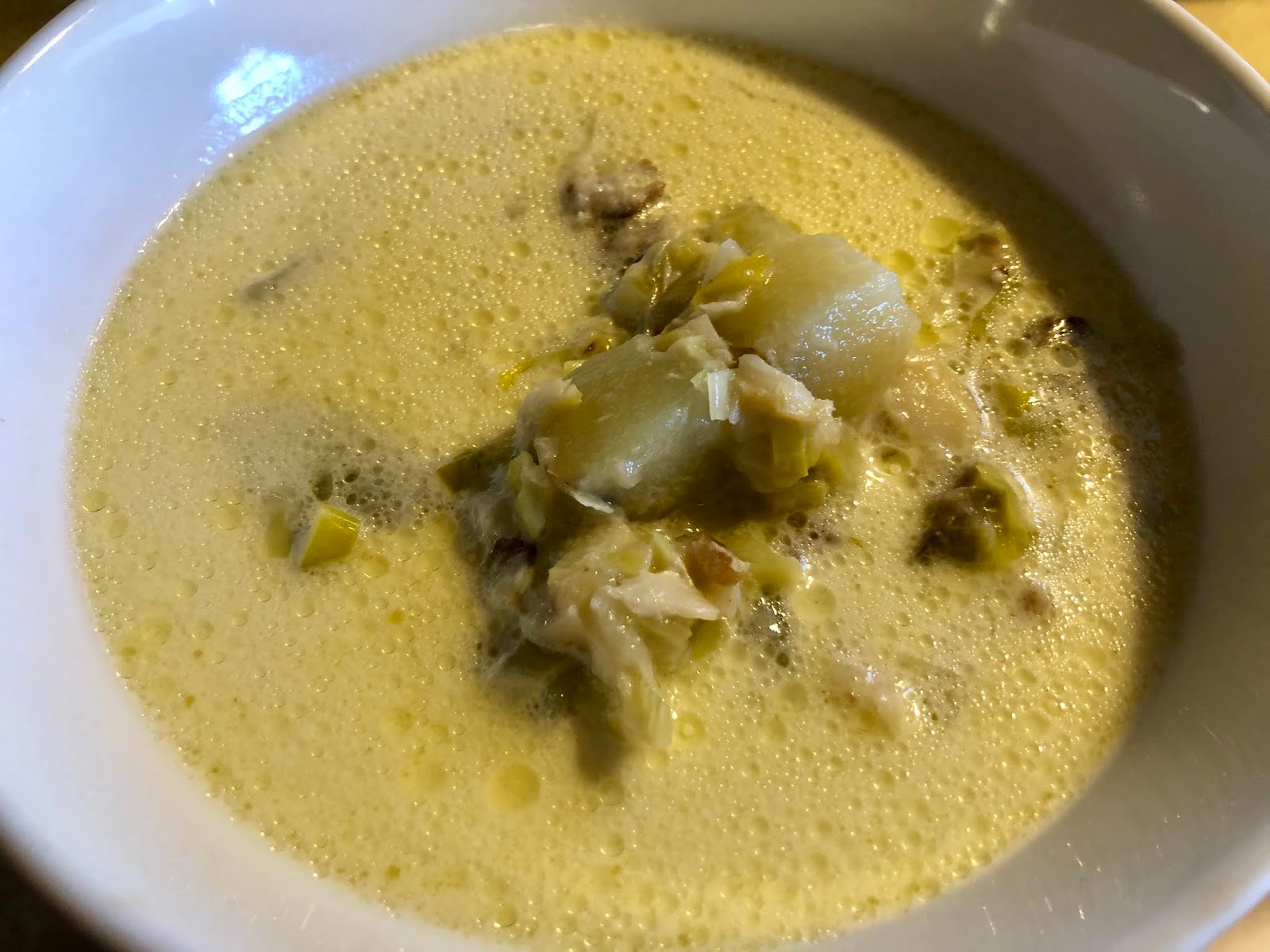
The Fish Chowder was tasty too, with plenty of fish and potatoes, and a savory and buttery broth, which also was intriguing with the Scotch. And it was true that each of these dishes brought something different out of the Scotch.
The creamy Haddie Spread, with Oatcakes, was flavorful as well, and the oatcakes also made for an excellent palate cleanser.
Scotch and cheese? Yes, this was a fine pairing too. With the Dubliner, we paired the 12 Year Old, and the sharpness of the cheese helped to bring out vanilla notes and creaminess in the Scotch. The butteriness of the cheese also drew out the Oloroso notes. With the Gorgonzola, we paired the 18 Year Old, and the mild sweetness of the Scotch contrasted well with the pungency of the cheese. Port and Blue Cheese has always been one of my favorite pairings, but I think I need to explore more Scotch and Blue cheese pairings.
The GlenDronach 12 Year Old Single Malt Scotch ($62.99) was aged in a combination of Pedro Ximénez (PX) and Oloroso Sherry casks and has a 43% ABV. It's important to note that GlenDronach doesn't add any caramel coloring to their whiskies, and that their color is all natural, imparted only by the barrel maturation. With a light amber color, this whisky presented with an intriguing nose that would remind you of Sherry, with some sweet, raisiny notes of PX and the nuttiness of an Oloroso. On the palate, the Scotch was smooth, creamy, dry and full-bodied, with a complex melange of flavors, including vanilla, dried fruits, hints of citrus, spice notes, and plump raisins. The finish was lengthy and pleasing, with the Oloroso elements becoming even more prominent. Overall, a delicious and compelling whisky, which would make for an excellent introduction for those new to Scotch, but which would also please Scotch lovers.
The GlenDronach Allardice 18 Year Old Single Malt Scotch ($179.99) was aged solely in Oloroso Sherry casks and had a 46% ABV. Rebecca stated this was her favorite, and that sipping it brought her home. She also recommended that you should let this Scotch breathe for about 20 minutes before drinking, to bring out its best aromas and flavors. It had a darker amber color than the 12 year old, and its nose was complex and alluring, with plenty of spice, chocolate notes, and nutty elements. The Oloroso aspect was noticeable and pleasing, especially to a Sherry lover like myself.
When I tasted this Scotch, I was immediately enamored with its complexity and fine taste. It was silky smooth, seductive on the palate, and each sip brought different notes to my mind. There were baking spices and salted nuts, chocolate notes and ripe fruit notes, honey and vanilla, sweet and bitter, and so much more. The finish was incredibly long, extremely satisfying, and beckoned you like a Siren to sip more. I loved this Scotch and its Oloroso notes, and continued sipping it long after the tasting event concluded. Highly recommended, and well worth the splurge.
GlenDronach makes other whiskies as well, including the Parliament 21 Year Old, the Cask Strength Batch 8, and the Grandeur Batch 10 (a 27 Year Old Scotch). I have great respect for the whisky-making philosophy of GlenDronach, especially concerning their use of only authentic Sherry barrels. And their Scotches are delicious and complex, compelling spirits which are worthy of much more attention than they receive. Their 18 Year Old Scotch is a rock star, and has become one of my new favorite whiskies.
For Over 18 Years, and over 5600 articles, I've Been Sharing My Passion for Food, Wine, Saké & Spirits. Come Join Me & Satisfy Your Hunger & Thirst.
Showing posts with label jamaica plain. Show all posts
Thursday, April 30, 2020
Thursday, May 3, 2018
Thursday Sips & Nibbles
I am back again with a new edition of Thursday Sips & Nibbles, my regular column where I highlight some interesting, upcoming food & drink events.
**********************************************************
1) The Casa Verde team is excited to announce a new chef, Owen Royce-Nagel, who, in addition to working at some of the more creative and respected kitchens in Boston and Chicago (Craigie on Main and Publican to name two), is also the founder of JP Beer Garden with his wife Lizzie Szczepaniak. Owen and Lizzie have hosted a number of successful JP Beer Garden pop-ups in Boston, featuring French-German cuisine. With 20 rotating craft beers on tap, he and the Casa Verde team are excited to collaborate with up-and-coming local breweries on special tasting events.
Royce-Nagel, a four year alum of sister JP restaurant Tres Gatos, has already streamlined the menu and introduced some popular new dishes, including a fried clam taco with charred corn/red pepper/spring onion salsa, a grilled chipotle tofu taco with charred scallion salsa, crema and fried shallots, and queso fundido with his house made chorizo, roasted peppers, and melted chihuahua cheese. He has also brought on new staff dedicated to making fresh corn tortillas by hand every day.
Chef Royce-Nagel draws inspiration for new menu items from his time working at coastal influenced restaurants such as Straight Warf in Nantucket and Row 34 in Fort Point. He has already experimented with a lobster taco, and his passion for shellfish will undoubtedly find its way on to the menu soon.
To celebrate Cinco de Mayo, the Casa Verde team will be offering some specials from the bar, including pitchers of Negro Modelo, buckets of Tecate and Modelo Especial, and special cocktails like the "Vampiro" (a Mexican classic), as well as a "Green Earth Julep" in honor of the 40th Wake Up the Earth Festival in Jamaica Plain.
2) Chef and restaurateur Michael Schlow and Executive Chef Justin Dain of PINE at the Hanover Inn host a final collaboration dinner full of culinary creativity.
Chefs Schlow and Dain combined their passions and expertise to bring PINE to life in 2013, and have celebrated the partnership year after year – Dain at the helm and Schlow as Hanover Inn culinary partner. After five years, the duo will heat up the kitchen together to deliver one more deliciously memorable experience. This summer, Schlow will step aside to focus his efforts on his numerous dining concepts coast to coast, as well as launch new ventures in DC and the Detroit area. Dain will remain Executive Chef and continue the day-to-day service of stellar dishes that has helped PINE remain an award-winning favorite.
On Wednesday, May 2, from 5pm-10pm, guests will savor a special menu designed by both chefs that features the finest seasonal ingredients sourced regionally throughout New England and served in PINE’s intimate and elegant setting against the backdrop of the Historic Dartmouth Green.
The Menu includes:
1st Course
Hamachi Crudo, Pickled Fennel, Spicy Salsa Verde, Pistachios
2nd Course
Pan Roasted Halibut, Spring Dug Parsnip & Leek Puree (House Smoked Bacon Vinaigrette)
3rd Course Pasta
Spring Lamb Sausage filled Tortellinis (Fresh Peas, Charred Ramp Pesto, Shaved Pecorino)
4th Course
Flash Grilled Wagyu Strip loin (Morel Mushrooms, Fava Beas, Bearnaise, Red Wine Reduction)
5th Course
Strawberry & Rhubarb Tart (Housemade Graham Cracker and Mint Ice Cream)
Cost: The special pre-fixe menu is $65 per person, not including gratuity or beverage pairings. Reservations can be made by calling the restaurant at 603-646-8000.
3) Ocean Prime Boston is handing over the reins of the restaurant to two-time Super Bowl Champion, Patrick Chung, for the night of Friday, May 11th, from 5:30pm-6:30pm. For this one-night only event, guests can book a four-course prix-fixe dinner for $125 with 100% of proceeds going to Patrick’s charity of choice, Asperger/Autism Network.
With only 20 seats available, the special Chung Charity Prix-Fixe reservation offers diners the opportunity to spend some quality time with the beloved athlete along with the chance to have a course personally served by him.
Being a General Manger of Ocean Prime is no small feat. Under the tutelage of seasoned GM, and ex Australian pro-football (Soccer) player, Nick Foley, Patrick will be greeting tables, ensuring everything is running smoothly in the kitchen and on the floor, while also signing jerseys and taking selfies with fans.
The Chung Charity Prix-Fixe includes:
First Course
Point Judith Calamari Sweet Chili Sauce
Crab Cakes Kale, Pickled Fennel, Horseradish Mustard Aioli
Sonoma Goat Cheese Ravioli Golden Oak Mushrooms
Second Course (Choose 1)
Ocean Prime House Salad Romaine, Field Greens, Granny Smith Apples, Goat Cheese, Walnuts, Sherry Mustard Vinaigrette
Caesar Salad Crisp Romaine, Parmesan Garlic Dressing, Brioche Croutons
Lobster Bisque Butter Poached Lobster
Entrées (Choose 1)
10oz Filet Mignon Whipped Potatoes, Haricot Vert, Cabernet Jus
6oz Filet Mignon with Maine Lobster Tail
14oz New York Strip with Maytag Blue Cheese crust
Chilean Sea Bass Whipped Potatoes, Champagne Truffle Sauce
Blackened Snapper Corn Spoon Bread, Jalapeno Tartar
Dessert (Choose 1)
Chocolate Peanut Butter Pie Peanut Butter Mousse, Bittersweet Chocolate Ganache
Carrot Cake Cream Cheese Icing, Pineapple Syrup
Blueberry Lemon Cheesecake Graham Cracker Crust, Blueberry Syrup
Chef’s selection of sorbet or ice cream
To make Reservations, please call (617) 670-1345
4) Chef/Restauranteur Steve DiFillippo of Davio’s is teaming up with the Best Buddies Challenge: Hyannis Port, presented by Pepsi-Cola and Shaw’s and Star Market Foundation to raffle off a chance to play football with NFL Legend Tom Brady, with proceeds benefitting Best Buddies International. One lucky winner will get the chance to play with Tom Brady, as well as several past and present NFL players and other celebrities, professional athletes and special guests in the Best Buddies Tom Brady Football Challenge on June 1 at Harvard University’s football stadium.
Now through Tuesday, May 15, at 1 pm EST, purchase your entries for a chance to win the grand prize package. Raffle tickets are $1 for ten (10) entries and can be purchased at www.prizeo.com/davios
Proceeds of the raffle will benefit Best Buddies International.
GRAND PRIZE package includes:
· Roundtrip airfare for two (2) to Boston
· Two (2) nights accommodations
· One (1) player spot in the Best Buddies Tom Brady Football Challenge at Harvard University Football Stadium on June 1st, 2018
· Autographed football signed by Tom Brady
Additional packages may be purchased for varying amounts on www.prizeo.com/davios
Entry deadline: Tuesday, May 15th, 2018 at 12:00 pm EST. Winner will be selected and notified shortly thereafter. Must be 18+ with valid ID.
5) Sumiao Hunan Kitchen (SHK) has relaunched its popular “Hunan Hour” menu, their twist on a culinary happy hour. Available each afternoon and late-night, Hunan Hour showcases an assortment of full-portion appetizers for half-price with any cocktail, wine or beer purchase. The specialty menu caters to any budget and any outing, whether it be an after-work treat with coworkers or the desire to indulge in array of Hunanese-style bites after-dark.
The relaunch of this dining deal will offer more than 10 of SHK’s menu items priced at only $4-6, such as Wood-Ear Mushroom Salad ($4), Steamed Pork Sausage ($4), Sumiao Gyoza ($5), Scallion Pancake ($5) and Sesame La Niu Rou ($6).
Sumiao’s “Hunan Hour” menu will be available daily from 3:30pm-6:30pm, as well as late-night from 9:00pm-10:30pm Sunday through Wednesday and 9:00pm-11:30pm Thursdays through Saturdays.
6) Starting this May, Puritan & Co. will be responsible for all weddings, special events, retreats, and monthly farm dinners at The Herb Lyceum.
Each week starting on May 4th, The Herb Lyceum will host their Farm Dinners on Fridays and select Saturdays throughout the summer season. The farm dinners feature five-courses for $75 per person, which includes gratuity. The dinners are BYOB and guests are invited to explore the farm, dine at a communal table and enjoy farm-centric seasonal cuisine created by the talented team behind Puritan & Company and Chef/Partner Will Gilson.
Each month's dinner menu will be posted monthly online and bookings will be available via Eventbrite along with the scheduled dinner dates.
Tickets for May's Farm Dinners on Friday, May 4th; Friday, May 11th; and Friday, May 18th are now available for purchase at https://www.eventbrite.com/e/may-dinners-tickets-44944723879?aff=es2.
May Farm Dinners will feature:
First Course:
Cucumber Toast with mint, dill, radish, goats milk feta, caviar
Second Course:
Roasted Asparagus with smoked salmon, gribiche, basil, new potatoes
Third Course:
Chilled Pea Soup with marinated mushrooms, berbere oil, crème fraiche
Main Course:
Grilled Pork Chop with sunchoke, peppers, potato galette, mustard jus
Dessert:
Carrot Cake with candied walnuts, rum raisin puree, mascarpone, vanilla
7) Viale in Central Square has now launched full lunch service, served daily from 11:30am-2:30pm. "With the expanding Central Square community, we're excited to be offering all day options to serve people working or visiting the neighborhood." states Greg Reeves and Mark Young, Viale co-owners.
Lunch Menu:
Salads
Baby Arugula - radish, pecorino, buttermilk, almond $10
Marinated Beet Salad - pickled fennel, herbed yogurt, pistachio $10
Salmon Crudo and Pea Salad - snap, snow and english $15
Chilled Asparagus Salad - 60 deg egg, prosciutto, micro basil, puffed farro $15
Small Plates
Marinated Olives - orange and rosemary $6
Pan Roasted Calamari - creamy napa, smokey tomato, crispy shallots $12
Crab Toast - chive aioli, citrus salad, radish $13
Fried Cauliflower - White anchovy, caper-golden raisin brown butter $9
Sandwiches and Chips
Chicken Parm $13
Pork Saltimbocca $12
Cheesesteak $12
Mains
Gnocchi - wild boar bolognese, rosemary $15
Bucatini - cacio e pepe $12
Torchio Puttanesca - black and green olives, white anchovy $14
Swordfish - avocado yogurt, slow roasted tomato $17
They also serve various Pizzas during lunch and in the Week of May 1, they will be serving Margherita, Clam & Bacon, Mushroom w/Nettle Pesto, and Sausage & Broccoli Rabe pizzas.
Drinks will include tea-infused spritzy cocktails, bubbly, booze-free or booze-filled beverages, craft beers, Rosé, and a variety of new wines for the spring and summer.
**********************************************************
1) The Casa Verde team is excited to announce a new chef, Owen Royce-Nagel, who, in addition to working at some of the more creative and respected kitchens in Boston and Chicago (Craigie on Main and Publican to name two), is also the founder of JP Beer Garden with his wife Lizzie Szczepaniak. Owen and Lizzie have hosted a number of successful JP Beer Garden pop-ups in Boston, featuring French-German cuisine. With 20 rotating craft beers on tap, he and the Casa Verde team are excited to collaborate with up-and-coming local breweries on special tasting events.
Royce-Nagel, a four year alum of sister JP restaurant Tres Gatos, has already streamlined the menu and introduced some popular new dishes, including a fried clam taco with charred corn/red pepper/spring onion salsa, a grilled chipotle tofu taco with charred scallion salsa, crema and fried shallots, and queso fundido with his house made chorizo, roasted peppers, and melted chihuahua cheese. He has also brought on new staff dedicated to making fresh corn tortillas by hand every day.
Chef Royce-Nagel draws inspiration for new menu items from his time working at coastal influenced restaurants such as Straight Warf in Nantucket and Row 34 in Fort Point. He has already experimented with a lobster taco, and his passion for shellfish will undoubtedly find its way on to the menu soon.
To celebrate Cinco de Mayo, the Casa Verde team will be offering some specials from the bar, including pitchers of Negro Modelo, buckets of Tecate and Modelo Especial, and special cocktails like the "Vampiro" (a Mexican classic), as well as a "Green Earth Julep" in honor of the 40th Wake Up the Earth Festival in Jamaica Plain.
2) Chef and restaurateur Michael Schlow and Executive Chef Justin Dain of PINE at the Hanover Inn host a final collaboration dinner full of culinary creativity.
Chefs Schlow and Dain combined their passions and expertise to bring PINE to life in 2013, and have celebrated the partnership year after year – Dain at the helm and Schlow as Hanover Inn culinary partner. After five years, the duo will heat up the kitchen together to deliver one more deliciously memorable experience. This summer, Schlow will step aside to focus his efforts on his numerous dining concepts coast to coast, as well as launch new ventures in DC and the Detroit area. Dain will remain Executive Chef and continue the day-to-day service of stellar dishes that has helped PINE remain an award-winning favorite.
On Wednesday, May 2, from 5pm-10pm, guests will savor a special menu designed by both chefs that features the finest seasonal ingredients sourced regionally throughout New England and served in PINE’s intimate and elegant setting against the backdrop of the Historic Dartmouth Green.
The Menu includes:
1st Course
Hamachi Crudo, Pickled Fennel, Spicy Salsa Verde, Pistachios
2nd Course
Pan Roasted Halibut, Spring Dug Parsnip & Leek Puree (House Smoked Bacon Vinaigrette)
3rd Course Pasta
Spring Lamb Sausage filled Tortellinis (Fresh Peas, Charred Ramp Pesto, Shaved Pecorino)
4th Course
Flash Grilled Wagyu Strip loin (Morel Mushrooms, Fava Beas, Bearnaise, Red Wine Reduction)
5th Course
Strawberry & Rhubarb Tart (Housemade Graham Cracker and Mint Ice Cream)
Cost: The special pre-fixe menu is $65 per person, not including gratuity or beverage pairings. Reservations can be made by calling the restaurant at 603-646-8000.
3) Ocean Prime Boston is handing over the reins of the restaurant to two-time Super Bowl Champion, Patrick Chung, for the night of Friday, May 11th, from 5:30pm-6:30pm. For this one-night only event, guests can book a four-course prix-fixe dinner for $125 with 100% of proceeds going to Patrick’s charity of choice, Asperger/Autism Network.
With only 20 seats available, the special Chung Charity Prix-Fixe reservation offers diners the opportunity to spend some quality time with the beloved athlete along with the chance to have a course personally served by him.
Being a General Manger of Ocean Prime is no small feat. Under the tutelage of seasoned GM, and ex Australian pro-football (Soccer) player, Nick Foley, Patrick will be greeting tables, ensuring everything is running smoothly in the kitchen and on the floor, while also signing jerseys and taking selfies with fans.
The Chung Charity Prix-Fixe includes:
First Course
Point Judith Calamari Sweet Chili Sauce
Crab Cakes Kale, Pickled Fennel, Horseradish Mustard Aioli
Sonoma Goat Cheese Ravioli Golden Oak Mushrooms
Second Course (Choose 1)
Ocean Prime House Salad Romaine, Field Greens, Granny Smith Apples, Goat Cheese, Walnuts, Sherry Mustard Vinaigrette
Caesar Salad Crisp Romaine, Parmesan Garlic Dressing, Brioche Croutons
Lobster Bisque Butter Poached Lobster
Entrées (Choose 1)
10oz Filet Mignon Whipped Potatoes, Haricot Vert, Cabernet Jus
6oz Filet Mignon with Maine Lobster Tail
14oz New York Strip with Maytag Blue Cheese crust
Chilean Sea Bass Whipped Potatoes, Champagne Truffle Sauce
Blackened Snapper Corn Spoon Bread, Jalapeno Tartar
Dessert (Choose 1)
Chocolate Peanut Butter Pie Peanut Butter Mousse, Bittersweet Chocolate Ganache
Carrot Cake Cream Cheese Icing, Pineapple Syrup
Blueberry Lemon Cheesecake Graham Cracker Crust, Blueberry Syrup
Chef’s selection of sorbet or ice cream
To make Reservations, please call (617) 670-1345
4) Chef/Restauranteur Steve DiFillippo of Davio’s is teaming up with the Best Buddies Challenge: Hyannis Port, presented by Pepsi-Cola and Shaw’s and Star Market Foundation to raffle off a chance to play football with NFL Legend Tom Brady, with proceeds benefitting Best Buddies International. One lucky winner will get the chance to play with Tom Brady, as well as several past and present NFL players and other celebrities, professional athletes and special guests in the Best Buddies Tom Brady Football Challenge on June 1 at Harvard University’s football stadium.
Now through Tuesday, May 15, at 1 pm EST, purchase your entries for a chance to win the grand prize package. Raffle tickets are $1 for ten (10) entries and can be purchased at www.prizeo.com/davios
Proceeds of the raffle will benefit Best Buddies International.
GRAND PRIZE package includes:
· Roundtrip airfare for two (2) to Boston
· Two (2) nights accommodations
· One (1) player spot in the Best Buddies Tom Brady Football Challenge at Harvard University Football Stadium on June 1st, 2018
· Autographed football signed by Tom Brady
Additional packages may be purchased for varying amounts on www.prizeo.com/davios
Entry deadline: Tuesday, May 15th, 2018 at 12:00 pm EST. Winner will be selected and notified shortly thereafter. Must be 18+ with valid ID.
5) Sumiao Hunan Kitchen (SHK) has relaunched its popular “Hunan Hour” menu, their twist on a culinary happy hour. Available each afternoon and late-night, Hunan Hour showcases an assortment of full-portion appetizers for half-price with any cocktail, wine or beer purchase. The specialty menu caters to any budget and any outing, whether it be an after-work treat with coworkers or the desire to indulge in array of Hunanese-style bites after-dark.
The relaunch of this dining deal will offer more than 10 of SHK’s menu items priced at only $4-6, such as Wood-Ear Mushroom Salad ($4), Steamed Pork Sausage ($4), Sumiao Gyoza ($5), Scallion Pancake ($5) and Sesame La Niu Rou ($6).
Sumiao’s “Hunan Hour” menu will be available daily from 3:30pm-6:30pm, as well as late-night from 9:00pm-10:30pm Sunday through Wednesday and 9:00pm-11:30pm Thursdays through Saturdays.
6) Starting this May, Puritan & Co. will be responsible for all weddings, special events, retreats, and monthly farm dinners at The Herb Lyceum.
Each week starting on May 4th, The Herb Lyceum will host their Farm Dinners on Fridays and select Saturdays throughout the summer season. The farm dinners feature five-courses for $75 per person, which includes gratuity. The dinners are BYOB and guests are invited to explore the farm, dine at a communal table and enjoy farm-centric seasonal cuisine created by the talented team behind Puritan & Company and Chef/Partner Will Gilson.
Each month's dinner menu will be posted monthly online and bookings will be available via Eventbrite along with the scheduled dinner dates.
Tickets for May's Farm Dinners on Friday, May 4th; Friday, May 11th; and Friday, May 18th are now available for purchase at https://www.eventbrite.com/e/may-dinners-tickets-44944723879?aff=es2.
May Farm Dinners will feature:
First Course:
Cucumber Toast with mint, dill, radish, goats milk feta, caviar
Second Course:
Roasted Asparagus with smoked salmon, gribiche, basil, new potatoes
Third Course:
Chilled Pea Soup with marinated mushrooms, berbere oil, crème fraiche
Main Course:
Grilled Pork Chop with sunchoke, peppers, potato galette, mustard jus
Dessert:
Carrot Cake with candied walnuts, rum raisin puree, mascarpone, vanilla
7) Viale in Central Square has now launched full lunch service, served daily from 11:30am-2:30pm. "With the expanding Central Square community, we're excited to be offering all day options to serve people working or visiting the neighborhood." states Greg Reeves and Mark Young, Viale co-owners.
Lunch Menu:
Salads
Baby Arugula - radish, pecorino, buttermilk, almond $10
Marinated Beet Salad - pickled fennel, herbed yogurt, pistachio $10
Salmon Crudo and Pea Salad - snap, snow and english $15
Chilled Asparagus Salad - 60 deg egg, prosciutto, micro basil, puffed farro $15
Small Plates
Marinated Olives - orange and rosemary $6
Pan Roasted Calamari - creamy napa, smokey tomato, crispy shallots $12
Crab Toast - chive aioli, citrus salad, radish $13
Fried Cauliflower - White anchovy, caper-golden raisin brown butter $9
Sandwiches and Chips
Chicken Parm $13
Pork Saltimbocca $12
Cheesesteak $12
Mains
Gnocchi - wild boar bolognese, rosemary $15
Bucatini - cacio e pepe $12
Torchio Puttanesca - black and green olives, white anchovy $14
Swordfish - avocado yogurt, slow roasted tomato $17
They also serve various Pizzas during lunch and in the Week of May 1, they will be serving Margherita, Clam & Bacon, Mushroom w/Nettle Pesto, and Sausage & Broccoli Rabe pizzas.
Wednesday, April 19, 2017
Enderle & Moll Basis: An Intriguing German Pinot Noir
Spätburgunder.
A German word for what you will likely better know as Pinot Noir. German Rieslings get most of the attention so many people don't realize that Pinot Noir is produced in Germany. In fact, Pinot Noir has been grown in Germany since at least the 14th century, though it never attained the fame of Burgundy, partially as the wines just didn't seem as good as those in Burgundy. However, their quality has greatly improved. Currently, there are approximately 12,000 hectares of Pinot Noir grown in Germany and we're starting to see more of those wines in the U.S. market.
Streetcar Wines, in Jamaica Plain, has an excellent and fascinating selection of wines, primarily from small producers and their prices are very reasonable. This is a wine lovers store, an intriguing place for people to explore and expand their palates. Recently, while perusing their shelves, I found the 2014 Enderle & Moll Basis Pinot Noir ($30) and owner Michael Dupuy told me that it might be his favorite German Pinot Noir. I chose to buy a bottle, as well as a number of other fascinating wines.
The Enderle & Moll winery, which is relatively new, is named for its two German owners, Sven Enderle and Florian Moll. The winery is located in the Baden region, in the Black Forest foothills between Offenburg and Freiburg im Breisgau. They have a small, 2.4 hectare vineyard, in the village of Münchweier, which they farm organically and they also purchase some grapes from another small, organic vineyard. Their Pinot Noir vines are some of the oldest in the Baden region and purchase aged barrels from a small estate in Burgundy. Enderle and Moll are seen as "contrarians," very different from many other neighboring German producers. They are very hands-on, producing wines which many might consider "natural wines." They also have a reputation for making some of the best Pinot Noir in Germany.
The 2014 Enderle & Moll Basis Pinot Noir is their entry-level Pinot and it is created from two different barrels. One barrel is from whole clusters that were foot-stomped while the other barrel was only 30% whole clusters. And this wine has only an 11.5% ABV, an amazingly low alcohol level compared to most other Pinot Noirs. This wine has a very light red color and on the nose, its present an alluring scent of cherry, mild spice and a touch of earthiness. On the palate, you'll be impressed with its elegance and complexity, its bright acidity and delightful flavors of red fruit, spice notes, earthy elements and a touch of herbs.
With a lengthy and pleasing finish, this is a killer Pinot, one that can easily compete with Pinots from any other region. It seems like a wine reflective of place, and it was easy to finish the bottle over the course of an evening. And if this is only their entry level wine, then I very much want to explore their higher end wines, to see the vinous magic they produce. I highly recommend this wine and also highly recommend you check out Streetcar Wines.
A German word for what you will likely better know as Pinot Noir. German Rieslings get most of the attention so many people don't realize that Pinot Noir is produced in Germany. In fact, Pinot Noir has been grown in Germany since at least the 14th century, though it never attained the fame of Burgundy, partially as the wines just didn't seem as good as those in Burgundy. However, their quality has greatly improved. Currently, there are approximately 12,000 hectares of Pinot Noir grown in Germany and we're starting to see more of those wines in the U.S. market.
Streetcar Wines, in Jamaica Plain, has an excellent and fascinating selection of wines, primarily from small producers and their prices are very reasonable. This is a wine lovers store, an intriguing place for people to explore and expand their palates. Recently, while perusing their shelves, I found the 2014 Enderle & Moll Basis Pinot Noir ($30) and owner Michael Dupuy told me that it might be his favorite German Pinot Noir. I chose to buy a bottle, as well as a number of other fascinating wines.
The Enderle & Moll winery, which is relatively new, is named for its two German owners, Sven Enderle and Florian Moll. The winery is located in the Baden region, in the Black Forest foothills between Offenburg and Freiburg im Breisgau. They have a small, 2.4 hectare vineyard, in the village of Münchweier, which they farm organically and they also purchase some grapes from another small, organic vineyard. Their Pinot Noir vines are some of the oldest in the Baden region and purchase aged barrels from a small estate in Burgundy. Enderle and Moll are seen as "contrarians," very different from many other neighboring German producers. They are very hands-on, producing wines which many might consider "natural wines." They also have a reputation for making some of the best Pinot Noir in Germany.
The 2014 Enderle & Moll Basis Pinot Noir is their entry-level Pinot and it is created from two different barrels. One barrel is from whole clusters that were foot-stomped while the other barrel was only 30% whole clusters. And this wine has only an 11.5% ABV, an amazingly low alcohol level compared to most other Pinot Noirs. This wine has a very light red color and on the nose, its present an alluring scent of cherry, mild spice and a touch of earthiness. On the palate, you'll be impressed with its elegance and complexity, its bright acidity and delightful flavors of red fruit, spice notes, earthy elements and a touch of herbs.
With a lengthy and pleasing finish, this is a killer Pinot, one that can easily compete with Pinots from any other region. It seems like a wine reflective of place, and it was easy to finish the bottle over the course of an evening. And if this is only their entry level wine, then I very much want to explore their higher end wines, to see the vinous magic they produce. I highly recommend this wine and also highly recommend you check out Streetcar Wines.
Thursday, April 13, 2017
The Origins of Pechuga, Pierde Almas, & Mezcal de Conejo
I've found the perfect Mezcal for celebrating Easter, the Pierde Almas Mezcal de Conejo. Why is it so perfect? Because this unique Mezcal is made with a wild, cottontail rabbit. Anyone for some liquid bunny?
Mezcal is a distilled spirit from the agave plant and for some background information on it, please check out some of my prior Mezcal articles, including Rant: 400 Rabbits Say "Drink More Mezcal", Mezcal Bars in the Boston Area, Mezcal & Beyond, and Amuleto Mexican Table, Mezcal Vago & "A Slap To The Face." Tequila gets loads of publicity but Mezcal too often gets ignored and needs additional promotion. It is more than worthy of your attention, being complex and intriguing, and often made by more traditional methods.
There is a special variety of Mezcal known as Pechuga, a flavored version that often is made with some type of meat. The Spanish term "pechuga" basically translates as "breast" and generally refers to a "chicken breast." This type of Mezcal likely acquired its name as chicken breasts were probably the first meats used to produce it. Currently, you'll find versions of Pechuga made from a variety of animals, including turkey, deer, goat, cow, pig, rabbit and even iguana.
To make Pechuga, a Mezcal is commonly distilled for a third time with a raw piece of meat suspended inside the still. In addition, various fruits, herbs, nuts, grains and/or spices are added into the still. The specific recipe of that melange of ingredients will vary from mezcalero to mezcalero and as there is no legal definition for Pechuga, the recipes can be quite diverse. The heat of the still will cook the meat and the vapors will pass through and into the meat. Sometimes, a few mezcaleros will conduct this process during the second distillation instead of adding a third.
How does the meat affect the taste of the Mezcal? Some claim the meat helps to mellow and soften the Mezcal, and others state it gives the Mezcal a fuller body. If you taste a Pechuga, you probably won't be able to identify the specific type of meat that was used, but will likely detect more savory notes, and possibly even some gamier elements.
Pechuga is sometimes referred to as a harvest Mezcal as it is commonly produced during November to January, when the wild fruits are ripe, such as apples, plums, red plantains, pineapples, and more. It is also usually produced from Espadin agave, one of the most common, hearty and least expensive agaves used to make Mezcal. Placing all of the various ingredients into the Mezcal will tend to overwhelm any subtlety of the agave so it would make little sense to use some of the rarer agave varieties to make Pechuga. Pechuga is often drank at various celebrations and holidays.
The origins of Pechuga are murky, both its date of origin as well as the reasons behind its initial creation. When I initially surveyed the current information about Pechuga, there was some evidence that it reached back at least to the 1930s as there were bottles labeled Pechuga from this decade. As for printed evidence, the earliest, as stated by Ron Cooper of Del Maguey Mezcal, appeared to be a book from the 1950s which mentioned a Pechuga made from baby goat breast that was added during the second distillation. It seemed likely that Pechuga originated before the 1930s, but the evidence was lacking.
Until now.
My own research has to the discovery of printed evidence of Pechuga extending back to 1864, meaning it is at least 150 years old. In addition, I've located multiple other printed references to Pechuga, ranging from 1864 to 1904, which provide more insight into this unique type of Mezcal. Since I originally published this article, I've revised and expanded it once and now have returned to revise and expand it again, as I've uncovered additional evidence.
It is possible that continued research might lead me to revise and expand this article in the future as well. Despite my fascinating discoveries, there are still significant questions remaining about the history of Pechuga. Additional research is certainly needed to address the unknowns and I strongly suspect there is more to find out there.
As I conducted my initial research to write this article on Pechuga, I was quite surprised when I discovered a newspaper from 1901 that mentioned Pechuga. As far as I was aware, that appeared to be the oldest known printed reference to Pechuga. That newly uncovered information meant Pechuga was at least 116 years old and probably even older. I also felt that it could be a starting point for additional research on the history of Pechuga.
In the Saturday, January 5, 1901 edition of The Oasis, an Arizona newspaper, they published an article, Mescal Making, though the author of the article was not identified. The article discussed the Mezcal being produced in the Sahuaripa district of the Sonora state in Mexico, stating the area was "...noted far and wide for the excellence and quality of the mescal there produced,..."
There was a further explanation of how Mezcal was produced, including information on its quality levels, which mentioned Pechuga. “Of the finished liquor there are three qualities determined by the number of distillations to which subjected. The product of the first distillation is called “vino,” and is the cheapest grade of mescal. The “vino” when subjected to a second distillation loses about thirty per cent in weight and then is known as “Bacanora.” This is a much finer and more expensive liquor than the “vino.” In the third distillation the “Bacanora” loses another thirty per cent, by weight, of the “vino” and the product, known as “pechuga,” is a very fine and costly liquor, within reach of the purses of the wealthy only. It is a soft, smooth liquor, having all the strength of the “vino,” contained within forty per cent of its weight but losing none of its fiery qualities and pungent taste.”
It is important to note that this article didn't specifically mention that Pechuga was made with meat, but it was stated to be produced from a third distillation. Did the author misunderstand the actual nature of Pechuga? Or did the term Pechuga once only refer to a higher quality of Mezcal? It doesn't seem logical that this Pechuga didn't include meat. Why else refer to it by a name meaning "breast," especially "chicken breast?" There doesn't appear to be any other historical evidence that the term Pechuga was ever used for anything but Mezcal flavored with meat. I think it is probably most likely the author made a mistake, an omission error, failing to mention the addition of meat in Pechuga.
We also see that Pechuga was very expensive, and tasted soft and smooth, though still possessing the fiery character of Mezcal. This article also raises the question about whether Pechuga might have originated in the Sahuaripa district or not. We can pinpoint the presence of Pechuga there at least 116 years ago. At the very least, this article provides a lead for further research, that maybe more evidence could be found in this district. It was certainly fascinating to find such an old reference to Pechuga, though I didn't know at that time that I would soon find an even older reference.
Before I get there though, I should mention that on Saturday, May 24, 1902, The Oasis published a second article, Mezcal Manufacture, mentioning Pechuga. However, the article was simply an expanded version of their prior article, using much of the same information, and didn't add anything new about Pechuga.
Though this was an intriguing find, pushing back the known origins of Pechuga, I didn't stop my research, using this new information as a springboard. My continued efforts paid off and I made another compelling discovery, finding a printed reference to Pechuga in a book from 1891! What made this even more interesting was that the reference was very clear that the creation of Pechuga included the addition of a chicken.
The book, El Maguey. Memoria sobre el cultivo y beneficio de sus productos, by Jose C. Segura, was published in Mexico in 1891. Jose Segura (1846-1906) was an agronomist engineer and a professor at the National School of Agriculture and Veterinary Medicine, having written several other books and numerous articles. This book, published in Spanish, discussed the many uses of the agave plant, including its use in making Pulque and Mezcal. It is probably worth a deeper examination as it may contain other intriguing information about agave, Pulque, Mezcal and more. It would also help if there were an English translation.
There is a passage in this book that references the term Pechuga: “El primer producto que se obtiene y que se llama vino ordinario, sufre una segunda destilacion, que pro duce el vino refino, que se expende en el comercio con un grado de 46° (Gay Lussac). Las primeras porcio nes que pasan en esta segunda destilacion, toman el nombre de flor primera, segunda, etc. Hay un vino que - rectifican añadiéndole gallina y no recuerdo qué otras cosas bien poco volátiles, que llaman vino de pechuga, el cual lo preparan solamente para regalo."
This passage mentions "vino de pechuga," which is made by adding chicken and other unstated ingredients. It is also noted that this Pechuga was prepared only for a gift. However, after a closer examination of the book and additional research, I learned that Mr. Segura did not actually author that passage, but was quoting a prior writer, D. Manuel Payno. And Mr. Payno's original article containing that passage is from 1864, pushing back the calendar on Pechuga even more.
In the Boletin de la Sociedad Mexicana de Geografia y Estadistica, there was a lengthy article, Memoria Sobre El Maguey Mexicano Y Sus Diversos Productos, written by D. Manuel Payno (1864). The article contained the above passage on Pechuga which Mr. Seguara included in his book. Unfortunately, Mr. Payno didn't include anything else in his article about Pechuga, though we now know Pechuga existed in Mexico over 150 years ago. This is now the oldest known printed evidence of Pechuga.
Returning to Mr. Segura's 1891 book, there was another reference to Pechuga, one which appeared directly attributable to him, but it used a different term. He wrote "Dos clases de Mezcal se conocen en el Sur de Mexico: el mezcal de cabezas, que es el que se obtiene destilacion del liquidoen donde se han puestoa fermentar las cabezas, y el que llama de sustancia, que es el que se obtiene distilando el jugo fermentado de las cabezas con carne de gallina cocida, o patas de ternera. Tambien acostumbran en algunas partes, aromatizar el mezcal, destilandolo sobre cascaras de fruta."
He referred to it as mezcal of sustancia, substance, which is made with chicken or legs of veal. There was also a mention that sometimes fruit peels are added to the mezcal. This was not the only work to use a different term for Pechuga. For example, published in 1882, the Memoria de la Primera Exposicion Industrial De Queretaro, y Lista de los objetos presentados en la misma (Memory of the first exhibition industry of Queretaro and list of objects presented), written by Celestino Diaz, mentioned this term a couple times.
The first mention was of "mezcal de sustancia, que los Srs. Becerill y Ordonez fabrican en San Angel." There was another mention, noting that mezcal de sustancia won a first class award at the Exposition. Interestingly, there was also a reference to "Pechuga Naranjado," which won a first class award too.
In addition, the Diccionario de Aztequismos: ó sea, Catálogo de las palabras del idioma Nahuatl, Azteca ó Mexicano, introducidas al idioma Castellano bajo diversas formas, written in 1904 by Cecilio A. Robelo provided a list of various types of Mezcal. It defined "Mezcal de sustancia" as "el que se obtiene destilando el jugo fermentado de las cabezas con carne de gallina cocida, o patas de ternera." That is essentially the same language as used by Mr. Segura.
Beside these discoveries, I also found multiple other references to Pechuga from 1872-1901, which add to our understanding, as well as raise additional questions, of this unique type of Mezcal.
A Colorado newspaper, Out West (November 21, 1872), provided a travelogue, written by Rosa Del Monte, who journeyed with a group to various parts of Mexico. At the Hacienda de Quesaria, the group had breakfast, checked out their sugar mill and were amazed by "chicken wine." As the passage states: “But the most remarkable product of the estate is “Chicken Wine.” As any-one may imagine, we greeted the member of the party who made the discovery with shouts of derision, but he stuck to his statement, and soon a bottle with “Vino de Pechuga” (the breast of a chicken) on the label was produced. We tasted the decoction, and found it very bad rum, with no perceptible taste of feathers. Three barrels, worth $36 the barrel, are made daily, and two chickens are boiled in every four gallons of the wine. Such is the fact—but the reason why remains a mystery to this day.”
This is an interesting passage and the writer might have been confused as to the actual method of production of the Pechuga. This was likely created with Mezcal and not wine, as Pechuga is sometimes referred to as "vino de Pechuga," despite no actual wine being involved. It is also surprising that this Pechuga is allegedly made every day.
In the Mexican newspaper El Padre Cobos (November 6, 1873), there is a brief mention of "Vino de Pechuga," which is made in Tequila, that will soon be available for sale: "Gran Lecheria! En la calle de la Alcaiceria entre los numeros 27 y 28 se vende leche pura garantizada desde las cinco de la manana adelante y chocolate superior de varias clases, al estilo de Guadalajara. Proximamente se recibera de esa ciudad un abudante surtido de vino de Pechuga febrido in Tequila, Frijol garbancillo y Cigarros de la Conchita y el Buen Gusto todo legitimo y a precios comodos."
Another newspaper, La Patria (March 31, 1878), noted Jesus Flores won a prize at an exposition for his "vino de Pechuga." Unfortunately, the article didn't provide any additional details about this winning Pechuga but now we see that Pechuga was sometimes entered into competitions.
In La Patria (February 1, 1879), there is an advertisement from a seller, Nicolas Andrade, of Tequila and Pechuga. The ad lists the prices, in Mexican dollars, for various containers, from a cup to a barrel. It is interesting to see that Pechuga generally cost twice as much as Tequila. A cup of "Grande Tequila" costs $0.03 while a cup of Pechuga cost $0.06. A bottle of Tequila cost $0.37 while a bottle of Pechuga cost $1.00. A Jar of Tequila cost $3.50 while a Jar of Pechuga cost $7.00. A Barrel of Tequila cost $25.00 but there wasn't a price for Pechuga by the barrel.
More prices were provided by the El Municipio Libre (April 3, 1879), in an advertisement by a liquor store. Mescal de Tierra Caliente cost $1.50 for a bottle and $20.00 for a Box (though there is no indication how much the box contains). Tequila Superior cost $3.00 for a bottle and $40.00 for a Box. And "Legitimate" Pechuga costs $7.00 for a bottle and $90.00 for a box. These prices are higher than the other advertisement though Pechuga is still the most expensive. What is also curious is that this ad states its Pechuga is "legitimate," raising the question whether some people were selling fake Pechuga. Maybe that is why the other seller's prices were so cheap.
In 1880, Mariano Barcena presented a study to the Secretary of Development, La 2. Exposicion de “Las Clases Productoras” y descripcion de la ciudad de Guadalajara. There was a list under the heading, Bebidas Azucaradas y Otras, which included a number of Pechuga references, usually as "vino de Pechuga." There were also references to “vino de Pechuga y almendrado” (Pechuga and Nuts), “Pechuga Almendrado,” and “Pechuga Naranjado” (Orange Pechuga). These terms seem to indicate the additional ingredients added to the base Pechuga. It raises the question then whether originally Pechuga only contained chicken, or another meat, and not the fruits, nuts, and such known to be used to create later versions of Pechuga. This study also mentioned that Sr. D. Carlos G. Sancho presented a "very good" Pechuga.
The book Estudio quimico-industrial de los varios productos del maguey mexicano y analisis quimico del aguamiel y el pulque (Chemical-industrial study of various products of Mexican maguey and chemical analysis of aguamiel and pulque) was written by José G. Lobato and published in January 1884. One of its passages is: "El estado de Zacatecas posee varios distritos mezcaleros; pero entre ellos el de Pinos es muy notable por las plantaciones y cultivo de sius magueyeras, que producen much mezcal, alcohol de primera y segunda clase, llamdos chorrera el primero, y pechuga el sugundo. Esta misma denominacion se les aplica en San Luis Potoso, Guanajuato, Queretaro y otros Estados."
This passage mentions that the Mexican state of Zacatecas, located north of Jalisco, has several Mezcal producing districts and that the Pinos district is notable. This district is best known for two classes of Mezcal, Chorrera and Pechuga. It continues noting that this also applies to other Mexican states, including San Luis Potoso, Guanajuato, and Queretaro, indicating the prevalence of Pechuga Mezcal.
Another passage goes into some additional detail, "El mezcal de pechuga de San Luis Potosí, de Pinos en Zacatecas, de Tequila en Jalisco, etc., es un alcohol muy aromático, muy sápido, muy carminativo, debido esto al aceite esencial del maguey, al ácido agávico y á la agavina encontrada por el Sr. Fernandez en 1876, con moti vo del análisis que exprofeso ejecutó, comisiónado por el Ayuntamiento de Guanajuato con motivo del envenena miento de este alcohol por el plomo."
It is stated that the Pechuga of San Luis Potosí, the Pinos in Zacatecas, and Tequila in Jalisco, are very aromatic and full-bodied. Strangely, it's also stated that these mezcals are "carminativo," which translates as carminative, meaning they can induce or prevent flatulence. Mezcal has long been said to cure many ailments, but mentioning its carminative properties along with it being aromatic and full-bodied seems to be a strange combination. The passage also mentions that these qualities are considered to be due to the essential oil of the maguey plant, agavic acid and its agavina (natural sugars).
The El Correo de San Luis (May 19, 1885) presented an ad, noting its low prices, for "Vino de Pechuga Almendrado," which is stated to be "propio para las senoras por su suavidad y buen gusto," ("suitable for ladies for its softness and good taste"). This is the first reference I've seen that refers to women as a specific demographic for Pechuga. Is it only because nuts were added to this Pechuga? This reference seems to raise more questions than it answers.
In El Agricultor Mexicano (June 1, 1901), there was a passage "En el estado de Zacatecas, que cuenta con mucho distritos mezcaleros, el mas notable es el de Pinos que produce un alcohol supremo, y que es de dos clases, la de primera se llama "chorrera" y "pechuga" la de segunda." It mentioned the Mexican state of Zacatecas, located north of Jalisco, which had many Mezcal producing districts and the Pinos district was considered the best. The Pinos district was best known for two types of Mezcal, Chorrera and Pechuga.
It is abundantly clear now that Pechuga wasn't a 20th century invention, but extends back at least to 1864, over 150 years ago. These are fascinating finds, and I hope that it might lead to even more such discoveries in the future.
Though Pechuga is rare, it can be found in the U.S. market, primarily due to the work of Ron Cooper of Del Maguey. Around 1999, Cooper, after a few years of fighting the bureaucracy, was the first to bring Pechuga into the U.S. market. Currently, they sell two Pechugas, one made with chicken and the other with Iberico ham. Since then, a number of other Mezcal producers, including El Jolgorio (using a guajolote, a creole turkey rooster ), Wahaka (one also using a guajolote and another which is a vegan version), and Fidencio (using chicken breast). As Pechuga is made in small batches, it tends to be very pricey, and you can expect to pay $100-$300 a bottle.
Pierde Almas, a Mezcal producer which considers itself to be a socially, culturally and environmentally responsible company, also produces a version of Pechuga. Made in the village of San Baltazar Chichicapam and created by Master Distiller Jonathan Barbieri, this Mezcal de Conejo (about $300) is produced from Espadin Mezcal with local heirloom fruits, herbs, nuts (including apples, pineapples, almonds, pecans, citrus blossoms and anise) and the saddle of a wild, Cottontail rabbit. The fruit, herbs, nuts and rabbit are added during a third distillation in a copper pot still.
I recently tasted this Mezcal de Conejo at Tres Gatos in Jamaica Plain, one of a handful of Mezcal Bars in the Boston area (and they have over 25 Mezcals on their list). A small tasting cup of the Conejo is $18.50 while a larger cup is $36. I was immediately struck by the anise notes in this Mezcal and then I could detect the ripe fruit flavors, especially pineapple, a mild smokiness, and a touch of a more wild and gamey element. It was complex and intriguing, a unique melange of flavors which should please any Mezcal lover. You wouldn't know this Mezcal was made with rabbit, but it still would make for an interesting addition to your Easter dinner. Or just drop by Tres Gatos to sample this unique Mezcal.
Have you tasted Pechuga? If so, what were your thoughts?
(Please be advised that my recent experience at Tres Gatos was comped, without any obligation to write a review or say anything specific about my experience. )
(Please also be advised that this article was revised/expanded on April 21, 2017, adding new information to the section on the origins of Pechuga.)
Mezcal is a distilled spirit from the agave plant and for some background information on it, please check out some of my prior Mezcal articles, including Rant: 400 Rabbits Say "Drink More Mezcal", Mezcal Bars in the Boston Area, Mezcal & Beyond, and Amuleto Mexican Table, Mezcal Vago & "A Slap To The Face." Tequila gets loads of publicity but Mezcal too often gets ignored and needs additional promotion. It is more than worthy of your attention, being complex and intriguing, and often made by more traditional methods.
There is a special variety of Mezcal known as Pechuga, a flavored version that often is made with some type of meat. The Spanish term "pechuga" basically translates as "breast" and generally refers to a "chicken breast." This type of Mezcal likely acquired its name as chicken breasts were probably the first meats used to produce it. Currently, you'll find versions of Pechuga made from a variety of animals, including turkey, deer, goat, cow, pig, rabbit and even iguana.
To make Pechuga, a Mezcal is commonly distilled for a third time with a raw piece of meat suspended inside the still. In addition, various fruits, herbs, nuts, grains and/or spices are added into the still. The specific recipe of that melange of ingredients will vary from mezcalero to mezcalero and as there is no legal definition for Pechuga, the recipes can be quite diverse. The heat of the still will cook the meat and the vapors will pass through and into the meat. Sometimes, a few mezcaleros will conduct this process during the second distillation instead of adding a third.
How does the meat affect the taste of the Mezcal? Some claim the meat helps to mellow and soften the Mezcal, and others state it gives the Mezcal a fuller body. If you taste a Pechuga, you probably won't be able to identify the specific type of meat that was used, but will likely detect more savory notes, and possibly even some gamier elements.
Pechuga is sometimes referred to as a harvest Mezcal as it is commonly produced during November to January, when the wild fruits are ripe, such as apples, plums, red plantains, pineapples, and more. It is also usually produced from Espadin agave, one of the most common, hearty and least expensive agaves used to make Mezcal. Placing all of the various ingredients into the Mezcal will tend to overwhelm any subtlety of the agave so it would make little sense to use some of the rarer agave varieties to make Pechuga. Pechuga is often drank at various celebrations and holidays.
The origins of Pechuga are murky, both its date of origin as well as the reasons behind its initial creation. When I initially surveyed the current information about Pechuga, there was some evidence that it reached back at least to the 1930s as there were bottles labeled Pechuga from this decade. As for printed evidence, the earliest, as stated by Ron Cooper of Del Maguey Mezcal, appeared to be a book from the 1950s which mentioned a Pechuga made from baby goat breast that was added during the second distillation. It seemed likely that Pechuga originated before the 1930s, but the evidence was lacking.
Until now.
My own research has to the discovery of printed evidence of Pechuga extending back to 1864, meaning it is at least 150 years old. In addition, I've located multiple other printed references to Pechuga, ranging from 1864 to 1904, which provide more insight into this unique type of Mezcal. Since I originally published this article, I've revised and expanded it once and now have returned to revise and expand it again, as I've uncovered additional evidence.
It is possible that continued research might lead me to revise and expand this article in the future as well. Despite my fascinating discoveries, there are still significant questions remaining about the history of Pechuga. Additional research is certainly needed to address the unknowns and I strongly suspect there is more to find out there.
As I conducted my initial research to write this article on Pechuga, I was quite surprised when I discovered a newspaper from 1901 that mentioned Pechuga. As far as I was aware, that appeared to be the oldest known printed reference to Pechuga. That newly uncovered information meant Pechuga was at least 116 years old and probably even older. I also felt that it could be a starting point for additional research on the history of Pechuga.
In the Saturday, January 5, 1901 edition of The Oasis, an Arizona newspaper, they published an article, Mescal Making, though the author of the article was not identified. The article discussed the Mezcal being produced in the Sahuaripa district of the Sonora state in Mexico, stating the area was "...noted far and wide for the excellence and quality of the mescal there produced,..."
There was a further explanation of how Mezcal was produced, including information on its quality levels, which mentioned Pechuga. “Of the finished liquor there are three qualities determined by the number of distillations to which subjected. The product of the first distillation is called “vino,” and is the cheapest grade of mescal. The “vino” when subjected to a second distillation loses about thirty per cent in weight and then is known as “Bacanora.” This is a much finer and more expensive liquor than the “vino.” In the third distillation the “Bacanora” loses another thirty per cent, by weight, of the “vino” and the product, known as “pechuga,” is a very fine and costly liquor, within reach of the purses of the wealthy only. It is a soft, smooth liquor, having all the strength of the “vino,” contained within forty per cent of its weight but losing none of its fiery qualities and pungent taste.”
It is important to note that this article didn't specifically mention that Pechuga was made with meat, but it was stated to be produced from a third distillation. Did the author misunderstand the actual nature of Pechuga? Or did the term Pechuga once only refer to a higher quality of Mezcal? It doesn't seem logical that this Pechuga didn't include meat. Why else refer to it by a name meaning "breast," especially "chicken breast?" There doesn't appear to be any other historical evidence that the term Pechuga was ever used for anything but Mezcal flavored with meat. I think it is probably most likely the author made a mistake, an omission error, failing to mention the addition of meat in Pechuga.
We also see that Pechuga was very expensive, and tasted soft and smooth, though still possessing the fiery character of Mezcal. This article also raises the question about whether Pechuga might have originated in the Sahuaripa district or not. We can pinpoint the presence of Pechuga there at least 116 years ago. At the very least, this article provides a lead for further research, that maybe more evidence could be found in this district. It was certainly fascinating to find such an old reference to Pechuga, though I didn't know at that time that I would soon find an even older reference.
Before I get there though, I should mention that on Saturday, May 24, 1902, The Oasis published a second article, Mezcal Manufacture, mentioning Pechuga. However, the article was simply an expanded version of their prior article, using much of the same information, and didn't add anything new about Pechuga.
Though this was an intriguing find, pushing back the known origins of Pechuga, I didn't stop my research, using this new information as a springboard. My continued efforts paid off and I made another compelling discovery, finding a printed reference to Pechuga in a book from 1891! What made this even more interesting was that the reference was very clear that the creation of Pechuga included the addition of a chicken.
The book, El Maguey. Memoria sobre el cultivo y beneficio de sus productos, by Jose C. Segura, was published in Mexico in 1891. Jose Segura (1846-1906) was an agronomist engineer and a professor at the National School of Agriculture and Veterinary Medicine, having written several other books and numerous articles. This book, published in Spanish, discussed the many uses of the agave plant, including its use in making Pulque and Mezcal. It is probably worth a deeper examination as it may contain other intriguing information about agave, Pulque, Mezcal and more. It would also help if there were an English translation.
There is a passage in this book that references the term Pechuga: “El primer producto que se obtiene y que se llama vino ordinario, sufre una segunda destilacion, que pro duce el vino refino, que se expende en el comercio con un grado de 46° (Gay Lussac). Las primeras porcio nes que pasan en esta segunda destilacion, toman el nombre de flor primera, segunda, etc. Hay un vino que - rectifican añadiéndole gallina y no recuerdo qué otras cosas bien poco volátiles, que llaman vino de pechuga, el cual lo preparan solamente para regalo."
This passage mentions "vino de pechuga," which is made by adding chicken and other unstated ingredients. It is also noted that this Pechuga was prepared only for a gift. However, after a closer examination of the book and additional research, I learned that Mr. Segura did not actually author that passage, but was quoting a prior writer, D. Manuel Payno. And Mr. Payno's original article containing that passage is from 1864, pushing back the calendar on Pechuga even more.
In the Boletin de la Sociedad Mexicana de Geografia y Estadistica, there was a lengthy article, Memoria Sobre El Maguey Mexicano Y Sus Diversos Productos, written by D. Manuel Payno (1864). The article contained the above passage on Pechuga which Mr. Seguara included in his book. Unfortunately, Mr. Payno didn't include anything else in his article about Pechuga, though we now know Pechuga existed in Mexico over 150 years ago. This is now the oldest known printed evidence of Pechuga.
Returning to Mr. Segura's 1891 book, there was another reference to Pechuga, one which appeared directly attributable to him, but it used a different term. He wrote "Dos clases de Mezcal se conocen en el Sur de Mexico: el mezcal de cabezas, que es el que se obtiene destilacion del liquidoen donde se han puestoa fermentar las cabezas, y el que llama de sustancia, que es el que se obtiene distilando el jugo fermentado de las cabezas con carne de gallina cocida, o patas de ternera. Tambien acostumbran en algunas partes, aromatizar el mezcal, destilandolo sobre cascaras de fruta."
He referred to it as mezcal of sustancia, substance, which is made with chicken or legs of veal. There was also a mention that sometimes fruit peels are added to the mezcal. This was not the only work to use a different term for Pechuga. For example, published in 1882, the Memoria de la Primera Exposicion Industrial De Queretaro, y Lista de los objetos presentados en la misma (Memory of the first exhibition industry of Queretaro and list of objects presented), written by Celestino Diaz, mentioned this term a couple times.
The first mention was of "mezcal de sustancia, que los Srs. Becerill y Ordonez fabrican en San Angel." There was another mention, noting that mezcal de sustancia won a first class award at the Exposition. Interestingly, there was also a reference to "Pechuga Naranjado," which won a first class award too.
In addition, the Diccionario de Aztequismos: ó sea, Catálogo de las palabras del idioma Nahuatl, Azteca ó Mexicano, introducidas al idioma Castellano bajo diversas formas, written in 1904 by Cecilio A. Robelo provided a list of various types of Mezcal. It defined "Mezcal de sustancia" as "el que se obtiene destilando el jugo fermentado de las cabezas con carne de gallina cocida, o patas de ternera." That is essentially the same language as used by Mr. Segura.
Beside these discoveries, I also found multiple other references to Pechuga from 1872-1901, which add to our understanding, as well as raise additional questions, of this unique type of Mezcal.
A Colorado newspaper, Out West (November 21, 1872), provided a travelogue, written by Rosa Del Monte, who journeyed with a group to various parts of Mexico. At the Hacienda de Quesaria, the group had breakfast, checked out their sugar mill and were amazed by "chicken wine." As the passage states: “But the most remarkable product of the estate is “Chicken Wine.” As any-one may imagine, we greeted the member of the party who made the discovery with shouts of derision, but he stuck to his statement, and soon a bottle with “Vino de Pechuga” (the breast of a chicken) on the label was produced. We tasted the decoction, and found it very bad rum, with no perceptible taste of feathers. Three barrels, worth $36 the barrel, are made daily, and two chickens are boiled in every four gallons of the wine. Such is the fact—but the reason why remains a mystery to this day.”
This is an interesting passage and the writer might have been confused as to the actual method of production of the Pechuga. This was likely created with Mezcal and not wine, as Pechuga is sometimes referred to as "vino de Pechuga," despite no actual wine being involved. It is also surprising that this Pechuga is allegedly made every day.
In the Mexican newspaper El Padre Cobos (November 6, 1873), there is a brief mention of "Vino de Pechuga," which is made in Tequila, that will soon be available for sale: "Gran Lecheria! En la calle de la Alcaiceria entre los numeros 27 y 28 se vende leche pura garantizada desde las cinco de la manana adelante y chocolate superior de varias clases, al estilo de Guadalajara. Proximamente se recibera de esa ciudad un abudante surtido de vino de Pechuga febrido in Tequila, Frijol garbancillo y Cigarros de la Conchita y el Buen Gusto todo legitimo y a precios comodos."
Another newspaper, La Patria (March 31, 1878), noted Jesus Flores won a prize at an exposition for his "vino de Pechuga." Unfortunately, the article didn't provide any additional details about this winning Pechuga but now we see that Pechuga was sometimes entered into competitions.
In La Patria (February 1, 1879), there is an advertisement from a seller, Nicolas Andrade, of Tequila and Pechuga. The ad lists the prices, in Mexican dollars, for various containers, from a cup to a barrel. It is interesting to see that Pechuga generally cost twice as much as Tequila. A cup of "Grande Tequila" costs $0.03 while a cup of Pechuga cost $0.06. A bottle of Tequila cost $0.37 while a bottle of Pechuga cost $1.00. A Jar of Tequila cost $3.50 while a Jar of Pechuga cost $7.00. A Barrel of Tequila cost $25.00 but there wasn't a price for Pechuga by the barrel.
More prices were provided by the El Municipio Libre (April 3, 1879), in an advertisement by a liquor store. Mescal de Tierra Caliente cost $1.50 for a bottle and $20.00 for a Box (though there is no indication how much the box contains). Tequila Superior cost $3.00 for a bottle and $40.00 for a Box. And "Legitimate" Pechuga costs $7.00 for a bottle and $90.00 for a box. These prices are higher than the other advertisement though Pechuga is still the most expensive. What is also curious is that this ad states its Pechuga is "legitimate," raising the question whether some people were selling fake Pechuga. Maybe that is why the other seller's prices were so cheap.
In 1880, Mariano Barcena presented a study to the Secretary of Development, La 2. Exposicion de “Las Clases Productoras” y descripcion de la ciudad de Guadalajara. There was a list under the heading, Bebidas Azucaradas y Otras, which included a number of Pechuga references, usually as "vino de Pechuga." There were also references to “vino de Pechuga y almendrado” (Pechuga and Nuts), “Pechuga Almendrado,” and “Pechuga Naranjado” (Orange Pechuga). These terms seem to indicate the additional ingredients added to the base Pechuga. It raises the question then whether originally Pechuga only contained chicken, or another meat, and not the fruits, nuts, and such known to be used to create later versions of Pechuga. This study also mentioned that Sr. D. Carlos G. Sancho presented a "very good" Pechuga.
The book Estudio quimico-industrial de los varios productos del maguey mexicano y analisis quimico del aguamiel y el pulque (Chemical-industrial study of various products of Mexican maguey and chemical analysis of aguamiel and pulque) was written by José G. Lobato and published in January 1884. One of its passages is: "El estado de Zacatecas posee varios distritos mezcaleros; pero entre ellos el de Pinos es muy notable por las plantaciones y cultivo de sius magueyeras, que producen much mezcal, alcohol de primera y segunda clase, llamdos chorrera el primero, y pechuga el sugundo. Esta misma denominacion se les aplica en San Luis Potoso, Guanajuato, Queretaro y otros Estados."
This passage mentions that the Mexican state of Zacatecas, located north of Jalisco, has several Mezcal producing districts and that the Pinos district is notable. This district is best known for two classes of Mezcal, Chorrera and Pechuga. It continues noting that this also applies to other Mexican states, including San Luis Potoso, Guanajuato, and Queretaro, indicating the prevalence of Pechuga Mezcal.
Another passage goes into some additional detail, "El mezcal de pechuga de San Luis Potosí, de Pinos en Zacatecas, de Tequila en Jalisco, etc., es un alcohol muy aromático, muy sápido, muy carminativo, debido esto al aceite esencial del maguey, al ácido agávico y á la agavina encontrada por el Sr. Fernandez en 1876, con moti vo del análisis que exprofeso ejecutó, comisiónado por el Ayuntamiento de Guanajuato con motivo del envenena miento de este alcohol por el plomo."
It is stated that the Pechuga of San Luis Potosí, the Pinos in Zacatecas, and Tequila in Jalisco, are very aromatic and full-bodied. Strangely, it's also stated that these mezcals are "carminativo," which translates as carminative, meaning they can induce or prevent flatulence. Mezcal has long been said to cure many ailments, but mentioning its carminative properties along with it being aromatic and full-bodied seems to be a strange combination. The passage also mentions that these qualities are considered to be due to the essential oil of the maguey plant, agavic acid and its agavina (natural sugars).
The El Correo de San Luis (May 19, 1885) presented an ad, noting its low prices, for "Vino de Pechuga Almendrado," which is stated to be "propio para las senoras por su suavidad y buen gusto," ("suitable for ladies for its softness and good taste"). This is the first reference I've seen that refers to women as a specific demographic for Pechuga. Is it only because nuts were added to this Pechuga? This reference seems to raise more questions than it answers.
In El Agricultor Mexicano (June 1, 1901), there was a passage "En el estado de Zacatecas, que cuenta con mucho distritos mezcaleros, el mas notable es el de Pinos que produce un alcohol supremo, y que es de dos clases, la de primera se llama "chorrera" y "pechuga" la de segunda." It mentioned the Mexican state of Zacatecas, located north of Jalisco, which had many Mezcal producing districts and the Pinos district was considered the best. The Pinos district was best known for two types of Mezcal, Chorrera and Pechuga.
It is abundantly clear now that Pechuga wasn't a 20th century invention, but extends back at least to 1864, over 150 years ago. These are fascinating finds, and I hope that it might lead to even more such discoveries in the future.
Though Pechuga is rare, it can be found in the U.S. market, primarily due to the work of Ron Cooper of Del Maguey. Around 1999, Cooper, after a few years of fighting the bureaucracy, was the first to bring Pechuga into the U.S. market. Currently, they sell two Pechugas, one made with chicken and the other with Iberico ham. Since then, a number of other Mezcal producers, including El Jolgorio (using a guajolote, a creole turkey rooster ), Wahaka (one also using a guajolote and another which is a vegan version), and Fidencio (using chicken breast). As Pechuga is made in small batches, it tends to be very pricey, and you can expect to pay $100-$300 a bottle.
Pierde Almas, a Mezcal producer which considers itself to be a socially, culturally and environmentally responsible company, also produces a version of Pechuga. Made in the village of San Baltazar Chichicapam and created by Master Distiller Jonathan Barbieri, this Mezcal de Conejo (about $300) is produced from Espadin Mezcal with local heirloom fruits, herbs, nuts (including apples, pineapples, almonds, pecans, citrus blossoms and anise) and the saddle of a wild, Cottontail rabbit. The fruit, herbs, nuts and rabbit are added during a third distillation in a copper pot still.
I recently tasted this Mezcal de Conejo at Tres Gatos in Jamaica Plain, one of a handful of Mezcal Bars in the Boston area (and they have over 25 Mezcals on their list). A small tasting cup of the Conejo is $18.50 while a larger cup is $36. I was immediately struck by the anise notes in this Mezcal and then I could detect the ripe fruit flavors, especially pineapple, a mild smokiness, and a touch of a more wild and gamey element. It was complex and intriguing, a unique melange of flavors which should please any Mezcal lover. You wouldn't know this Mezcal was made with rabbit, but it still would make for an interesting addition to your Easter dinner. Or just drop by Tres Gatos to sample this unique Mezcal.
Have you tasted Pechuga? If so, what were your thoughts?
(Please be advised that my recent experience at Tres Gatos was comped, without any obligation to write a review or say anything specific about my experience. )
(Please also be advised that this article was revised/expanded on April 21, 2017, adding new information to the section on the origins of Pechuga.)
Thursday, January 12, 2017
Thursday Sips & Nibbles
I am back again with a new edition of Thursday Sips & Nibbles, my regular column where I highlight some interesting, upcoming food & drink events.
**********************************************************
1) On Monday, January 23, at 6:30pm, Legal Sea Foods in Park Square will host a wine dinner with selections from Ravines Wine Cellar. A boutique winery located in an emerging world-class wine region, the Finger Lakes of upstate New York, this small, distinctive winery crafts elegant and food-friendly wines using Old World winemaking traditions with New World innovation.
Legal Sea Foods will team up with owners, Lisa & Morten Hallgren, to host an exclusive four-plus-course dinner featuring signature cuisine paired with their selections from the Ravines Wine Cellars vine. The menu will be presented as follows:
HORS D’OEUVRES
Lobster Arancini, Lemon, Chervil
Crispy Fried Oysters, Chipotle Aioli, Crispy Kale
Coconut Shrimp, Yuzu Marmalade
Ravines “Methode Classique” Brut Sparkling Wine, Finger Lakes, 2007
FIRST COURSE
Grey Sole Tiradito (Citrus Aji Amarillo Marinade, Toasted Corn, Yuca Chips)
Ravines “White Springs Vineyard” Dry Riesling, Finger Lakes, 2014
Ravines “Argetsinger Vineyard” Dry Riesling, Finger Lakes, 2012
SECOND COURSE
Rainbow Trout Rollatini (Lemon-Tarragon Butter Sauce, New England Crab, Baby Spinach)
Ravines Chardonnay, Finger Lakes, 2014
MAIN COURSE
Swordfish Marsala (Cremini Mushrooms, Peruvian Potatoes Au Gratin)
Ravines Cabernet Franc, Finger Lakes, 2014
Ravines “Maximilien,” Finger Lakes, 2013
DESERT COURSE
Pineapple Crostata (Coconut Zabaglione, Mascarpone Ice Cream)
Ravines “Late Harvest” Vignoles, Finger Lakes, 2013
COST: $85 per person (excludes tax & gratuity)
Reservations required by calling 617-53009397
2) There are some positive changes coming to Jamaica Plain, to a few of the interesting restaurants which are owned by David Doyle, Maricely Perez-Alers, and Keith Harmon.
First, Centre Street Cafe has been awarded an upgrade from Wines and Malt Beverages to Wines, Malt Beverages and Liqueurs (commonly referred to as a "Cordials" License). This will allow the restaurant to expand their beverage list to include aperitifs and digestifs -- including Amaro, and simple but iconic cocktails such as the Negroni, the Americano, and Aperol Spritz -- as well as offer a Bloody Mary for brunch. With the numerous artisan liqueurs that are now available, this grants the restaurants lots of flexibility and diversity to create some intriguing and delicious cocktails.
Second, Casa Verde has been awarded a non-transferable, All Alcohol License ("Full Liquor" License) pending approval of the ABCC. This will allow the restaurant to serve traditional Margaritas, other classic cocktails, Mezcal, as well as a curated Bourbon list. I'm glad to see some love for Mezcal! And it is always good to see more Bourbon.
Third, the group is seeking to open a new restaurant, the Brass Cat Cafe, which would be located at 3399 Washington Street in Jamaica Plain. It will be discussed at a Jamaica Plain Neighborhood Council meeting on Monday, January 23 at 7pm at Curtis Hall, 20 South Street. Pending support from the neighborhood associations related to the Washington Street corridor, and from the Public Service Committee of the JP Neighborhood Council, the Licensing Board for the City of Boston would then decide later in January whether to approve Brass Cat Cafe's application for a Wines, Malt Beverages and Liqueurs License. The ABCC would need to give final approval on the license.
The Brass Cat Cafe is in the late stage of concept design, with conversations ongoing that will almost certainly end up causing small adjustments to the final product. Currently the plan is to be a counter service coffee shop, bakery, and sandwich shop during the day and an inexpensive, full-service American comfort food restaurant at night. Sandwiches will all be made with bread baked in house and the Brass Cat will act as a bakery supporting their other restaurants (who currently make all their own bread daily.)
At night, the menu would likely revolve around the southeastern quadrant of the United States: American comfort food. Sample items might include fried chicken, jambalaya, ribs, burgers, po' boys, blackened fish, dumplings, etc... Though that is subject to change with time and further discussions.
The basic idea though is to keep it simple, affordable and approachable. In addition, they want it to be a great place to work, that adds something to neighborhood, and which the locals will enjoy and support. More information about Brass Cat Cafe will be forthcoming.
3) With the New England Patriots in the Playoffs this Saturday night, heavy favorites against the Houston Texans, many people might be tailgating at home. Brian Dandro, Executive Chef of ArtBar and Royal Sonesta Boston has shared an easy recipe for a tailgating snack. Let's hope Saturday is but another step leading to Brady's Fifth Super Bowl Ring!
HOT CRAB DIP
Ingredients
3 pounds jumbo lump crab meat
2 cups shredded mozzarella cheese
2 cups mayonnaise
2 cups grated parmesan
¾ cup chopped scallion
6 cloves roasted garlic cloves
3 T Worcestershire sauce
2 T fresh squeezed lemon
1 T Frank’s Hot Sauce
½ TSP dry mustard
Method
Mix well and season with salt and pepper. Top with some bread crumbs, sprinkle with more grated parmesan and bake at 350 degrees in a casserole dish until the top is browned and the dip bubbles at the sides. Break out some tortilla chips, pita bread, or some other cracker/bread to scoop up some of this dip.
Go Patriots!!!
**********************************************************
1) On Monday, January 23, at 6:30pm, Legal Sea Foods in Park Square will host a wine dinner with selections from Ravines Wine Cellar. A boutique winery located in an emerging world-class wine region, the Finger Lakes of upstate New York, this small, distinctive winery crafts elegant and food-friendly wines using Old World winemaking traditions with New World innovation.
Legal Sea Foods will team up with owners, Lisa & Morten Hallgren, to host an exclusive four-plus-course dinner featuring signature cuisine paired with their selections from the Ravines Wine Cellars vine. The menu will be presented as follows:
HORS D’OEUVRES
Lobster Arancini, Lemon, Chervil
Crispy Fried Oysters, Chipotle Aioli, Crispy Kale
Coconut Shrimp, Yuzu Marmalade
Ravines “Methode Classique” Brut Sparkling Wine, Finger Lakes, 2007
FIRST COURSE
Grey Sole Tiradito (Citrus Aji Amarillo Marinade, Toasted Corn, Yuca Chips)
Ravines “White Springs Vineyard” Dry Riesling, Finger Lakes, 2014
Ravines “Argetsinger Vineyard” Dry Riesling, Finger Lakes, 2012
SECOND COURSE
Rainbow Trout Rollatini (Lemon-Tarragon Butter Sauce, New England Crab, Baby Spinach)
Ravines Chardonnay, Finger Lakes, 2014
MAIN COURSE
Swordfish Marsala (Cremini Mushrooms, Peruvian Potatoes Au Gratin)
Ravines Cabernet Franc, Finger Lakes, 2014
Ravines “Maximilien,” Finger Lakes, 2013
DESERT COURSE
Pineapple Crostata (Coconut Zabaglione, Mascarpone Ice Cream)
Ravines “Late Harvest” Vignoles, Finger Lakes, 2013
COST: $85 per person (excludes tax & gratuity)
Reservations required by calling 617-53009397
2) There are some positive changes coming to Jamaica Plain, to a few of the interesting restaurants which are owned by David Doyle, Maricely Perez-Alers, and Keith Harmon.
First, Centre Street Cafe has been awarded an upgrade from Wines and Malt Beverages to Wines, Malt Beverages and Liqueurs (commonly referred to as a "Cordials" License). This will allow the restaurant to expand their beverage list to include aperitifs and digestifs -- including Amaro, and simple but iconic cocktails such as the Negroni, the Americano, and Aperol Spritz -- as well as offer a Bloody Mary for brunch. With the numerous artisan liqueurs that are now available, this grants the restaurants lots of flexibility and diversity to create some intriguing and delicious cocktails.
Second, Casa Verde has been awarded a non-transferable, All Alcohol License ("Full Liquor" License) pending approval of the ABCC. This will allow the restaurant to serve traditional Margaritas, other classic cocktails, Mezcal, as well as a curated Bourbon list. I'm glad to see some love for Mezcal! And it is always good to see more Bourbon.
Third, the group is seeking to open a new restaurant, the Brass Cat Cafe, which would be located at 3399 Washington Street in Jamaica Plain. It will be discussed at a Jamaica Plain Neighborhood Council meeting on Monday, January 23 at 7pm at Curtis Hall, 20 South Street. Pending support from the neighborhood associations related to the Washington Street corridor, and from the Public Service Committee of the JP Neighborhood Council, the Licensing Board for the City of Boston would then decide later in January whether to approve Brass Cat Cafe's application for a Wines, Malt Beverages and Liqueurs License. The ABCC would need to give final approval on the license.
The Brass Cat Cafe is in the late stage of concept design, with conversations ongoing that will almost certainly end up causing small adjustments to the final product. Currently the plan is to be a counter service coffee shop, bakery, and sandwich shop during the day and an inexpensive, full-service American comfort food restaurant at night. Sandwiches will all be made with bread baked in house and the Brass Cat will act as a bakery supporting their other restaurants (who currently make all their own bread daily.)
The basic idea though is to keep it simple, affordable and approachable. In addition, they want it to be a great place to work, that adds something to neighborhood, and which the locals will enjoy and support. More information about Brass Cat Cafe will be forthcoming.
3) With the New England Patriots in the Playoffs this Saturday night, heavy favorites against the Houston Texans, many people might be tailgating at home. Brian Dandro, Executive Chef of ArtBar and Royal Sonesta Boston has shared an easy recipe for a tailgating snack. Let's hope Saturday is but another step leading to Brady's Fifth Super Bowl Ring!
HOT CRAB DIP
Ingredients
3 pounds jumbo lump crab meat
2 cups shredded mozzarella cheese
2 cups mayonnaise
2 cups grated parmesan
¾ cup chopped scallion
6 cloves roasted garlic cloves
3 T Worcestershire sauce
2 T fresh squeezed lemon
1 T Frank’s Hot Sauce
½ TSP dry mustard
Method
Mix well and season with salt and pepper. Top with some bread crumbs, sprinkle with more grated parmesan and bake at 350 degrees in a casserole dish until the top is browned and the dip bubbles at the sides. Break out some tortilla chips, pita bread, or some other cracker/bread to scoop up some of this dip.
Go Patriots!!!
Thursday, October 20, 2016
Thursday Sips & Nibbles
I am back again with a new edition of Thursday Sips & Nibbles, my regular column where I highlight some interesting, upcoming food & drink events.
**********************************************************
1) The team at ArtBar, Royal Sonesta Boston’s locally-infused restaurant, is cheering for the New England Patriots and knows a thing or two about rooting for the home team. As a restaurant with travelers from every part of the world, they have heard it all. To defend the home team the best way they know how, ArtBar has created a specialty “Bully For Brady” cocktail.
Cheer on ‘the most hated team’ in the NFL as they ‘do their job.’ From the special “Bully For Brady” cocktail to a new football menu featuring half-priced wings, ArtBar is ready for some football.
Bully For Brady
“We created this with Tom Brady in mind” explains Kevin Khem, restaurants director at Royal Sonesta Boston. “We are keeping the cocktail clean and fresh with nothing artificial – the way Tom likes to eat. Bully Boy Whiskey is perfect for a football themed cocktail.”
The Recipe:
Bully Boy Whiskey
St. Germain
Agave
Lemon Juice
Cranberry Bitters
Club Soda
Garnished with fresh cranberries and a lemon twist
Football Game Day Menu
The special football game day menu, offered Sundays 1pm- til closing:
½ price wings – lime garlic, sriracha roasted peanuts
Loaded Fries – cheddar, mozzarella, bacon, scallion, garlic parmesan aioli
Fried Calamari – roasted tomato sauce
½ BBQ Ribs – pickled peppers, cornbread
2) Brassica Kitchen + Café Co-Chef/Owners Jeremy Kean and Phil Kruta invite you to a '6-Course Tasting Menu' to raise awareness and funds for Rise Up for Justice. Along with Chef Kean and Kruta, the event will be hosted by Beth Fraster and Rosie McMahan in collaboration with James Mackey of Opportunity Youth United. All Proceeds from the event will support Opportunity Youth United’s work.
Opportunity Youth United is a movement of young leaders from all backgrounds working towards creating a nation where all young people can reach their highest potential and noblest aspirations in the context of supportive, healthy, and inclusive communities. The active membership reflects a diverse group of religions, genders, sexual preferences, and geographical areas across the United States.
The event will take place on October 30th from 6 to 8 pm.
Tickets cost $200 per person or $350 per couple. Attendees will be treated to a 6 course French inspired meal with wine pairings.
To purchase tickets, please go to: http://boston.eventful.com/events/rise-up-justice-/E0-001-094910245-1
3) On Halloween night, Union Square will be home to a Murder Mystery as Brass Union presents a classic game of “Who Done It?” hosted throughout the venue. Beginning at 8pm, the Brass team will be in full character while they go about their business and guests try to solve the mystery at-hand. Adult trick-or-treaters will comb the scene for clues while doing some of their best detective work questioning the (mostly) unassuming service staff to determine who went on a murderous tear. The first one to figure it out will get a $100 gift card to Brass Union.
Party-goers also will have their chance to shine with Brass Union’s annual costume contest, as voted on by the Brass team. Before 11pm, present yourself at the host stand for your close-up as they snap a picture and later confer with their colleagues in choosing the “Best in Show.” The winner will take home a $100 cash prize, and have bragging rights through the next All Hallows Eve. Additionally, Halloween faithful will be treated to piles of candy and other festive swag and DJ J-Wall will take to the turntables starting at 10pm to spin the “Monster Mash” and other spooky sounds.
Admission is complimentary. This event is reserved for ages 21+.
4) Travel back in time with CHOPPS American Bar and Grill at the First Annual 80’s Themed Halloween Costume party in partnership with The 33 Foundation. Dawn your best perm, apply that frosted blue eyeshadow, and throw on your favorite leg warmers for a party that will be “totally tubular”. DJ Doze will be dropping beats and playing top 80’s hits all night. The Burlington Marriott Boston Hotel will be offering a discounted overnight stay and breakfast for party goers for just $129/night.
Proceeds from tickets sales will go to The 33 Foundation, a community of beneficiaries and donors that are passionate about helping those living with and recovering from spinal cord injury.
To register for the 80s Themed Halloween Party, please contribute a donation of $33 or more to The 33 Foundation at http://www.the33foundation.org/new-events. Donations/admission will also be available at the door.
5) Committee is hosting a special Halloween Brunch on Sunday, October 30th featuring beats from DJ Ryan Brown from 12pm–5pm.
Guests are invited to indulge in an array of Meze Dishes (perfect for sharing), Breakfast favorites with a Greek twist, and Greek-inspired Lunch Entrees while Beverage Director Peter Szigeti crafts up creepy cocktails behind the bar.
Please make reservations by calling 617-737-5051
6) In celebration of Halloween, The Beehive is bringing a sensual side to terror on Thursday, October 27, from 5pm-12am, at its Dead Sexy Burlesque show. This year, the space will be transformed into the Evil Laboratory and Cabaret Space of Mad Scientist Dr. Johanny Porkenpie (Jonny Porkpie) and his three peek-a-boo darlings. For one night only the slasher flasher showcase Dead Sexy will leave its weekly Times Square, New York City venue for its annual Boston appearance. Throughout the evening, Executive Chef Gregory Torrech will be serving up devilishly delicious dinner specials alongside special cocktail concoctions from the evening’s sponsor, Beam Suntory.
The psychopath who created Pinchbottom Theatrical Burlesque (named the "Best Burlesque" in NYC - The Village Voice, New York Magazine) and the infamous international burlesque gameshow "Grab My Junk" has dug up a skeleton crew of ghoulishly gorgeous (and gorgeously ghoulish) burlesque stars, to possess the stage of The Beehive just in time for Halloween. Terror has never been so titillating; horror has never been so hot. Come scream — with excitement — at this frighteningly attractive, monstrously talented, insanely seductive night of blood & gore and bump & grind.
Since 2013, Dead Sexy has been haunting the stages of Times Scare, a year-round Haunted House and performance venue in Times Square, NYC. Showcasing acts of more haunting nature, Dead Sexy has featured over a hundred top burlesque stars from across the country and around the world, including over a dozen Burlesque Hall of Fame “Queen of Burlesque” winners. This October in New York, a world-premiere Off-Broadway play will tell the electrifying story behind the creation of this burlesque cabaret.
Show begins at 8pm.
Cost: No cover charge RSVP: Dinner reservations are encouraged and can be made by calling (617) 423-0069.
**********************************************************
1) The team at ArtBar, Royal Sonesta Boston’s locally-infused restaurant, is cheering for the New England Patriots and knows a thing or two about rooting for the home team. As a restaurant with travelers from every part of the world, they have heard it all. To defend the home team the best way they know how, ArtBar has created a specialty “Bully For Brady” cocktail.
Cheer on ‘the most hated team’ in the NFL as they ‘do their job.’ From the special “Bully For Brady” cocktail to a new football menu featuring half-priced wings, ArtBar is ready for some football.
Bully For Brady
“We created this with Tom Brady in mind” explains Kevin Khem, restaurants director at Royal Sonesta Boston. “We are keeping the cocktail clean and fresh with nothing artificial – the way Tom likes to eat. Bully Boy Whiskey is perfect for a football themed cocktail.”
The Recipe:
Bully Boy Whiskey
St. Germain
Agave
Lemon Juice
Cranberry Bitters
Club Soda
Garnished with fresh cranberries and a lemon twist
Football Game Day Menu
The special football game day menu, offered Sundays 1pm- til closing:
½ price wings – lime garlic, sriracha roasted peanuts
Loaded Fries – cheddar, mozzarella, bacon, scallion, garlic parmesan aioli
Fried Calamari – roasted tomato sauce
½ BBQ Ribs – pickled peppers, cornbread
2) Brassica Kitchen + Café Co-Chef/Owners Jeremy Kean and Phil Kruta invite you to a '6-Course Tasting Menu' to raise awareness and funds for Rise Up for Justice. Along with Chef Kean and Kruta, the event will be hosted by Beth Fraster and Rosie McMahan in collaboration with James Mackey of Opportunity Youth United. All Proceeds from the event will support Opportunity Youth United’s work.
Opportunity Youth United is a movement of young leaders from all backgrounds working towards creating a nation where all young people can reach their highest potential and noblest aspirations in the context of supportive, healthy, and inclusive communities. The active membership reflects a diverse group of religions, genders, sexual preferences, and geographical areas across the United States.
The event will take place on October 30th from 6 to 8 pm.
Tickets cost $200 per person or $350 per couple. Attendees will be treated to a 6 course French inspired meal with wine pairings.
To purchase tickets, please go to: http://boston.eventful.com/events/rise-up-justice-/E0-001-094910245-1
3) On Halloween night, Union Square will be home to a Murder Mystery as Brass Union presents a classic game of “Who Done It?” hosted throughout the venue. Beginning at 8pm, the Brass team will be in full character while they go about their business and guests try to solve the mystery at-hand. Adult trick-or-treaters will comb the scene for clues while doing some of their best detective work questioning the (mostly) unassuming service staff to determine who went on a murderous tear. The first one to figure it out will get a $100 gift card to Brass Union.
Party-goers also will have their chance to shine with Brass Union’s annual costume contest, as voted on by the Brass team. Before 11pm, present yourself at the host stand for your close-up as they snap a picture and later confer with their colleagues in choosing the “Best in Show.” The winner will take home a $100 cash prize, and have bragging rights through the next All Hallows Eve. Additionally, Halloween faithful will be treated to piles of candy and other festive swag and DJ J-Wall will take to the turntables starting at 10pm to spin the “Monster Mash” and other spooky sounds.
Admission is complimentary. This event is reserved for ages 21+.
4) Travel back in time with CHOPPS American Bar and Grill at the First Annual 80’s Themed Halloween Costume party in partnership with The 33 Foundation. Dawn your best perm, apply that frosted blue eyeshadow, and throw on your favorite leg warmers for a party that will be “totally tubular”. DJ Doze will be dropping beats and playing top 80’s hits all night. The Burlington Marriott Boston Hotel will be offering a discounted overnight stay and breakfast for party goers for just $129/night.
Proceeds from tickets sales will go to The 33 Foundation, a community of beneficiaries and donors that are passionate about helping those living with and recovering from spinal cord injury.
To register for the 80s Themed Halloween Party, please contribute a donation of $33 or more to The 33 Foundation at http://www.the33foundation.org/new-events. Donations/admission will also be available at the door.
5) Committee is hosting a special Halloween Brunch on Sunday, October 30th featuring beats from DJ Ryan Brown from 12pm–5pm.
Guests are invited to indulge in an array of Meze Dishes (perfect for sharing), Breakfast favorites with a Greek twist, and Greek-inspired Lunch Entrees while Beverage Director Peter Szigeti crafts up creepy cocktails behind the bar.
Please make reservations by calling 617-737-5051
6) In celebration of Halloween, The Beehive is bringing a sensual side to terror on Thursday, October 27, from 5pm-12am, at its Dead Sexy Burlesque show. This year, the space will be transformed into the Evil Laboratory and Cabaret Space of Mad Scientist Dr. Johanny Porkenpie (Jonny Porkpie) and his three peek-a-boo darlings. For one night only the slasher flasher showcase Dead Sexy will leave its weekly Times Square, New York City venue for its annual Boston appearance. Throughout the evening, Executive Chef Gregory Torrech will be serving up devilishly delicious dinner specials alongside special cocktail concoctions from the evening’s sponsor, Beam Suntory.
The psychopath who created Pinchbottom Theatrical Burlesque (named the "Best Burlesque" in NYC - The Village Voice, New York Magazine) and the infamous international burlesque gameshow "Grab My Junk" has dug up a skeleton crew of ghoulishly gorgeous (and gorgeously ghoulish) burlesque stars, to possess the stage of The Beehive just in time for Halloween. Terror has never been so titillating; horror has never been so hot. Come scream — with excitement — at this frighteningly attractive, monstrously talented, insanely seductive night of blood & gore and bump & grind.
Since 2013, Dead Sexy has been haunting the stages of Times Scare, a year-round Haunted House and performance venue in Times Square, NYC. Showcasing acts of more haunting nature, Dead Sexy has featured over a hundred top burlesque stars from across the country and around the world, including over a dozen Burlesque Hall of Fame “Queen of Burlesque” winners. This October in New York, a world-premiere Off-Broadway play will tell the electrifying story behind the creation of this burlesque cabaret.
Show begins at 8pm.
Cost: No cover charge RSVP: Dinner reservations are encouraged and can be made by calling (617) 423-0069.
Thursday, June 30, 2016
Thursday Sips & Nibbles
I am back again with a new edition of Thursday Sips & Nibbles, my regular column where I highlight some interesting, upcoming food & drink events.
**********************************************************
1) Chef Will Gilson and the Puritan and Co. team invite guests to enjoy a cone (or six) at their upcoming soft serve pop-up. The team at Puritan & Company is embracing the warm weather with the addition of a one-time-only soft serve pop-up on Saturday, July 9th. From 11 a.m. to 4 p.m. the space next to Puritan & Co. will transform into a decedent soft serve pop-up concept.
The soft serve will cost $5 with homemade toppings available for an additional $0.50 each. Specialty Puritan and Co. sandwiches may also be available for purchase.
Homemade toppings will include:
Homemade peanut Butterfinger
Homemade hard pretzel crumbs
Farmer’s market berries
Rainbow and chocolate sprinkles
Brownie pieces
Toasted salted nuts
Toasted coconut
Cookie crumble
Hot fudge
Salted caramel sauce
2) This Independence Day, Bukowski Tavern in Cambridge’s Inman Square will host a luau-themed celebration in honor of our nation’s fiftieth state. Courtesy of Buks, the Hawaiian 4th of July fête will dress patriots in grass skirts, leis and coconut bras to get into the festive spirit. Chef/owner Brian Poe will be serving up the special Hawaiian Luau Burger with spicy Napa cabbage, cucumber, mango and peanut slaw, spam bits and guava BBQ sauce ($12.95). To sip, bar manager Justin Lipata will lead the team in pouring tiki drinks while tapping the kegs to specialty brews including Goose Island’s Four Star Pils, 10 Barrel Brewing Co.’s Piña, a seasonal wheat beer with pineapple and passion fruit, and a special cask of the grapefruit peel-infused Blue Point Hoptical Illusion.
WHEN: Monday, July 4, beginning at 4pm
COST: Specials available at a la carte pricing
3) Parsnip Restaurant and Lounge invites guests to enjoy the warm, summer weather on their newly opened patio. Parsnip’s new patio, located adjacent to the restaurant’s Winchester Street entrance is the perfect spot for enjoying a bite while people-watching in Harvard Square’s Winthrop Park. The space, shaded by sleek umbrellas, seats 20 and is open Tuesday through Saturday from 4:30 p.m. to 11 p.m.
The patio features a special menu of lighter fare, which includes:
English green pea falafel ($6)
Oysters with mignonette and seasonal accouterments (Market Price)
Grilled shrimp with watermelon, feta, and basil ($18)
Cheese platter with chutney and crostini (three for $15 or 5 for $21)
Charcuterie platter ($25)
Maine lobster roll with butter poached lobster, chives, lobster-infused potato roll, and fries ($27)
Salmon sliders with shaved fennel salad and caper aioli ($15)
4) Owner Nick Frattaroli, Chef Kenny Schweizer, and General manager Mike Wyatt of Ward 8 have unveiled a new summer menu showcasing the season’s bounty. The cuisine and cocktails on the menu reflect Ward 8’s commitment to providing guests a casual but refined dining experience in Boston’s North End.
New, summer menu highlights include: Lobster “Hole” with fresh shucked lobster, black truffle mayo, griddled brioche and sweet potato fries; Crispy Pork & Watermelon with braised pork belly, fresh watermelon, watercress and feta; Curried Mussels with beer-steamed mussels, curry coconut broth and country bread; Carpetbagger Carpaccio with beef carpaccio, fried oysters and pickled crème fraiîche; Pan Seared Shrimp & Scallops with sweet potato gnocchi, tomato, scallion, spinach and citrus fumet; Fried Clam Lettuce Cups with whole belly clams, slaw and pickle chips; and raw bar options including a Seafood Plateau, Lobster Cocktail, Chilled Steamed Clams, and more.
Ward 8 is also now hosting Oyster Mondays and Lobster Clambake Sundays. Every Monday night throughout the summer from 5 p.m. to 12:30 a.m., Ward 8 is serving up grilled oysters for $1.50 and raw oysters for $1. Every Sunday night throughout the summer from 5 p.m. to 10 p.m., Ward 8 offers a delicious Lobster Clambake for only $35, which includes a full lobster, clams, corn on the cob, mussels and chorizo sausage.
To complete the dining experience, Ward 8’s carefully curated menu of high-quality, craft cocktails has been updated to highlight the summer’s flavors and ingredients. Ward 8’s delicious and refreshing cocktail options now include: Charles Marie with passion fruit, green chartreuse, cacao and club soda; After School Special ketel oranje, falernum, pineapple and mango pale ale; Hotline Sling tanqueray 10, aperol, lemon and pink bubbles; and Cute But Pyscho ron zacapa, grapefruit, lemon and bantam cider.
5) Experience an All-American feast at Davio’s Northern Italian Steakhouse in honor of the Fourth of July as Davio’s is offering two exclusive specials just for America’s birthday. Available on Saturday, July 2 and Sunday, July 3, the Surf N’ Turf Burger ($30) takes it to the next level with the bi-coastal bounties of Kobe Brandt beef from California and fresh Maine lobster, topped with truffle béarnaise sauce and served with a heaping side of truffle fries. And available from Tuesday, July 5, to Friday, July 8, enjoy some Red, White & Blue Sangria ($13), a light and fruity libation.
6) Local beverage innovators Spindrift and Night Shift Brewing share values of making real, quality ingredients a priority in everything they do, and for one night are aligning for a fun summer celebration of Boston’s real food movement, and the consumers who care as much about what they drink as what they eat. The evening will highlight Boston’s freshest food and drinks with local food trucks brought in for the occasion, live music, complimentary Spindrift and an interactive “The Real Squeeze” station where attendees can fresh-squeeze their own Spindrift flavors.
WHERE: Night Shift Brewing, 87 Santilli Hwy, Everett
WHEN: Wednesday, July 13th, 7-11 pm
Spindrift is proud to make the first and only sparkling waters with real, fresh fruit. The water is triple-filtered, and the fruit is picked from family farms and then squeezed and bottled/canned within only a few days from harvest. The result is light, bright, and slightly pulpy sparkling beverages. Night Shift Brewing was founded in 2012 by three friends passionate about home brewing. This Massachusetts brewery aims to create and share a world-class culture with memorable craft beers that offer a wide array of unique, complex flavors through culinary inspiration and innovation.
7) Located in the heart of Harvard Square, Asian-Fusion eatery Night Market is rolling out a tasty, and refreshing way for Bostonians to beat-the-heat this summer. When temperatures reach 85+ degrees, diners who order any flavor of Night Market’s famous Sake Slushies, will receive half-off an order of the “Lick ‘em Sticks.”
Diners can choose from a refreshing variety of slushie flavors including Pineapple Coconut Punch, Yamato Mule, and a rotating “Slushie du jour.” Night Market’s Lick ‘em Sticks includes five sticky rice balls served with garnishes and an addictively tasty dipping sauce.
Guests must be 21+ and show valid identification to take advantage of the special.
WHEN: Available Tuesday through Sunday from 5 p.m. to close whenever the temperature is 85+ degrees.
I have tasted the Sake Slushies and they do a very good job, and the slashes definitely are perfect for summer weather.
8) Chef Moe Kuroki of OISA Ramen is hosting another pop-up event, this time at Brassica Kitchen + Cafe, located in Jamaica Plain. The event will be held on Monday, July 11, from 6pm-9pm.
The Ramen Dinner ($35/person) will include three courses and you must purchase tickets ahead of time as there is a limited amount of ramen available. And Chef can work with dietary restrictions if she is notified 5 days before the event. Please let the Chef know if you have food allergies, because not all of the ingredients are listed.
--Shabu shabu salad (thinly sliced pork, ponzu dressing)
--Tonkotsu Shoyu Ramen (Pork broth with homemade noodle, pork belly, egg, burnt garlic oil, scallion, sesame)
--Mitsu Mame, Japanese style fruit salad (Elderflower kanten jelly, watermelon, orange, mint syrup)
Buy tickets online here.
There will also be an a la carte Izakata menu offered all night, with no ticket purchase nesessary.
--Shichimi Fries (Spicy seven spice French fries)
--Age dashi Tofu (Tofu with mushroom and kombu dashi)
--Tsukune (Chicken meatball)
--Buta Don (Pork, soy soaked egg, rice)
--Yasai Don (Summer vegitable, rice)
--Chasu Chili Dog (Chili with pork, cabbage)
--Old Fashioned Mitsu Mame (whiskey kanten, orange, cherry)
I've been to a couple of the OISA Ramen events and the Ramen is absolutely delicious. This should be an excellent event and I highly recommend you check it out.
**********************************************************
1) Chef Will Gilson and the Puritan and Co. team invite guests to enjoy a cone (or six) at their upcoming soft serve pop-up. The team at Puritan & Company is embracing the warm weather with the addition of a one-time-only soft serve pop-up on Saturday, July 9th. From 11 a.m. to 4 p.m. the space next to Puritan & Co. will transform into a decedent soft serve pop-up concept.
The soft serve will cost $5 with homemade toppings available for an additional $0.50 each. Specialty Puritan and Co. sandwiches may also be available for purchase.
Homemade toppings will include:
Homemade peanut Butterfinger
Homemade hard pretzel crumbs
Farmer’s market berries
Rainbow and chocolate sprinkles
Brownie pieces
Toasted salted nuts
Toasted coconut
Cookie crumble
Hot fudge
Salted caramel sauce
2) This Independence Day, Bukowski Tavern in Cambridge’s Inman Square will host a luau-themed celebration in honor of our nation’s fiftieth state. Courtesy of Buks, the Hawaiian 4th of July fête will dress patriots in grass skirts, leis and coconut bras to get into the festive spirit. Chef/owner Brian Poe will be serving up the special Hawaiian Luau Burger with spicy Napa cabbage, cucumber, mango and peanut slaw, spam bits and guava BBQ sauce ($12.95). To sip, bar manager Justin Lipata will lead the team in pouring tiki drinks while tapping the kegs to specialty brews including Goose Island’s Four Star Pils, 10 Barrel Brewing Co.’s Piña, a seasonal wheat beer with pineapple and passion fruit, and a special cask of the grapefruit peel-infused Blue Point Hoptical Illusion.
WHEN: Monday, July 4, beginning at 4pm
COST: Specials available at a la carte pricing
3) Parsnip Restaurant and Lounge invites guests to enjoy the warm, summer weather on their newly opened patio. Parsnip’s new patio, located adjacent to the restaurant’s Winchester Street entrance is the perfect spot for enjoying a bite while people-watching in Harvard Square’s Winthrop Park. The space, shaded by sleek umbrellas, seats 20 and is open Tuesday through Saturday from 4:30 p.m. to 11 p.m.
The patio features a special menu of lighter fare, which includes:
English green pea falafel ($6)
Oysters with mignonette and seasonal accouterments (Market Price)
Grilled shrimp with watermelon, feta, and basil ($18)
Cheese platter with chutney and crostini (three for $15 or 5 for $21)
Charcuterie platter ($25)
Maine lobster roll with butter poached lobster, chives, lobster-infused potato roll, and fries ($27)
Salmon sliders with shaved fennel salad and caper aioli ($15)
4) Owner Nick Frattaroli, Chef Kenny Schweizer, and General manager Mike Wyatt of Ward 8 have unveiled a new summer menu showcasing the season’s bounty. The cuisine and cocktails on the menu reflect Ward 8’s commitment to providing guests a casual but refined dining experience in Boston’s North End.
New, summer menu highlights include: Lobster “Hole” with fresh shucked lobster, black truffle mayo, griddled brioche and sweet potato fries; Crispy Pork & Watermelon with braised pork belly, fresh watermelon, watercress and feta; Curried Mussels with beer-steamed mussels, curry coconut broth and country bread; Carpetbagger Carpaccio with beef carpaccio, fried oysters and pickled crème fraiîche; Pan Seared Shrimp & Scallops with sweet potato gnocchi, tomato, scallion, spinach and citrus fumet; Fried Clam Lettuce Cups with whole belly clams, slaw and pickle chips; and raw bar options including a Seafood Plateau, Lobster Cocktail, Chilled Steamed Clams, and more.
Ward 8 is also now hosting Oyster Mondays and Lobster Clambake Sundays. Every Monday night throughout the summer from 5 p.m. to 12:30 a.m., Ward 8 is serving up grilled oysters for $1.50 and raw oysters for $1. Every Sunday night throughout the summer from 5 p.m. to 10 p.m., Ward 8 offers a delicious Lobster Clambake for only $35, which includes a full lobster, clams, corn on the cob, mussels and chorizo sausage.
To complete the dining experience, Ward 8’s carefully curated menu of high-quality, craft cocktails has been updated to highlight the summer’s flavors and ingredients. Ward 8’s delicious and refreshing cocktail options now include: Charles Marie with passion fruit, green chartreuse, cacao and club soda; After School Special ketel oranje, falernum, pineapple and mango pale ale; Hotline Sling tanqueray 10, aperol, lemon and pink bubbles; and Cute But Pyscho ron zacapa, grapefruit, lemon and bantam cider.
5) Experience an All-American feast at Davio’s Northern Italian Steakhouse in honor of the Fourth of July as Davio’s is offering two exclusive specials just for America’s birthday. Available on Saturday, July 2 and Sunday, July 3, the Surf N’ Turf Burger ($30) takes it to the next level with the bi-coastal bounties of Kobe Brandt beef from California and fresh Maine lobster, topped with truffle béarnaise sauce and served with a heaping side of truffle fries. And available from Tuesday, July 5, to Friday, July 8, enjoy some Red, White & Blue Sangria ($13), a light and fruity libation.
6) Local beverage innovators Spindrift and Night Shift Brewing share values of making real, quality ingredients a priority in everything they do, and for one night are aligning for a fun summer celebration of Boston’s real food movement, and the consumers who care as much about what they drink as what they eat. The evening will highlight Boston’s freshest food and drinks with local food trucks brought in for the occasion, live music, complimentary Spindrift and an interactive “The Real Squeeze” station where attendees can fresh-squeeze their own Spindrift flavors.
WHERE: Night Shift Brewing, 87 Santilli Hwy, Everett
WHEN: Wednesday, July 13th, 7-11 pm
Spindrift is proud to make the first and only sparkling waters with real, fresh fruit. The water is triple-filtered, and the fruit is picked from family farms and then squeezed and bottled/canned within only a few days from harvest. The result is light, bright, and slightly pulpy sparkling beverages. Night Shift Brewing was founded in 2012 by three friends passionate about home brewing. This Massachusetts brewery aims to create and share a world-class culture with memorable craft beers that offer a wide array of unique, complex flavors through culinary inspiration and innovation.
7) Located in the heart of Harvard Square, Asian-Fusion eatery Night Market is rolling out a tasty, and refreshing way for Bostonians to beat-the-heat this summer. When temperatures reach 85+ degrees, diners who order any flavor of Night Market’s famous Sake Slushies, will receive half-off an order of the “Lick ‘em Sticks.”
Diners can choose from a refreshing variety of slushie flavors including Pineapple Coconut Punch, Yamato Mule, and a rotating “Slushie du jour.” Night Market’s Lick ‘em Sticks includes five sticky rice balls served with garnishes and an addictively tasty dipping sauce.
Guests must be 21+ and show valid identification to take advantage of the special.
WHEN: Available Tuesday through Sunday from 5 p.m. to close whenever the temperature is 85+ degrees.
I have tasted the Sake Slushies and they do a very good job, and the slashes definitely are perfect for summer weather.
8) Chef Moe Kuroki of OISA Ramen is hosting another pop-up event, this time at Brassica Kitchen + Cafe, located in Jamaica Plain. The event will be held on Monday, July 11, from 6pm-9pm.
The Ramen Dinner ($35/person) will include three courses and you must purchase tickets ahead of time as there is a limited amount of ramen available. And Chef can work with dietary restrictions if she is notified 5 days before the event. Please let the Chef know if you have food allergies, because not all of the ingredients are listed.
--Shabu shabu salad (thinly sliced pork, ponzu dressing)
--Tonkotsu Shoyu Ramen (Pork broth with homemade noodle, pork belly, egg, burnt garlic oil, scallion, sesame)
--Mitsu Mame, Japanese style fruit salad (Elderflower kanten jelly, watermelon, orange, mint syrup)
Buy tickets online here.
There will also be an a la carte Izakata menu offered all night, with no ticket purchase nesessary.
--Shichimi Fries (Spicy seven spice French fries)
--Age dashi Tofu (Tofu with mushroom and kombu dashi)
--Tsukune (Chicken meatball)
--Buta Don (Pork, soy soaked egg, rice)
--Yasai Don (Summer vegitable, rice)
--Chasu Chili Dog (Chili with pork, cabbage)
--Old Fashioned Mitsu Mame (whiskey kanten, orange, cherry)
I've been to a couple of the OISA Ramen events and the Ramen is absolutely delicious. This should be an excellent event and I highly recommend you check it out.
Wednesday, May 11, 2016
Mezcal Bars In the Boston Area
--Los Angeles Herald, January 17, 1898
Sure, you probably know the locations of the best Tequila bars in the Boston area, with some of the top bars stocking more than 100 Tequilas. They certainly get lots of publicity. However, do you know where to find the best Mezcal bars in the city? That might be a much tougher question for you to answer so I'll provide some assistance and give you some information on those spots which are most passionate about Mezcal.
You might want to start with an introductory lesson to the wonders of Mezcal so please check out my recent article, Rant: 400 Rabbits Say "Drink More Mezcal." That will provide you some of the basics as well as dispelling some popular myths about Mezcal. For example, Tequila is actually a type of Mezcal. In that respect, every Tequila bar is a Mezcal bar though I'll be using a more limited definition for my list of Mezcal bars in the Boston area.
"William H. Hildebrant of 1373 FuIton Street; enthused by an overindulgence in mezcal, shot up his neighborhood early yesterday morning...Firing with a repeating rifle at blue zebras jumping over pink elephants that he pair through the empurpled haze of a mezcal jag."
--San Francisco Call, September 26, 1906
First, let me begin with stating that there are about 29 different brands of Mezcal, with approximately 100 different bottlings, available in Massachusetts. The available brands include: El Autentico Mezcal Alacran, Alipus, Mezcal Amaras, Banhez Mezcal, Mezcal Clase Azul, Creyente Mezcal, Del Maguey, Delirio, El Buho, El Jolgorio, Fidencio, Ilegal, La Fogata Mezcal, Marca Negra, Los Amantes, Los Naguales, Mayalen, Mezcal Vago (check my recent reviews), Mezcalero, Monte Alban, Montelobos, Peloton de la Muerte, Piedre Almas, Sangre de Vida, Scorpion, Sombra, Tres Papalote, Wild Shot, and Xicaru Mezcal. You'll find bottlings including Joven, Reposado and Anejo, as well as a variety of Mescals produced from different agave types.
These are all the Mezcals which are available to local restaurants, bars and liquor shops. If you don't see one of these brands or a specific bottle at your local liquor store, you likely can order it. And you could suggest that your local restaurant or bar stock a specific brand that you enjoy. 100 different bottles is a small amount but fortunately it is a growing category so more should become available in the near future, especially if more locals start embracing Mezcal.
What constitutes a Mezcal bar? For my purposes, I've chosen to define a Mezcal bar as a place that has about twenty or more Mezcals on their menu, about 20% of the available Mezcals. I think that number is indicative of a true passion for Mezcal, somewhere you can experience a fair share of the diversity of Mezcal. Far too many places only carry a handful of Mezcals, if even that many. Those bars and restaurants which cherish and promote Mezcal deserve recognition for their passion and people need to know where to visit to taste some excellent Mezcals.
“Mexico City alone consumes 100,000 pints of pulque a day, besides large quantities of mescal and tequilla. These are very intoxicating spirits, obtained by distillation from the heart and root of the maguey. Although to the ordinary person to drink them is like swallowing a fiery furnace, to the palate of the peon they are as grateful as would be the softest "old Scotch" to a northerner.”
--Los Angeles Herald, April 11, 1899
Some of the top bar/restaurants in the Boston area that fit my definition include Tres Gatos in Jamaica Plain, The Painted Burro in Somerville, Lone Star Taco Bar in Allston & Cambridge, Ole Mexican Grill in Cambridge, and Ameluto Mexican Table in Waltham (which I recently wrote about). Besides carrying 20+ Mescals, these places also create a variety of Mezcal-based cocktails, showcasing this versatile and intriguing spirit.
Tres Gatos deserves special attention as they are the only non-Mexican restaurant on this list. Their cuisine centers more on Spanish tapas, which I believe pairs well with Mezcal. For Mezcal to become more popular, it is important to see it at more non-Mexican restaurants, to show its versatility with a variety of cuisines.
The Ole Mexican Grill also deserves special recognition as they have the largest menu of Mezcals, nearly 50! That is approximately half the available Mezcals in the state. If you're looking for the top Mezcals available in Massachusetts, you'll probably find them here. And if you can't find them here, they might not be worth your effort.
All five of these places are where you can gain an education about Mezcal, where the staff will gladly talk about Mezcal and help you choose what to drink and experience. There is a reason why they carry so many Mezcals on their menus, despite the fact it is still very much a niche spirit. They are passionate about Mezcal, loving its taste and history, its culture and the people behind it. I strongly encourage everyone to experience Mezcal and highly recommend you check out these five spots.
“Mescal is a Mexican spirit, strong and pungent, and is made from the milk of the Maguey plant or cactus. He who has not indulged in a tipple of Mescal with a garniture of salt, has missed something the native Californian will tell you, and he is right. Mescal, however, has the same effect upon the average American as ordinary firewater upon an Apache Indian. With a load of it he is liable to run amuck at any moment and vermilionize a whole city.”
--Los Angeles Herald, August 6, 1888
A few of these spots shared some of their insights concerning Mezcal.
Yuri Bredbeck, the General Manager/Beverage Director at Tres Gatos, answered these questions:
What makes you passionate about Mezcal?
"To start, Mezcal has such an amazing spectrum of flavors & subtleties, & I haven't found another spirit that stands up to it. Beyond just the taste, the small production, attention to craft that has been honed through generations, & the incredible amount of time & energy that goes into each & every bottle keep me going back for more."
What are your most popular Mezcals? What are your most popular Mezcal cocktails?
"The Del Maguey line up (Green Wall!) are a huge hit with guests, whether they're familiar with the spirit or just feeling adventurous. After the first glass, I usually encourage guests to branch out & try one of the Fidencio mezcals as well. Both line ups are delicious! Currently, the cocktail that everyone has to have is our Down in Mexico. It's a riff on a last word, swapping Del Maguey VIDA for gin, & yellow for green Chartreuse."
What is your greatest challenge in selling Mezcal?
"Selling mezcal is similar to selling any niche or new alcohol. When people aren't familiar with it, they make assumptions based on passing associations. We spend a lot of time talking to our guests about why we're excited about mezcal & why they should be too!"
What do you tell customers are the main differences between Mezcal and Tequila?
"Tequila is delicious, & both spirits come from the same plant, but mezcal has a built in advantage because it can be made from any variety of agave. I find tequila to be much more green & vegetal generally, while even unsmoked mezcal leans in the direction of sweet, savory, & succulent."
Why should consumers drink more Mezcal?
"Because it's delicious!"
"Mescal distilleries are very simple and more secret than any moonshiner's still. Maguey has been immemorially cultivated in Old Mexico, but is not raised north of the line. In Arizona for twenty-five years past mescal has averaged $2.50 per gallon new with $1 added for each year of maturity."
--San Francisco Call, May 18, 1891
Zack, the Head Bartender at Ole Mexican Grill, answered as follows:
What makes you passionate about Mezcal?
"Mezcal is not just a spirit, it is a unique tradition. Like our kitchen, we choose to produce authentic flavors, we choose to pour Mezcal that represents the culture and the people of Oaxaca."
What are your most popular Mezcals? What are your most popular Mezcal cocktails?
"-Single Village Expressions from Del Maguey
-Mezcal-Rita (Margarita with Mezcal instead of Tequila)"
What is your greatest challenge in selling Mezcal?
"Getting people past the smokiness of Mezcal to taste the deeper flavors."
What do you tell customers are the main differences between Mezcal and Tequila?
"I like to reference Mezcal as Tequila’s more rustic and rambunctious sister spirit."
Why should consumers drink more Mezcal?
"There is more history associated with producing Mezcal compared to bigger branded spirits. It is a drink with a story behind it."
“The value of mescal produced in 1889 was $4,041,965 and is at the present time in the neighborhood of $10,000,000 per annum. The reason of this enormous increase is the steadily growing demand for the raw fiber owing to its well established merit and great variety of uses. As to the mescal, the bulk of it is consumed in Mexico, but there is great market awaiting it in this country. Its medicinal virtues are fully recognized by the Mexicans.”
--Los Angeles Herald, March 8, 1895
Alec Riveros, the Director of Operations at The Painted Burro, answered the following:
What makes you passionate about Mezcal?
"Mezcal is a magical spirit that will never be able to be mass produced. Every batch made by a mezcalero is slightly different with varying level of smokiness. People talk about terroir in wine, oysters and produce. The same can be said about Single Village Mezcals. Tasting Mezcal is about discovery and experimentation which keeps me coming back to try something new."
What are your most popular Mezcals? What are your most popular Mezcal cocktails?
"Del Maguey certainly is the most popular, but we also love recommeding the Mezcals from Mezcal Vago. Such a great story behind the people that make it and make it possible for us to enjoy it in the US. In terms of cocktails, we offer several Mezcal cocktails on a nightly basis that it is hard to say which is the most popular. A variation of a Mezcal Mule is very popular."
What is your greatest challenge in selling Mezcal?
"The greatest challenge is trying to convince someone that their is no such thing as a worm in the bottle! We get our share of sad faces but once we tell the story, guests are open to experiment and taste something new."
What do you tell customers are the main differences between Mezcal and Tequila?
"It is an artisanal product that can not be mass produced. Of course the element of smoke is also explained to our guests trying Mezcal for the first time."
Why should consumers drink more Mezcal?
"Like the old saying goes: 'Para todo mal, mezcal, y para todo bien, también.' ('For every ill, Mezcal, and for every good as well.)."
Subscribe to:
Posts (Atom)