Wednesday, March 23, 2016

Louisiana Seafood & Chef Michael Brewer

Time and time again, such as in my 3 Rules Of Eating Seafood, I have implored Americans to eat more domestic seafood. Sadly, we import about 90% of the seafood we consume and that is a tragedy on several levels. It is also unnecessary as there is so much delicious seafood in our local waters. By consuming domestic seafood, we give support to our local fishermen, many who have financial difficulties due to various circumstances. Domestic seafood is also highly regulated, helping to ensure our seafood is sustainable and safe.

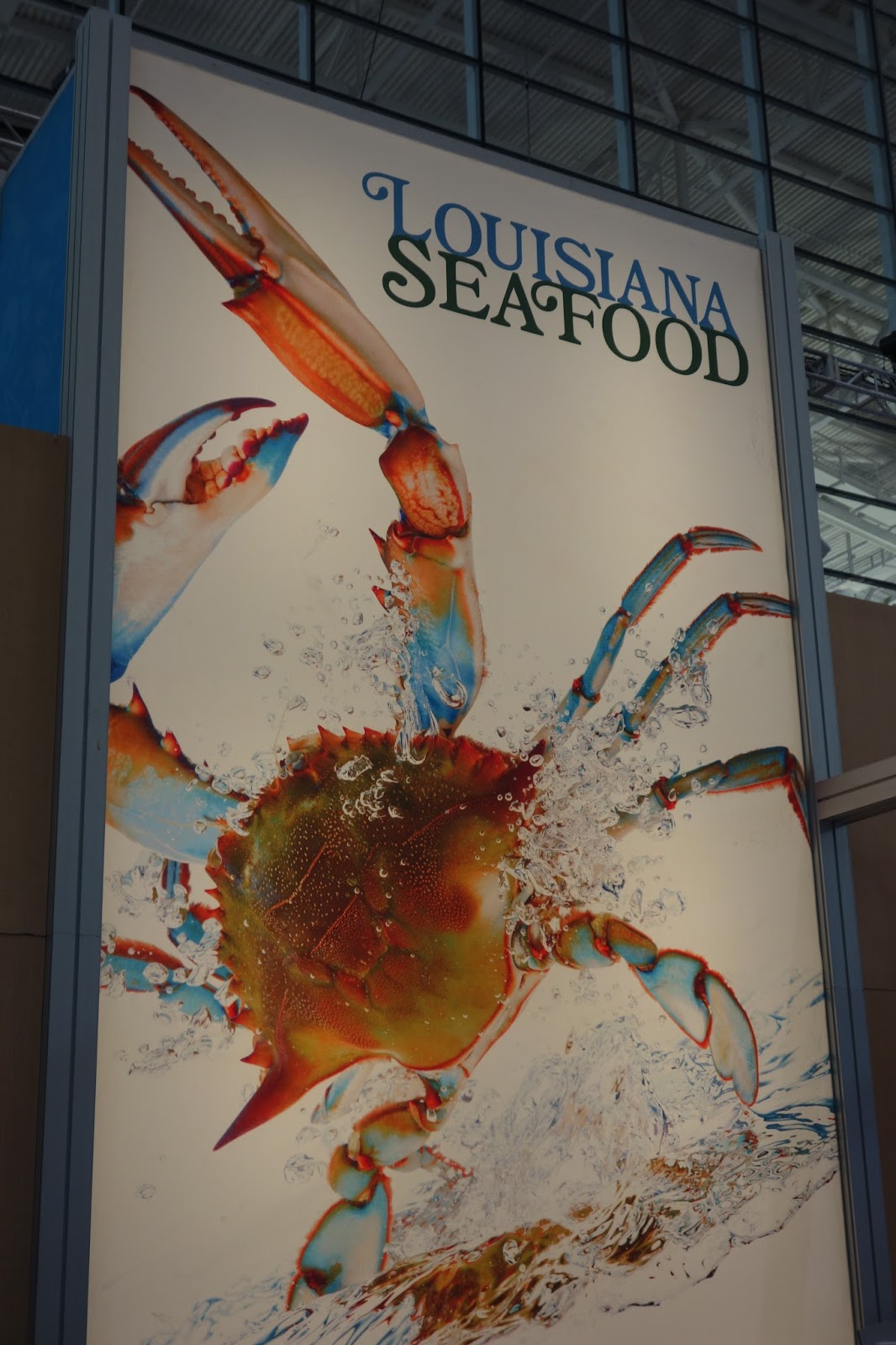
At the Seafood Expo North America (SENA), I spent some time at the Louisiana Seafood booth, learning more about their seafood industry and speaking with an award-winning chef, Michael Brewer. If you look at the statistics, you'll understand the great importance of Louisiana and U.S. seafood. Let's begin with the size of its waters, noting that its coastline is over 7700 miles long, which is longer than that of California. Annually, nearly 4 billion pounds of seafood are landed in the U.S. and Louisiana lands almost 900,000 pounds. One-third of all landed seafood comes from the Gulf, and Louisiana lands two-thirds of that total, making it the King of the Gulf.

As for specific seafood species, Louisiana lands 32% of the U.S. total amount of Shrimp, 34% of total Oysters, 25% of Blue Crab, 98% of Crawfish, 25% of Red Snapper, 62% of Drumfish, and 52% of Catfish. Unfortunately, it is important to note that 75% of the Crawfish consumed by Americans is imported. Why can't people stick to Louisiana crawfish? A crawfish boil is tasty and so much fun, but it is best with domestic crawfish as you know exactly what you are getting. I'll also mention that roughly 85%-90% of the crawfish harvested in Louisiana is from aquaculture, which is considered sustainable.

You might not realize that Louisiana's seafood industry includes wild and farmed raised alligators. I'm a fan of alligator meat, especially from the body. The tail meat can be too chewy and fibrous unless it is cooked just right. Roughly 310,000 wild and farmed alligators are sustainably harvested each year in Louisiana, which is probably far more than you would have ever suspected. Gator is certainly more popular in the South, but I think more Northerners should check it out too.

At the Seafood Expo, the Louisiana Seafood Promotion & Marketing Board was present to discuss the benefits of seafood from Louisiana. I also got to briefly meet Lt. Gov. Billy Nungesser, who oversees the Louisiana Seafood Promotion & Marketing Board. Lt. Governor Nungesser has said, “Being a leader in the industry, we have responsibility to stress the health benefits and quality of our product compared to our imported counterparts.”

The Louisiana Seafood Promotion & Marketing Board has also developed the American Seafood Coast Guard, an "initiative to address the issues associated with imported seafood and better educate the public about the health risks involved, as well as how to identify and where to locate high-quality, domestic product." Their basic advice to consumers includes getting them to seek out the origin of their seafood and to develop a relationship with their seafood vendor. Consumers need to check Country of Origin labels, to learn what is domestic seafood, and if they have any questions, they need to ask the fish vendor or restaurant staff. Education of consumers is vital in this regard.
As I've said before, one of the primary reasons why consumers don't eat more seafood is that they think it is too difficult to cook. Preparing seafood is far easier than most people think and if you can cook a chicken or steak, you can just as easily cook seafood. The Louisiana Seafood site provides a number of recipes for home cooks for Louisiana seafood, broken down into Shrimp, Crawfish, Crab, Oysters, Fish and Alligator. You'll also find recipes for Appetizers, Soups, Salads and Entrees. Try some Crawfish Bread Bites, Oyster & Bacon Chowder, Tropical Shrimp Salad or Crab Imperial.

For more recipes and advice on cooking seafood, please see one of my previous posts, How To Cook Seafood.

Last year, Chef Michael Brewer (pictured above) was crowned the King of Louisiana Seafood at the 2015 Louisiana Seafood Cook-Off for his Sheepshead Nachos. At the Seafood Expo, while Chef Brewer was removing shell and cartilage pieces from a large tray of crab meat, I had the chance to chat with him about his experiences and Louisiana seafood. He was unpretentious and down-to-earth, a passionate man and ardent advocate to the Gulf.

Chef Brewer initially worked as an electrical engineer but when his company closed in 2002, he decided to follow his passion and enter restaurant work. He didn't attend culinary school and began working as a waiter, subsequently receiving instruction and advice from the chefs at the various restaurants he worked. It would be the devastation of Katrina though which would firmly set him on his culinary path.

This tragedy brought out all of his love for New Orleans and he had an intense desire to help rebuilt New Orleans through food. He understood the importance of food to the people of New Orleans, such as the strong connection between family and food. In New Orleans, the talk at lunch ofen involves discussing what they will eat for dinner. There is also a close community of chefs in New Orleans, willing to help each other when needed.

For a couple years, Chef Brewer owned and operated The Sammich, a creative sandwich shop. It began as a test and closed last fall. Since then, Chef Brewer has become the new Executive Chef at Manning's Restaurant, which is located in the Harrah's New Orleans. Though Harrah's generally uses seafood from all over the world, Chef Brewer will be able to use only local seafood at Manning's. It is Chef Brewer's goal to give a soul to Manning's, to solidify its roots to the seafood of the Gulf.

Chef Brewer stated that the best thing about Louisiana seafood is its freshness, that it comes right out of their backyard. In addition, its diversity is also compelling, where fresh seafood is available year round, each season offering something different. He offered some advice on the use of seafood, first recommending that we use more "trash" fish, those underutilized species which still taste delicious but aren't as commonly popular. I've previously offered that same advice, having also heard it from a number of other chefs and seafood proponents.

In addition, Chef Brewer recommends using the entire fish, from nose to tail fin, to maximize the use of your fish and get every bit of value from it. He mentioned how he once learned the Mexican way to cook chicken skin and he then used that technique to cook fish skin. For example, he used the skins of Sheepshead fish (also known as the Convict fish), in his award-winning Nachos, which also had bacon fat tartar sauce and charred corn salsa. You will find other chefs now working with fish skin, which is great to see more people using every part of the fish.

Chef Brewer also provided some cooking advice for consumers, for preparing seafood at home. Many home cooks think cooking seafood is too difficult but his main advice is: "Don't be afraid. The worst thing you can make is dog food and that will make your dog happy." He recommends experimenting and not worrying about the results. Home cooks must get over their fears and just start cooking seafood, gaining practice and learning how to best prepare that seafood. Yes, there might be a few mistakes initially but if you keep at it, you won't keep making those errors and you'll start cooking delicious seafood dishes.

For more specific cooking tips, he states that home cooks need to get a flavor for salt, to understand how not to use too much or too little, to get to that happy medium. In addition, home cooks need to learn how to season better, to push it until it is almost too much. That will take practice but will payoff in the end, when you continually make perfectly seasoned food. Chef Brewer suggested using citrus peels as a  easoning agent, placing those peels in a coffee grinder. Finally, Chef Brewer highly recommended that consumers buy U.S. seafood, even if they have to pay more for it. U.S. seafood is a quality product and it is worth the added expense.

It was a pleasure to chat with Chef Brewer and I'm in agreement with his seafood advice. We need to eat more domestic seafood, more trash fish and not be afraid to cook seafood at home. Louisiana seafood offers many benefits and is a much better option than imported seafood, even if it costs a bit more. Explore the seafood options from the Gulf!

Tuesday, March 22, 2016

Owl's Brew: Tea For Cocktails

Nearly every day, year round, I drink fresh-brewed, unsweetened iced tea. I commonly drink black tea or green tea, and occasionally a flavored iced tea. I love the taste of tea and have also encountered a few delicious cocktails that used tea as an ingredient. Though you could brew your own tea at home to use in cocktails, there is an easy alternative, the tea mixers from Owl's Brew.

Back in 2011, in New York City, Jennie Ripps and Maria Littlefield established The Teaologist, later rebranded as Brew Lab Tea, a company that created artisanal custom tea blends. Two years later they expanded the scope of their business and founded Owl's Brew, to create tea-based cocktail mixers. Their desire was to make Owl's Brew as naturally as possible, without using the fake flavors that numerous other mixers and alcohols use.

The product is brewed in Vermont, in large kettles, and using fresh, natural ingredients, including an organic tea base and organic agave. The Owl's Brew is also gluten free and non-GMO. They make a variety of different blends, generally priced at 8oz for $9.99 and 32oz for $16.99. I first bought a bottle of The Classic at Total Wine, which is made with English Breakfast tea, lemon peel, lemon juice and lime juice. I experimented with this in several cocktails and later found their Smoky Earl at the Boston Wine Expo. Most recently, I got to taste several of their other flavors at the New England Food Show.

These tea mixers can be used with any type of alcohol, from rum to vodka, tequila to gin, beer to wine, sparkling wine to Port. The labels suggest that you mix two parts of the mixer with one part of alcohol but I would recommend experimenting with the ratios, finding something which meets your preferences. For my own preferences, I found an equal ratio was better, and sometimes even more alcohol was beneficial. Your ratio preferences will likely also depend on the specific flavor of the mixer and the type of alcohol you use. In addition, these tea mixers can be used as an additional ingredient in more complex and layered cocktails. It is a versatile product, limited only by your imagination.

The Classic has a bright lemony taste with black tea notes and more subtle lime accents. With The Classic, I initially mixed it with a Kimoto Junmai Sake, using three parts Sake to two parts mixer. The tea and citrus flavors worked well with the savory, umami-rich Sake. I think other Junmai Sakes would also pair well with the mixer. Ginjo and Daiginjo Sakes might not be able to stand up as well with the mixer. I also used The Classic with Speyburn Arranta Single Malt Scotch. The bold Scotch stood up well to the mixer at an equal ratio, and the tea and citrus flavors enhanced the taste of the Scotch. The Classic would definitely work well with a variety of different alcoholic beverages.


At the Boston Wine Expo, Jonathan Potash, the Cocktail Guru, and Kirsten "Kitty" Amann (pictured above) presented two different wine cocktails, The Wiseguy and the Santa Vino, which used Owl's Brew.  Both were intriguing cocktails, well balanced and tasty, though my favorite was The Wiseguy, which used the Smoky Earl. Made specifically for The Black Grouse Scotch Whiskey, the Smoky Earl is made from robust Lapsang Souchong tea, Earl Grey tea, lemon peel, honey, cane sugar and lemon juice. I very much enjoyed the smoky edge to the mixer, and in the cocktail, it was a pleasing combination with the yuzu and banana flavors. I very much want to experiment with the Smoky Earl at home.

Some of their other flavors, which I tasted at the New England Food Show, include:

White & Vine: White tea blended with pomegranate, lemon peel, agave, watermelon juice, lime juice, lemon juice, and raspberry juice. A nice fruity blend with a touch of tartness amidst the sweetness.

The Famous Mint Tea: Peppermint tea blended with lemon peel, agave, lemon juice concentrate, and lime juice concentrate. Lots of minty flavor.

Pink & Black: Darjeeling tea blended with hibiscus, lemon peel, strawberry juice, lemon juice, and agave. The pleasant strawberry flavor stands out with underlying citrus and black tea notes.

Coco-Lada: Black tea blended with coconut, chai spices, agave, pineapple juice concentrate, and coconut water. Tropical and spicy, this is an intriguing mixer which might be interesting in a frozen cocktail.

Overall, I was impressed with these tea-based cocktail mixers and will continue trying new combinations at home. I recommend you check them out too, and find some of your own favorite combinations. For more ideas, check out Jennie Ripps and Maria Littlefield new book due out this October, Wise Cocktails: the Owl's Brew Guide to Crafting & Brewing Tea-Based Beverages. 

Monday, March 21, 2016

Rant: Wine Is Just Fermented Grape Juice?

Wine is just fermented grape juice. As such, it has little real importance. Or at least that is what some people claim. These people want to dismiss wine as a mere luxury, thinking it has little reason to exist beyond its alcoholic content.

Let's dismiss their ignorance.

They fail to understand how wine can create connections between people, how it can bring people together, leading to friendships and more. The formation of those connections is significant, cementing relationships that can last our entire lives.

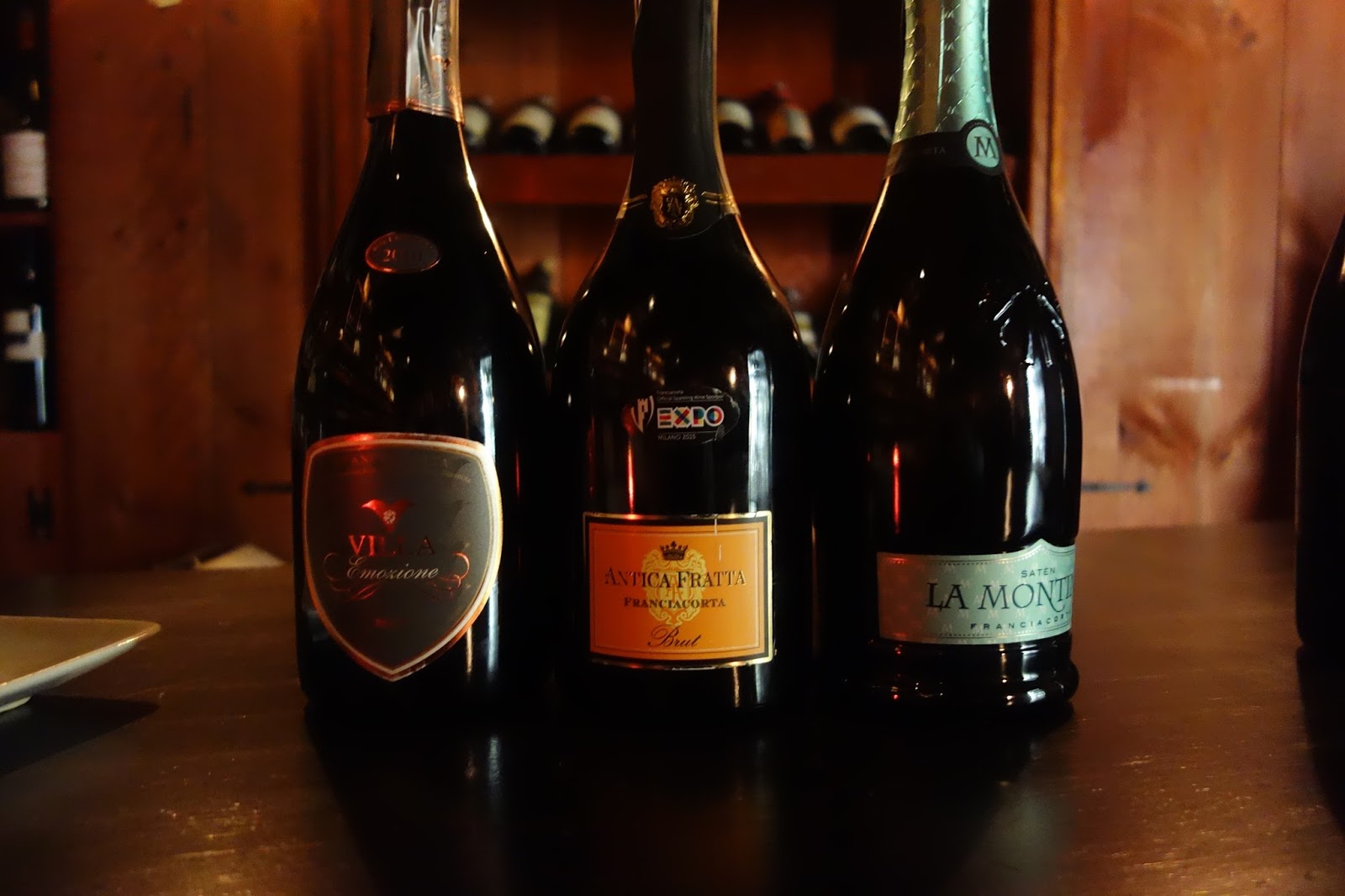
Last week, I attended a Franciacorta wine tasting with a number of my wine-loving friends. Nearly all of those people became my friends through wine. Without that connection through wine, I might never have met these people, which would have been a terrible shame. Though these friendships began with a shared passion for wine, they have developed into deeper relationships, extending beyond just wine. Wine was but the entry way for our friendships which have grown over time into something more complex.

The power of fermented grape juice.

In addition, I met new people at this tasting, other wine lovers who could become closer friends in time. Our shared love of wine became a foundation for friendship, common ground which started conversations which eventually led beyond just the realm of wine. And I probably never would have met some of these people except for the wine. For example, I got to meet Jeremy Parzen, an Italian wine expert, writer and excellent person. Without the connection of wine, our paths may never have crossed.

A person can sit home alone and drink a bottle of wine. That person might enjoy the wine but if that person shared that same bottle with others, it would likely elevate the experience. I've often said, and many others agree, that shared wine tastes much better than wine drank alone. It becomes a mutual experience, providing "oil" to lubricate conversation. It is a means of bringing people together in pleasure, spreading happiness. Even if you don't know those you are drinking with, you have common ground through the wine to get to know them better.

Life is about connections, about the people in our lives. It is those people who share our joys and sorrows, who help us in times of need. Our lives are so much richer due to the good people who are connected to us. And if wine can lead to friendships and connections, then it is an important element which is worthy of our praise. Wine might be fermented grape juice but that fails to properly encompass its greater role.

Don't underestimate the potential of wine.

Friday, March 18, 2016

Jeremy Parzen: Spreading Love For Franciacorta

Franciacorta may be the best sparkling wine that many people know nothing about.

I first wrote those words back in 2013 and they are as relevant today as they were three years ago. Franciacorta still needs wider recognition among the wine-loving community. It continues to be difficult to find in local wine stores and on restaurant wine lists. How can we change this situation?

On Wednesday evening, Jeremy Parzen, the U.S. Franciacorta Trade Ambassador, came to Boston to help elevate recognition of this quality sparkling wine. At the Wine Bottega in the North End, Jeremy, accompanied by Francesca Zocchi, who represented the Consorzia Franciacorta, presented a tasting of 11 Franciacorta wines. A number of my friends and I attended the event, and also dined later that evening with Jeremy and Francesca at Sportello. It was a fun, informative and delicious tasting event and it certainly helped to illuminate some of the wonders of Franciacorta.

Jeremy, who writes the fascinating Do Bianchi blog, has this in his About page: "In 2007, food and wine historian, Italian translator, and rock musician Jeremy Parzen Ph.D. created his blog “Do Bianchi” to offer readers a humanist perspective into the world of Italian wine and food." He first started working with Italian wine back in 1998 and has since been published in numerous magazines, seen as an expert on Italian wine. After spending some time with him, it was more than evident he is a very intelligent person who is extremely knowledgeable about wine. In addition, he is personable, down-to-earth, and humble. He also loves to engage others in discussing wine and other topics.

In 2014, the Consorzio Franciacorta retained Jeremy to create a blog devoted to Franciacorta, and the result is Franciacorta: the Real Story. This is an excellent place to find background about the region, its producers, and wines as well as the latest news of Franciacorta, including upcoming events. You will also find a link to a new movie about Franciacorta, titled F For Franciacorta.

For my own previous articles on Franciacorta, showing my passion for this delicious sparkling wine, I recommend you check out: Fun With Franciacorta, Franciacorta: Bubbly That Needs To Be On Your Wine Radar and Franciacorta: Serious Bubbly You Should Be Drinking.

In short, Franciacorta is Italian Sparkling Wine, made in the méthode traditionnelle, and produced in the Franciacorta region of Lombardy. In a prior article, I stated that in 2014, annual production of Franciacorta was about 15.5 million bottles, roughly a 10% increase since 2012. As an update, in 2015, annual production increased to about 16.5 million bottles, with about 1.5 million bottles exported. Unfortunately, though the amount is increasing each year (with a 16% increase in 2015), only a small percentage of Franciacorta, a few hundred thousand bottles, is exported to the U.S. That needs to change and hopefully it will as more Americans learn about Franciacorta.

Jeremy began his discussion of Franciacorta with a short explanation of how sparkling wine is produced, which he feels is an important foundation in understanding the unique benefits of Franciacorta. One of the most important aspects of the Franciacorta region, which causes it to stand apart from many other regions which produce sparkling wine, is the climate. Franciacorta has an alpine climate rather than a continental one, which means their vineyards produce riper grapes so there is much less need to add sugar to the bubbly.

Thus, when you drink Franciacorta, the sweetness you perceive is often due much more to the fruit rather than added sugars. That is a significant difference which often doesn't receive sufficient attention. There seem to be few discussions on sugar levels in sparkling wine, despite the importance of that topic. It should also be mentioned that the alpine climate is affected in part by the moderating influence of Lake Iseo. Thus, the terroir of Franciacorta plays a strong role in the ultimate product, in the taste of its sparkling wine.

Another important consideration in the Franciacorta region is the diversity of its soils, over 60 different types. Its morainic soils, caused by ancient glacial action, are stony, with larger stones located in the northern part and much smaller stones to the south. These stony soils don't retain water well, which force grape vines to become stressed as they have to seek deeper to find water. That struggle leads to better grapes, and it is often said that the worst soils make the best wines. About 50% of Franciacorta vineyards are organic and the rest are moving in that direction too. It is possible that in the near future Franciacorta could become the first Italian wine region to become 100% organic.

Jeremy feels that Franciacorta is one of the world's greatest expressions of Chardonnay and the Franciacorta style Saten, the equivalent of Blanc de Blancs, is the perfect example of such. In Franciacorta, outside of their Rosé, Chardonnay is generally the major component of their sparkling wines, with sometimes a small percentage of added Pinot Noir or Pinot Blanc. You can find good Franciacorta for around $30-$40, though you can also find high end bottlings costing $200 or more.

I've mentioned before that I feel Franciacorta is very food friendly and was pleased to hear Jeremy echo those thoughts. Jeremy feels that Franciacorta, unlike some other sparkling wines, works very well throughout an entire meal, especially due to its freshness and fruit flavors. He feels that is an important advantage which can help convince consumers to purchase Franciacorta at a wine store or restaurant.

In the Franciacorta region, lake fish are a major pairing, including perch, a lake white fish, and freshwater sardines. These fish might be smoked or pickled (which is one of Jeremy's favorite preparations). What may surprise you is that Franciacorta has also become a major producer of caviar. I've previously paired caviar with Franciacorta and it is a superb match. Jeremy even loves a glass or two of Franciacorta with a juicy hamburger. I haven't tried that pairing yet but now it is on my short list to sample in the near future.


Of the 11 Franciacorta wines we tasted, four especially stood out to me. The Enrico Gatti Nature, a blend of 85% Chardonnay and 15% Pinot Noir, is made without any dosage. It is dry and fresh, with pleasing flavors of green apple and citrus, a hint of nuttiness and a subtle toasty element. The Lantieri Extra Brut, made from a blend of 90% Chardonnay and 10% Pinot Noir, was dry and creamy with mild apple notes, some minerality and a pleasing freshness.

I was also impressed by the two vintage Franciacorta we sampled. The 2009 Fratelli Berlucchi Brut Freccianera, a blend of 60% Chardonnay, 30% Pinot Blanc, and 10% Pinot Noir, spent about 55 months on the lees. It was an amazing sparkling wine, complex with multiple layers of flavor. Dry and intriguing, with delicious notes of green apple, citrus and toast, with a strong savory element. And its lengthy finish was so satisfying. Highly recommended. The 2006 Majolini Brut Electro, a blend of 80% Chardonnay and 20% Pinot Noir, spends at least 60 months on the lees. This was also extremely impressive, with a greater intensity and an earthy element. There was still pleasant fruit flavors, though more subtle, and also with a lingering and compelling finish. Highly recommended.

Let me leave you with an intriguing thought:
     Champagne is considered a sparkling wine while Franciacorta is a wine that happens to be sparkling.
--Owner of Ca' del Bosco Winery

Thursday, March 17, 2016

Thursday Sips & Nibbles

I am back again with a new edition of Thursday Sips & Nibbles, my regular column where I highlight some interesting, upcoming food & drink events.
**********************************************************
1) On Wednesday, April 6, at 6:30pm, Legal Sea Foods in Park Square will host a Rioja wine dinner with selections from Bodegas Muga. Located in the heart of northern Spain, Bodegas Muga joins together Mediterranean, Atlantic and continental influences in great harmony, creating an ideal climate for grapes. As one of the most elegant and old-world Rioja producers, Bodega Muga combines both tradition and modernity to create superior wines.

Legal Sea Foods will team up with owner, Manu Muga, to host a four-plus-course dinner featuring cuisine paired with his selections from the Bodegas Muga vine. The menu will be presented as follows:

HORS D’OEUVRES
Grilled King Crab, Papaya Relish, Baguette
Chaat Masala Sea Scallops, Pimentón Potato Cake, Valencia Orange Aioli
Kung Pao Grilled Cauliflower, Star Fruit
Muga “Conde de Haro” Brut Cava, NV
FIRST COURSE
Orange-Scented Poached Halibut (Mixed Greens, Spicy Marcona Almonds, Strawberry-Rhubarb Vinaigrette)
Muga Rioja Blanco, 2014
Muga Rioja Rosado, 2015
SECOND COURSE
Herb Grilled Lamb Lollipops (Fennel Confit & Pardina Lentil Ragout)
Muga Rioja Reserva, 2011
MAIN COURSE
Venison Tenderloin (Madeira & Peppercorn Demi-Glace, Wild Mushroom & Potato Gnocchi)
Muga “Prado Enea” Rioja Gran Reserva, 2006
CHEESE COURSE
Manchego, Tetilla, Mahón (Jamón Serrano, Manzanilla Olive Tapenade, Mission Figs)
Muga “Selección Especial” Rioja Reserva, 2010

COST: $95 per person (excludes tax & gratuity)
Reservation required by calling 617-530-9397

2) This April, Anna’s Taqueria continues its commitment to charitable organizations by welcoming Boston Marathon survivor Adrianne Haslet-Davis to its Beacon Hill location for a special celebrity charity roller event on Wednesday, April 13, from 6pm-8pm. Haslet-Davis lost her left leg below the knee during the 2013 Boston Marathon bombing and will return to run 26.2 miles to raise awareness and funds for the Limbs for Life Foundation, a non-profit organization that is dedicated to providing fully-functional prosthetic care for individuals who cannot otherwise afford it.

For one night only, Anna’s fans can get their burrito fix while simultaneously helping a good cause. Guests who visit Haslet-Davis behind the counter will pay $10 for a burrito (plus chips and salsa) with all proceeds going to Limbs for Life.

The core of Anna’s mission is giving back to those that have helped grow the restaurant into a treasured citywide staple. Over the years, Anna’s Taqueria has supported countless organizations and has encouraged fundraising at the grassroots level by helping volunteers champion the causes they’re passionate about.

COST: $10 per person; chips & salsa included.
100% of proceeds for each guest-rolled burrito will go to the Limbs for Life Foundation.

3) One in five children in the United States does not get the food they need. 16 million kids in the United States struggle with hunger every day. These numbers are staggering and upsetting. Childhood hunger is a problem in the U.S that should not exist, and The Massachusetts Restaurant Association is partnering with Share Our Strength and their No Kid Hungry Campaign to help provide all children in Massachusetts with access to nutritious, healthy food options.

On April 11th, 2016 five restaurants across Massachusetts will be participating in Massachusetts Restaurant Day for No Kid Hungry. Inspired by Chef Andy Husbands of Tremont 647, who has graciously hosted a dinner for this important cause for the past 19 years; the MRA is pleased to announce its expansion throughout the state. The event will consist of a multi-course meal at one of five Massachusetts Restaurants, and all ticket proceeds will go to benefit No Kid Hungry’s Nutrition Education program in Massachusetts.

Participating restaurants include: Tremont 647 (Boston), One Eleven Chop House (Worcester), Quarterdeck (Falmouth), Cobblestones of Lowell (Lowell), and East Bay Grille (Plymouth).

Don’t miss this opportunity to donate to an important cause and help Massachusetts stamp out childhood hunger. To learn more about Share Our Strength and their No Kid Hungry Campaign, please visit: www.nokidhungry.org

COST: $75-$150
RSVP: Get tickets and more info here