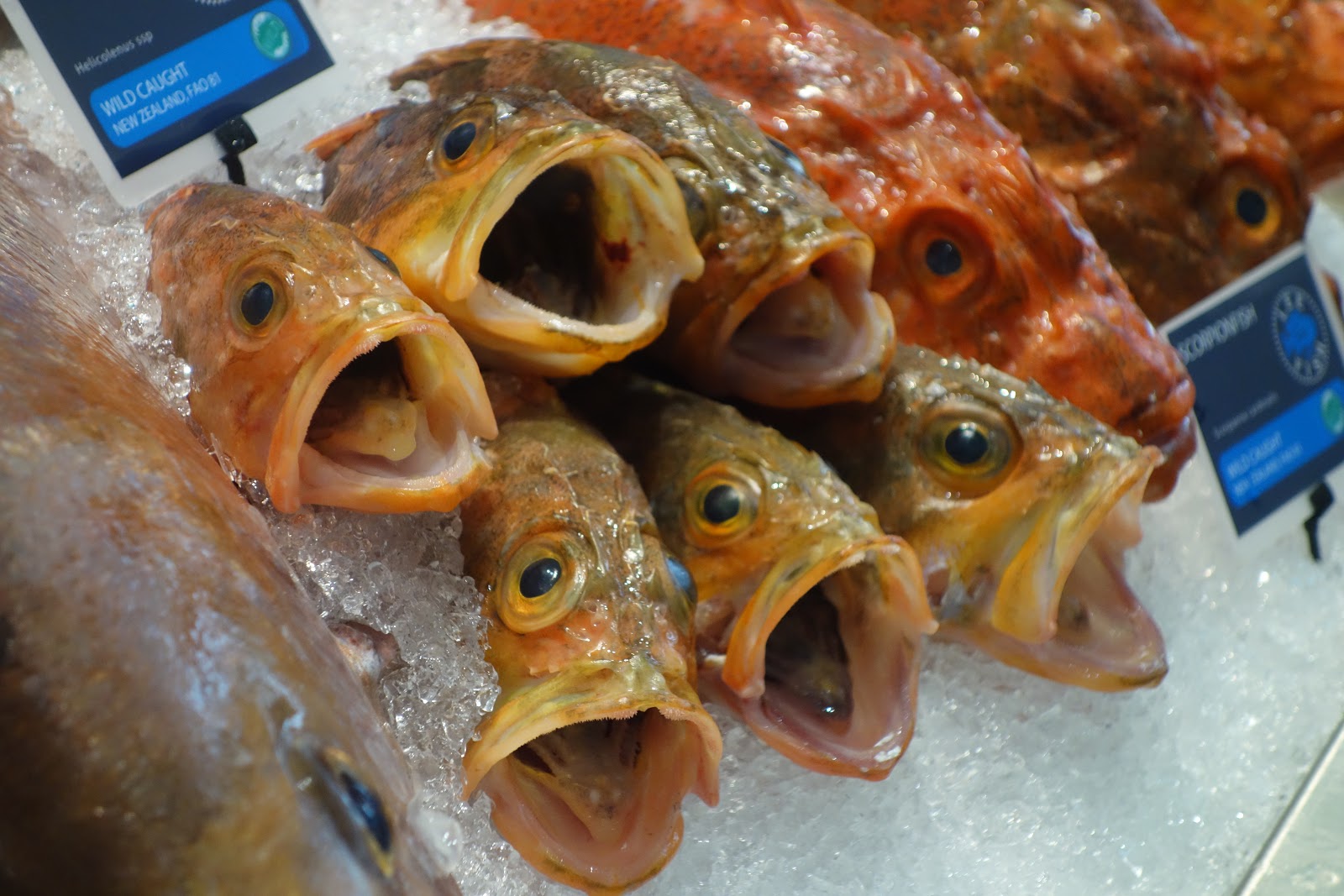
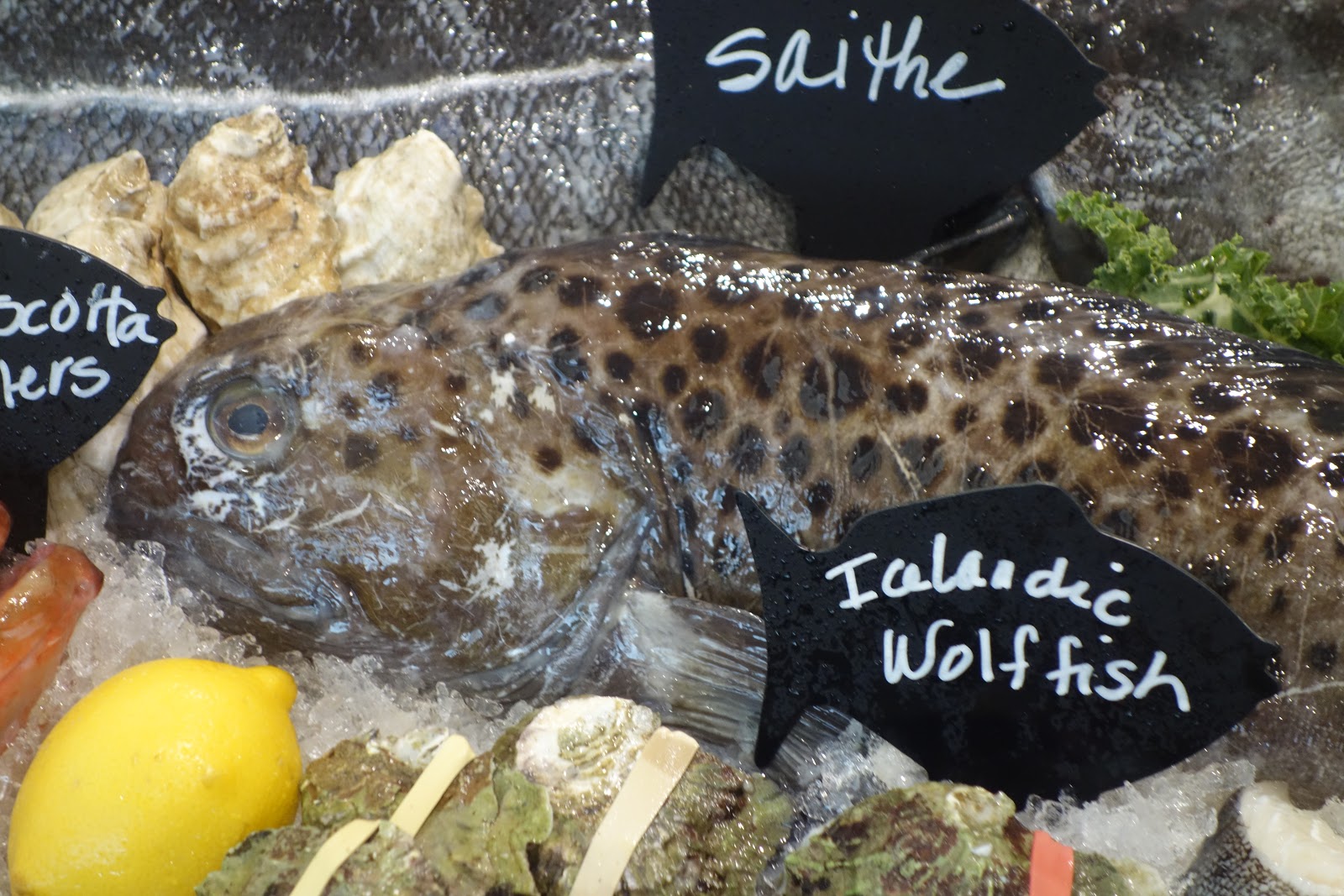
Fish heads fish heads,
Roly poly fish heads,
Fish heads fish heads,
Eat them up yum
--Barnes & Barnes
Every year at the Seafood Expo North America (SENA), I take plenty of photos of all of the fascinating things I find there, including numerous fish heads. I've collected a group of my photos for your viewing pleasure. Please enjoy this visual journey through the warped eye of the Fish Head Whisperer.
See you next year at the Seafood Expo!
For Over 18 Years, and over 5600 articles, I've Been Sharing My Passion for Food, Wine, Saké & Spirits. Come Join Me & Satisfy Your Hunger & Thirst.
Thursday, April 6, 2017
Thursday Sips & Nibbles
I am back again with a new edition of Thursday Sips & Nibbles, my regular column where I highlight some interesting, upcoming food & drink events.
**********************************************************
1) The Glass House is beginning Brunch Service, starting Sunday, April 16, which is also Easter. And for Easter, they will also hold a free Easter Egg Hunt beginning at 11am, as well as photo opportunities with the Easter Bunny. The new Brunch menu includes items such as Beignets (with dulce de leche & orange-cardamom sugar), Stuffed Clams (with bechamel sauce, chorizo, manchego, hot sauce, & tarragon), Breakfast Potato Poutine (two eggs, lamb gravy, goat cheese curds, & herbs), Mussels & Fries (ale & herb broth, hot sauce, & creme fraiche), and a Breakfast Burger (fried egg, kimchi hollandaise, bacon, served on a griddled bun with breakfast potatoes). Certainly sounds like a nice addition to the local Brunch scene.
2) In celebration of Passover, Cook Newton is offering the neighborhood a selection of special dishes from Monday, April 10 through Tuesday, April 18. Executive Chef/Owner Paul Turano will serve three unique takes on traditional Seder fare including Matzo Ball Soup ($8), Hot Veal Pastrami with fondant potatoes, sautéed spinach, and mustard jus ($24) and a Passover Cookie Plate with Hamantaschen and coconut macaroons ($7). The regular menu will also be available.
Reservations can be made by calling 617-964-2665
3) The Red Sox Foundation will host Eat Boston’s Eighth Annual Bacon & Beer Festival at Fenway Park, where fans can sample bacon-inspired dishes and beers from various local chefs and breweries. The event will take place on Saturday, May 13 from 12:30 p.m. to 3:00 p.m. Proceeds benefit the Red Sox Foundation, Lovin Spoonfuls, and Community Servings.
Tickets are on sale now at www.redsox.com/bacon. General Admission is $52 and VIP tickets are $135 and include early entrance to the event, a bleacher ticket to the 7:10 p.m. Red Sox-Rays game on March 13 at Fenway Park, an event t-shirt and tote bag, a Red Sox giveaway, and a coupon for a special bacony dish at the game.
“It's very exciting to bring the Bacon and Beer Festival back to America's best venue,” said Aaron Cohen, founder of Eat Boston and Gracie’s Ice Cream. “The chefs have always made amazingly creative dishes, and I can't wait to see what year 8 brings.”
Participating restaurants include A&B Burgers, Art Bar Cambridge, b.good, Bambara, Bertucci's, Blue Ribbon BBQ, Bostonia Public House, Brass Union, Brasserie Jo, Brewers Fork, Cask N Flagon, Central Bistro, Chubby Chickpea, City Tap House, Cook and Brown (Providence), Coppersmith, El Pelon, En Boca, Gracie's Ice Cream, Hops N Scotch, Island Creek Oyster Bar, Island Creek Oyster Bar - Burlington, Juliet, La Morra / Heritage of Sherborn, Lion's Tail, Lord Hobo, Loretta's Last Call, Lower Mills Tavern, McGreevy's Third Base Saloon, Michael's Deli, Not Your Average Joe's, Puritan & Co, Rail Stop, Roxy's Grilled Cheese, Smoke Shop, Superfine, Tapestry, The Fireplace, The Sinclair, Tilted Kilt, Trina's Starlite Lounge, UNI, Whole Foods Market, Woods Hill Table.
Participating breweries include beers currently sold at Fenway Park, plus about 15 special breweries invited in just for the day. Special breweries to be announced mid-April.
4) The Burro Bar officially kicks off brunch service this weekend in Brookline. Located in Brookline’s Washington Square, the Painted Burro’s younger sibling restaurant will offer a Latin-inspired brunch every Saturday and Sunday from 11 a.m. to 2 p.m.
Created by Chef/Owner Joe Cassinelli, the brunch menu will feature a variety of appetizers, entrees, brunch cocktails, and specialty non-alcoholic beverages inspired by regions of Mexico such as Baja, Oaxaca, Vera Cruz and the Yucatan with splashes of influence from South America. Burro Bar’s modern approach to Latin-American cuisine with a respect for tradition is exemplified throughout its menu where ingredients and local produce take center stage.
Food menu highlights will include:
The Burro Bowl: two fried eggs, beef tongue, Mexican fried rice, pork charro beans, Baja crema, chipotle mayo, and salsa verde
The Burro Benedict: two poached eggs, sliced ham, and refried beans atop English muffins served with smoke chili hollandaise and home fries
French Toast: egg-dipped brioche served with caramelized plantains, mascarpone whipped cream, and maple syrup Mexican Street Corn Esquites: sweet yellow corn served off the cob with garlic mojo, Serrano, cilantro, cotija, and cayenne
Beverage menu highlights will include:
Pineapple Mango Margarita: Cimarrón Blanco Tequila, Combier, pineapple & mango jugos, and agave
Hair of the Dog: almond horchata cold brew, rumchata, and espresso liqueur
Modelo Michelada: Modelo with tomato, clamato, fresh herbs and spices
5) On Thursday, April 13, at 7pm, Puritan & Co. Chef/Owner Will Gilson, Wine Director Peter Nelson, and the restaurant’s team invite guests will kick off spring with a five-course Spring Fling Wine Dinner featuring new spring menu items and American-focused wine pairings. The meal will give diners a sneak peek of Chef Will Gilson’s new seasonal menu and Wine Director Peter Nelson’s upcoming addition of an American wine section to Puritan and Co.’s wine list.
The pairings will include:
Salmon tiradito with rhubarb, roe, jalapeno, lime & 2015 Teutonic Wine Company “Recorded in Doubly,” Willamette Valley, Oregon
“Peas and Carrots” with berbere spiced carrot soup, pea green and snap pea salad & 2016 Edmunds St. John Rosé “Bone-Jolly” El Dorado County, California
Grilled Cobia with nettle flan, crab, fiddleheads, meyer lemon, sunchoke rosti & 2014 Cyprus Chardonnay, Russian River Valley, California
Braised shortrib of local beef with green garlic skordalia, marrow jus, morels, asparagus & 2015 Vinca Minor Carignan, Redwood Valley, California
Marinated strawberries with lemon opera cake, crème fraiche ice cream, basil & 2014 Andrew Rich Gewürtztraminer “Celilo Vineyard,” Columbia Gorge, Washington
Tickets are $95 including gratuity.
Limited space is available and tickets can be purchased at: https://www.eventbrite.com/e/spring-fling-wine-dinner-tickets-33345504301
**********************************************************
1) The Glass House is beginning Brunch Service, starting Sunday, April 16, which is also Easter. And for Easter, they will also hold a free Easter Egg Hunt beginning at 11am, as well as photo opportunities with the Easter Bunny. The new Brunch menu includes items such as Beignets (with dulce de leche & orange-cardamom sugar), Stuffed Clams (with bechamel sauce, chorizo, manchego, hot sauce, & tarragon), Breakfast Potato Poutine (two eggs, lamb gravy, goat cheese curds, & herbs), Mussels & Fries (ale & herb broth, hot sauce, & creme fraiche), and a Breakfast Burger (fried egg, kimchi hollandaise, bacon, served on a griddled bun with breakfast potatoes). Certainly sounds like a nice addition to the local Brunch scene.
2) In celebration of Passover, Cook Newton is offering the neighborhood a selection of special dishes from Monday, April 10 through Tuesday, April 18. Executive Chef/Owner Paul Turano will serve three unique takes on traditional Seder fare including Matzo Ball Soup ($8), Hot Veal Pastrami with fondant potatoes, sautéed spinach, and mustard jus ($24) and a Passover Cookie Plate with Hamantaschen and coconut macaroons ($7). The regular menu will also be available.
Reservations can be made by calling 617-964-2665
3) The Red Sox Foundation will host Eat Boston’s Eighth Annual Bacon & Beer Festival at Fenway Park, where fans can sample bacon-inspired dishes and beers from various local chefs and breweries. The event will take place on Saturday, May 13 from 12:30 p.m. to 3:00 p.m. Proceeds benefit the Red Sox Foundation, Lovin Spoonfuls, and Community Servings.
Tickets are on sale now at www.redsox.com/bacon. General Admission is $52 and VIP tickets are $135 and include early entrance to the event, a bleacher ticket to the 7:10 p.m. Red Sox-Rays game on March 13 at Fenway Park, an event t-shirt and tote bag, a Red Sox giveaway, and a coupon for a special bacony dish at the game.
“It's very exciting to bring the Bacon and Beer Festival back to America's best venue,” said Aaron Cohen, founder of Eat Boston and Gracie’s Ice Cream. “The chefs have always made amazingly creative dishes, and I can't wait to see what year 8 brings.”
Participating restaurants include A&B Burgers, Art Bar Cambridge, b.good, Bambara, Bertucci's, Blue Ribbon BBQ, Bostonia Public House, Brass Union, Brasserie Jo, Brewers Fork, Cask N Flagon, Central Bistro, Chubby Chickpea, City Tap House, Cook and Brown (Providence), Coppersmith, El Pelon, En Boca, Gracie's Ice Cream, Hops N Scotch, Island Creek Oyster Bar, Island Creek Oyster Bar - Burlington, Juliet, La Morra / Heritage of Sherborn, Lion's Tail, Lord Hobo, Loretta's Last Call, Lower Mills Tavern, McGreevy's Third Base Saloon, Michael's Deli, Not Your Average Joe's, Puritan & Co, Rail Stop, Roxy's Grilled Cheese, Smoke Shop, Superfine, Tapestry, The Fireplace, The Sinclair, Tilted Kilt, Trina's Starlite Lounge, UNI, Whole Foods Market, Woods Hill Table.
Participating breweries include beers currently sold at Fenway Park, plus about 15 special breweries invited in just for the day. Special breweries to be announced mid-April.
4) The Burro Bar officially kicks off brunch service this weekend in Brookline. Located in Brookline’s Washington Square, the Painted Burro’s younger sibling restaurant will offer a Latin-inspired brunch every Saturday and Sunday from 11 a.m. to 2 p.m.
Created by Chef/Owner Joe Cassinelli, the brunch menu will feature a variety of appetizers, entrees, brunch cocktails, and specialty non-alcoholic beverages inspired by regions of Mexico such as Baja, Oaxaca, Vera Cruz and the Yucatan with splashes of influence from South America. Burro Bar’s modern approach to Latin-American cuisine with a respect for tradition is exemplified throughout its menu where ingredients and local produce take center stage.
Food menu highlights will include:
The Burro Bowl: two fried eggs, beef tongue, Mexican fried rice, pork charro beans, Baja crema, chipotle mayo, and salsa verde
The Burro Benedict: two poached eggs, sliced ham, and refried beans atop English muffins served with smoke chili hollandaise and home fries
French Toast: egg-dipped brioche served with caramelized plantains, mascarpone whipped cream, and maple syrup Mexican Street Corn Esquites: sweet yellow corn served off the cob with garlic mojo, Serrano, cilantro, cotija, and cayenne
Beverage menu highlights will include:
Pineapple Mango Margarita: Cimarrón Blanco Tequila, Combier, pineapple & mango jugos, and agave
Hair of the Dog: almond horchata cold brew, rumchata, and espresso liqueur
Modelo Michelada: Modelo with tomato, clamato, fresh herbs and spices
5) On Thursday, April 13, at 7pm, Puritan & Co. Chef/Owner Will Gilson, Wine Director Peter Nelson, and the restaurant’s team invite guests will kick off spring with a five-course Spring Fling Wine Dinner featuring new spring menu items and American-focused wine pairings. The meal will give diners a sneak peek of Chef Will Gilson’s new seasonal menu and Wine Director Peter Nelson’s upcoming addition of an American wine section to Puritan and Co.’s wine list.
The pairings will include:
Salmon tiradito with rhubarb, roe, jalapeno, lime & 2015 Teutonic Wine Company “Recorded in Doubly,” Willamette Valley, Oregon
“Peas and Carrots” with berbere spiced carrot soup, pea green and snap pea salad & 2016 Edmunds St. John Rosé “Bone-Jolly” El Dorado County, California
Grilled Cobia with nettle flan, crab, fiddleheads, meyer lemon, sunchoke rosti & 2014 Cyprus Chardonnay, Russian River Valley, California
Braised shortrib of local beef with green garlic skordalia, marrow jus, morels, asparagus & 2015 Vinca Minor Carignan, Redwood Valley, California
Marinated strawberries with lemon opera cake, crème fraiche ice cream, basil & 2014 Andrew Rich Gewürtztraminer “Celilo Vineyard,” Columbia Gorge, Washington
Tickets are $95 including gratuity.
Limited space is available and tickets can be purchased at: https://www.eventbrite.com/e/spring-fling-wine-dinner-tickets-33345504301
Wednesday, April 5, 2017
SENA17: Seafood of Interest
“Blue, green, grey, white, or black; smooth, ruffled, or mountainous; that ocean is not silent.”
--H.P. Lovecraft
Once again, I attended the Seafood Expo North America (SENA), a huge trade show for the seafood industry. SENA is one of my favorite food events each year, an Expo worthy of continued support and where you'll find fodder for many story ideas. The basic Expo events occur from Sunday to Tuesday, over the course of 19 hours, and as usual, I met with a variety of people, attended conference sessions, tasted loads of seafood samples, took plenty of photos and tried to learn new information about seafood.
SENA is the largest seafood trade event in North America, continuing to grow each year, constantly breaking records on its size and attendance, Last year, over 1259 companies exhibited at the Expo and this year, that number rose to 1327 exhibitors, representing 51 different countries. The total exhibit space grew to approximately 253,000 square feet. You'll get plenty of exercise walking down the roughly 34 aisles of exhibitors.
Over 20,000 people attended SENA, indicating the huge interest in this Expo. The exhibit hall gets busy, but far less than you would expect for an event this large, likely because the hall is so spread out. However, there is still a lack of civility from some attendees, as I noted last year. Even though the event lasts three days, that is still insufficient time to experience all the Expo has to offer. You'll have to make choices as to which booths and conferences you wish to visit, which people you choose to engage. The size of the event permits a great diversity in exhibitors, allowing you to find whatever interests you.
SENA is all about commerce, the buying and selling of products and services. Nearly all of the exhibitors are there to make money while most of the attendees are there to spend money. Attendees are seeking seafood, both fresh and frozen, as well as various processed seafood products, from crab cakes to salmon bacon. Others are there to buy processing equipment, cooking supplies, packaging machinery, labeling equipment, conveyors, and much more. Still others are seeking services, from food safety to third party certification.
Each morning, before the Expo opens, you'll find tables throughout the convention center filled with people conducting business. Once the Expo opens, much of the business will end up in the main exhibit hall, at small tables at their booths, though business will also continue to be conducted in other parts of the convention center. And this is clearly international business, with attendees from all over the world, trying to make deals.
What may not seem obvious is that SENA is not really about seafood. It's not??? Despite the many thousand pounds of seafood being showcased at the Expo, it is all merely a means to an end. SENA is actually about people and community. Seafood is only food, intended to provide sustenance and nutrition to people, and that is understood, though largely unspoken, by the exhibitors and attendees. SENA is much more about fishermen and fish farmers, distributors and retailers, inventors and importers. It is about all of the people involved in the seafood industry, and their economic well being. It is about the global economy as the seafood industry is truly international and affects people all across the world.
Concerns about seafood sustainability ultimately come down to the fate of people, whether future generations will have enough food to survive, and whether they will live in a clean world, with adequate resources. The fate of the oceans and the fish directly relates to the fate of mankind. When you understand that SENA is all about people, then the issues take on an even greater significance. We need to talk about this more, you ensure that everyone understands people are the primary concern. It is our future and nothing is more important than that. And that sentiment would be repeated at a couple of the conferences I attended.
Having said that, I want to highlight some of the delicious seafood I sampled at SENA. Many exhibitors offer tastes of their seafood products, and you'll find seafood prepared in many different ways, such as chowders, soups, pate, batter fried, marinated, pickled, dried, raw, smoked, salads, smoked, sushi and much more. Each year, there are plenty of new products offered, though you will likely find some prior favorites still around. Some of the best samples you will find are prepared by some creative chefs. It is just a matter of locating the booths of those inventive people. You can also feel good that at the end of the event, SENA donates several thousand pounds of seafood product to the Greater Boston Food Bank Network.
Onto my tasty highlights of the Expo...
I've previously tasted various seafood sausages, and you usually know exactly what you're eating. It is clearly seafood. However, the California Calamari Sausage (pictured above), made by Real Good Fish and apparently distributed under the Ocean Angel Brand (which is part of Del Mar Seafoods), is very different. The squid is sourced from the California Current, and these sausages are also prepared with fennel seed, dried sage, dried oregano, sea salt, black pepper, brown sugar, red pepper flake, ground clove, cayenne pepper, and a lamb sausage casing. They are supposed to be high in protein, low calorie and have 0 grams of saturated fats. I loved these sausages, and they certainly tasted like a usual pork sausage, and not other seafood sausages. You likely would not have known they were made from squid. They have a nice blend of spices, a mild bit of heat, and an excellent texture. Being healthier than other sausages, these would be a good option, even for people who claim not to like seafood. Highly recommended.
At the Japanese Pavilion, Daiei Foods Co. Ltd., a seafood wholesaler founded in 1973, presented samples of their Wasabikko, Wasabi Flavored Seasoned Flying Fish Roe. It is an intriguing idea, blending spicy wasabi with salty fish roe, and this would make a nice addition on sushi. I liked the taste, and the heat was evident though not overwhelming.
Seaweed snacks have been popular for quite some time and Ocean's Halo is upping the game with their line-up of Seaweed Strips. These Strips come in four flavors, Almond, Chocolate Almond, Coconut and Chocolate Coconut. They are made from only a few ingredients, including seaweed and a complex sauce base. I tasted the Chocolate Almond & Chocolate Coconut flavors, and they were an intriguing blend of briny and sweet flavors, like drinking hot chocolate made from sea water. Though it may sound strange, it was tasty, and the added texture of the nuts and coconut enhanced the treat. The flavor may not appeal to everyone, but at least be open to trying it.
Another more unusual flavor combination is the Coppa Candied Salmon Caramel Ice Cream. Coppa, which opened in September 2013, is a handmade ice cream and coffee shop in Juneau, Alaska. Currently the ice cream is only available at their shop, which caters to the many cruise passengers that stop by the area. However, they are seeking ways to make distribution more cost-effective so they can sell it across the country. The ice cream is made with Sockeye Salmon from Taku River Reds, as well as milk, cream, sugar, maple syrup, butter, sea salt, guar gum, and gum arabic. I found the ice cream to be creamy and delicious, with a sweet and salty element, the merest hint of salmon. I know plenty of people cringe at the idea of fish in their ice cream, but if they tasted this ice cream, they would change their minds.
Caviarum, a Canadian company, produces Faux Caviar, which is intended to be less expensive and more sustainable than actual caviar. They sell their products to restaurants and food service companies. In short, to create their faux caviar, they use "molecular science technology by extracting fish broth and using fish oils to create a formulated liquid." That liquid is then processed into small balls, like fish eggs. Overall, I think these can make a nice substitute, unless you are a connoisseur who doesn't mind paying the steep prices for actual caviar.
They make four different types, including:
--Crown Osetra: To represent wild Osetra sturgeon from the Black Sea. This was probably my favorite of the four. Tiny, dark "roe" with a delightful briny and fishy taste.
--Royal Beluga: To represent wild Beluga sturgeon from the Black & Caspian Sea. These "roe" are larger, though also with that pleasant briny and fishy taste.
--Albino Gold: To represent the extremely rare wild Albino Beluga from the Caspian Sea. These were intriguing, possessing a touchy of smokiness that enhanced the more briny "roe."
--Pearl D'Escargot: To represent the wild Escargot from the ancient European oak forests. These also had a more unique flavor, more earthy notes with plenty of umami. Would love to have some of this with a glass of Sake.
At the Louisiana booth, Chef Michael Brewer prepared a few different seafood dishes during the course of the Expo. Last year, I wrote an article about him, Louisiana Seafood & Chef Michael Brewer, and it is worth a read.
One of the dishes he prepared this year was Alligator Sausage Cheese Cake. This was prepared with 60% farm-raised alligator and 40% for, as well as a proprietary spice blend, cream cheese, & sour cream. This was moist and flavorful, with a little bit of spicy heat, pleasant sausage spices, and a nice texture. It is always a pleasure when a Chef at the Expo prepares something original as there isn't enough of that at the Expo.
I was very pleased to finally get the chance to meet Chef Diane Kochilas at the Expo. Chef Kochilas, an expert in Greek cuisine, is the consulting chef for Committee. She represented Selonda at the Expo, a Greek company which produces and supplies Sea Bream and Sea Bass.
Chef Kochilas simply prepared some Sea Bream, also known as Dorade, and it was quite good, with a nice firm texture and moist, white flesh. I've often advised people to seek out less common fish to enjoy, rather than the most popular types. And Sea Bream would be a good choice.
What foods did you particularly enjoy at SENA17?
“The sea can bind us to her many moods, whispering to us by the subtle token of a shadow or a gleam upon the waves, and hinting in these ways of her mournfulness or rejoicing. Always she is remembering old things, and these memories, though we may not grasp them, are imparted to us, so that we share her gaiety or remorse.”
--H.P. Lovecraft
--H.P. Lovecraft
Once again, I attended the Seafood Expo North America (SENA), a huge trade show for the seafood industry. SENA is one of my favorite food events each year, an Expo worthy of continued support and where you'll find fodder for many story ideas. The basic Expo events occur from Sunday to Tuesday, over the course of 19 hours, and as usual, I met with a variety of people, attended conference sessions, tasted loads of seafood samples, took plenty of photos and tried to learn new information about seafood.
SENA is the largest seafood trade event in North America, continuing to grow each year, constantly breaking records on its size and attendance, Last year, over 1259 companies exhibited at the Expo and this year, that number rose to 1327 exhibitors, representing 51 different countries. The total exhibit space grew to approximately 253,000 square feet. You'll get plenty of exercise walking down the roughly 34 aisles of exhibitors.
Over 20,000 people attended SENA, indicating the huge interest in this Expo. The exhibit hall gets busy, but far less than you would expect for an event this large, likely because the hall is so spread out. However, there is still a lack of civility from some attendees, as I noted last year. Even though the event lasts three days, that is still insufficient time to experience all the Expo has to offer. You'll have to make choices as to which booths and conferences you wish to visit, which people you choose to engage. The size of the event permits a great diversity in exhibitors, allowing you to find whatever interests you.
SENA is all about commerce, the buying and selling of products and services. Nearly all of the exhibitors are there to make money while most of the attendees are there to spend money. Attendees are seeking seafood, both fresh and frozen, as well as various processed seafood products, from crab cakes to salmon bacon. Others are there to buy processing equipment, cooking supplies, packaging machinery, labeling equipment, conveyors, and much more. Still others are seeking services, from food safety to third party certification.
Each morning, before the Expo opens, you'll find tables throughout the convention center filled with people conducting business. Once the Expo opens, much of the business will end up in the main exhibit hall, at small tables at their booths, though business will also continue to be conducted in other parts of the convention center. And this is clearly international business, with attendees from all over the world, trying to make deals.
What may not seem obvious is that SENA is not really about seafood. It's not??? Despite the many thousand pounds of seafood being showcased at the Expo, it is all merely a means to an end. SENA is actually about people and community. Seafood is only food, intended to provide sustenance and nutrition to people, and that is understood, though largely unspoken, by the exhibitors and attendees. SENA is much more about fishermen and fish farmers, distributors and retailers, inventors and importers. It is about all of the people involved in the seafood industry, and their economic well being. It is about the global economy as the seafood industry is truly international and affects people all across the world.
Concerns about seafood sustainability ultimately come down to the fate of people, whether future generations will have enough food to survive, and whether they will live in a clean world, with adequate resources. The fate of the oceans and the fish directly relates to the fate of mankind. When you understand that SENA is all about people, then the issues take on an even greater significance. We need to talk about this more, you ensure that everyone understands people are the primary concern. It is our future and nothing is more important than that. And that sentiment would be repeated at a couple of the conferences I attended.
Having said that, I want to highlight some of the delicious seafood I sampled at SENA. Many exhibitors offer tastes of their seafood products, and you'll find seafood prepared in many different ways, such as chowders, soups, pate, batter fried, marinated, pickled, dried, raw, smoked, salads, smoked, sushi and much more. Each year, there are plenty of new products offered, though you will likely find some prior favorites still around. Some of the best samples you will find are prepared by some creative chefs. It is just a matter of locating the booths of those inventive people. You can also feel good that at the end of the event, SENA donates several thousand pounds of seafood product to the Greater Boston Food Bank Network.
Onto my tasty highlights of the Expo...
I've previously tasted various seafood sausages, and you usually know exactly what you're eating. It is clearly seafood. However, the California Calamari Sausage (pictured above), made by Real Good Fish and apparently distributed under the Ocean Angel Brand (which is part of Del Mar Seafoods), is very different. The squid is sourced from the California Current, and these sausages are also prepared with fennel seed, dried sage, dried oregano, sea salt, black pepper, brown sugar, red pepper flake, ground clove, cayenne pepper, and a lamb sausage casing. They are supposed to be high in protein, low calorie and have 0 grams of saturated fats. I loved these sausages, and they certainly tasted like a usual pork sausage, and not other seafood sausages. You likely would not have known they were made from squid. They have a nice blend of spices, a mild bit of heat, and an excellent texture. Being healthier than other sausages, these would be a good option, even for people who claim not to like seafood. Highly recommended.
At the Japanese Pavilion, Daiei Foods Co. Ltd., a seafood wholesaler founded in 1973, presented samples of their Wasabikko, Wasabi Flavored Seasoned Flying Fish Roe. It is an intriguing idea, blending spicy wasabi with salty fish roe, and this would make a nice addition on sushi. I liked the taste, and the heat was evident though not overwhelming.
Seaweed snacks have been popular for quite some time and Ocean's Halo is upping the game with their line-up of Seaweed Strips. These Strips come in four flavors, Almond, Chocolate Almond, Coconut and Chocolate Coconut. They are made from only a few ingredients, including seaweed and a complex sauce base. I tasted the Chocolate Almond & Chocolate Coconut flavors, and they were an intriguing blend of briny and sweet flavors, like drinking hot chocolate made from sea water. Though it may sound strange, it was tasty, and the added texture of the nuts and coconut enhanced the treat. The flavor may not appeal to everyone, but at least be open to trying it.
Another more unusual flavor combination is the Coppa Candied Salmon Caramel Ice Cream. Coppa, which opened in September 2013, is a handmade ice cream and coffee shop in Juneau, Alaska. Currently the ice cream is only available at their shop, which caters to the many cruise passengers that stop by the area. However, they are seeking ways to make distribution more cost-effective so they can sell it across the country. The ice cream is made with Sockeye Salmon from Taku River Reds, as well as milk, cream, sugar, maple syrup, butter, sea salt, guar gum, and gum arabic. I found the ice cream to be creamy and delicious, with a sweet and salty element, the merest hint of salmon. I know plenty of people cringe at the idea of fish in their ice cream, but if they tasted this ice cream, they would change their minds.
Caviarum, a Canadian company, produces Faux Caviar, which is intended to be less expensive and more sustainable than actual caviar. They sell their products to restaurants and food service companies. In short, to create their faux caviar, they use "molecular science technology by extracting fish broth and using fish oils to create a formulated liquid." That liquid is then processed into small balls, like fish eggs. Overall, I think these can make a nice substitute, unless you are a connoisseur who doesn't mind paying the steep prices for actual caviar.
They make four different types, including:
--Crown Osetra: To represent wild Osetra sturgeon from the Black Sea. This was probably my favorite of the four. Tiny, dark "roe" with a delightful briny and fishy taste.
--Royal Beluga: To represent wild Beluga sturgeon from the Black & Caspian Sea. These "roe" are larger, though also with that pleasant briny and fishy taste.
--Albino Gold: To represent the extremely rare wild Albino Beluga from the Caspian Sea. These were intriguing, possessing a touchy of smokiness that enhanced the more briny "roe."
--Pearl D'Escargot: To represent the wild Escargot from the ancient European oak forests. These also had a more unique flavor, more earthy notes with plenty of umami. Would love to have some of this with a glass of Sake.
At the Louisiana booth, Chef Michael Brewer prepared a few different seafood dishes during the course of the Expo. Last year, I wrote an article about him, Louisiana Seafood & Chef Michael Brewer, and it is worth a read.
One of the dishes he prepared this year was Alligator Sausage Cheese Cake. This was prepared with 60% farm-raised alligator and 40% for, as well as a proprietary spice blend, cream cheese, & sour cream. This was moist and flavorful, with a little bit of spicy heat, pleasant sausage spices, and a nice texture. It is always a pleasure when a Chef at the Expo prepares something original as there isn't enough of that at the Expo.
I was very pleased to finally get the chance to meet Chef Diane Kochilas at the Expo. Chef Kochilas, an expert in Greek cuisine, is the consulting chef for Committee. She represented Selonda at the Expo, a Greek company which produces and supplies Sea Bream and Sea Bass.
Chef Kochilas simply prepared some Sea Bream, also known as Dorade, and it was quite good, with a nice firm texture and moist, white flesh. I've often advised people to seek out less common fish to enjoy, rather than the most popular types. And Sea Bream would be a good choice.
What foods did you particularly enjoy at SENA17?
“The sea can bind us to her many moods, whispering to us by the subtle token of a shadow or a gleam upon the waves, and hinting in these ways of her mournfulness or rejoicing. Always she is remembering old things, and these memories, though we may not grasp them, are imparted to us, so that we share her gaiety or remorse.”
--H.P. Lovecraft
Tuesday, April 4, 2017
Boston Wine Expo: Quinta Vale D. Maria, Port & The Douro
"Of all the places where men have planted vineyards the upper Douro is the most improbable."
--Hugh Johnson
At the recent Boston Wine Expo, they offered 35 Seminars, mostly about wine but also a few dealing with topics like whiskey and olive oil. The Seminars are an excellent way to get a more directed wine education at the Expo, and you usually get to taste some compelling wines. This year, as a media guest, I attended one of the seminars, The Wines of the Douro Valley: From Dream to Reality: An Adventure in the Oldest Demarcated Region of the World.
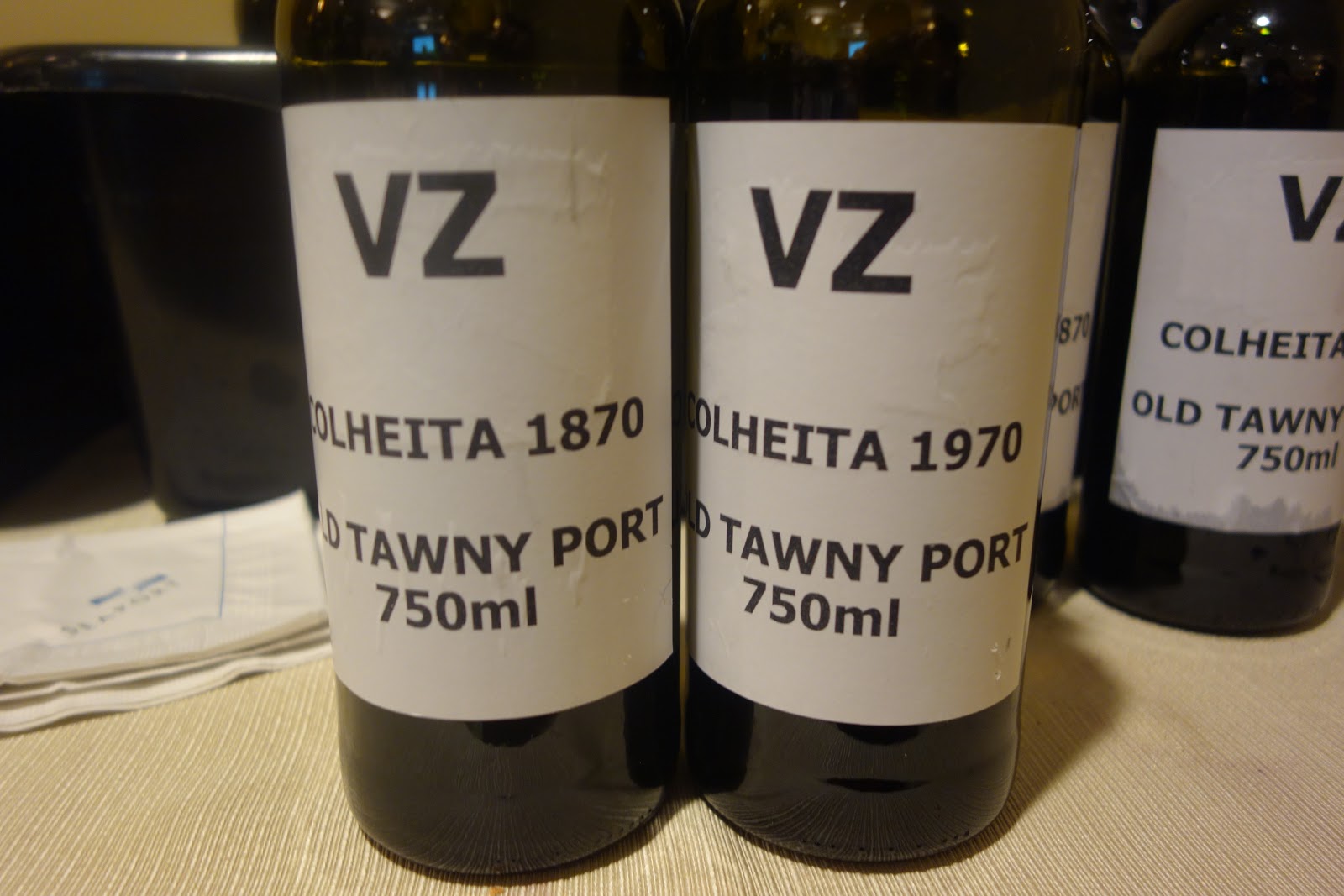
The description of this seminar stated: "Since 1780, the family has been intimately entwined in the region's wine trade. When Cristiano Van Zeller left Quinta do Noval at the end of 1993 it was to pursue his passion for innovation and the development of independent producers in the Douro valley. His goal was to diminish the region's dependence on the production of port, while showing the true potential and diversity of this incredible land. In 1996 he acquired the ancient Quinta Vale D. Maria and immediately went to work restoring this venerable estate. Within two years the estate was receiving critical acclaim for their Douro Red Wine. As of 2006, he took over the reins of the centuries old family business, Van Zeller & Co. Please join Cristiano in tasting through the last decade of Red wines and Ports from Quinta Vale D. Maria along with the rare opportunity to experience two tawny ports bottled 100 years apart: 1970 versus 1870. When did you drink your last 1870?"
You don't often get a chance to taste a Port from 1870 and as a Cavaleiro in the Confraria do Vinho do Porto, I felt it was my duty to investigate and taste. When I entered the room for the seminar, there was a strong and alluring aroma from the intensity of the Tawny Ports. It made you want to start drinking right away, but I had restraint.
The speaker for the seminar was Cristiano Van Zeller, the Chairman of the Federation of Douro Farmers and the Owner of Quinta Vale D. Maria, and he was accompanied by his daughter, Francisca. Christiano was an excellent presenter, knowledgeable, humorous and personable.
The Van Zeller family can trace its history in the wine trade back to 1620, and in 1780 they became officially established as a Port Wine shipper. Cristiano is a 14th generation Van Zeller and he began his wine career working at the family Port company, Quinta do Noval. In 1993, the family sold the Port company and Cristiano moved onto some independent projects. The family of Cristiano's wife, Joana Lemos, had owned a Port estate for about 150 years and in 1996, Cristiano and Joana purchased the estate, Quinta Vale D. Maria, from her family. They had to rebuild the estate, which had fallen into a state of disrepair.
Cristiano began his presentation with some basic information about the Douro region, which he states is a "special place" in northeast Portugal. The Douro is protected from the sea and possesses lots of biodiversity. Grape growing began in the western section, the Baixo Corgo, first and then proceeded east, to the Cima Corgo and finally the Douro Superior. The Douro Superior, which is located near the Spanish border, is tougher to reach as the river isn't as easily navigable and less than 20% of the vineyards in the Douro are located in this region. The Douro region has harsh winters (though not as harsh as Boston) and hot summers. The soil is mainly schist, a slate-like metamorphic rock, that is rich in nutrients and possesses good water retention abilities. 2011 is supposed to have been the greatest vintage in the 21st century.
Quinta Vale D. Maria, which began with about 19 hectares, now encompasses approximately 31 hectares of vineyards, having purchased a few additional vineyards since 1996. In 2003, they bought the CV-Curriculum Vitae vineyard, which includes 6 hectares of vines (with an average age of 80 years) and olive trees, and grow about 20 different grape varieties. In 2004, as a gift to his Francisca for her 18th birthday, they purchased the Vinha da Francisca, about five hectares of 10 year old vines, growing five grapes, Touriga Nacional, Touriga France, Tinta Francisca, Sousao and Rufete. Finally, they acquired the Vinha do Rio, a vineyard that is the closest and lowest to the River Torto that runs through the estate. It encompasses only 2 hectares, growing about 20 grapes with an average age of 100 years.
They engage in organic viticulture, use horse plows and hand harvest all of their grapes. Grape selection is very important to them and they use a second selection on the selecting table. All of their red grapes are first foot-trodden in lagares, and for some the treading is then carried on by robots for another four hours. For their Ports and Single Quinta Douro DOC red wines, full fermentation occurs in the lagares. These wines are true labors of love. They still purchase some grapes though they make a number of single vineyard wines too.
Personally, Cristiano loves the diversity of wine, stating he would "hate to drink the same wine all the time" and that even the "same pleasure all the time gets routine." That is certainly a sentiment I fully support and have often encouraged people to be adventurous, expand their palate and taste all of the vast diversity in the wine industry. Cristiano also mentioned that he is under "no pressure to conform to public trends/tastes." He just tries to produce the best wines he can each year. To Cristiano, "Greatness of wine is how it is perceived at the moment and how it makes you feel." That is probably one of the best definitions of "greatness" in wine I've seen.
We began our tasting with four vintages of the Quinta Vale d. Maria Douro Red, a wine made from a field blend of 40 indigenous grapes, vines averaging about 60 years. Cristiano seeks a balance for the grapes, which is a challenge as each year the grapes are different. This wine is usually aged for 20-22 months in 65%-75% new French oak. The wine has an excellent aging potential, at least twenty years, and it could age longer but they don't have sufficient experience with a longer period. The wine sells for about $70 retail, and is locally distributed by M.S. Walker.
The four vintages we tasted included 2006, 2009, 2011, & 2013, and Cristiano commented that 2006 & 2013 were cooler years. As a general observation, all of these wines, including the oldest, seemed relatively fresh, with lots of life in them. They were all complex and intriguing, with notes of black cherry, blackberry, ripe plum, a hint of eucalyptus, and a strong, spicy backbone. The tannins were restrained though the 2009 and 2013 were more muscular wines. All of these wines would probably be best paired with food, especially beef, wild boar, game meats or other hearty dishes. The 2006 was the clear winner of the four, being more elegant and throughly impressive, the type of "wow" wine which will make you savor each compelling sip.
We then moved onto four Vintage Ports, from 2003, 2007, 2009, & 2014. These Ports are made from a field blend of more than 25 indigenous grapes, from vines aged 25-60 years old. The wines are aged in ancient (more than 100 years old) oak and chestnut wood Port casks, as well as small stainless steel vats, for about 18 months. You should decant these Ports for at least a day before, though the older the vintage, the less you need to decant. Cristiano stated that the 2003 & 2007 vintages should age the longest.
All four of these Ports were excellent, delicious and complex. They too possessed a nice freshness to them, with plenty of primary fruit flavors, both red and black fruits, from cherry to plum. The colors of these ports was rich and dark, each with alluring aromas which will seduce you into sampling them. The 2014 and 2007 were the more powerful of the four, though certainly not overwhelming so, and they also seemed less sweet than the other two vintages. Each vintage had its own unique character so it was fascinating to compare the different vintages. My favorite of the group was the 2007, which was so complex and well balanced, and each sip brought something new to my palate. However, you wouldn't go wrong with any of these Ports.
Finally, we tasted Ports from 1970 and 1870, though neither of these was ever registered as a single vintage wines and will never be sold as such. These are Colheitas, made in a single year and aged for at least seven years in the barrel, though they can often spend much longer in the barrel. Cristiano noted that you should chill old Ports like a white wine. Interestingly, the darker colored of these two Ports was the older, the 1870. Though Ports lose their color over time, there comes a point when that changes, and they actually get darker.
The 1970 Port still had a freshness to it, and was full bodied, with a mild sweetness, plenty of complexity and a lengthy finish. There were interesting flavors of caramel, dried fruit and cedar, with mild herbal accents. As for the 1870 Port, it had a bit of a musty aroma that began to dissipate with time. It was more savory than sweet, still with plenty of complexity and a lingering finish. There were more dried fruit and spice flavors, with notes of herbs, caramel and salted nuts. A fascinating Port which is still very much alive despite it being nearly 150 years old. It was a true pleasure to get to taste this Port and mere words cannot do justice to it.
Let me end on a note of beauty. Francisca wants to be a writer, mentioning that "Port is the greatest poetry in wine." Certainly an intriguing thought. She also put together a compelling short video about the winery, Quinta Vale D. Maria - Unique Vines and Music, which you should watch above. The video shows the fine beauty of the estate as well as Francisca's poetic language. There is nothing more for me to say.
--Hugh Johnson
At the recent Boston Wine Expo, they offered 35 Seminars, mostly about wine but also a few dealing with topics like whiskey and olive oil. The Seminars are an excellent way to get a more directed wine education at the Expo, and you usually get to taste some compelling wines. This year, as a media guest, I attended one of the seminars, The Wines of the Douro Valley: From Dream to Reality: An Adventure in the Oldest Demarcated Region of the World.
The description of this seminar stated: "Since 1780, the family has been intimately entwined in the region's wine trade. When Cristiano Van Zeller left Quinta do Noval at the end of 1993 it was to pursue his passion for innovation and the development of independent producers in the Douro valley. His goal was to diminish the region's dependence on the production of port, while showing the true potential and diversity of this incredible land. In 1996 he acquired the ancient Quinta Vale D. Maria and immediately went to work restoring this venerable estate. Within two years the estate was receiving critical acclaim for their Douro Red Wine. As of 2006, he took over the reins of the centuries old family business, Van Zeller & Co. Please join Cristiano in tasting through the last decade of Red wines and Ports from Quinta Vale D. Maria along with the rare opportunity to experience two tawny ports bottled 100 years apart: 1970 versus 1870. When did you drink your last 1870?"
You don't often get a chance to taste a Port from 1870 and as a Cavaleiro in the Confraria do Vinho do Porto, I felt it was my duty to investigate and taste. When I entered the room for the seminar, there was a strong and alluring aroma from the intensity of the Tawny Ports. It made you want to start drinking right away, but I had restraint.
The speaker for the seminar was Cristiano Van Zeller, the Chairman of the Federation of Douro Farmers and the Owner of Quinta Vale D. Maria, and he was accompanied by his daughter, Francisca. Christiano was an excellent presenter, knowledgeable, humorous and personable.
The Van Zeller family can trace its history in the wine trade back to 1620, and in 1780 they became officially established as a Port Wine shipper. Cristiano is a 14th generation Van Zeller and he began his wine career working at the family Port company, Quinta do Noval. In 1993, the family sold the Port company and Cristiano moved onto some independent projects. The family of Cristiano's wife, Joana Lemos, had owned a Port estate for about 150 years and in 1996, Cristiano and Joana purchased the estate, Quinta Vale D. Maria, from her family. They had to rebuild the estate, which had fallen into a state of disrepair.
Cristiano began his presentation with some basic information about the Douro region, which he states is a "special place" in northeast Portugal. The Douro is protected from the sea and possesses lots of biodiversity. Grape growing began in the western section, the Baixo Corgo, first and then proceeded east, to the Cima Corgo and finally the Douro Superior. The Douro Superior, which is located near the Spanish border, is tougher to reach as the river isn't as easily navigable and less than 20% of the vineyards in the Douro are located in this region. The Douro region has harsh winters (though not as harsh as Boston) and hot summers. The soil is mainly schist, a slate-like metamorphic rock, that is rich in nutrients and possesses good water retention abilities. 2011 is supposed to have been the greatest vintage in the 21st century.
Quinta Vale D. Maria, which began with about 19 hectares, now encompasses approximately 31 hectares of vineyards, having purchased a few additional vineyards since 1996. In 2003, they bought the CV-Curriculum Vitae vineyard, which includes 6 hectares of vines (with an average age of 80 years) and olive trees, and grow about 20 different grape varieties. In 2004, as a gift to his Francisca for her 18th birthday, they purchased the Vinha da Francisca, about five hectares of 10 year old vines, growing five grapes, Touriga Nacional, Touriga France, Tinta Francisca, Sousao and Rufete. Finally, they acquired the Vinha do Rio, a vineyard that is the closest and lowest to the River Torto that runs through the estate. It encompasses only 2 hectares, growing about 20 grapes with an average age of 100 years.
They engage in organic viticulture, use horse plows and hand harvest all of their grapes. Grape selection is very important to them and they use a second selection on the selecting table. All of their red grapes are first foot-trodden in lagares, and for some the treading is then carried on by robots for another four hours. For their Ports and Single Quinta Douro DOC red wines, full fermentation occurs in the lagares. These wines are true labors of love. They still purchase some grapes though they make a number of single vineyard wines too.
Personally, Cristiano loves the diversity of wine, stating he would "hate to drink the same wine all the time" and that even the "same pleasure all the time gets routine." That is certainly a sentiment I fully support and have often encouraged people to be adventurous, expand their palate and taste all of the vast diversity in the wine industry. Cristiano also mentioned that he is under "no pressure to conform to public trends/tastes." He just tries to produce the best wines he can each year. To Cristiano, "Greatness of wine is how it is perceived at the moment and how it makes you feel." That is probably one of the best definitions of "greatness" in wine I've seen.
We began our tasting with four vintages of the Quinta Vale d. Maria Douro Red, a wine made from a field blend of 40 indigenous grapes, vines averaging about 60 years. Cristiano seeks a balance for the grapes, which is a challenge as each year the grapes are different. This wine is usually aged for 20-22 months in 65%-75% new French oak. The wine has an excellent aging potential, at least twenty years, and it could age longer but they don't have sufficient experience with a longer period. The wine sells for about $70 retail, and is locally distributed by M.S. Walker.
The four vintages we tasted included 2006, 2009, 2011, & 2013, and Cristiano commented that 2006 & 2013 were cooler years. As a general observation, all of these wines, including the oldest, seemed relatively fresh, with lots of life in them. They were all complex and intriguing, with notes of black cherry, blackberry, ripe plum, a hint of eucalyptus, and a strong, spicy backbone. The tannins were restrained though the 2009 and 2013 were more muscular wines. All of these wines would probably be best paired with food, especially beef, wild boar, game meats or other hearty dishes. The 2006 was the clear winner of the four, being more elegant and throughly impressive, the type of "wow" wine which will make you savor each compelling sip.
We then moved onto four Vintage Ports, from 2003, 2007, 2009, & 2014. These Ports are made from a field blend of more than 25 indigenous grapes, from vines aged 25-60 years old. The wines are aged in ancient (more than 100 years old) oak and chestnut wood Port casks, as well as small stainless steel vats, for about 18 months. You should decant these Ports for at least a day before, though the older the vintage, the less you need to decant. Cristiano stated that the 2003 & 2007 vintages should age the longest.
All four of these Ports were excellent, delicious and complex. They too possessed a nice freshness to them, with plenty of primary fruit flavors, both red and black fruits, from cherry to plum. The colors of these ports was rich and dark, each with alluring aromas which will seduce you into sampling them. The 2014 and 2007 were the more powerful of the four, though certainly not overwhelming so, and they also seemed less sweet than the other two vintages. Each vintage had its own unique character so it was fascinating to compare the different vintages. My favorite of the group was the 2007, which was so complex and well balanced, and each sip brought something new to my palate. However, you wouldn't go wrong with any of these Ports.
Finally, we tasted Ports from 1970 and 1870, though neither of these was ever registered as a single vintage wines and will never be sold as such. These are Colheitas, made in a single year and aged for at least seven years in the barrel, though they can often spend much longer in the barrel. Cristiano noted that you should chill old Ports like a white wine. Interestingly, the darker colored of these two Ports was the older, the 1870. Though Ports lose their color over time, there comes a point when that changes, and they actually get darker.
The 1970 Port still had a freshness to it, and was full bodied, with a mild sweetness, plenty of complexity and a lengthy finish. There were interesting flavors of caramel, dried fruit and cedar, with mild herbal accents. As for the 1870 Port, it had a bit of a musty aroma that began to dissipate with time. It was more savory than sweet, still with plenty of complexity and a lingering finish. There were more dried fruit and spice flavors, with notes of herbs, caramel and salted nuts. A fascinating Port which is still very much alive despite it being nearly 150 years old. It was a true pleasure to get to taste this Port and mere words cannot do justice to it.
Monday, April 3, 2017
Rant: Respect For Older Restaurants
New restaurants get the lion's share of publicity from food writers and restaurant reviewers. There often is a rush to be the first to review a new spot and you can usually see the same, new place reviewed by multiple writers within a short time period. As new restaurants continue opening at a steady pace, these writers don't lack for new subjects for their reviews. However, what happens to older restaurants, including those that have been around 5, 10 or even 20 years? Do they receive sufficient attention, if any?
Many of these older restaurants were reviewed years ago but often haven't received an updated review in a long time. During the years, restaurants can change, from major expansions to menu updates. Some of these places can decline in quality while others continue to provide the same high quality as always. The older restaurants, which are still worthy, deserve attention too and that can be difficult to obtain. For example, printed periodicals, with limited space, generally feel they must review primarily new restaurants. Bloggers have more flexibility and thus can give more attention to older restaurants.
I raised this issue back in 2014 and it came to mind again over this past weekend. On Saturday, Patrick Maguire, of I'm Your Server Not Your Servant, posted on Facebook, offering a Challenge to "list Boston area restaurants that have stood the test of time (15 year minimum) that you genuinely love, appreciate, respect, and to state why, devoid of any selfish motive." His post has received a large, and growing, number of responses, giving love to those older, worthy restaurants which may not often receive sufficient attention from food writers. And as the list grows, it is fascinating to see the number of restaurants which actually have stood the test of time, lasting at least 15 years. That is a huge accomplishment in the restaurant industry.
I added some of my own selections, including Troquet on South, Prezza, Taberna de Haro, Tampopo, and Bistro 5. I also agree with most of the other restaurants mentioned in the thread. More restaurants will likely be added to this thread and it is becoming a fine resource for people to learn about some of the best restaurants in the Boston area which have matured well over the years. These restaurants have survived so long for a reason and they should receive some attention from time to time, to ensure people don't forget them.
Every month, a significant number of restaurants close, indicative of the toughness of the restaurant industry. Those that can survive the test of time often deserve our respect and attention, and we need to ensure they are not forgotten. We need to write more about these older restaurants, to continue to highlight their quality. Any worthy writer can find an angle concerning these older restaurants. Don't just be dazzled by the new, restaurants that might not even survive a year.
Which Boston area restaurants, which are over 15 years old, do you especially love?
Many of these older restaurants were reviewed years ago but often haven't received an updated review in a long time. During the years, restaurants can change, from major expansions to menu updates. Some of these places can decline in quality while others continue to provide the same high quality as always. The older restaurants, which are still worthy, deserve attention too and that can be difficult to obtain. For example, printed periodicals, with limited space, generally feel they must review primarily new restaurants. Bloggers have more flexibility and thus can give more attention to older restaurants.
I raised this issue back in 2014 and it came to mind again over this past weekend. On Saturday, Patrick Maguire, of I'm Your Server Not Your Servant, posted on Facebook, offering a Challenge to "list Boston area restaurants that have stood the test of time (15 year minimum) that you genuinely love, appreciate, respect, and to state why, devoid of any selfish motive." His post has received a large, and growing, number of responses, giving love to those older, worthy restaurants which may not often receive sufficient attention from food writers. And as the list grows, it is fascinating to see the number of restaurants which actually have stood the test of time, lasting at least 15 years. That is a huge accomplishment in the restaurant industry.
I added some of my own selections, including Troquet on South, Prezza, Taberna de Haro, Tampopo, and Bistro 5. I also agree with most of the other restaurants mentioned in the thread. More restaurants will likely be added to this thread and it is becoming a fine resource for people to learn about some of the best restaurants in the Boston area which have matured well over the years. These restaurants have survived so long for a reason and they should receive some attention from time to time, to ensure people don't forget them.
Every month, a significant number of restaurants close, indicative of the toughness of the restaurant industry. Those that can survive the test of time often deserve our respect and attention, and we need to ensure they are not forgotten. We need to write more about these older restaurants, to continue to highlight their quality. Any worthy writer can find an angle concerning these older restaurants. Don't just be dazzled by the new, restaurants that might not even survive a year.
Which Boston area restaurants, which are over 15 years old, do you especially love?
Subscribe to:
Posts (Atom)