Showing posts with label boston wine expo. Show all posts

Monday, February 9, 2026

Tasting Recommendations & Wine Classes For The Boston Wine Expo

The Boston Wine Expo will be here at the start of March, held once again at the Park Plaza Hotel. The large-scale tasting event will be held on Saturday, March 7 and Sunday, March 8, and Tickets are still available. The 2-day event will feature over 100 participating wineries from all over the U.S. and select international ones as well. 

In December, I provided Advice on Attending the Expo and now I'm here to provide some Tasting Recommendations, the exhibitors at the Expo where you should stop and sample their wines. At the Grand Tasting, there will be hundreds of wines which you can taste, which is an overwhelming amount of wine. As you can only practically sample a tiny fraction of those wines, which should you choose to taste?

The list of the exhibitors for the Expo are listed HERE. When choosing which winery tables to visit, I recommend that you don't drink wines you already know and like. You can do that anytime and anywhere else. Instead, take this opportunity to expand your palate and try different wines, hoping to find new wines to enjoy. With all the diversity of wines available, it makes little sense to spend your time drinking the same wines you drink at home all the time. Be willing to experiment and taste something different. Make the Expo an opportunity to explore the wide world of wine. 

To assist in your choices, I'm going to provide you with my own recommendations for some wine tables you should check out. This list will include some exhibitors which I visited at prior Expos and thoroughly enjoyed. Others on the list will include wines which I know well and believe worthy of your attention. Of these recommendations, they are also the wine tables which I will probably be visiting again this year, seeing what new wines they are presenting. 

There are obviously other wine tables which may interest you, and which I will check out too. Although the Expo website presents a list of all of the Exhibitors, it doesn't present a list of the wines which each exhibitor will offer at the Expo. So, consider my recommendations as a starting point, and after checking out those exhibitors, explore the rest of the Expo.  

Croatian Wines
I love Croatian wines, and have twice visited the country, visiting dozens of wineries and tasting hundreds of wines. Their wines are diverse, delicious and interesting, a significant number using indigenous grapes you won't find elsewhere. Croatian Premium Wines, owned and led by Mirena Bagur and Win Burke, will once again be at the Expo, showcasing a number of excellent Croatian wines. They are the importer of these wines, and their wines are readily available locally, as well as through online sales. So, if you find Croatian wines you enjoy, you will be able to later purchase them. 

Georgian Wines
The country not the state. Once part of the Soviet Union, Georgia might be the historical birthplace of wine production. It now produces some intriguing and delicious wines, including some made in a very traditional manner in qvevri, earthenware vessels. I've enjoyed many Georgian wines and continue to seek out new ones too. The Wines of Georgia will be represented at the Expo, so I expect they will showcase a diverse selection of wines. 

South Africa
From Chenin Blanc to Pinotage, South Africa offers an interesting and tasty selection of wines, and they will be represented at the Expo by Wines of South Africa. Again, there's no list yet of the specific wines they will showcase but it will likely also be a diverse selection of wines. You can even find some excellent Pinot Noir in South Africa. 

Italian Wines 
Fantasy Fine Wines, based in Boston, has an excellent Italian wine portfolio, and a number of those wines are available for purchase at Victoria Hill Wine, Spirits & Gourmet in Melrose. I've personally tasted a number of their wines and can attest to their quality and taste. 

Israeli Wines
Have you ever tasted an Israeli wine? Golan Heights Winery will be showcasing some of their wines at the Expo, and you have the opportunity to experience such wines. This is your chance to try wines from a country which doesn't get much exposure in the U.S. 

********************

Wine Tasting Classes: Although initially, the Expo had mentioned there would be twelve tasting classes, only five are listed on their website HERE. There will be three on Saturday and two on Sunday, including: South African Chenin Blanc, Sicily: A Winegrowing Continent, a Tasting Tour of Cotes du RhoneSaint-Emilion – Pomerol – Fronsac / Right Bank, and Old Vines Classic Wines – Australian heritage in a Glass. Each class costs $68.39, and does not include admission to the Grand Tasting Sessions. 

My personal recommendation for those classes would be the Sicily one, as Sicily has an exciting wine industry, with some fascinating native grapes, volcanic soils, and an interesting history. 

********************'

I hope you find my recommendations helpful in making your plans for the Boston Wine Expo. Expand your palate and seek out wines new to you!

Monday, December 8, 2025

Boston Wine Expo: My Advice For Attending

The Boston Wine Expo is returning in 2026, for its fourth year, back at the Park Plaza Hotel, on Saturday, March 7 and Sunday, March 8. The 2-day event will feature over 100 participating wineries from all over the U.S. and select international ones as well. The new Expo is organized by Raffaele Scalzi, the Boston Wine Expo Show Director and Founder of Scalzi Hospitality Corporation. I've attended the prior Expos and want to offer some advice for attendees who plan to attend next March.

At the Expo, you'll be confronted with hundreds of different wines and spirits, which can be overwhelming. There's no way, in the limited, two-hour period of your tasting session, that you can taste all of the wines, or even a large percentage, so what should you do? What's the best strategy to handle this intimidating dilemma? What other advice should you know about attending such a large-scale wine event? 

Though many don't like to discuss it, there's always a contingent of attendees that go just to get drunk. I don't advise anyone to do this. Instead, have fun, taste wine, but don't over do it. You will want to remember what you experienced and tasted. Use this opportunity to learn about wine, to find new favorites, and to socialize with other wine lovers. If you just want to get drunk at the Expo, why not just stay home instead or go to a bar?

*********************

What's my best advice for attending these Grand Tastings? Like many endeavors, the key is in your preparation. Don't just show up and drink, especially if you want to learn anything. Take some time and make a plan. I've attended numerous of these Expos and, based on my experiences, I'll help you make an informed plan so you can best enjoy the Expo.

Initial Planning

1) Your first decision needs to be which events you want to attend at the Expo. You have the choice of 4 Grand Tasting sessions, two on Saturday and two on Sunday. Each ticket costs $89-$93.08 (a slight decrease from last year). The Grand Tasting is the main event, where the 100+ wineries and distributors showcase their wines. If you can only go one day, I recommend going to Sunday as the crowds are smaller as Saturdays are usually the busiest day at the Expo. 

2) You should also consider attending one or more of their Tasting Classes, as they can be an excellent choice for more directed wine education in a more intimate setting. Twelve Tasting Class will be scheduled, but none of those seminars are yet listed. Once they are listed, I will provide some recommendations on which Tasting Classes sound the like most interesting. When the Tasting Classes become available, I suggest you buy your tickets early as seating is limited and seminars can sell out. 

3) If attending the Grand Tasting, the sheer number of wines available for tasting is intimidating. To make the most of your limited time at the Expo, you shouldn't just show up at the Expo and wander around tasting wine. You'll probably miss plenty of wines you wished you had tasted. Instead, I strongly recommend that you make a plan beforehand, deciding which wine regions and/or specific wineries tables you want to visit and taste. Check the list of Participating Exhibitors (which currently lists only last year's exhibitors) to see which wineries will be at the Expo and select a number you want to visit. The Exhibitors for 2026 will be announced in the near future. 

4) When choosing which winery tables to visit, I recommend that you don't drink wines you already know and like. You can do that anytime and anywhere else. Instead, take this opportunity to expand your palate and try different wines, hoping to find new wines to enjoy. Never had Croatian wines? Then make an effort to venture to their table and try some of their wines, from Posip to Plavac Mali. Never had Greek wines, then check out their wines made from grapes like Xynomavro and Agioritiko. Seek out other wines from Portugal, Georgia (the country), Massachusetts and elsewhere. With all the diversity of wines available, it makes little sense to spend your time drinking the same wines you drink at home all the time. Be willing to experiment and taste something different. Make the Expo an opportunity to explore the wide world of wine.

Pre-Expo Preparation

5) How will you get to the Expo? Remember that you will be tasting lots of wines so you may not be able to drive home safely. No one should ever drink and drive! So, if you can, take public transportation, book a nearby hotel room, get an Uber, or have a designated driver. Please don't drink and drive. That is the most important advice in this entire post. DON'T DRINK & DRIVE!!

6) Eat a hearty breakfast or lunch before going to the Expo. If you're going to be tasting all that wine, you should have a full stomach to help nullify some of that alcohol. If you go on an empty stomach, the alcohol will hit you harder and quicker, and you won't last long. There will be some very limited food available at these events, but it's much better to start off with a relatively full belly before you even get there. And after the Grand Tasting, you could walk somewhere close to have lunch or dinner, to continue soaking up all that alcohol. 

7) Dress comfortably, noting that there is always the potential you might spill wine on your clothes. So leave those white shirts, blouses, pants, etc. home. It's a casual event so there's no need to get all dressed up, though you are welcome to do so if you desire. Just beware of the possibility of wine spills. It's also very important to wear comfortable shoes as you will be on your feet for at least a couple hours, walking around the tasting rooms. 

8) Please don't wear perfume or cologne as they will interfere with your ability to properly smell the wines, and will also interfere with the ability of other people to do the same. It's very important for a number of attendees to be able to smell all of the aromas within the wines. That becomes so much more difficult when a strong perfume or cologne clouds their sense of smell. So please show consideration for your fellow attendees and don't wear it.

9) Make sure all your electronics, such as your camera and smartphone, are fully charged. It's a pain when your battery dies half way through the Expo and you are unable to take any more photos. You might also be posting to social media while at the Expo so you want sufficient power in your smart phone to keep you going for the while event.

At The Expo

10) When you are tasting wines, please spit. Every table should have at least one spit bucket available. Every sip you swallow adds to your alcohol level and if you don't spit, you'll soon find yourself intoxicated. Even small sips can add up quickly. Once you're intoxicated, all of the wines will start tasting good to you and you probably won't learn anything. Spitting is the only way to navigate through a large number of wines, trying to discern which new wines appeal to you. So spit, spit, spit! At the very least, minimize the amount of wines you swallow and spit out the rest.

11) While you're tasting wines, take frequent breaks to drink water and eat snacks to help cleanse your palate. There will be a few vendors selling snacks at these events, such as cookies and candies. Water is also necessary to stay hydrated and the Expo usually has plenty of free water available. All of this will help keep your palate sharp and also try to limit the effect of all that alcohol.

12) Carry some napkins in your pocket. They will help if you spill any wine, letting you quickly blot up such a spill. In addition, your wine glass is likely to get a little sticky after you've tasted a number of wines and a napkin can help clean off your glass for continued tasting. Plus, if you nibble on some food, an extra napkin can come in handy.

13) If you really enjoy a wine, ask questions about whether it is available or not. Unfortunately, not all of the wines poured at these events may yet be available in Massachusetts. If it's available, they should be able to tell you the name of the distributor. Write that info down as it will help you locate the wine later. You can go to your local wine store with that info and they should be able to get the wine for you.

14) If you find a new wine you enjoy, how will you remember it? You can take notes, writing down the name of the wine, or use your cell phone to take a picture of the wine bottle label. Nothing is worse than tasting a great wine but later forgetting its name. You will taste plenty of wines at the Expo so the only way to ensure you remember which ones you enjoyed are to take notes or pictures. Taking a photo of the label is easy and you'll be very glad later that you have a record of your favorite wines.

15) Bring cash or a credit/debit with you just in case you want to purchase anything at the Expo. There will be some food vendors selling their items, as well as other lifestyle vendors, selling everything from jewelry to culinary knives. Some of these vendors offer special deals for Expo attendees so you can save some money off their regular prices.

16) Most importantly, make sure you have fun!

A list of the participating wineries and distributors has not yet been released. Plus, the list of Tasting Classes isn't out yet. When that information becomes available, I will post another article with my own recommendations for the wine and spirit booths that Expo attendees should visit. 

Hope to see you at the Boston Wine Expo in the Spring!

Tuesday, November 11, 2025

The Boston Wine Expo Returns in 2026

The Boston Wine Expo is returning in 2026, back at the Park Plaza Hotel, on Saturday, March 7 and Sunday, March 8. The 2-day event will feature over 100 participating wineries from all over the U.S. and select international ones as well. The new Expo is organized by Raffaele Scalzi, the Boston Wine Expo Show Director and Founder of Scalzi Hospitality Corporation.  

There will be two Grand Tastings on both Saturday and Sunday from 1:30 – 3:30 p.m. and 4:30 – 6:30 p.m. At each Grand Tasting, you will be able to taste many different wines, to expand your palate and experience wines that are new to you. Please note that tickets to one Grand Tasting do not allow you access to any of the other Grand Tasting events. Tickets are now available HERE. The Saturday 1:30-3:30 session costs $89, while the other three sessions cost $93.08. I'll note this is a slight decrease from last year's price of $95 per session.

They are planning to have 12 different Tasting Classes, but none of them have been listed yet. Last year,  each class lasted 90 minutes, and tickets cost $75 per person. I'm sure that the schedule of Tasting Classes will likely be added in the near future. So, just keep an eye on their website to learn what new Tasting Classes get added.  

A list of the participating wineries and distributors has also not yet been released. When that information becomes available, I will post an article with my own recommendations for the wine and spirit booths that Expo attendees should visit. 

I've attended the prior Boston Wine Expos, and overall, I've been very pleased to see its return. It's a smaller, and more intimate event than what the Expo used to be when it was at the Seaport Hotel & World Trade Center. I have tasted numerous excellent wines at these events during the last two years. I would like to see more diversity in the wines they showcase, but we shall see what this years bring. In the near future, I'll also post my advice and suggestions for making the most of your Boston Wine Expo experience.  

For additional information, sponsorship + exhibitor opportunities, and to purchase tickets, please visit Boston Wine Expo

Wednesday, February 26, 2025

Tasting Recommendations For The Boston Wine Expo

The Boston Wine Expo will be here at the start of April, held once again at the Park Plaza Hotel. The large-scale tasting event will be held on Saturday, April 5 and Sunday, April 6 and Tickets are available. The 2-day event will feature over 100 participating wineries from all over the U.S. and select international ones as well. 

Last month, I provided Advice on Attending the Expo and now I'm here to provide some Tasting Recommendations, the exhibitors at the Expo where you should stop and sample their wines. At the Grand Tasting, there will be hundreds of wines which you can taste, which is an overwhelming amount of wine. As you can only practically sample a tiny fraction of those wines, which should you choose to taste?

When choosing which winery tables to visit, I recommend that you don't drink wines you already know and like. You can do that anytime and anywhere else. Instead, take this opportunity to expand your palate and try different wines, hoping to find new wines to enjoy. With all the diversity of wines available, it makes little sense to spend your time drinking the same wines you drink at home all the time. Be willing to experiment and taste something different. Make the Expo an opportunity to explore the wide world of wine. 

To assist in your choices, I'm going to provide you with my own recommendations for some wine tables you should check out. This list will include exhibitors which I visited at prior Expos and thoroughly enjoyed. Others on the list will include wines which I know well and believe worthy of your attention. Of these recommendations, they are also the wine tables which I will probably be visiting again this year, seeing what new wines they are presenting. 

There are obviously other wine tables which may interest you, and which I will check out too. Although the Expo website presents a list of all of the Exhibitors, it doesn't present a list of the wines which each exhibitor will offer at the Expo. So, consider my recommendations an excellent starting point, and after checking out those exhibitors, explore the rest of the Expo.  

Croatian Wines
I love Croatian wines, and have twice visited the country, visiting dozens of wineries and tasting hundreds of wines. Their wines are diverse, delicious and interesting, a significant number using indigenous grapes you won't find elsewhere. Croatian Premium Wines will be at the Expo, showcasing a number of excellent Croatian wines. They are the importer of these wines, and their wines are readily available locally, as well as through online sales. So, if you find Croatian wines you enjoy, you will be able to later purchase them. 

Portuguese Wines
As I've often said, Portugal produces some of the best value wines in the world and if you want inexpensive, but delicious, wines then you need to explore Portugal. Portugal also makes many fine, higher end wines as well, including delicious Ports, which are well worth the price. I've been to Portugal twice, visiting numerous wineries, and have enjoyed so many superb Portuguese wines. Portugal has lots of intriguing, indigenous grapes, making their wines unique in a number of ways. Brands of Portugal will be at the Expo once again, showcasing many intriguing Portuguese wines, and overall, I believe they are the best local distributor of Portuguese wines. A number of their wines have ended up on my annual Top Wine lists. I looked forward to tasting the new wines they will showcase this year. 

This year, there's also a new Portuguese company at the Expo, Granvinhos, which represents several different wineries, including Quinta de Ventozelo. On my last trip to Portugal, I stayed at their hotel for a few days, and got to enjoy some of their wines as well. Granvinhos also represents Dalva and their tasty Ports, such as their compelling 20 Year Old Dry White Port. I'm eager to check out which wines they will sample at the Expo.

In addition, MS Walker will be present showcasing the Ports of Van Zeller & Co., a well know and much lauded winery. You definitely should stop by to sample their Ports, although I recommend making them one of your last stops during your time at the Expo. 

Uruguay Wines
Bodega Garzón, located in the small South American country of Uruguay, produces plenty of excellent wines, at various price points. Their wines are made from grapes such as Tannat, Albarino, Cabernet Franc, Marselan, Pinot Noir, and more. Many consumers aren't familiar with wines from Uruguay, and this is a great chance to sample some, especially considering these are delicious and well-made wines. 

New York Wines
The Finger Lake Wine Alliance will be showcasing a number of wines from that region of New York. I've visited this region before and found many excellent wines, so there should be plenty of intriguing and delicious wines presented at the Expo. These wines are also more local than wines from the West Coast, and generally come from much small wineries. And if you enjoy Riesling, the Finger Lakes are well known for producing quality wines from this grape..

Georgian Wines
The country not the state. Once part of the Soviet Union, Georgia might be the historical birthplace of wine production. It now produces some intriguing and delicious wines, including some made in a very traditional manner in qvevri, earthenware vessels. I've enjoyed a number of Georgian wines and continue to seek out new ones too. There will be at least two Georgian exhibitors this year, including Homeland Kodasheni & Demurashvili and Marnaveli.

I hope you find my recommendations helpful in making your plans for the Boston Wine Expo. Expand your palate and seek out wines new to you!

Monday, January 13, 2025

Boston Wine Expo: Advice For Attending

The Boston Wine Expo is returning in 2025, for its third year, back at the Park Plaza Hotel, on Saturday, April 5 and Sunday, April 6. The 2-day event will feature over 100 participating wineries from all over the U.S. and select international ones as well. The new Expo is organized by Raffaele Scalzi, the Boston Wine Expo Show Director and Founder of Scalzi Hospitality Corporation. I've attended the last two Expos and want to offer some advice for attendees this year.

At the Expo, you'll be confronted with hundreds of different wines and spirits, which can be overwhelming. There's no way, in the limited time period of your tasting session, that you can taste all of the wines, or even a large percentage, so what should you do? What's the best strategy to handle this intimidating dilemma? What other advice should you know about attending such a large-scale wine event? 

Though many don't like to discuss it, there's always a contingent of attendees that go just to get drunk. I don't advise anyone to do this. Instead, have fun, taste wine, but don't over do it. You will want to remember what you experienced and tasted. Use this opportunity to learn about wine, to find new favorites, and to socialize with other wine lovers. If you just want to get drunk at the Expo, why not just stay home instead?

What's my best advice for attending these Grand Tastings? Like many endeavors, the key is in your preparation. Don't just show up and drink, especially if you want to learn anything. Take some time and make a plan. I've attended numerous of these Expos and, based on my experiences, I'll help you make an informed plan so you can best enjoy the Expo.

Initial Planning

1) Your first decision needs to be which events you want to attend at the Expo. You have the choice of 4 Grand Tasting sessions, two on Saturday and two on Sunday. Each ticket costs $95 (the same price as last year). The Grand Tasting is the main event, where the 100+ wineries and distributors showcase their wines. If you can only go one day, I recommend going to Sunday as the crowds are smaller as Saturdays are usually the busiest day at the Expo. 

2) You should also consider attending one or more of their Tasting Classes, which are $75 each ($10 more than last year), as they can be an excellent choice for more directed wine education in a more intimate setting. Only four seminars are currently listed, including The Grand Crus of Spain, Australian Wine Today, Champagne--Beyond the Bubbles, and French Wine Essentials. More seminars are likely to be added during the next few months. Buy tickets early as seating is limited and seminars can sell out. 

3) If attending the Grand Tasting, the sheer number of wines available for tasting is intimidating. To make the most of your time at the Expo, you shouldn't just show up at the Expo and wander around tasting wine. You'll probably miss plenty of wines you wished you had tasted. Instead, I strongly recommend that you make a plan beforehand, deciding which wine regions and/or specific wineries tables you want to visit and taste. Check the list of Participating Exhibitors (which currently lists last year's exhibitors but will list the 2025 exhibitors in the near future) to see which wineries will be at the Expo and select a number you want to visit.

4) When choosing which winery tables to visit, I also recommend that you don't drink wines you already know and like. You can do that anytime and anywhere else. Instead, take this opportunity to expand your palate and try different wines, hoping to find new wines to enjoy. Never had Croatian wines? Then make an effort to venture to their table and try some of their wines, from Posip to Plavac Mali. Never had Greek wines, then check out their wines made from grapes like Xynomavro and Agioritiko. Seek out other wines from Portugal, Georgia, Massachusetts and elsewhere. With all the diversity of wines available, it makes little sense to spend your time drinking the same wines you drink at home all the time. Be willing to experiment and taste something different. Make the Expo an opportunity to explore the wide world of wine.

Pre-Expo Preparation

5) How will you get to the Expo? Remember that you will be tasting lots of wines so you may not be able to drive home safely. No one should ever drink and drive! So, if you can, take public transportation, book a nearby hotel room, get an Uber, or have a designated driver. Please don't drink and drive. That is the most important advice in this entire post. DON'T DRINK & DRIVE!!

6) Eat a hearty breakfast or lunch before going to the Expo. If you're going to be tasting all that wine, you should have a full stomach to help nullify some of that alcohol. If you go on an empty stomach, the alcohol will hit you harder and quicker, and you won't last long. There will be some very limited food available at these events, but it's much better to start off with a relatively full belly before you even get there. And after the Grand Tasting, you could walk somewhere close to have lunch or dinner, to continue soaking up all that alcohol. 

7) Dress comfortably, noting that there is always the potential you might spill wine on your clothes. So leave those white shirts, blouses, pants, etc. home. It's a casual event so there's no need to get all dressed up, though you are welcome to do so if you desire. Just beware of the possibility of wine spills. It's also very important to wear comfortable shoes as you will be on your feet for at least a couple hours, walking around the tasting rooms. 

8) Please don't wear perfume or cologne as they will interfere with your ability to properly smell the wines, and will also interfere with the ability of other people to do the same. It's very important for a number of attendees to be able to smell all of the aromas within the wines. That becomes so much more difficult when a strong perfume or cologne clouds their sense of smell. So please show consideration for your fellow attendees and don't wear it.

9) Make sure all your electronics, such as your camera and smartphone, are fully charged. It's a pain when your battery dies half way through the Expo and you are unable to take any more photos. You might also be posting to social media while at the Expo so you want sufficient power in your smart phone to keep you going for the while event.

10) If you drive, leave your coat in your car. There isn't a coat check room at the Expo so otherwise you will have to wear or carry your coat throughout the event. 

At The Expo

11) When you are tasting wines, please spit. Every table should have at least one spit bucket available. Every sip you swallow adds to your alcohol level and if you don't spit, you'll soon find yourself intoxicated. Even small sips can add up quickly. Once you are intoxicated, all of the wines will start tasting good to you and you probably won't learn anything. Spitting is the only way to navigate through a large number of wines, trying to discern which new wines appeal to you. So spit, spit, spit! At the very least, minimize the amount of wines you swallow and spit out the rest.

12) While you're tasting wines, take frequent breaks to drink water and eat snacks to help cleanse your palate. There will be a few vendors selling snacks at these events, such as cookies and candies. Water is also necessary to stay hydrated and the Expo usually has plenty of free water available. All of this will help keep your palate sharp and also try to limit the effect of all that alcohol.

13) Carry some napkins in your pocket. They will help if you spill any wine, letting you quickly blot up such a spill. In addition, your wine glass is likely to get a little sticky after you've tasted a number of wines and a napkin can help clean off your glass for continued tasting. Plus, if you nibble on some food, an extra napkin can come in handy.

14) If you really enjoy a wine, ask questions about whether it is available or not. Unfortunately, not all of the wines poured at these events may yet be available in Massachusetts. If it's available, they should be able to tell you the name of the distributor. Write that info down as it will help you locate the wine later. You can go to your local wine store with that info and they should be able to get the wine for you.

15) If you find a new wine you enjoy, how will you remember it? You can take notes, writing down the name of the wine, or use your cell phone to take a picture of the wine bottle label. Nothing is worse than tasting a great wine but later forgetting its name. You will taste plenty of wines at the Expo so the only way to ensure you remember which ones you enjoyed are to take notes or pictures. Taking a photo of the label is easy and you'll be very glad later that you have a record of your favorite wines.

16) Bring cash or a credit/debit with you just in case you want to purchase anything at the Expo. There will be some food vendors selling their items, as well as other lifestyle vendors, selling everything from jewelry to culinary knives. Some of these vendors offer special deals for Expo attendees so you can save some money off their regular prices.

17) Most importantly, make sure you have fun!

A list of the participating wineries and distributors has not yet been released. Plus, the full list of Tasting Classes isn't out yet. When that information becomes available, I will post another article with my own recommendations for the wine and spirit booths that Expo attendees should visit. 

Hope to see you at the Boston Wine Expo this year!

Tuesday, December 17, 2024

The Boston Wine Expo: Once Again In April 2025

The Boston Wine Expo is returning in 2025, back at the Park Plaza Hotel, on Saturday, April 5 and Sunday, April 6. The 2-day event will feature over 100 participating wineries from all over the U.S. and select international ones as well. The new Expo is organized by Raffaele Scalzi, the Boston Wine Expo Show Director and Founder of Scalzi Hospitality Corporation.  

There will be two Grand Tastings on both Saturday and Sunday from 1:30 – 3:30 p.m. and 4:30 – 6:30 p.m. At each Grand Tasting, you will be able to taste many different wines, to expand your palate and experience wines that are new to you. Please note that tickets to one Grand Tasting do not allow you access to any of the other Grand Tasting events. Tickets are now available HERE and cost $95 per person (the same price as last year). 

There are also currently 4 Tasting Class events scheduled, including The Grand Crus of Spain, History/Evolution/Revolution--Australian Wine Today, Champagne-Beyond the Bubbles, and French Wine Essentials. Each class lasts 90 minutes, and tickets cost $75 per person. I'm sure that additional Tasting Classes will likely be added in the near future. So, just keep an eye on their website to learn what new Tasting Classes get added.  

A list of the participating wineries and distributors has not yet been released. When that information becomes available, I will post an article with my own recommendations for the wine and spirit booths that Expo attendees should visit. 

I've attended the last two Boston Wine Expos, and overall, I've been very pleased to see its return. It's a smaller, and more intimate event than what the Expo used to be when it was at the Seaport Hotel & World Trade Center. I have tasted numerous excellent wines at these events during the last two years. In the near future, I'll also post my advice and suggestions for making the most of your Boston Wine Expo experience.  

For additional information, sponsorship + exhibitor opportunities, and to purchase tickets, please visit Boston Wine Expo

Monday, February 19, 2024

For The Upcoming Boston Wine Expo: Tasting Recommendations

The Boston Wine Expo will be here in about two weeks, held once again at the Park Plaza Hotel. The large-scale tasting event will be held on Saturday, March 2 and Sunday, March 3 and Tickets are still available. The 2-day event will feature over 100 participating wineries from all over the U.S. and select international ones as well. 

Last month, I provided Advice on Attending the Expo and now I'm here to provide some Tasting Recommendations, the exhibitors at the Expo where you should stop and sample their wines. At the Grand Tasting, there will be hundreds of wines which you can taste, which is an overwhelming amount of wine. As you can only practically sample a tiny fraction of those wines, which should you choose to taste?

When choosing which winery tables to visit, I recommend that you don't drink wines you already know and like. You can do that anytime and anywhere else. Instead, take this opportunity to expand your palate and try different wines, hoping to find new wines to enjoy. With all the diversity of wines available, it makes little sense to spend your time drinking the same wines you drink at home all the time. Be willing to experiment and taste something different. Make the Expo an opportunity to explore the wide world of wine. 

To assist in your choices, I'm going to provide you with my own recommendations for some wine tables you should check out. This list will include exhibitors which I visited at last year's Expo and thoroughly enjoyed. Others on the list will include wines which I know well and believe worthy of your attention. Of these recommendations, they are also the wine tables which I will be visiting this year, seeing what new wines they are presenting. 

There are obviously other wine tables which may interest you, and which I will check out too. Although the Expo website presents a list of all of the Exhibitors, it doesn't present a list of the wines which each exhibitor will offer at the Expo. So, consider my recommendations an excellent starting point, and after checking out those exhibitors, explore the rest of the Expo.  

Croatian Wines
I love Croatian wines, and have twice visited the country, visiting dozens of wineries and tasting hundreds of wines. Their wines are diverse, delicious and interesting, a significant number using indigenous grapes you won't find elsewhere. Croatian Premium Wines will be at the Expo, showcasing a number of excellent Croatian wines. They are the importer of these wines, and their wines are readily available locally, as well as through online sales. So, if you find Croatian wines you enjoy, you will be able to later purchase them. 

Portuguese Wines
As I've often said, Portugal produces some of the best value wines in the world and if you want inexpensive, but delicious, wines then you need to explore Portugal. Portugal has lots of intriguing, indigenous grapes, making their wines unique in a number of ways. Portugal also makes many fine, higher end wines as well, including delicious Ports. Brands of Portugal will be at the Expo once again, showcasing many intriguing Portuguese wines. Four of their wines I tasted at last year's Expo ended up on my Top Twenty Wines of 2023. I'm sure they will have some new wines this year, some of which could end up on my list of the best wines of 2024. 

Georgian Wines
The country not the state. Once part of the Soviet Union, Georgia might be the historical birthplace of wine production. It now produces some intriguing and delicious wines, including some made in a very traditional manner in qvevri, earthenware vessels. I've enjoyed a number of Georgian wines and continue to seek out new ones too. There will be two Georgian exhibitors this year, including Marnaveli and the Saperavi Brothers.

Italian Wines 
There will be several exhibitors at the Expo offering Italian wines. One of those exhibitors I would highly recommend is Fantasy Fine Wines, which primarily distributes Italian wines, from all across Italy, and their portfolio is diverse and interesting. Two of their wines made my Top Twenty Wines of 2023

Spanish Wines:
The region of Rias Baixas will be showcasing their white wines made from the Albariño grape. I'm a big fan of this grape, and the region produces a fascinating diversity of wines. As their website states, their wines "all share a number of characteristics. Pale golden lemon, they are all crisp, elegant and fresh. These wines are bone-dry and aromatic, packed with flavors of white peach, apricot, melon, pineapple, mango and honeysuckle. They share good natural acidity, have mineral overtones, and are medium bodied with moderate alcohol." You need to check out these delicious white wines. 

I hope you find my recommendations helpful in making your plans for the Boston Wine Expo. Expand your palate and seek out wines new to you!

Monday, December 18, 2023

The Boston Wine Expo: Once Again In March 2024

The Boston Wine Expo is returning in 2024, back at the Park Plaza Hotel, on Saturday, March 2 and Sunday, March 3. The 2-day event will feature over 100 participating wineries from all over the U.S. and select international ones as well. The new Expo is organized by Raffaele Scalzi, the Boston Wine Expo Show Director and Founder of Scalzi Hospitality Corporation.  

There will be two Grand Tastings on both Saturday and Sunday from 1:30 – 3:30 p.m. and 4:30 – 6:30 p.m. There is currently no VIP Tasting listed on there website, as there was last year, but I suspect they may announce one in the near future. Tickets to one Grand Tasting does not allow you access to any of the other Grand Tasting events. Tickets are now available and cost $95 per person. 

There are also currently 5 Tasting Class events scheduled, including an Intro to Wine Tasting, Wines of the Piedmont, Belle Glos Pinot Noir, Uncorking Bordeaux, and For The Love of Sake. Each class lasts from 90-120 minutes, and tickets cost $65 per person. I've received some information that additional Tasting Classes will likely be added in the near future. 

A list of the participating wineries and distributors has not yet been released. When that information becomes available, I will post an article with my own recommendations for the wine and spirit booths that Expo attendees should visit. 

I attended last year's Boston Wine Expo, and you can check out my article, The Return of the Boston Wine Expo, for my general thoughts. Overall, I was pleased to see the return of the Expo, which is now a smaller, and more intimate event than what the Expo used to be when it was at the Seaport Hotel & World Trade Center. I just hope that there is more diversity in the types of wines offered this year, showcasing the excellent wines from all over the world. 

Last year, I also wrote about several of my favorite wine tables at the event, including: 
Several wines from the Expo will also end up this week on my end-of-the-year list, Top Twenty Wines of 2023. I'm  intrigued to what changes might come to the Boston Wine Expo this year, to see which additional wineries attend, to see the new seminars, and more. Hopefully, the above wineries and distributors will return in 2024. 

For additional information, sponsorship + exhibitor opportunities, and to purchase tickets, please visit Boston Wine Expo.

Tuesday, April 4, 2017

Boston Wine Expo: Quinta Vale D. Maria, Port & The Douro

"Of all the places where men have planted vineyards the upper Douro is the most improbable."
--Hugh Johnson

At the recent Boston Wine Expo, they offered 35 Seminars, mostly about wine but also a few dealing with topics like whiskey and olive oil. The Seminars are an excellent way to get a more directed wine education at the Expo, and you usually get to taste some compelling wines. This year, as a media guest, I attended one of the seminars, The Wines of the Douro Valley: From Dream to Reality: An Adventure in the Oldest Demarcated Region of the World.

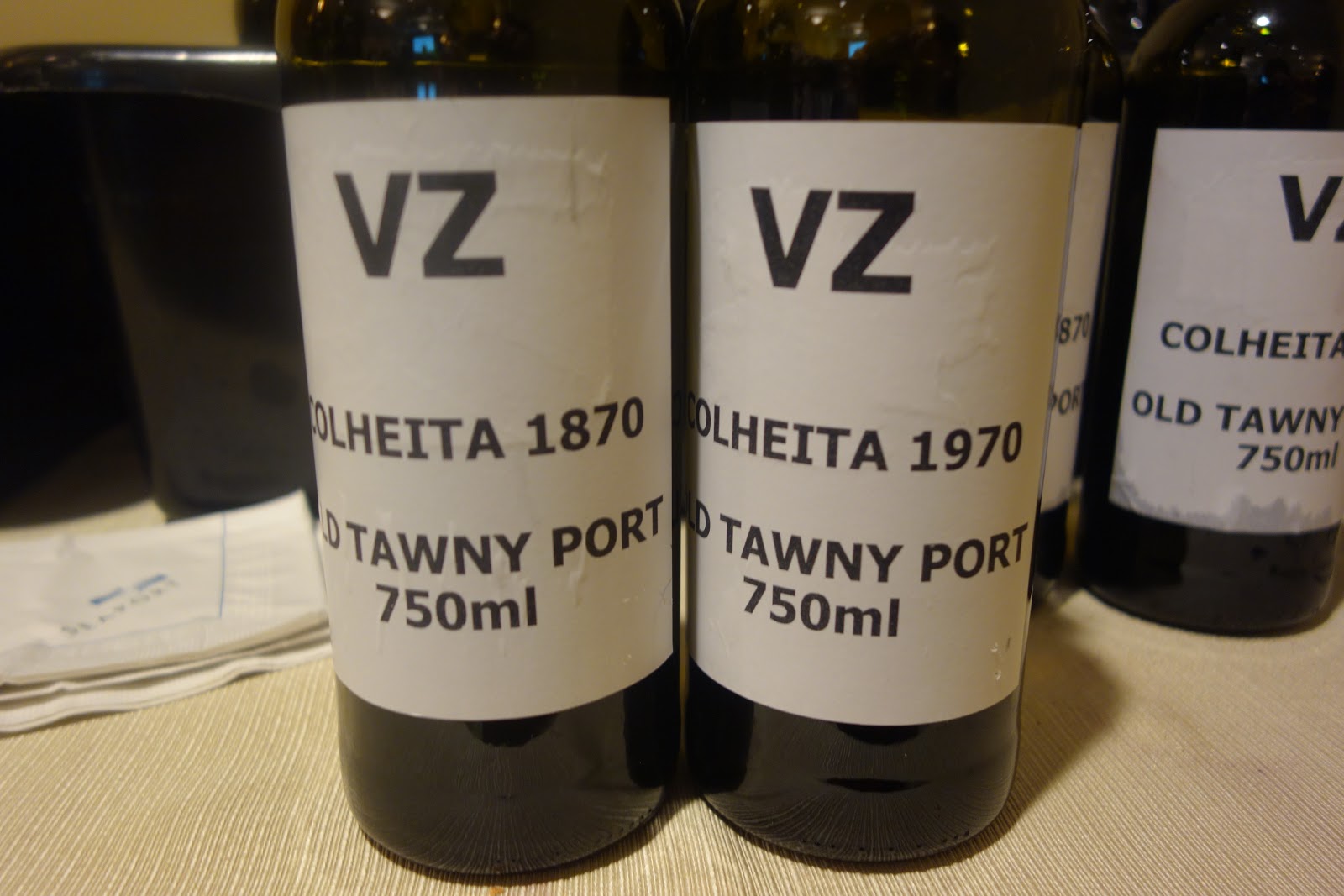
The description of this seminar stated: "Since 1780, the family has been intimately entwined in the region's wine trade. When Cristiano Van Zeller left Quinta do Noval at the end of 1993 it was to pursue his passion for innovation and the development of independent producers in the Douro valley. His goal was to diminish the region's dependence on the production of port, while showing the true potential and diversity of this incredible land. In 1996 he acquired the ancient Quinta Vale D. Maria and immediately went to work restoring this venerable estate. Within two years the estate was receiving critical acclaim for their Douro Red Wine. As of 2006, he took over the reins of the centuries old family business, Van Zeller & Co. Please join Cristiano in tasting through the last decade of Red wines and Ports from Quinta Vale D. Maria along with the rare opportunity to experience two tawny ports bottled 100 years apart: 1970 versus 1870. When did you drink your last 1870?"

You don't often get a chance to taste a Port from 1870 and as a Cavaleiro in the Confraria do Vinho do Porto, I felt it was my duty to investigate and taste. When I entered the room for the seminar, there was a strong and alluring aroma from the intensity of the Tawny Ports. It made you want to start drinking right away, but I had restraint.

The speaker for the seminar was Cristiano Van Zeller, the Chairman of the Federation of Douro Farmers and the Owner of Quinta Vale D. Maria, and he was accompanied by his daughter, Francisca. Christiano was an excellent presenter, knowledgeable, humorous and personable.

The Van Zeller family can trace its history in the wine trade back to 1620, and in 1780 they became officially established as a Port Wine shipper. Cristiano is a 14th generation Van Zeller and he began his wine career working at the family Port company, Quinta do Noval. In 1993, the family sold the Port company and Cristiano moved onto some independent projects. The family of Cristiano's wife, Joana Lemos, had owned a Port estate for about 150 years and in 1996, Cristiano and Joana purchased the estate, Quinta Vale D. Maria, from her family. They had to rebuild the estate, which had fallen into a state of disrepair.

Cristiano began his presentation with some basic information about the Douro region, which he states is a "special place" in northeast Portugal. The Douro is protected from the sea and possesses lots of biodiversity. Grape growing began in the western section, the Baixo Corgo, first and then proceeded east, to the Cima Corgo and finally the Douro Superior. The Douro Superior, which is located near the Spanish border, is tougher to reach as the river isn't as easily navigable and less than 20% of the vineyards in the Douro are located in this region. The Douro region has harsh winters (though not as harsh as Boston) and hot summers. The soil is mainly schist, a slate-like metamorphic rock, that is rich in nutrients and possesses good water retention abilities. 2011 is supposed to have been the greatest vintage in the 21st century.

Quinta Vale D. Maria, which began with about 19 hectares, now encompasses approximately 31 hectares of vineyards, having purchased a few additional vineyards since 1996. In 2003, they bought the CV-Curriculum Vitae vineyard, which includes 6 hectares of vines (with an average age of 80 years) and olive trees, and grow about 20 different grape varieties. In 2004, as a gift to his Francisca for her 18th birthday, they purchased the Vinha da Francisca, about five hectares of 10 year old vines, growing five grapes, Touriga Nacional, Touriga France, Tinta Francisca, Sousao and Rufete. Finally, they acquired the Vinha do Rio, a vineyard that is the closest and lowest to the River Torto that runs through the estate. It encompasses only 2 hectares, growing about 20 grapes with an average age of 100 years.

They engage in organic viticulture, use horse plows and hand harvest all of their grapes. Grape selection is very important to them and they use a second selection on the selecting table. All of their red grapes are first foot-trodden in lagares, and for some the treading is then carried on by robots for another four hours. For their Ports and Single Quinta Douro DOC red wines, full fermentation occurs in the lagares. These wines are true labors of love. They still purchase some grapes though they make a number of single vineyard wines too.

Personally, Cristiano loves the diversity of wine, stating he would "hate to drink the same wine all the time" and that even the "same pleasure all the time gets routine." That is certainly a sentiment I fully support and have often encouraged people to be adventurous, expand their palate and taste all of the vast diversity in the wine industry. Cristiano also mentioned that he is under "no pressure to conform to public trends/tastes." He just tries to produce the best wines he can each year. To Cristiano, "Greatness of wine is how it is perceived at the moment and how it makes you feel." That is probably one of the best definitions of "greatness" in wine I've seen.

We began our tasting with four vintages of the Quinta Vale d. Maria Douro Red, a wine made from a field blend of 40 indigenous grapes, vines averaging about 60 years. Cristiano seeks a balance for the grapes, which is a challenge as each year the grapes are different. This wine is usually aged for 20-22 months in 65%-75% new French oak. The wine has an excellent aging potential, at least twenty years, and it could age longer but they don't have sufficient experience with a longer period. The wine sells for about $70 retail, and is locally distributed by M.S. Walker.

The four vintages we tasted included 2006, 2009, 2011, & 2013, and Cristiano commented that 2006 & 2013 were cooler years. As a general observation, all of these wines, including the oldest, seemed relatively fresh, with lots of life in them. They were all complex and intriguing, with notes of black cherry, blackberry, ripe plum, a hint of eucalyptus, and a strong, spicy backbone. The tannins were restrained though the 2009 and 2013 were more muscular wines. All of these wines would probably be best paired with food, especially beef, wild boar, game meats or other hearty dishes. The 2006 was the clear winner of the four, being more elegant and throughly impressive, the type of "wow" wine which will make you savor each compelling sip.

We then moved onto four Vintage Ports, from 2003, 2007, 2009, & 2014. These Ports are made from a field blend of more than 25 indigenous grapes, from vines aged 25-60 years old. The wines are aged in ancient (more than 100 years old) oak and chestnut wood Port casks, as well as small stainless steel vats, for about 18 months. You should decant these Ports for at least a day before, though the older the vintage, the less you need to decant. Cristiano stated that the 2003 & 2007 vintages should age the longest.

All four of these Ports were excellent, delicious and complex. They too possessed a nice freshness to them, with plenty of primary fruit flavors, both red and black fruits, from cherry to plum. The colors of these ports was rich and dark, each with alluring aromas which will seduce you into sampling them. The 2014 and 2007 were the more powerful of the four, though certainly not overwhelming so, and they also seemed less sweet than the other two vintages. Each vintage had its own unique character so it was fascinating to compare the different vintages. My favorite of the group was the 2007, which was so complex and well balanced, and each sip brought something new to my palate. However, you wouldn't go wrong with any of these Ports.

Finally, we tasted Ports from 1970 and 1870, though neither of these was ever registered as a single vintage wines and will never be sold as such. These are Colheitas, made in a single year and aged for at least seven years in the barrel, though they can often spend much longer in the barrel. Cristiano noted that you should chill old Ports like a white wine. Interestingly, the darker colored of these two Ports was the older, the 1870. Though Ports lose their color over time, there comes a point when that changes, and they actually get darker.

The 1970 Port still had a freshness to it, and was full bodied, with a mild sweetness, plenty of complexity and a lengthy finish. There were interesting flavors of caramel, dried fruit and cedar, with mild herbal accents. As for the 1870 Port, it had a bit of a musty aroma that began to dissipate with time. It was more savory than sweet, still with plenty of complexity and a lingering finish. There were more dried fruit and spice flavors, with notes of herbs, caramel and salted nuts. A fascinating Port which is still very much alive despite it being nearly 150 years old. It was a true pleasure to get to taste this Port and mere words cannot do justice to it.

Let me end on a note of beauty. Francisca wants to be a writer, mentioning that "Port is the greatest poetry in wine." Certainly an intriguing thought. She also put together a compelling short video about the winery, Quinta Vale D. Maria - Unique Vines and Music, which you should watch above. The video shows the fine beauty of the estate as well as Francisca's poetic language. There is nothing more for me to say.

Tuesday, March 28, 2017

Primizie Thick Cut Crispbreads: Healthy & Tasty Snacks

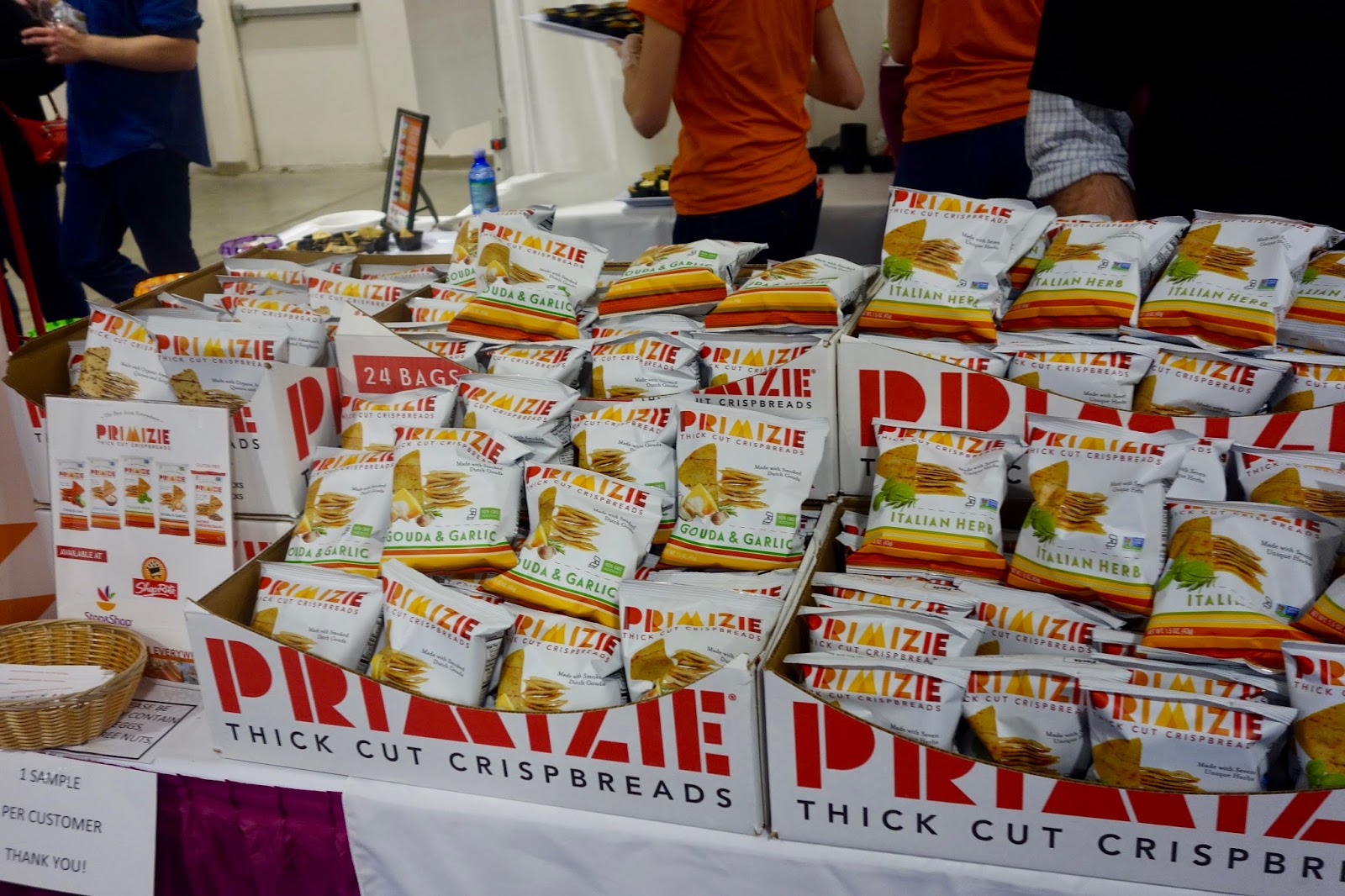
As I mentioned in my prior post, Boston Wine Expo: Food Finds, I enjoyed the Primizie Thick Cut Crispbreads. Coming in a variety of flavors, they gave away free bags of their crisp breads, plus coupons, at the Expo, although they didn't showcase all of the flavors they made. Primizie also sent me media samples of some of their other flavors. Overall, I continued to be impressed with these crispbreads and would recommend them as a tasty and versatile snack.

Primizie Thick Cut Crispbreads was founded by Mark & Lisa Spedale, and its origins extend back to 2001 when Mark founded Primizie Catering. A trip to Italy would help inspire the idea for the crispbreads, as they sought a way to use leftover bread with hors d'oeuvres. The bread would be grilled, crisped and then sliced into smaller triangles. In 2011, they started selling these crispbreads to retailers and the company has grown since then, now available nationwide.

These crispbreads are intended to be healthy, lacking artificial colors, artificial flavors, and preservatives. They continue to be grilled, crisped and hand-cut, while the seasonings for each variety are mixed into the dough. The only area of their FAQ which doesn't appear to be correct is the section, Minimal Ingredients, which states "All Primizie products are made with fewer than six ingredients." For example, the Ancient Grains and Gouda & Garlic flavors are made with more than six ingredients. It isn't a major issue though as if you consult the ingredients list, it is clear why those ingredients were added and they don't appear to be anything you wouldn't want in such a snack.

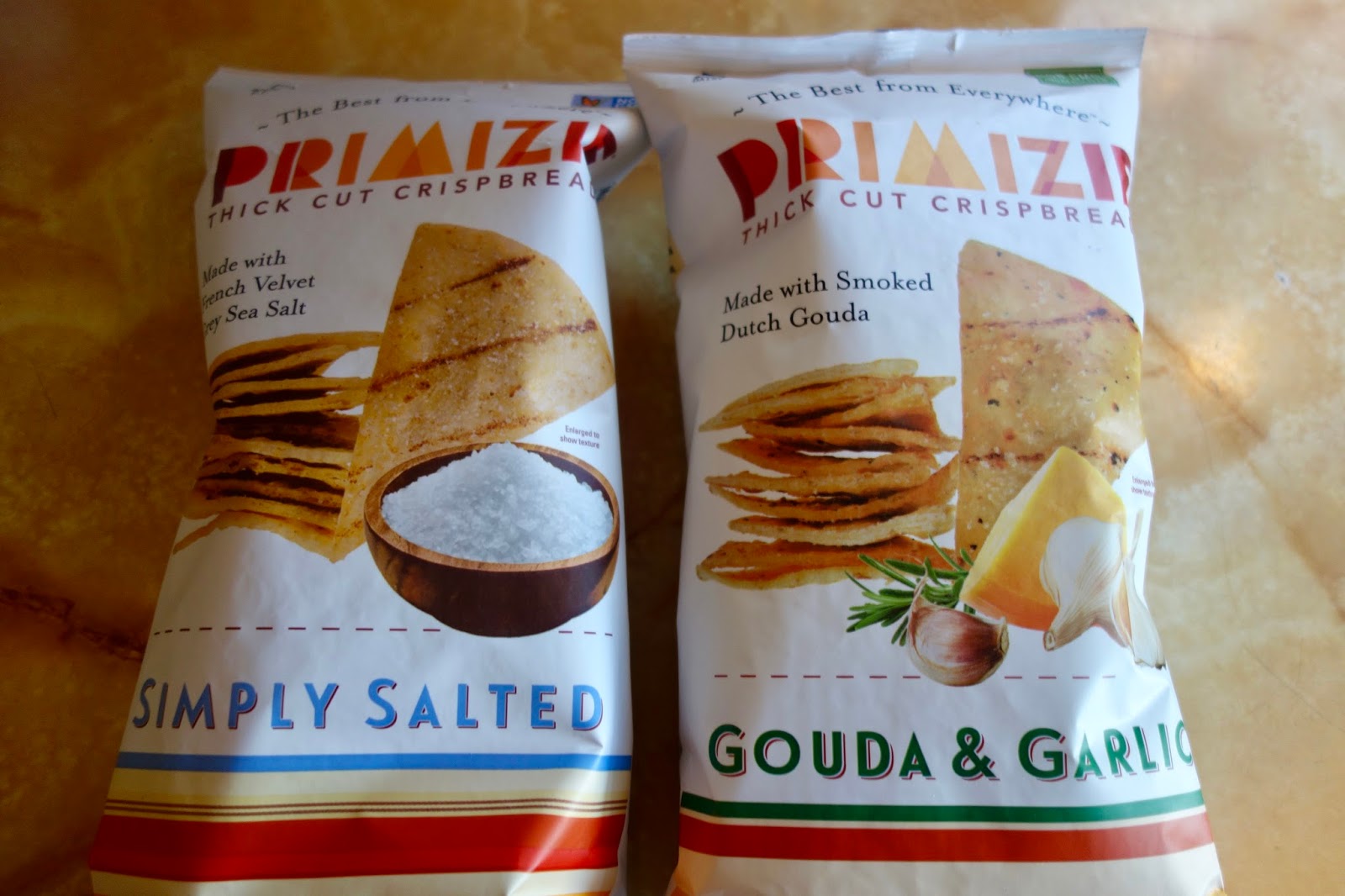
The Simply Salted is their basic version, made from only four ingredients including wheat flour, sunflower oil, salt (Sel Gris, French Velvet Grey Sea Salt) and yeast. The "chip" itself is thick and sturdy, able to stand up to any dip without breaking or wilting. You could also stack other ingredients atop it to make your own hors d'oeuvres. All of their flavored crispbreads are equally as thick and sturdy, which is an advantage. The Simply Salted has a mild, buttery taste, enhanced by the salt, and make for a nice snack on their own, though the addition of some salsa or cheese dip works well too.

The Gouda & Garlic, made with Smoked Dutch Gouda cheese and roasted garlic, adds more flavor to the basic crispbread, with plenty of smoky cheese flavors and lots of garlic. There is a intriguing tang to the flavor which elevates these snacks. I really enjoyed these on their own, though they too would work with plenty of dips.

The Applewood Smoked Cheddar brings a different cheese flavor to the crispbreads, though there is still that smoky edge. Maybe my favorite flavor was the Ancient Sprouted Grains, made with organic Amaranth, Quinoa, and Sorghum plus poppy seeds, caraway seeds, and organic molasses. I loved the rich nuttiness of these crispbreads, a satisfying blend of flavors which were perfect on their own, though topped with cheese they were also excellent. As healthy as these crispbreads are, they still possess a compelling taste which will appeal to anyone.

Their crispbreads get even healthier, with the Green Harvest (made with Kale and Spinach) and the Rustic Beets (made with beets). These aren't flavors that usually attract me, though the crispbreads actually didn't totally turn me off. And those who like those flavors really enjoyed these crispbreads.

You'll also find Primizie in other flavors, including Italian Herb, Chile & Lime, and Dolce Caramel. If you're looking for a new snack to try, one that is healthy but still tasty, then pick up a bag or two of Primizie Thick Cut Crispbreads.

Thursday, March 9, 2017

Boston Wine Expo: Wines of Georgia (Part 3)


That was the end of life, but the qvevri is the beginning of life for wine,” he continued. “It is the womb.”
--For the Love of Wine: My Odyssey through the World's Most Ancient Wine Culture by Alice Feiring

Continuing to relate my recent experiences with Georgian wines, I'm providing more reviews of some of the 60 Georgian wines I tasted at the recent Boston Wine Expo. And I'm also going to provide additional history and background on the region of Georgia and its wines, to give better context to these wines.

It is impossible to understand Georgian wine without knowing something about qvevri (or kvevri), giant earthenware vessels which may be used to ferment and age wine. Also known as churi in Western Georgia, use of these vessels extends back thousands of years, with proto-qvevri vessels reaching back to the Neolithic era. I'm going to provide some basic information about qvevri, but please note that this is a much more expansive subject.

Other synonyms for Georgian qvevri, or earthenware vessels of different shapes and sizes, include: dergi, lagvini, lagvani, lagvinari, kvibari, kubari, lakhuti, chasavali, khalani, and kotso. Other countries had their own earthenware wine vessels, from the Greek pithos to the Roman dolium, or other vessels such as amphorae, tinaja and giara. However, many of those other vessels were used more for storage and transport rather than fermentation and maturation.

Qvevri production is, in many respects, a dying art, though there are efforts to ensure its continuation. Historically, traditional qvevri-producing areas includes the villages of Atsana in Guria; Makatubani, Shrosha, Tq'emlovana and Chkhiroula in Imereti; and Vardisubani in Kakheti. The production techniques were passed down for generations through families. Qvevri are made from baked clay, using the built-coil method, and red clay is the most common though some claim that black clay, from Western Georgia is the best, though  there may not be anyone currently producing qvevri from black clay.

Selecting the clay for qvevri is important as the clay needs to be free of impurities, not too porous, and possess the proper mix of mineral. Once the qvevri has been properly fired, the inside is lined with propolis, also known as bee glue, which is a combination of beeswax, saliva and secretions from botanical sources.

Once grapes have been crushed, the juice, along with the skins, seeds and stems, are placed into a qvevri, which is buried underground, helping to keep the wine cool, stable and safe. This natural temperature control helps to make the fermentation proceed well and without incident. In addition, the clay helps with micro-oxygenation, also providing some nutrition to the wine. The extended skin contact in the qvevri will commonly darken the wine, plus qvevri wines tend to be more tannic, including the whites.

Not all Georgian wineries use qvevri, and some wineries only use them for some of their wines, but its use seems to be expanding. It is a link to their historic past, and the wines can be delicious and unique, interesting and compelling. There is also a push for the use of qvevri in making more natural wines. Amphora use is expanding throughout the wine industry across the world, but the Georgian qvevri still retains its own uniqueness. In 2013, the United Nations even added qvevri to their UNESCO Intangible Cultural Heritage list.

"Tradition says that the Georgians have always lived under threat; they must be sober enough to defend themselves at any time."
--Vintage: The Story of Wine by Hugh Johnson

All of the wines I'm reviewing in this post are part of the Corus Imports portfolio. Corus, which was founded in 2006 and is located in Connecticut, is an importer and distributor of wines and spirits, including wines from Georgia and France, Georgian Chacha, Georgian Brandy, and Russian & Canadian Vodka.

The Batono Winery, founded in 2013, has vineyards in the micro-zones of Sagarejo (in Kakheti), Napareuli (in Kakheti), and Ambrolauri (in Racha-Lechkhumi & Kvemo Svaneti). Their winery is located near Sagarejo vineyards, and their name, Batono, means "lord" and is a form of polite address.

The 2015 Batono Chinuri ($12) was interesting and delicious, with notes of ripe pear and melon, accompanied by some herbal accents. Easy drinking, but with some complexity, good acidity, and a nice texture. Excellent value wine. The 2015 Batono Qvevruli Saperavi ($20), which is made with both qvevri, and oak, was easy drinking, with bright red cherry, raspberry and plum flavors, hints of spice, and a touch of vanilla. The 2015 Batono Qvevruli Tetri ($20), which is made with both qvevri, and oak, is a blend of 40% Kisi, 40% Mtsvane and 20% Rkatsiteli grapes. This was a fascinating and delicious wines with a unique melange of spice, dried fruit, herbal accents and a touch of eucalyptus. Each sip brings a new flavor combination to your palate and this is a wine to savor and enjoy over time. Highly recommended and a very good value.

The Alapiani Marani has made wine for over 20 years, but they only formed a company and began bottling wine in 2011. They have vineyards in the regions of Kartli and Kakheti.

The 2015 Alapiani Rkatsiteli ($20), fermented in qvevri, was aromatic and spicy, reminding me in some ways of a Gewürztraminer. There were also dried fruit flavors, with a mineral backbone, and some white pepper on the finish. Very interesting and tasty wine. The 2016 Alapiani Tavkveri ($25), made from a grape usually used for Rosé wines and fermented in qvevri, was crisp, dry and light bodied, with pleasing cherry and raspberry flavors with herbal accents. An elegant and easy drinking red wine.

I was thoroughly impressed with the 2015 Alapiani Shavkapito ($25), produced from the Shavkapito grape which is new to me and appears to be rare even in Georgia. Its name means "vine with a black cane" and is said to be terroir-reflective. The grapes were sourced from a vineyard in the Okami village of the Shida Kartli region and the wine was fermented and aged in qvevri. With an alluring aroma of black fruit and herbs, the wine presented with a fascinating melange of flavors, including ripe plum, blackberry and black cherry, along with herbal accents, a smoky note, and a touch of spice. Lots of complexity, smooth tannins and a lengthy, pleasing finish. Highly recommended.

The Telavi Wine Cellar, founded in 1915, is located just outside the city of Telavi, in the Alazani Vallet of Kakheti. Some of their vineyards extend back hundreds of years, such as their Kondoli vineyards which were mentioned as far back as 1742. The winery has about 240 hectares of Kondoli vineyards, mostly planted with indigenous varietals though they grow a few international ones as well. They also have vineyards on the left bank of the Alazani River, in the Kindzmarauli area, and one in the Napareuli area. Telavi has a few different labels, including Marani and Satrapezo.

The NV Marani Sparkling White Brut ($11) is dry and lightly effervescent, with bright peach, citrus and almond notes, and a hint of toast. A tasty and easy drinking bubbly, with plenty of complexity for this excellent value wine. The 2015 Marani Kondoli Mtsvane-Kisi ($14) is fresh, crisp and dry, with pleasing flavors of peach and tropical fruits, enhanced by some floral notes and spice accents. This seems very much like a summer wine, and while drinking it, it will make you think of a tropical island.

The 2013 Satrapezo Mtsvane ($30) was fermented for 5 months in qvevri and then spent 10 months aging in new French oak. It was crisp, dry and aromatic, like Gewürztraminer, with some tropical fruit flavors, a buttery texture, and spices notes.

The Wine Man is a family-owned winery, founded by Alexandre I. Jorjadze in 1998, and his family has a history of winemaking.

The 2014 Wine Man Tsinandali ($10), a blend of 85% Rkatsiteli and 15% Mtsvane, which is fermented in stainless steel. It is fresh and crisp, with tasty apple, pear, and lemon flavors, with mild hints of spice and vanilla. An easy drinking and tasty wine at a very good price point. The 2015 Wine Man Saperavi ($11) is also easy-drinking, with tasty red fruit flavors, low tannins, and a smooth finish. Another value wine.

The 2010 Wine Man Ikhalto ($12) is a blend of 50% Saperavi and 50% Cabernet Franc, one of the few Georgian wines I tasted with an international grape. The wine was fermented in stainless steel and aged for 6 months in old oak. With a tasty blend of cherry and black cherry, plum and raspberry, the wine also had peppery notes, restrained tannins, and a full body. The finish was long and pleasing, this would be a fine wine with barbecue or a steak. The 2014 Wine Man Mukuzani Saperavi ($12) also spent 6 months in oak, and was delicious, with ripe red and fruit fruit flavors, mild spices, and a hint of vanilla.

Which Georgian wines did you enjoy at the Boston Wine Expo?

Wednesday, March 8, 2017

Boston Wine Expo: Wines of Georgia (Part 2)

"They clung to their ghvino (wine) with such a passion you’d think it was their blood."
For the Love of Wine: My Odyssey through the World's Most Ancient Wine Culture by Alice Feiring

Continuing to relate my recent experiences with Georgian wines, I'm providing more reviews of some of the 60 Georgian wines I tasted at the recent Boston Wine Expo. And I'm also going to provide additional history and background on the region of Georgia and its wines, to give better context to these wines.

The name "Georgia" may derive from Persian and Turkish versions of the name George, respectively Gorj and Gurju, and which the Russians later named Gruzia. It is possible that sometime during the Middle Ages, the country became known to English speakers as Georgia rather than Gruzia. Georgians though refer to their country as Sakartvelo ("the land of the Kartvelians") and themselves as Kartveli. This refers back to the ancient kingdom of Kartli, in Eastern Georgia, which the ancient Greeks and Romans called Iberia.

The capital city of Georgia is Tbilisi, which was founded in the 5th century, and the legend of its creation claims that King Vakhtang Gorgaslani, while on a hunt near the Kura River, killed a pheasant. When he went to find the bird he had slain, he found that it had fallen into a hot spring and had been cooked by the waters. The King felt that it was a fortuitous location, and he chose to found a city there, calling it Tbilis-kalaki, the Warm City.

The ancient people of Georgia worshipped Aguna, a deity of viticulture and wine-making, which some people have compared to Bacchus/Dionysus. In parts of Georgia, Aguna was known by other names such as Aguna-Angura in Racha-Lechkhumi and Nunua, Jujelia in Samegrelo. Harvest time would see rituals and animal sacrifices to this deity and theatrical performances of these ancient rituals can still be seen in modern-day Georgia.

Christianity came early to Georgia, with King Mirian III, in 337 A.D. declaring it to be the state religion. Before this time, one of the first missionaries who traveled to Georgia to spread Christianity was Saint Nino, who allegedly came to the country carrying a cross tied with dried grape vines, creating a long lasting link between wine and the church.

"Zedashe is what the Georgians call sacramental wine. Where church wine is historically awful, in Georgia it was supposed to be the purest and the highest quality. In most traditional wineries there was always one qvevri dedicated to sacramental wine and intended for donation to churches, as well as for use during holidays."
--For the Love of Wine: My Odyssey through the World's Most Ancient Wine Culture by Alice Feiring

The Shilda Winery is located in the village of Shilda in the Kakheti region and its mission is to revive endangered Georgian grape varieties. They also produce five kinds of Georgian brandy. The beautiful wine labels have artwork from a famous Georgian artist, David Kakabadze.

The 2015 Shilda Manavi Mtsvane was fresh, dry and crisp, with pleasing notes of pear and spice, with citrus accents. Easy drinking and tasty.  The 2015 Shilda Kisi was another delicious white wine,  with more juicy peach notes, and intriguing spice accents. Easy drinking, with a moderately long finish, there is a hint of the exotic which helps to elevate this wine. The 2015 Shilda Mukuzani Saperavi, which is aged in oak for about a year, possessed an alluring aroma of black fruit and spice. On the palate, the ripe plum and blackberry flavors were prominent, assisted by a spicy backbone and hints of vanilla. Full bodied, but with restrained tannins, this is a wine you want with meat.

Kartuli Vazi Winery produces wine from both Racha-Lechhumi in Western Georgia and Kakheti in Eastern Georgia. They combine ancient traditions with modern technology. The 2013 Kartuli Vazi Tsinandali is a blend of Rkatsiteli and Mtsvane, and is easy drinking with tasty pear and mild spice notes. The 2016 Kartuli Vazi Saperavi, with a pleasing fruity aroma, is also easy drinking with fresh red fruit flavors and a hint of licorice. The 2013 Kartuli Vazi Mukuzani Saperavi, which spent about 6 months in used oak, is a bigger wine, though still with low tannins, and ripe flavors of plum and black cherry, with hints of spice. Delicious, it would be an excellent pizza and burger wine.

Kakhuri Gvinis Marani, which means Kakhetian Wine Cellar, was founded about 9 years ago and owns vineyards in the Kakheti region. The winery is located in the town of Gurjanni, on the road to their vineyards in the Alazani Valley.

The 2009 Tsinandali, a blend of Rkatsiteli and Mtsvane, was matured in oak yet it remains fresh and elegant with alluring aromatics. On the palate, there are tasty peach and pear flavors, with spice accents, and this wine would pair well with seafood. An intriguing complexity, a lengthy finish and soft tannins. Highly recommended. The 2014 Manavi is also a blend of Rkatsiteli and Mtsvane, though with a higher proportion of Mtsvane. It was more aromatic, with stronger herbal notes on the palate, along with apple and pear flavors. It wasn't as complex, but was easy drinking and pleasant.

The 2013 Saperavi was also an easy drinking wine, with predominant red and black fruit, mild tannins, and a hint of smoke on the finish. A fine pizza and burger wine. On the other hand, the 2009 Mukuzani, which spent three years in oak, was a much more complex wine, elegant and impressive. It was silky smooth, with notes of ripe plum, black berry, mild spice, and a touch of vanilla. It has an exotic accent to it, a lingering finish, and is definitely a wine to slowly savor. Highly recommended.

The Tbilvino Winery, founded in 1962, is one of the largest wine producers in Georgia as well as the largest exporter. It operates two wineries, under a couple different brands, including Georgian Valley wine. Their history extends back to the Soviet era, when the largest wine factory was launched, eventually producing 90% of the wine in Georgia. When Georgia attained independence, the company became independent, and 1999 was their first harvest as a new company.

The 2015 Tbilvino Rkatsiteli was fresh and crisp, with tasty stone fruit flavors, accented by mild spice notes. An easy drinking white, good for seafood or just enjoying during the summer. The 2014 Tbilvino Qvevri Rkatsiteli offered a more unique taste, with more prominent spice and herbal notes, and mild stone fruit flavors. It was still crisp and dry, but offers more complexity and would pair well with roast chicken and other poultry dishes.

The 2015 Tbilvino Saperavi was fresh and fruity, an easy drinking wine with tasty red fruit flavors and a bit of spice and vanilla. A burger and pizza wine.  In comparison, the 2014 Tbilvino Saperavi Special Release, which was aged in oak for ten months, is a more impressive wine. With a nice depth of flavor, the wine presents with flavors of black cherry and plum, mild spice notes, and a hint of smoke. The tannins are well restrained, the finish is long and satisfying, and there is so much going on in this wine. You'll want to pair this wine with a hearty meat dish, such as a grilled steak, though you could also drink it on its own, enjoying every supple sip. Highly recommended.

The Qimerioni Winery, which was founded in 2011, was named after an artistic café that opened in Tbilisi back in 1919 by the group of acclaimed Georgian poets and artists. They create wines using indigenous grapes, most from vineyards in the village of Chumlakhi in the Gurjaani District of the Kakheti region. They also produce two types of chacha, a Georgian brandy.

The 2012 Qimerioni Tsinandali, a blend of Rkatisteli and Mtsvane, is fresh, crisp and dry, with apple and pear notes, and hints of spice. Easy drinking and tasty. The 2013 Qimerioni Qvevri Gora Saperavi is also easy drinking, but with rich black fruit flavors, plenty of spice, and a mild earthy undertone. Drink it with a steak or ribs. The 2012 Qimerioni Mukuzani is more complex, elegant and intriguing, with silky black fruit flavors, a spicy backbone, and a lengthy finish.