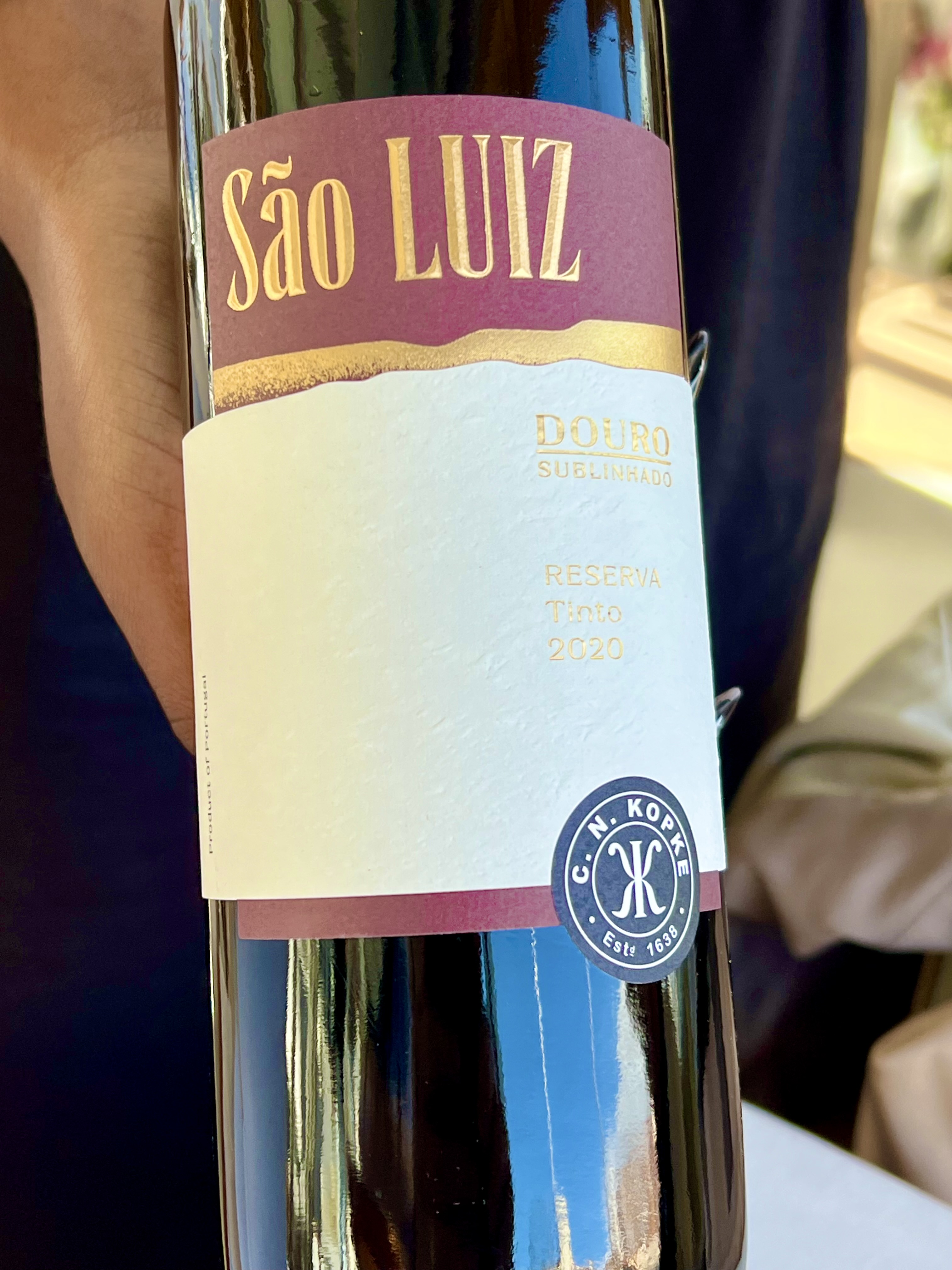
With a history extending back to 1882, Symington Family Estates is one of the largest and most important producers in the Douro region of Portugal. They own well-known brands including Graham's Ports, Cockburn's Port, Dow's Port, Warre's Port, Quinta do Vesuvio, and more. The Douro is well known for its Port Wines, but the region also makes some excellent still wines. You can check out one of my previous posts, The Douro River Region: Beauty & Thriving Amidst Adversity, for some background on this area. I received a couple media samples of two of Symington's Douro still red wines, and I was't surprised by their quality.
Quinta do Vesuvio, which can trace its history back to the 16th century, was acquired by the Symingtons in 1989, and its 1000 acre estate is located in the upper Douro. It is considered one of the best, and largest, vineyards in the Douro Superior. The 2015 Pombal do Vesuvio ($28), the winery's second wine, is a blend of 50% Touriga Nacional, 45% Touriga Franca, and 5% Tinto Amarela. The Portuguese term "pombal" translates as "dovecote," and refers to an ancient dovecote, where pigeons or doves were housed, which is in the middle of the vineyards. It was an exceptional vintage, the weather cooperating throughout the year. giving rain when necessary.
The wine went through fermentation in stainless steel, and then was aged for about 10 months in French oak. At only 13.5% ABV, the wine had a rich, dark red color with a pleasing nose of red fruits and floral notes, a touch of violets. On the complex palate, the red and black fruit flavors were prominent, accented by some dusty spices, bright acidity, well-integrated tannins, and some underlying minerality. The finish was long and satisfying, and there was a mild earthy touch as well. Definitely an excellent food wine, with everything from pizza to burgers, steak to pasta with a hearty ragu. An excellent choice to experience what the Douro has to offer in still red wines.
The 2016 Dow Vale do Bomfim ($12.99) is from the Quinta do Bomfim, which was acquired by Symington in 1896, making it their oldest owned estate. The quinta is located just beside the town of Pinhão, and consists of a 130-acre property with over 160,000 vines. This still wine is a blend of 30% Touriga Franca, 20% Touriga Nacional and 50% Field Blend of indigenous grapes. All of the grapes come from the same vineyards they use for their Vintage Ports. The wine spent about 6 months in neutral oak, has a 13.2% ABV, and is an excellent example of the great values you can find in Portugal.
With a dark red color, it possesses an appealing fruity aroma with floral accents. On the palate, there is a tasty melange of red and black fruit (especially cherry and plum), peppery spice with some licorice notes. Mild tannins, a moderately long finish, and decent complexity for this price point. An easy drinking wine which provides better quality than many other wines at this price point. This wine will pair well with a wide range of foods, though it can be enjoyed on its own as well. Highly recommended!
Drink more Portuguese wine!
For Over 11 Years, I've Been Sharing My Passion for Food, Wine, Saké & Spirits. Come Join Me & Satisfy Your Hunger & Thirst.
Showing posts with label Portugal Wines. Show all posts
Friday, March 15, 2019
Tuesday, March 5, 2019
2017 Herdade do Rocim Amphora: Preserving The Talha In Alentejo
When you hear about amphora, skin contact, or orange wines, you're likely to think of countries such as Georgia, Italy and Slovenia. Portugal probably doesn't immediately come to mind although it has a two-thousand year old history with amphora wines. That may change in the near future if the Talha wines of the Alentejo region gain more attention and publicity.
Although I've known about talha wines for a few years, it was only recently that I've seen any available in Massachusetts. At Pamplemousse, in Reading, I found the 2017 Herdade do Rocim Amphora Vinho Tinto ($17.99) and I picked up a couple bottles because I was intrigued.
Wines fermented on their skins in talha (a Portuguese word for amphorae), has a history extending back two thousand years to the ancient Romans. This tradition in the Alentejo region has been maintained throughout the centuries though the advent of more modern wine-making techniques led to a massive decrease in its use. There has been a recent resurgence though in the use of talha, even leading to the creation of its own DO, the Vinho de Talha DOC.
It states on their website, "According to etymologists, the term “talha” comes from the Latin “Tinalia” and that refers to large pot or vessel. A talha, therefore, is a pot that varies in its porosity depending on its intended use and the type of clay it is made from. It is used for fermenting grape juice and storing several liquids, especially wine and olive oil. The talha comes in a range of sizes and shapes, according to the potter’s working style and the local traditions where it is made. It is rarely stands taller than two metres in height and rarely exceeds a ton in weight; it can hold up to 2,000 litres of must."
The Herdade do Rocim estate was purchased in 2000 by the late Jose Vieira, founder of Movicortes, S.A., a holding company which specializes in agricultural machinery. Jose's daughter, Catarina Vieira, leads the operations of the estate, which is located in the Baixo Alentejo. The estate consists of about 120 hectares, with 70 under vine. The vineyards are broken down into 53 hectares of red grapes and 17 hectares of whites. Some of the planted grapes include Alicante Bouschet, Antão Vaz, Aragonez, Manteúdo, Moreto, Perrum, Rabo de Ovelha, Roupeiro, Tinta Grossa, Touriga Nacional, and Trincadeira.
Their stated mission is "...to produce wines in a sustainable manner, respecting the social, cultural and natural matrix of the region." They are also low interventionists, such as only using indigenous yeasts. Some of their vineyards are certified organic while others are organic, though not yet certified. They wish to emphasize the terroir of their vineyards, while maintaining sustainability. In addition, they wish to preserve the ancient tradition of the talha.
The 2017 Herdade do Rocim Amphora Vinho Tinto is a blend of indigenous Portuguese grapes including 50% Moreto, 30% Tinta Grossa, 15% Trincadeira, and 5% Aragonez. Both Moreto and Tinta Grossa are more unique to the Alentejo region so it is rare to see them in any other Portuguese wines. Such an intriguing mix of grapes! The vineyards are organic, though not certified, and the wine was fermented in the talha, without any temperature control and using indigenous yeasts. Afterwards, the wine was aged for three months in the bottle.
At only 12% ABV, the wine has a deep red color with an interesting nose of earth and red fruits, with a mild floral note. On the palate, it was fresh, with deep and complex flavors of plum, black cherry, and blackberry, an earthy backbone, and a mild tomato accent. The tannins were well integrated, the acidity was good, and the finish was fairly long. There was a certain uniqueness of its complex flavor profile, though it certainly reminded me of other Portuguese wines. This is a wine that would pair well with hearty dishes, a thick stew, a juicy steak, or a humble burger.
A fine introduction to Talha wines from Alentejo, though I definitely need to find more such wines to taste. And at its price, about $18, it is a good value for the quality, complexity and taste of this wine. As I've long and often said, Portugal offers some of the best wine values in the world.
Although I've known about talha wines for a few years, it was only recently that I've seen any available in Massachusetts. At Pamplemousse, in Reading, I found the 2017 Herdade do Rocim Amphora Vinho Tinto ($17.99) and I picked up a couple bottles because I was intrigued.
Wines fermented on their skins in talha (a Portuguese word for amphorae), has a history extending back two thousand years to the ancient Romans. This tradition in the Alentejo region has been maintained throughout the centuries though the advent of more modern wine-making techniques led to a massive decrease in its use. There has been a recent resurgence though in the use of talha, even leading to the creation of its own DO, the Vinho de Talha DOC.
It states on their website, "According to etymologists, the term “talha” comes from the Latin “Tinalia” and that refers to large pot or vessel. A talha, therefore, is a pot that varies in its porosity depending on its intended use and the type of clay it is made from. It is used for fermenting grape juice and storing several liquids, especially wine and olive oil. The talha comes in a range of sizes and shapes, according to the potter’s working style and the local traditions where it is made. It is rarely stands taller than two metres in height and rarely exceeds a ton in weight; it can hold up to 2,000 litres of must."
The Herdade do Rocim estate was purchased in 2000 by the late Jose Vieira, founder of Movicortes, S.A., a holding company which specializes in agricultural machinery. Jose's daughter, Catarina Vieira, leads the operations of the estate, which is located in the Baixo Alentejo. The estate consists of about 120 hectares, with 70 under vine. The vineyards are broken down into 53 hectares of red grapes and 17 hectares of whites. Some of the planted grapes include Alicante Bouschet, Antão Vaz, Aragonez, Manteúdo, Moreto, Perrum, Rabo de Ovelha, Roupeiro, Tinta Grossa, Touriga Nacional, and Trincadeira.
Their stated mission is "...to produce wines in a sustainable manner, respecting the social, cultural and natural matrix of the region." They are also low interventionists, such as only using indigenous yeasts. Some of their vineyards are certified organic while others are organic, though not yet certified. They wish to emphasize the terroir of their vineyards, while maintaining sustainability. In addition, they wish to preserve the ancient tradition of the talha.
The 2017 Herdade do Rocim Amphora Vinho Tinto is a blend of indigenous Portuguese grapes including 50% Moreto, 30% Tinta Grossa, 15% Trincadeira, and 5% Aragonez. Both Moreto and Tinta Grossa are more unique to the Alentejo region so it is rare to see them in any other Portuguese wines. Such an intriguing mix of grapes! The vineyards are organic, though not certified, and the wine was fermented in the talha, without any temperature control and using indigenous yeasts. Afterwards, the wine was aged for three months in the bottle.
At only 12% ABV, the wine has a deep red color with an interesting nose of earth and red fruits, with a mild floral note. On the palate, it was fresh, with deep and complex flavors of plum, black cherry, and blackberry, an earthy backbone, and a mild tomato accent. The tannins were well integrated, the acidity was good, and the finish was fairly long. There was a certain uniqueness of its complex flavor profile, though it certainly reminded me of other Portuguese wines. This is a wine that would pair well with hearty dishes, a thick stew, a juicy steak, or a humble burger.
A fine introduction to Talha wines from Alentejo, though I definitely need to find more such wines to taste. And at its price, about $18, it is a good value for the quality, complexity and taste of this wine. As I've long and often said, Portugal offers some of the best wine values in the world.
Wednesday, December 12, 2018
2018: Top Wines Over $50 (Plus My Wine of The Year)
What were some of my favorite wines of the past year?
Welcome to my third, and last, Top Wines List. I've already posted my Top Ten Wines Under $15 and Top Ten Wines Over $15 (But Under $50). It is now time for my Top Wines Over $50. This isn't a Top Ten list as there aren't always sufficient wines at this price point that I've tasted and deemed worthy for inclusion. Like the prior lists, this list includes wines that not only I enjoyed, but which I also found to be particularly compelling for various reasons. They might be especially delicious, something more unique or just excellent values for the price. They all stand out, for some particular reason, above the other wines at this price point that I have tasted this past year.
This is a purely subjective list, based on my own preferences, and makes no claims about being the "best" wines out there. It is primarily the wines which spoke to me the loudest, even when they were subtle wines. These are all wines that I highly recommend and which I believe many other wine lovers will also enjoy.
The wines are not listed in any particular order and each choice is linked to my more detailed prior review. All of these value wines are worth your consideration but please also note that the prices are approximations and the actual price may vary in your area. In addition, some of the wines might not be available in your local area, though you might be able to order them from the winery or an online store, dependent on your state's shipping laws.
I'm also going to note that this is the first year that I am announcing an overall Wine Of The Year! One wine simply stood out so much this year that I saw the need for such a declaration. And I will begin my list with that very wine...
1) Bodegas Yuste Conde de Aldama Amontillado Sherry ($210)
It was a very easy decision to select this phenomenal and unique Sherry as my Wine Of The Year. First, it may be the oldest wine I've ever tasted. This Sherry is an average of 130-150 years old, and its solera was begin sometime from 1740-1750, before the U.S. was even a country. Second, you need to read my detailed review for more details about its history and production, as well as my full tasting notes. For me, this wine may be as close to perfect as any wine will ever be. Third, it certainly helped that I shared this bottle with some very close friends at a fantastic birthday celebration. Fourth, even at this price point, I think the wine is a bargain and if I ever see it again on a wine store shelf, I'll buy it without question. How often can you say that about a $200 wine? I cannot recommend this wine highly enough.
2) 2014 San Felice Il Grigio Chianti Classico Gran Selezione ($50.99)
This Italian wine is a blend of 80% Sangiovese, with the rest a blend of indigenous grapes including Abrusco, Pugnitello, Malvasia Nera, Ciliegiolo and Mazzese. This is a WOW wine, impressive and compelling. The aromas seduce your nose, giving evidence of the quality that you'll find within the wine. On the palate, it is silky smooth, with plenty of complexity, including ripe plum, black cherry, mild spice notes, hints of earthiness, and wisps of additional flavors that seem to flit in and out. Well-balanced, fine acidity, and a lingering, satisfying finish. It is the epitome of elegance, a wine to slowly savor over the course of an evening, relishing each sip, finding new flavors within each taste.
3) Graham's 20 Year Old Tawny Port ($60-$65).
Port doesn't get enough attention, and when it does, Vintage Port seems to get the spotlight. However, there are plenty of other excellent Port types available, such as this one. This Port wine is actually about 24 years old, made from high quality wines, and is complex and intriguing, more dry than sweet, well-balanced and delicious. Caramel and salted nuts, dried fruit, a wisp of citrus and black cherry, hints of spice and good acidity. A Port to slowly savor over the course of an evening, chatting with good friends, paired with blue cheese or creme brulee. Each sip will bring something new to your palate, and you could get lost within your glass.
4) 2015 Bodegas Garzón Balasto ($120)
From Uruguay, the 2015 vintage was the first release of this wine, a blend of the best grapes of the vineyard, including 45% Tannat, 25% Cabernet France, 20% Petit Verdot, and 10% Marselan. The grapes were fermented in concrete tanks and then the wine spent about 20 months in untoasted, large French oak casks. This is a powerful, muscular wine with concentrated red and black fruit flavors, yet it still possesses a beautiful elegance. The tannins are restrained, helping to rein in its power. There are also subtle spice notes, nice acidity, a hint of earthiness and it possesses a lingering and pleasant finish. This is a wine built for aging, though it is still impressive now.
5) 2014 Kay Brothers Amery Vineyard Block 6 Shiraz ($119.99)
An Australian wine made from 100% Shiraz from a vineyard that was planted in 1892. 122 year old vines! This wine, with a 14.5% ABV, aged for at least 22 months in 1/3 new, 1/3 second, and 1/3 third use French and American oak puncheons. It possesses a rich, crimson color and an alluring nose of spice and black fruit. On the palate, the wine is elegant and silky smooth, with a complex melange of concentrated flavors of plum, black cherry and raspberry, with a strong spicy backbone, well integrated tannins, and pleasing acidity. It is well balanced with a long, lingering finish that completely satisfies. This is nowhere close to a jammy, fruit bomb but rather the type of high quality wine that seduces your senses.
6) 2013 Bedrock Wine Co. Griffin's Lair Syrah, Sonoma Coast ($50-$60)
A blend of 88% Syrah and 12% Viognier, this California wine possesses a dark, almost purplish colored wine, emitted an alluring nose of black fruits and spice, with subtle, almost fleeting aromas of other elements, such as herbal and floral notes. You can detect the complexity of this wine from the start, and that complexity is further elaborated on the palate. Full bodied and intense, it is lush and seductive, possessed of an intricate melange of flavors, including plum, black cherry, vanilla, dark spice, and an underlying earthiness. Such a long and lingering finish, each sip providing pleasure for minutes at the least. The tannins are well integrated, the silky feel of the wine caressing your palate. A hedonistic and complex wine that will please almost any wine lover.
This year, six countries and regions have a single spot on the list, including Spain, Italy, Portugal, Uruguay, Australia, and California. Of these six wines, they also consist of 2 Fortified Wines and 4 Red Wines. The Uruguayan wine may be the most surprising wine on the list as most people wouldn't expect such an amazing, high-end wine from this up and coming wine country. For myself, the biggest surprise may be the Australian wine, as I've tasted little from this country in several years after having had too many disappointing wines. It's time for me to sample more Australian wines.
Not all expensive wines are worth their high price but these wines well worth the splurge. These are the type of wines that words often cannot do justice. These are wines to experience and savor, not to dissect and analyze. These wines should be shared with others, with family and friends, to share the experience. With the holidays near, why not splurge and buy one of these wines.
If you have some of your own recommendations for unique and compelling wines over $50, please add them to the comments.
Welcome to my third, and last, Top Wines List. I've already posted my Top Ten Wines Under $15 and Top Ten Wines Over $15 (But Under $50). It is now time for my Top Wines Over $50. This isn't a Top Ten list as there aren't always sufficient wines at this price point that I've tasted and deemed worthy for inclusion. Like the prior lists, this list includes wines that not only I enjoyed, but which I also found to be particularly compelling for various reasons. They might be especially delicious, something more unique or just excellent values for the price. They all stand out, for some particular reason, above the other wines at this price point that I have tasted this past year.
This is a purely subjective list, based on my own preferences, and makes no claims about being the "best" wines out there. It is primarily the wines which spoke to me the loudest, even when they were subtle wines. These are all wines that I highly recommend and which I believe many other wine lovers will also enjoy.
The wines are not listed in any particular order and each choice is linked to my more detailed prior review. All of these value wines are worth your consideration but please also note that the prices are approximations and the actual price may vary in your area. In addition, some of the wines might not be available in your local area, though you might be able to order them from the winery or an online store, dependent on your state's shipping laws.
I'm also going to note that this is the first year that I am announcing an overall Wine Of The Year! One wine simply stood out so much this year that I saw the need for such a declaration. And I will begin my list with that very wine...
1) Bodegas Yuste Conde de Aldama Amontillado Sherry ($210)
It was a very easy decision to select this phenomenal and unique Sherry as my Wine Of The Year. First, it may be the oldest wine I've ever tasted. This Sherry is an average of 130-150 years old, and its solera was begin sometime from 1740-1750, before the U.S. was even a country. Second, you need to read my detailed review for more details about its history and production, as well as my full tasting notes. For me, this wine may be as close to perfect as any wine will ever be. Third, it certainly helped that I shared this bottle with some very close friends at a fantastic birthday celebration. Fourth, even at this price point, I think the wine is a bargain and if I ever see it again on a wine store shelf, I'll buy it without question. How often can you say that about a $200 wine? I cannot recommend this wine highly enough.
2) 2014 San Felice Il Grigio Chianti Classico Gran Selezione ($50.99)
This Italian wine is a blend of 80% Sangiovese, with the rest a blend of indigenous grapes including Abrusco, Pugnitello, Malvasia Nera, Ciliegiolo and Mazzese. This is a WOW wine, impressive and compelling. The aromas seduce your nose, giving evidence of the quality that you'll find within the wine. On the palate, it is silky smooth, with plenty of complexity, including ripe plum, black cherry, mild spice notes, hints of earthiness, and wisps of additional flavors that seem to flit in and out. Well-balanced, fine acidity, and a lingering, satisfying finish. It is the epitome of elegance, a wine to slowly savor over the course of an evening, relishing each sip, finding new flavors within each taste.
3) Graham's 20 Year Old Tawny Port ($60-$65).
Port doesn't get enough attention, and when it does, Vintage Port seems to get the spotlight. However, there are plenty of other excellent Port types available, such as this one. This Port wine is actually about 24 years old, made from high quality wines, and is complex and intriguing, more dry than sweet, well-balanced and delicious. Caramel and salted nuts, dried fruit, a wisp of citrus and black cherry, hints of spice and good acidity. A Port to slowly savor over the course of an evening, chatting with good friends, paired with blue cheese or creme brulee. Each sip will bring something new to your palate, and you could get lost within your glass.
4) 2015 Bodegas Garzón Balasto ($120)
From Uruguay, the 2015 vintage was the first release of this wine, a blend of the best grapes of the vineyard, including 45% Tannat, 25% Cabernet France, 20% Petit Verdot, and 10% Marselan. The grapes were fermented in concrete tanks and then the wine spent about 20 months in untoasted, large French oak casks. This is a powerful, muscular wine with concentrated red and black fruit flavors, yet it still possesses a beautiful elegance. The tannins are restrained, helping to rein in its power. There are also subtle spice notes, nice acidity, a hint of earthiness and it possesses a lingering and pleasant finish. This is a wine built for aging, though it is still impressive now.
5) 2014 Kay Brothers Amery Vineyard Block 6 Shiraz ($119.99)
An Australian wine made from 100% Shiraz from a vineyard that was planted in 1892. 122 year old vines! This wine, with a 14.5% ABV, aged for at least 22 months in 1/3 new, 1/3 second, and 1/3 third use French and American oak puncheons. It possesses a rich, crimson color and an alluring nose of spice and black fruit. On the palate, the wine is elegant and silky smooth, with a complex melange of concentrated flavors of plum, black cherry and raspberry, with a strong spicy backbone, well integrated tannins, and pleasing acidity. It is well balanced with a long, lingering finish that completely satisfies. This is nowhere close to a jammy, fruit bomb but rather the type of high quality wine that seduces your senses.
6) 2013 Bedrock Wine Co. Griffin's Lair Syrah, Sonoma Coast ($50-$60)
A blend of 88% Syrah and 12% Viognier, this California wine possesses a dark, almost purplish colored wine, emitted an alluring nose of black fruits and spice, with subtle, almost fleeting aromas of other elements, such as herbal and floral notes. You can detect the complexity of this wine from the start, and that complexity is further elaborated on the palate. Full bodied and intense, it is lush and seductive, possessed of an intricate melange of flavors, including plum, black cherry, vanilla, dark spice, and an underlying earthiness. Such a long and lingering finish, each sip providing pleasure for minutes at the least. The tannins are well integrated, the silky feel of the wine caressing your palate. A hedonistic and complex wine that will please almost any wine lover.
This year, six countries and regions have a single spot on the list, including Spain, Italy, Portugal, Uruguay, Australia, and California. Of these six wines, they also consist of 2 Fortified Wines and 4 Red Wines. The Uruguayan wine may be the most surprising wine on the list as most people wouldn't expect such an amazing, high-end wine from this up and coming wine country. For myself, the biggest surprise may be the Australian wine, as I've tasted little from this country in several years after having had too many disappointing wines. It's time for me to sample more Australian wines.
Not all expensive wines are worth their high price but these wines well worth the splurge. These are the type of wines that words often cannot do justice. These are wines to experience and savor, not to dissect and analyze. These wines should be shared with others, with family and friends, to share the experience. With the holidays near, why not splurge and buy one of these wines.
If you have some of your own recommendations for unique and compelling wines over $50, please add them to the comments.
Tuesday, December 11, 2018
2018: Top Ten Wines Over $15 (But Under $50)
What were some of my favorite wines of the past year?
Welcome to my second Top Ten Wine List. Yesterday, I posted my Top Ten Wines Under $15, which I hope you enjoyed and found useful. Now it is time for my Top Ten Wines Over $15, though these wines also cost less than $50.
Like the prior list, this list includes wines that not only I enjoyed, but which I also found to be particularly compelling for various reasons. They might be especially delicious, something more unique or just excellent values for the price. They all stood out, for some particular reason, above the other wines at this price point that I have tasted this past year.
This is a purely subjective list, based on my own preferences, and makes no claims about being the "best" wines out there. It is primarily the wines which spoke to me the loudest, even when they were subtle wines. These are all wines that I highly recommend and which I believe many other wine lovers will also enjoy.
The wines are not listed in any particular order and each choice is linked to my more detailed prior review. All of these wines are worth your consideration but please also note that the prices are approximations and the actual price may vary in your area. In addition, some of the wines might not be available in your local region, though you might be able to order them from the winery or an online store, dependent on your state's shipping laws.
1) 2014 Domaine Albert Mann Extra Brut Crémant d'Alsace ($24)
This Crémant d'Alsace is a blend of Auxerrois, Pinot Blanc and Pinot Noir. With a fine golden color and a myriad of tiny bubbles, it possesses an alluring aroma, with elements of fresh fruit. On the palate, the Crémant is fresh, crisp and dry, with delicious flavors of green apple, pear and hints of lemon. Though it is fruit driven, there is complexity in the palate as well, with a touch of minerality and hints of spice. There is a light, elegant creaminess to this wine with a lengthy, pleasing finish, ending with more fruit notes. At this price point, it is also an excellent value.
2) 2014 Domaines Schlumberger "Les Princes Abbés" Pinot Noir ($25) Pinot Noir from Alsace is rare and that needs to change. This wine is produced from 100% Pinot Noir, from vines of an average age of 19 years. The wine is fermented in stainless steel and then aged on the lees for about 8 months in old wooden foudres. This is a wine of silky elegance, of bright, fresh red fruit flavors, a hint of spice, and a wisp of earthiness. Excellent acidity, some floral accents, soft tannins, and a lengthy, pleasing finish. Such a well balanced and delicious wine, its elegance is so compelling and its complex melange of flavors pleases me immensely.
3) 2016 Georges Duboeuf Domaine les Chenevieres, Macon-Villages ($21.99)
This French wine is made from 100% Chardonnay, with vines that are over 20 years old, this wine has a 12.5% ABV and sees only stainless steel. It has an interesting and fresh taste, lots of crispness with flavors of green apple and citrus, with a backbone of minerality, and a lingering finish. This wine would go very well with goat cheese, as well as many types of seafood.
4) 2016 Georges Duboeuf Jean Ernest Descombes, Morgon ($21.99)
Another French wine, fro the Morgon Cru, this wine is made from 100% Gamay (vines from 50-100 years old), with a 13% ABV. It was vinified and aged in cement tanks. It possesses a captivating aroma, one that quickly lures you into the bottle. The red and black fruit flavors are intense, with crisp acidity, spice notes, and an earthy undertone. It is elegant and complex, intriguing and delicious. Many of my favorite Beaujolais wines come from the Morgon Cru and this is an excellent example of what that Cru has to offer.
5) 2015 Darting Winery Pinot Meunier ($21.99)
This German wine is made from 100% Pinot Meunier, from the Pfalz region, and has a 13.5% ABV. It is rare to find single varietal Pinot Meunier. This wine has a light red color, with a touch of sediment, and a mild, pleasing aroma of red fruit and spice. It is a light-bodied wine, subtle and elegant in its presentation, with delicious flavors of cherry and cranberry, a mild spicy backbone and a hint of earthiness. Nice acidity, a lingering finish, and interesting. Overall, it is delicious and paired perfectly with a dinner of lamb lollipops.
6) Gonzalez Byass La Copa Vermouth ($25)
Vermouth is actually a wine, an aromatized wine, and many people seem to forget that fact, which is why you rarely see Vermouth on Top Ten Wine lists. They are worthy though of more recognition. The La Copa Vermouth is a blend of 75% Oloroso Sherry and 25% Pedro Ximinez Sherry. It is rare to find any Vermouth made from Sherry. Some of the botanicals that are used in this Vermouth include wormwood, angelica, savory, clove, orange peel, nutmeg, quinine, and cinnamon. On the nose, its complexity is first experienced, a wonderful melange of spices, salted nuts, and citrus notes. On the palate, you will be intrigued by its complexity, balance and elegance. There is a superb blend of spices and herbs, with nuts, caramel, a touch of plum, candied orange and more. The Sherry influence is prominent and well integrated. There is balanced sweetness with hints of bitterness, exactly what you want from a fine vermouth. It's smooth with a lengthy, satisfying finish and is wonderful on its own, though it also works well in a Manhattan.
7) 2015 Post Scriptum de Chryseia ($20-$25)
This Portuguese wine is impressive, a blend of 64% Touriga Franca, 28% Touriga Nacional and 8% Tinta Roriz, spending about 12 months in French oak. It has bright red fruit flavors, nice acidity, a spicy backbone and an elegant nature. Definitely very approachable, with good complexity, a lengthy finish and a wine that is very food friendly. Simply delicious.
8) 2015 Bodegas Garzón Cabernet France Reserve ($27)
Uruguay is producing some interesting and delicious wines, and this wine, made from Cabernet France, is an impressive example of their potential. With a rich purple color, the wine has alluring aromas, lots of ripe fruit and hints of spice. On the palate, there are delicious black and blue fruit flavors, enhanced by mild spice notes and a hint of herbal notes. There isn't a prominent flavor of green peppers, which delights me. The tannins are well integrated, the finish lingers, and there is a touch of mint on the finish too. This would be a great wine to pair with grilled meats or even a pizza.
9) 2015 Scheid Vineyards Pinot Noir ($36)
From California, this wine is made from 100% Pinot Noir, a blend of grapes from two estate vineyards, and it is aged for about 9 months in neutral French oak. With a 14.1% ABV, the wine has an appealing nose of red and black fruits with a hint of spice. On the palate, the wine is light bodied and silky, with a complex melange of flavors, from cherry to blackberry, cranberry to plum, with subtle spice notes, a touch of vanilla, and a hint of smoke, especially on the lengthy finish. An elegant Pinot, this is a wine to slowly savor over the course of an evening.
10) 2015 Kocabağ Öküzgözü ($19.99)
This is the first wine from Turkey that I've ever reviewed and it won't be my last. Öküzgözü is an indigenous grape with high acidity and mild tannins, tending to make soft, easy drinking wines similar in some respects to Gamay or Pinot Noir. This wine possesses a medium-red color with an interesting nose of black cherry and raspberry, with a few spice notes. On the palate, it is light bodied, with plenty of acidity, and delicious ripe plum and black cherry flavors, enhanced by a mild earthiness and hints of spice. It has a very Old World feel to it, with mild tannins, a moderately lengthy finish, and is simply tasty.
This is always my toughest list to compile because there are numerous other excellent wines which I could have added. I had to ponder long over which wines to actually select for the main list, meaning that I had to eliminate other worthy wines. To give some credit to those other worthy wines, which almost made the Top Ten list, I have an Honorable Mention list. These are also wines you definitely should check out.
Welcome to my second Top Ten Wine List. Yesterday, I posted my Top Ten Wines Under $15, which I hope you enjoyed and found useful. Now it is time for my Top Ten Wines Over $15, though these wines also cost less than $50.
Like the prior list, this list includes wines that not only I enjoyed, but which I also found to be particularly compelling for various reasons. They might be especially delicious, something more unique or just excellent values for the price. They all stood out, for some particular reason, above the other wines at this price point that I have tasted this past year.
This is a purely subjective list, based on my own preferences, and makes no claims about being the "best" wines out there. It is primarily the wines which spoke to me the loudest, even when they were subtle wines. These are all wines that I highly recommend and which I believe many other wine lovers will also enjoy.
The wines are not listed in any particular order and each choice is linked to my more detailed prior review. All of these wines are worth your consideration but please also note that the prices are approximations and the actual price may vary in your area. In addition, some of the wines might not be available in your local region, though you might be able to order them from the winery or an online store, dependent on your state's shipping laws.
1) 2014 Domaine Albert Mann Extra Brut Crémant d'Alsace ($24)
This Crémant d'Alsace is a blend of Auxerrois, Pinot Blanc and Pinot Noir. With a fine golden color and a myriad of tiny bubbles, it possesses an alluring aroma, with elements of fresh fruit. On the palate, the Crémant is fresh, crisp and dry, with delicious flavors of green apple, pear and hints of lemon. Though it is fruit driven, there is complexity in the palate as well, with a touch of minerality and hints of spice. There is a light, elegant creaminess to this wine with a lengthy, pleasing finish, ending with more fruit notes. At this price point, it is also an excellent value.
2) 2014 Domaines Schlumberger "Les Princes Abbés" Pinot Noir ($25) Pinot Noir from Alsace is rare and that needs to change. This wine is produced from 100% Pinot Noir, from vines of an average age of 19 years. The wine is fermented in stainless steel and then aged on the lees for about 8 months in old wooden foudres. This is a wine of silky elegance, of bright, fresh red fruit flavors, a hint of spice, and a wisp of earthiness. Excellent acidity, some floral accents, soft tannins, and a lengthy, pleasing finish. Such a well balanced and delicious wine, its elegance is so compelling and its complex melange of flavors pleases me immensely.
3) 2016 Georges Duboeuf Domaine les Chenevieres, Macon-Villages ($21.99)
This French wine is made from 100% Chardonnay, with vines that are over 20 years old, this wine has a 12.5% ABV and sees only stainless steel. It has an interesting and fresh taste, lots of crispness with flavors of green apple and citrus, with a backbone of minerality, and a lingering finish. This wine would go very well with goat cheese, as well as many types of seafood.
4) 2016 Georges Duboeuf Jean Ernest Descombes, Morgon ($21.99)
Another French wine, fro the Morgon Cru, this wine is made from 100% Gamay (vines from 50-100 years old), with a 13% ABV. It was vinified and aged in cement tanks. It possesses a captivating aroma, one that quickly lures you into the bottle. The red and black fruit flavors are intense, with crisp acidity, spice notes, and an earthy undertone. It is elegant and complex, intriguing and delicious. Many of my favorite Beaujolais wines come from the Morgon Cru and this is an excellent example of what that Cru has to offer.
5) 2015 Darting Winery Pinot Meunier ($21.99)
This German wine is made from 100% Pinot Meunier, from the Pfalz region, and has a 13.5% ABV. It is rare to find single varietal Pinot Meunier. This wine has a light red color, with a touch of sediment, and a mild, pleasing aroma of red fruit and spice. It is a light-bodied wine, subtle and elegant in its presentation, with delicious flavors of cherry and cranberry, a mild spicy backbone and a hint of earthiness. Nice acidity, a lingering finish, and interesting. Overall, it is delicious and paired perfectly with a dinner of lamb lollipops.
6) Gonzalez Byass La Copa Vermouth ($25)
Vermouth is actually a wine, an aromatized wine, and many people seem to forget that fact, which is why you rarely see Vermouth on Top Ten Wine lists. They are worthy though of more recognition. The La Copa Vermouth is a blend of 75% Oloroso Sherry and 25% Pedro Ximinez Sherry. It is rare to find any Vermouth made from Sherry. Some of the botanicals that are used in this Vermouth include wormwood, angelica, savory, clove, orange peel, nutmeg, quinine, and cinnamon. On the nose, its complexity is first experienced, a wonderful melange of spices, salted nuts, and citrus notes. On the palate, you will be intrigued by its complexity, balance and elegance. There is a superb blend of spices and herbs, with nuts, caramel, a touch of plum, candied orange and more. The Sherry influence is prominent and well integrated. There is balanced sweetness with hints of bitterness, exactly what you want from a fine vermouth. It's smooth with a lengthy, satisfying finish and is wonderful on its own, though it also works well in a Manhattan.
7) 2015 Post Scriptum de Chryseia ($20-$25)
This Portuguese wine is impressive, a blend of 64% Touriga Franca, 28% Touriga Nacional and 8% Tinta Roriz, spending about 12 months in French oak. It has bright red fruit flavors, nice acidity, a spicy backbone and an elegant nature. Definitely very approachable, with good complexity, a lengthy finish and a wine that is very food friendly. Simply delicious.
8) 2015 Bodegas Garzón Cabernet France Reserve ($27)
Uruguay is producing some interesting and delicious wines, and this wine, made from Cabernet France, is an impressive example of their potential. With a rich purple color, the wine has alluring aromas, lots of ripe fruit and hints of spice. On the palate, there are delicious black and blue fruit flavors, enhanced by mild spice notes and a hint of herbal notes. There isn't a prominent flavor of green peppers, which delights me. The tannins are well integrated, the finish lingers, and there is a touch of mint on the finish too. This would be a great wine to pair with grilled meats or even a pizza.
9) 2015 Scheid Vineyards Pinot Noir ($36)
From California, this wine is made from 100% Pinot Noir, a blend of grapes from two estate vineyards, and it is aged for about 9 months in neutral French oak. With a 14.1% ABV, the wine has an appealing nose of red and black fruits with a hint of spice. On the palate, the wine is light bodied and silky, with a complex melange of flavors, from cherry to blackberry, cranberry to plum, with subtle spice notes, a touch of vanilla, and a hint of smoke, especially on the lengthy finish. An elegant Pinot, this is a wine to slowly savor over the course of an evening.
10) 2015 Kocabağ Öküzgözü ($19.99)
This is the first wine from Turkey that I've ever reviewed and it won't be my last. Öküzgözü is an indigenous grape with high acidity and mild tannins, tending to make soft, easy drinking wines similar in some respects to Gamay or Pinot Noir. This wine possesses a medium-red color with an interesting nose of black cherry and raspberry, with a few spice notes. On the palate, it is light bodied, with plenty of acidity, and delicious ripe plum and black cherry flavors, enhanced by a mild earthiness and hints of spice. It has a very Old World feel to it, with mild tannins, a moderately lengthy finish, and is simply tasty.
This is always my toughest list to compile because there are numerous other excellent wines which I could have added. I had to ponder long over which wines to actually select for the main list, meaning that I had to eliminate other worthy wines. To give some credit to those other worthy wines, which almost made the Top Ten list, I have an Honorable Mention list. These are also wines you definitely should check out.
Honorable Mention
1) 2016 Alto do Joa Tinto ($15-$17)
This compelling Portuguese wine is a field blend of 20 grapes, including Alvarelhão, Bastardo, Chasselas Suíça, Cornifesto, Dona Branca, Folgasão, Formosa, Jaen, Mourisco, and Tinta Amarela. With a dark red color, and an alluring nose, I was captivated by this wine from my first taste. It is elegant and silky smooth, with well-integrated tannins, good acidity, and a touch of rusticness. Its complex melange of flavors includes ripe plum, black cherry, fig, dark spices, and a subtle earthiness. A long and lingering finish tantalizes and satisfies. It over delivers for the price and was pure pleasure on the palate.
Another Portuguese wine, this Sparking wine is made from 100% Touriga Nacional, which is certainly more unique. Almost a Rosé in color, and with tiny bubbles, there are mild red fruit notes on the aroma. As soon as I tasted a sip, bright berry flavors burst on my tongue, such a pleasurable taste and sensation. Dry and crisp, once I got past the berries, there were subtle notes of almond and plum, as well as a lingering finish. If I could have easily transported it home from Portugal, I would have bought a case of this bubbly.
3) Dow 2011 Late Bottled Vintage Port ($25-$30)
Portugal is taking dominance on this Honorable Mention list. This Port has an amazing taste and aroma, being more dry than sweet, with concentrated black fruit flavors, notes of dried fruit, spicy accents, and plenty of complexity. Well balanced, this is a powerful Port yet still restrained, more elegant than muscular. And you can easily enjoy it now without a need for further aging. Pure deliciousness at a very reasonable price.
And one more Portuguese wine, a rare aged White Port, made from a blend of at least Malvasia Fina, Gouveio, Moscatel Galego, and Rabigato. It is fermented in traditional lagares, granite treading tanks where the grapes are trod on by foot. It was aged for about 9 months in stainless steel and then for at least more 20 years in wooden casks. Sniffing your glass, you'll be seduced by an alluring blend of honey, floral and herbal scents, with wisps of citrus. On the palate, the complexity of the aromas is still evident, with each sip bringing something new to your mouth. There is a mild sweetness, well balanced by its acidity, with bright honey notes, citrus flavors, and touches of herbs. It is more full bodied and rich, with a long, lingering finish that soothes and satisfies. It is well worth the effort to seek it out, especially due to its complexity and superb taste.
5) Valdespino "Tio Diego" Amontillado ($25-$30)
This fascinating Sherry is produced from Palomino grapes all sourced from the Macharnudo Alto, making it a single-vineyard Sherry, which is rare in the Sherry industry. It is also one of the few Sherries that is still fermented in cask, in American oak, with nearly all other Sherries fermented in stainless steel. This Amontillado begins its life by spending from eight to twelve years under flor, like a Fino Sherry, and then spent another five to eight years without flor, aging oxidatively, averaging about 16-18 years in total. This Sherry has a compelling aroma, and the complex taste is nutty with rich caramel, vanilla and spice, as well as lots of acidity. It also possesses a long and pleasing finish. When I think of this Sherry, I think of it as delicious and comforting, fueling my belly and soul.
6) Gonzalez Byass Tio Pepe Fino En Rama ($27/750ml)
An En Rama Sherry is unfiltered or lightly filtered, which tends to produce a Sherry that is more intense and complex. With a 15% ABV, the Tio Pepe Fino En Rama has a bright golden color and is aromatic, with intriguing notes of toast and the briny nature of the sea. On the palate, it is fresh and dry, with a complex and intense melange of citrus, almonds, and the taste of the ocean. The finish has a tinge of bitterness, which doesn't detract from the taste, and lingers on your palate for quite a time. It is not as light and subtle as more heavily filtered Fino Sherries. I'm a big fan of this style and love the intense expressiveness of this Tio Pepe.
7) NV Willm Crémant d’Alsace Rosé ($18)
Made from 100% Pinot Noir, this Alsace bubbly is produced by the méthode champenoise and remains on the lees for about 12 months. With an appealing nose of red fruits and a touch of spice, this is a delicious and lush Crémant with ripe flavors of strawberry, cherry and raspberry. Dry, crisp, and clean, with a fine effervescence, this is a true crowd pleaser. At this price, it is an excellent value for the taste and complexity found within the bottle.
This Italian wine is made from 100% Sangiovese, which spent about 24 months in oak, 20% in small barriques, and 1 year in the bottle. It is made in a more traditional style, which is my preference, and is quite good, with nice acidity, notes of cherry and black fruit, mild spice notes, and low tannins. It is delicious, but definitely does best when paired with food, especially meat or a hearty dish. To me, this is an example of a very good traditional Chianti Classico.
From Uruguay, thus wine is made from 100% Albarino, selected from the best seven plots in the vineyard. About 80% of the grapes were fermented in large, concrete tanks (without epoxy) and the rest were fermented in untoasted oak barrels. The wine spent about 8 months on the lees. This is an impressive wine, elegant and complex, something meant to be slowly sipped and savored. It has a richer texture, great acidity, and more savory notes with only underlying and subtle fruit notes. The finish is long and satisfying, simply a stellar wine.
10) 2015 Windvane Carneros Pinot Noir ($45)
This California Pinot Noir, from the Carneros region, possesses a medium red color and an enticing aroma of red fruit with mild, underlying spice notes. On the palate, the complex wine presents delicious and intense flavors of red cherry and blackberry, enhanced by mild spice notes and plenty of acidity. Medium-bodied, the finish is fairly lengthy and satisfying, ending with a silky crispness. Paired with Chinese sausages, the acidity of the wine helped to balance the sweetness of the sausages, and its flavors worked well with the spices and flavors of the sausage.
Summary
Eight wine countries and regions made the list this year, the same amount as last year. France dominates, occupying four spots, which include two wines from the Alsace region. The rest of the list is occupied by Germany, Spain, Portugal, Uruguay, Turkey and California. The list is also broken down into one Sparkling wine, one Aromatized wine, one White wine and seven Red wines.
On the Honorable Mention list, six countries made the list, compared to seven last year. Portugal dominates this list, with four spots, and Spain takes second place with two spots. The rest of the spots were taken by France (Alsace), Italy, Uruguay, and California. The list is also broken down into two Sparkling wines, four Fortified wines, three Red wines, and one White wine. Last year, there weren't any Fortified wines on this list.
When you combine the two lists, France (with three from Alsace) and Portugal are tied for first place, each with five spots. In comparison, last year's leader of this combined list was the country of Georgia with four spots, while Portugal had two spots and France only one. This year, Spain occupied three spots while Uruguay and California both had two spots. Rounding out the combined list are Germany, Turkey and Italy, each with one spot. In addition, the combined list includes three Sparkling wines, four Fortified wines, one Aromatized wine, two White wines, and ten Red wines.
I have plenty of other recommendations for wines at this price point on my blog. There are top notch wines from countries all over the world, made from an incredibly diverse selection of grapes and you can still find plenty of values too. My advice is that you seek out wines outside of your comfort zone. Explore the multitude of diversity in the wonderful world of wine. Taste and try anything new, unique or potentially interesting. I am sure your search will lead to new favorites.
If you have some of your own recommendations for wines that are over $15 but under $50, please add them to the comments.
Labels:
2018,
alsace,
California Wines,
France Wines,
germany wines,
Italy Wines,
port,
Portugal Wines,
sherry,
Spain Wines,
sparkling wines,
top ten,
turkey wines,
Uruguay Wines,
vermouth,
Wine Reviews
Monday, December 10, 2018
2018: Top Ten Wines Under $15
What were some of my favorite wines of the past year?
As 2019 approaches, it's time once again to reflect upon the past year, to remember and savor many pleasant memories. As 2018 winds down, I'll be posting my annual series of Favorite Lists over the next few weeks, covering food, wine, spirits and other drinks. These lists should provide a comprehensive summary of my favorites from this past year, allowing my readers to more readily locate such gems, the best of my recommendations.
My first Favorites List of 2018 is my Top Ten Wines Under $15. This list includes wines that not only I enjoyed, but which I also found to be particularly compelling for various reasons. They might be especially delicious, something more unique or just excellent values for the price. They all stand out, for some particular reason, above the other wines at this price point that I have tasted this past year.
This is a purely subjective list, based on my own preferences, and makes no claims about being the "best" wines out there. It is primarily the wines which spoke to me the loudest, even when they were subtle wines. These are all wines that I strongly recommend and which I believe many other wine lovers would also enjoy.
The wines are not listed in any particular order and each choice is linked to my more detailed prior review. All of these value wines are worth your consideration but please also note that the prices are approximations and the actual price may vary in your area. In addition, some of the wines might not be available in your local region, though you might be able to order them from the winery or an online store, dependent on your state's shipping laws.
1) 2018 Les Vins Georges Duboeuf Beaujolais Nouveau Rosé ($13.99)
This is the first year that this wine was imported into the U.S. and it made an impressive debut. With a bright pink color, this wine has a nose of bright red fruit, and on the palate, those red fruit flavors, especially strawberry and cherry are prominent, though with minor notes of citrus too. It is dry and crisp, with some underlying minerality, and has a pleasing, though short, finish. Easy drinking, it is an excellent food wine and a very good value.
2) NV Vilarnau Cava Brut Reserva ($14.99)
This Spanish Cava is a blend of 50% Macabeo, 35% Paralleda; 15% Xarel.lo, three indigenous grapes, and is aged for over 15 months in the bottle. With a nice golden color, small bubbles, and 11.5% ABV, this Cava presents a pleasing aroma of fruit, including apple and citrus. On the palate, it is fresh, crisp and dry, with a tasty blend of green apple, citrus and pear, enhanced with a touch of toast, and a moderately long finish. For inexpensive bubbly, it is an appealing choice.
3) 2015 Schlossmühlenhof Dornfelder Rotwein Trocken ($14.40/liter)
This German red wine, made from the Dornfelder grape, has a deep, opaque red, almost purplish, color. On the nose, it is appealing, with enticing black fruit flavors enhanced by mild floral and spice notes. On the palate, it is silky, with mild tannins, and a delicious melange of juicy black fruit, intense spice and nice acidity. It is more elegant rather than powerful, with a lingering, pleasing finish. There is plenty of complexity for a wine at this price point and is a sheer pleasure to drink. This is definitely a food-friendly wine, a versatile wine that pairs well with pizza to tuna. And at this price, for a full liter, it is a fantastic bargain.
4) 2017 San Felice Perolla Rosato ($12)
A blend of 65% Sangiovese and 35% Cabernet Sauvignon, this Italian Rosé is made in the saignee process. It has an alluring aroma and is pure deliciousness on the palate. Light bodied, crisp and dry, with bright red fruits (especially strawberry) and a savory touch. Refreshing and an excellent summer wine, it will also pair well with a variety of foods. I bought a case of this wine to enjoy during the summer and continued drinking some into the fall.
5) 2017 Planeta Rosé ($14)
This Sicilian Rosé is a blend of 50% Nero d'Avola & 50% Syrah and I believe it to be an excellent value wine. It is crisp, light and full of tasty red fruit flavors, from strawberry to raspberry, with subtle hints of peach. Easy to drink, very food friendly, and perfect year round. I've been a fan of this winery for a number of years and this is definitely one of their best wines under $15.
6) 2016 Feudo Maccari Noto Nero d'Avola ($14)
Another Sicilian wine, this red is silky smooth, with bright cherry, raspberry and plum flavors, enhanced by some pepper and spice notes. Nice acidity, well-restrained tannins, and a fairly long finish. It is an easy drinking wine, which can be enjoyed on its own though it also pairs well with plenty of dishes, from pasta to pizza, burgers to hotdogs. Simply delicious.
7) 2015 Dow's Vale do Bomfim ($12.99)
Portugal offers plenty of excellent value wines, which is why you often see them on my annual lists. This Portuguese red wine is a blend of 40% Touriga Franca, 25% Touriga Nacional and 35% Field Blend. It spent about 9 months in neutral oak, and presents as a light bodied wine, with cherry and plum flavors, mild spice notes, and low tannins. For a wine of this price point, it is moderately complex with some intriguing licorice notes on the finish. Definitely a good value wine!
8) 2017 Quinta de Covela Avesso (About $12)
My trip to Portugal this year led me to some fine vinous treasures, including this Portuguese white wine. It is made from 100% Avesso, an indigenous grape, which makes it more unique. The aromas are subtle, with hints of peach and pear, and on the palate, the wine is crisp, dry and fruit, with bright tastes of pear, green apple and a hint of more tropical fruit. With a medium-body, the wine is certainly delicious and mouth-watering, with a pleasing and fairly long finish. Easy-drinking, this wine is enjoyable on its own, or paired with seafood, light chicken dishes, and more.
9) 2017 Quinta de Covela Touriga Nacional Rosé (About $12-$13)
From the same winery as the Avesso, this Rosé, made from 100% Touriga Nacional, possesses a very pale pink color and its aroma is almost savory, with mild notes of red fruits. On the palate, it is light and crisp, dry and elegant, with delicious notes of strawberry and cherry, as well as wisps of floral notes. Such a fine example of Rosé and definitely the style I prefer. Another excellent value wine.
10) 2016 Quinta do Vallado Douro Red (About $10-$12)
Also encountered during my trip to the Douro region, this Portuguese red wine is s a blend of 25% Touriga Franca, 25% Touriga Nacional, 25% Tinta Roriz, 5% Sousão and 25% mixed grapes from old vineyards. About 70% of the wine is aged for 16 months in stainless steel tanks while 30% is aged in 225 liters used French Oak barriques for 16 months. With a nose of red fruit and spice, this was also an easy drinking and delicious wine, with prominent cherry and raspberry notes and spice accents. Low tannins, good acidity and a pleasing finish. A wine for everyday drinking, which would pair well from burgers to pizza.
Five countries made the list this year, the same as last year. Portugal took the lead with four spots on the list (not a surprise in the least), followed by Italy with three spots. Germany, Spain and France each occupied one spot. Last year, Alsace took three spots on this list but isn't included this year, though you will see their wines on another of my Favorite Wine lists. As for wine types, the list is also broken down into four Rosé, one White, four Reds and one Sparkling. Last year, there weren't any Rosé wines on this list.
The cancellation of of the 2018 Boston Wine Expo certainly affected this list as I usually find several excellent value wines there which then end up on this list. It also seemed that I found less wines, new to me, under $15 this past year. That may be indicative that wine prices have actually been rising, as a number of news sources have predicted they would this year.
I have other recommendations for wines under $15 on my blog and you just have to search for them. Even if some wine prices are rising, you can still find value wines all over the world, in every region, though some regions provide a greater range and diversity of value wines. It is important to remember that though wine stores sell plenty of wines in this price range, not all of them are of equal value. Wines in this price range do not have to be one-dimensional wines that all taste the same.
You can find wines of character and complexity, though you might need to spend a little more time seeking them out. Wine blogs can help you in that regard, pointing out wines that you might not otherwise know about. Tasting the wines before you buy them is another way to find such values. Or simply ask your trusted wine store staff for advice and suggestions. For more advice on finding value wines, please check out my recent article on the subject.
If you have some of your own recommendations for excellent wines under $15, please add them to the comments.
As 2019 approaches, it's time once again to reflect upon the past year, to remember and savor many pleasant memories. As 2018 winds down, I'll be posting my annual series of Favorite Lists over the next few weeks, covering food, wine, spirits and other drinks. These lists should provide a comprehensive summary of my favorites from this past year, allowing my readers to more readily locate such gems, the best of my recommendations.
My first Favorites List of 2018 is my Top Ten Wines Under $15. This list includes wines that not only I enjoyed, but which I also found to be particularly compelling for various reasons. They might be especially delicious, something more unique or just excellent values for the price. They all stand out, for some particular reason, above the other wines at this price point that I have tasted this past year.
This is a purely subjective list, based on my own preferences, and makes no claims about being the "best" wines out there. It is primarily the wines which spoke to me the loudest, even when they were subtle wines. These are all wines that I strongly recommend and which I believe many other wine lovers would also enjoy.
The wines are not listed in any particular order and each choice is linked to my more detailed prior review. All of these value wines are worth your consideration but please also note that the prices are approximations and the actual price may vary in your area. In addition, some of the wines might not be available in your local region, though you might be able to order them from the winery or an online store, dependent on your state's shipping laws.
1) 2018 Les Vins Georges Duboeuf Beaujolais Nouveau Rosé ($13.99)
This is the first year that this wine was imported into the U.S. and it made an impressive debut. With a bright pink color, this wine has a nose of bright red fruit, and on the palate, those red fruit flavors, especially strawberry and cherry are prominent, though with minor notes of citrus too. It is dry and crisp, with some underlying minerality, and has a pleasing, though short, finish. Easy drinking, it is an excellent food wine and a very good value.
2) NV Vilarnau Cava Brut Reserva ($14.99)
This Spanish Cava is a blend of 50% Macabeo, 35% Paralleda; 15% Xarel.lo, three indigenous grapes, and is aged for over 15 months in the bottle. With a nice golden color, small bubbles, and 11.5% ABV, this Cava presents a pleasing aroma of fruit, including apple and citrus. On the palate, it is fresh, crisp and dry, with a tasty blend of green apple, citrus and pear, enhanced with a touch of toast, and a moderately long finish. For inexpensive bubbly, it is an appealing choice.
3) 2015 Schlossmühlenhof Dornfelder Rotwein Trocken ($14.40/liter)
This German red wine, made from the Dornfelder grape, has a deep, opaque red, almost purplish, color. On the nose, it is appealing, with enticing black fruit flavors enhanced by mild floral and spice notes. On the palate, it is silky, with mild tannins, and a delicious melange of juicy black fruit, intense spice and nice acidity. It is more elegant rather than powerful, with a lingering, pleasing finish. There is plenty of complexity for a wine at this price point and is a sheer pleasure to drink. This is definitely a food-friendly wine, a versatile wine that pairs well with pizza to tuna. And at this price, for a full liter, it is a fantastic bargain.
4) 2017 San Felice Perolla Rosato ($12)
A blend of 65% Sangiovese and 35% Cabernet Sauvignon, this Italian Rosé is made in the saignee process. It has an alluring aroma and is pure deliciousness on the palate. Light bodied, crisp and dry, with bright red fruits (especially strawberry) and a savory touch. Refreshing and an excellent summer wine, it will also pair well with a variety of foods. I bought a case of this wine to enjoy during the summer and continued drinking some into the fall.
5) 2017 Planeta Rosé ($14)
This Sicilian Rosé is a blend of 50% Nero d'Avola & 50% Syrah and I believe it to be an excellent value wine. It is crisp, light and full of tasty red fruit flavors, from strawberry to raspberry, with subtle hints of peach. Easy to drink, very food friendly, and perfect year round. I've been a fan of this winery for a number of years and this is definitely one of their best wines under $15.
6) 2016 Feudo Maccari Noto Nero d'Avola ($14)
Another Sicilian wine, this red is silky smooth, with bright cherry, raspberry and plum flavors, enhanced by some pepper and spice notes. Nice acidity, well-restrained tannins, and a fairly long finish. It is an easy drinking wine, which can be enjoyed on its own though it also pairs well with plenty of dishes, from pasta to pizza, burgers to hotdogs. Simply delicious.
7) 2015 Dow's Vale do Bomfim ($12.99)
Portugal offers plenty of excellent value wines, which is why you often see them on my annual lists. This Portuguese red wine is a blend of 40% Touriga Franca, 25% Touriga Nacional and 35% Field Blend. It spent about 9 months in neutral oak, and presents as a light bodied wine, with cherry and plum flavors, mild spice notes, and low tannins. For a wine of this price point, it is moderately complex with some intriguing licorice notes on the finish. Definitely a good value wine!
8) 2017 Quinta de Covela Avesso (About $12)
My trip to Portugal this year led me to some fine vinous treasures, including this Portuguese white wine. It is made from 100% Avesso, an indigenous grape, which makes it more unique. The aromas are subtle, with hints of peach and pear, and on the palate, the wine is crisp, dry and fruit, with bright tastes of pear, green apple and a hint of more tropical fruit. With a medium-body, the wine is certainly delicious and mouth-watering, with a pleasing and fairly long finish. Easy-drinking, this wine is enjoyable on its own, or paired with seafood, light chicken dishes, and more.
9) 2017 Quinta de Covela Touriga Nacional Rosé (About $12-$13)
From the same winery as the Avesso, this Rosé, made from 100% Touriga Nacional, possesses a very pale pink color and its aroma is almost savory, with mild notes of red fruits. On the palate, it is light and crisp, dry and elegant, with delicious notes of strawberry and cherry, as well as wisps of floral notes. Such a fine example of Rosé and definitely the style I prefer. Another excellent value wine.
10) 2016 Quinta do Vallado Douro Red (About $10-$12)
Also encountered during my trip to the Douro region, this Portuguese red wine is s a blend of 25% Touriga Franca, 25% Touriga Nacional, 25% Tinta Roriz, 5% Sousão and 25% mixed grapes from old vineyards. About 70% of the wine is aged for 16 months in stainless steel tanks while 30% is aged in 225 liters used French Oak barriques for 16 months. With a nose of red fruit and spice, this was also an easy drinking and delicious wine, with prominent cherry and raspberry notes and spice accents. Low tannins, good acidity and a pleasing finish. A wine for everyday drinking, which would pair well from burgers to pizza.
Five countries made the list this year, the same as last year. Portugal took the lead with four spots on the list (not a surprise in the least), followed by Italy with three spots. Germany, Spain and France each occupied one spot. Last year, Alsace took three spots on this list but isn't included this year, though you will see their wines on another of my Favorite Wine lists. As for wine types, the list is also broken down into four Rosé, one White, four Reds and one Sparkling. Last year, there weren't any Rosé wines on this list.
The cancellation of of the 2018 Boston Wine Expo certainly affected this list as I usually find several excellent value wines there which then end up on this list. It also seemed that I found less wines, new to me, under $15 this past year. That may be indicative that wine prices have actually been rising, as a number of news sources have predicted they would this year.
You can find wines of character and complexity, though you might need to spend a little more time seeking them out. Wine blogs can help you in that regard, pointing out wines that you might not otherwise know about. Tasting the wines before you buy them is another way to find such values. Or simply ask your trusted wine store staff for advice and suggestions. For more advice on finding value wines, please check out my recent article on the subject.
If you have some of your own recommendations for excellent wines under $15, please add them to the comments.
Tuesday, November 13, 2018
Cockburn's Port: The Largest Port Lodge In Vila Nova de Gaia
On my first day in Portugal, we spent some time walking around the city of Porto, seeing some of the historic sites, Above, you can see the Ponte Dom Luíz, a a double-deck metal arch bridge, built in 1886, that spans the Douro River. The bridge joins the cities of Porto and Vila Nova de Gaia, and we walked down part of the upper deck and later also traveled to Vila Nova de Gaia, to visit the lodge of Cockburn's Port.
Vila Nova de Gaia is home to numerous Port Wine lodges, where Port is generally aged and stored. These are not commonly referred to as cellars for a number of reasons. First, the term "lodge" is derived from the Portuguese word "loja" meaning a shop or store. Second, the Portuguese often refer to these places as armazém, which basically translates as "warehouse" or "storehouse." Third, Port is often aged above ground.
What a precarious location for this church. Let's hope it doesn't fall into the Douro.
Due to the extreme heat of the Douro during the summer, most wineries felt that area wasn't conducive to the proper maturation of their wines. As such, they decided to ship their wines down to Vila Nova de Gaia for maturation, where the temperatures were cooler and more consistent throughout the year.
Down a narrow street in Vila Nova de Gaia, we stopped at Cockburn's Port for a tour, joining a public English-language group, and tasting. This visit was a change from our scheduled itinerary and coincidentally, I'd recently reviewed one of their Ports the week before I departed for Portugal. Check my prior article, Cockburn’s Special Reserve Port: Break Out The Cheese, Chocolate & Twizzlers, for more background and information on this winery.
Cockburns, which is pronounced "Coe-burns" not "Cock-burns," is owned by Symington Family Estates, which also owns Graham's, Dow's and Warre's. In general, each Symington brand possesses three quintas, estates containing vineyards.
All of Cockburn's quintas are "A" rated, the top quality rating for estates.
Near the entrance to the lodge, there are some historic display cases, holding old documents that document the lengthy history of the winery. The walls also have a number of relevant quotes.
Cockburn's is allegedly the largest lodge in Vila Nova de Gaia, storing over 9 Million liters of wine, equivalent to about 12 Million bottles.
In the production of their wines, they generally use indigenous yeasts, rarely inoculating, and much of the grape crushing is done by European robot lagares (size 42). They rarely do any human foot treading, except for their Vintage Ports. Their House Style of Port was described as robust, sweet, and spicy, with deep color and deep fruit.
Cockburn's has their own cooperage, where they make and repair barrels, and they currently possess over 6,000 barrels, of French, U.S. and Portuguese oak. The average age of their barrels is 60-70 years with their oldest barrel, still in use, being from 1900. Most of the barrels are 600-650 liters, with some larger vats as well, such as 30,000 liter barrels used for their Ruby Port. If a barrel is damaged, they will replace the staves with seasoned, older staves.
I was informed that even though 2018 was a challenging vintage, due to rain, hail and extreme heat, it still might be the best vintage of the century, better even than 2011. I'll note that this was contrary to what I heard from other wineries in the Douro region.
In one part of their cellars, you could see wines from the 19th century, as far back as 1868.
We then did a tasting of three Ports, including the Special Reserve Port. The 2013 Cockburn's Late Bottled Vintage was intense, with bold flavors of ripe plums and black fruit, mild spices and a balanced sweetness. It was smooth and easy to drink, with a lengthy, pleasing finish.
The Cockburn's 10 Year Old Tawny Port possessed a lighter, more brownish color, with a delightful aroma and an excellent blend of flavors, including caramel, nuts, spicy notes, and dried fruits. It was silky and a bit sweeter than the LBV, but still nicely balanced and the fortification was well integrated. This is a fine example of a 10 Year Old, and highly recommended.
I'll also mention that I got some dark chocolate to pair with these Ports, and everyone at my table thought the Ports shined even better with some chocolate. And I'm sure they will share chocolate and Port with their family and friends in the future.
Though it was interesting to visit this lodge, our guide could have been better, as he spoke much too fast and for too long at any one time, making it more difficult to ask questions as you didn't want to interrupt him mid-stream. He was good about answering questions once he finished talking, but you might forget your question while you waited for him to finish his spiel.
If you are a Port lover, you really need to visit the lodges of Vila Nova de Gaia . It is an enlightening experience, and you'll better understand how this compelling wine is created.
Vila Nova de Gaia is home to numerous Port Wine lodges, where Port is generally aged and stored. These are not commonly referred to as cellars for a number of reasons. First, the term "lodge" is derived from the Portuguese word "loja" meaning a shop or store. Second, the Portuguese often refer to these places as armazém, which basically translates as "warehouse" or "storehouse." Third, Port is often aged above ground.
What a precarious location for this church. Let's hope it doesn't fall into the Douro.
Due to the extreme heat of the Douro during the summer, most wineries felt that area wasn't conducive to the proper maturation of their wines. As such, they decided to ship their wines down to Vila Nova de Gaia for maturation, where the temperatures were cooler and more consistent throughout the year.
Down a narrow street in Vila Nova de Gaia, we stopped at Cockburn's Port for a tour, joining a public English-language group, and tasting. This visit was a change from our scheduled itinerary and coincidentally, I'd recently reviewed one of their Ports the week before I departed for Portugal. Check my prior article, Cockburn’s Special Reserve Port: Break Out The Cheese, Chocolate & Twizzlers, for more background and information on this winery.
Cockburns, which is pronounced "Coe-burns" not "Cock-burns," is owned by Symington Family Estates, which also owns Graham's, Dow's and Warre's. In general, each Symington brand possesses three quintas, estates containing vineyards.
All of Cockburn's quintas are "A" rated, the top quality rating for estates.
Near the entrance to the lodge, there are some historic display cases, holding old documents that document the lengthy history of the winery. The walls also have a number of relevant quotes.
Cockburn's is allegedly the largest lodge in Vila Nova de Gaia, storing over 9 Million liters of wine, equivalent to about 12 Million bottles.
In the production of their wines, they generally use indigenous yeasts, rarely inoculating, and much of the grape crushing is done by European robot lagares (size 42). They rarely do any human foot treading, except for their Vintage Ports. Their House Style of Port was described as robust, sweet, and spicy, with deep color and deep fruit.
Cockburn's has their own cooperage, where they make and repair barrels, and they currently possess over 6,000 barrels, of French, U.S. and Portuguese oak. The average age of their barrels is 60-70 years with their oldest barrel, still in use, being from 1900. Most of the barrels are 600-650 liters, with some larger vats as well, such as 30,000 liter barrels used for their Ruby Port. If a barrel is damaged, they will replace the staves with seasoned, older staves.
I was informed that even though 2018 was a challenging vintage, due to rain, hail and extreme heat, it still might be the best vintage of the century, better even than 2011. I'll note that this was contrary to what I heard from other wineries in the Douro region.
In one part of their cellars, you could see wines from the 19th century, as far back as 1868.
We then did a tasting of three Ports, including the Special Reserve Port. The 2013 Cockburn's Late Bottled Vintage was intense, with bold flavors of ripe plums and black fruit, mild spices and a balanced sweetness. It was smooth and easy to drink, with a lengthy, pleasing finish.
The Cockburn's 10 Year Old Tawny Port possessed a lighter, more brownish color, with a delightful aroma and an excellent blend of flavors, including caramel, nuts, spicy notes, and dried fruits. It was silky and a bit sweeter than the LBV, but still nicely balanced and the fortification was well integrated. This is a fine example of a 10 Year Old, and highly recommended.
I'll also mention that I got some dark chocolate to pair with these Ports, and everyone at my table thought the Ports shined even better with some chocolate. And I'm sure they will share chocolate and Port with their family and friends in the future.
Though it was interesting to visit this lodge, our guide could have been better, as he spoke much too fast and for too long at any one time, making it more difficult to ask questions as you didn't want to interrupt him mid-stream. He was good about answering questions once he finished talking, but you might forget your question while you waited for him to finish his spiel.
If you are a Port lover, you really need to visit the lodges of Vila Nova de Gaia . It is an enlightening experience, and you'll better understand how this compelling wine is created.
Tuesday, November 6, 2018
The Douro River Region: Beauty & Thriving Amidst Adversity
"Few plants can live, much less thrive, in the physical conditions of the Douro valley, where chunks of rock are found instead of soil, where rainfall is relatively low and evaporation diminishes the amount available for plants, and where slopes are steep."
--Landscapes Of Bacchus: The Vine in Portugal by Dan Stanislawski
Such stunning scenery. The beauty and allure of the the Douro River region was astounding, especially in October when the leaves had turned, providing such gorgeous colors to the landscape. My several days spent in the Douro region were memorable, and my pictures don't do adequate justice to everything I witnessed, from the steep vineyards to the majestic mountains, from the the myriad colors to the fine architecture. What I witnessed was a testament to the tenacity and passion of the Douro farmers, growing grapes in some of the toughest vineyards in the world. It also is a testament to the marvels of Port Wine, which sees its origin in this fascinating region.
The Douro River ("River of Gold"), which originates in Spain (where it is known as the Duero River), extends for about 557 miles, passing through Portugal and emptying into the Atlantic Ocean. Only about 124 miles of the Douro winds through Portugal, now broken up by a series of hydroelectric dams.
The Douro River region was first demarcated in 1756 when the Marques de Pombal, the Prime Minister of Portugal, commissioned a geographical study of the region’s vineyards. The demarcation covered about 100,000 acres and included a detailed classification of the Baixa Corgo and Cima Corgo subzones. Many people claim that this was the first demarcated wine region, though there are others who claim that the Tokaj region in Hungary was the first, with a Royal Charter in 1737. Whatever the truth, the Douro River is certainly one of the oldest demarcated regions, indicative of its importance.
Over the subsequent years, the demarcated region of the Douro has been modified and expanded, and it now ranges from the parish of Barqueiros to the village of Barca d’Alva. It currently comprises about 250,000 hectares, though only about 18% (45,000 hectares) of that land is covered with vineyards. Olive trees are also common in this region and we enjoyed some fine olive oils at various spots.
The Douro River was once much wilder and nearly impassable at points due to its raging rapids, but engineering endeavors worked to transform the river into a more navigable waterway. It was also beneficial that by the end of the 19th century, a railway had been constructed that extended to the Spanish border, making travel much easier and quicker. Now, with a series of hydroelectric dams, the river is more like a series of placid lakes, making river transport relatively easy.
"When the demerits of this area are balanced against its advantages, it is difficult to understand how men ever came to consider it suitable for cultivation."
--Landscapes Of Bacchus: The Vine in Portugal by Dan Stanislawski
On one day of our trip, we took a 5km walk, led by Portugal Green Walks, through the vineyards of Quinta da Roêda, which are owned by Croft Port. Portugal Green Walks conducts numerous walking tours of northern Portugal and this is an excellent way to get to know the Douro region. I gained a deeper understanding of the issues involving the steep, terraced vineyards and the schist soils. It is clearly arduous work, and you need to be sure footed with good footwear while wandering through the vineyards. Surrounded by incredible beauty, it was such a pleasure to leisurely walk past the vines, on a fine autumn day
The Douro region is surrounded on three sides by high mountains and the upper reaches of the region are largely protected from the Atlantic, earning it the provincial name of Trás-os-Montes ("behind the mountains"). Because of the mountainous terrain of the Douro, the vineyards are generally planted on slopes, commonly steep, and about 90% have a gradient in excess of 30%, which can even range up to a 70% gradient.
The soil in the Douro region tends to be comprised of rocky schist, which is high in acid, rich in nutrients and possesses excellent water retention. The term "schist" derives from the Greek term "schistos" which means "divided," as the schist has a foliated structure and will split in thin irregular plates. At times in the past, schist had to be dynamited to plant vineyards although bulldozers are now used more commonly. However, dynamite is still occasionally used even today.
This is a cork tree in one of the vineyards and the number on it indicates the year it was last harvested. The number "3" refers to the year 2013, and it won't be harvested again for nine years, so not until 2022.
The Douro region has three primary subzones, including: Baixo Corgo, in the west & centered on the town of Regua; Cima Corgo, centered on Pinhao; and the Douro Superior, in the east. The Baixo Corgo sub zone, which produces about 45% of all the Douro wines, tends to have cooler and wetter weather and the wines are lighter. The Cima Corgo sub zone, which produces about 40% of all Douro wines, is a warmer region and is the location of some of the best vineyards in the Douro. The Douro Superior sub zone, which produces about 15% of all the Douro wines, has the hottest and driest weather,
Since 1933, every vineyard in the Douro has been graded, from A to F, based on a point system, with a maximum of 1680 points, that considers twelve different factors, including altitude, soil type, grape variety, slope, angle toward the sun, age of the vines, upkeep & maintenance, and more.
In general, the Douro region has harsh winters and hot summers with temperatures in the winter sometimes below freezing and summer temperatures that can reach 100 degrees Fahrenheit. It is because of those hot summer temperatures that Port wines were sent down the Douro River to Vila Nova de Gaia, where the wine could mature in cooler temperatures. The region also usually receives about twenty inches of rain annually.
At one point during our Portugal trip, while we were in Pinhão, we took a boat tour of the Douro with Magnifico Douro.
We traveled aboard a barcos rabelo-style boat, the type of flat-bottomed vessels that once traveled up and down the Douro River, transporting passengers and cargo.
Here are a number of my traveling companions, all also from the Boston+ area.
It was a sunny day so the views were amazing, providing a more unique view of the landscape.
It was also quite tranquil and we saw only a few other vessels on the water.
If you visit the Douro, you should take one of the boat cruises to get a different view of the land.
At another point, we also rode on a train on the Linha do Douro, to Peso da Régua. The train line follows the course of the Douro River so you have plenty of great scenery visible from the train windows.
You can explore the Douro River region by so many different methods, including car, boat, train or by foot. No matter what method you use, you'll be stunned by the beauty of the region and awed by the steep-terraced vineyards wondering why any sane farmer who choose to plant in such a difficult area. I enjoyed such an amazing trip to the Douro and am sure that any wine lover would be equally as impressed.
“Port Wine is a great wine because it is the product of long experimentation, meticulous attention to details, and strict controls; and no Portuguese vineyardist would doubt that the environment of the Douro valley, its place of origin, has played an important part in its ultimate character.”
--Landscapes Of Bacchus: The Vine in Portugal by Dan Stanislawski
Such stunning scenery. The beauty and allure of the the Douro River region was astounding, especially in October when the leaves had turned, providing such gorgeous colors to the landscape. My several days spent in the Douro region were memorable, and my pictures don't do adequate justice to everything I witnessed, from the steep vineyards to the majestic mountains, from the the myriad colors to the fine architecture. What I witnessed was a testament to the tenacity and passion of the Douro farmers, growing grapes in some of the toughest vineyards in the world. It also is a testament to the marvels of Port Wine, which sees its origin in this fascinating region.
The Douro River ("River of Gold"), which originates in Spain (where it is known as the Duero River), extends for about 557 miles, passing through Portugal and emptying into the Atlantic Ocean. Only about 124 miles of the Douro winds through Portugal, now broken up by a series of hydroelectric dams.
The Douro River region was first demarcated in 1756 when the Marques de Pombal, the Prime Minister of Portugal, commissioned a geographical study of the region’s vineyards. The demarcation covered about 100,000 acres and included a detailed classification of the Baixa Corgo and Cima Corgo subzones. Many people claim that this was the first demarcated wine region, though there are others who claim that the Tokaj region in Hungary was the first, with a Royal Charter in 1737. Whatever the truth, the Douro River is certainly one of the oldest demarcated regions, indicative of its importance.
Over the subsequent years, the demarcated region of the Douro has been modified and expanded, and it now ranges from the parish of Barqueiros to the village of Barca d’Alva. It currently comprises about 250,000 hectares, though only about 18% (45,000 hectares) of that land is covered with vineyards. Olive trees are also common in this region and we enjoyed some fine olive oils at various spots.
The Douro River was once much wilder and nearly impassable at points due to its raging rapids, but engineering endeavors worked to transform the river into a more navigable waterway. It was also beneficial that by the end of the 19th century, a railway had been constructed that extended to the Spanish border, making travel much easier and quicker. Now, with a series of hydroelectric dams, the river is more like a series of placid lakes, making river transport relatively easy.
"When the demerits of this area are balanced against its advantages, it is difficult to understand how men ever came to consider it suitable for cultivation."
--Landscapes Of Bacchus: The Vine in Portugal by Dan Stanislawski
On one day of our trip, we took a 5km walk, led by Portugal Green Walks, through the vineyards of Quinta da Roêda, which are owned by Croft Port. Portugal Green Walks conducts numerous walking tours of northern Portugal and this is an excellent way to get to know the Douro region. I gained a deeper understanding of the issues involving the steep, terraced vineyards and the schist soils. It is clearly arduous work, and you need to be sure footed with good footwear while wandering through the vineyards. Surrounded by incredible beauty, it was such a pleasure to leisurely walk past the vines, on a fine autumn day
The Douro region is surrounded on three sides by high mountains and the upper reaches of the region are largely protected from the Atlantic, earning it the provincial name of Trás-os-Montes ("behind the mountains"). Because of the mountainous terrain of the Douro, the vineyards are generally planted on slopes, commonly steep, and about 90% have a gradient in excess of 30%, which can even range up to a 70% gradient.
The soil in the Douro region tends to be comprised of rocky schist, which is high in acid, rich in nutrients and possesses excellent water retention. The term "schist" derives from the Greek term "schistos" which means "divided," as the schist has a foliated structure and will split in thin irregular plates. At times in the past, schist had to be dynamited to plant vineyards although bulldozers are now used more commonly. However, dynamite is still occasionally used even today.
This is a cork tree in one of the vineyards and the number on it indicates the year it was last harvested. The number "3" refers to the year 2013, and it won't be harvested again for nine years, so not until 2022.
The Douro region has three primary subzones, including: Baixo Corgo, in the west & centered on the town of Regua; Cima Corgo, centered on Pinhao; and the Douro Superior, in the east. The Baixo Corgo sub zone, which produces about 45% of all the Douro wines, tends to have cooler and wetter weather and the wines are lighter. The Cima Corgo sub zone, which produces about 40% of all Douro wines, is a warmer region and is the location of some of the best vineyards in the Douro. The Douro Superior sub zone, which produces about 15% of all the Douro wines, has the hottest and driest weather,
Since 1933, every vineyard in the Douro has been graded, from A to F, based on a point system, with a maximum of 1680 points, that considers twelve different factors, including altitude, soil type, grape variety, slope, angle toward the sun, age of the vines, upkeep & maintenance, and more.
In general, the Douro region has harsh winters and hot summers with temperatures in the winter sometimes below freezing and summer temperatures that can reach 100 degrees Fahrenheit. It is because of those hot summer temperatures that Port wines were sent down the Douro River to Vila Nova de Gaia, where the wine could mature in cooler temperatures. The region also usually receives about twenty inches of rain annually.
At one point during our Portugal trip, while we were in Pinhão, we took a boat tour of the Douro with Magnifico Douro.
We traveled aboard a barcos rabelo-style boat, the type of flat-bottomed vessels that once traveled up and down the Douro River, transporting passengers and cargo.
Here are a number of my traveling companions, all also from the Boston+ area.
It was a sunny day so the views were amazing, providing a more unique view of the landscape.
It was also quite tranquil and we saw only a few other vessels on the water.
If you visit the Douro, you should take one of the boat cruises to get a different view of the land.
At another point, we also rode on a train on the Linha do Douro, to Peso da Régua. The train line follows the course of the Douro River so you have plenty of great scenery visible from the train windows.
You can explore the Douro River region by so many different methods, including car, boat, train or by foot. No matter what method you use, you'll be stunned by the beauty of the region and awed by the steep-terraced vineyards wondering why any sane farmer who choose to plant in such a difficult area. I enjoyed such an amazing trip to the Douro and am sure that any wine lover would be equally as impressed.
“Port Wine is a great wine because it is the product of long experimentation, meticulous attention to details, and strict controls; and no Portuguese vineyardist would doubt that the environment of the Douro valley, its place of origin, has played an important part in its ultimate character.”
--Landscapes Of Bacchus: The Vine in Portugal by Dan Stanislawski
Subscribe to:
Posts (Atom)