Showing posts with label Uruguay Wines. Show all posts

Friday, December 14, 2018

2018: Favorite Wine-Related Items

What were some of my favorite wine related items of the past year?

Let me continue the lists of my best recommendations and favorites of 2018. I have already posted my Top Ten Wines Under $15Top Ten Wines Over $15 (But Under $50) and Top Wines Over $50 lists. This post will now concentrate on some of my Favorite Wine-Related Items, which are not specific wine recommendations. This is certainly not a complete list but it is more a sampling of compelling and memorable matters I have experienced and posted about over the past year.

This is also a purely subjective list, based on my own preferences, and makes no claims about being the "best" of anything. But all of the items here have earned my strong recommendations and I hope you will enjoy them as well. For more wine related items, you can just search my blog posts for the past year.

Analysis Of Top Ten Wines: In my three prior Top Wine lists of 2018, I mentioned a total of 36 wines, which included wines from 9 different countries and regions, four less than last year. In first place was Portugal, with 10 wines, and I'll note that last year, Portugal and Georgia were tied for first place, each with 6 wines. France came in second with 6 wines, including 3 from Alsace. Spain and Italy tied for third place with 5 wines each. Uruguay and California each had 3 wines, while Germany had 2 wines. Rounding out the lists, Turkey and Australia each had 1 wine. As for wine types, the lists are also broken down into 4 Sparkling, 3 White, 4 Rosé, 18 Red, 6 Fortified and 1 Aromatized Wine. 

Favorite Discount Wine Stores: Consumers always want bargains, excellent value wines which won't stretch their wallets. You can buy the cheap, mass-produced commercial wines which can be found in almost any wine store or instead, you can seek out excellent, value wines which put to shame those cheap wines. Certain discount wine stores provide not only excellent prices but also an interesting selection and good service. I want to highlight three such stores which continue to do an especially good job, places where I go to seek bargains: Bin Ends in Braintree & Needham, Wine Connextion in North Andover, and Rapid Liquors in Stoneham. Shop at any of those stores and you won't be disappointed.

Favorite Wine Stores: This is a small list of wine stores which consistently impress me with their selection and service. Each shop is worthy of your patronage and wine lovers should make the effort to visit these places if you have not done so yet.
Lower Falls Wine Company in Newton Lower Falls
Wine-Sense in Andover
Wine Bottega in Boston's North End
Central Bottle Wine & Provisions in Cambridge
Wine Press in Brookline and Wine Press now in the Fenway
Streetcar Wines in Jamaica Plain

Favorite Private Wine Dinner: The wines of Uruguay are still new to many but they deserve your attention. I had the opportunity to taste several Uruguayan wines from the portfolio of Bodega Garzón: Uruguayan Treasures, From Albarino to Tannat, finding plenty of treasures, from Albarino to Tannat, Cabernet Franc to the high-end Balasto. Three of their wines ended up on my Top Wine lists this year. And we got to enjoy this wines while dining at the compelling La Bodega By Salts, savoring some Uruguayan cuisine. Such delicious food, paired with excellent wines, combined to elevate the evening.

Runner-Up Favorite Private Wine Dinner: When you're savoring a dish of Escargot en Cocotte, snails in garlic butter, at Brasserie Jo, you probably crave some French wine. I had an enjoyable and fascinating lunch there with Romain Teyteau, the North America Export Director for Les Vins Georges Duboeuf, which led me to write about The Beauty Of Beaujolais. We had plenty of stimulating conversation, while tasting some delicious wines, including some killer Beaujolais. A couple of those wines even ended up on my Top Wine lists.

Favorite Public Wine Dinner: This was an easy decision as Il Casale in Belmont thoroughly impressed me with their San Felice Wine Dinner. They sold out the entire restaurant, indicative of the popularity of their wine dinners, and I understood the reasons. The food was superb, the wines were amazing, and service was professional. They made it seem easy to serve around 100 guests the same multi-course dinner. A couple of the Italian wines from this dinner ended up on my Top Wine lists. Plus, I was stunned by one of their incredible dishes, the Fusilli fatti in casa con ragù "bianco" di carne e salamino di cinghiale (Handmade fusilli with "white" meat ragù and diced wild boar salami). It was one of the best dishes I ate in 2018. I also attended a wine dinner, dedicated to Olio Taibi & Olive Oil, at their Lexington location, which was just as well done. I give my strongest recommendation that you attend an Il Casale wine dinner.

Favorite Regional Wine Tasting: With a fascinating and delicious portfolio of nine, family-owned Greek wineries, from all across Greece, An Odyssey Greek Wine Tasting with Cava Spiliadis was a stellar tasting event, one that was open to the public. I've long been an advocate for Greek wines and it is tasting like this that can be so persuasive to consumers. The wines were diverse, a myriad of styles and flavor profiles, as well as approachable and food-friendly. Every wine I tasted had its merits and I loved learning more about the indigenous grapes of Greece as well as its terroir. Plus, Post 390 presented plenty of tasty food to accompany all of the wines. You need to Drink More Greek Wine!

Runner-Up Favorite Regional Wine Tasting: Puritan & Co. hosted an informative and fun tasting of Georgian wines, which I wrote about in two parts: Georgian Wine: All About Context (Part 1) and Georgian Wine: All About Context (Part 2)Georgian wines are another passion of mine and I take almost every possible opportunity to taste their wines. With 8,000 years of vinous history, over 500 indigenous grapes, and a tradition of the qvevri, Georgia has plenty to offer a wine lover. There was even an intriguing discussion about skin contact wines that raised some compelling issues. You need to Drink More Goergian Wine!

Favorite Formal Wine Seminar: At the City Winery, I attended an educational seminar about the wines of the Italian region of Alto Adige - Südtirol, which were once known as Rhaetian Wines, Favorites of the Ancients. We did some comparison tastings of wines from various grapes, including Pinot Bianco, Schiava, Pinot Grigio, Pinot Nero, Lagrein and Gewurtztraminer. I was particularly taken with the Schiava wines and want to find more of them to sample. Overall, the wines were delicious, food friendly and compelling, sure to please any wine lover.

Favorite Informal Wine Seminar: This year, Sommelier Theresa Paopao created a Wine School At Asta, an afternoon wine lounge inspired by New York Times wine critic Eric Asimov’s monthly column. I visited the restaurant during the month she showcases the Fiano grape, offering seven Fiano wines from the Campania region of Italy. They were all available by the glass as well as in flights of three wines. Theresa explained all about the grape and the various wines, evidencing her passion and knowledge. Plus, you could pair the wines with various special and delicious dishes created by the restaurant. Excellent food and drink in a fun and informative atmosphere make this a compelling event and hopefully they will continue their Wine School in 2019.

Favorite Restaurant Wine List Change: At Committee, one of my favorite Greek restaurants, Wine Director Lauren Friel instituted significant changes to their wine list, compiling an All Greek, All Natural Wine Program. The list is diverse, exciting, reasonably priced and has plenty of delicious options. And this past summer, they held a Natural Wine Pop-Up on their patio on Wednesday nights, helping to promote their new list. The wines pair very well with the various Greek dishes and every wine lover will find something to excite their palate. Lauren has done a great job with this new list and I will repeat, You need to Drink More Greek Wine!

Favorite New Wine List: Though The Table at Season To Taste has been open since 2016, I only just dined there recently. And I look forward to dining there again very soon. Besides their excellent food, they have an intriguing wine list, curated by Jesse Eslin, their Wine Director, which changes on regular basis with their changing food menu. The wine list has plenty of intriguing and small production wines, the type of wines that excite an adventurous wine lover. The evening began well with a German sparkling wine made from the rare Elbling grape, and continued on that same level throughout the dinner. If you love wine, you need to make a trip to The Table at Season To Taste.

Favorite Wine Pairing: Last New Year's Day, I chose to celebrate with a large pot of Lobsters, paired with two different bottles of Crémant d'Alsace. Sparkling wine is a versatile food wine and often pairs very well with seafood. With the sweetness and rich of lobster, especially dipped in drawn butter, it helps to have a wine with good acidity and these Crémant wines possessed that trait. Plus, their tiny bubbles helped to cleanse the palate between bites. The complex flavors of the two Crémant wines also complemented the delicious lobster. It was a killer pairing, well appreciated by everyone at the table. And such a hedonistic way to begin the New Year.

Favorite Wine Travel Event: This past October, I visited Portugal, touring Porto and the Douro region. It was an amazing trip, filled with so much fun and excitement, great food and wine, intriguing museums and historical sites, and much more. A number of the wines from this trip ended up on my Top Wine lists this year. And I'll be mentioning some of the culinary highlights in other Favorite lists next week. Check out my page of Collected Linkswhich will lead you to all of my 20 articles about the trip to Portugal. And I'll likely add a couple more articles next month.

What were some of your favorite wine-related items this year?

Wednesday, December 12, 2018

2018: Top Wines Over $50 (Plus My Wine of The Year)

What were some of my favorite wines of the past year?

Welcome to my third, and last, Top Wines List. I've already posted my Top Ten Wines Under $15 and Top Ten Wines Over $15 (But Under $50). It is now time for my Top Wines Over $50. This isn't a Top Ten list as there aren't always sufficient wines at this price point that I've tasted and deemed worthy for inclusion. Like the prior lists, this list includes wines that not only I enjoyed, but which I also found to be particularly compelling for various reasons. They might be especially delicious, something more unique or just excellent values for the price. They all stand out, for some particular reason, above the other wines at this price point that I have tasted this past year.

This is a purely subjective list, based on my own preferences, and makes no claims about being the "best" wines out there. It is primarily the wines which spoke to me the loudest, even when they were subtle wines. These are all wines that I highly recommend and which I believe many other wine lovers will also enjoy.

The wines are not listed in any particular order and each choice is linked to my more detailed prior review. All of these value wines are worth your consideration but please also note that the prices are approximations and the actual price may vary in your area. In addition, some of the wines might not be available in your local area, though you might be able to order them from the winery or an online store, dependent on your state's shipping laws.

I'm also going to note that this is the first year that I am announcing an overall Wine Of The Year! One wine simply stood out so much this year that I saw the need for such a declaration. And I will begin my list with that very wine...

1) Bodegas Yuste Conde de Aldama Amontillado Sherry ($210)
It was a very easy decision to select this phenomenal and unique Sherry as my Wine Of The Year. First, it may be the oldest wine I've ever tasted. This Sherry is an average of 130-150 years old, and its solera was begin sometime from 1740-1750, before the U.S. was even a country. Second, you need to read my detailed review for more details about its history and production, as well as my full tasting notes. For me, this wine may be as close to perfect as any wine will ever be. Third, it certainly helped that I shared this bottle with some very close friends at a fantastic birthday celebration. Fourth, even at this price point, I think the wine is a bargain and if I ever see it again on a wine store shelf, I'll buy it without question. How often can you say that about a $200 wine? I cannot recommend this wine highly enough.

2) 2014 San Felice Il Grigio Chianti Classico Gran Selezione ($50.99)
This Italian wine is a blend of 80% Sangiovese, with the rest a blend of indigenous grapes including Abrusco, Pugnitello, Malvasia Nera, Ciliegiolo and Mazzese. This is a WOW wine, impressive and compelling. The aromas seduce your nose, giving evidence of the quality that you'll find within the wine. On the palate, it is silky smooth, with plenty of complexity, including ripe plum, black cherry, mild spice notes, hints of earthiness, and wisps of additional flavors that seem to flit in and out. Well-balanced, fine acidity, and a lingering, satisfying finish. It is the epitome of elegance, a wine to slowly savor over the course of an evening, relishing each sip, finding new flavors within each taste.

3) Graham's 20 Year Old Tawny Port ($60-$65).
Port doesn't get enough attention, and when it does, Vintage Port seems to get the spotlight. However, there are plenty of other excellent Port types available, such as this one. This Port wine is actually about 24 years old, made from high quality wines, and is complex and intriguing, more dry than sweet, well-balanced and delicious. Caramel and salted nuts, dried fruit, a wisp of citrus and black cherry, hints of spice and good acidity. A Port to slowly savor over the course of an evening, chatting with good friends, paired with blue cheese or creme brulee. Each sip will bring something new to your palate, and you could get lost within your glass.

4) 2015 Bodegas Garzón Balasto ($120)
From Uruguay, the 2015 vintage was the first release of this wine, a blend of the best grapes of the vineyard, including 45% Tannat, 25% Cabernet France, 20% Petit Verdot, and 10% Marselan. The grapes were fermented in concrete tanks and then the wine spent about 20 months in untoasted, large French oak casks. This is a powerful, muscular wine with concentrated red and black fruit flavors, yet it still possesses a beautiful elegance. The tannins are restrained, helping to rein in its power. There are also subtle spice notes, nice acidity, a hint of earthiness and it possesses a lingering and pleasant finish. This is a wine built for aging, though it is still impressive now.

5) 2014 Kay Brothers Amery Vineyard Block 6 Shiraz ($119.99)
An Australian wine made from 100% Shiraz from a vineyard that was planted in 1892. 122 year old vines! This wine, with a 14.5% ABV, aged for at least 22 months in 1/3 new, 1/3 second, and 1/3 third use French and American oak puncheons. It possesses a rich, crimson color and an alluring nose of spice and black fruit. On the palate, the wine is elegant and silky smooth, with a complex melange of concentrated flavors of plum, black cherry and raspberry, with a strong spicy backbone, well integrated tannins, and pleasing acidity. It is well balanced with a long, lingering finish that completely satisfies. This is nowhere close to a jammy, fruit bomb but rather the type of high quality wine that seduces your senses.

6) 2013 Bedrock Wine Co. Griffin's Lair Syrah, Sonoma Coast ($50-$60)
A blend of 88% Syrah and 12% Viognier, this California wine possesses a dark, almost purplish colored wine, emitted an alluring nose of black fruits and spice, with subtle, almost fleeting aromas of other elements, such as herbal and floral notes. You can detect the complexity of this wine from the start, and that complexity is further elaborated on the palate. Full bodied and intense, it is lush and seductive, possessed of an intricate melange of flavors, including plum, black cherry, vanilla, dark spice, and an underlying earthiness. Such a long and lingering finish, each sip providing pleasure for minutes at the least. The tannins are well integrated, the silky feel of the wine caressing your palate. A hedonistic and complex wine that will please almost any wine lover.

This year, six countries and regions have a single spot on the list, including Spain, Italy, Portugal, Uruguay, Australia, and California. Of these six wines, they also consist of 2 Fortified Wines and 4 Red Wines. The Uruguayan wine may be the most surprising wine on the list as most people wouldn't expect such an amazing, high-end wine from this up and coming wine country. For myself, the biggest surprise may be the Australian wine, as I've tasted little from this country in several years after having had too many disappointing wines. It's time for me to sample more Australian wines.

Not all expensive wines are worth their high price but these wines well worth the splurge. These are the type of wines that words often cannot do justice. These are wines to experience and savor, not to dissect and analyze. These wines should be shared with others, with family and friends, to share the experience. With the holidays near, why not splurge and buy one of these wines.

If you have some of your own recommendations for unique and compelling wines over $50, please add them to the comments.

Tuesday, December 11, 2018

2018: Top Ten Wines Over $15 (But Under $50)

What were some of my favorite wines of the past year?

Welcome to my second Top Ten Wine List. Yesterday, I posted my Top Ten Wines Under $15, which I hope you enjoyed and found useful. Now it is time for my Top Ten Wines Over $15, though these wines also cost less than $50.

Like the prior list, this list includes wines that not only I enjoyed, but which I also found to be particularly compelling for various reasons. They might be especially delicious, something more unique or just excellent values for the price. They all stood out, for some particular reason, above the other wines at this price point that I have tasted this past year.

This is a purely subjective list, based on my own preferences, and makes no claims about being the "best" wines out there. It is primarily the wines which spoke to me the loudest, even when they were subtle wines. These are all wines that I highly recommend and which I believe many other wine lovers will also enjoy.

The wines are not listed in any particular order and each choice is linked to my more detailed prior review. All of these wines are worth your consideration but please also note that the prices are approximations and the actual price may vary in your area. In addition, some of the wines might not be available in your local region, though you might be able to order them from the winery or an online store, dependent on your state's shipping laws.

1) 2014 Domaine Albert Mann Extra Brut Crémant d'Alsace ($24)
This Crémant d'Alsace is a blend of Auxerrois, Pinot Blanc and Pinot Noir. With a fine golden color and a myriad of tiny bubbles, it possesses an alluring aroma, with elements of fresh fruit. On the palate, the Crémant is fresh, crisp and dry, with delicious flavors of green apple, pear and hints of lemon. Though it is fruit driven, there is complexity in the palate as well, with a touch of minerality and hints of spice. There is a light, elegant creaminess to this wine with a lengthy, pleasing finish, ending with more fruit notes. At this price point, it is also an excellent value.

2) 2014 Domaines Schlumberger "Les Princes Abbés" Pinot Noir ($25) Pinot Noir from Alsace is rare and that needs to change. This wine is produced from 100% Pinot Noir, from vines of an average age of 19 years. The wine is fermented in stainless steel and then aged on the lees for about 8 months in old wooden foudres. This is a wine of silky elegance, of bright, fresh red fruit flavors, a hint of spice, and a wisp of earthiness. Excellent acidity, some floral accents, soft tannins, and a lengthy, pleasing finish. Such a well balanced and delicious wine, its elegance is so compelling and its complex melange of flavors pleases me immensely.

3) 2016 Georges Duboeuf Domaine les Chenevieres, Macon-Villages ($21.99)
This French wine is made from 100% Chardonnay, with vines that are over 20 years old, this wine has a 12.5% ABV and sees only stainless steel. It has an interesting and fresh taste, lots of crispness with flavors of green apple and citrus, with a backbone of minerality, and a lingering finish. This wine would go very well with goat cheese, as well as many types of seafood.

4) 2016 Georges Duboeuf Jean Ernest Descombes, Morgon ($21.99)
Another French wine, fro the Morgon Cru, this wine is made from 100% Gamay (vines from 50-100 years old), with a 13% ABV. It was vinified and aged in cement tanks. It possesses a captivating aroma, one that quickly lures you into the bottle. The red and black fruit flavors are intense, with crisp acidity, spice notes, and an earthy undertone. It is elegant and complex, intriguing and delicious.  Many of my favorite Beaujolais wines come from the Morgon Cru and this is an excellent example of what that Cru has to offer.

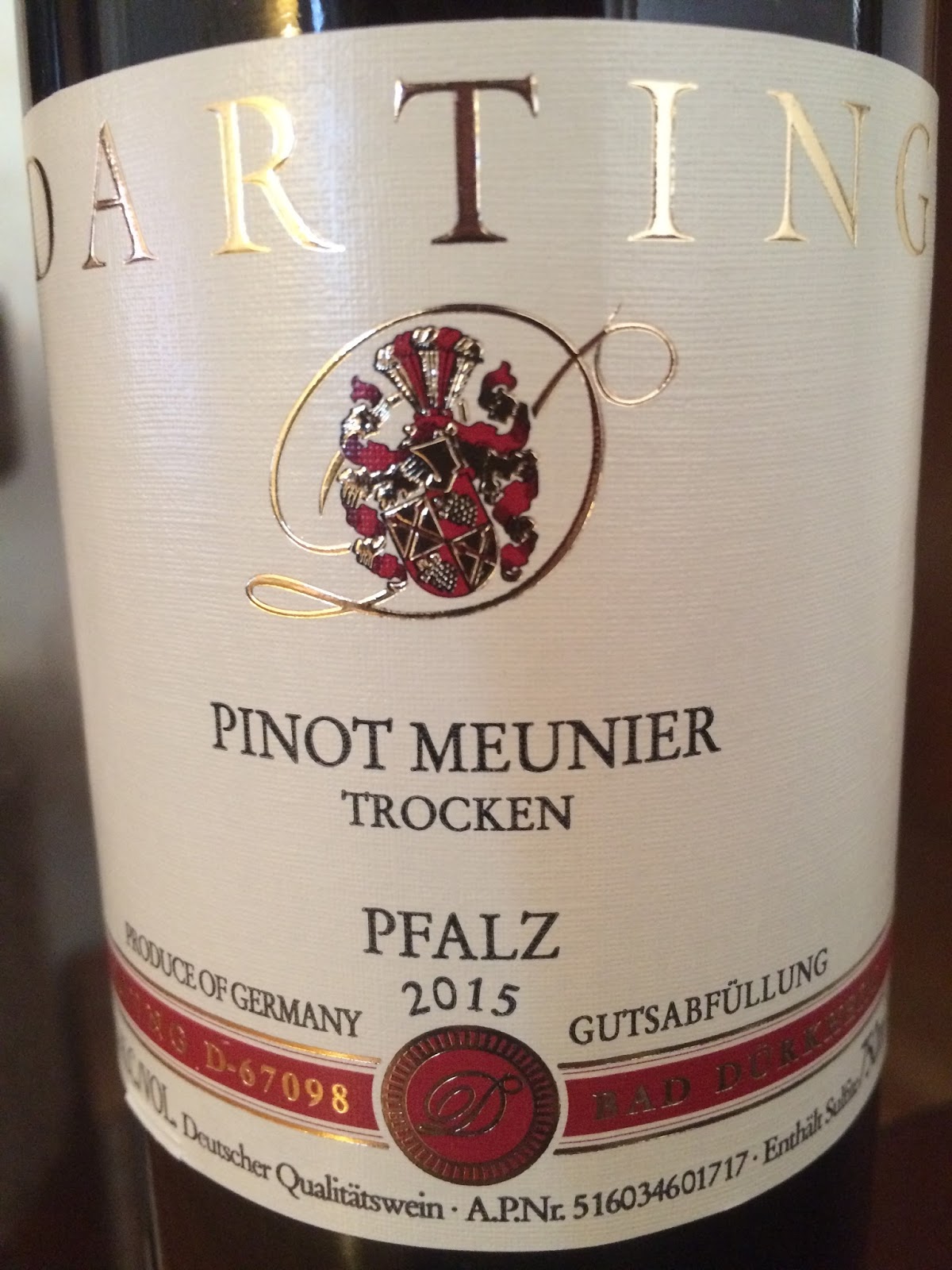
5) 2015 Darting Winery Pinot Meunier ($21.99)
This German wine is made from 100% Pinot Meunier, from the Pfalz region, and has a 13.5% ABV. It is rare to find single varietal Pinot Meunier. This wine has a light red color, with a touch of sediment, and a mild, pleasing aroma of red fruit and spice. It is a light-bodied wine, subtle and elegant in its presentation, with delicious flavors of cherry and cranberry, a mild spicy backbone and a hint of earthiness. Nice acidity, a lingering finish, and interesting. Overall, it is delicious and paired perfectly with a dinner of lamb lollipops.

6) Gonzalez Byass La Copa Vermouth ($25)
Vermouth is actually a wine, an aromatized wine, and many people seem to forget that fact, which is why you rarely see Vermouth on Top Ten Wine lists. They are worthy though of more recognition. The La Copa Vermouth is a blend of 75% Oloroso Sherry and 25% Pedro Ximinez Sherry. It is rare to find any Vermouth made from Sherry. Some of the botanicals that are used in this Vermouth include wormwood, angelica, savory, clove, orange peel, nutmeg, quinine, and cinnamon. On the nose, its complexity is first experienced, a wonderful melange of spices, salted nuts, and citrus notes. On the palate, you will be intrigued by its complexity, balance and elegance. There is a superb blend of spices and herbs, with nuts, caramel, a touch of plum, candied orange and more. The Sherry influence is prominent and well integrated. There is balanced sweetness with hints of bitterness, exactly what you want from a fine vermouth. It's smooth with a lengthy, satisfying finish and is wonderful on its own, though it also works well in a Manhattan.

7) 2015 Post Scriptum de Chryseia ($20-$25)
This Portuguese wine is impressive, a blend of 64% Touriga Franca, 28% Touriga Nacional and 8% Tinta Roriz, spending about 12 months in French oak. It has bright red fruit flavors, nice acidity, a spicy backbone and an elegant nature. Definitely very approachable, with good complexity, a lengthy finish and a wine that is very food friendly. Simply delicious.

8) 2015 Bodegas Garzón Cabernet France Reserve ($27)
Uruguay is producing some interesting and delicious wines, and this wine, made from Cabernet France, is an impressive example of their potential. With a rich purple color, the wine has alluring aromas, lots of ripe fruit and hints of spice. On the palate, there are delicious black and blue fruit flavors, enhanced by mild spice notes and a hint of herbal notes. There isn't a prominent flavor of green peppers, which delights me. The tannins are well integrated, the finish lingers, and there is a touch of mint on the finish too. This would be a great wine to pair with grilled meats or even a pizza.

9) 2015 Scheid Vineyards Pinot Noir ($36)
From California, this wine is made from 100% Pinot Noir, a blend of grapes from two estate vineyards, and it is aged for about 9 months in neutral French oak. With a 14.1% ABV, the wine has an appealing nose of red and black fruits with a hint of spice. On the palate, the wine is light bodied and silky, with a complex melange of flavors, from cherry to blackberry, cranberry to plum, with subtle spice notes, a touch of vanilla, and a hint of smoke, especially on the lengthy finish. An elegant Pinot, this is a wine to slowly savor over the course of an evening.

10) 2015 Kocabağ Öküzgözü ($19.99)
This is the first wine from Turkey that I've ever reviewed and it won't be my last. Öküzgözü is an indigenous grape with high acidity and mild tannins, tending to make soft, easy drinking wines similar in some respects to Gamay or Pinot Noir. This wine possesses a medium-red color with an interesting nose of black cherry and raspberry, with a few spice notes. On the palate, it is light bodied, with plenty of acidity, and delicious ripe plum and black cherry flavors, enhanced by a mild earthiness and hints of spice. It has a very Old World feel to it, with mild tannins, a moderately lengthy finish, and is simply tasty.

This is always my toughest list to compile because there are numerous other excellent wines which I could have added. I had to ponder long over which wines to actually select for the main list, meaning that I had to eliminate other worthy wines. To give some credit to those other worthy wines, which almost made the Top Ten list, I have an Honorable Mention list. These are also wines you definitely should check out.

Honorable Mention
1) 2016 Alto do Joa Tinto ($15-$17)
This compelling Portuguese wine is a field blend of 20 grapes, including Alvarelhão, Bastardo, Chasselas Suíça, Cornifesto, Dona Branca, Folgasão, Formosa, Jaen, Mourisco, and Tinta Amarela. With a dark red color, and an alluring nose, I was captivated by this wine from my first taste. It is elegant and silky smooth, with well-integrated tannins, good acidity, and a touch of rusticness. Its complex melange of flavors includes ripe plum, black cherry, fig, dark spices, and a subtle earthiness. A long and lingering finish tantalizes and satisfies. It over delivers for the price and was pure pleasure on the palate.

Another Portuguese wine, this Sparking wine is made from 100% Touriga Nacional, which is certainly more unique. Almost a Rosé in color, and with tiny bubbles, there are mild red fruit notes on the aroma. As soon as I tasted a sip, bright berry flavors burst on my tongue, such a pleasurable taste and sensation. Dry and crisp, once I got past the berries, there were subtle notes of almond and plum, as well as a lingering finish. If I could have easily transported it home from Portugal, I would have bought a case of this bubbly.

Portugal is taking dominance on this Honorable Mention list. This Port has an amazing taste and aroma, being more dry than sweet, with concentrated black fruit flavors, notes of dried fruit, spicy accents, and plenty of complexity. Well balanced, this is a powerful Port yet still restrained, more elegant than muscular. And you can easily enjoy it now without a need for further aging. Pure deliciousness at a very reasonable price.

And one more Portuguese wine, a rare aged White Port, made from a blend of at least Malvasia Fina, Gouveio, Moscatel Galego, and Rabigato. It is fermented in traditional lagares, granite treading tanks where the grapes are trod on by foot. It was aged for about 9 months in stainless steel and then for at least more 20 years in wooden casks. Sniffing your glass, you'll be seduced by an alluring blend of honey, floral and herbal scents, with wisps of citrus. On the palate, the complexity of the aromas is still evident, with each sip bringing something new to your mouth. There is a mild sweetness, well balanced by its acidity, with bright honey notes, citrus flavors, and touches of herbs. It is more full bodied and rich, with a long, lingering finish that soothes and satisfies. It is well worth the effort to seek it out, especially due to its complexity and superb taste.

This fascinating Sherry is produced from Palomino grapes all sourced from the Macharnudo Alto, making it a single-vineyard Sherry, which is rare in the Sherry industry. It is also one of the few Sherries that is still fermented in cask, in American oak, with nearly all other Sherries fermented in stainless steel. This Amontillado begins its life by spending from eight to twelve years under flor, like a Fino Sherry, and then spent another five to eight years without flor, aging oxidatively, averaging about 16-18 years in total. This Sherry has a compelling aroma, and the complex taste is nutty with rich caramel, vanilla and spice, as well as lots of acidity. It also possesses a long and pleasing finish. When I think of this Sherry, I think of it as delicious and comforting, fueling my belly and soul.

An En Rama Sherry is unfiltered or lightly filtered, which tends to produce a Sherry that is more intense and complex. With a 15% ABV, the Tio Pepe Fino En Rama has a bright golden color and is aromatic, with intriguing notes of toast and the briny nature of the sea. On the palate, it is fresh and dry, with a complex and intense melange of citrus, almonds, and the taste of the ocean. The finish has a tinge of bitterness, which doesn't detract from the taste, and lingers on your palate for quite a time. It is not as light and subtle as more heavily filtered Fino Sherries. I'm a big fan of this style and love the intense expressiveness of this Tio Pepe.

Made from 100% Pinot Noir, this Alsace bubbly is produced by the méthode champenoise and remains on the lees for about 12 months. With an appealing nose of red fruits and a touch of spice, this is a delicious and lush Crémant with ripe flavors of strawberry, cherry and raspberry. Dry, crisp, and clean, with a fine effervescence, this is a true crowd pleaser. At this price, it is an excellent value for the taste and complexity found within the bottle. 

This Italian wine is made from 100% Sangiovese, which spent about 24 months in oak, 20% in small barriques, and 1 year in the bottle. It is made in a more traditional style, which is my preference, and is quite good, with nice acidity, notes of cherry and black fruit, mild spice notes, and low tannins. It is delicious, but definitely does best when paired with food, especially meat or a hearty dish. To me, this is an example of a very good traditional Chianti Classico.

From Uruguay, thus wine is made from 100% Albarino, selected from the best seven plots in the vineyard. About 80% of the grapes were fermented in large, concrete tanks (without epoxy) and the rest were fermented in untoasted oak barrels. The wine spent about 8 months on the lees. This is an impressive wine, elegant and complex, something meant to be slowly sipped and savored. It has a richer texture, great acidity, and more savory notes with only underlying and subtle fruit notes. The finish is long and satisfying, simply a stellar wine. 

10) 2015 Windvane Carneros Pinot Noir ($45)
This California Pinot Noir, from the Carneros region, possesses a medium red color and an enticing aroma of red fruit with mild, underlying spice notes. On the palate, the complex wine presents delicious and intense flavors of red cherry and blackberry, enhanced by mild spice notes and plenty of acidity. Medium-bodied, the finish is fairly lengthy and satisfying, ending with a silky crispness. Paired with Chinese sausages, the acidity of the wine helped to balance the sweetness of the sausages, and its flavors worked well with the spices and flavors of the sausage.

Summary

Eight wine countries and regions made the list this year, the same amount as last year. France dominates, occupying four spots, which include two wines from the Alsace region. The rest of the list is occupied by Germany, Spain, Portugal, Uruguay, Turkey and California. The list is also broken down into one Sparkling wine, one Aromatized wine, one White wine and seven Red wines.

On the Honorable Mention list, six countries made the list, compared to seven last year. Portugal dominates this list, with four spots, and Spain takes second place with two spots. The rest of the spots were taken by France (Alsace), Italy, Uruguay, and California. The list is also broken down into two Sparkling wines, four Fortified wines, three Red wines, and one White wine. Last year, there weren't any Fortified wines on this list.

When you combine the two lists, France (with three from Alsace) and Portugal are tied for first place, each with five spots. In comparison, last year's leader of this combined list was the country of Georgia with four spots, while Portugal had two spots and France only one. This year, Spain occupied three spots while Uruguay and California both had two spots. Rounding out the combined list are Germany, Turkey and Italy, each with one spot. In addition, the combined list includes three Sparkling wines, four Fortified wines, one Aromatized wine, two White wines, and ten Red wines.

I have plenty of other recommendations for wines at this price point on my blog. There are top notch wines from countries all over the world, made from an incredibly diverse selection of grapes and you can still find plenty of values too. My advice is that you seek out wines outside of your comfort zone. Explore the multitude of diversity in the wonderful world of wine. Taste and try anything new, unique or potentially interesting. I am sure your search will lead to new favorites.

If you have some of your own recommendations for wines that are over $15 but under $50, please add them to the comments.

Tuesday, May 8, 2018

Bodega Garzón: Uruguayan Treasures, From Albarino to Tannat

Al pan, pan y al vino, vino.”
This Uruguayan saying literally translates as “To the bread, bread and to wine, wine.” Its deeper meaning refers to something that is said with truth, being frank and upfront. I think this is applicable to the wines of Bodega Garzón, an Uruguayan winery, which seeks to present wines of terroir, not concealed with heavy oak, and sometimes with no oak at all. The truth of the land and the grapes is intended to be revealed within their wines.

I was recently invited, as a media guest, to visit La Bodega By Salts, an Uruguayan restaurant in Watertown, by Alexander Griffiths, a native of Uruguay and the export manager for Bodega Garzón. While enjoying a sampling of the delicious dishes of La Bodega, we tasted a range of wines from his portfolio. All of the wines were delicious and well-made, though of course I had my personal preferences. These are wines that would appeal to most wine consumers and which earn a hearty recommendation.

Alexander and I not only spoke about the wines, but also talked about a myriad of other subjects. He was personable and interesting, and we enjoyed a fun and tasty evening. For some background on Uruguay and their wines, please check out three of my prior articles, which stemmed from a large Uruguay wine tasting several years ago: The Wines of Uruguay (Part 1)The Wines of Uruguay (Part 2), and The Wines of Uruguay (Part 3). I found many intriguing wines at this event, including a couple from Bodega Garzón, thus it was educational to taste their wines now, to see how their winemaking has evolved.

I'll provide a brief update on the Uruguayan wine industry as well. In 2017, the country produced a record-setting 4.6 million liters of wine, a growth of 32% from 2016. Tannat was the most dominant grape used for these wines. Brazil remains the #1 market for Uruguayan wines, constituting about 50% of exports, followed by the U.S. and Mexico. Combined, those three countries represent about 85% of the total export market. And even though the U.S. is the #2 market, Uruguayan wine imports are still relatively small.

Alejandro P. Bulgheroni, an Argentinian, got his start working in the energy sector, including a number of agro-industrial projects. He is currently a billionaire, with a large portfolio of wine interests, currently including approximately 21 estates in six different countries and regions, from Australia to California, Italy to Argentina, France to Uruguay. And it all began with Bodega Garzón.

Around 1999, Alejandro and his wife, Bettina, traveled to the region Garzón and were enamored with the land, eventually deciding to purchase 2200 hectares of land and 2000 hectares of forest. They planted olive trees to produce olive oil, and almond trees, because Bettina wanted them. They also raised cattle, kept bees for honey, and harvested lumber from the forests. Currently, they grow 14 types of olives, almonds, blueberries and pecans.

Alejandro eventually decided he also wanted to grow vineyards and produce wine, so he purchased more property, about five miles from his current properties. This estate, composed of many rolling hills, is located in the eastern border of the Maldonado region, about 11 miles from the Atlantic Ocean, and is still one of the only wineries in this region. He then hired Alberto Antonini, a famed enologist from Tuscany, to make that desire a reality. In 2007, Antonini started to examine the region, checking its soils and terroir, trying to ascertain what might grow best. He felt that the region resembled Galicia, a region in the northwest of Spain, which explains why they eventually planted Albariño, a dominant grape in Galicia.

It is important to recognize the different soil types in Uruguay, as the Western region tends to have clay soils while the Eastern region, where Garzón is located, tends to have granite soils. In 2008, the first Garzón vines began to be planted, starting with about 12 different grapes. Their first commercial vintage was in 2011 and they started exporting their wines in 2013. Thus, their wines are relative newcomers to the U.S. market.

In 2016, their state-of-the-art winery and restaurant opened to public, and they are seeking LEED (Leadership in Energy & Environmental Design) certification, which would make them the first sustainable winery outside the U.S. with that certification. About 30,000 people visit their winery each year. Bodega Garzón is passionate about sustainability and their goal is to make all of their vineyards 100% organic. Currently, the winery owns about 500 acres of vineyards, broken down into 1000 different lots. They grow grapes including Tannat, Merlot, Cabernet Franc, Pinot Noir, Marselan, Caladoc, Albariño, Sauvignon Blanc, Pinot Grigio, Viognier, and Petit Manseng. Despite that diversity, about 1/3 of their vineyards are planted with Tannat.

About 70% of their wine production is exported and in 2017, they were the largest exporter in Uruguay, comprising about 28.5% of the total market share. About 38% of their exports are sent to Brazil while about 22%, approximately 11,000 cases, are exported to the U.S. It is clear to see that exports of Uruguayan wines to the U.S. remain comparatively low, making it very much a niche wine. However, the Uruguayan wine industry is seeing significant growth so more will get soon exported to the U.S. For Garzón, they grew 300% in 2017, and that rapid growth is certainly a challenge to handle properly. They also believe that more education is needed, to teach consumers about Uruguay and their wines.

The Bodega Garzón wines imported into the U.S. come in three basic levels, Reserve (about $17), Single Vineyard (about $27) and the high-end Balasto (about $120). As their website states, "Garzón’s terroir is made up of ballast, a fantastic soil of fine stone. It has an excellent drainage and plenty of minerals that vines can absorb; they lend minerality, vibrancy, complexity and elegance to the wine." In addition, when oak aging is conducted, the barrels tend to be quite large and untoasted, so the oak won't overpower and conceal the fruit and other characteristics of the wine. Overall, I found the wines to be well-balanced, elegant, and fresh, with plenty of acidity, a nice minerality, and each level possessed its own unique style.

The evening began with the 2017 Sauvignon Blanc Reserve, which is fermented in stainless steel and sees no oak. All of the Reserve wines are about freshness, and this Sauvignon Blanc certainly presented a fresh and crisp image. The natural acidity is said to be due to the vineyard's closeness to the ocean. There were delightful and bright flavors of grapefruit and lemon, with mineral notes, and all of the elements were well-balanced. An excellent summer wine, this would also work great with seafood.

Bodega Garzón is one of the only Uruguayan wineries that grows Albariño, with 20% of their vineyards dedicated to this grape. This might be due to the region being a great growing region for the grape but there are very few wineries currently located there. The 2016 Albariño Reserve is fermented in stainless steel and sits on the lees for 5-6 months. It was fresh, clean and crisp, with delicious fruit flavors of peach, citrus and apple, some mineral notes, and a pleasing richness to its body. This would be delicious on its own, sitting on your porch this summer, or paired with some oysters, shrimp or grilled fish. It will remind you of a tasty Spanish Albariño.

The 2016 Albariño Single Vineyard is produced from high quality grapes, selected from the best seven plots in the vineyard. About 80% of the grapes were fermented in large, concrete tanks (without epoxy) and the rest were fermented in untoasted oak barrels. The wine spends about 8 months on the lees. This is an impressive wine, elegant and complex, something meant to be slowly sipped and savored. It has a richer texture, great acidity, and more savory notes with only underlying and subtle fruit notes. The finish is long and satisfying, simply a stellar wine. Highly recommended.

The two Albariño wines have very different styles, but both certainly have their place, dependent on your preference at the moment.

I was also impressed with their 2015 Cabernet France Reserve, which was fermented in concrete tanks and then aged for 6-12 months in 50 hectoliter, untoasted French oak barrels and casks. With a rich purple color, the wine has alluring aromas, lots of ripe fruit and hints of spice. On the palate, there are delicious black and blue fruit flavors, enhanced by mild spice notes and a hint of herbal notes. There isn't a prominent flavor of green peppers, which delights me. The tannins are well integrated, the finish lingers, and there is a touch of mint on the finish too. This would be a great wine to pair with grilled meats this summer. Or even a pizza. Highly recommended.

Tannat is the signature red grape of Uruguay, similar in some respects to Malbec in Argentina. It can be a highly tannic grape, due in part because Tannat has more seeds than any other grape. The Tannat grapes for Garzón's wines include some clones from France, but I was told that their soils make the grapes taste different. The 2016 Tannat Reserve is fermented in concrete, and aged for 6-9 months in untoasted, large French oak barrels. This wine is all about fresh red and black fruit flavors, with very mild tannins, crisp acidity and a pleasant finish. It is bold yet restrained, great for burgers to pizza, grilled meats or meaty pasta dishes.

The 2016 Tannat Single Vineyard is a stunner, which is produced from high quality grape from the best seven parcels in the vineyards. It is fermented in concrete, and aged for 12-18 months in untoasted, 5000 liter French oak casks. Like the Albariño Single Vineyard, it is elegant and complex, with well-integrated tannins and delicious flavors of black fruits, mild spices, mineral notes and a hint of chocolate. It is well balanced, with plenty of acidity, and a lengthy finish that is eminently satisfying. This is a wine you could slowly savor all night, though it would work well with a variety of foods as well, especially meat-based. Highly recommended.

The final wine of the evening was their high-end 2015 Balasto, the first release of this line. The name, "Balasto," refers to the upper layer of granite of the soil. It is considered a blend of the best grapes of the vineyard, and this vintage was a blend of 45% Tannat, 25% Cabernet France, 20% Petit Verdot, and 10% Marselan. Subsequent vintages may have different ratios, such as the 2016 vintage which had less Petite Verdot and more Marselan. The 2015 was released last September, only about 8800 bottles, and the label ink actually includes some granite in it. Subsequent vintages have a large amount of production.  

The grapes were fermented in concrete tanks and then the wine spent about 20 months in untoasted, large French oak casks. This is a powerful, muscular wine with concentrated red and black fruit flavors, yet it still possesses a beautiful elegance. The tannins are restrained, helping to rein in its power. There are also subtle spice notes, nice acidity, a hint of earthiness and it possesses a lingering and pleasant finish. This is a wine built for aging, though it is still impressive now. If you wish to splurge on a wine, or buy someone a high-end gift, then you should consider this wine. Highly recommended.

Uruguayan wines are a niche that you should explore, and the wines of Bodega Garzón would be a great starting point. They will show you the potential of Uruguay, as well as the terroir, for both white and red wines, from Albariño to Tannat. Their different levels will show you the various wine styles you can find, from fresh and fruity to more savory and complex. Most of their wines, except for the Balasto, are fairly affordable, from $17-$27, with the Balasto being a splurge wine. Expand your vinous horizons and let your palate visit Uruguay.

Tuesday, May 1, 2018

La Bodega By Salts: Compelling Uruguayan Cuisine in Watertown

Most restaurants have a soft opening for a week or two, giving themselves a little time to prepare for their official opening, testing out their food and service with actual customers. Last week, I dined at a restaurant during their soft opening, which has been going on for over four months. Why such a lengthy soft opening? I'll explain that in a moment but first let me tell you that I had an impressive experience and am eager to return.

La Bodega by Salts, located in Watertown is owned by Gabriel Bremer and Analia Verolo, the former owners of the famed Cambridge restaurant, Salts, which offered upscale French cuisine. Back in 2014, a serious flood within the restaurant led to its closure. Gabriel and Analia considered what to do next, eventually finding a potential location in Watertown. However, they didn't believe that a similar concept to Salts would fit their new location so they opted for Uruguayan cuisine, reflective of Analia's homeland. The main idea was to offer wood-fired, farm-to-table cuisine with a primary influence from Uruguay and other influences from Spain.

I was invited to visit the restaurant by Alexander Griffiths, the export manager for Bodega Garzón, an Uruguayan winery. We sampled numerous dishes while tasting wines from his portfolio. I'll be discussing those wines in another post in the near future.

The 90-seat restaurant is split into two sections, the first being a narrow greenhouse-like room (pictured above) with a lengthy bar on the left side. The second section is housed within a refurbished, train dining car from the 1950s. Overall, the restaurant presents as casual and homey, with a bit more intimacy in the dining car.


The lengthy bar has numerous shelves of wines and spirits, and I began my experience by sitting at the bar so that I could have a drink.

At the end of the bar, the area is for the preparation of the cold food dishes on their menu. What a beautiful leg of jamon!

I had the chance to meet both Gabriel and Analia, who were very personable, and I observed them being that way with many of their customers. I spoke more with Analia, clearly witnessing her passion for the restaurant and her home country of Uruguay. She explained to me the reasons for the length of the soft opening, the challenges they faced as they attempted to open their restaurant. At one point in the process, they were informed by the licensing board that they needed to open La Bodega within 15 days or risk losing their liquor license. Gabriel and Analia weren't expecting to have to open so soon, and there were plenty of obstacles facing them, but they chose to make the huge effort to comply.

Somehow they found a way to pull all of the pieces together, furnishing the restaurant, hiring staff, gathering all of the necessary licenses, and much more. They succeeded in opening within fifteen days and I'm sure many of other restaurant owners would have failed in a similar situation. With this rush, they couldn't put together everything in place as they wanted it to be. So, since their opening, they have been working on everything else, such as trying to garner sufficient staff, and creating the menus they desire. Currently, they are only open during the evening, Wednesday to Saturday. In the future, they want to open from Monday to Saturday, and be open for lunch as well.

I didn't witness any issues, in either service or the cuisine, during my visit. Whatever issues they still have weren't readily visible. My visit was on a Friday evening and the restaurant was packed, a good sign that the restaurant has already earned a good reputation. Based on my own experiences, I too would provide a hearty recommendation for La Bodega.

Their drinks program is intriguing and extensive, including spirits, cocktails, wine, beer, ciders, and more. The drinks list has 9 special cocktails ($10-$14) such as the Compartir Or Not, made with Yerba Mate, Lemon, Orange, & Brandy or the Sangria de la Casa, made with red wine, compressed pear, spice, & house citrus liquor. I opted for the Mangalitsa Old Fashioned ($13), made with Amarena Wild Cherries, Angostura, and Mangalitsa Jamon Infused Bourbon. It was delicious, very savory with a briny element to it. What a fine way to begin the evening.

You'll find an interesting list of beers as well as 4 ciders ($6-$9), including 2 from Spain, 1 from New York, and 1 from Boston. There are 8 wines available by the glass ($9-$16), with 3 from Uruguay, 3 from Spain, 1 from France, and 1 from California. Those wines are also broken down into 1 Sparkling Wine, 1 Rosé, 3 Whites, and 3 Reds. There are also 6 Vermouth by the glass ($9-$10), including 2 from Spain, 1 from Italy and 1 from France. The bottle list begins with a list of about 30 Uruguay wines, from five wineries including Bodegas Carrau, Bodegas Cerro Chapeu, Bodegas Bouza, Familias Deicas, and Bodegas Garzon. The rest of the wine list includes numerous wines from the cellar of Salts as well as others, with a diverse selection from all over the world.

We began our dinner with bread and Bodega Garzón olive oil, a blend of Arbequina and Coratina olives. The food menu contains about 25 dishes, mostly small plates with a couple larger dishes. Dishes are priced from $4-$27, with 10 dishes priced at $10 and under while only 2 dishes are priced over $20. Much of the menu are Uruguayan specialties while other dishes have a Spanish influence. There is plenty of variety and everyone should be able to find several dishes that appeal to them, whether they seek vegetable or meat dishes. Overall, each dish is large enough for two people, if not more, to share. I'm a big fan of small plates as I like to experience the diversity of the menu and don't mind sharing. Please note that the menu is subject to change.

The Cured Mangalitsa Ham with Pan Con Tomato ($15) includes paper thin slices of ham from Mangalitsa pigs which were raised in Hungary, eating acorns, and were then sent for finishing to Spain for three years. The silky ham had a nutty undertone, a mild saltiness and plenty of flavor.

The Uruguayan Style Empanadas ($10) change daily and Beef ones were available during my visit. A fine, flaky crust encased a tasty filling of finely chopped beef, veggies, spices and herbs. They brought to mind some of the empanadas I enjoyed when I visited Argentina.

The Grilled Provolone, Uruguayan style ($8) is a medium-sized pan of cheese, topped with some oregano. The dark spot atop the dish is just grilled cheese which provides a bit of a crunchy texture, complementing the spongy cheese beneath. With a mild sharpness to it, this melted cheese was delicious, a nice blend of textures, and was excellent atop the country bread. I'd probably order this every time I visited La Bodega.

The Wood Grilled Wild Spanish Octopus ($15), with heirloom fingerling potatoes and pimenton, had several very tender pieces of tentacle, with a pleasant smokiness. Octopus isn't the easiest to prepare well but they hit the mark. The potatoes were also cooked just right. A winner of a dish.

The Wood Roasted Mussels ($10), with toasted almond, spring green garlic, and garden herbs, presented a nice mound of plump and tender mussels with a tasty broth, perfect for dipping bread. There was a touch of smokiness to the mussels, enhanced by the garlic. Another winner of a dish.

The Heirloom Baby Carrots ($10), prepared A la plancha, are made with Romesco and almonds. The tender, grilled carrots were tasty, the almonds adding some nuttiness and texture to the dish.

The Wood Grilled Sweetbreads ($14) are topped by a Sauce Verde and roasted lemon.  I love sweetbreads and these were prepared well, with a great texture, some crispiness on the exterior, and a smoky element. The lemon gave the dish some acid to cut the richness of the sweetbreads.

The Albondigas de Cordero ($14) are spring lamb meatballs with English peas and green garlic. The tender meatballs were flavorful with the peas adding a slight sweetness to the dish. Nice comfort food.

Chivito, means literally means "small goat," is a popular sandwich in Uruguay, and generally is a steak sandwich with a variety of toppings. The Chivito al Pan ($17) is sliced beef tenderloin, country ham, bacon, and a fried egg. It is quite a large sandwich, and a bit messy to eat, but it was also quite tasty, with plenty of tender meats. The soft roll enhanced the sandwich, which is large enough to make its own meal. Again, this is an excellent comfort food and I understand its popularity in Uruguay.


The dessert menu has about 9 or so options, and we opted for these Dulce de Leche filled-cookies. Dulce de leche is a hugely popular item in Uruguay, and is served in a myriad of dishes. We also got to taste their Flan, which was sweet and smooth, topped with a dollop of whipped cream.

We enjoyed every dish we ordered, which were all well-prepared and possessed of balanced flavors. Much of the menu could be considered comfort food, the type of food that just pleases the belly. The drinks list is compelling as well, and if I lived closer to Watertown, I might be a regular at the bar. This is a worthy successor to Salts, though the cuisine is very different. I love Analia's passion for her heritage, and Uruguayan cuisine certainly deserves a place in our culinary scene. I strongly recommend you check out La Bodega, and I'll report back again when I revisit the restaurant.

Tuesday, December 15, 2015

2015: Top Ten Wines Under $15

What were some of my favorite wines of the past year?

As 2016 approaches, it's time once again to reflect upon the past year, to remember and savor many pleasant memories. As 2015 winds down, you'll see plenty lists of the Best and Worst of the past year. As I find value in at least the Best lists, I'll post my own series of Favorite Lists for 2015 over the next few weeks, covering food, wine, sake and spirits. These lists should provide a comprehensive summary of my favorites from this past year, allowing my readers to more readily locate such gems, the best of my recommendations.

My first Favorites List of 2015 is my Top Ten Wines Under $15. This list includes wines that not only did I enjoy, but which I also found to be particularly compelling for various reasons. They might be especially delicious, something more unique or just excellent values for the price. They all stand out, for some particular reason, above the other wines at this price point that I have tasted this past year.

This is a purely subjective list, based on my own preferences, and makes no claims about being the "best" wines out there. It is primarily the wines which spoke to me the loudest, even when they were subtle wines. These are all wines that I strongly recommend and which I believe many other wine lovers would also enjoy.

The wines are not listed in any particular order and each choice is linked to my more detailed prior review. All of these value wines are worth your consideration but please also note that the prices are approximations and the actual price may vary in your area. In addition, some of the wines might not be available in your local area, though you might be able to order them from the winery or an online store, dependent on your state's shipping laws.

1) 2013 Earthshaker Wines Pomp & Power Syrah ($14.99)
The people behind 90+ Cellars wines have created a few new labels, to better highlight wine terroir, and this Syrah is one such wine. From the Knights Valley in Sonoma, California, it is easy drinking but with complexity and character, making it a better value. Deep black fruit flavors, strong spice and restrained tannins. A perfect choice for lamb, a hearty Bolognese, or barbecue.

2) 2011 LangeTwins Family Winery Old Vine Zinfandel ($14.99)
From Lodi, California, a region well know for Zinfandel, this wine is produced from a blend of grapes from a 110 year old vineyard as well as much younger grapes. Inky dark in color, this is a rich, muscular and concentrated wine with lots of black fruit flavors, vanilla, and dark spices. Tannins are moderate and it is well balanced so that you won't notice the higher alcohol. For the price, you are getting a lot of wine, making it a very good value.

3) 2011 Castra Rubra Via Diagonalis White ($14.99)
The Castra Rubra ("red fortress") winery, located in Bulgaria, is a relatively new winery, with their first wines released in 2007.  This white blend consists of a melange of Sauvignon Blanc, Grenache Blanc, Sauvignon Gris, and Chardonnay. It is an intriguing wine with a complex blend of peach and pear flavors, with herbal accents and some minerality. It is crisp and dry, with a very satisfying finish. At this price point, I highly recommend this wine as it presents something more unique and tasty.

4) 2009 Castra Rubra Pendar Red ($11.99)
The Bulgarian winery also makes this interesting red blend of 55% Rubin and 45% Merlot. Rubin is an indigenous grape, a cross between Syrah and Nebbiolo. With lots of red fruit aromas and flavors, there is additional complexity with spice notes and hints of earthiness. The tannins are noticeable but restrained and there is a nice, spicy kick on the finish. This is an easy drinking wine with character, which could be enjoyed on its own though pairing it with food might be a better option. Highly recommended.

5) 2011 Quinta da Padrela Red ($12.99)
This Portuguese wine is a blend of Tinta Roriz, Touriga Franca, Tinta Barroca, and Touriga Nacional, and was aged for about 12 months in French oak barrels. This is a smooth, easy drinking wine but with the addition of some restrained tannins and spicy elements. There is plenty of tasty red fruit flavors, but also a bit of ripe plum. Though you could drink this wine on its own, I think it might be better paired with food, though again it only needs something simple, from pizza to tacos. This would also be an excellent BBQ wine.

6) 2011 DFJ Vinhos Vega Douro Red ($9.99)
The cheapest wine on this list is a Portuguese wine, which doesn't surprise me in the least. The Vega is a blend of three grapes, including Touriga Nacional, Touriga Franca and Tinta Roriz. I found this wine to be smooth with bright red fruit flavors and a touch of vanilla. It possesses more character than many similarly priced wines, and I could easily drink it on its own. I also would pair this wine with casual meals. from burgers to pizza.

7) NV Fermi Bohigas Rossinyol de Moragas Extra Brut Cava ($14.99)
This Spanish bubbly is produced by Fermi Bohigas, which has been involved in working the vineyards for over 800 years. The wine is produced from a blend of traditional Cava grapes, Macabeo, Xarello and Parellada and is made in the Champenoise method. It is organic and low production, and at this price is an excellent value. With a nice golden color and plenty of tiny bubbles, this is a dry, crisp and delicious Cava. There are tasty flavors of apple and pear, with a tiny hint of toast. It is hard to find such compelling bubbly at such a low price.

8) NV Domaine Schoenheitz Edelzwicker ($14.99)
This intriguing wine is a blend of Chasselas, Sylvaner, Auxerrois, Riesling, Muscat, Pinot Gris & Gewurztraminer (with proportions that change every year). This white wine comes in a one-liter bottle as Alsatian law prohibits them from selling wine in a box. The liter bottle is less expensive and a good choice for restaurants, especially as this wine is designed to be something casual for food. This aromatic wine is light, dry and easy drinking with pleasant citrus and mineral notes. A very good wine at this price point, it has more character than many similarly priced wines from other regions. It is an excellent food wine too.

9) 2013 Bodega Garzon Sauvignon Blanc ($14.99)
Uruguay, with a strong wine culture, is exporting a small portion of their wines and I'm sure their exports will grow each year. They are a region to watch as they are producing many excellent wines. This Sauvignon Blanc appealed to me, being bright and crisp, with summery tastes of citrus and grapefruit. There were not any grassy notes and it was more on the leaner side, an excellent wine for seafood or a warm summer day. Nicely balanced, it had plenty of character for the price, and should appeal to many consumers.

10) 2013 Vincola Salton 013 Salton Classic Tannat Reserva Especial ($10.99)
Also from South American, this wine is from Brazil and is made from 100% Tannat, which is the signature grape of Uruguay. It is dark red in color with an aroma of chocolate and black fruit. On the palate, it is a bit rustic, with moderate tannins, and flavors of chocolate, blackberry, black cherry and some herbal accents. This is a wine that would benefit from pairing with food, especially burgers and BBQ. It is a good wine, just not as soft as many Uruguayan Tannats at this price point, but that is merely a matter of preference, not quality.

Seven countries made the list this year, as opposed to only four last year. California, Bulgaria and Portugal all have two spots on the list and Spain, Brazil, Uruguay and France (Alsace) each have one spot. A number of these wines were tasted at the Boston Wine Expo, and unfortunately I missed the Mohegan Sun Wine Fest, which usually uncovers a few value gems too, California wines don't make this list too often as I often don't find their wines especially compelling at this price point but there are always welcome exceptions. Keep an eye on the wines from Bulgaria, Brazil and Uruguay as you should start to see more of their wines on store shelves and they bear checking out. As for wine types, the list is also broken down into 1 Sparkling Wine, 3 Whites, and 6 Reds.

I have other recommendations for wines under $15 on my blog and you just have to search for them. You can find value wines all over the world, in every region, though some regions provide a greater range and diversity of value wines. It is important to remember that though wine stores sell plenty of wines in this price range, not all of them are of equal value. Wines in this price range do not have to be one-dimensional wines that all taste the same.

You can find wines of character and complexity, though you might need to spend a little more time seeking them out. Wine blogs can help you in that regard, pointing out wines that you might not otherwise know about. Tasting the wines before you buy them is another way to find such values. Or simply ask your trusted wine store staff for advice and suggestions. For more advice on finding value wines, please check out my prior article on the subject.

If you have some of your own recommendations for excellent wines under $15, please add them to the comments.

Tuesday, June 16, 2015

Bodega Garzón: From Albariño to Tannat

The wines of Uruguay have started to make their mark in the U.S., and deservedly so, and their popularity will only continue to grow as their presence expands in the market. Last September, I attended a large Uruguayan trade tasting, and was thoroughly impressed with what I tasted. Check out my prior articles on the Wines of Uruguay: Part 1, Part 2, and Part 3. These articles cover everything from history to tasting notes, grapes to wineries, giving you an intriguing glimpse into Uruguay.

Recently, there was another major Uruguayan trade tasting event, and I had the opportunity to learn even more about their wines. Prior to this event, I attended a media lunch at the Capital Grille with Gilles de Chambure, MS, who does some work for the Wines Of Uruguay. He wanted to share with me some information and wines from Bodega Garzón.

Alejandro Bulgheroni, an Argentinian, got his start working in the energy sector, including a number of agro-industrial projects. Around 1999,  Alejandro and his wife, Bettina, came to Garzón and were enamored with the land, eventually deciding to purchase 2200 hectares of land and 2000 hectares of forest. They first planted olive trees to produce olive oil, and almond trees, because Bettina wanted them. Today, they grow 14 types of olives, almonds, blueberries and pecans.

Alejandro eventually decided he also wanted to grow vineyards and produce wine, so he hired Alberto Antonini, an enologist from Tuscany, to make that desire a reality. In 2007, Antonini started to examine the region, checking its soils and terroir, trying to ascertain what might grow best. In 2008, the first vines began to be planted.

Bodega Garzón is located in the eastern border of the Maldonado region, about 11 miles from the Atlantic Ocean. It is one of the only wineries in this region, though others have started showing interest in expanding into the area. Currently, the bodega owns about 500 acres of vineyards, broken down into 1000 different lots. They grow grapes including Tannat, Merlot, Cabrnet Franc, Pinot Noir, Marselan, Caladoc, Albarino, Sauvignon Blanc, Pinot Grigio, Viognier, and Petit Manseng. Despite that diversity, about 80% of their vineyards are planted with Tannat, the signature grape of Uruguay.

Their latest project is the construction of a new, state-of-the-art winery which will be LEED Certified (Leadership in Energy & Environmental Design), and that will make them the first sustainable winery outside the U.S. with that certification. Bodega Garzón is passionate about sustainability and plan to open the new winery by December. About 25 hectares of their vineyards are organic and their goal is to eventually become 100% organic. The 2015 harvest is considered to be an exceptional vintage so you should look forward to those Uruguayan wines in the near future.

One of the factors that makes Uruguay, which has 410 miles of coastline, unique in the wine producing nations of South America, is that part of the country, especially the Maldonado region, is influenced by the Atlantic Ocean. Penguins can also sometimes be seen on the beaches in Maldonado. In some respects, Maldonado can resemble parts of Spanish Galicia, which may explain why Albariño may do very well in that part of Uruguay.

Only three wines from Bodega Garzón are currently imported into Massachusetts by Carolina Wine & Spirits, including a Sauvignon Blanc, Albariño and Tannat (priced around $15-$20). I tasted previous vintages of the Sauvignon Blanc and Albariño and enjoyed them, so was pleased to taste different vintages, and see how they paired with food.

The 2013 Sauvignon Blanc was bright and crisp, with summery tastes of citrus and grapefruit. There were not any grassy notes, and it was more on the leaner side, an excellent wine for seafood or a warm summer day. Nicely balanced, it had plenty of character for the price, and should appeal to many consumers.

I was even more impressed with the 2014 Albariño, and Garzón is one of only two producers of this grape in Uruguay. It spends all of its time in stainless steel and has some aging on the lees. It had excellent acidity, with bright citrus flavors and hints of tropical fruits as well. The longer it sat in the glass, it began acquiring more of a creaminess to the body, due to its lees aging. You would be hard pressed not to think this was a Spanish Albariño. With a creamy Lobster Bisque, it paired well, the acidity cutting through the creamy fat of the bisque. Highly recommended.

With a Tannat, you might readily choose to pair it with a steak, which is always a fine choice. However, I decided to try some seafood, the Sushi-Grade Sesame Seared Tuna with Gingered Rice (pictured above). The 2013 Tannat is produced with a little Petit Verdot, Cabernet Franc, Marselan, and Caladoc.  It is aged in large oak barrels for about 18 months, using larger barrels as they want to show more of the fruit of the Tannat.

It is a muscular wine, one of power, yet there is still restraint and the wine isn't overly tannic or unwieldy. It is under control, presenting with delicious ripe plum and black cherry flavors, and hints of spicy undertones. The fruit dominates but it isn't a one-note wine, with more complexity than you might expect for a wine of this price point. It went very well with the seared tuna, the richness of the raw fish harmonizing well with the power of the Tannat. Highly recommended.

Check out the wines of Bodega Garzón at your local wine shop, or ask your shop owner to order them for you. And seek out other wines from Uruguay too.