Showing posts with label France Wines. Show all posts

Tuesday, July 14, 2026

2018 Domaine Pichot Clos St. Mathurin Sparkling Vouvray: Loire Bubbly & Mussels

This past Friday night, I enjoyed a dinner of mussels at home, having purchased them earlier that day at the Ipswich Shellfish Fish Market in Ipswich. They were organic PEI Mussels, which were rope grown, for only $7.49 for a bag. I love mussels, steamed in a flavorful broth, and accompanied by a crusty bread for sopping up the broth. 

Wild mussels have been consumed for thousands of years and farmed mussels extend back at least to the 12th century, when they were cultivated in the waters off the coast of France. The Pilgrims probably feasted on mussels during the first Thanksgiving. Farmed mussels are one of the most sustainable forms of aquaculture. They are easy and quick to grow, better than probably any other bivalve. They are also filter feeders, which eat algae, plankton and other microscopic sea creatures, and help to purify the water. They make the oceans cleaner which is a great benefit. 

Mussels are also a healthy choice, one of the best seafoods you can consume. They are a good source of protein, with the added benefit of being low in calories and saturated fats. In some respects, that makes it a better choice than beef. In addition, mussels are a good source of selenium, vitamin B12, zinc and folate. Most importantly, mussels also possess a significant amount of Omega-3 fatty acids, which is important in reducing the risk of heart disease. A 3 ounce portion of mussels contains about 700 milligrams of Omega-3s, placing it high on the list of seafood with significant amounts of Omega-3 fatty acids. Plus, mussels have a far less risk of mercury and PCBs. In many ways, mussels are an excellent nutritious choice and should be a regular visitor to your dinner plate.

To accompany the mussels, I selected a bottle of bubbly from the Loire region of France, the 2018 Domaine Pichot Clos St. Mathurin Sparkling Vouvray (about $27), which is supposed to be an excellent pairing for seafood, from oysters to crab. I received this bottle as a media sample. 

Although the Domaine Pichot winery was established in 1996, the history of the Pichot family extends back to at least 1739, when they were restaurateurs. They purchased their first vineyards around 1770, so they could supply their restaurant with wine. When Domaine Pichot was founded, the family brought together three family vineyards: Coteau de la Biche, Le Peu de la Moriette, and Le Marigny. The vines are generally about 30 years old, and are planted with only Chenin Blanc. Their vineyards are organic and certified sustainable. 

The Clos St. Mathurin Sparkling Vouvray is produced from grapes, about 35 years old, from a small, 1.5 hectare vineyard within the Le Marigny site. The soil in this vineyard is limestone and flint. The sparkling wine is made in the méthode traditionnelle (like Champagne), with fermentation in 70% in stainless steel and 30% in 400 liter used barrels, followed by two years on fine lees in the bottle. No dosage is used. Only 6,000 bottles are produced each year.

On the nose, the wine was expressive, with notes of white flowers and stone fruit, and in the glass, there were plenty of tiny bubbles. On the palate, it was elegant and crisp, fresh and flavorful, dry and pleasing. It possessed a complex melange of flavors, including peach and green apple, a subtle nuttiness, a touch of toast, and hints of baking spice. The finish was persistent and satisfying, and each sip beckoned you to take another. It paired very well with the mussels, and I could easily see it pairing well with other seafood too. This bubbly over-delivers for its price point, and I heartily recommend it. 

Monday, April 29, 2024

2022 C&C Lecareux L'Hydrophobe: The "Water Hater"

A wine of resilience in the face of disaster, a wine that emerged after the devastation of hail storms. It's also delicious and interesting, an excellent showcase of the Gamay grape. 

Back in 2017, the vineyards of Domaine Les Capréoles sustained significant damage from terrible hail storms, and they had to somehow make do with the limited amount of grapes which remained. They chose to create a new cuvée, L'Hydrophobe, the "Water Hater."

Domaine Les Capréoles was established in July 2014, although the wine estate they purchased in Regnie-Durette possessed a history of over 250 years. The term “capreoles” derives from Old French and means "vine tendrils." They only own about 5.5 hectares of organic vineyards, upon granitic bedrock, in the Brouilly appellation in Beaujolais. However, some of their Gamay vines are over 80 years old.  

The Beaujolais wine region contains 10 crus, including Brouilly, which is the largest and southernmost cru. It has been recognized as an AOC since 1938, and the history of the region extends back to the ancient Romans, who were the first to plant grapes vines in this area. The cru's name derives from the name of a nearby mountain, which was named after an ancient Roman lieutenant. 

The 2022 C&C Lecareux L'Hydrophobe ($28), composed of 100% Gamay, has a 13% ABV, and little information seems readily available on its production process. Gamay probably doesn't receive as much attention as it should, and far too many people think only of Nouveau Beaujolais when they think of the Beaujolais wine region. In the ten different Crus of Beaujolais, the Gamay grape can be expressed in many different manners, showcasing terroir, and providing a complex and compelling wine. 

I very much enjoyed this wine! With an intriguing nose of cherries, violets, and subtle spices, on the palate, it was bright, fresh, fruity and complex with silky tannins. A delightful melange of ripe plum, black cherries, hints of forest, a touch of minerality, and even a subtle briny note. Well balanced, good acidity, and a lengthy, pleasing finish. You can easily enjoy this wine on its own, but it also will pair well with a variety of foods, from pizza to burgers. It's also stated that this wine can age well for 5 years. It earns my hearty recommendation.

I bought this wine at the Cellar Door in Ipswich, a cool shop which sells wines, beers, and gourmet foods. Their wine selection is interesting, with many small production wines, organic wines, skin contact wines, and more. Wine lovers should definitely check out this shop.

Wednesday, May 10, 2023

Chateau de Berne: Organic Provence Rosé

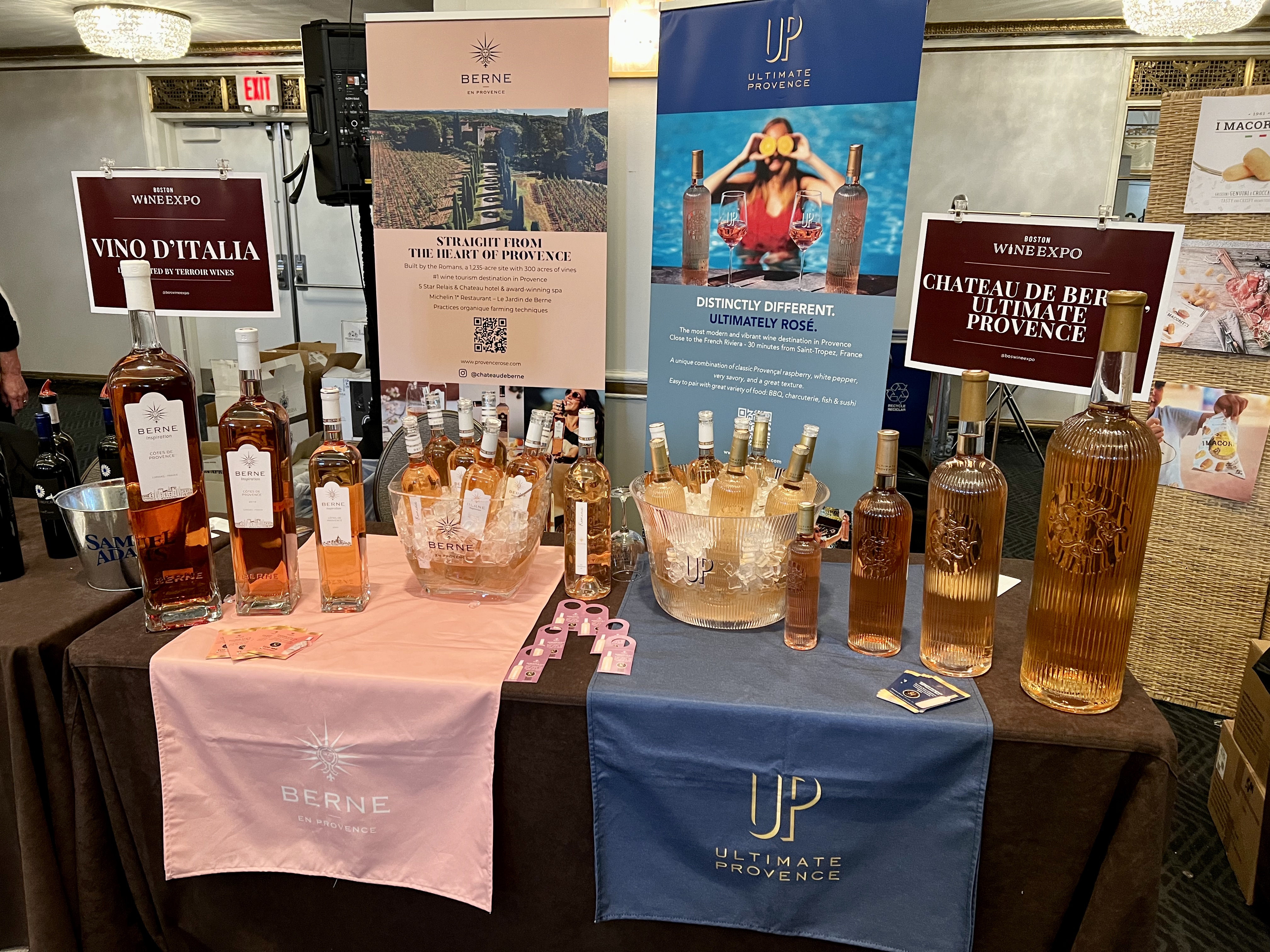
While walking down the aisles of the recent Boston Wine Expo, I stopped to sample some Provence Rosé at a table for Chateau de Berne, which is part of the Provence Rosé Group by MDCV.  

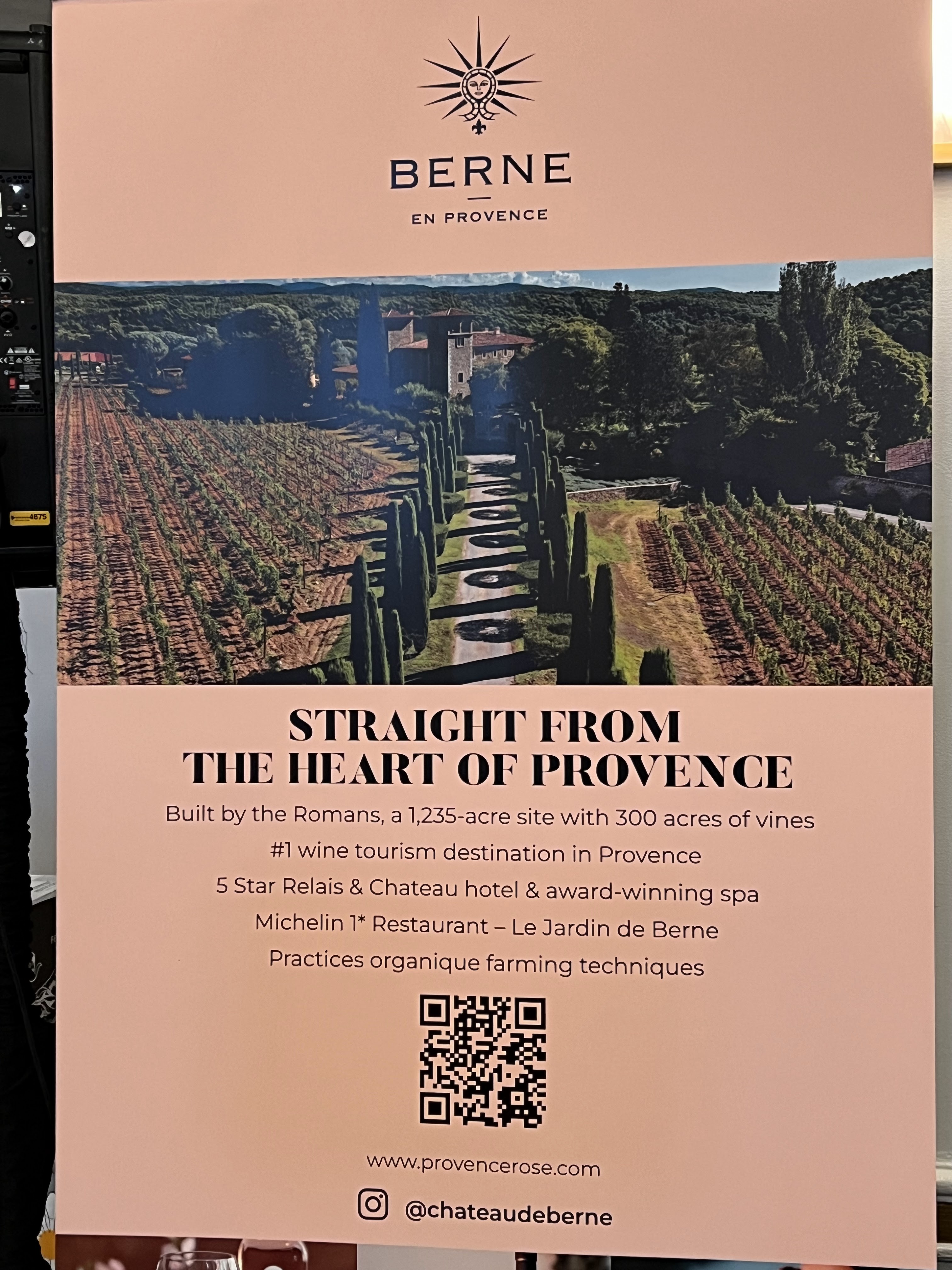
The area which is now occupied by Chateau de Berne was once settled by ancient Romans, who planted vineyards in the area. By the 12th century, Cistercian monks took over the estate and it was eventually donated to Saint Bernard de Clairvaux, who encouraged the monks to cultivate vineyards, and his name inspired the name of the property. 

Today, the estate, located in the Côtes-de-Provence appellation, spans about 1700 acres, with about 1300 being devoted to woodlands and 432 acres devoted to vineyards. They have been certified organic since February 2021, growing about ten different grape varieties, although the dominant grapes are Grenache, Cinsault and Syrah. The property also includes a 5 Star Relais & Chateau hotel, a Michelin star restaurant, a spa, and more.

Most of their vineyards, about 80%, are planted on chalky plateau, at an altitude of 300 meters. "Cool nights, combined with a broad daytime temperature range, allow the grapes to mature at a slower pace, thus enhancing the wine’s freshness and delicate aromas." The limestone of the plateau also provides a minerality aspect to their wines. 

The 2021 Chateau de Berne Romance Rosé (IGP Méditerranée), with a 12.5% ABV is a blend of  Grenache Noir, Cinsault, Syrah, and Merlot. With a bright nose of red fruits, on the palate, the wine is light and fresh, dry and crisp with lush red fruit flavors and a touch of floral elements. It's an easy drinking Rosé, perfect on its own, although it would pair well with food too. At about $16, it's a good value as well. 

The 2022 Chateau de Berne Inspiration Rosé (AOP Côtes-de-Provence), with a 12.5% ABV, is a blend of Grenache Noir, Cinsault, and Syrah. This is a more complex and elegant Rosé, with an interesting melange of red fruits, citrus, floral elements, subtle spice notes and a backbone of minerality. It's also dry, crisp, and fresh, with a lengthy, pleasing finish. Each sip brings different elements to your mouth. Again, this would be delicious on its own, or paired with food. At about $21, this is also a very good value for such a complex and tasty wine. This was my favorite of the three Rosés I tasted. 

The 2022 Chateau de Berne Ultimate Rosé (AOP Côtes-de-Provence), with a 12.5% ABV, is a blend of Grenache Noir, Cinsault, Syrah and Rolle. This is another complex and intriguing Rosé, which is dry, crisp and fuller-bodied, with delicious red fruit, citrus, herbal notes and floral elements. This wine would also be good on its own, although I think it would be even better paired with food. At about $28, it is a bit more of splurge. 

Wednesday, December 22, 2021

2021: Top Ten Wines Over $20

What were some of my favorite wines of the past year?


As 2021 has arrived, it's time to reflect upon the past year, to remember and savor pleasant memories. I've already posted a few of my annual Favorite Lists, including My Favorite Restaurants, My Favorite Food-Related Items, and Top Ten Wines Under $20. It's now time for my list of Top Ten Wines Over $20. 

This list includes wines that not only I enjoyed, but which I also found to be particularly compelling for various reasons. They might be especially delicious, something more unique or just excellent values for the price. They all stand out, for some particular reason, above the other wines that I've tasted this past year. 

This is a purely subjective list, based on my own preferences, and makes no claims about being the "best" wines out there. It is primarily the wines which spoke to me the loudest, even when they were subtle wines. These are all wines that I strongly recommend and which I believe many other wine lovers would also enjoy.

The wines are not listed in any particular order and each choice is linked to my more detailed prior review. All of these value wines are worth your consideration but please also note that the prices are approximations and the actual price may vary in your area. In addition, some of the wines might not be available in your local region, though you might be able to order them from the winery or an online store, dependent on your state's shipping laws. 

************

1) 2019 Ritosa Malvazija Istarska ($22)
This Croatian white wine, from the Istrian region, thoroughly impressed me. Made from 100% Malvazija Istarska, the wine has a 13% ABV, and was very aromatic, with pleasant floral and spice notes. My first sip brought a smile to my face. It was complex and compelling, with a wonderful melange of harmonious flavors. It was fresh and crisp, refreshing and satisfying with a moderately lengthy finish. On the palate, it was fruity (especially peach and pear) and floral, spicy and with a nice minerality. There was so much going on in this wine, and all of it was delicious. I could easily sip this on its own, relaxing outside on a warm summer day, but it would also be a fine accompaniment with seafood, light chicken dishes, and cheese. 

2) 2017 Quinta da Baseira Tinto Bom ($22)
This Portuguese wine is produced from 100% Tinta Nacional, also known as Vinhão or Sousao. The grapes for this wine are trod by foot in steel vats, and aged in stainless steel for about three years. With a 13% ABV, the wine is also unfined, unfiltered, and has no added So2. It is more of a natural wine, intended to show the terroir of the vineyard. On the nose, there were interesting red fruit aromas with a hint of earthiness. It was medium-bodied, with a medium-red color, less dark than expected, and on the palate it was light, crisp and refreshing, with a mild effervescence, and flavors of red and black berries, and an earthy undertone. It possessed an intriguing taste, complex and delicious, with a lengthy and pleasing finish. Simply delicious. Serve slightly chilled, and enjoy on its own or with anything grilled.

3) 2019 Les Vins Pirouettes Eros by Vincent ($25)
An "orange" wine from Alsace! This wine is a blend, of 20 year old grapes from a Biodynamic vineyard, of 40% Pinot Gris, 40% Riesling, and 20% Sylvaner. The grapes are fermented on the skins for about 25 days, and the pink color of the wine comes from the Pinot Gris, which is a pink-colored variety. The wine is also aged on the lees in large foudre for about eight months. On the nose, there's an intriguing aroma of spice, citrus, and apples, although there are hints of even more. And on the palate, there's a compelling and complex melange of flavors, such a joy in the mouth. It is primarily savory, with baking spices, pepper, black tea, and more, combined with a variety of fruits, from citrus to pineapple. It is crisp, dry, well-balanced and with a pleasing, lengthy finish. Each sip brings something a little different to your mouth, and this is a wine you can slowly savor and enjoy. 

4) 2016 Vina Skaramuca Plavac Mali Dingac ($24)
Another Croatian wine, this red is made from 100% Plavac Mali, organically grown, and made with natural yeasts. It is aged for 12 months in large 3000L barrels, aged for another 6 months in the bottle, and has a 14% ABV. and is in a bigger, bolder style. This wine tends more to richer, black fruit flavors, like plum and black cherry, with an ample spicy element, strong tannins, and a touch of earthiness. A lengthy finish, nicely balanced, and quite tasty. This is a wine to pair with hearty dishes, from steak to stews. Or some wild boar. 
I explored a number of Nova Scotian wines this year, and was pleased to find so many tasty wines. This Rosé is a blend of Pinot Meunier, L'Acadie Blanc and Frontenac Noir. The wine was fermented in stainless steel and has only an 11% ABV. The Rosé had a nice pale pink color with a delightful nose of red fruits and a touch of herbal accents. On the palate, it was crisp, dry and clean, with juicy red fruit flavors of strawberry, watermelon and peach, with subtle touches of herbs. It was refreshing and delicious, with a moderately long finish. It was tasty on its own, but would also pair well with a variety of foods. 

6) NV Blomidon Cremant ($28) 
Another Nova Scotian wine, this is from a winery from which I've enjoyed a number of their wines. This Crémant, produced in the Méthode Traditionnelle, is a blend of Seyval Blanc, L'Acadie Blanc, and Chardonnay. This sparkling wine was disgorged in the winter of 2020 and only has an 11% ABV. With such a low ABV, you can easily have a couple glasses without any worry. On the nose, the sparkling wine was aromatic with fresh apple and stone fruit notes. When I peruse the glass, it had plenty of tiny bubbles and a bright golden color. On the palate, it was delicious and delightful, being crisp, dry and creamy. It was refreshing, with flavors of apple and pear, and a touch of minerality. It has a very dry, pleasant and lengthy finish.

7) 2019 Blomidon Estate Baco Noir ($22)
This Nova Scotian red wine is made from 100% Baco Noir, but the winery's website lacks any details of its production process, although it seems like it has seen some aging in American oak and it only has a 12% ABV. The wine has a medium-red color with pleasing aromas of red and black fruit with a touch of spice. On the palate, it was smooth and juicy, with rich black and red fruits, including some cherry and blackberry, complemented by some vanilla and other spices. Mild tannins, good acidity, and a nice finish. A very tasty wine, it had nice character and complexity, and would be excellent on its own or paired with food. 

8) 2019 Bent Ridge Winery Contorto ($23)
And one more Nova Scotian wine! This red wine is produced from 100% Marquette, and unfortunately, details of the production process are not available on the winery's website. I suspect it has received some oak aging and it has a 13.5% ABV. On the nose, there are notes of black fruits and spice, and the wine has a rich, dark red color. On the palate, it has a relatively complex and tasty blend of flavors, including black cherry and black raspberry, with spice notes and a touch of vanilla. It's a bolder wine, yet the tannins are still restrained, and the wine is balanced, with good acidity and a pleasing finish. This is a wine probably best paired with food, and the back label suggests pasta as one possible pairing..

9) 2017 Sarris Vineyards "V is for Vostilidi" ($30) 
What a fascinating and unique Greek wine! I first tasted this wine at Krasi, and loved it so much I had to order a case for home. The is 100% Vostilidi (an indigenous Greek grape), spontaneously fermented and aged for about 11 months in a neutral 2-ton Austrian oak barrel. The vines are organic, although not certified, and the wine has a 13.2% ABV. The color of the wine reminded me more of an orange wine than the usual white wine. On the nose, I found an appealing blend of fruit notes, from apricot to peach, with a tinge of honey. And on my palate, it provided a complex and intriguing melange of flavors, including peach, apricot, vanilla, sweet orange and sesame! I don't recall the last wine that ever brought to mind sesame seeds but I loved that aspect of the wine. Good acidity, some minerality, firm tannins, plenty of umami, and a touch of floral notes. So much going on in each sip and the finish was lengthy and very satisfying. Highly recommended!

10) Multivintage Bruno Paillard Premiere Cuvee Champagne ($60)
The final wine on my list is a splurge-worthy wine, especially for the holidays. This Champagne is the flagship wine for the style of this winery. In general, this Cuvée is a blend of about 25 vintages. The wine is also a blend of about 45% Pinot Noir, 35% Chardonnay, and 22% Pinot Meunier, from a selection of 35 of the 320 crus of Champagne. The wine is aged for three years sur lie, longer than the legal requirement, and then aged for at least another five months after disgorgement. The Première Cuvée has a nice golden color and very tiny bubbles are visible in your glass. The aromas are intriguing, with a fine melange of red berries, orange and grapefruit, and a hint of almond. As I tasted this wine, its elegance, complexity and freshness stood out, pure deliciousness and each sip made me crave more. Dry and crisp, the flavors were complex and tasty, including apple, citrus, almond, a touch of brioche, a streak of minerality, and red fruits, but each sip seemed to bring forth even more flavors. It's the type of Champagne to slowly sip, to revel in the different, intriguing flavors that flit over your palate. The finish is lengthy and satisfying, clean and pure. I loved this Champagne! Its elegance, subtlety and complexity are captivating. 


************

This year, 6 countries/regions made the list with Nova Scotia taking the lead with four spots, followed by Croatia in second place with two spots. The other countries/regions include Portugal, Alsace, Greece, and France, all with one spot each. As for wine types, the list is also broken down into one  Rosé, two Whites, four Reds, two Sparkling, and one skin-contact White. I have other wine recommendations on my blog and you just have to search for them. 

If you have some of your own recommendations for excellent wines you've enjoyed, please add them to the comments.

Tuesday, December 14, 2021

"Multivintage" Bruno Pailiard Première Cuvée Champagne: Pure Elegance

"Frog eyes should not be in your bubbly."
--Bruno Paillard

That's a quote that has remained with me for the last ten years. While I was touring the Champagne region, I visited the small House, Champagne Bruno Pailiard, and listened to the passionate, and outspoken, Bruno Paillard. I wrote about my experiences in Champagne Bruno Pailiard: The Art of Assemblage. In short, Bruno feels that the bubbles in Champagne should be tiny, almost microscopic, and that large bubbles, "frog eyes" have no place in a quality Champagne. Few would dispute that Bruno Paillard produces high quality Champagne. 

Champagne Bruno Pailiard is a small, family-owned Champagne House that was established in 1981, making it 40 years old this year. They currently own about 79 acres of vineyards, almost half of which are Grand Cru. In general, the vineyards are farmed organically and sustainably. They also purchase about 50% of their grapes from a variety of other growers. Bruno sees this as an advantage, because he then gains access to so many different plots and terroirs. This allows him much more versatility and diversity in his Champagne blends, like giving him a vast palette of colors to compose his masterpieces.

As I wrote before, "To Bruno, the blend is the true heart of Champagne, and that assemblage is an artistic process. It is a composition, where different "colors" are used to create a greater "picture." For him, a Champagne label refers more to a person than a place, as it is the person who retains the control over the blend. Thus, a blend is the best way to be loyal to your signature, to express your creativity."

And as Bruno's website states: "A great champagne for Bruno Paillard is – above all – an “assemblage”, blending: of diverse crus, grape varieties and vintages. It is about the constant desire to capture the quintessential finesse and elegance which champagne can bring when it is served with love and care. The Bruno Paillard style is a marriage of elegance and complexity which is manifested as a light and smooth effervescence, a remarkable purity, a true freshness and a silky texture."

I received a media sample of the "Multivintage" Bruno Pailiard Première Cuvée ($60), which is the flagship wine for the Bruno Paillard style. Bruno doesn't like the term "non-vintage," as he believes it's meaningless. He prefers to use the term "multivintage," as it is more indicative of the actuality of the blend, usually a combination of grapes from several different vintages. In general, this Cuvée is a blend of about 25 vintages.

The wine is also a blend of about 45% Pinot Noir, 35% Chardonnay, and 22% Pinot Meunier, from a selection of 35 of the 320 crus of Champagne. The specific selection of crus is kept a secret. The Cuvée is meant to be consistent year to year, even when the harvest isn't the best. In addition, only the first pressing of the grapes is used. The wine is aged for three years sur lie, longer than the legal requirement, and then aged for at least another five months after disgorgement. 

To Bruno, the disgorgement date is an essential element of Champagne production, and in 1983, he was the first Champagne producer to place the disgorgement date on every single bottle of his production.  "By doing this, he tells the consumer about a key moment in the life of a champagne bottle: Disgorgement is like a second birth for the wine." The dosage for this wine is very low, meant to create "a very pure, very authentic champagne." 

The Première Cuvée has a nice golden color and very tiny bubbles are visible in your glass. There's certainly not a single frog eye. The aromas are intriguing, with a fine melange of red berries, orange and grapefruit, and a hint of almond. As I tasted this wine, its elegance, complexity and freshness stood out, pure deliciousness and each sip made me crave more. Dry and crisp, the flavors were complex and tasty, including apple, citrus, almond, a touch of brioche, a streak of minerality, and red fruits, but each sip seemed to bring forth even more flavors. It's the type of Champagne to slowly sip, to revel in the different, intriguing flavors that flit over your palate. The finish is lengthy and satisfying, clean and pure. 

I loved this Champagne! Its elegance, subtlety and complexity were captivating. And it offers so much more than many other Champagnes at a similar price point. It would be great on its own, as an aperitif or celebratory drink, but it would also pair well with a variety of foods. I'd love to drink it with oysters or even lobster. And Champagne and potato chips is always a fun pairing. The Bruno Pailiard Première Cuvée earns my highest recommendation.

Tuesday, November 23, 2021

2020 Bott Frères Rosé d'Alsace: Great For the Holidays

With Thanksgiving this week, many people are thinking about which wines to drink with their turkey dinner. It's important to realize that Rosé is not just a summer wine, especially considering how well it pairs with a wide variety of foods. Rosé works well on your Thanksgiving table, and it will pair well with other holiday dishes during the rest of this year. 

I love the wines of Alsace, from their Crémant d'Alsace to their intriguing White wines. You might not realize that they make some delicious Red wines too. Pinot Noir is the only authorized grape for AOC Red wines, and that applies to their Rosé wines as well. Unfortunately, very little is currently imported into the U.S. although hopefully that will change.  

Within Alsace, Pinot Noir is planted in nearly 11% of their vineyards, and they produce about 105,000 hectoliters of wine with Pinot Noir, which appears to include Crémant d'Alsace, Rosé and Red still wines. Pinot Noir has a lengthy history in the Alsace region, with some claiming it extends back to the ancient Romans. During the 15th and 16th centuries, Alsace Pinot Noir was even more valued than all of their white wines. For unknown reasons, that changed over time so that their wine wines came to dominate.

Within the various terroirs of Alsace, it has been learned that Pinot Noir grows best in their clay and limestone soils, while Pinot Noir grown in more gravel and sandy soils is best suited for use in Crémant d'Alsace and Rosé. In addition, due to climate change, temperatures in Alsace have risen, making it easier to ripen their Pinot Noir. Some of the best areas to grow Pinot Noir are also designated Grand Cru, but only for white wines. Currently, Pinot Noir cannot be designated as Grand Cru though there are efforts to change this and it seems likely that within several years, Grand Cru Pinot Noir will be authorized.

In general, Alsace Pinot Noir tends to present bright red fruit flavors, crisp acidity, and vibrant freshness. Many are intended to be consumed while young though some have the potential for aging. Oak aging is sometimes used, and when it is, it is more of a light touch, allowing the fruit to take center stage. Curiously, their Pinot Noir is usually bottled  in "flutes," those bottles you most commonly see used for Riesling.

The Bott Frères winery was founded in 1835 by Philippe Louis Bott, the son of a brewer and an winegrower. It's primarily located in Ribeauvillé, an old medieval town known for the ruins of three fortified castles. The winery currently has about 50 acres of vineyards, sustainably farmed (and moving towards organic), and produces only about 15,000 cases of wine annually. 

The 2020 Bott Frères Rosé d'Alsace ($20) is made from 100% Pinot Noir, from 20 year old vines in chalky soil, and was aged in stainless steel tanks for about 8-10 months. With a 14% ABV, the wine has a rich pink color and an appealing aroma of fresh red berries and floral notes. On the palate, it's fresh and crisp, with tasty red fruit flavors, especially raspberry and strawberry, with a floral accent, and a nice streak of minerality. Well balanced, complex, and with a lengthy finish, this Rosé is absolutely delicious, perfect on its own or paired with food. This is an excellent holiday wine which will impress your guests.

Tuesday, September 14, 2021

2019 Les Vins Pirouettes Eros By Vincent: An Orange Wine From Alsace

When you look at the tall, slender bottle, the wine appears to be a Rosé, yet it was produced from only white grapes. In fact, it's what is commonly called an "orange" wine, a skin-contact wine, and it's delicious and intriguing. Many excellent wines comes from Alsace, and this is certainly one of them.

Domaine Christian Binner is over 250 years old, having been established in 1770. The estate now owns vineyards in the Kaefferkopf, Schlossberg and Wineck-Schlossberg Grands Crus and other parcels in Ammerschwihr, with most vines averaging 35 years old, and the rest between 60 and 100 years old. It has been sustainable farmed for about 35 years and in 2012, the winery built an eco-friendly winery, whose roof is covered in soil. They produce a wide range of wines, from Crémant d’Alsace to Late-Harvest.

As a related endeavor, Christian Binner established the Les Vins Pirouettes label as a means for small, organic and Biodynamic grape growers, to produce their own wines instead of selling off their grapes. There are currently 14 grape growers in this project, and their first name is always placed on the label. I haven't discovered yet why the label doesn't include their full name. The grape growers are assisted by the enologists Xavier Couturier and Pierre Sanchez,  and collectively produce about 80,000 bottles annually. 

The name Pirouettes was chosen to "symbolize the fun they’re having" as well as  because “these wines are like beautiful artistic figures, the result of certain know-how and mastery. Pirouette is a gesture of freedom, emotion, and joy,”  All of their wines are natural, using spontaneous fermentation, and there is no fining, filtration, or added sulfur. 

The 2019 Les Vins Pirouettes Eros By Vincent (about $25) is a blend, of 20 year old grapes from a Biodynamic vineyard, of 40% Pinot Gris, 40% Riesling, and 20% Sylvaner. The grapes are fermented on the skins for about 25 days, and the pink color of the wine comes from the Pinot Gris, which is a pink-colored variety. The wine is also aged on the lees in large foudre for about eight months. 

On the nose, there's an intriguing aroma of spice, citrus, and apples, although there are hints of even more. And on the palate, there's a compelling and complex melange of flavors, such a joy in the mouth. It is primarily savory, with baking spices, pepper, black tea, and more, combined with a variety of fruits, from citrus to pineapple. It is crisp, dry, well-balanced and with a pleasing, lengthy finish. Each sip brings something a little different to your mouth, and this is a wine you can slowly savor and enjoy. I paired the wine with some quail breasts and it was a very fine pairing. 

This is a wine I'd highly recommend for any adventurous wine lover. 

Tuesday, January 5, 2021

2020: My Favorite Wines

What were some of my favorite wines of the past year?

As 2021 has arrived, it's time to reflect upon the past year, to remember and savor pleasant memories. I've already posted a couple of my annual Favorite Lists, My Favorite Restaurants and My Favorite Food-Related Items, and it's time now to cover my Favorite Wines. As I said before, these Favorite Lists will be different, and smaller, from prior years due to the pandemic. However, there are still items deserving of being highlighted, and I will endeavor to showcase them. 

Usually, I have three lists of my Favorite Wines, divided by price point. This year, I will only have a single list, including wines at all price points. This list includes wines that not only I enjoyed, but which I also found to be particularly compelling for various reasons. They might be especially delicious, something more unique or just excellent values for the price. They all stand out, for some particular reason, above the other wines that I've tasted this past year.

This is a purely subjective list, based on my own preferences, and makes no claims about being the "best" wines out there. It is primarily the wines which spoke to me the loudest, even when they were subtle wines. These are all wines that I strongly recommend and which I believe many other wine lovers would also enjoy.

The wines are not listed in any particular order and each choice is linked to my more detailed prior review. All of these value wines are worth your consideration but please also note that the prices are approximations and the actual price may vary in your area. In addition, some of the wines might not be available in your local region, though you might be able to order them from the winery or an online store, dependent on your state's shipping laws.

Wines Under $20

1) 2016 K7 Plavac Mali ($19)
This wine was a joint effort from 7 wineries in the Komarna region of Croatia. Made from 100% Plavac Mali, it's certified organic, has a 14.5% ABV, and was aged for 24 months in a combination of Croatian, American and French oak barrels. It possessed a medium-red color, slightly translucent, and the initial aromas included black fruit and subtle spice. This wine presented an interesting complex melange of flavors, including blackberry, plum, blueberry, black pepper, hints of vanilla, and a touch of chocolate. It also possessed a lengthy, satisfying finish, pure deliciousness. The tannins were moderate, and it was a wine that's probably best accompanied with food, something hearty, a juicy steak or even just a burger. This wine was a very good value and an excellent introduction to Croatian wines and the Plavac Mali grape. 

2) 2018 Yamhill Valley Vineyards Rosé of Pinot Noir ($16-$18) 
This Oregon wine was fermented in stainless steel, and then aged for three months, 95% in stainless steel and 5% in neutral oak. With a 13.8% ABV, this wine had a rich pink color and a pleasing nose of red fruits. On the palate, it was dry and crisp, with delicious and complex strawberry, watermelon, cherry and mild citrus flavors, and a hint of herbal notes. It was fresh and clean, with a satisfying finish, and would be excellent on its own or paired with food. This would be great with seafood, pizza or even hamburgers. 

3) 2016 Karabunar "Bulgarian Heritage" Dimyat ($12-$15)
An intriguing Bulgarian wine, made with 100% Dimyat, an indigenous grape, and with a 13% ABV. On the nose, there were intriguing spice notes that reminded me a little of Gewurtztraminer. There were also some notes of pear and citrus. On the palate, I was again reminded in part of a Gewurtztraminer, with a nice spice element, along with tasty notes of pear, citrus and toasted nuts. Very crisp and with a moderate richness, it was a pleasant and refreshing wine. At this price, it's an excellent value, over-delivering for this price point.

4) NV Keush Origins Brut ($19.99)
An Armenian Sparkling wine made from two indigenous grapes, 60% Voskehat and 40% Khatouni. It was produced by the Méthode Traditionelle, aged for at least 22 months on the lees, and had a 12% ABV. When you taste this bubbly, it will remind you of Champagne. This was a serious sparkling wine. It was dry, fresh and crisp, with a complex melange of flavors, including peach, pear, citrus, white flowers and a touch of brioche. It had a creamy and rich texture, pure pleasure on the palate. It had a lingering and clean finish and over delivered at this price point.

5) 2019 Oenops Apla Dry Rosé ($14.99)
From Greece, this Rosé is a blend of indigenous grapes, 50% Xinomavro, 30% Limniona, and 20% Mavroudi, all from sustainable vineyards which are 15-45 years old. The grapes were fermented in concrete tanks and the wine wass aged on the lees for about four months before bottling. This Rosé was easy drinking, though it was far from simple, being fairly complex, especially at its low price point. With a 12.8% ABV, this Rosé had a rich pink color and an appealing nose of red fruits and citrus, and a savory hint. On the palate, it was crisp and dry, with delicious flavors of strawberry, cherry and hints of savory, almost a touch of tomato. The finish pleasantly lingered and it was a nicely balanced wine. 

Wines From $20 to $50

1) 2018 Amity Vineyards White Pinot Noir
($25)
Another Oregon wine, this Pinot Noir was lightly pressed, fermented in stainless steel and then aged sur lie for a time. At 13.9% ABV, this wine had a light pink color, almost like a Rosé, and on the nose, there was a blend of white fruit flavors, including tropical notes. Take a sip and you'd be impressed with its complex melange of rich fruit flavors, including melon, pear, pineapple and a hint of cherry. There was so much happening in your glass. Everything was well balanced and it was pure delicious, definitely excellent on its own though it would pair well with food too. Good acidity, a lengthy, pleasing finish, and you'll crave a second, and third, glass. 

2) 2017 Hyland Estates Old Vine Pinot Noir ($45)
Also from Oregon, this Pinot Noir, with a 13.3% ABV, spent about 9 months in French oak. With a medium red color, it possessed an appealing aroma of red fruits and subtle spice notes. On the palate, it was compelling and elegant, complex and silky, with delicious flavors of cherry and raspberry, with a mild spiciness, balanced acidity, well integrated tannins, and a touch of earthiness. The lengthy finish was satisfying and alluring, and beckoned for you to take another sip. 

3) 2018 Wine & Soul Guru Branco (about $35)
From the Douro region of Portugal, this compelling white wine was produced from a field blend, from a 60 year old vineyard, which is approximately 25% Viosinho, 25% Rabigato, 25% Codega do Larinho and 25% Gouveio. The wine was fermented and aged in French barriques for about seven months. With a 12.5% ABV, this wine was fresh, crisp and delicious, with a complex blend of flavors, including peach, grapefruit, mineral notes, and a touch of oak. Medium-bodied, it possessed a pleasing finish and a nice elegance. Would love to pair this wine with seafood, from oysters to cod.

4) 2014 Yamhill Valley Vineyards Pinot Noir Reserve ($40) 
Once again, an Oregon wine hits this list. This Pinot was a select barrel blend, aged for sixteen months in French oak, about 20% new. With a 14.3% ABV, it had a light ruby red color, with an alluring aroma of red fruits and subtle spices. On the palate, it presented a complex melange of flavors, bright cherry, a touch of vanilla, a mild, spicy backbone, and a hint of clove. The finish was lengthy and pleasing, with a bit more spice. Medium-bodied, interesting and delicious. 

5) 2018 Hamilton Russell Pinot Noir ($42)
South Africa can produce excellent Pinot too. The wine was aged for about ten months, in a variety of French oak barrels, and was a pleasant red wine to drink and you can easily have a second, or even third glass over the course of an evening. With a dark red hue, though still partially opaque, the wine had an alluring nose of red fruits and spice, a mild floral note and a hint of earth. On the palate, it was smooth and silky, with an intriguing complex melange of flavors, including strawberry, cherry and plum, mild spice notes (including a peppery aspect), and a subtle, underlying earthiness. Nice acidity, a clean taste, and a lengthy, satisfying finish. Simply delicious.

6) 2019 Greek Wine Cellars Flowers Assyrtiko (about $25)
A Greek white wine, it had a 13% ABV with a pleasing aroma of citrus. From your first sip, you would be entranced by its freshness, crisp acidity, lemon and apple notes, and its mineral backbone. There was an interesting complexity to the wine as well, elevating it above some of the simple Assyrtiko you might find. All of its elements worked harmoniously together and it was simply delicious and refreshing, a great choice for seafood or other light fare. 

7) 2018 Éric Teixer Chat Fou Côtes du Rhône (about $23)
This French Rhône wine was a blend of 85% Grenache and 15% white grapes, including Clairette, Viognier, and Chasselas. The grapes were fermented with native yeasts in concrete tanks, and it then was aged for a year in concrete. The wine was certified organic, unfiltered, unfined, and had a 13% ABV.  The wine was intended to be fresh and light, and it certainly accomplished that objective. It had an alluring fruity nose, with hints of spice. If you took a few moments to ponder over the wine, you would realize it offered some intriguing complexity. It was an easy drinking wine but it was far from simple. Besides the delicious red fruit flavors, cherry and raspberry, there were spice notes as well as a subtle minerality. It was a well balanced wine with a very pleasing finish, excellent acidity.

Wines Over $50

1) 2017 Wine & Soul Pintas (about $90)
The grapes for this Portuguese wine were foot-trodden, and the wine aged for 22 months in French barriques. With a 13.7% ABV, this wine first evidenced a seductive aroma, subtle and complex, drawing you into its beauty. On the palate, there was an intriguing and absolutely delicious melange of complex flavors, such as ripe plum, blackberry, blueberry, mild spice notes, a few floral hints, and a touch of earthiness. Full-bodied and bold, yet elegant, with well-integrated tannins and a delightfully lengthy finish. Well-balanced and compelling, this was a superb wine, certainly evidence that Portugal can make world-class wines. It was an amazing pairing with lamb. This is also a wine that should age well for many years to come, something definitely you should add to your wine cellar. It earns my highest recommendation.

2) 2017 Wine & Soul 10 Year Old Tawny Port ($55)
Also from Wine & Soul, this Port was aged closer to 15 years, spending time in 50+ year old, 630 liter, chestnut barrels. At 19.5% ABV, its nose was compelling, with a subtle sense of sweetness amidst dried fruit and nut notes. On the palate, the Port was more dry, with only a hint of sweetness, and possessed a complex and beguiling flavor profile, with elements of dried fruit, cherry, salted nuts, honey, caramel, earthiness, and more. It drank more like a 20 year-old Port, being well balanced and well integrated, and I could have sat there all evening just sipping this Port. I can easily understand how this Port could convince more people to drink it, especially as it was more dry than sweet. This Port also earns my highest recommendation. 

3) 2014 Dominio Fournier Reserva ($50)
This Spanish wine, made from 100% Tinta del Pais, was fermented in stainless steel and wooden vats, and aged in French oak barrels for at least 18 months. With a 15% ABV, this wine had a dark red, nearly black, color with an intriguing aroma of black fruit, intense spice, and a touch of smokiness. On the palate, it was a powerful wine, yet with restraint, as the tannins weren't overpowering and it possessed a complex and concentrated melange of flavors, including plum, black berry, dark spices, a little earthiness, and more. Well-balanced, a lengthy, satisfying finish, and nice acidity. This was a wine best paired with a juicy steak, or similar hearty dish. 

************

Nine countries/regions made the list this year, and Oregon took the lead with four spots with Portugal a close second with three spots. Greece came in third with two spots, while Croatia, Bulgaria, Armenia, South Africa, France, and Spain all had a single spot. As for wine types, the list is also broken down into two Rosé, four Whites, seven Reds, one Sparkling, and one Fortified. I have other wine recommendations on my blog and you just have to search for them. 

If you have some of your own recommendations for excellent wines you've enjoyed, please add them to the comments.

Monday, December 7, 2020

2018 Éric Teixer Chat Fou Côtes du Rhône: Crazy For This Cat

Sometimes your first impression of a wine, once you taste that first sip, is that it is pure delicious. You don't think about the wine but instead savor its taste. You crave more of it, each sip continuing to bring pleasure. It can easily be enjoyed on its own or with food, from pizza to burgers. You want to share it with friends, to allow them to share the compelling taste of this wine. 

Recently, that is exactly how I felt about the 2018 Éric Teixer Chat Fou Côtes du Rhône (about $23).

A couple weeks ago, I was at the Market at Frank restaurant, and my good friend Adam Japko highly recommended this wine so I bought a couple bottles. I then opened a bottle on the day after Thanksgiving, enjoying it with some leftover turkey dinner. It was absolutely delicious, but there was more to the wine than that. 

The producer, Éric Texier, is a former nuclear engineer from Bordeaux whose passion for wine changed the course of his life. In 1995, he moved to the southern Beaujolais and started learning how to make wine. Eventually, he purchased small parcels of land in the northern Rhône Valley, in Brézème and St. Julien-en-St.-Alban. His vineyards are now certified organic, and he also uses some Biodynamic practices. He is a minimalist wine maker, but is still willing to experiment. Éric has become one of the most compelling producers in the northern Rhône, and after enjoying the Chat Fou, I need to seek out more Texier wines. 

The 2018 Éric Teixer Chat Fou Côtes du Rhône is a blend of 85% Grenache and 15% white grapes, including Clairette, Viognier, and Chasselas. The grapes come from the granite-soiled St.Julien-en-St.Alban vineyard. The grapes are fermented with native yeasts in concrete tanks, and it is then aged for a year in concrete. The wine is certified organic, unfiltered, unfined, and has a 13% ABV. In French, "Chat Fou" means "crazy cat." 

The wine is intended to be fresh and light, and it certainly accomplishes that objective. It has an alluring fruity nose, with hints of spice. On the palate, you first realize that it is delicious and you're quick to take another taste. However, if you take a few moments to ponder over the wine, you realize it offers some intriguing complexity as well. It's an easy drinking wine but it is far from simple. Besides the delicious red fruit flavors, cherry and raspberry, there are spice notes as well as a subtle minerality. It is a well balanced wine with a very pleasing finish, excellent acidity, and it wasn't long before the bottle was empty.

It went well with Thanksgiving leftovers, but is versatile enough to pair well with many different dishes, from pizza to pasta, burgers to stews. Or just sip it on its own, reveling in its delicious taste. Highly recommended!

Wednesday, December 18, 2019

2019: Top Wines Over $50

What were some of my favorite wines of the past year?

Welcome to my third Top Wines List. I've already posted my Top Ten Wines Under $20 and Top Ten Wines Over $20 (But Under $50). It is now time for my Top Wines Over $50. This isn't a Top Ten list as there aren't always sufficient wines at this price point that I've tasted and deemed worthy for inclusion. Like the prior lists, this list includes wines that not only I enjoyed, but which I also found to be particularly compelling for various reasons. They might be especially delicious, something more unique or just excellent values for the price. They all stand out, for some particular reason, above the other wines at this price point that I have tasted this past year.

This is a purely subjective list, based on my own preferences, and makes no claims about being the "best" wines out there. It is primarily the wines which spoke to me the loudest, even when they were subtle wines. These are all wines that I highly recommend and which I believe many other wine lovers will also enjoy.

The wines are not listed in any particular order and each choice is linked to my more detailed prior review. All of these value wines are worth your consideration but please also note that the prices are approximations and the actual price may vary in your area. In addition, some of the wines might not be available in your local area, though you might be able to order them from the winery or an online store, dependent on your state's shipping laws.

1) 2014 Shirvington Cabernet Sauvignon ($58.99)
Made from 100% Cabernet Sauvignon, and with a 13% ABV, this Australian wine was compelling. With a dark red, almost plummy color, the wine had an appealing nose of red fruits with subtle spice notes. On the palate, there was an initial taste of bright red fruits, cherry and raspberry, and on the finish it transformed so there were more black fruit, plum and black cherry, flavors. Throughout the complex palate, there were subtle spice notes, restrained tannins, and a hint of sweetness. It was a more elegant wine, with a lengthy, satisfying finish, and it was a delightful companion to steak.

2) 2014 Podere Il Carnasciale Caberlot (about $275/magnum)
This unique wine is made from Caberlot, a natural crossing of Cabernet Franc and Merlot, using only their best and oldest grapes. The wine is unfiltered, has a 13.5% ABV, and is bottled only in magnum. It was a more complex wine, with silky tannins, vibrant plum and black raspberry flavors, and a spicy backbone. Each sip delivered an intriguing taste, which tantalized the palate with a harmonious melange of flavors. The lengthy finish was satisfying and the acidity was spot-on. It would benefit from food pairing, maybe wild boar or lamb.

3) 2017 Antiquum Passiflora Pinot Noir ($58)
This Oregon Pinot Noir, using high altitude grapes, is a superb wine, fresh and vibrant. It also possesses a light red color, an alluring aroma, and a complex melange of flavors, including plum, black cherry, and almost tropical fruit notes. There are also earthy notes, accompanied by chocolate and dark spices, with a very lengthy finish you didn't want to end. Some a compelling Pinot.

4) 2016 Troon Vineyard Cuvée Pyrénées ($65)
Also from Oregon, this wine is a blend of 62% Tannat & 38% Malbec, has a 13.5% ABV, and is produced with native yeast, no new oak, and spends some time in concrete. This was a fascinating and impressive wine, with a rich, almost purplish color, and a nose of black fruits and spice. On the palate, there is plenty of intriguing complexity, each sip delivering something different to your palate. Ripe plum, black raspberry, hints of cherry, chocolate, dark spices, rich acidity, and more. The tannins are well integrated and the finish is lengthy and satisfying. A well-balanced wine, it brings hedonistic pleasure to your palate, and would be a great accompaniment to steak, wild boar, or other hearty dishes.

5) NV Krug Rosé (about $300)
This Rosé is a blend of 51% Pinot Noir, 17% Chardonnay, and 32% Pinot Meunier. The blend also contains 22 wines, 5 vintages (2005-2010), 47% Reserve wines, and 9% macerated Pinot Noir. Elegant, complex, and subtle, it seduces your palate with its compelling melange of flavors, from red fruits to citrus. It is delicate and fresh, with crisp acidity and pure deliciousness. Each sip tantalizes and satisfies, and will make you yearn for another sip. While it might not possess the depth of the other two Champagnes, it still pleases on many levels. This is a Champagne of romance, a bottle to share with your significant other for celebrations, or simply to make any night even more special.

6) 2016 Halter Ranch Ancestor ($80)
A Bordeaux style blend, from Paso Robles, California, this wine, at 14.6% ABV, is composed of 70% Cabernet Sauvignon, 19% Petite Verdot, and 11% Malbec. The aromas of this wine were compelling, alluring notes of black fruits and dark spices, which meshed so well together, almost like the smell of a freshly baked fruit pie. On the palate, the wine was powerful yet elegant, with well-integrated tannins and a silky mouthfeel. It possessed a complex melange of flavors, with rich blackberry, black cherry and blueberry, mixed with dark spices, vanilla, and some mineral notes. It was rich and delicious, a hedonistic wine which is sure to please. You don't want its lingering finish to ever end. Paired with a juicy steak, this is a fantastic pairing, and it certainly would do well with many hearty dishes.

Summary

This year, there were five countries and regions on this list, with only Oregon occupying two spots, the others being Australia, California, France, and Italy. Of these six wines, they also consist of one Sparkling Wine and 5 Red Wines. Not all expensive wines are worth their high price but these wines well worth the splurge. These are the type of wines that words often cannot do justice. These are wines to experience and savor, not to dissect and analyze. These wines should be shared with others, with family and friends, to share the experience. With the holidays near, why not splurge and buy one of these wines.

If you have some of your own recommendations for unique and compelling wines over $50, please add them to the comments.

Tuesday, December 17, 2019

2019: Top Ten Wines Over $20 (But Under $50)

What were some of my favorite wines of the past year?

Welcome to my second Top Ten Wine List. Yesterday, I posted my Top Ten Wines Under $20, which I hope you enjoyed and found useful. Now it is time for my Top Ten Wines Over $20, though these wines also cost less than $50.

Like the prior list, this list includes wines that not only I enjoyed, but which I also found to be particularly compelling for various reasons. They might be especially delicious, something more unique or just excellent values for the price. They all stood out, for some particular reason, above the other wines at this price point that I have tasted this past year.

This is a purely subjective list, based on my own preferences, and makes no claims about being the "best" wines out there. It is primarily the wines which spoke to me the loudest, even when they were subtle wines. These are all wines that I highly recommend and which I believe many other wine lovers will also enjoy.

The wines are not listed in any particular order and each choice is linked to my more detailed prior review. All of these wines are worth your consideration but please also note that the prices are approximations and the actual price may vary in your area. In addition, some of the wines might not be available in your local region, though you might be able to order them from the winery or an online store, dependent on your state's shipping laws.

1) 2004 Shavnabada Mtsvane ($39.99)
This is an amazing Georgian wine, quite unique and absolutely delicious. It is made from 100% Kakhuri Mtsvane, where the grapes were foot trodden and then it was macerated in qvevri for about five months, before aging in the qvevri for another 11 years! The wine has a light mahogany color, with an intriguing nose of nuts and savory spices. On the palate, it is a complex melange of savory notes, with basically no fruit elements. I was enthralled with its flavors, hints of salted nuts, smoke, as well as savory spices and herbs. In addition, the taste is very clean and elegant, a feeling of freshness, and you might not even believe it has been aging for 11 years. Phenomenal.

2) Gonzalez Byass La Copa Vermouth Extra Seco ($21.99)
You almost never see Vermouth on other top ten wine lists but that needs to change, especially with the surge of so many excellent artisan Vermouths. And this isn't the first year I've had Vermouths on my Top Ten lists. This La Copa Extra Seco, a Spanish Vermouth, has a 17% ABV and was produced with numerous botanicals, including wormwood, savory, clove, and cinnamon. In addition, some red fruits were added "to achieve a long and persistent balsamic aftertaste." All you have to do is to smell this vermouth and it will remind you of a Fino Sherry. On the palate, it is bone dry, like a good Fino, with a compelling blend of flavors, including citrus and peach, herbal notes, and a hint of bitter. It is fresh and elegant, with a pleasant mouthfeel and a long, pleasing finish. It would be easy to drink this on its own, simply slightly chilled.

3) T.W. Hollister Oso de Oro Dry Vermouth ($37)
Another excellent Vermouth, the Oso de Oro, made in California, with a 16% ABV, begins with a base of "quality white wine" and is macerated with a blend of 12 botanicals that include orange peel, wormwood, chamomile, rosehip, and hyssop. It was dry and light, with an intriguing melange of herbs, bright fruit, and a touch of bitterness. Nice acidity, a lengthy finish, and such a pleasing taste on the palate. It went down so easy. You can enjoy this Vermouth on its own, though I loved it mixed with some club soda and ice. It would also work well in a cocktail though I'd suggest making it the star of a cocktail rather than as a minor ingredient.

4) 2016 Hudson-Chatham "Block 3 North Creek Vineyard" Baco Noir ($24.95)
Produced in the Hudson Valley of New York, this Baco Noir wine is quite compelling. At only 12% ABV, it is easier to drink multiple glasses, and you'll want to do so with this wine. With a light red color, this wine possesses an appealing fruity nose with subtle hints of vanilla and spice. On the palate, it is smooth, delicious and easy drinking, but this isn't a simple wine but rather one with some interesting complexity. It also possessed bright cherry and raspberry flavors, subtle spice notes, a touch of vanilla, and excellent acidity. This is a versatile food wine, great for pizza to burgers, salmon to roast pork.

5) 2015 Gitana Winery Lupi Reserve ($27.99)
I loved the label of this Moldovan wine, with its wolf paw print, as "Lupi" means "wolf," and it's named after a pack of wolves that wander through the vineyard. This wine is a blend of Cabernet Sauvignon, Merlot and Saperavi, which was aged for two years in big, used oak barrels and then for another year in new barrique. This is a complex and delicious wine, with plenty of rich, black fruit flavors, mild spices, some vanilla notes, and hints of chocolate. It is full bodied and powerful, yet with well-integrated tannins, and paired beautifully with lamb.

6) 2017 Gilbert Picq Chablis ($24.99)
At a superb dinner at Mooncusser Fish House in Boston, this was one of the wines paired with our multi-course seafood dinner. It was an absolutely delicious Chardonnay, from the Burgundy region of France, with complex notes of white flowers, citrus, and minerality with a hint of briny salt. It went great with a halibut crudo and I would love to try this wine with oysters too. This is the style of Chardonnay I love the best.

7) NV Domaine Mittnacht-Freres Crémant d'Alsace Extra Brut ($22.99)
Crémant d'Alsace has a special place in my heart and I loved this example. The Crémant was produced from an intriguing blend of 60% Pinot Auxerrois, 10% Pinot Blanc, 10% Riesling, 10% Pinot Gris, and 10% Pinot Noir, all from 25+ year old vines. The wine, with a 12% ABV, was aged on the less for about 18 months. With a light golden color, and plenty of tiny bubbles, this Crémant was bone dry, with high acidity, and intriguing subtle tastes of green apple and peaches, and an underlying steely minerality. Elegant and delicious, this would be a great pairing with oysters or fried foods, as well as even a simple bag of potato chips.

8) 2017 Antiquum Daisy Pinot Gris ($24.99)
This Oregon wine, from a farm that practices "grazing-based viticulture," is named in honor of the owner's daughter, is intended to be an everyday wine. It is easy drinking and delicious, with fresh flavors of citrus, pear, and lime, bright acidity, and an underlying backbone of minerality. An excellent summer wine, with plenty of complexity at this price point, this would also be a nice pairing with a variety of seafood.

9) 2015 Henry's Drive "H" Syrah ($27.99)
I enjoyed a few delicious Australian wines this past year and loved this wine, made from 100% Syrah and with a 14.1% ABV. I found this wine to have a rich, red color and an appealing nose of blueberries and floral notes, with just a hint of spice. On the palate, there was an initial bust of bright fruit, cherry, raspberry and blueberries though it wasn't jammy in the least. As the taste progressed, there was an undertone of spice notes, especially on the finish. The tannins were well-integrated and the wine presented as silky and elegant, with a fairly lengthy and satisfying finish.

10) 2015 Pombal do Vesuvio ($27.99)
This Portuguese wine is a blend of 50% Touriga Nacional, 45% Touriga Franca, and 5% Tinto Amarela. At only 13.5% ABV, the wine had a rich, dark red color with a pleasing nose of red fruits and floral notes, a touch of violets. On the complex palate, the red and black fruit flavors were prominent, accented by some dusty spices, bright acidity, well-integrated tannins, and some underlying minerality. The finish was long and satisfying, and there was a mild earthy touch as well. Definitely an excellent food wine, with everything from pizza to burgers, steak to pasta with a hearty ragu.

Summary

Nine wine countries and regions made the list this year, one more than last year. France ekes out first place, with two wines on the list. The rest of the list is occupied by Australia, California, New York, Oregon, Georgia, Moldova, Spain, and Portugal. The list is also broken down into one Sparkling wine, two Aromatized wines, one Amber wine, two White wines and four Red wines.

I have plenty of other recommendations for wines at this price point on my blog. There are top notch wines from countries all over the world, made from an incredibly diverse selection of grapes and you can still find plenty of values too. My advice is that you seek out wines outside of your comfort zone. Explore the multitude of diversity in the wonderful world of wine. Taste and try anything new, unique or potentially interesting. I am sure your search will lead to new favorites.

If you have some of your own recommendations for wines that are over $20 but under $50, please add them to the comments.

Monday, December 16, 2019

2019: Top Ten Wines Under $20

What were some of my favorite wines of the past year?

As 2020 approaches, it's time once again to reflect upon the past year, to remember and savor many pleasant memories. As 2019 winds down, I'll be posting my annual series of Favorite Lists over the next few weeks, covering food, wine, spirits and other drinks. These lists should provide a comprehensive summary of my favorites from this past year, allowing my readers to more readily locate such gems, the best of my recommendations.

My first Favorites List of 2019 is my Top Ten Wines Under $20. For the previous 11 years, this list has included only wines Under $15, but over time, wine prices have obviously risen and it has been more difficult to find compelling wines under this price point. I've finally decided to raise the price point of this Favorites list, although these wines still remain excellent values. You can still find some compelling wines under $15, but it gets harder each year.

This list includes wines that not only I enjoyed, but which I also found to be particularly compelling for various reasons. They might be especially delicious, something more unique or just excellent values for the price. They all stand out, for some particular reason, above the other wines at this price point that I have tasted this past year.

This is a purely subjective list, based on my own preferences, and makes no claims about being the "best" wines out there. It is primarily the wines which spoke to me the loudest, even when they were subtle wines. These are all wines that I strongly recommend and which I believe many other wine lovers would also enjoy.

The wines are not listed in any particular order and each choice is linked to my more detailed prior review. All of these value wines are worth your consideration but please also note that the prices are approximations and the actual price may vary in your area. In addition, some of the wines might not be available in your local region, though you might be able to order them from the winery or an online store, dependent on your state's shipping laws.

1) 2016 Dow Vale do Bomfim ($12.99)
This wine is a blend of 30% Touriga Franca, 20% Touriga Nacional and 50% Field Blend of indigenous grapes. With a dark red color, it possesses an appealing fruity aroma with floral accents. On the palate, there is a tasty melange of red and black fruit (especially cherry and plum), peppery spice with some licorice notes. Mild tannins, a moderately long finish, and decent complexity for this price point. This is an excellent example of the great values you can still find in Portugal.

2) 2017 Herdade do Rocim Amphora Vinho Tinto ($17.99)
A blend of indigenous Portuguese grapes including 50% Moreto, 30% Tinta Grossa, 15% Trincadeira, and 5% Aragonez. The vineyards are organic and the wine was fermented in a talha (amphora), without any temperature control and using indigenous yeasts. At only 12% ABV, the wine has a deep red color with an interesting nose of earth and red fruits, with a mild floral note. On the palate, it was fresh, with deep and complex flavors of plum, black cherry, and blackberry, an earthy backbone, and a mild tomato accent. The tannins were well integrated, the acidity was good, and the finish was fairly long. And at its price, it is a good value for the quality, complexity and taste of this wine.

3) 2017 Chateau Mercian Yamanashi Koshu ($16.99)
You probably can't buy this wine in the Boston area, but there is a single restaurant in Massachusetts, Kamakura, that carries it, and this is where I tasted it. The wine is from Japan, made from the intriguing Koshu grape. This was an excellent summer wine, with plenty of acidity, bright citrus and peach notes, a streak of mineralogy, and a pleasing and fairly lengthy finish. There was a mild richness to the wine as well as a touch of salinity. This would pair great with seafood, including raw oysters.

4) Karavitakis Little Prince Red ($12.99)
This is another wine which I first tasted at a local Greek restaurant, the new location of Gre.Co in the Seaport. They only have two wines, a white and a red, both from the Karavitakis winery. This red wine is a blend of 65% Kotsifali and 35% Mandilari, both indigenous Greek grapes. The wine is smooth and easy drinking, but there is still depth to this wine, with pleasant black fruit flavors, including plum and black cherry. There is a freshness to this wine as well, and it pairs very well with a lamb gyro.

5) NV Cricova Crisecco Vin Spumant Alb Brut ($11.99)
This Sparkling Wine, from Moldova, is a blend of 90% Fetească Albă (an indigenous grape) and 10% Muscat, and is produced by the Charmat method (like most Italian Prosecco). I enjoyed it at a wine dinner at the Moldova Restaurant in Newton. At 12.5% ABV, this bubbly is aromatic, with a distinctive Muscat nose enhanced by some citrus notes. On the palate, it is dry, crisp and tasty, with flavors of apple, pear and subtle citrus. A very pleasant and easy-drinking, and at this price point, an excellent value as well.

6) NV Mirco Mariotti "Set e Mez" Rosato ($19.99)
I tasted this Italian Sparkling wine, from the Emilia-Romagna region of Northern Italy, at BISq, pairing it with their Fried Chicken. The wine is produced from the indigenous Fortana grape, made by the méthode ancestrale, with native yeasts. It was delicious, dry and complex, with pleasing red fruit flavors and a touch of earthiness. A nice depth of flavor and it worked great with the Fried Chicken.

7) 2015 3 Rings Shiraz ($19.99)
This Australian wine, made of 100% Shiraz, possessed a dark purple color and a nose of black fruits enhanced by spice notes. On the palate, it was a full bodied and muscular wine, with deep and complex flavors of plum, black pepper and raspberry, with a vein of pepper and other bold spices. However, it wasn't a jammy fruit bomb, and the alcohol was well balanced. The finish was fairly lengthy, the tannins bold but not overwhelming, and it has a spicy kick. This is a wine of power, but it isn't overpowering. The complex taste will please and with a juicy steak, the wine shines even greater.

8) 2017 Laurent Cazottes Champetre Blanc ($17.99)
On their wine list, Forge & Vine in Groton, has some interesting natural wines, including this one from the Gaillac region of south western France. It is produced from 100% Mauzac Blanc, a grape that is indigenous to this region. The wine is fermented in stainless steel with native yeasts, aged in tank on its fine lees, and isn't fined or filtered. The wine is also certified organic and Biodynamic. With a 12% ABV, this was an impressive white wine, one would like to enjoy all summer long. It was crisp and light, fresh and clean, with delicious citrus, especially lemon and pear notes. Excellent acidity, a lengthy finish, and a few floral hints. Pure pleasure and it would be a great pairing with seafood too.

9) 2018 Westmount Pinot Noir Rosé ($19.99)
From Oregon, where Pinot reigns king, this Rosé certainly was impressive. With a 12.9% ABV, it possessed a medium pink color and an alluring nose of fresh red fruits with a hint of tropical fruit. On the palate, it was dry, crisp and fresh, with bright strawberry and watermelon, and subtle hints of more tropical fruits and citrus. A tasty, refreshing and well-balanced wine, it was excellent on its own though it would also be very food friendly.

10) Bodegas Williams & Humbert Canasta Cream Sherry ($19.99)
Made from a blend of Oloroso and PX, this Spanish Sherry had a rich, brown color, and an alluring nutty aroma, enhanced with dried fruit notes and a little brown sugar. It has an excellent complexity, with a silky, creamy body and only a mild sweetness. The Oloroso was the primary star of this sherry, with a minor, but important, supporting role from the PX. The melange of flavors intrigued my palate, with enticing notes of nuts and caramel, a touch of raisins and dried figs. The finish was persistent and satisfying, prolonging the pure enjoyment of the taste. A killer value in a dessert wine.

Eight countries/regions made the list this year, more than the five from last year. Portugal took the lead with two spots on the list (the same as last year). The other countries/regions on the list included Japan, Greek, Moldova, Italy, Australia, France, Spain, and Oregon. There is plenty of diversity on this list, and it is also the first time that Japan has appeared on these lists. As for wine types, the list is also broken down into two Rosé, two Whites, four Reds, one Sparkling, and one Fortified.

One interesting trend this year is that half of the wines on this list were tasted at restaurants. Obviously their price at a restaurant will be two to four times the usual retail price, but most of these wines can also be found at your local wine shop, or they will be able to order them from you. Restaurants with good wine programs can present delicious and intriguing wines, and you simply have to be adventurous to find those wines. Ask the sommelier for some recommendations and be willing to be a vinous explorer.

I have other recommendations for wines under $20 on my blog and you just have to search for them. Even if some wine prices are rising, you can still find value wines all over the world, in every region, though some regions provide a greater range and diversity of value wines. It is important to remember that though wine stores sell plenty of wines in this price range, not all of them are of equal value. Wines in this price range do not have to be one-dimensional wines that all taste the same.

You can find wines of character and complexity, though you might need to spend a little more time seeking them out. Wine blogs can help you in that regard, pointing out wines that you might not otherwise know about. Tasting the wines before you buy them is another way to find such values. Or simply ask your trusted wine store staff for advice and suggestions. For more advice on finding value wines, please check out my article on the subject.

If you have some of your own recommendations for excellent wines under $20, please add them to the comments.

Wednesday, December 11, 2019

Tussock Jumper Wines: Tasty Value Wines

Tussock Jumper Wines. A portfolio of wines with animals, wearing red jumpers, on the labels.

As far back as 2008, I wrote about how having animals on wine labels often increases sales, and there were studies explaining the reasons for such. Working at a wine store, I regularly hear customers tell me how they choose a wine because they simply like the label. So why not take advantage by adding cute animals to your label? However, it raises the question, is this merely a gimmick for Tussock Jumper?

According to their website: "All the animals wearing red jumpers on our wines isn’t just a gimmick or a clever branding idea to stand out on the crowded shelves of your local store. It’s more than that. The jumper is a seal of authenticity which is your guarantee that everything has been done to provide you with the finest quality, best tasting wine." The key then is sampling the wine, to assess its taste and quality, and determine whether it is merely a gimmick or not. I recently received several media samples from Tussock and did my own taste testing.

Tussock Jumper Wines was founded by a group of people "with over three decades in the wine business," with an objective of creating "a way for wine lovers to discover the world of wine, all under one label, and at approachable, budget friendly prices." Their wines are sourced from 11 different wine regions, including California, Spain, South Africa, Italy, Argentina, Australia, France, Portugal, Chile, Germany, and New Zealand. They source the grapes for their wines from multiple small farms and vineyards, bottling the wine near the source, to help the local communities.

Their first wine was a Sauvignon Blanc from New Zealand, which seems to be the origin of part of their name as well." As their website states, "tussock" is "a tuft-like grass that grows in meadowlands all around the world, but each species is unique to its region. It’s also a nod to our commitment to preserving nature, and sustainable winemaking." Currently, I'm reading a series of novel by a New Zealand, and the term "tussock" is used several times in those books.

Currently, in the U.S. market, Tussock Jumper has 24 wines available, generally priced at under $15 each. These are value wines, everyday drinking wines, but how do they compare to similarly priced wines? Actually, they do quite well. The four wines I sampled were tasty and pleasant, delivering at their price point, and their quality was indicative that they weren't just gimmick wines. You might enjoy the cute animal on the label, but you'll probably also enjoy the wine inside the bottle. Tussock Jumper Wines earn my recommendation.

The 2017 Tussock Jumper Chenin Blanc ($12), from South Africa, was a pleasing white wine, at 13.5% ABV, with crisp acidity, tasty pear and pineapple flavors, an underlying minerality, and a satisfying finish. Lush and delicious! This wine can be enjoyed on its own or paired with food, such as a chicken alfredo, risotto or even lobster.

The 2013 Tussock Jumper Touriga Nacional-Aragonez ($12), from the Alentejo region of Portugal, is a blend of 25% Touriga Nacional & 75% Aragonez, with a 13.5% ABV. About 50% of the wine spent 6 months in French and American oak. This light bodied red wine had lush red fruit flavors, with vanilla and spice notes, and a hint of chocolate on the finish. Portugal usually delivers well at these price points and this wine is no exception.

The 2017 Tussock Jumper Organic Malbec ($14/750ml), from Argentina, partially spent about 3 months in American and French oak. At 13% ABV, this was a bolder wine than many other similarly priced Malbecs, yet the tannins were well integrated and it drank smooth and rich. Lush black fruit flavors, hints of chocolate, and dark spices. This is definitely a wine for a good steak, or a hamburger from the grill.

The 2017 Tussock Jumper Pinot Noir ($13/750ml), from France, at 12% ABV, is also a bolder red wine, with more black cherry and plum notes, vanilla, dark spices, and a touch of almost sweet fruit. This isn't the light bodied Pinot that some might desire, but more a pairing for beef and rich dishes.

These wines are also sold in Single Serving sizes, pictured above, with their own plastic cup, for $3.99 each.

Have you tasted any of the Tussock Jumper wines?