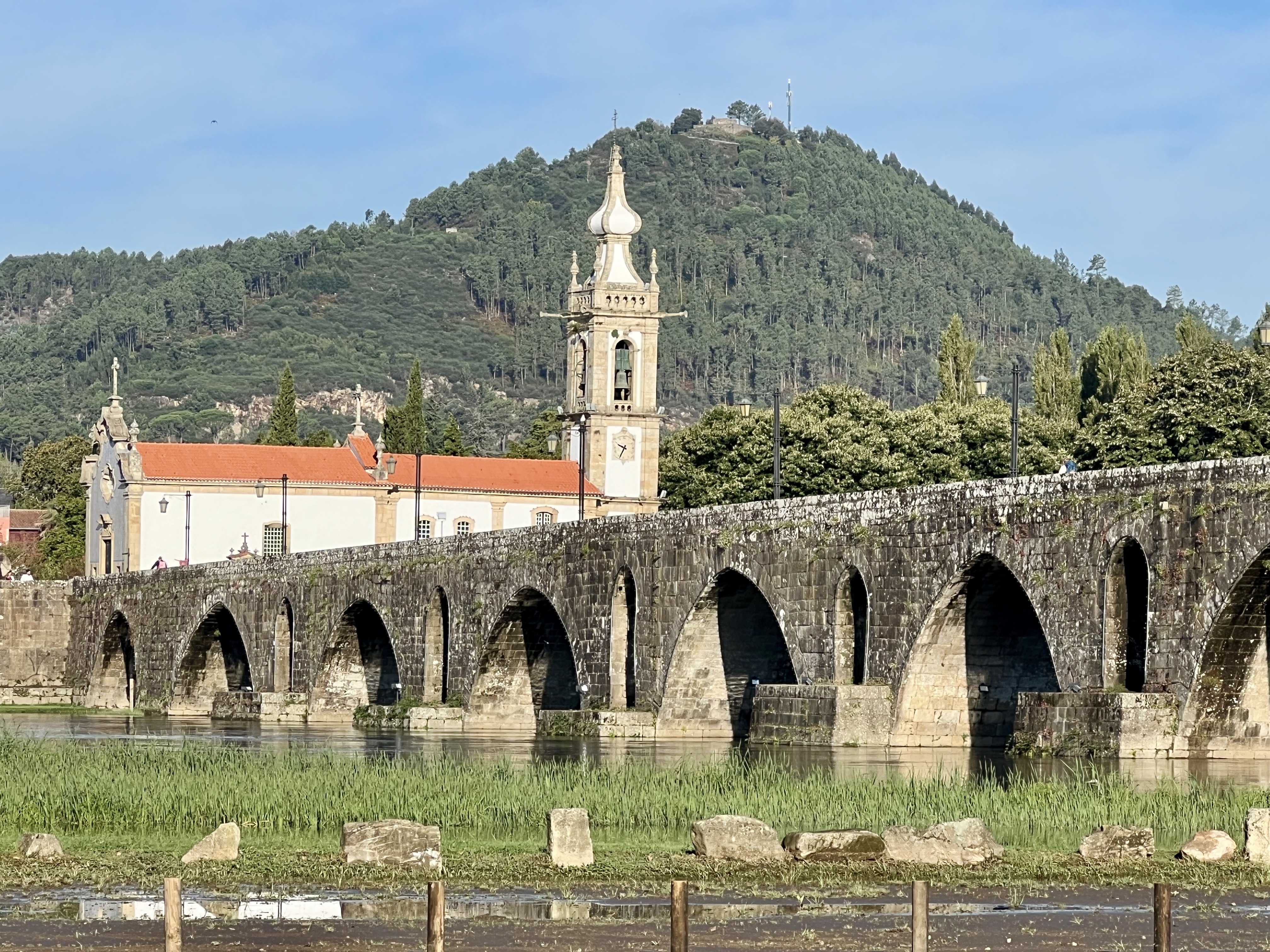
After visiting Ponte de Lima, I got the opportunity to visit the Quinta do Ameal winery, guided by our host Hugo. We saw some of their vineyards, checked out their newest winery, and tasted more of their portfolio.
Quinta do Ameal, located next to the Lima River, occupies about 75-acres, about 35 of which are planted with the Loureiro grape. Of the various subregions of the DOC, they are generally differentiated by their temperature and rainfall amounts. The Lima subregion has two main influences, the Atlantic (about 30 km from the ocean), and Continental, and has lower temperatures and higher rainfalls than some other subregions. There is also a large gap in the day and night temperatures, and the Lima River helps to control humidity.
The soil is primarily granitic, and is richer in clay than in other subregions. The winery is currently conducting extensive soil studies to determine how the grapes can best be grown. Zé Luis, their previous winemaker, once stated that the Lima subregion has the "best natural conditions for white wine in the Vinho Verde DOC." Quinta do Ameal was originally planted with only Loureiro as the winemaker wanted to make more serious Vinho Verde, which would have an aging potential of 15-20 years. Likely due to climate change, the average ABV level in their wines has risen over the years from 8% to about 12%.
The Loureiro grape is named after the louro, the Portuguese word for laurel, as the aroma of the grape is supposed to be suggestive of the laurel. The grape originated in the Lima River valley, so it was only natural that Quinta do Ameal chose to concentrate on this grape. Zé Luis loved the grape for its “tense, vibrant acidity, and incredible aromatic and aging potential.”
Initially, Esporão appointed Zé Luis as the lead winemaker for Quinta do Ameal, although currently the winemaker and agricultural manager is now Lourenço Charters (who also occupies those same positions at Quinta dos Murças). There are also now two wineries on the property.
 One of the first sights we saw while exploring the vineyards was a bamboo forest, which I didn't expect to see. About 30 years ago, the bamboo had been planted by the prior owner, Pedro Araújo. Currently, some of the bamboo was used to make a stable for their horse, Falco, who helps to keep their grass levels low.
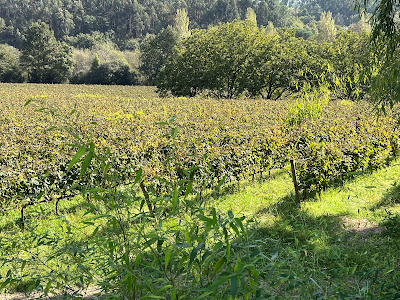
 Their vineyards are divided into various named sections, such as the Core Vineyards, which is their largest and youngest plot, only three years old. There's also the Cowboy Vineyard, River Vineyard (located close to the Lima River), Roundabout Vineyard and Mount Vineyard. In 2014, they had to replant Cowboy Vineyard because of a destructive beetle disease. The vineyards are organic, although they haven't been certified as of yet. The 2023 harvest, which they collected during September, was a good harvest, with a larger number of grapes than usual.
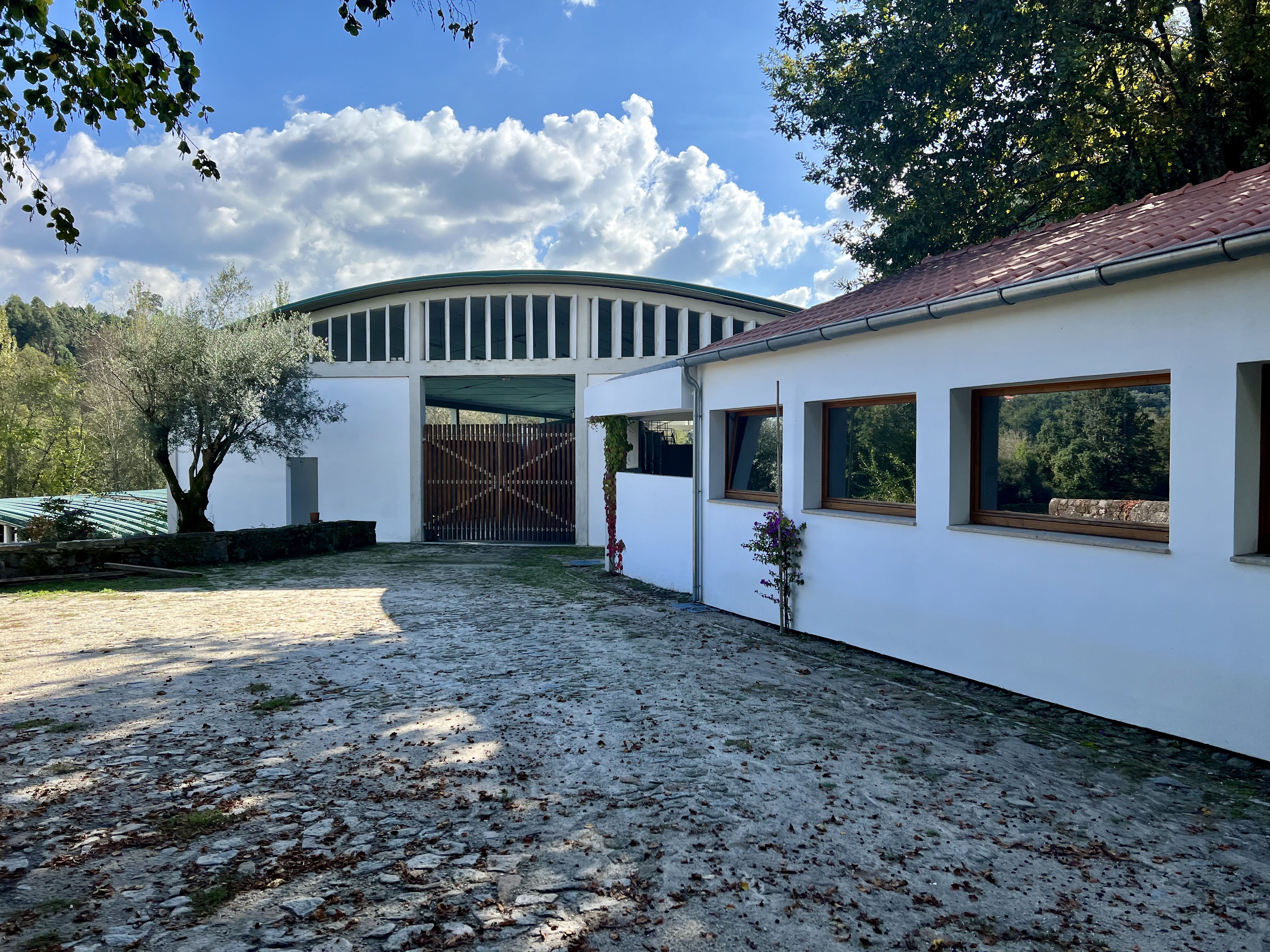
 In 2019, Esporão constructed a new laboratory (in a former milking room) and winery at Quinta do Ameal. The new building above, where their fermentation tanks are located, provides constant air movement. The estate also has numerous bee hives in one of the vineyards, which act as pollinators, and the estate also rents the hives to beekeepers so they can produce honey.

 It's a very lush and green estate.

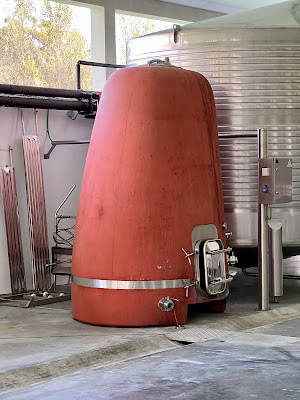 Although they have numerous stainless steel fermentation tanks, they also have two different shapes of concrete fermentation vats, and none of them are coated. The porous nature of the concrete gives a rounder mouthfeel to the wines. The shape of the concrete eggs give a natural battonage, stirring of the lees, while the shape of the taller concrete tank helps to maximize contact with the lees.
 In another corner, there are a small amount of experimental wine globes and bottles (like the dessert wine I would later taste).
 Their small barrel room has two types of oak barrels, including used French (with a medium toast) and Austrian oak foudre.

 Quinta do Ameal produces three, estate-grown Loureiro wines, including the Ameal Loureiro Classic, Ameal Solo Único and Ameal Reserva. All three are intended to be gastronomic wines.
 The 2022 Ameal Solo Único is also made from 100% Loureiro, from the Marejão vineyard, and has a 11.5% ABV. The wine was fermented in concrete vats, 20% in concrete eggs and 80% in rectangular vats, for around 15 days. It then spent about 8 months on the lees in those concrete vats. This is another wine which can age well, for at least 15 years. It is said to be a wine that would be "friendly" to many consumers. The wine is fresh and complex, with a richer mouthfeel and very strong acidity, which is partially due to the soil. The fruit elements are softer, and there's more of a savory note to the taste with a strong backbone of minerality. This wine was said to have a larger scope of possible food pairings, including Japanese cuisine and sushi. Certainly fascinating to see the differences between the Classico and this wine, despite them both being the same grape. Another excellent wine, which would cost around $25 in the U.S.
 The 2020 Ameal Reserva, made from Loureiro grapes from the Marinhas vineyard, has a 12.5% ABV. Only about 2600 bottles were produced, and this wine wasn't produced in 2021. It was made in the 2022 vintage, which is still aging. This wine was fermented in used oak barrels, and then aged on the lees in 500-liter French oak barrels and 2000-liter Austrian oak tuns for twelve months. Finally, the wine was aged in the bottle for about six months. With a rich golden color, there are aromas of citrus and mild spice. On the palate, there's a complex melange of flavors, including citrus, stone-fruit, and spices notes, with obvious oak influence but to a more mild effect. There's good acidity, a lengthy finish and overall, its a nicely balanced wine. Another wine, costing about $25 in the U.S., which would pair well with a range of foods.
We also got the opportunity to taste one of their experimental wines, not for commercial sale, a Dessert wine made from Loureiro. Half of the grapes were dried on mats, similar to the making of Amarone, while the other half were subject to botrytis. The wine was also aged in used French oak and only ended up with a 15.5% ABV. It had a bright gold color and was delicious, a balanced wine with a mild sweetness and good acidity. There were flavors of honey and dried fruits, savory spices and a touch of pineapple. This wine would appeal to many people, and maybe one day, they will release a version to the public.
The history of the estate extends back to around 1710, and it was purchased in 2019 by the Esporão group. The estate, under its previous owner, Pedro Araújo, possessed an excellent reputation, best known for its Loureiro-based wines, which possess great acidity, minerality and can age well. Back in the 19th century, the estate was more diverse, growing corn, rye, grapes and other produce. There were significant changes to the estate during the 1970s, and the first Loureiro wines were produced in 1999. A hotel was even opened on the property in 2015.
Quinta do Ameal, located next to the Lima River, occupies about 75-acres, about 35 of which are planted with the Loureiro grape. Of the various subregions of the DOC, they are generally differentiated by their temperature and rainfall amounts. The Lima subregion has two main influences, the Atlantic (about 30 km from the ocean), and Continental, and has lower temperatures and higher rainfalls than some other subregions. There is also a large gap in the day and night temperatures, and the Lima River helps to control humidity.
The soil is primarily granitic, and is richer in clay than in other subregions. The winery is currently conducting extensive soil studies to determine how the grapes can best be grown. Zé Luis, their previous winemaker, once stated that the Lima subregion has the "best natural conditions for white wine in the Vinho Verde DOC." Quinta do Ameal was originally planted with only Loureiro as the winemaker wanted to make more serious Vinho Verde, which would have an aging potential of 15-20 years. Likely due to climate change, the average ABV level in their wines has risen over the years from 8% to about 12%.
The Loureiro grape is named after the louro, the Portuguese word for laurel, as the aroma of the grape is supposed to be suggestive of the laurel. The grape originated in the Lima River valley, so it was only natural that Quinta do Ameal chose to concentrate on this grape. Zé Luis loved the grape for its “tense, vibrant acidity, and incredible aromatic and aging potential.”
Initially, Esporão appointed Zé Luis as the lead winemaker for Quinta do Ameal, although currently the winemaker and agricultural manager is now Lourenço Charters (who also occupies those same positions at Quinta dos Murças). There are also now two wineries on the property.




Quinta do Ameal makes four wines, including three estate wines which are intended to be gastronomic. They export most of their production to the U.S., Brazil, UK and Canada.
The 2022 Esporão Bico Amarelo ("Yellow Beak") is their least expensive wine, often retailing in the U.S. for around $12. Originally, this wine was made only for the Brazilian market, but when Esporão purchased the winery, they decided to make it available to additional markets. The wine shouldn't be aged for more than 2-3 years. For this wine, they purchases the grapes from other growers in the Vinho Verde, and produced about 400,000 liters (about 44K cases) of this wine in 2022. This vintage was a blend of 60% Loureiro (from Lima), 20% Alvarinho (from Moncão), and 20% Avesso (from Baião). This blend differs from the previous two vintages which were blends of 40% Loureiro, 30% Alvarinho and 30% Avesso.
Much of what I've written before about this wine still holds. With an ABV of 11.5%, the wine remains on the lees for 3-4 months, and possesses no effervescence. On the palate, it's light, crisp and refreshing, with bright notes of apple, citrus and floral elements. It seemed to be a bit leaner than the prior vintage, with more acidity. It's a easy drinking wine, but still with some character, something to just sip and enjoy, especially on a fine summer day. Although it wasn't designed to be a gastronomic wine, I still think it would pair very well with seafood or light dishes. This is the type of wine you should buy by the case so you always have a bottle on hand.

I'm a huge fan of the Ameal Loureiro Classic, and it's been extremely well received by my friends who have shared a bottle with me. The 2022 Ameal Loureiro Classic, of which about 56,000 liters (about 6200 cases) was produced, is made from 100% Loureiro, mostly from the Cowboy and River vineyards. The wine sits on the lees in stainless steel for about 7 months and has a 12% ABV.
The winery doesn't put "Vinho Verde" on the front label as they wish to highlight the Loureiro grape, as well as avoiding consumer's usual expectations about Vinho Verde wines. Loureiro is known for its crisp acidity, and locals refer to its style as "needle point" because of that acidity. This is a wine said to be able to age well for up to 20 years.
Much of what I've written before about this wine still holds. The wine possesses an intriguing nose, stone fruits and floral elements, and on the palate, its complexity and rich flavors burst through. It is crisp, fresh and dry, with a delightful melange of citrus, peach, floral notes, minerality and subtle herbal touches. This wine was well-balanced with a lengthy and delicious finish. This vintage might have been a touch richer than previous vintages, but only a small amount. This wine would also be perfect on its own, or paired with fatty or oily fish. The wine is also said to seem similar to Riesling, as the two grape varieties have much in common.
At about $18, this is a very good value and I'd continue to highly recommend buying this wine by the case as well. I find this wine frequently at Bin Ends in Needham, at a discounted price under $18. This would be an excellent choice for Thanksgiving dinner.


We also got the opportunity to taste one of their experimental wines, not for commercial sale, a Dessert wine made from Loureiro. Half of the grapes were dried on mats, similar to the making of Amarone, while the other half were subject to botrytis. The wine was also aged in used French oak and only ended up with a 15.5% ABV. It had a bright gold color and was delicious, a balanced wine with a mild sweetness and good acidity. There were flavors of honey and dried fruits, savory spices and a touch of pineapple. This wine would appeal to many people, and maybe one day, they will release a version to the public.
I strongly encourage you to seek out the wines of Quinta do Ameal! You will get to experience a different type of Vinho Verde, a non-effervescent version, and the Bico and Classic are excellent values too. When I recommend that you expand your palate, these are the types of wines you should try, delicious wines that are outside the usual ones you may drink.