You can't have a conference dedicated to spirits and cocktails unless you provide plenty to taste and drink. At the
Boston Cocktail Summit, they certainly provided ample opportunity for tasting and drinking, from some of the seminars to the evening parties. In addition, there was a
Craft & Fine Spirits Showcase, separated into a
Grand Tasting Room and a
Craft Distiller's Hall, where a myriad of spirits and cocktails were presented for sampling.
I spent several hours on Saturday sampling in these two rooms, generally passing on those spirits I already knew, seeking out the different, interesting, unique and unusual. Tasting so many spirits is not an easy task, as even if you spit, you still absorb some of the alcohol. It is more difficult than wine tasting due to the much higher alcohol content of the spirits. Fortunately, both rooms had some snacks to help cleanse your palate and absorb some of the alcohol. Plus, taking a lunch break, a burger and tater tots, helped keep me going for more tasting in the afternoon.
This is a great time in the spirits world, and there has never been a greater number and diversity of artisan and high-end spirits available. No matter what your preference, you can find plenty to please your palate. And if you are adventurous, you will find much to satisfy you, much to delight and tantalize you. I am going to highlight some of the alcohols which most impressed and excited me, those which intrigued me because of their uniqueness and fine taste. I may follow up on some of these spirits in the future, to gain more information about their creation, and if so, I will report back.
Let me start with some local spirits.
I previously toured
Turkey Shore Distilleries, sampling three of their rums. At the Summit, they presented their newest offering, which had only been bottled less than a week before. The
Old Ipswich Golden Marsh Spiced Rum, a limited edition, is basically a blend of 80% of their
White Cap rum and 20% of their
Tavern Style Amber with the addition of ten different spices. Master Distiller Evan Parker says, "
With the cooler weather, we created a flavor profile that is perfect for those crisp days out and about or for those cold nights by the fire."
The rum presents a bright, golden yellow color and a spicy aroma, which will bring to mind autumn and cool weather. It has a smooth taste, with delicious fall spice notes and hints of orange peel. This is definitely a rum to enjoy now, either on its own or in a cocktail. Evan states, "
For a simple, tasty cocktail, you can pair Golden Marsh Spiced Rum with ginger beer or hot cider." I could easily see this rum added to some hot cider.
They also had an intriguing cocktail to taste, which was made from the Golden Marsh Spiced rum, caramel, butterscotch liqueur, and spiced apple cider, topped with a Pumpkin Munchkin. The rum complemented this drink very much and I think apple cider is a great pairing. The guys from Turkey Shore, Mat Perry and Evan Parker have created another winner.
Grand Ten Distilling is another local distillery, located in South Boston, and
Luke O'Neil has just written an
interesting article in
The Phoenix about this distillery. For background on the distillery, you should check out his article though it only discusses their
Wire Works Gin (which I did not taste). I tasted three of their other products and found all three to be interesting.
The
Amandine Barrel Aged Almond Liqueur spends about 6 months in 30 gallon American oak barrels. They use 30 gallon barrels as it is easier for two people to move them around rather than the usual 53 gallon barrels. The barrels are toasted, not charred, as they do not want the barrels to filter out any of the taste. All the color of liqueur is due to the barrels. The liqueur had a pleasant almond taste, not too sweet, and would make a fine addition to a cocktail. The
Angelica Botanical Liqueur is made with angelica root, cinnamon, orange peel and cloves. It too is not sweet, but is aromatic and floral with a fresh, clean taste and slight hints of spice. Another liqueur that would add interesting flavors and aromas to a cocktail. The
Fire Puncher Fire Vodka has a hickory smoked and pepper flavor, and I found the peppery notes to be far more prominent than the mild smokiness. It is farily easy drinking and would be great in a Bloody Mary.
Another local company, in
Somerville, is
Infusion Diabolique which is a collaboration between Executive Chef
Robert Fathman and
Brandon Bach, both who worked at
Azure. They produce infused alcohols and at the Summit showcased two of them, their bourbon and tequila, though it appears they also make an infused rum. They are all infused with natural fruits, herbs and spices.
The
Infusion Diabolioque Kentucky uses a four year old bourbon and infuses it with dried organic Black Mission figs, Madagascar & Tahitian vanilla, cinnamon, star anise, black currants, cloves, and allspice. It smells like typical bourbon with subtle spicy notes and on the palate, the bourbon flavor is enhanced by subtle fruit flavors with a pleasant melange of spices. It was smooth and easy drinking, and would satisfy you on its own, though it would do well in a cocktail too. The
Infusion Diabolioque Mixto is a silver tequila infused with sweet pineapple, Persian limes, cardamon, and mint. Up front, the usual tequila flavors are most prominent, but it then transforms into a more complex blend with some tropical fruit accents and subtle mint. The finish is smooth and long, with hints of lime. Again, it would work well on its own or in a cocktail.
Dunc's Mill is the oldest continuously operating distillery in Vermont. The founder,
Duncan Holaday, previously created
Vermont Spirits but now has moved on to creating local rum. He currently produces two rums, both which are made from Fair Trade, organic sugar cane and Vermont flavors. The
Elderflower Flavored Rum is created with Vermont elderflower blossoms and Austrian elder essence, which is infused into a light rum. I was impressed with this rum, which possessed a delightful floral aroma, and on the palate was smooth, clean and dry with a prominent, but not overwhelming, taste of elderflower. It was a well balanced spirit which reminded me somewhat of a dry version of
St. Germain Elderflower Liqueur. I am not a huge fan of maple flavor but their
Maple Flavored Rum, made from Vermont maple syrup, was pleasant. It was dry and possessed a milder maple profile, once again also smooth and clean. Another well balanced spirit, you should check out both these rums.
In 2006, the
Consejo Regulador Del Tequila (CRT), the ruling tequila body in Mexico, added a couple new tequila categories:
Extra Anejo and
Infused Blanco Tequila.
Tanteo has taken advantage ot the later of the two categories and currently produces three Infused 100% De Agave Tequilas ($36-$40). Their inspiration was the fruit cups, topped with chiles, they found in Mexico. Their blanco tequilas,
Jalapeno, Cocoa and
Tropical, are infused with natural ingredients, such as organic jalapenos.
Their
Jalapeno was my favorite of the three, and it is produced by infusing organic jalapenos, hand-sliced, which are mixed in a 10,000 gallon tank with the tequila. On the nose, there is some grassy notes as well as the typical agave, and on the palate, the tequila flavor was very prominent up front. On the finish, rather than the usual tequila bite, you ended up with a spicy and delicious jalapeno burn. It was not overly spicy, but very noticeable and I loved that heat. I could easily enjoy this on its own though it would make great cocktails as well.
The
Cocoa is made with roasted, malted and raw cocoa, like a traditional mole, and has a little jalapeno added as well. It presented a strong cocoa flavor atop the tequila notes, a strange combo that actually worked, and certainly was intriguing, though not my personal preference for a spirit. Yet I could see it working well in the right cocktail. The only issue is that I didn't get much of a jalapeno kick to this tequila. The
Tropical is infused with pineapple, mango, and guanabana, also known as soursop, and there was a little jalapeno added too. The tropical fruits added subtle flavors, enhancing the tequila, though again the jalapeno wasn't really assertive. I could see this tequila working well in a tropical cocktail.
The
Macchu Pisco La Diablada is intended to be a high-end Peruvian Pisco and is currently not available in the U.S. but that will hopefully change soon. They only make 1000 bottles so even when it becomes available, it will be in very limited supply. La Diablada is a blend of 3 Pisco grapes: Quebranta, Moscatel and Italia. It is rested, not aged, for about 18 months and sees no oak. It is very aromatic with a smooth taste of herbs and fruit, with some underlying spiciness. A complex taste with a lengthy and pleasing finish. Though many know of the Pisco Sour, this is a Pisco that you might want to enjoy on its own, rather than as the base for a cocktail.
I love a good bourbon and the
Rock Hill Farms Bourbon, produced at
Buffalo Trace, really excited my palate. It is a single barrel, Kentucky Straight bourbon that is 100 proof, though you probably won't notice the alcohol is that high. It is an excellent sipping bourbon, smooth, complex and absolutely delicious with nice vanilla notes and intriguing spicy elements on the finish. This is definitely a bourbon I will add to my home bar.
Brendan Edwards of
Third Wave Brands, a supplier of spirits and wines, presented several different brands (including
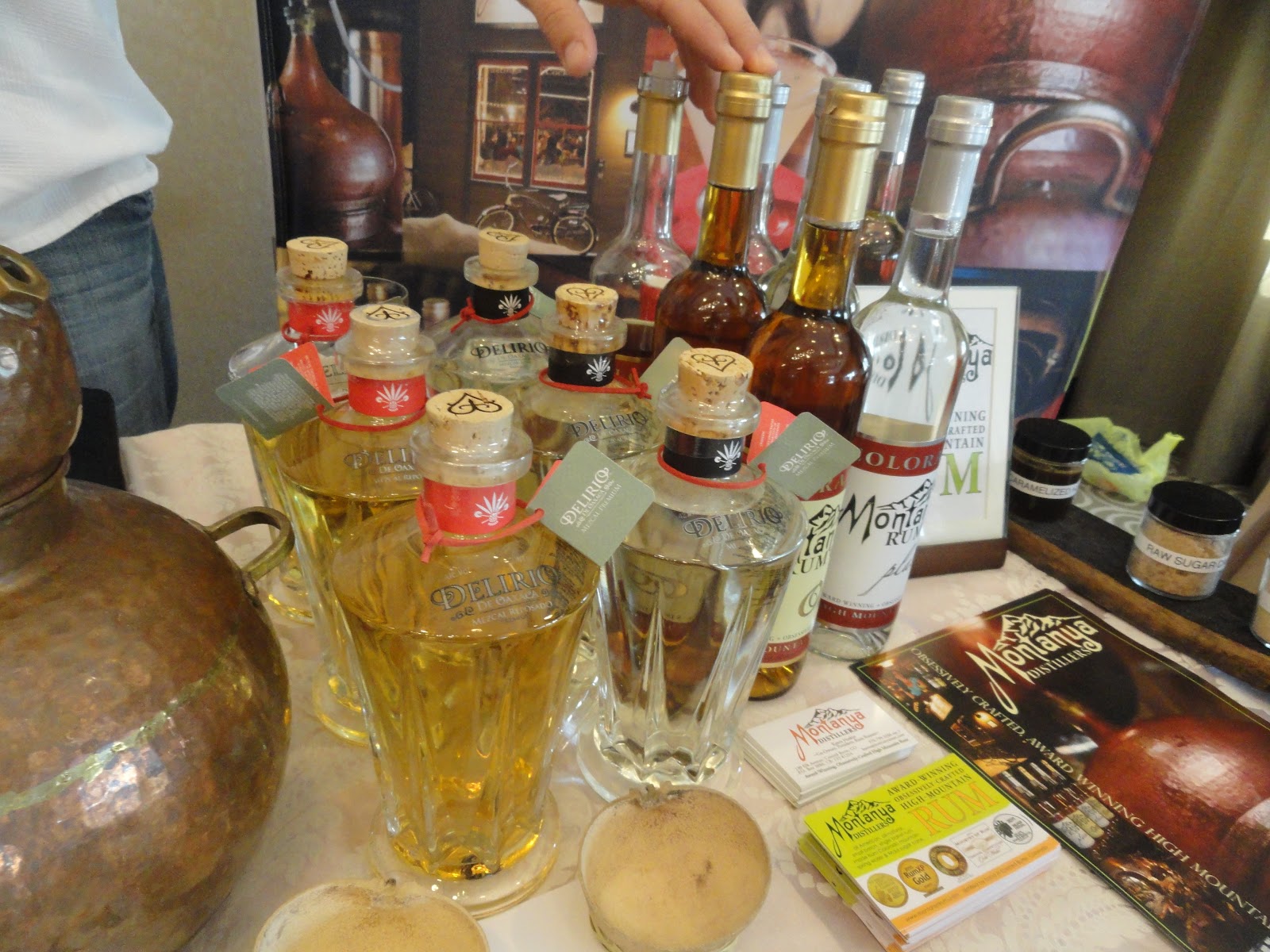
Montanya Distillers, Delirio de Oaxaca, and
Cariel Vodka) and I found them compelling.
Montanya Distillers, owned by
Karen &
Brice Hoskin, was founded in 2008 and is now located in
Crested Butte, Colorado. which is is the West Elk Mountain range of southwest Colorado. They currently produce two rums, the
Platino Light Rum and
Oro Dark Rum. The rums are all natural, each made with only four ingredients, including water, sugar cane, yeast and honey. The water comes from Colorado mountain springs while the sugar cane is from
Maui, Hawaii. At the time of bottling, a tiny bit of Colorado mountain honey is added to the rum.
The
Oro is aged in a fresh, American oak whiskey barrel that previously held Stranahan's Colorado Whiskey. The Oro was a fine sipping rum, with a pleasant blend of flavors, including vanilla, honey, caramel, and mocha hints. I really enjoyed it and would drink it both straight or in a cocktail. The
Platino is aged in a barrel that once aged Oro, so the barrel has far less effect on the rum. The Platino is also filtered and I found it to be very aromatic, a lighter rum with vanilla and herbal notes. For me, it would be best used in a cocktail.
Delirio de Oaxaca is a traditional palenque in Matatlan, Oaxaca, producing
Mezcal by Master Distiller
Fernando Santibanez. The
Mezcal Joven is double distilled in copper alembics from 100% Agave Espadin and only 10,000 bottles were produced. It had an intriguing smoky nose with a prominent taste of agave fruit and a mild smokiness. Quite tasty and I could drink it on its own or in a cocktail. The
Mezcal Reposado has been aged for about 4 months in lightly toasted American oak and only 5000 bottles were produced. It had a lighter nose of smoke, and on the palate it was softer and more subtle, with the same delicious fruit flavors and hints of smoke. Again, another winner.
Cariel Vodka was created by Master Blender
Peter Carlson in
Sweden, who desired to create a vodka with natural flavor and the product just came on the U.S. market in July. It is produced from Swedish winter wheat and barley, as well as glacial water from Lake Vattern. I found the vodka to have an almost subtle sweetness to the aroma, with an intriguing and smooth taste, elements of herbs, grain, and subtle peach flavors. It is definitely not a tasteless vodka but rather presents an enticing melange of subtle tastes. I was impressed. They also produce a
Vanilla Vodka, made with the addition of vanilla from Southern India and Madagascar. It had a big, bold vanilla aroma and flavor, yet it remains only mildly sweet, not cloying like many other flavored vodkas. I can see this working well in the right cocktail.
Koval Distillery, founded in 2008
, was the first craft distillery in Chicago since Prohibition. The founders,
Robert and
Sonat Birnecker, gave up their academic careers to create the distillery. Using custom-made Kothe potsills, they produce organic and kosher liqueurs and whiskey. The whiskey is made in small batches from 100% Midwest organic grain from Midwest and aged in 30 gallon organic oak from a Minnesota cooperage.
My favorite of the three I tasted was the
Lion's Pride Dark Rye, made from 100% Rye. It presented nice vanilla and bold spice flavors with hints of citrus. A nice sipping whiskey. The
Lion's Pride Dark Millet had a more earthy flavor with vanilla accents. The
Lion's Pride 47th Ward is made from a mash bill of rye, wheat, oat and malted barley, and is aged in heavily charred oak. Each grain is distilled separately. This is a complex and spicy whiskey, but at 94 proof, you probably need to add a little water to mute some of the alcoholic heat.
In general, I am not much of a Gin guy because I find too many gins with a strong juniper taste. But, I have found myself enjoying much more the ancestor to gin,
Genever, which is made with numerous botanicals and where any juniper flavor is far more subtle.
Veronique Beittel is the owner of
Flemish Lion, an importing company, based in Vermont, of Belgium Genever. She even has an informative
website of information about Genever. At the Summit, she was showcasing two Genevers from
Diep9.
The
Diep Young Genever is distilled using 19th century techniques, hand crafted in a traditional copper pot at De Moor, Belgium's smallest family owned distillery. It is produced with a combination of rye, wheat, malted barley, and nine botanicals. Those botanicals include juniper berries, sweet orange peel, blessed thistle, carob, nutmeg, guinea pepper, angelica root, cinnamon and coriander. I liked the herbal blend on this spirit, which was relatively smooth and easy drinking. I think the key was the balance of the botanicals, that none of them seemed to overpower the others. The
Diep9 Old Genever is distilled using 16th century techniques and is barrel aged for two years in French oak. It is also packaged in an old style clay bottle. Though it too has a balanced, herbal taste there is also a deeper, earthier element, which really intrigued me. Try these Genevers and let them open your eyes to the possibilities.
Palm Bay International is a distributor of wines and spirits and they showcased several of their products at the Summit, from mezcal to whiskey.
Los Amantes, which translates as "the lovers" and is inspired by an ancient Aztec legend, produces
Mezcal made of 100% agave from Oaxaca. Only a small supply of this traditionally produced spirit is available in the U.S. The
Joven has about 2 months of barrel aging and the nose had a mild smokiness with a bit of brininess as well. On the palate, it was smokier, with strong fruit flavors and a nice smoothness to the finish. Delicious and easy drinking. The
Reposado has been aged for about 6 months in American oak and its taste was superb, a complex melange of flavors, smokiness and subtle accents of fruit. An excellent sipping spirit, it is highly recommended.
The
Bastille 1789 is a French blended whisky hand-crafted in the Cognac region and produced from barley and wheat grown in northeast France. Their water derives from the Gensac Spring and it is naturally filtered through limestone. It has been finished in French Limousin oak casks. It was an intriguing whiskey, with a complex blend of flavors, with orange notes, dried fruits, honey and Christmas spices. There was a mild earthy backbone, and it was smooth and easy drinking with a satisfying finish.
The Irishman, founded in 1999 by Bernard and Rosemary Walsh, produce a line of Irish whiskey based products. The
Original Clan is a pot still blend of 70% single malt and 30% pure pot still. It was triple distilled and matured in bourbon casks. This was produced in a pre-Prohibition style and is said be be a "gateway" Irish whiskey. This is a delightful sipping whiskey, with delicious flavors of caramel, honey, vanilla and butterscotch as well as slight undertones of pepper and spice. It goes down so easy and lingers in your mouth for a long time. I can understand why so many people will enjoy this whiskey.
The
Single Malt is produced from 100% malted barley, was triple distilled and then matured in first-fill bourbon and sherry oak casks. Only 1000 cases of this whiskey were made. This is a more serious whiskey, being complex, subtle and intriguing. There is less sweetness than the Original Clan and a bit more spice, and the finish is even longer and more pleasing. This is definitely a whiskey to slowly sip and savor, and will appeal to whiskey aficionados.
The
Superior Irish Cream is a blend of real Irish cream and 100% Irish whiskey, with added hints of vanilla and toffee. All of the ingredients are natural and it does not contain any thickening agents or artificial ingredients. It is based on an old family recipe and was a satisfying pleasure. There is a thick, creaminess to the drink and the whiskey flavors are not hidden in the least. It does not taste artificial in any way, and with winter approaching, you might want to stock up on a couple bottles for those chilly evenings. Add a bit to your coffee or tea, or just drink it on its own.