Showing posts with label interview. Show all posts

Friday, January 9, 2026

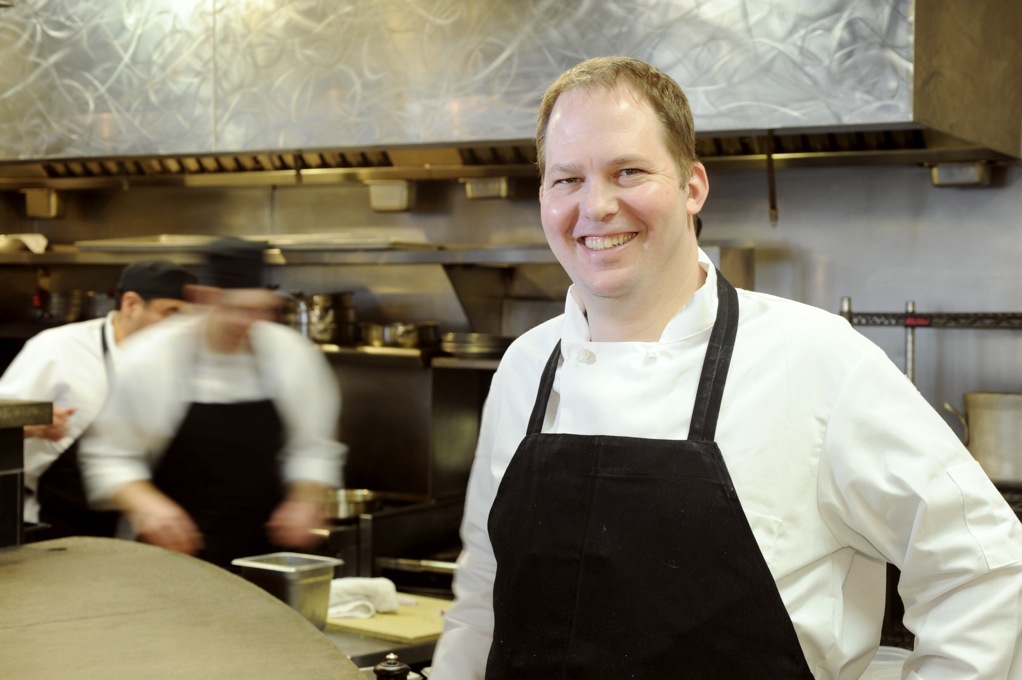
Culinary Creativity: Chef Joseph Carli

Chef Joseph Carli
is the Executive Chef and culinary force behind A Tavola in Winchester, Massachusetts, where he offers a thoughtful, ingredient-driven approach to Italian cuisine rooted in tradition and seasonality. A lifelong New Englander, his cooking reflects both the warmth of the Italian table and a deep connection to the region he proudly calls home. A graduate of the New England Culinary Institute, Chef Carli brings classical training and a philosophy centered on balance, restraint, and respect for quality ingredients. His menus highlight house-made pastas, carefully sourced produce, and thoughtfully prepared proteins that allow simplicity and technique to shine.

At A Tavola, Chef Carli creates refined yet approachable dishes that honor Italian culinary traditions while embracing a modern sensibility. His commitment to craftsmanship, consistency, and genuine hospitality has made the restaurant a beloved neighborhood destination north of Boston. Chef Carli lives locally with his wife, Kacie, their son, Ryan, and their two golden retrievers, remaining closely connected to the community he serves both in and out of the kitchen. 

I'll also personally note that A Tavola is one of my Top Five Favorite Restaurants, earning my highest recommendation. I heartily thank Joe for participating in my resurrection of my Culinary Creativity series. 

(Check out my Introduction to the Culinary Creativity series.)

*********************

Now onto the interview--

How important is culinary creativity to you? Why is it important?
Culinary creativity is essential to me. A chef mentor once told me, “If you’re not changing, you’re getting stale,” and that idea really guided me—especially during the pandemic, which coincided with my first year in business.
When we were forced to shift entirely to takeout, I noticed the same loyal guests coming back week after week. I didn’t want them to feel bored or uninspired, so while we kept a few core dishes, the rest of the menu was constantly evolving—sometimes changing day to day based on instinct, mood, or what was available.
As a neighborhood restaurant, it’s important to me that guests feel the menu is alive and never stagnant. Creativity keeps things exciting not just for our guests, but for me and the staff as well. Living in New England, where seasons and weather shift dramatically, it only feels natural that the food reflects those changes. Variety keeps us honest, energized, and engaged.


What are your most significant inspirations for your culinary creativity? What makes those sources so inspiring?
Cookbooks and flavor memories are huge inspirations for me, but honestly, ideas can come from anywhere. I once got the idea for a steak dish while watching a Bugs Bunny cartoon with my son when he was a baby—the dish just just clicked in that moment.
At A Tavola, many of the cookbooks I love most live in our dining room. While I may reference techniques or ideas, if I ever adapt a dish directly, I believe strongly in crediting the original chef—it’s about paying respect to someone who did it first.
What inspires me most, though, are the stories. I love cookbooks that include essays, anecdotes, and reflections. I’m a big believer in reading a cookbook cover to cover—it gives you insight into how a chef thinks, not just how they cook.


Where do you get your ideas for new recipes or dishes?
Ideas come from a mix of memories, books, conversations, seasons, and guest experiences. Sometimes it’s something I’ve eaten years ago that sticks with me; other times it’s a product that arrives and it is so fresh and perfect that I don’t really want to do anything to it and serve it as natural as I can. The menu often reflects what’s happening outside, what guests are responding to, and what excites me at that moment. I try and be observant as to what is trendy with what my clientele sees in magazines, blogs and socials, so that I know what they would be looking for when they come in for dinner.

What is your process for creating a new recipe or dish?
When I’m developing a new dish, I always start by cooking it myself and tasting it thoroughly. Then I tweak it and taste again—often with someone else—before deciding whether it needs further refinement or should be scrapped entirely. If it’s close, I’ll run it as a special for a night or two to gauge guest response. Like any restaurant, we have hits and flops. There are dishes I’m convinced will be instant winners that don’t land, and others I’m less excited about that the staff and guests absolutely love. Staying open to that feedback is crucial.

Do other members of your staff assist with creating ideas for new recipes or dishes?
Yes and no. Some of our younger staff are very plugged into food trends and social media and will show me things they’re seeing online. While those dishes can look beautiful, they’re often designed more for the camera than for flavor or practicality in a restaurant setting. Where the staff really influences the menu is through guest feedback. The team spends way more time talking with guests than I do —many of whom travel extensively and dine out often—and they share those experiences with us. That feedback can absolutely shape menu items, specials, and even what ends up on our wine list or behind the bar.
My sous chef, David, who I’ve worked with across six kitchens over the past 15 years, is also an essential sounding board. We understand each other’s palates and cooking styles deeply, and I trust him to tell me whether a dish truly fits A Tavola or belongs to a future project. Every member of the staff knows that I have an open door policy and they can come to me with any idea or thought on how to improve A Tavola in any way.


How do you test new recipes or dishes?
Through repetition, tasting, and real guest response. A dish isn’t finished until it performs well both in the kitchen and in the dining room. Specials are often the final test before something earns a place on the menu.

What is the most difficult part of culinary creativity?
One of the hardest parts is deciding who you’re cooking for. Are you cooking for yourself, for recognition, or for your guests? I’ve never been particularly motivated by stars or awards. What matters most to me is cooking food that makes both me and our guests genuinely happy. That means staying aware of trends without chasing them, remaining true to my own instincts, and cooking with intention. I really believe that your emotions show up on the plate.

Do you ever experience creative block, and how do you work through it?
Absolutely—it’s very real. When it happens, I’ll dive into cookbooks or buy a new one to shake up my thinking. Sometimes I’ll cook something tied to a positive memory, like a dialed up version of my mother’s mushroom chicken dish from when I was a kid, which I recently served at a wine dinner.
Other times, I need physical focus. My version of “zen” is making pasta or breaking down a whole animal and challenging myself to use every part thoughtfully. And when all else fails, I’ll go out to eat somewhere I know I’ll be taken care of—like Giulia, where I’ve never had a bad experience. It’s a reminder that food is meant to bring joy. Cooking in any form is a happy place for me, I can’t sit at a desk or behind a screen for too long or I grow restless and just need to MOVE


Relate an unusual or interesting anecdote about the creation of one of your dishes.

One of my favorite stories comes from a beer dinner with Aeronaut Brewing. They were debuting a beer called Hop Hop and Away, featuring a cartoon rabbit astronaut on the can. Naturally, my mind went straight to rabbit—but I needed a way to make it playful and thoughtful. It was early spring, so I leaned into freshness. The beer was hop-forward with citrus notes, which led me toward something fried and rich but balanced. I braised rabbit hind legs, carefully deboned them, reshaped them, and breaded them with an herb-forward mixture before pan-frying them until golden. I paired them with a hop-infused aioli and surrounded the dish with clovers, greens, and herbs—echoing what rabbits would be eating in the fields. It was whimsical, seasonal, and tied directly back to the beer. 

Wednesday, December 17, 2025

Culinary Creativity: The New Edition

What is the wellspring of inspiration, the source of creativity?

As a writer, I have some understanding of the creative process, but creativity is not for writers alone as it exists in all professions. Each person derives inspiration from a variety of sources as well as undertaking their own unique processes. Their backgrounds and experience often affect these matters. If we better understand someone's creative process, I think that can make us more appreciative of the work of such individuals.

Chefs can be very creative individuals, concocting new recipes and dishes, or cleverly altering an existing recipe. However, there are restaurants where the menu never seems to change. A chef at such a place will make the same dishes, day in and day out, and the act of cooking becomes repetitive and routine. But I believe that the truly passionate chefs will not be not satisfied working in such restaurants. They will want to be inventive, to expand their own culinary horizons. They will constantly be seeking to better themselves, to improve their dishes. They will relish the challenge and their patrons will benefit. Their menus will constantly change, with new dishes continually being added.

I greatly appreciate and admire the culinary creativity of such chefs and desire to gain a better understanding of their creative process. I want to delve into their methods of crafting new dishes and to seek out their inspirations. I hope to gain even more admiration for their profession through analyzing their creative process.

Sixteen years ago, in 2009, I began such an endeavor, to enhance my comprehension of such matters and to share my findings with my readers. Over the course of nine years, I interviewed nineteen chefs, who were different in many ways. This allowed me to obtain a better overall perspective on culinary creativity. However, I haven't added to this series in seven years, and feel its time to resurrect it for 2026, to interview more chefs, to add to our understanding of culinary creativity. 

Here are the basic questions I ask each chef, noting that the chefs don't have to answer any specific question if they did not want to do so. They are also free to expand into related areas that I might not have asked about. 
  • How important is culinary creativity to you? Why is it important?
  • What are your most significant inspirations for your culinary creativity? What makes those matters so inspiring?
  • Where do you get your ideas for new recipes/dishes?
  • What is your process of creating a new recipe or dish?
  • Do other members of your staff assist with creating ideas for new recipes/dishes?
  • How do you test new recipes/dishes?
  • What is the most difficult part of culinary creativity?
  • Do you ever experience “writer’s block,” an inability to be creative, and if so, how do you deal with it?
  • Relate an unusual or interesting anecdote about the creation of one of your dishes.
I will be contacting some local chefs, hoping to find some who are willing to participate in this process. And if you're a chef interested in participating, feel free to contact me as well. There are no specific deadlines so please don't feel rushed. Besides answering the questions, I'll also request a photo for the article, as well as a brief bio. 

For those chefs who choose to participate, I will then highlight each chef and their inspirational answers. I hope my readers find their answers to be both interesting and informative. If you enjoy this series, or even if you don't, please post your comments here. With your feedback, I can hopefully make this project even better.

I should also give much thanks to the chefs who previously agreed to participate in this endeavor!

Chef Interviews:
Chef Peter Ungár: Part 1 & Part 2 of his Answers
Chef Matthew Barros: Part 1 & Part 2 of his Answers
Chef Vittorio Ettore: Answers
Chef Marisa Iocco: Answers
Chef Jacky Robert: Answers
Chef Shingara "Peppino" Singh: Answers
Chef Rebecca Newell: Part 1 & Part 2 of her Answers
Chef Evan Percoco: Answers
Chef Jacob Zachow: Answers
Chef Denise Baron: Answers
Chef Scott Hebert: Answers
Chef Anthony Caturano: Answers
Chef Susheela Raghavan: Answers
Chef Chris Chung: Answers
Chef Franck Iglesias: Answers
Chef Keith Pooler: Answers
Chef Matt Louis: Answers
Chef Steve Zimei: Answers
Chef Brian Poe: Answers

Friday, July 12, 2019

Mind of a Sommelier: Rebecca Myers

(Check out my Introduction to the The Mind of a Sommelier series.)

Rebecca Myers is the Co-Owner and Director of Wine & Service ay Loyal Nine in Cambridge, a restaurant which "focuses on New England culinary traditions." Loyal Nine serves breakfast, lunch, and supper, as well as Sunday Brunch. It's a casual spot with creative, delicious and intriguing cuisine and I'm fascinated by their wine list.

Rebecca grew up in Bordeaux, and her first real restaurant experience began at 16 when she had a job working at a small bar & café after school and on weekends. This was the start of her wine education. A move to the United States four years later landed her at a restaurant in Providence, RI where she met her husband (and Loyal Nine co-owner) Daniel Myers. In 2007, the two moved to Boston, and she landed a serving job at Les Zygomates Wine Bar & Bistro.

After four years, Rebecca moved to Chicago and joined the team of the newly opened Parisian-style Maude’s Liquor Bar. A few months later, she continued west where she worked at A16 and, as a Captain, at Coi. However, the couple's love for the East Coast brought them back to Boston in 2012, and she joined the team at Barry Maiden’s Hungry Mother in Cambridge. Together in early 2013, the wife-husband duo formed the Hand Taste Collective, a Somerville-based pop-up group that created one-night-only dinner services at restaurants around town. Through this project, they began to develop the concept for their own restaurant, partnering with two other industry vets for its opening.

Rebecca and Daniel are currently working to open their second location, Northern Spy, in Canton.

Now, onto the Interview:

What term do you use to describe yourself: Sommelier, Wine Steward, Wine Director, something else?
Being part of an owner-operator team, we all wear many hats but we all have our area of expertise. One of my favorite parts of day to day is keeping track of the wine world at Loyal Nine and sharing it with our staff and guests that dine at our restaurant. For that privilege, I hold the title of wine steward or wine Director. I am a self taught wine lady, immersed in the food & wine world since child hood, growing up in France.

Please give a brief description of the wine list at your restaurant.
The wine list is an ode to the Vigneron, the independent growers, farming cleanly and producing grapes on living, heathy soils. They often times are working with heritage grape varieties sometimes on the verge of disappearing. It is their life's passion that they present to us in bottle form and we are here to share their story and product with others. Many of the growers are using organic/ biodynamic farming methods and some a hands off approach in the cellar with minimal use of sulfur, leading to wines with a raw or wild feel, very alive and can also vary from bottle to bottle. That being said the list is geared towards offering great value in terms of quality, price and above all joy.

What are your objectives with the wine list?
The idea with the wine list and with wine service all together is to make the experience easy, delightful and you might be pleasantly surprised with something that you have never heard of or thought that you would order before, at times you may even get your mind blown... great wine Has a way of doing that. We strive to present you with wines that are exciting and expressive while finding balance with our environment and playing well with our food. We do a lot of preserving with pickling, curing and make our own vinegars. So with our food having a penchant towards the tangy and briny, wild wine is well matched with its lively attitude and textural tendencies.

How often does the wine list change?
Working with small producers keeps the wine list changes quite frequent, as the amount of wine produced is always limited. We try to retain working with the same producers as much as possible. Some of which we have represented on our list from the beginning, we keep several of their wines on our list in different categories, sparkling, white and red. Their wines come and go throughout the year in these different categories and we get them whenever we can. This is also great for the staff as they get to know a producers style very well and can get excited for a new release or the return of an old friend.

How do you learn about new wines?
There seems to always be a continuous stream of new producers or wines to be in touch with, so the key seems to be enabling a constant exposure to as much wine as possible at all times. whether attending organized trade tastings, importers showing their portfolios, house visits.....but the very best is getting to meet the maker behind the wine, getting a feel of who they are, their convictions and what they would express through the wine.

What is your strategy on pricing the wines on your list?
For the wine list format and pricing, I took inspiration from little restaurants or eateries you can find throughout towns all over France. Often times they hold quite an extensive amount of wines but always organized in categories by price. So for our list, with about a hundred wines listed, if you are looking for a wine for $40 you will find a selection in white and red, and the same with a $60 option. A separate category we call 'Down cellar', includes wines priced above 60 but under 200, as nothing on our list exceeds that price. The idea is to provide ease of ordering, you always know what price you are willing to spend for a bottle when dining out.

What is the most common wine question asked by your guests?
The great thing in working with wines that are less recognizable and unusual is that we are always being asked for recommendations, which really gives us the chance to tell you about the wine and get you excited to try something new. If you are thinking of a chardonnay, what type of white do you really have in mind, something plump and buttery or something bright and mineral focused? You might find yourself enjoying a glass of Negro Lorenzo Arneis from the Roero in Piedmont or Roditis from Slavos in Cephalonia, Greece. 

What is your greatest challenge as a sommelier?
The challenge is being able to turn people on to wine made in a less conventional way, just be open to trying something new, getting out of your comfort zone can be very rewarding. People care about what they put in their bodies and are enjoying getting into wine made with no additives, farmed from grapes not covered in pesticides. However it is very much thanks to the server staff who care to learn about each wine and get excited about the message and really get to know the wines as well. We talk about and taste wines at the restaurant on a regular basis, we also love having the growers come visit us and talk wine with everyone here. 

Tell me about 1 or 2 of the best value wines on your list?
Some of our best value wine is from Meinklang, a family run 'mixed farming operation', located along Austria's eastern border with Hungry, in the middle of the national park Neusiedlersee. The Michlits family truly celebrate biodynamic principles of diversity, growing crops, cultivating wild insect colonies, raising farm animals including a herd of Angus cattle providing natural fertilizer for the farm. Angela and Werner Junior run the wine side of the farm, cultivating a variety of indigenous grapes surrounded by natural ponds and wild grasses. They work minimally in the cellar using ambient yeast and maturation in concrete egg-shaped containers. A bottle that we love and are pouring by the glass right now is their 'Burgenlandred', it's a juicy blend of Zweigelt and Blaufrankisch, both native Austrian grapes. A vibrant, fragrant red with tart berry fruit and a light dry finish that keeps you coming back for more. Their wines are so great that we also had to have their 'Foam', naturally sparkling wine, and Gruner Veltliner for white, all poured by the glass. 

Tell me about 1 or 2 of the most unique wines on your list?
     A wine from Hubert and Heidi Hausherr, that is very unique is the 'Altengarten' 2012 bottling. All of their wine is very unique and really special. They are located in Alsace, and farm a very small estate in the village of Eguisheim. Everything is done manually from plowing the fields with the help of their draft horse Skippy, hand harvesting, and at the time their grapes were pressed in an old wooden manual vertical basket press. They strive to represent the terroir and make their wine in a natural way without additives or filtration. They will typically make field blends, multiple varieties grow together, are picked and fermented together. They do not follow the norm for the area nor do they take the easy road in any way. The reward is this wine, a blend of Riesling & Gewürztraminer, it pours a hazy golden color, intense aromatics of wild flowers, tropical fruit and spice escaping from the glass. It drinks full bodied & inciting with complex flavors of baked nectarine, Meyer lemon and pink pepper corn, but also oxidative with a nutty, savory, dry sherry finish. It is alive and evolving as it reacts to the air and the temperature in the room, dream wine. 
     Another Unique winery is Rocco di Carpenetto, Lidia and Paolo run a tiny winery and agriturismo (essentially a B&B), in the village of Carpenetto in the Alto Monferrato hills of Piedmonte. They make natural wines from old vines in the Ovada, using spontaneous fermentation with native yeast, unfiltered with very little sulfites. They take care of everything themselves, up to the bottling and labeling. they Their 'Losna', local dialect for lightning bolt, it's a spirited, big red made with Dolcetto grapes, a beautifully structured wine balancing chewy tannins, intense dark berry fruit and raw textured mouthfeel. A stunner! 

Tell me about 1 or 2 of your favorite wines on your list?
     A wine that I will always love to drink as long as it will be, is Cascina degli Ulivi, Ivag. RIP Stefano Bellotti, a pioneer become guru of biodynamics, no longer of this earth. His revolutionary winemaking and authentic practices in Novi Ligure, Piedmont, have influences many and have forever changed the face of the wine world. This wine is made of cortese grapes, from wild vineyards scattered about the hills of Gavi, zero sulfur is added and it is bottled unfiltered. 'IVAG' is Gavi spelt backwards reflecting his non conformist methods. The wine pours a cloudy deep straw color, drinks bold and earthy, expressing it's wild personality with notes of yellow fruit, raw nuts and bread. 
     For a view into the independent growers life I would recommend a documentary called 'Natural Resistance' by filmmaker Jonathan Nossiter, a group of natural winemakers in Italy stirring the pot. Among other winemakers that we work with Stefano Belotti participated in the making of this documentary.

Friday, October 5, 2018

Culinary Creativity: Chef Brian Poe

Chef Brian Poe was born in the town of Macon (GA) and grew up in the foothills of the Blue Ridge Mountains. Poe went to school at Auburn University (AL) where he soon found himself in the kitchen, working his way up the back-of-house ranks at the Auburn University Hotel & Conference Center. From there, he was promoted to sous chef at the Northeast Atlanta Hilton – during the Olympics. Next Poe relocated to Scottsdale (AZ) as chef at Steamers Oyster Grill in Phoenix and then executive chef at the American Grill.

Over time, Poe moved to Massachusetts, currently living in Danvers, and eventually manned Poe’s Kitchen at the Rattlesnake Bar & Grill. It was there that Chef Poe became business partners with Gordon Wilcox of the Wilcox Hospitality Group. Together, in 2012, they opened The Tip Tap Room in Boston’s Beacon Hill neighborhood. Then, in 2015, they joined forces for the Bukowski Tavern. Their collaboration continued, and in 2018, Chef Poe became a partner in Parish Café, a Boston institution. In addition, Chef Poe is an active board member of the American Institute for Food & Wine and a board member of several local and national charities.

(Check out my Introduction to the Culinary Creativity series.)

Now onto the interview--

How important is culinary creativity to you? Why is it important?
Creativity is truly one of the most important aspects of cooking and hospitality. One should constantly be creatively thinking how and why can I do this better for the guests, for the flavor, for speed of service, and for highest quality taste and experience.

What are your most significant inspirations for your culinary creativity? What makes those matters so inspiring?
I read everything I can get my hands on old and new- I think there's close to 1,000 cookbooks in the office at Tip Tap and probably another four or five hundred at home. There's a few books at a time always on my desks or a table near me. I watch everything I can from the Masterclass Series of Thomas Keller or Alice Waters to the excellent Eat the World series on Amazon. When I feel in a slight rut, I'll re-watch Charlie Trotter’s The Evolution of Creativity on Amazon followed by something more modern (Ugly Delicious) or pull from the file cabinets to tap into old dishes that can be revisited and revised and then move on to watching or reading something modern to inspire new ideas. I also believe in management books like Creativity Inc. I've read it a few times and mentally sub out the word "movie" or "pixar" to restaurant- and it helps to remind me that creativity is a key player in all walks of life. Two other lifetime reference books that I turn to are Becoming a Chef & Culinary Artistry by Dosenberg & Page. I'll often pick those up to remind me of when I was a 20 year old cook- to balance back to what I love about creativity and cooking.

I also look around me everywhere I go. One of my favorite creative moments was at a beach bar, having a couple of beers and oysters in Nahant- a woman came up with the thickest New England accent, cigarette hanging out of her mouth, sunburnt, frizzed beach hair, holding her kids hands- and yelled "You guys serve Lime Rickey’s here?!?!?" Ding ding! A Cranberry & Angelica Lime Rickey Vinaigrette was born!

Where do you get your ideas for new recipes/dishes?
Reading, writing, traveling, eating, gardening, farmers, chefs and weather are top influencers.

What is your process of creating a new recipe or dish?
The night before I'll jot down ideas I didn't have time to get to today - before I leave the office. The next morning at the house, I go into the garden to see what's looking the best, then back at the restaurants - into the refrigerators to see what fits the weather outside, what came in fresh, what is at its peak. Then at the cutting boards in the basement kitchen at the Tip Tap Room it all begins to come together. So many of the specials that go on to the other restaurants are either inspired by what I cook at home or the Tip Tap. The Tip Tap Chalkboard Special dishes often become menu items at the other locations.

Do other members of your staff assist with creating ideas for new recipes/dishes?
I love cooking with the chefs at each restaurant. There's often moments where I'll stop them and say "Pretend I'm not the chef or owner today and pretend that we're just a couple of guys hanging out cooking"- and then there is a specific moment that you can feel the edge drop and we just start cranking out fun ideas- these moments carry on much further than just today’s special- the moment of just being cooks transcends into the vibe of the restaurants for weeks to come. I have so much fun doing this with all the guys and girls at Tip Tap, Parish, Lower Depths and Bukowski Cambridge. We all get to learn together and it builds a very special bond and energy between cooks.

How do you test new recipes/dishes?
First round is typically inspired by cooking/creating with the crew. The next round I try to remember everything we did. Then we write the recipe and have one of our lead people test the recipe to see if we missed anything (there is literally a moment in creativity where I "go blind" in having so much fun that we have to have another person test to see if we left something out) Then if all of that works- we take it to another restaurant or another cook to see if our writing of the recipe translates correctly. If it does- we put it on.

What is the most difficult part of culinary creativity?
Keeping the creative juices flowing. Some days after a tough run with the grown up side of the business (cooks calling out, equipment failures, snow storms or 100 degree days when the heat/air decides not to work, leases, licensing, plus an unexpected string of extra-long days) can stifle the creative juices. Creativity is often my medicine for stress.

Do you ever experience “writer’s block,” an inability to be creative, and if so, how do you deal with it?
Writers block does occur. That's when I go down to the farmers market and just stroll- or read something else nonfood related- to find my way back. I'm lucky to be at an age where I have recipes that I can pull to get us through a jam- but I most love creating new flavor experiences. Sometimes pulling from a fun time period in my career can help me reset and get going again. I'm also in a very interesting/lucky part of my career where I could feel like I'm not contributing a lot of creativity today at one restaurant but 30 minutes later I'm at another restaurant and I have an idea that then creates/inspires four new dishes at each restaurant.

Relate an unusual or interesting anecdote about the creation of one of your dishes.
Partnering into the Parish Cafe was one of the more unusual and interesting moments of my career. Here's an entire side of the menu that was created by the most talented chefs in the city. The other side of the menu has been staples of the restaurant for 25 plus years. Ultimately, it was the first time I've been in a restaurant that I didn't create every dish on the menu for probably 20. How can one politely create without offending the guests or former partners while still providing fun new dishes to help support and represent all of the culinary talent in the city? That has reinforced my philosophy that creativity in cooking should happen, and always do so respectfully. 

One last addition to creativity comes from Chef Chris Bianco in Phoenix Arizona- "The hardest thing to learn in cooking is restraint." My early days of creativity (my twenties) I went a little too far in trying to make it cool- learning to back off by an ingredient or two in an effort to make it delicious also requires its own sort of creativity. And some dishes may just need to be the classic that they are- so you have to creatively explain to a young energetic cook- that this dish is a classic and maybe we should just respect that- while somehow creatively building upon that great energy they bring to the table.

Wednesday, January 31, 2018

Culinary Creativity: Chef Steve Zimei

Chef Steve Zimei is the Executive Chef at Chopps American Bar & Grill, which is located at the Marriott Burlington. Steve is a native of Massachusetts and graduated from Johnson & Wales University in 1995. He then began his culinary career working for Chef Daniel Bruce, eventually becoming a sous chef at Rowes Wharf Sea Grille. Steve would also work on the opening teams for spots including Aquitaine, Harvest and XV Beacon Hotel. In addition, Steve moved onto executive chef positions at places including Gallia, Hotel MIT, The Worcester Restaurant Group, the Papa Razzi Group, and most recently Trails End Café in Concord.

Most recently, Steve returned to work with Chef Bruce at Chopps, introducing new flavors to rejuvenate the American chophouse. Outside of the kitchen you can find Zimei, an avid runner and cyclist, racing for the local cycling team Optimum Performance and serving his community through various charitable organizations. Zimei currently resides in Leominster with his wife and three young sons.

Chopps American Bar & Grill is one of my Top 50 Restaurants of 2017, and I've enjoyed numerous lunches and dinners at this spot. Chef Zimei is helping to ensure the consistent quality of this restaurant and it's great to see the new dishes he creates.

(Check out my Introduction to the Culinary Creativity series.)

Now onto the interview--

How important is culinary creativity to you? Why is it important?
"Culinary Creativity plays a vital role in being a chef. I am constantly thinking of what's coming in-season and new ways for my staff to learn and grow as culinary professionals. Being creative with menu design, technique, and presentation are all essential in this industry. The best part of my day is when I see a dish come to life. We have a vast array of clientele from all over the world that dine with us at Chopps, so we like to showcase our talents with weekly features that, if a fan-favorite, have the potential of going on our menu."

What are your most significant inspirations for your culinary creativity? What makes those matters so inspiring?
"I find that a lot of my inspiration stems from visiting local farms where I can feel, eat, and smell the freshest produce at the time. I like to utilize new ingredients to compliment dishes. Traveling to other restaurants to try different cuisines is also important to me to stay current in the culinary world. Not only is it fun, but experiencing new dishes really helps with flavor combinations that I can use to develop into my own style."

Where do you get your ideas for new recipes/dishes?
"A lot of my menu items develop from foods that I love to eat...I often go out and have dinner and say, “man I need to have a variation of this on the menu.” I will then experiment with flavors that are true to my style and build from there. Often seeking advice from my sous chefs is the best way to get a true feeling of whether the dish works or how to tweak it if needs be."

What is your process of creating a new recipe or dish?
"Creating a dish for me always starts by using the highest quality of ingredients that is in-season. We change our menu quarterly, so a menu change isn't just a few items but 10-15 dishes. I typically focus in on an idea and then run it as a feature on a tasting menu. Eating a dish a few times helps me navigate textures and flavor profiles until it is at the standard we want to serve guests. With the chef’s tasting menus, we can really play around with off-menu items and those tend to be the most fun for us!"

Do other members of your staff assist with creating ideas for new recipes/dishes?
"My sous chef and I are constantly bouncing ideas off each other. Most times, we will bring ingredients into the kitchen and cook until we are happy with the end result. This is a time when we can be totally honest and also allow for our staff to give feedback."

What is the most difficult part of culinary creativity?
"The hardest part of culinary creativity is not letting yourself fall back into your "old stand bys". I try to not repeat dishes that I have crafted in the past and continue using different products. Staying focused when in the restaurant is a different challenge in itself when so many things are happening simultaneously."

Do you ever experience "writer's block," an inability to be creative, and if so, how do you deal with it? 
"Absolutely. I don’t usually tend to have writer’s block in terms of creativity, but I often overthink dishes, which can prevent me from letting the simplicity of natural flavors shine. To overcome this, I take a step back from my pad, and go for a long bike ride to clear my head. I’ve also found it’s helpful for me to think of food pairings late at night before I head to bed…when the kids are asleep and the house is quiet. Usually this is when I’m not stressing over why I just put watermelon and sea beans together!"

Tuesday, December 16, 2014

Shinkame Brewery: From Holy Turtle to Aged Sake (Part 2)

An important objective for Ogawahara in his visit to Boston was to promote the idea of consuming warm Sake. He states that Sake is the only alcohol in the world where the taste varies according to a wide variety of temperatures, both hot and cold. In many respects this is correct as it is much rarer to warm many other alcohols, except in limited situations. You might enjoy some warm mulled wine, with numerous spices added to it, but you aren't concerned with picking out different nuances in the heated wine. Various spirits might be used in hot cocktails, from a Hot Toddy to an Irish Coffee, but again, you are not really seeking out the different tastes of the spirit because of the temperature. Shochu might be one of the only other alcohols where heating it may truly matter to the taster.

Let's look back through the history of Sake, seeking the origins of heating. The first historical written references to warmed Sake were between 905 and 927 AD., so it may have originated sometime in the 9th century. By the early 17th century, it became common to drink warmed Sake between the 9th day of the 9th month, called the Chrysanthemum Festival, and the 3rd day of the 3rd month of the following year, called the Plum Festival. Essentially, they were generally drinking warmed Sake during the winter months. Around the start of the 18th century or so, numerous people started drinking warmed Sake year round. Only a few decades before that happened, the written character for kan, the general term for "warm Sake," was created.

There are different theories for why the Japanese started to drink warm Sake. The most plausible seems to be for health reasons. In China, people had been drinking warmed alcohol in the winter for many centuries and eventually this practice likely made its way to Japan. In some Eastern health traditions, eating and drinking warmed items is thought to be much better than cold things, which were thought to chill the the body. So staying warm in the winter and overall health seem to have been the driving factors. A Japanese philosopher and scientist, Kaibara Ekiken, also wrote a book stating that drinking warmed Sake improves the circulation of your chi, life force.

For the greater part of the 20th century, warm Sake was the norm. In the James Bond film, You Only Live Twice (1967), Bond says, "I like sake. Especially when it’s served at the correct temperature, 98.4 degrees Fahrenheit, like this is.” This might be referred to as hitohada-kan, or body temperature, and was a very common serving temperature at that time. It would also be served at a variety of other temperatures, so there was no real correct temperature, just one that might be more common than others.

Unfortunately, nowadays in the U.S., Sake is most often served much too hot, enough that you must be careful not to burn your mouth or tongue. It is rare to find a spot that will gently warm your Sake, such as to body temperature. If you were in Japan, you could order warm Sake by asking for O-kan, a polite way to ask for it. In the U.S., you have little choice but to accept the steaming hot Sake they serve you. That really needs to change as it does a disservice to the Sake.

With the advent in Japan of the more complex Ginjo and Daiginjo Sakes, chilled Sake started to take hold, as heating was often thought to take away some of the more delicate flavors in these more highly polished Sakes. As such, many people now provide general advice to drink premium Sake slightly chilled, and for most cases it probably is excellent advice. However, there is definitely premium Sake that can be drank warm, but it is more difficult to explain to someone about these exceptions, to tell them which Sakes should be drank warm, and how they should be warmed, Sometimes the back label of a Sake bottle will recommend serving temperatures, but that is not always the case.

Sake shows different flavor profiles, dependent on its temperature. In general, the higher the temperature, the sweeter the Sake will seem. Sake also contains different types of acids, from malic acid to succinic acid, and each acid has a specific temperature that will make it more dominant. For example, succinic acid tends to dominate more at higher temperatures, while malic acid is more prominent at lower temperatures. As such, there is no one perfect temperature to taste a Sake. The flavor profile will vary, dependent on the temperature, so the optimum temperature will come down to your personal preference.

Ogawahara noted that warm Sake is growing more popular in Japan and that women generally prefer warmed Sake, though men are starting to drink more too. Interestingly, while warm Sake is popular in the Kanto region, which includes Tokyo, people in the colder regions, such as Tohoku, often still prefer to drink chilled Sake. Ogawahara is not opposed to chilled Sake, but he feels that you should take advantage of the full potential of Sake, its ability to show differently at various temperatures.In addition, he believes warm Sake is better for your stomach and digestion, especially if you drink it slowly over time. He even claims that he can drink two bottles of warm Sake in one sitting without a hangover.

He is also an advocate for drinking warm Sake with food, believing it pairs well with a diversity of cuisines and not just Japanese. He also claims that warm Sake may open up your taste buds, as hot water opens up skin pores, while chilled Sake won't accomplish the same. I'm not sure if that actually occurs but it is something I'm going to research. It sounds plausible but I would like some scientific validation. If it is true, it would have ramifications beyond just warmed Sake.

I know that Sake and cheese is an excellent pairing, and Ogawahara feels that warm Sake and cheese is even better, especially if the Sake is warmed to about 42-48 degrees Celsius. And we would soon put that pairing to the test when we tasted some of his warmed Sake. The maximum temperature he recommends for warming any Sake is 70 degrees Celsius, which he feels pairs best with heavier flavors like salted pork.

To Ogawahara, you cannot just sell or recommend warm Sake but you must promote the entire experience, from how it is warmed to how well it pairs with food. It requires time and explanation, to educate people about the concept. It requires restaurants and bars to understand about warmed Sake, to help promote it to their customers. There is so much misinformation out there that needs to be dispelled, that needs passionate advocates to help educate and promote. Warmed Sake needs its time in the spotlight, to illuminate its potential and possibilities.

The picture at the top of this post shows a special Sake warming device that Ogawahara invented. It has three pieces that stack together, and which is pictured above. The innermost, tin container (on the right side) holds your Sake, and that fits into a second, plastic container (in the middle) where you pour hot water, which will thus warm your Sake. Those two containers then sit in a third container (on the left side), which protects your hands from the hot inner container, and it then acts as a pitcher. I think you could also use this for chilled Sake, filling the second container with crushed ice rather than hot water. It is not yet available in the U.S., and costs about $100 US in Japan. Hopefully it will become available in the U.S. in the near future as it would make it easier for people to experience warmed Sake.

Without such a device, I can offer another recommended way to warm your Sake. Just please don't use a microwave to do so. Instead, pour some Sake into a tokkuri, a ceramic flask. Heat some water in a pot until it starts to boil, and then take it off the heat. Place the tokkuri into the hot water and wait for a minute or so, dependent on how warm you want the Sake to be. It might take several times of experimentation to determine exactly how long you should let the tokkuri sit in the hot water. You could use a thermometer to be more accurate in your Sake's temperature.

Ogawahara was kind enough to pour some warm Sake for me, his Hikomago Junmai. This Sake is produced from Yamada Nishiki rice, that has been polished down to 55%, and it was aged for three years before release. I drank some at three different temperatures, from about 45 degrees to 60 degrees, as well as from three different types of cups, including porcelain, lacquer and pottery. There were also some snacks on the table, including cheese, olives, prosciutto, crackers, and roe. I admit that I have little experience with warm Sake, usually drinking it slightly chilled, so this was an enlightening comparison tasting.

The different temperatures changed the flavor profile of the Sake, and it was tasty, albeit different, at all three levels. It presented plenty of umami flavor, and the fruit flavors varied dependent on the amount of warmth, with more fruit at the lower temperatures. There was plenty of complexity with the flavors, and it paired well with the different foods. To Ogawahara, the temperature that best brings out the umami in the Sake will depend on which food it is paired. It would be difficult for me to say which temperature I preferred, as each level was intriguing in its own way.

I wouldn't have thought of warm Sake and cheese before, but it really worked, bringing out the creaminess of the cheese. The warm Sake seemed to bring out more of the flavors in the other food too, especially the olives. The different cups also brought minor changes to the taste, which I knew would happen. I also realized that warm Sake cools down fairly quickly so having a small cup makes more sense, as you can finish it while it is still warm.

Warm Sake is a different experience from chilled Sake, and it is worthy of further exploration and experimentation. In the winter time, warm Sake can be very pleasing, and more than just because of its temperature. Warm Sake makes an interesting match to different foods, even cheese, and I definitely would like to follow up more of those pairings. Shinkame produces a type of matured Sake which lends itself well to warming, and not all Sakes would be as appropriate. I strongly recommend that you try some warm Sake, and not the steaming hot Sake you find at most restaurants.

Besides the warming device, Ogawahara has been involved in other creations as well. For example, he invented a machine to produce the clear part of Sake for Nigori. I should note that he makes a Dry Nigori, rather than the usual sweet ones. In addition, his brewery was the first to make a Sparkling Sake, and it took about two years before it received government approval. He continues to make Sparkling Sake and stated that you definitely shouldn't warm it.

I could have spent several more hours talking with Ogawahara as he had many interesting things to say. For example, he was once invited to an Italian dinner and he tried to pair his Sake with the food. In the end, he decided to blend three of his Sakes together, at the table, into a drink that he considered would be the best pairing. Ogawahara also noted that one of his favorite pairings is his Junmai Daiginjo & chocolate.

For the future, Ogawahara will continue to advocate for Junmai, for warm Sake, and for Sake & food pairings. His daughter and son-in-law, who graduated from the same university as he did, are active in the brewery and will be the 8th generation to own and operate it. They have a great role model to follow, a passionate man with a true love for Sake.

Monday, December 15, 2014

Shinkame Brewery: From Holy Turtle to Aged Sake (Part 1)

The Holy Turtle. Warm Sake. World War 2. Junmai. Cheese Pairings. Aged Sake. Honjozo. 

What a fascinating interview with Yoshimasa Ogawahara (pictured above), the 7th generation owner of Shinkame Shuzo, a Sake brewery located in the Saitama Prefecture of Japan. Mr. Ogawahara made a three-night trip to the U.S. and his only stop was in Boston. It is certainly an honor that he felt Boston was a great spot for him to spread his passion for Japanese culture and Sake. I was fortunate to meet Mr. Ogawahara, taste some of his Sake, and speak about a variety of issues. I should also note that as my Japanese is meager, we spoke through an interpreter, Ms. Keiko Imazato.

Ogawahara is acting as an unofficial ambassador for Japanese culture, expending his efforts to educate and promote Sake, especially Junmai, warm Sake, matured Sake, and food & Sake pairing. His endeavors are not limited to countries outside of Japan. He feels that he has "accomplished his goal" with his own kura, Sake brewery, and now wants to help other kura, through education and fund raising, to produce more Junmai and matured Sake. He wants a greater diversity of kura, so that they can produce a wider diversity of Sake. All very worthy objectives, and he is certainly a passionate advocate.

The Shinkame Shuzo, founded in 1848, is located in a residential district in Hasuda, Saitama Prefecture, about an hour by train from Tokyo. Saitama Prefecture has 35 sake breweries, some excellent, natural water sources, and Sake from this prefecture is commonly light and fresh. Shinkame Sake though does not conform to this norm. The kura is small, producing only about 200 kiloliters annually, and they export less than 1%, mainly to Sydney and Vancouver. Though they have retained a California importer, they still haven't started selling their Sake in the U.S. They are seeking an importer/distributor for the East Coast too. Hopefully they will find someone so that we will be able to find their Sake in Massachusetts.

I first learned of the Shinkame Brewery in Saké's Hidden Stories: The Personalities, Philosophies, and Tricks-of-the-Trade Behind the Brew by John Gauntner. In a brief mention, Ishikawa-san, the Toji of the Taketsuru Brewery, stated how he loved the unique Sake from Shinkame, one which "begs to be gently warmed." It is also mentioned that "Shinkame" translates as "Holy Turtle," which I think is such a cool name for a brewery. There once was a shrine located behind the kura, and it was dedicated to Tenjin, a god of wisdom and scholarship. There was a turtle who lived there, thought to be a messenger of the gods, and the kura decided to name itself after that turtle.

Almost 100 years after Shinkame's founding, they and every other Sake brewery faced a great threat, one which destroyed many of them. Though everyone knows that World War II brought significant changes to Japan, you may be unaware of how it also negatively affected the entire Sake industry. In many ways, the war wrought devastating changes on the Sake industry and if it wasn't for the passion, advocacy and great efforts of breweries like Shinkame, the industry might never have recovered.

During World War II, there were significant rice shortages so alcohol and water was added to Sake to increase the volume of production. This added-alcohol sake is commonly referred to aru-ten, which is short for arukoru tenka ("added alcohol"). The added alcohol also helped to prevent the Sake from freezing, which was necessary for all of the Sake sent to the troops in Manchuria, a cold region in China. Some Sake was diluted so much with water that it became derisively known as Kingyo-zake, "goldfish Sake," said to be safe enough for a goldfish to live in it.

In addition, the government began forcing numerous companies, including breweries, to consolidate into larger entities, cutting the number of kura by almost 50%. Some of those closed breweries were transformed into factories for the war effort. Ogawahara's grandfather died during the war, and his grandmother ran the brewery, successfully fighting efforts to merge with other breweries. She sounds like quite the woman, strong and intelligent, and I'm sure her tale would make for a fascinating story all on its own.

Even when the war ended, it became the official government policy that Sake still had to have added alcohol. It soon became legal for breweries to produce Sanzo-shu, which was Sake that had tripled in volume from the addition of alcohol. Breweries, often located in rural areas, had difficulty getting workers as many young people were gravitating to the cities to work in the new factories and offices. That forced many of the larger breweries to begin mechanizing their production process, eliminating the need for as much labor. The techniques of producing Junmai were used much less and less, especially as it was so much easier to make alcohol-added Sake. Artisan Sake was becoming rarer, replaced by large-scale and mechanized commercial production.

As an agricultural student at university, Ogawahara was inspired to pursue a career in producing Junmai, "pure rice" Sake without any added alcohol. One of his professors lamented how his daughter no longer drank Sake, claiming that it didn't taste good, and preferred to drink wine. Ogawahara later went home and told his grandmother that they needed to make Junmai Sake or they would regret it. He wanted to revive Junmai, to stop making alcohol-added Sake, and produce a better tasting Sake which could compete with the alternatives, like wine. He wanted to return to a more traditional way, to the pre-war ways.

With the support of his grandmother, Ogawahara applied to the government to produce only Junmai but they initially rejected his request. He continued pursuing the matter though and in 1967, the government finally permitted him to make a small amount of Junmai, 3000 liters. However, at first, Ogawahara had difficulty selling his Junmai as it was too dry, but that didn't stop hiim. It wouldn't be until his third year of production that his Junmai started to sell. In addition, each year, the government was slowly increasing the amount of Junmai he was legally permitted to produce, though not without some harassment.

It took 20 years, in 1987, for Shinkame to become the first brewery permitted to produce only Junmai Sake. To Ogawahara, Honjozo is not really Sake. Currently, about 85% of all Sake is still alcohol-added, though Junmai is getting more popular, especially as Ogawahara is trying to convert other breweries to making more Junmai. Ogawahara states that the brewing process for Junmai is very different from that of making Honjozo, so it is difficult for some brewers to change.

Ogawahara states that the quality of Sake primarily depends on three elements, good rice, the amount of polishing and the method of koji production. The quality of rice varies year from year, sometimes being hard, and tougher to dissolve in water, or sometimes being softer, and easier to dissolve. To make a consistent product, the brewery will produce several lots and then blend them together to make their desired Sake. The brewery only makes Sake from October to March, and rarely takes a holiday during that period.

Besides making only Junmai, Ogawahara also is an advocate of maturing his Sake longer than most other brewers. It was his grandmother who used to tell him that a kura should not sell new Sake, and should wait to sell it until at least the fall, and probably longer. When genshu Sake is first diluted with water, it can take at least three months for it to mix together properly. It was said that some breweries would blend some older Sake in with new Sake to increase the volume, and create a better tasting "new" Sake. Shinkame would never do such a thing.

Many Sakes are aged for 6-12 months before release but those of Shinkame are aged for at least two years to four years, and a few even longer. The aging is now done in steel tanks, at temperatures ranging from 5-25 degrees Celsius. This lengthier maturation period is supposed to make a richer, smoother and more full-bodied Sake, and also one which handles well when warmed.  His Sake should last for at least one to two years after it has been released.

Initially, they had trouble finding an exporting agent for their Sake as the agents they spoke to didn't want to export their matured Sake, wrongly thinking that the Sake wouldn't last long once it was exported. The Shinkame Sake will last as long as any other Sake, and maybe even longer than some. Ogawahara stated that more people need to learn to appreciate matured Sake, to get out of the preconception that only fresh Sake is good.

Besides their Shinkame brand, they have a second label, Hikomago, a term which means "great grandchildren." Some time ago, Ogawahara had an elder sister who wasn't married, and his grandmother didn't yet have any great grandchildren. Secretly, Ogawahara registered a trademark for the Hikomago brand, and created a Sake that was aged for three years: the first to represent children, the second grandchildren and the third to represent great grandchildren. He then presented the Hikomago Sake to his grandmother, a substitute great grandchild for her. Such a beautiful gesture.

Part 2 of my Interview

Monday, February 25, 2013

Rant: Save The World, Cook At Home

Stop going to all those fast food restaurants and start cooking at home! Now only will it be better for your health but it will also be better for the environment which will benefit everyone. You will probably shake your head in agreement with me, but will you actually act on it?

The new issue of Lucky Peach, one of my favorite food magazines, is themed around the Apocalypse. The first article in the magazine is "The End of the World as We Know It", an interview with Michael Pollan, the famed food writer and journalist. It is a fascinating and thought provoking article which anyone interested in food, cooking, climate change and the environment should read.

"The way we eat now is having a profound effect on climate change,..." Pollan begins by explaining the  environmental threats related to current food system, how it leads to an increased carbon footprint which contributes to climate change. The huge fast food chains are often significant contributors to this problem and people need to frequent such restaurants far less.

Pollan has a solution, a relatively easy answer, to reduce the environmental impact of our food system. "Home cooking is very important to solving these environmental issues." He notes that after World War 2, when more women began to enter the work place, there arose issues as to who would cook dinner at home. The corporate food industry, which had been seeking an opening for years, moved in like a shark going for the kill. Some started marketing fast food, frozen foods, processed food and other such items as a feminist option. The corporate food industry tried to make it simple, so that there was no need to argue over who would cook. They could instead just grab some friend chicken from KFC.

There is a discussion of food technology, including how much of it doesn't actually create delicious food. He does not believe that meat substitutes taste good. "No one but a vegan can get excited about fake bacon." He also feels that cooking shows on television might actually be counterproductive. "Cooking on TV might be keeping people away from the kitchen." The function of television is not to motivate people to do anything except watch more television.


How do we motivate people to cook more at home? They have many excuses why they think they can't cook more at home. But are they really valid reasons? "I think the best way to get people back into the kitchen is to have more than one person cooking." I think that is an excellent idea. Have spouses or significant others cook together. Bring together friends or family to communally cook. It is more fun that way and seems far less of a chore.

Pollan has a new book due out in April called Cooked. He wants to "make a case for cooking as a valuable way to spend your time." Based on his thoughts in the Lucky Peach interview, this should be an excellent and valuable book. It promotes the importance of cooking at home and that is beneficial on many levels. So don't go to so many fast food restaurants and learn how to use your stove.

Cook together and have fun!

Friday, October 19, 2012

Culinary Creativity: Chef Matt Louis

Chef Matt Louis, Chef/Owner of Moxy in Portsmouth, New Hampshire, is a native of NH and graduated from the Culinary Institute of America. Matt worked under Chef Thomas Keller at The French Laundry and also headed with the team to open Per Se in New York City. Of this experience, Matt says, “Every day was an education, and I didn’t want to miss any of it. Working for arguably the most influential American born chef in history was an amazing experience.” Matt eventually left NYC and became a culinary instructor at Southern New Hampshire University, later working at Wentworth by the Sea Hotel and Spa. It was then that he met Portsmouth-area restaurateur Jay McSharry and the two discussed the idea of opening a restaurant in Portsmouth.

Prior to opening Moxy, Matt embarked on a series of stages at top restaurants including Noma, Momofuku KO, Torrisi, and Eleven Madison. At Moxy, Matt brings together his appreciation for and commitment to local product, and a desire to make it fun and approachable with food and service at the highest level of quality. Matt says, “Modern American tapas just means really great locally sourced food meant for sharing." I was very impressed with Moxy, with its chef, philosophy, drinks program and food,  and you can check out my rave review. As I have said before, it is well worth the drive to Portsmouth and I look forward to my next trip up north.

(Check out my Introduction to the Culinary Creativity series.)

Now onto the interview--

How important is culinary creativity to you? Why is it important?
Every dish we do has a purpose, we never just have a dish hit the menu without a reason. Creativity comes in many forms, but for me, it is more about finding purpose, identity and reason...then making sure everything follows that common thread with your own voice.

What are your most significant inspirations for your culinary creativity? What makes those matters so inspiring?
Inspirations come from everywhere...most important and significant are ones I have seen at Torrisi in NYC as well as David Chang's restaurants...not so much what they were doing in terms of actual dishes...but that they had foudn their voice, found their purpose and stick to it.

Where do you get your ideas for new recipes/dishes?
Our dishes come from 3 sources: 1) history and culture of our area 2) our own twists on iconic tapas dishes 3) what the local farmers are growing. Everything fits into at least one of these categories, if not more than one.

What is your process of creating a new recipe or dish?
Start with one of the above 3 listed criteria and let it evolve into something that makes sense for our restaurant...it could be an ingredient that has become available, or a historical or cultural significant dish that we than evolve into our own.

Do other members of your staff assist with creating ideas for new recipes/dishes?
Constant, and always.

How do you test new recipes/dishes?
Some we do tests, other we just go with....really depends on the nature of that specific dish.

What is the most difficult part of culinary creativity?
You must be highly organized in your operation to allow the time needed to really think, this, coupled with the balance of also trying to maintain a viable business at the same time is the biggest balancing act.

Do you ever experience "writer's block," an inability to be creative, and if so, how do you deal with it? 
It is difficult to continue to push the mental part of what we do when we are really deep in the day to day...it almost has to happen away from the day to day operation...too much going on, too many distractions, and too much to tend to.

Relate an unusual or interesting anecdote about the creation of one of your dishes. 
Hmmm....the fact that we serve burgers...I had no intention on opening a restaurant that serves burgers. However, when the identity became clear that this was going to be a modern American tapas restaurant and all items would stem from that...a huge part of tapas menu is bocadillos (small sandwiches)...traditionally Spanish in approach, we needed to look at how to make this American...the most iconic American sandwich...the burger. We had no choice. We did not want to jump on the "slider" bandwagon, nor did we simply want to serve a burger to please the masses...but when looked at it from the way we got there...it had to happen. I wish the whole "slider" thing never happened...we would have still come to the same conclusion about serving our mini burgers regardless, because it made sense with the thought process of how we got there...it just also happened to be one of the most overplayed items in restaurants...but again, we had no choice, the identity, concept, and reason told us we had to.

Sunday, March 11, 2012

International Boston Seafood Show: An Interview With Monty

This is Monty, a Hawaiian Big-Eye Tuna, who graciously consented to an interview with me about seafood sustainability.

During today's 2012 International Boston Seafood Show (IBSS), as I wandered the numerous aisles, perusing the plethora of booths, I kept an eye open for potential interview subjects. We hear from so-called human experts all the time, but shouldn't we get the viewpoint of the victims? Though I discussed the matter with several fish, and might interview one or two of them another time, Monty stood out as the most charismatic and passionate. I think he is a smart fish and understands the key issues of seafood sustainability. He was able to put it very simply for what he refers to as the "land walkers" aka "humans."

So watch this brief interview and I hope you are touched by Monty's words and will decide to choose to eat only sustainable seafood.


As Monty says: "I want my children and grandchildren to have a future. Wouldn't you want the same for your family?"

(Thanks very much to the good people at Hawaiian Fresh Seafood for allowing me to interview Monty.)

Wednesday, January 4, 2012

Culinary Creativity: Chef Keith Pooler

Chef Keith Pooler, of Bergamot in Somerville, is a native of Gloucester, Massachusetts, and he grew up appreciating the sea and its bounty. Since he was 14 year old, Keith has been working in restaurants, eventually graduating from the Culinary Institute of America in Hyde Park, NY. While in school, he completed stages in Union Square, Vong, and The Gotham Bar and Grill. After working at a few other New York restaurants, he returned to Boston where he became the sous chef at Harvest. With stints at Excelsior and Scampo, working with famed Lydia Shire, Keith finally chose to open his own restaurant, Bergamot.

At Bergamot, Pooler combines his respect for local, sustainable and seasonal ingredients with a deft hand and innovative techniques. Chef Pooler states: “I can’t wait to see what we can accomplish as we continue to grow. We are so grateful for the warm welcome. Our team is the most dedicated one I’ve ever worked with, and it shows.” I am a huge fan of Bergamot, and it won as my Overall Favorite Restaurant of 2011, in part due to the creativity of Chef Pooler. If you have not eaten there yet, you should make reservations and check out this amazing restaurant.

(Check out my Introduction to the Culinary Creativity series.)

Now onto the interview--

How important is culinary creativity to you? Why is it important?
Culinary creativity is the aspect that drives me. If I had to choose my favorite part of my job it is creating and the satisfaction of seeing it come to fruition. When that dish comes out as good as you see it in your head or better that makes my day. If it misses the mark than it is something to work on or reassess. I believe that in my field you are a combination of tradesman and artist. Chefs talk about a love of one particular aspect of food (butchering, charcuterie, plating food, etc… ), for me I like it all. The tradesman part of the job takes the creative side and makes it come alive. When I opened Bergamot I wanted it to always evolve and change. There is not a part of the job that is not important, but the creative part is the spark that makes me work harder.

Where do you get your ideas for new recipes/dishes?
To be creative and to be inspired you need a repertoire. I have worked and breathed food for my whole life and there is always something around the corner that moves me. It could be a conversation with another Chef, cook book, an awesome meal or a stroll down an aisle in the grocery store. I always have scrap paper in my pocket with a menu idea or something that I liked. I wish I could sit down and have it all be neat and organized one day. I have note books with flavor combinations that I like and recipes that I have clipped from magazines. In the last year I have not opened it once. I have been doing most of my creating in the walk-in, just letting the food sing.

Do other members of your staff assist with creating ideas for new recipes/dishes?
I created the kitchen at Bergamot with the idea that I was making a Culinary Think Tank. One of the biggest problems with Chefs is ego. I do not get to give enough credit to the people behind me. I am the front man that everyone is supposed to remember. I surround myself with passionate cooks and out of that passion we create some amazing food. I love to talk about food and help my staff to develop their creative mojo. We together are far better than just one of us. I act as a funnel that take ideas and visions and molds them into the final product. I make the call if it needs to be tweaked. I like when the cooks come to me and say “What if”

How do you test new recipes/dishes?
The Black Board at Bergamot is the way we test out new ideas. It changes almost daily. We like to say if you like dinner tonight comeback next week and we will have something different. Having a constantly changing menu is a win win. You keep the guests intrigued and the cooks challenged. Since we have been open we have only repeated ourselves a few times to honor articles in magazines and news papers.

Do you ever experience “writer’s block,” an inability to be creative, and if so, how do you deal with it?
I only find creative block, when I try and force something. I tend to close my mind and stubbornly focus on one aspect. When this happens I either get very frustrated or walk away. The worst is when I dream about food and the next day I try and remember exactly what it was.

Any additional thoughts on creativity?
What I find to be cool about Bergamot is we have no restrictions we just want to have fun. We like to make something out of nothing. We like to take ordinary and make it unusual. We like to think outside the box. The hardest thing I have to do is describe my food. It is not that it is wacky and strange, but because it is a lot of influences, ideas and techniques all rolled into one. I think of it as us trying to capture the moment.

Tuesday, November 15, 2011

Culinary Creativity: Chef Franck Iglesias

(Check out my Introduction to the Culinary Creativity series.)

Executive Pastry Chef Franck Iglesias was born in Argenteuil, France, just north of Paris, and while his mother prepared traditional French specialties at home, his father worked as a restaurant chef.  When he was 16 years old, he entered Andorra Culinary School and two years later moved on to Perpignan, where he learned the art of pastry making. After a number of years working in France and Spain, he moved to the U.S. in 2000, working in Connecticut and New York. In New York, he worked at the famed Upper East Side Payard Patisserie & Bistro.

In 2009, Chef Iglesias became the Executive Pastry Chef at Foxwoods Resort Casino and the MGM Grand at Foxwoods, and oversees a staff of 40 and services 34 food outlets. I most recently saw Chef Iglesias on television, as he competed against three other pastry chefs in the new culinary competition show “Sweet Genius.”  Chef Iglesias came in second place with his final dish of Dark Chocolate Huitlacoche Mousse with an Eggnog Crème Brûlée. He evidenced much creativity during the course of this show so he seemed a perfect person for my Culinary Creativity interview.

Now onto the interview--

How important is culinary creativity to you? Why is it important?
Very important! To me it is crucial, and it’s why I love my job! It allows me to be creative. Without creativity, it would be boring, that’s why it is so important. Creativity allows me to incorporate my love of art into my work.

What are your most significant inspirations for your culinary creativity? What makes those matters so inspiring?
Seasons are my true inspiration. Ingredients that are available for a few weeks or months, sometimes fruit or vegetables that you only find in farmer’s market, are what inspires me the most. From the flavors to colors, each season brings a different feeling, sensation and taste, that I use as inspirations for my creations.

Where do you get your ideas for new recipes/dishes?
I get ideas in so many different ways. It can come from a combination of flavors that I feel would work well or a theme or even some colors I want to work with.

What is your process of creating a new recipe or dish?
I first write down the seasonal ingredients available or the one I want to work with. Then I decide which one I want to pair (sometimes unusual combination that I believe would work together), after this process, I try to create a dessert that explores the different ways to add textures, contrast (hot-cold) or colors.

Do other members of your staff assist with creating ideas for new recipes/dishes?
Yes, I sometimes ask my team for ideas. As an example I recently asked one of my employees to think about a dessert idea for one of our restaurants. She said I love pumpkin latte; it would be great to do a dessert inspired by it. We turned that idea into a delicious pumpkin pain de gene with cappuccino cream, pumpkin seed brittle, milk foam and pumpkin seed oil powder.

How do you test new recipes/dishes?
We mostly try them until we like the way they taste and look. It can sometimes happen the first time but mostly we have to change things several times before we feel completely happy with the result.

What is the most difficult part of culinary creativity?
It is difficult to put flavors together without having some overpower other ones. You have to be careful when you mention ingredients on your dessert description. If you mention ginger or lemon thyme you want the customer to taste it along with all the components of the dessert. It is all about balance!

Do you ever experience “writer’s block,” an inability to be creative, and if so, how do you deal with it?
Yes, sometimes that happens. Usually it is because I have too many ingredients or too many ideas and I need to walk away from them for a couple of days. It helps to come back with a “fresh mind” There is definitely some moments where inspiration flow like a melting snow river, and then moments or pure dryness!

Relate an unusual or interesting anecdote about the creation of one of your dishes.
One day I wanted to infuse pears with Tobacco, I wanted to give a light smoky flavor. The result was awful; it was leaving a nasty nicotine taste in your mouth. One of my sous-chef got mad at me as he was trying to stop to smoke and had this “cigarette” taste for a little while after tasting the pear. I tried again with cigar tobacco! That was much better! We are still talking with my team about this “creation” as one of the worst I ever did!

Tuesday, August 16, 2011

Culinary Creativity: Chef Chris Chung

(Check out my Introduction to the Culinary Creativity series.)

Executive Chef/Co-Owner Chris Chung was born in Honolulu, but grew up in Macao, a former Portugese colony where food was often a combination of influences from east and west, and Chung became intrigued by it at a very early age. A family dinner at one of Joel Robuchon’s high end hotel restaurants there was transformative; at the age of eight, Chung vowed to make haute cuisine his career. The family returned to Hawaii, where Chung was educated, but he spent his summers in various Japanese restaurant kitchens on Oahu, learning how to perform every position, from server on up.

A meeting with James Beard Award-winning chef Kenneth Oringer in 2004 led to Uni, an intimate sashimi bar adjacent to Oringer’s Clio in Boston, where Chung served as chef. Chung lived and worked in Los Angeles for a few years, but returned to Uni in 2009 and was named a Rising Star Chef that same year. In 2010, Chung left Uni to open AKA Bistro in suburban Lincoln, with his business partner Christian Touche.

Now onto the interview--

How important is culinary creativity to you? Why is it important?
To me, culinary creativity means that my brain contains a database of flavor profiles, which I constantly combine in both traditional and surprising ways.

What are your most significant inspirations for your culinary creativity?
In my case, it’s WHO are my inspirations, not what. In this order: Joel Robuchon and Ken Oringer.

Where do you get your ideas for new recipes/dishes?
I research simple recipes and find ways to translate them into something fresh and new, or to reconstruct them in an original way.

What is your process of creating a new recipe or dish? 
I often draw a sort of Food Tree on paper, containing 10-12 items, and I play around with the branches of that tree until I see a pattern emerge that I think might taste good.

Do other members of your staff assist with creating ideas for new recipes/dishes?
Yes, I depend upon AKA's assistant sashimi chef, Tony Messina, whose judgement I trust.

How do you test new recipes/dishes?
We invented a testing night for consumers; we call it "No Boundaries." It happens every Monday night. Diners pay $45 to try six courses of whatever I’m playing with, and we solicit their reactions. If they make a face, that dish never gets on the menu. If they rave, it goes on the next day.

Do you ever experience “writer’s block,” an inability to be creative, and if so, how do you deal with it?
No. The day I cannot come up with a creative idea for food is the day I shoot myself.

Relate an unusual or interesting anecdote about the creation of one of your dishes.
Accidents, happy or otherwise, don’t often happen in my kitchen. One time, however, a customer ordered our spicy tuna tataki dish and I added some chunks of foie gras to it, just for fun, and it was a hit. Now it’s practically our signature appetizer.