What were some of my favorite restaurant dishes of the past year?
Let me continue the lists of my best recommendations and favorites of 2019 with my Top Ten Restaurant Dishes of the past year.
This list includes ten dishes which I not only enjoyed immensely, but which I also found to be particularly compelling for various reasons. They might be especially delicious or something more unique, but all stand out for some particular reason, above the other dishes I have tasted this past year. These are the type of dishes I would order again and again, and which I would highly recommend.
This is certainly not a complete list but it's more a sampling of memorable dishes I have experienced and/or posted about over the past year. It is also a purely subjective list, based on my own preferences, and makes no claims about being the "best" of anything. But all of the items here have earned my strong recommendations and I hope you will enjoy them as well. This list is not in any order of preference, so all receive equal accolades. For more of my favorite restaurant dishes, you can just search my blog posts for the past year.
Jeera Chicken at Mitho (Winchester)
Mitho is a new restaurant that serves authentic Nepalese and Himalayan cuisine, and it's food is quite compelling. One of my favorite dishes on their menu is the Jeera Chicken. "Jeera" means "cumin seeds" and this dishes includes pan-grilled chicken, with cumin seeds, that is cooked in a typical Nepali way. The crispness of the chicken pieces was compelling, and the spices and seasonings were absolutely delicious, with a pleasing spicy kick. This dish is an appetizer and it would be an excellent snack for cocktails or Sake.
Roast Beef Sandwich at Cusser's Roast Beef & Seafood (Boston)
Beneath the Mooncusser Fish House, and open for lunch during the week, Cusser's Roast Beef serves delicious roast beef sandwiches and seafood. The Roast Beef Sandwich can be ordered in two different styles: North Shore and 80T Style. The 80T Style is served with cheddar, pickled red onions and Thoreau sauce (a type of spicy mayo). I went for the North Shore style, which usually comes with barbecue sauce, mayo, and cheese. The rolls, made daily by pastry chef Katherine Hamilburg, are soft and fresh, with the slight crunch of the seeds atop the roll. Hamilburg's roll was an excellent vehicle for the extremely tender and flavorful rare, roast beef. The barbecue sauce had a pleasant tang to it and didn't overwhelm the sandwich. Each bite was so satisfying and frankly, it is one of the best Roast Beef sandwiches I've eaten anywhere.
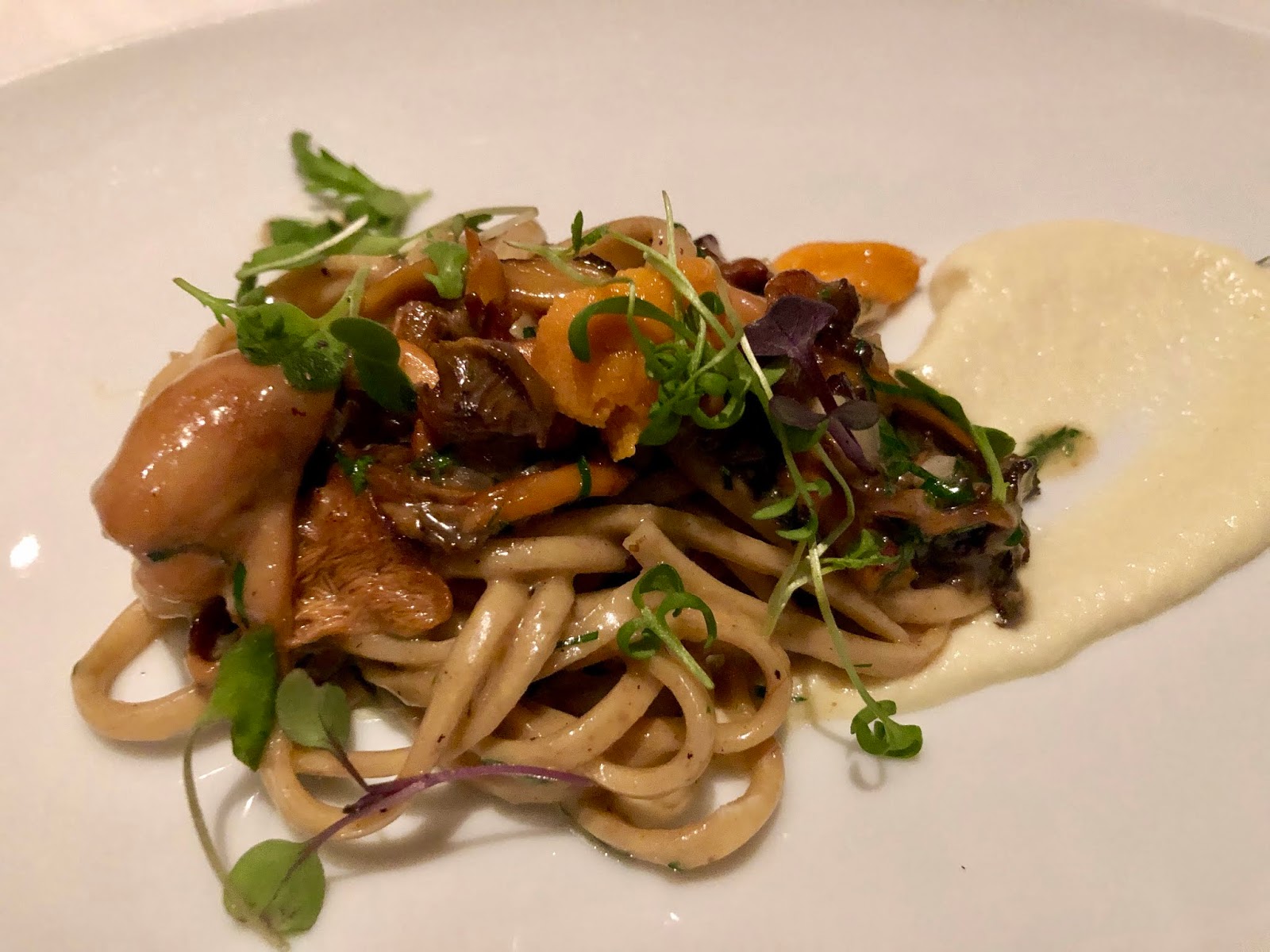
Rye Chitarra at Mooncusser Fish House (Boston)
And atop Cusser's the Mooncusser Fish House offers a seafood-centric menu, with a few exceptions, and the seafood is fresh, creatively prepared, and superb. One of my favorite dishes there is the Rye Chitarra, made with uni, celeriac, and mushrooms. Perfectly cooked pasta, briny uni, and umami-rich mushrooms, all combined for a fantastic taste. Such a nice blend of flavors of the soil and sea. This dish cried out for an umami-rich Sake, though they have an excellent wine list. The restaurant recently acquired a full liquor license, and now you can get cocktails there too.
Fried Chicken at BISq (Cambridge)
The Inman Square area has a number of excellent restaurants and BISq is certainly one of the best. They are well known for their Fried Chicken, with Thai Bird Chili Salt, and you receive four ample-sized pieces of boneless fried chicken, with your choice of dipping sauce, Buttermilk Ranch or Chipotle BBQ. I chose the Chipotle BBQ sauce, which had a pleasant tangy and slightly spicy taste. The fried chicken has a very crisp, crunchy and flavorful coating, covering the moist and tender chicken within. I can easily understand why this chicken is so beloved, and it is a very good value as well.
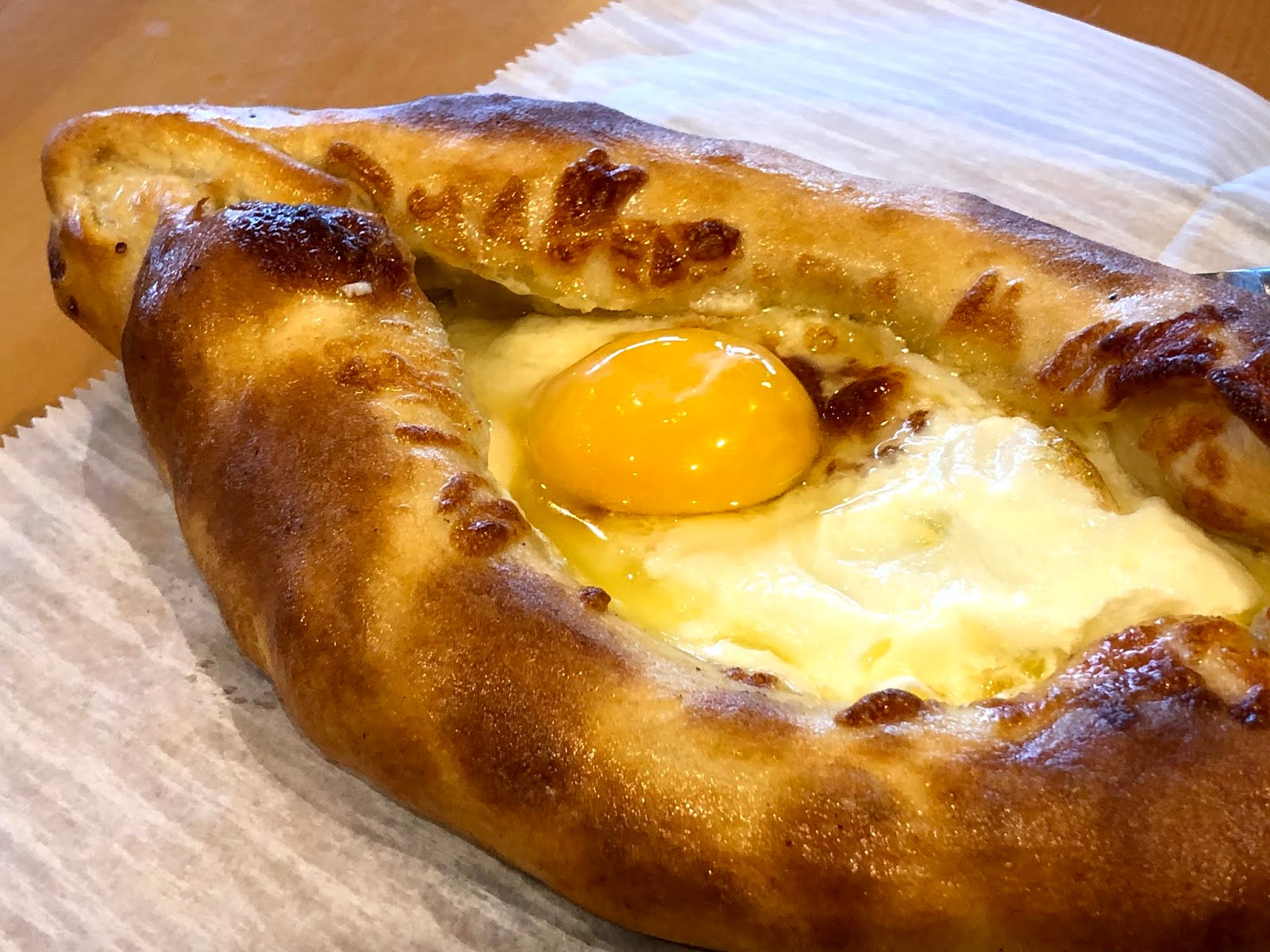
Ajarian Khachapuri at Jana Grill (Watertown)
Only a few local spots make Khachapuri, Georgian cheese bread, and the best I've tasted has been at the Jana Grill. Khachapuri is made in numerous ways and one of the most popular is the Adjarian, where the bread is molded into a boat shape and the middle is topped by a soft-boiled egg or just the yolk. Jana's version is pure comfort food, with a crust that's cooked perfectly to a nice golden brown, with a crisp exterior and a light, fluffy interior. The thick crust surrounding the middle even had cheese inside of it. The cheesy blend in the middle, when mixed with the egg yolk, was salty, cheesy, creamy and rich of umami. Each bite made me want to have another.
Goat Cheese Rangoon at East of Suez (Wolfeboro, NH)
East of Suez, a Pan Asian restaurant, is a delightful culinary destination in New Hampshire with plenty of tasty options. It's also BYOB, which is another reason to dine there. Their Goat Cheese Rangoon are made from local goat cheese, seasoned with fresh herbs, and enveloped in a deep-fried wonton skin with a sweet chili sauce dip. I'm not a fan of Crab Rangoon, with their fake crab meat and cream cheese, but I loved these goat cheese rangoon. Fried perfectly, with a crunchy exterior, the creamy goat cheese was a delight on the palate, enhanced by the sweet chili dip. Why can't more restaurants make something similar rather than the usual crab rangoon?
Pork Milanese at Osteria Posto (Waltham)
Osteria Posto is one of my favorite suburban Italian restaurants, and dishes like this are part of the reason. The Pork Milanese, made with mozzarella and tomatoes, was a killer dish. The plump little tomatoes spray your mouth with hot juices. The pork, pounded thin, was coated with a thin, crispy coating and the pork itself was very tender, covered with plenty of gooey cheese. You almost didn't need a knife to cut it. Overall, though it was an amply-sized piece of pork, the overall dish seemed light and you would definitely eat every piece.
Friptura De Miel at Moldova Restaurant (Newton)
I love lamb and the Moldova Restaurant knows well how to prepare it. Their Friptura De Miel is made from roasted lamb, stewed in a special wine and rosemary sauce, and it was served with polenta, feta cheese and sour cream. The lamb was cooked for over four hours, braised and then roasted in the oven. All that slow cooking made the lamb extremely tender, and you certainly didn't need a knife to cut it. The lamb was superb, with a hint of rosemary, and plenty of juicy, tender meat, lacking that gaminess which turns off some people to lamb. As a lamb lover, this dish impressed me immensely.
Torched Salmon Sashimi at Legal Harborside (Boston)
I haven't yet written about this dining experience but it was too good not to include on this list. The Torched Sashimi is made with Ōra King Tyee Salmon, farmed in New Zealand, which some say is like the Waygu beef of the seafood world. Made with ponzu sauce, a slice of jalapeño, and some soy sauce bubbles, this salmon was so rich and fatty, silky like butter, and well accented by the hint of heat and the umami of the soy. Pure hedonistic gustatory pleasure. Legal Harborside is the only New England restaurant that has any of these unique salmons.
Cinnamon Roll at Katie's Kitchen (Wolfeboro, NH)
Have to end this list with some home-made sweetness, a Cinnamon Roll from a cool, little breakfast spot in New Hampshire. It is everything you want in such a pastry, fresh, soft and full of plenty of rich cinnamon, as well as covered with a mildly sweet glaze. Though it comes with a large pat of butter, you won't need it for this sweet treat. This is one of the best cinnamon rolls that I've eaten at a restaurant. I'd come to Katie's Kitchen just for a couple of these pastries.
What were some of your favorite restaurant dishes of the past year?
For Over 18 Years, and over 5600 articles, I've Been Sharing My Passion for Food, Wine, Saké & Spirits. Come Join Me & Satisfy Your Hunger & Thirst.
Thursday, December 26, 2019
Wednesday, December 25, 2019
Merry Christmas & Happy Holidays To All
Merry Christmas and Happy Holidays to my family, friends, my readers and everyone else!
May the glad tidings of this holiday season shine on you, your family and friends. May your celebrations be joyous and overflowing with great people, excellent conversation, fun times, delicious food and fine drink. May the gifts you give to others be well appreciated and bring joy to the recipients. May you thoroughly enjoy whichever holiday you celebrate at this season.
This is one of my favorite times of year as I love sharing the holidays with my family and friends, enjoying their company as we eat and drink to celebrate the season. It should be a joyous occasion, reveling in all of our blessings, for no matter what ills there may be, there still is much to appreciate. That appreciation deserves recognition and sharing, and not only during the holidays. Do not dwell on the negative but rather embrace all that is good in your life.
It is also a time for giving, for sharing with those less fortunate than us. Please donate as much as you can to your favorite charities, whether you give money, time or goods. Even small donations can make a significant impact. Think of more than just yourself at this time and throughout the year.
Make sure you have a safe holiday as well. Please, please, please don't drink and drive, and drive safely and cautiously. If you are going to drink, let someone else drive, or take a taxi, Uber or public transportation. Again, please do not drink and drive! I hope that everyone will remain around to celebrate the New Year and see what 2020 brings all of us.
Drink and dine with passion this holiday, as well as every day of the year! Passion is what gives our lives meaning, what drives us toward excellence. A life devoid of passion is empty and shallow, and desperately needs change. Seek out whatever makes you passionate and revel in its delights. And share your passion with others.
Happy Holidays!
May the glad tidings of this holiday season shine on you, your family and friends. May your celebrations be joyous and overflowing with great people, excellent conversation, fun times, delicious food and fine drink. May the gifts you give to others be well appreciated and bring joy to the recipients. May you thoroughly enjoy whichever holiday you celebrate at this season.
This is one of my favorite times of year as I love sharing the holidays with my family and friends, enjoying their company as we eat and drink to celebrate the season. It should be a joyous occasion, reveling in all of our blessings, for no matter what ills there may be, there still is much to appreciate. That appreciation deserves recognition and sharing, and not only during the holidays. Do not dwell on the negative but rather embrace all that is good in your life.
It is also a time for giving, for sharing with those less fortunate than us. Please donate as much as you can to your favorite charities, whether you give money, time or goods. Even small donations can make a significant impact. Think of more than just yourself at this time and throughout the year.
Make sure you have a safe holiday as well. Please, please, please don't drink and drive, and drive safely and cautiously. If you are going to drink, let someone else drive, or take a taxi, Uber or public transportation. Again, please do not drink and drive! I hope that everyone will remain around to celebrate the New Year and see what 2020 brings all of us.
Drink and dine with passion this holiday, as well as every day of the year! Passion is what gives our lives meaning, what drives us toward excellence. A life devoid of passion is empty and shallow, and desperately needs change. Seek out whatever makes you passionate and revel in its delights. And share your passion with others.
Happy Holidays!
Monday, December 23, 2019
2019: My Top Five Croatian Dining Experiences
What were my Top Five Croatian Dining Experiences of the past year?
Let me continue the lists of my favorites and top best recommendations of 2019. I've already posted four Favorite Wine lists, and now I want to start on my Food-Related Favorites. In September 2019, I spent ten days traveling through Croatia, experiencing plenty of delicious wine and food. You can find links to my 25+ articles about this trip in All About Croatia.
While in Croatia, I dined at various restaurants and homes, experiencing a diversity of Croatian cuisine, including the fruits of the Adriatic Sea. Some of the restaurants I chose on my own, after doing plenty of research before my trip. Overall, I was impressed with the quality of food in Croatia and it certainly is an excellent culinary destination. There is so much more that I'm certain I missed, but that just means I need to return to taste more this fine country has to offer.
It wasn't easy to select just five dining experiences for this list but I made some hard choices. Please note that this is purely a subjective list, based on my own preferences, and makes no claims about being the "best" of anything. This list is also not in any particular order and each choice is linked to my more detailed prior review.
1) Seafood Extravaganza at Ficovic Restaurant
One afternoon, we stopped in the village of Hodilje, and enjoyed an amazing seafood lunch at the Ficovic Restaurant, right on the water. With wines from Vina Deak, we gorged ourselves on the bounty of the sea, including Fish Pâté, Marinated White Anchovies, Salted Sardines, Marinated Shrimp, Octopus Salad, the famed Ston Oysters, Grilled Oysters, Mussels, Clams, Noah's Ark Shells, Sea Bream, Sole, and Squid. So much absolutely delicious seafood and I made sure none of the shellfish went to waste. A great location, excellent wines, and compelling, fresh seafood. Highly recommended!
2) Home-Made Octopus Peka
The Peka is a domed metal "bell" or lid that that covers a large metal pan, and which can be used to slow cook meat, seafood, vegetables, fruits, and plenty of other ingredients, dependent on your preferences. This is a traditional dish in the Dalmatian region of Croatia, and we enjoyed an Octopus Peka at the home of Ante Bagur. The Octopus was one of the most tender I've even eaten, just melting in my mouth. The rice, potatoes, apples and more were intensely flavorful, having taken in the amazing sauce within the pan. Even though my initial plate was quite large, I still went back for more.
3) Seafood Paradise at Proto Restaurant
In Dubrovnik, the Proto Restaurant is said to be one of the best restaurants in the city, and I'd agree that it was a top notch spot, with superb seafood. Their Ston Oysters were so fresh and pristine, while the Fish Tartare and Snails, Prepared Pelješac-Style, were also fantastic and delicious. The Gambero Rosso Shrimps Tails, accompanied by plump, homemade ravioli with ricotta in a sweet wine sauce, were scrumptious. The wines were killer, some of the best wines I tasted while in Croatia. Highly recommended!
4) Agava Restaurant, A Zagreb Treasure
I selected this restaurant based on my own research and it turned out to be wonderful, both its cuisine and wines. It's seafood was fresh, such as the silky Wild Fish (Sea Bass) Tartare and the St. Jacque's Shell, extremely tender scallops. Each dish was perfectly composed, with a nice balance of textures and flavors. The Pasta "Fuži" with Black Truffles, a traditional Istrian dish, was superb, with rich, earthy truffles and light pasta tubes in a delightfully creamy sauce. The wines I selected to accompany the dinner were excellent as well, helping to showcase the diversity of Croatian wines. Highly recommended!
5) Frogs & Eels at Volarević Winery
At the Volarević Winery, we first enjoyed an excellent wine tasting and then were hosted to a traditional lunch of the region, including frog legs and eels. There was a plate of Sautéed Frog Legs as well as Fried & Breaded Frog Legs, each with tender and flavorful meat. The centerpiece of the lunch was Brudet, a traditional Croatian, tomato-based seafood stew. It is commonly made with tomatoes, olive oil, onions, garlic, parsley, salt, and pepper. In the Neretva Valley region, eels and frog legs are very common, and that is what we were served, atop polenta. A rich and hearty stew, the meaty eel was a nice addition to the lighter meat of the frog legs. It was spiced well, with rich garlic notes, and was an excellent pairing with Plavac Mali.
If you've dined in Croatia, what were some of your most memorable dining experiences?
Let me continue the lists of my favorites and top best recommendations of 2019. I've already posted four Favorite Wine lists, and now I want to start on my Food-Related Favorites. In September 2019, I spent ten days traveling through Croatia, experiencing plenty of delicious wine and food. You can find links to my 25+ articles about this trip in All About Croatia.
While in Croatia, I dined at various restaurants and homes, experiencing a diversity of Croatian cuisine, including the fruits of the Adriatic Sea. Some of the restaurants I chose on my own, after doing plenty of research before my trip. Overall, I was impressed with the quality of food in Croatia and it certainly is an excellent culinary destination. There is so much more that I'm certain I missed, but that just means I need to return to taste more this fine country has to offer.
It wasn't easy to select just five dining experiences for this list but I made some hard choices. Please note that this is purely a subjective list, based on my own preferences, and makes no claims about being the "best" of anything. This list is also not in any particular order and each choice is linked to my more detailed prior review.
1) Seafood Extravaganza at Ficovic Restaurant
One afternoon, we stopped in the village of Hodilje, and enjoyed an amazing seafood lunch at the Ficovic Restaurant, right on the water. With wines from Vina Deak, we gorged ourselves on the bounty of the sea, including Fish Pâté, Marinated White Anchovies, Salted Sardines, Marinated Shrimp, Octopus Salad, the famed Ston Oysters, Grilled Oysters, Mussels, Clams, Noah's Ark Shells, Sea Bream, Sole, and Squid. So much absolutely delicious seafood and I made sure none of the shellfish went to waste. A great location, excellent wines, and compelling, fresh seafood. Highly recommended!
2) Home-Made Octopus Peka
The Peka is a domed metal "bell" or lid that that covers a large metal pan, and which can be used to slow cook meat, seafood, vegetables, fruits, and plenty of other ingredients, dependent on your preferences. This is a traditional dish in the Dalmatian region of Croatia, and we enjoyed an Octopus Peka at the home of Ante Bagur. The Octopus was one of the most tender I've even eaten, just melting in my mouth. The rice, potatoes, apples and more were intensely flavorful, having taken in the amazing sauce within the pan. Even though my initial plate was quite large, I still went back for more.
3) Seafood Paradise at Proto Restaurant
In Dubrovnik, the Proto Restaurant is said to be one of the best restaurants in the city, and I'd agree that it was a top notch spot, with superb seafood. Their Ston Oysters were so fresh and pristine, while the Fish Tartare and Snails, Prepared Pelješac-Style, were also fantastic and delicious. The Gambero Rosso Shrimps Tails, accompanied by plump, homemade ravioli with ricotta in a sweet wine sauce, were scrumptious. The wines were killer, some of the best wines I tasted while in Croatia. Highly recommended!
4) Agava Restaurant, A Zagreb Treasure
I selected this restaurant based on my own research and it turned out to be wonderful, both its cuisine and wines. It's seafood was fresh, such as the silky Wild Fish (Sea Bass) Tartare and the St. Jacque's Shell, extremely tender scallops. Each dish was perfectly composed, with a nice balance of textures and flavors. The Pasta "Fuži" with Black Truffles, a traditional Istrian dish, was superb, with rich, earthy truffles and light pasta tubes in a delightfully creamy sauce. The wines I selected to accompany the dinner were excellent as well, helping to showcase the diversity of Croatian wines. Highly recommended!
5) Frogs & Eels at Volarević Winery
At the Volarević Winery, we first enjoyed an excellent wine tasting and then were hosted to a traditional lunch of the region, including frog legs and eels. There was a plate of Sautéed Frog Legs as well as Fried & Breaded Frog Legs, each with tender and flavorful meat. The centerpiece of the lunch was Brudet, a traditional Croatian, tomato-based seafood stew. It is commonly made with tomatoes, olive oil, onions, garlic, parsley, salt, and pepper. In the Neretva Valley region, eels and frog legs are very common, and that is what we were served, atop polenta. A rich and hearty stew, the meaty eel was a nice addition to the lighter meat of the frog legs. It was spiced well, with rich garlic notes, and was an excellent pairing with Plavac Mali.
If you've dined in Croatia, what were some of your most memorable dining experiences?
Friday, December 20, 2019
2019: My Favorite Croatian Wines
What were my favorite Croatian wines this year?
Welcome to my final Favorite Wines List, all about the wines of the Republic of Croatia. Earlier this week, I posted three other Favorite lists, including my Top Ten Wines Under $20, Top Ten Wines Over $20 But Under $50, and Top Wines Over $50. In September 2019, I spent ten days traveling through Croatia, experiencing plenty of delicious wine and food. You can find links to my 25 articles about this trip in All About Croatia.
During that period, I tasted approximately 150 Croatian wines, so I want to highlight 15 of those wines here, the top 10% of what I sampled. Like the prior lists, this list includes wines that not only I thoroughly enjoyed, but which I also found to be particularly compelling for various reasons. They might be especially delicious, something more unique, excellent values for the price or memorable for other reasons. They all stand out, for some particular reason, above the other wines I sampled while in Croatia.
This is a purely subjective list, based on my own preferences, and makes no claims about being the "best" wines out there. It is primarily the wines which spoke to me the loudest, even when they were subtle wines. These are all wines that I strongly recommend and which I believe many other wine lovers would also enjoy.
The wines are not listed in any particular order and each choice is linked to my more detailed prior review. A number of these wines may not yet be available in your local area, but in the U.S., Croatian Premium Wine Imports is importing several of these wines. Those wines are available in Massachusetts, and also can be shipped to numerous states across the country. They will also be importing additional Croatian wines in 2020.
1) 2018 Dvanajščak Kozol Pušipel
The Agava Restaurant in Zagreb has an excellent wine list, as well as delicious food. This was one of the four wines I drank with my meal. Pušipel is the Croatian term for the Furmint grape, which is native to Hungary and commonly used to crate the famous Tokaji dessert wine. I enjoyed this dry, fresh and fruity wine, which had excellent crisp acidity. There were bright lemon and green apples flavors, with a backbone of minerality, and this does very well with seafood.
2) 2017 Vina Deak Ćaća Moj Pošip
During a superb seafood lunch, which included great shellfish, from Ston Oysters to Mussels, this wine was a perfect pairing. Made from the indigenous Pošip grape, it was aged for about six months on the lees in stainless steel, saw no oak, and had a 14.3% ABV. With a bright golden color, it possessed an appealing nose of citrus with subtle floral notes. And on the palate, it was crisp and dry, fresh and creamy, with delicious flavors of citrus and hints of floral honey, and a subtler herbal note. It was tasty on its own, an elegant and well-balanced summery wine, but it also shined with the seafood we enjoyed.
3) 2017 Volarević Rosé Premium
Made from 100% Plavac Mali, an indigenous grape, and with a 13.5% ABV, the wine is made from only free run juice. In addition, the final period of fermentation occurs in oak barrels, and later it ages for 3-4 months in stainless steel. This was a more complex and intriguing wine, which was crisp and dry, with more subtle red fruit flavors (especially strawberry and cherry), as well as a touch of herbs and floral elements. This was the type of Rosé that I would drink year round, savoring each sip, and it was also very food friendly.
4) 2013 Volarević "Gold Edition" Plavac Mali
Made from 100% Plavac Mali, and at a 15.5% ABV, this wine had a little age on it though it still retained a certain freshness to it. The newer vintages are big, bold wine, with strong tannins, but this wine had mellowed some, become more elegant and silky. A complex melange of flavors, including ripe plum, blackberry, a bit of blueberry, black pepper, leather, chocolate, subtle dark spice and a hint of herbs, especially on the finish. Complex, well balanced and superb, just a true pleasure to slowly sip and enjoy.
5) Tris Limited Edition Sparkling Wine
Lunch at the Proto Restaurant in Dubrovnik also offered a number of compelling and unique. wines. This Sparkling wine is made from three indigenous grapes, Pošip, Rukatac and Cetinka. I very much enjoyed this wine, finding it to be crisp and dry, with plenty of tiny bubbles, and delicious and complex flavors, primarily of green apple, pear, and a hint of brioche. Such a refreshing wine, with a pleasing finish, and an indication that Croatians can make excellent sparkling wine.
6) 2017 Crvik Blasius Malvasia Dubrovacka
Also from the Proto Restaurant, this was an amber wine, produced by a small, family-run winery with roots back to 1897. The Malvasija Dubrovačka grape has existed since the time of the ancient Greeks and it's seeing a revitalization in recent years. Fermented with natural yeasts, this wine was macerated on the lees for about six months. It was complex and intriguing, with a fascinating melange of flavors, including peach, almonds, orange peel, floral notes, and a subtle mineral aspect. Excellent acidity, well-integrated tannins, and a lengthy finish. There is so much going on in each sip, and you could easily sit and savor a glass for hours, reveling in what can be found with each taste.
7) 2017 Heritage,
And one more wine from Proto Restaurant, it was created by Igor Radovanovic, blending two indigenous varieties, Grk and Pošip, from a 50 year-old vineyard. The grapes were macerated on the skins, and then aged on the lees in oak barrique. It was alluringly aromatic, with a palate that was dry, crisp and fresh with intense herbal flavors and subtle citrus and stone fruit tastes. Another complex wine that only surprises you with each sip, bringing something new to you with each taste.
8) 2016 Rizman Tribidag
This wine is produced mainly primarily from Tribidag, an indigenous grape which you might know better as Zinfandel or Primitivo, with a small addition of Tempranillo. The wine spends about a year in oak, with less new oak than the Plavac Mali. At only 13.5% ABV, this is still a powerful wine, though the tannins are still very manageable. There are more plum and black cherry flavors, with notes of black pepper, and the melange is complex and compelling. The wine is well balanced, with a lingering and pleasing finish. You'll need a hearty dish to accompany this bold and delicious wine. It would be fascinating to taste test this next to a few California Zinfandels.
9) 2015 Rizman Primus
Made from Plavac Mali, with a tiny bit of Tempranillo, they select the best plots for the grapes in this wine. The wine was aged for about 12 months in American and French oak, including some new oak, and then another 6 months in the bottle. With a 13.5% ABV, this wine is bright and crisp, with a delicious blend of red and black fruits, a spicy backbone, and well-integrated tannins. A lengthy and satisfying finish, plenty of complexity, and this wine would pair well with steak or other hearty dishes.
10) 2014 Korak Rosé Nature
Croatia is making some compelling Sparkling wines, including this Rosé. Made from 100% Pinot Noir, it was aged on the lees for 3 years, and has no dosage. I loved this sparkling Rosé, from its delightful nose of bright red fruit to its complex, dry and intriguing taste. The fruit is dominant, from strawberry to cherry, with a hint of citrus, and there is an underlying minerality as well. Tiny bubbles, and a lingering, pleasing finish. A hedonistic pleasure.
11) 2018 Cossetto Prima Luce
From a family winery, located in the Istria region, this wine is produced from 100% Malvazija Istarska, an indigenous grape that is the second most planted white grape in Croatia. With a 13% ABV, this was a fascinating, complex and delicious wine, with plenty of acidity and intriguing herbal flavors. There were bright, though more subtle, citrus notes, an extremely lengthy finish, and a touch of spice. Its unique and appealing taste made it a stand out.
12) Ahearne Wild Skins
A blend of three indigenous grapes Kuč, Bogdanuša, and Pošip, only ambient yeast was used, and there was extended skin contact. This was a "wow" wine, an impressive and complex wine which has ended up as one of my most favorite wines during my entire time in Croatia. Its intriguing melange of flavors included notes of candied orange, honey, apricot, and a savory herbal element. This is something to slowly savor, to enjoy each fascinating taste and all that can be found within it. Each sip brings something different to your palate. Superb!
13) 2018 Bura Rukatac
Made from 100% Rukatac, a grape known as Marastina on Pelješac, this wine was made in a more traditional manner, fermented with wild yeasts and spending four days on the skins. At 12% ABV, this wine had an alluring nose of savory aromas, and on the palate it was wonderfully complex and intriguing. Herbs and spaces, briny notes, a taste of apples and dried fruit, and even some subtle mineral notes. So much going on in this wine and most of us seemed enamored with this wine.
14) 2015 Benmosche Family Dingač
Made from 100% Plavac Mali, and with a 15% ABV, this a big, bold wine, yet not overpowering. It has deep flavors of black fruit, with notes of raisins and black pepper, hints of herbs and a subtle earthiness. Such a compelling complex melange of flavors. A lingering finish, good acidity, and absolutely delicious.
15) 2018 Grgić Pošip
Produced from 100% Pošip, from grapes on the island of Korčula, about 30% of the wine was aged in used French oak for 3-6 months, and then blended back with the wine in the stainless steel. With a 13% ABV, this was quite a complex Pošip, with a rich and creamy body, and a fascinating melange of flavors, including lemon, pineapple, and green apple, along with a touch of salinity, a backbone of minerality and plenty of crisp acidity. A well balanced wine with a lengthy and pleasing finish. This is a white wine with aging potential, and it would pair well with seafood to light chicken dishes.
If you have some of your own recommendations for Croatian wines, please add them to the comments.
Welcome to my final Favorite Wines List, all about the wines of the Republic of Croatia. Earlier this week, I posted three other Favorite lists, including my Top Ten Wines Under $20, Top Ten Wines Over $20 But Under $50, and Top Wines Over $50. In September 2019, I spent ten days traveling through Croatia, experiencing plenty of delicious wine and food. You can find links to my 25 articles about this trip in All About Croatia.
During that period, I tasted approximately 150 Croatian wines, so I want to highlight 15 of those wines here, the top 10% of what I sampled. Like the prior lists, this list includes wines that not only I thoroughly enjoyed, but which I also found to be particularly compelling for various reasons. They might be especially delicious, something more unique, excellent values for the price or memorable for other reasons. They all stand out, for some particular reason, above the other wines I sampled while in Croatia.
This is a purely subjective list, based on my own preferences, and makes no claims about being the "best" wines out there. It is primarily the wines which spoke to me the loudest, even when they were subtle wines. These are all wines that I strongly recommend and which I believe many other wine lovers would also enjoy.
The wines are not listed in any particular order and each choice is linked to my more detailed prior review. A number of these wines may not yet be available in your local area, but in the U.S., Croatian Premium Wine Imports is importing several of these wines. Those wines are available in Massachusetts, and also can be shipped to numerous states across the country. They will also be importing additional Croatian wines in 2020.
1) 2018 Dvanajščak Kozol Pušipel
The Agava Restaurant in Zagreb has an excellent wine list, as well as delicious food. This was one of the four wines I drank with my meal. Pušipel is the Croatian term for the Furmint grape, which is native to Hungary and commonly used to crate the famous Tokaji dessert wine. I enjoyed this dry, fresh and fruity wine, which had excellent crisp acidity. There were bright lemon and green apples flavors, with a backbone of minerality, and this does very well with seafood.
2) 2017 Vina Deak Ćaća Moj Pošip
During a superb seafood lunch, which included great shellfish, from Ston Oysters to Mussels, this wine was a perfect pairing. Made from the indigenous Pošip grape, it was aged for about six months on the lees in stainless steel, saw no oak, and had a 14.3% ABV. With a bright golden color, it possessed an appealing nose of citrus with subtle floral notes. And on the palate, it was crisp and dry, fresh and creamy, with delicious flavors of citrus and hints of floral honey, and a subtler herbal note. It was tasty on its own, an elegant and well-balanced summery wine, but it also shined with the seafood we enjoyed.
3) 2017 Volarević Rosé Premium
Made from 100% Plavac Mali, an indigenous grape, and with a 13.5% ABV, the wine is made from only free run juice. In addition, the final period of fermentation occurs in oak barrels, and later it ages for 3-4 months in stainless steel. This was a more complex and intriguing wine, which was crisp and dry, with more subtle red fruit flavors (especially strawberry and cherry), as well as a touch of herbs and floral elements. This was the type of Rosé that I would drink year round, savoring each sip, and it was also very food friendly.
4) 2013 Volarević "Gold Edition" Plavac Mali
Made from 100% Plavac Mali, and at a 15.5% ABV, this wine had a little age on it though it still retained a certain freshness to it. The newer vintages are big, bold wine, with strong tannins, but this wine had mellowed some, become more elegant and silky. A complex melange of flavors, including ripe plum, blackberry, a bit of blueberry, black pepper, leather, chocolate, subtle dark spice and a hint of herbs, especially on the finish. Complex, well balanced and superb, just a true pleasure to slowly sip and enjoy.
5) Tris Limited Edition Sparkling Wine
Lunch at the Proto Restaurant in Dubrovnik also offered a number of compelling and unique. wines. This Sparkling wine is made from three indigenous grapes, Pošip, Rukatac and Cetinka. I very much enjoyed this wine, finding it to be crisp and dry, with plenty of tiny bubbles, and delicious and complex flavors, primarily of green apple, pear, and a hint of brioche. Such a refreshing wine, with a pleasing finish, and an indication that Croatians can make excellent sparkling wine.
6) 2017 Crvik Blasius Malvasia Dubrovacka
Also from the Proto Restaurant, this was an amber wine, produced by a small, family-run winery with roots back to 1897. The Malvasija Dubrovačka grape has existed since the time of the ancient Greeks and it's seeing a revitalization in recent years. Fermented with natural yeasts, this wine was macerated on the lees for about six months. It was complex and intriguing, with a fascinating melange of flavors, including peach, almonds, orange peel, floral notes, and a subtle mineral aspect. Excellent acidity, well-integrated tannins, and a lengthy finish. There is so much going on in each sip, and you could easily sit and savor a glass for hours, reveling in what can be found with each taste.
7) 2017 Heritage,
And one more wine from Proto Restaurant, it was created by Igor Radovanovic, blending two indigenous varieties, Grk and Pošip, from a 50 year-old vineyard. The grapes were macerated on the skins, and then aged on the lees in oak barrique. It was alluringly aromatic, with a palate that was dry, crisp and fresh with intense herbal flavors and subtle citrus and stone fruit tastes. Another complex wine that only surprises you with each sip, bringing something new to you with each taste.
8) 2016 Rizman Tribidag
This wine is produced mainly primarily from Tribidag, an indigenous grape which you might know better as Zinfandel or Primitivo, with a small addition of Tempranillo. The wine spends about a year in oak, with less new oak than the Plavac Mali. At only 13.5% ABV, this is still a powerful wine, though the tannins are still very manageable. There are more plum and black cherry flavors, with notes of black pepper, and the melange is complex and compelling. The wine is well balanced, with a lingering and pleasing finish. You'll need a hearty dish to accompany this bold and delicious wine. It would be fascinating to taste test this next to a few California Zinfandels.
9) 2015 Rizman Primus
Made from Plavac Mali, with a tiny bit of Tempranillo, they select the best plots for the grapes in this wine. The wine was aged for about 12 months in American and French oak, including some new oak, and then another 6 months in the bottle. With a 13.5% ABV, this wine is bright and crisp, with a delicious blend of red and black fruits, a spicy backbone, and well-integrated tannins. A lengthy and satisfying finish, plenty of complexity, and this wine would pair well with steak or other hearty dishes.
10) 2014 Korak Rosé Nature
Croatia is making some compelling Sparkling wines, including this Rosé. Made from 100% Pinot Noir, it was aged on the lees for 3 years, and has no dosage. I loved this sparkling Rosé, from its delightful nose of bright red fruit to its complex, dry and intriguing taste. The fruit is dominant, from strawberry to cherry, with a hint of citrus, and there is an underlying minerality as well. Tiny bubbles, and a lingering, pleasing finish. A hedonistic pleasure.
11) 2018 Cossetto Prima Luce
From a family winery, located in the Istria region, this wine is produced from 100% Malvazija Istarska, an indigenous grape that is the second most planted white grape in Croatia. With a 13% ABV, this was a fascinating, complex and delicious wine, with plenty of acidity and intriguing herbal flavors. There were bright, though more subtle, citrus notes, an extremely lengthy finish, and a touch of spice. Its unique and appealing taste made it a stand out.
12) Ahearne Wild Skins
A blend of three indigenous grapes Kuč, Bogdanuša, and Pošip, only ambient yeast was used, and there was extended skin contact. This was a "wow" wine, an impressive and complex wine which has ended up as one of my most favorite wines during my entire time in Croatia. Its intriguing melange of flavors included notes of candied orange, honey, apricot, and a savory herbal element. This is something to slowly savor, to enjoy each fascinating taste and all that can be found within it. Each sip brings something different to your palate. Superb!
13) 2018 Bura Rukatac
Made from 100% Rukatac, a grape known as Marastina on Pelješac, this wine was made in a more traditional manner, fermented with wild yeasts and spending four days on the skins. At 12% ABV, this wine had an alluring nose of savory aromas, and on the palate it was wonderfully complex and intriguing. Herbs and spaces, briny notes, a taste of apples and dried fruit, and even some subtle mineral notes. So much going on in this wine and most of us seemed enamored with this wine.
14) 2015 Benmosche Family Dingač
Made from 100% Plavac Mali, and with a 15% ABV, this a big, bold wine, yet not overpowering. It has deep flavors of black fruit, with notes of raisins and black pepper, hints of herbs and a subtle earthiness. Such a compelling complex melange of flavors. A lingering finish, good acidity, and absolutely delicious.
15) 2018 Grgić Pošip
Produced from 100% Pošip, from grapes on the island of Korčula, about 30% of the wine was aged in used French oak for 3-6 months, and then blended back with the wine in the stainless steel. With a 13% ABV, this was quite a complex Pošip, with a rich and creamy body, and a fascinating melange of flavors, including lemon, pineapple, and green apple, along with a touch of salinity, a backbone of minerality and plenty of crisp acidity. A well balanced wine with a lengthy and pleasing finish. This is a white wine with aging potential, and it would pair well with seafood to light chicken dishes.
If you have some of your own recommendations for Croatian wines, please add them to the comments.
Thursday, December 19, 2019
What's Traditional Shepherd's Pie? A Historical Look
Shepherd's Pie is excellent comfort food, especially during the winter, a hearty dish of minced or ground meat and mashed potatoes, and possibly some veggies. Historically, it used to be made with leftovers, a simple recipe so food wouldn't go to waste. Many restaurants and food markets seem to prepare their own version of Shepherd's pie and everyone has their own favorite spot to enjoy this hearty dish. For example, I enjoy the version sold at J. Pace & Son in Saugus.
This dish would seem to be free of controversy, absent of pretensions, but that isn't the case. What constitutes "traditional" Shepherd's Pie? That is the question at the heart of the disagreements. Some people claim that it must be made from lamb, and that if it is made from beef, then it must be called Cottage Pie. Other people add that it must only contain certain vegetables. Are these claims accurate? Do they represent a lengthy historical tradition? If not, what actually is "traditional" Shepherd's Pie?
We probably should first address the meaning of "traditional." This isn't a precise term, and generally refers to something that has existed for a significant length of time, over the course of a number of generations. For example, we might state that a recipe that has remained largely unchanged for a hundred years or so is a traditional recipe. Other people might believe that a recipe which has only been around for twenty-five years has become traditional, though we might also view that as more a modern tradition.
So, how should we view the "traditional" Shepherd's Pie recipe? Should we focus on recipes that have existed for 100+ years, or look for something more modern, which has been around for only a fraction of that time period? Let's take an extended historical look at Shepherd's Pie and later analyze the answers to these questions.
According to the Merriam-Webster dictionary, the first known use of the term "cottage pie" was in 1791. At the time, it referred to a meat and mashed potato pie, and it could be of any type of meat, such as beef or lamb. That same dictionary noted that the first known use of the term "shepherd's pie" was in 1854, though that isn't actually correct. From my own research, I found a source referencing "shepherd's pie" that was five years older, from 1849.
The Practice of Cookery and Pastry, Adapted to the Business of Every Day Life by Mrs. Williamson (Edinburgh, 1849) was a book of Scottish recipes, and the author was a culinary instructor, hoping to "give the most useful, plain, and economical dishes by means of easy and distinct directions, ..." There was a chapter on savory Pies, including items such as Pigeon Pie, Mutton Pie, Rabbit Pie, Partridge Pie, Venison Pie and Sheep's Head Pie. There wasn't a recipe or mention of Cottage Pie but there was a recipe for Shepherd's Pie, which could be the first such known printed recipe for such.
The recipe stated, “Shepherd’s Pie. Take cold dressed meat of any kind, roast or boiled. Slice it, break the bones, and put them on with a little boiling water, and a little salt. Boil them until you have extracted all the strength from them, and reduced it to very little, and strain it. Season the sliced meat with pepper and salt, lay it in a baking dish, and pour in the sauce you strained. Add a little mushroom ketchup. Have some potatoes boiled and nicely mashed, cover the dish with the potatoes, smooth it on the top with a knife, notch it round the edge and mark it on the top, the same as paste. Bake it in an oven, or before the fire, until the potatoes are a nice brown.”
This is a fascinating recipe in a number of regards. First, it tends to give some credence to those who believe Scotland originally coined the term, "Shepherd's pie." Second, it indicates that you can use any type of meat, and not just mutton or lamb. Third, there are no vegetables in this recipe, just a bit of mushroom ketchup. Fourth, the meat is placed at the bottom of the pan and then topped with mashed potatoes. For approximately the next 125+ years, most recipes for Shepherd's Pie would follow these basics, using any type of meat, mashed potatoes and no vegetables. This then is a strong candidate for a "traditional" Shepherd's Pie, a basic recipe that has lasted for 125+ years.
One of the first newspapers references to Shepherd's Pie was the Daily Telegraph & Courier (England), December 1, 1870, which discussed a dinner for a festival of the Scottish Corporation. "The dinner embraced the usual Scottish delicacies, such as cock-a-leekie, haggis, sheep's head and trotters, collops, shepherd's pie, and black puddings.." There was another brief reference in The Freeman’s Journal (Dublin, Ireland), December 4, 1872, “We learn that there was a strong flavour of national dishes in the menu, which included cockie leekie, Scotch broth, haggis, sheep’s head, shepherd’s pie, and white and black puddings—all excellent things in themselves,…” Neither newspaper provided any details of the ingredients for the shepherd's pie, however they help to confirm the Scottish origin of Shepherd's pie.
During the 1870s, several books provided recipes and additional information for Shepherd's Pie. The Scholars' Handbook of Household Management and Cookery, by W.B. Tegetmeier (London, 1876), printed this recipe, “Shepherd’s Pie.—Cut up any scraps of cold meat, season to taste, sprinkle over a few fine herbs, out them in a pie-dish, pour over a little water. Mash some potatoes with half a gill of hot milk, in which half an ounce of butter is melted. Cover your pie with them, and bake half an hour.” Once again, we see that any type of meat could be used, and that potatoes were the only other significant ingredient. There were no vegetables.
The Kettners Book of the Table: A Manual of Cookery (London, 1877) provided information on Irish stew, made with mutton and potatoes, and then stated, “In Scotland they produce exactly such a stew, cover it over with a crust, and call it Shepherd's pie." The book also noted, "In Devonshire and Cornwall they make this pie, put apples into it instead of potatoes, and announce it as Devonshire, Cornish, or Squab pie." Note that this passage didn't state that Shepherd's Pie was only made from mutton. And based on all of the additional references in other resources, it's obvious that restriction didn't exist during this time period. Plus, there is more confirmation of the Scottish origin of Shepherd's pie.
The Official Handbook for the National Training School for Cookery, Compiled by R.O.C. (London, 1877) provided a recipe for Shepherd’s Pie, as well as an average cost to make one, 9 1/4 sixpence. The recipe called for "any scraps of cold meat," potatoes and a small onion. It also noted that if there was insufficient fat in the cold meat, that you could add some pork fat. This is the first recipe to add a vegetable, an onion, to the recipe. And once again, we see that any type of meat could be used.
We then find in Margaret Sim's Cookery (London, 1879) a more elaborate ecipe for Shepherd’s Pie that called for you to “Take cold roast beef, mutton, or veal;…” It also called for several vegetables, including onion, carrot, turnip, and celery. In addition, an egg was added to the mashed potatoes. Again, we see that the recipe isn't limited to mutton, though a number of veggies are added, making this one of the more unique Shepherd's pie recipes of this time.
In The Art of Cooking by Matilda Lee Dods (NY, 1880), we find maybe the first time a recipe for Shepherd's Pie was published in an American cookbook. The recipe called for “One pound of cold roast beef, one Spanish onion, one and one-half ounces of butter, one-half ounce of flour, one pound of mashed potatoes, one-half gill of cold water, one teaspoonful of pepper, one teaspoonful of salt." No mutton used here. Differing from prior recipes, a layer of potatoes was first laid down in the pan, and then covered by a layer of meat. Then, additional layers of potatoes and meat were alternated, though potatoes would placed at the very top.
Moving back to newspapers, The Hull Packett and East Riding Times (England), April 1, 1880 published an article about the Pork Pie Club, which created a massive "Shepherd's pork pie, weighing one ton plumping weight, baked with a wagon of Denaby Main coals,.." It "will be eaten with a true South Yorkshire Relish, by the members of the above club, who will also partake of six dozen of Balding’s champagne.” Again, this pie wasn't limited to mutton, though they didn't provide the recipe so it is unknown if it contained any vegetables or not.
The Leeds Mercury (England), June 1, 1881 wrote, "When a sirloin of beef is no longer fit to be brought to the table there is always a great deal of meat on it which can be used for rissoles, croquettes, sausage rolls, Cornish pasties, Shepherd's pie, ..." This article was reprinted in a number of U.S. newspapers, and the first newspaper to do so might have been the Freeborn County Standard (MN), September 1, 1881. This might have also been the first U.S. newspaper reference to Shepherd's pie.
The Sheffield and Rotherham Independent (England), March 4, 1882, published a recipe, “Shepherd’s Pie—Chop fine about a pound of cold meat, add salt, pepper, parsley, and any other seasoning that may be liked; put it in a pie dish and pour it over some good gravy, sufficient to cover the meat; boil about two pounds of potatoes, mash them and put them over the meat nicely smoothed, a few bits of dripping stuck on the top, and a little flour; bake in the oven, or in front of the fire until nicely brown.” Any type of meat could be used, and no vegetables were included in this recipe, similar to the original recipe from 1849.
Back in the U.S., the Sterling Gazette (Kansas), March 20, 1884, quoted a Boston Globe article, providing another recipe for Shepherd’s pie, noting it is made with a “mince of cold mutton, made by cutting the meat in small bits and warming it in a little thickened gravy. This makes a delicious breakfast dish.” No vegetables were included. This recipe was reprinted in numerous other U.S. newspapers over the course of the next 4-5 years. Though this recipe called for mutton, plenty of other later recipes indicated any type of meat could be used.
It's also interesting that Shepherd's pie was seen at this time as a common breakfast dish in the U.S. Numerous later newspapers articles would continue this belief, sometimes showing breakfast menus that included Shepherd's pie. These articles also noted that Shepherd's pie could also be a lunch and dinner dish. You could eat it anytime during the day you desired. Would you eat Shepherd's pie for breakfast? Have you ever enjoyed it for breakfast?
Returning to the UK, The Newcastle Weekly Courant (England), November 13, 1885, penned an article about what cooks can make with cold mutton, referred to several times as “cold meat”. It stated, “Broken ragged pieces may be used for mince, mutton pie, Cornish pasties, shepherd’s pie, vol-au-vent;" There was a follow-up article in their November 20, 1885 issue, giving suggestions for what cooks can produce from cold beef, and that also included “made into Cornish pasty or shepherd’s pie.” As we can see, Shepherd's pie could still be made from mutton or beef.
Rabbits in Shepherd's pie? The Dumfries & Galloway Standard, August 14, 1886, detailed a dinner that included, "the chief dish was shepherd's pie, made with rabbits. Each pie contained four full-grown rabbits, one pound of fat pork, and potatoes in abundance." There certainly don't seem to be any hard and fast rules as to what meats could go into a Shepherd's pie. And rabbit is delicious!
As a brief aside, a similar dish to Shepherd's pie was conceived in the U.S., and it was known as Boston Brown Hash. I haven't yet been able to find the specific origin of this dish, and whether it actually originated in Boston or not, though the earliest reference I found to it was in the Philadelphia Cook Book: A Manual of Home Economics by Sarah Tyson Heston Rorer (G. H. Buchanan & Co., 1886).
The book's recipe stated, “Boston Brown Hash. Chop any remains of steaks, roasts or stews very fine. Grease deep pie-dishes. Put a layer of mashed potatoes (cold ones, left over, will answer) in the bottom of the dish, then a layer of meat, then a layer of stale bread crumbs; sprinkle with salt and pepper; place here and there a few bits of butter, and moisten with a half-cup of beef gravy, then another layer of potatoes. Dip a knife into milk and smooth over the top. Bake in a moderate oven about a half hour, until a nice brown.”
Boston Brown Hash was primarily mentioned in U.S. newspapers and books up to around 1935, and the various sources which provided a recipe were nearly identical. Any type of meat could be used for this dish, and its main difference from Shepherd's pie was the addition of a layer of stale bread crumbs. Why has this recipe been largely forgotten now?
Back to Shepherd's pie. The Hampshire Telegraph and Naval Chronicle (England), December 29, 1888, offered another Shepherd’s Pie recipe, “Cut cold cooked mutton into dice. Cut four good sized cold potatoes into blocks, put a layer of each in a deep baking dish, then a sprinkling of salt, pepper, and chopped parsley, and so continue until the materials are used; pour over a cup of stock or water, and place here and there a few bits of butter. Have ready two cups of mashed potatoes, add to them a quarter cup of cream, a half teaspoonful of salt and a dash of pepper; beat until very light and add a tablespoonful of butter and one cup of sifted flour, mix lightly and roll out in a sheet, cover it over the top of the baking dish, and make a small hole in the centre to allow the escape of steam. Bake in a moderate oven one hour.” This recipe used mutton but no vegetables were included.
The Weekly Standard and Express (England), November 5, 1892, then offered their own recipe for Shepherd’s pie, “Half fill a pudding mould with pieces of beef seasoned with salt and a little pepper. Pour over it a cupful of gravy, with a slight suggestion of Worcestershire sauce, catsup or vinegar, to give piquancy, cover with a thin crust of newly-boiled and mashed potatoes, and bake in a moderately heated oven to a nice light golden-brown colour.” Beef and mutton both remained as valid options for Shepherd's pie.
Next, in the U.S., the McPherson Daily Republican (Kansas), September 11, 1893 published a recipe stating, “Cut into dice one quart of any kind of cold meat. Mince very fine two tablespoonfuls of salt pork, and add to the meat.” The recipe also called for the addition of an onion, still the most common vegetable used in any of these recipes.
Returning to the UK, The Newcastle Weekly Courant (England), August 25, 1894, published, “Shepherd’s Pie (made of fragments of meat and cold potatoes).—Take whatever fragments of meat there may be in the larder, and double its bulk in potatoes. Mash the potatoes smoothly, and beat them up with a slice of melted butter, a little milk, and salt. Cut the meat into thin slices, free from fat, skin, and gristle; or if preferred, mince it finely. Season it with pepper and salt. Butter a shallow pie dish, put the meat into it, and moisten it with any gravy there may be, and a teaspoonful of Worcester sauce. If liked, a small onion finely chopped, and two sage leaves can be sprinkled over the meat. Cover with a thick layer of mashed potato, rough the top with a fork, and bake in a moderate oven until the pie is hot through, and brown on top.” We see again that any type of meat can be used, and an onion is used.
Though beef, mutton, and pork have all been choices for Shepherd's Pie, it doesn't stop there. The Freeman’s Journal (Dublin, Ireland), February 7, 1895, in an article on Some Recipes for Second Day Cooking, noted, “.., and such parts of the joint as still remain may be cut off and mixed together with any other scraps of cold meat, game, or poultry that there may be in the house, and served either as mince or shepherd’s pie for luncheon,…” Even poultry was permissible in your Shepherd's pie.
Back in the U.S., the Boston Globe, February 5, 1895, provided a Shepherd's pie recipe that called for the use of a "mince of cold lamb" and no vegetables. A slightly different recipe was in the Boston Globe, March 11, 1895, and it used mutton, though still no vegetables. The Marshfield News and Wisconsin Hub, June 13, 1895, also published a recipe calling for “A pound of mutton, minced fine, or any scraps of cold meat can be minced and used for this dish.” The Circleville News (KS), March 26, 1896, also printed a recipe that called for “Minced cold beef or lamb.”
What about Scotland? Well, The Courier and Argus (Scotland), October 29, 1896, published a recipe, “Shepherd’s Pie—Take cold meat, slice it, break the bones, and put them in with a little boiling water and salt. Boil till all the strength is extracted, and reduce to a little thin strain. Season the sliced meat, and lay in a baking dish. Pour in the sauce. Add ketchup. Cover with a paste of mashed potatoes, and bake in a brisk oven.” It calls for "cold meat" in general and doesn't differentiate what kind of meat. Also note that it calls for the addition of ketchup!
In The Californian, February 21, 1899, the paper presented a Shepherd's pie recipe that stated you could use "cold mutton, lamb or veal" and no vegetables were included in the recipe either. The Times (PA), May 16, 1899, printed a recipe that included "cold beef, onions, and potatoes." The Buffalo Evening News (NY), May 31, 1900, had a recipe calling for "cold mutton." And in another New York newspaper, the New-York Tribune, December 28, 1900, the recipe stated you could use "any kind of cold meat" and it also included the use of an onion. The News Journal (DE), February 5, 1901, had a recipe that stated you could use "whatever meat was at hand," and it too required an onion. And The Boston Globe, July 23, 1903, had a recipe using "cold meat" and an onion. We can see these recipes vary as to the type of meat that is used, most using whatever is available, and the only vegetable they still used were onions.
The Gloucestershire Echo, December 11, 1914, published, "Cottage pie (alias shepherd's pie) is a useful stand by; and it, too, will awaken tender recollections of home." We can see that 65 years after the first documented use of the term "shepherd's pie," it is still used interchangeably with cottage pie, indicating both are made from beef or mutton/lamb.
Let's jump forward a bit and check in on England. The Guardian (London), April 29, 1930, printed an article that stated, “The remains of joints such as shoulders and legs of mutton and ribs of sirloin of beef have many uses. Minced finely the meat can be made into potted meat, with the addition of seasoning and a little good stock, or it may be used to form a shepherd’s pie or rissoles, or it may be warmed in a little good gravy and served with boiled rice.” We continue to see that both mutton and beef could be used in a Shepherd's pie.
And later that year, The Guardian (London), December 30, 1930, published another fascinating article, titled Shepherd’s Pie: The Real Thing. It explained what they considered to be the proper way to prepare a Shepherd's pie, noting that “The false dish consists of a hash, containing ‘left-over’ mutton or beef disguised with sauce and concealed by potato. Not so the true. Though one of the least expensive dishes in all the home repertory, it should be also one of the most welcome, as it is certainly second to none in warming and nourishing qualities.”
It then went into detail about the type of meat that should be used. “It must be made from fresh meat. With this proviso it offers a wide range of flavouring and composition. If of mutton, the meat should be comparatively free from fat; if of beef, an admixture of fat is allowable. In either case the meat should be of good quality and freshly minced (not cut up), but a quarter of a pound is ample allowance for each person." We again see that Shepherd's pie, the "real thing," could be made with either mutton or beef. So, 80 years after the first Shepherd's pie recipe was published, we still see that any type of meat could be used. With that amount of time, it seems this is definitely a traditional dish.
This article was also the first to add numerous other vegetables, and not just onions, to the dish. It stated, "The meat should be spread loosely at the bottom of a pie-dish. Then scraped carrot, finely ringed onions, sieved or squeezed tomatoes (without their skins), and, if possible, some peeled and cut-up mushrooms are added in a layer over the meat. A very little of each vegetable goes a long way, and the more there are the better the pie." It continued, "A very small sprinkling of mixed herbs, with a bay leaf to work its subtle magic, is an addition for those who like herb flavouring."
Finally, it discussed the mashed potatoes and the cooking of this dish. "Then a generous plateful of well-cooked potatoes which have been mashed with pepper and salt and a tablespoonful of hot milk is added smoothly and thickly over and scored with a fork for better browning. But between the meat and the potato some knobs of butter and a very little salted water or weak stock have been inserted. The slower this dish cooks the better. It is important that no dry salt be added to the meat layer.”
The Aberdeen Press (Scotland), September 28, 1932, continued supporting the position that Cottage pie and Shepherd's pie were alternate terms for the same thing. It printed, "Many different kinds of pies can be made from cold minced meat. Many of them are slight variations of the well-known Shepherd's Pie or Cottage Pie for which the minced meat mixed with gravy, stock and seasonings is put in the bottom of a pie dish and covered with mashed potatoes dotted with little pieces of butter." This article also doesn't mention that any vegetables are included in this recipe.
Seven years later, The Guardian (England), May 31, 1939, presented another recipe for Shepherd’s pie. “Mince the meat finely together, with a couple ounces of ham to half a pound of beef or other meat.” Once again, the type of meat doesn't really matter, and there is the addition of ham! It is also around this time that the newspapers started to discuss the use of tinned and canned meats in making Shepherd's pie, due to meat shortages because of the war. The Guardian, in subsequent issues, presented some different recipes to use this tinned meat for Shepherd's Pie. This is probably also why The Guardian (England), January 31, 1940, presented a recipe for a Vegetarian Shepherd’s Pie recipe, which used boiled haricot beans, lentils, chopped onion, grated cheese, and mashed potatoes.
There wasn't much mention of the ingredients for Shepherd's pie again until the early 1960s. The Daily Mirror (England), February 8, 1961, presented a more unusual recipe. It called for any type of minced meat, but also included a "small tin of baked beans in tomato sauce" as well as chopped mushrooms. The Liverpool Echo (England), May 2, 1962, mentioned that "minced steak" can be used in Shepherd's pie. The Newcastle Evening Chronicle (England), January 10, 1963, made a similar suggestion, stating you could use "canned stewed steak."
The Thanet (England), April 2, 1963, had a recipe for Curried Shepherd's Pie, which required minced lamb or beef. The only vegetable was an onion, and there was also the addition of curry powder. Even these different recipes were still relatively simple, with only a handful of ingredients. The Guardian (England), March 6, 1963, wrote that you could use leftovers from your sirloin joint to make Shepherd’s pie. This advice was repeated in The Guardian (England), November 3, 1967 and The Guardian (England), June 24, 1976.
Pork in Shepherd's pie? I previously mentioned an example of pork used in such a recipe, and now there is another. The Tatler (England), September 11, 1963, discussed the uses of gammon, the hind leg of a pig, and similar to ham. One of those detailed uses was in Shepherd's pie. Lamb, beef, pork, poultry, rabbit, and more were all acceptable ingredients.
The People (London), February 21, 1971, presented another different recipe, which called for minced beef, as well as Italian tomatoes, onions, cinnamon, and grated cheddar cheese. In a later issue, The People (London), February 13, 1972, mentioned how Shepherd's pie is "traditionally made with meat" but gives a recipe to make a version with Fish. The Coventry Evening Telegraph, December 31, 1974, also provided a recipe, but it called for minced lamb, back bacon, an onion, mushrooms, carrot and a tomato. The Daily Mirror, November 25, 1974, references making Shepherd's pie with "left-over roast from Sunday or fresh-minced beef."
The Birmingham Daily Post (England), April 15, 1977, printed a recipe that used lean, minced beef, as well as an onion, carrot, tin of tomatoes, and ground cinnamon. The Belfast Telegraph (Ireland), May 11, 1977, detailed how on Monday nights, "The old standby was Shepherd's Pie made with remains from the Sunday roast." Beef, not lamb. The Sligo Champion (Ireland), January 27, 1978, printed a Shepherd's pie recipe, which used minced beef, onions and tomatoes.
We have now seen that the use of beef in Shepherd's pie has been acceptable for over 125 years. I think it's more than fair to say that it is a traditional ingredient for this dish. How can you ignore such a lengthy time period? So when did some people start claiming lamb was the primary identifier for Shepherd's pie? Obviously such a claim can only possess a far more limited time period.
The Observer (England), January 16, 1977, was one of the first newspapers to document differences in the ingredients between Cottage pie and Shepherd's pie. The article mentions that Shepherd's pie was made from either mutton or lamb, and otherwise, if beef were used, it would be known as cottage pie. The article fails to explain the rationale for this division and doesn't make claims to a lengthy historical basis. In addition, two years later, The Observer (England), January 7, 1979, provided a recipe for Shepherd's pie that used minced beef. A bit of a contradiction there.
The Bridgewater Journal (England), May 17, 1986, supported the differentiation between the two pies, noting, "Most people think any minced meat covered in potato is Shepherd's Pie, but strictly Shepherd's pie is lamb, and mashed potato, while cottage pie is beef tiled with potato slices like slates on a cottage roof." Yet, months later, the Liverpool Echo (England), December 2, 1986, still provided a Shepherd's Pie recipe calling for minced beef. And the contradiction continued.
The claim that Shepherd's pie must contain lamb appears to have originated in the late 1970s, though it certainly wasn't a belief held by everyone. Over the years, since the late 1970s, the belief has acquired many more adherents, until it has reached the point that some now claim it is the "traditional" way to prepare Shepherd's pie. That belief is obviously mistaken as historically, for over 125 years, it has been allowable to use beef, or any other meat, in Shepherd's pie. Just examine all of the numerous recipes and references I've mentioned in this article.
Shepherd's pie, using any type of meat, from beef to lamb, has a much stronger position to be known as the "traditional" way to prepare the recipe. Restricting Shepherd's pie to only lamb is a modern concept, and makes little sense when viewing the historical record. In addition, any claim that specific vegetables must used in Shepherd's pie is also a modern invention, as throughout 125+ years of history, Shepherd's pie usually didn't contain vegetables, and when it did, onions were the most common, and usually the only vegetable used. A few outliers existed throughout this history, but they were rarities, and not the norm.
Claiming Shepherd's pie can only be made from lamb may be a modern tradition, but it is not the traditional way to prepare it. So, enjoy your Shepherd's pie anyway that you'd like. Even if it's a Shepherd's Pie Donut!
Hopefully, this provides some clarity on these issues, though additional research would probably be beneficial.
This dish would seem to be free of controversy, absent of pretensions, but that isn't the case. What constitutes "traditional" Shepherd's Pie? That is the question at the heart of the disagreements. Some people claim that it must be made from lamb, and that if it is made from beef, then it must be called Cottage Pie. Other people add that it must only contain certain vegetables. Are these claims accurate? Do they represent a lengthy historical tradition? If not, what actually is "traditional" Shepherd's Pie?
We probably should first address the meaning of "traditional." This isn't a precise term, and generally refers to something that has existed for a significant length of time, over the course of a number of generations. For example, we might state that a recipe that has remained largely unchanged for a hundred years or so is a traditional recipe. Other people might believe that a recipe which has only been around for twenty-five years has become traditional, though we might also view that as more a modern tradition.
So, how should we view the "traditional" Shepherd's Pie recipe? Should we focus on recipes that have existed for 100+ years, or look for something more modern, which has been around for only a fraction of that time period? Let's take an extended historical look at Shepherd's Pie and later analyze the answers to these questions.
According to the Merriam-Webster dictionary, the first known use of the term "cottage pie" was in 1791. At the time, it referred to a meat and mashed potato pie, and it could be of any type of meat, such as beef or lamb. That same dictionary noted that the first known use of the term "shepherd's pie" was in 1854, though that isn't actually correct. From my own research, I found a source referencing "shepherd's pie" that was five years older, from 1849.
The Practice of Cookery and Pastry, Adapted to the Business of Every Day Life by Mrs. Williamson (Edinburgh, 1849) was a book of Scottish recipes, and the author was a culinary instructor, hoping to "give the most useful, plain, and economical dishes by means of easy and distinct directions, ..." There was a chapter on savory Pies, including items such as Pigeon Pie, Mutton Pie, Rabbit Pie, Partridge Pie, Venison Pie and Sheep's Head Pie. There wasn't a recipe or mention of Cottage Pie but there was a recipe for Shepherd's Pie, which could be the first such known printed recipe for such.
The recipe stated, “Shepherd’s Pie. Take cold dressed meat of any kind, roast or boiled. Slice it, break the bones, and put them on with a little boiling water, and a little salt. Boil them until you have extracted all the strength from them, and reduced it to very little, and strain it. Season the sliced meat with pepper and salt, lay it in a baking dish, and pour in the sauce you strained. Add a little mushroom ketchup. Have some potatoes boiled and nicely mashed, cover the dish with the potatoes, smooth it on the top with a knife, notch it round the edge and mark it on the top, the same as paste. Bake it in an oven, or before the fire, until the potatoes are a nice brown.”
This is a fascinating recipe in a number of regards. First, it tends to give some credence to those who believe Scotland originally coined the term, "Shepherd's pie." Second, it indicates that you can use any type of meat, and not just mutton or lamb. Third, there are no vegetables in this recipe, just a bit of mushroom ketchup. Fourth, the meat is placed at the bottom of the pan and then topped with mashed potatoes. For approximately the next 125+ years, most recipes for Shepherd's Pie would follow these basics, using any type of meat, mashed potatoes and no vegetables. This then is a strong candidate for a "traditional" Shepherd's Pie, a basic recipe that has lasted for 125+ years.
One of the first newspapers references to Shepherd's Pie was the Daily Telegraph & Courier (England), December 1, 1870, which discussed a dinner for a festival of the Scottish Corporation. "The dinner embraced the usual Scottish delicacies, such as cock-a-leekie, haggis, sheep's head and trotters, collops, shepherd's pie, and black puddings.." There was another brief reference in The Freeman’s Journal (Dublin, Ireland), December 4, 1872, “We learn that there was a strong flavour of national dishes in the menu, which included cockie leekie, Scotch broth, haggis, sheep’s head, shepherd’s pie, and white and black puddings—all excellent things in themselves,…” Neither newspaper provided any details of the ingredients for the shepherd's pie, however they help to confirm the Scottish origin of Shepherd's pie.
During the 1870s, several books provided recipes and additional information for Shepherd's Pie. The Scholars' Handbook of Household Management and Cookery, by W.B. Tegetmeier (London, 1876), printed this recipe, “Shepherd’s Pie.—Cut up any scraps of cold meat, season to taste, sprinkle over a few fine herbs, out them in a pie-dish, pour over a little water. Mash some potatoes with half a gill of hot milk, in which half an ounce of butter is melted. Cover your pie with them, and bake half an hour.” Once again, we see that any type of meat could be used, and that potatoes were the only other significant ingredient. There were no vegetables.
The Kettners Book of the Table: A Manual of Cookery (London, 1877) provided information on Irish stew, made with mutton and potatoes, and then stated, “In Scotland they produce exactly such a stew, cover it over with a crust, and call it Shepherd's pie." The book also noted, "In Devonshire and Cornwall they make this pie, put apples into it instead of potatoes, and announce it as Devonshire, Cornish, or Squab pie." Note that this passage didn't state that Shepherd's Pie was only made from mutton. And based on all of the additional references in other resources, it's obvious that restriction didn't exist during this time period. Plus, there is more confirmation of the Scottish origin of Shepherd's pie.
The Official Handbook for the National Training School for Cookery, Compiled by R.O.C. (London, 1877) provided a recipe for Shepherd’s Pie, as well as an average cost to make one, 9 1/4 sixpence. The recipe called for "any scraps of cold meat," potatoes and a small onion. It also noted that if there was insufficient fat in the cold meat, that you could add some pork fat. This is the first recipe to add a vegetable, an onion, to the recipe. And once again, we see that any type of meat could be used.
We then find in Margaret Sim's Cookery (London, 1879) a more elaborate ecipe for Shepherd’s Pie that called for you to “Take cold roast beef, mutton, or veal;…” It also called for several vegetables, including onion, carrot, turnip, and celery. In addition, an egg was added to the mashed potatoes. Again, we see that the recipe isn't limited to mutton, though a number of veggies are added, making this one of the more unique Shepherd's pie recipes of this time.
In The Art of Cooking by Matilda Lee Dods (NY, 1880), we find maybe the first time a recipe for Shepherd's Pie was published in an American cookbook. The recipe called for “One pound of cold roast beef, one Spanish onion, one and one-half ounces of butter, one-half ounce of flour, one pound of mashed potatoes, one-half gill of cold water, one teaspoonful of pepper, one teaspoonful of salt." No mutton used here. Differing from prior recipes, a layer of potatoes was first laid down in the pan, and then covered by a layer of meat. Then, additional layers of potatoes and meat were alternated, though potatoes would placed at the very top.
Moving back to newspapers, The Hull Packett and East Riding Times (England), April 1, 1880 published an article about the Pork Pie Club, which created a massive "Shepherd's pork pie, weighing one ton plumping weight, baked with a wagon of Denaby Main coals,.." It "will be eaten with a true South Yorkshire Relish, by the members of the above club, who will also partake of six dozen of Balding’s champagne.” Again, this pie wasn't limited to mutton, though they didn't provide the recipe so it is unknown if it contained any vegetables or not.
The Leeds Mercury (England), June 1, 1881 wrote, "When a sirloin of beef is no longer fit to be brought to the table there is always a great deal of meat on it which can be used for rissoles, croquettes, sausage rolls, Cornish pasties, Shepherd's pie, ..." This article was reprinted in a number of U.S. newspapers, and the first newspaper to do so might have been the Freeborn County Standard (MN), September 1, 1881. This might have also been the first U.S. newspaper reference to Shepherd's pie.
The Sheffield and Rotherham Independent (England), March 4, 1882, published a recipe, “Shepherd’s Pie—Chop fine about a pound of cold meat, add salt, pepper, parsley, and any other seasoning that may be liked; put it in a pie dish and pour it over some good gravy, sufficient to cover the meat; boil about two pounds of potatoes, mash them and put them over the meat nicely smoothed, a few bits of dripping stuck on the top, and a little flour; bake in the oven, or in front of the fire until nicely brown.” Any type of meat could be used, and no vegetables were included in this recipe, similar to the original recipe from 1849.
Back in the U.S., the Sterling Gazette (Kansas), March 20, 1884, quoted a Boston Globe article, providing another recipe for Shepherd’s pie, noting it is made with a “mince of cold mutton, made by cutting the meat in small bits and warming it in a little thickened gravy. This makes a delicious breakfast dish.” No vegetables were included. This recipe was reprinted in numerous other U.S. newspapers over the course of the next 4-5 years. Though this recipe called for mutton, plenty of other later recipes indicated any type of meat could be used.
It's also interesting that Shepherd's pie was seen at this time as a common breakfast dish in the U.S. Numerous later newspapers articles would continue this belief, sometimes showing breakfast menus that included Shepherd's pie. These articles also noted that Shepherd's pie could also be a lunch and dinner dish. You could eat it anytime during the day you desired. Would you eat Shepherd's pie for breakfast? Have you ever enjoyed it for breakfast?
Returning to the UK, The Newcastle Weekly Courant (England), November 13, 1885, penned an article about what cooks can make with cold mutton, referred to several times as “cold meat”. It stated, “Broken ragged pieces may be used for mince, mutton pie, Cornish pasties, shepherd’s pie, vol-au-vent;" There was a follow-up article in their November 20, 1885 issue, giving suggestions for what cooks can produce from cold beef, and that also included “made into Cornish pasty or shepherd’s pie.” As we can see, Shepherd's pie could still be made from mutton or beef.
Rabbits in Shepherd's pie? The Dumfries & Galloway Standard, August 14, 1886, detailed a dinner that included, "the chief dish was shepherd's pie, made with rabbits. Each pie contained four full-grown rabbits, one pound of fat pork, and potatoes in abundance." There certainly don't seem to be any hard and fast rules as to what meats could go into a Shepherd's pie. And rabbit is delicious!
As a brief aside, a similar dish to Shepherd's pie was conceived in the U.S., and it was known as Boston Brown Hash. I haven't yet been able to find the specific origin of this dish, and whether it actually originated in Boston or not, though the earliest reference I found to it was in the Philadelphia Cook Book: A Manual of Home Economics by Sarah Tyson Heston Rorer (G. H. Buchanan & Co., 1886).
The book's recipe stated, “Boston Brown Hash. Chop any remains of steaks, roasts or stews very fine. Grease deep pie-dishes. Put a layer of mashed potatoes (cold ones, left over, will answer) in the bottom of the dish, then a layer of meat, then a layer of stale bread crumbs; sprinkle with salt and pepper; place here and there a few bits of butter, and moisten with a half-cup of beef gravy, then another layer of potatoes. Dip a knife into milk and smooth over the top. Bake in a moderate oven about a half hour, until a nice brown.”
Boston Brown Hash was primarily mentioned in U.S. newspapers and books up to around 1935, and the various sources which provided a recipe were nearly identical. Any type of meat could be used for this dish, and its main difference from Shepherd's pie was the addition of a layer of stale bread crumbs. Why has this recipe been largely forgotten now?
Back to Shepherd's pie. The Hampshire Telegraph and Naval Chronicle (England), December 29, 1888, offered another Shepherd’s Pie recipe, “Cut cold cooked mutton into dice. Cut four good sized cold potatoes into blocks, put a layer of each in a deep baking dish, then a sprinkling of salt, pepper, and chopped parsley, and so continue until the materials are used; pour over a cup of stock or water, and place here and there a few bits of butter. Have ready two cups of mashed potatoes, add to them a quarter cup of cream, a half teaspoonful of salt and a dash of pepper; beat until very light and add a tablespoonful of butter and one cup of sifted flour, mix lightly and roll out in a sheet, cover it over the top of the baking dish, and make a small hole in the centre to allow the escape of steam. Bake in a moderate oven one hour.” This recipe used mutton but no vegetables were included.
The Weekly Standard and Express (England), November 5, 1892, then offered their own recipe for Shepherd’s pie, “Half fill a pudding mould with pieces of beef seasoned with salt and a little pepper. Pour over it a cupful of gravy, with a slight suggestion of Worcestershire sauce, catsup or vinegar, to give piquancy, cover with a thin crust of newly-boiled and mashed potatoes, and bake in a moderately heated oven to a nice light golden-brown colour.” Beef and mutton both remained as valid options for Shepherd's pie.
Next, in the U.S., the McPherson Daily Republican (Kansas), September 11, 1893 published a recipe stating, “Cut into dice one quart of any kind of cold meat. Mince very fine two tablespoonfuls of salt pork, and add to the meat.” The recipe also called for the addition of an onion, still the most common vegetable used in any of these recipes.
Returning to the UK, The Newcastle Weekly Courant (England), August 25, 1894, published, “Shepherd’s Pie (made of fragments of meat and cold potatoes).—Take whatever fragments of meat there may be in the larder, and double its bulk in potatoes. Mash the potatoes smoothly, and beat them up with a slice of melted butter, a little milk, and salt. Cut the meat into thin slices, free from fat, skin, and gristle; or if preferred, mince it finely. Season it with pepper and salt. Butter a shallow pie dish, put the meat into it, and moisten it with any gravy there may be, and a teaspoonful of Worcester sauce. If liked, a small onion finely chopped, and two sage leaves can be sprinkled over the meat. Cover with a thick layer of mashed potato, rough the top with a fork, and bake in a moderate oven until the pie is hot through, and brown on top.” We see again that any type of meat can be used, and an onion is used.
Though beef, mutton, and pork have all been choices for Shepherd's Pie, it doesn't stop there. The Freeman’s Journal (Dublin, Ireland), February 7, 1895, in an article on Some Recipes for Second Day Cooking, noted, “.., and such parts of the joint as still remain may be cut off and mixed together with any other scraps of cold meat, game, or poultry that there may be in the house, and served either as mince or shepherd’s pie for luncheon,…” Even poultry was permissible in your Shepherd's pie.
Back in the U.S., the Boston Globe, February 5, 1895, provided a Shepherd's pie recipe that called for the use of a "mince of cold lamb" and no vegetables. A slightly different recipe was in the Boston Globe, March 11, 1895, and it used mutton, though still no vegetables. The Marshfield News and Wisconsin Hub, June 13, 1895, also published a recipe calling for “A pound of mutton, minced fine, or any scraps of cold meat can be minced and used for this dish.” The Circleville News (KS), March 26, 1896, also printed a recipe that called for “Minced cold beef or lamb.”
What about Scotland? Well, The Courier and Argus (Scotland), October 29, 1896, published a recipe, “Shepherd’s Pie—Take cold meat, slice it, break the bones, and put them in with a little boiling water and salt. Boil till all the strength is extracted, and reduce to a little thin strain. Season the sliced meat, and lay in a baking dish. Pour in the sauce. Add ketchup. Cover with a paste of mashed potatoes, and bake in a brisk oven.” It calls for "cold meat" in general and doesn't differentiate what kind of meat. Also note that it calls for the addition of ketchup!
In The Californian, February 21, 1899, the paper presented a Shepherd's pie recipe that stated you could use "cold mutton, lamb or veal" and no vegetables were included in the recipe either. The Times (PA), May 16, 1899, printed a recipe that included "cold beef, onions, and potatoes." The Buffalo Evening News (NY), May 31, 1900, had a recipe calling for "cold mutton." And in another New York newspaper, the New-York Tribune, December 28, 1900, the recipe stated you could use "any kind of cold meat" and it also included the use of an onion. The News Journal (DE), February 5, 1901, had a recipe that stated you could use "whatever meat was at hand," and it too required an onion. And The Boston Globe, July 23, 1903, had a recipe using "cold meat" and an onion. We can see these recipes vary as to the type of meat that is used, most using whatever is available, and the only vegetable they still used were onions.
The Gloucestershire Echo, December 11, 1914, published, "Cottage pie (alias shepherd's pie) is a useful stand by; and it, too, will awaken tender recollections of home." We can see that 65 years after the first documented use of the term "shepherd's pie," it is still used interchangeably with cottage pie, indicating both are made from beef or mutton/lamb.
Let's jump forward a bit and check in on England. The Guardian (London), April 29, 1930, printed an article that stated, “The remains of joints such as shoulders and legs of mutton and ribs of sirloin of beef have many uses. Minced finely the meat can be made into potted meat, with the addition of seasoning and a little good stock, or it may be used to form a shepherd’s pie or rissoles, or it may be warmed in a little good gravy and served with boiled rice.” We continue to see that both mutton and beef could be used in a Shepherd's pie.
And later that year, The Guardian (London), December 30, 1930, published another fascinating article, titled Shepherd’s Pie: The Real Thing. It explained what they considered to be the proper way to prepare a Shepherd's pie, noting that “The false dish consists of a hash, containing ‘left-over’ mutton or beef disguised with sauce and concealed by potato. Not so the true. Though one of the least expensive dishes in all the home repertory, it should be also one of the most welcome, as it is certainly second to none in warming and nourishing qualities.”
It then went into detail about the type of meat that should be used. “It must be made from fresh meat. With this proviso it offers a wide range of flavouring and composition. If of mutton, the meat should be comparatively free from fat; if of beef, an admixture of fat is allowable. In either case the meat should be of good quality and freshly minced (not cut up), but a quarter of a pound is ample allowance for each person." We again see that Shepherd's pie, the "real thing," could be made with either mutton or beef. So, 80 years after the first Shepherd's pie recipe was published, we still see that any type of meat could be used. With that amount of time, it seems this is definitely a traditional dish.
This article was also the first to add numerous other vegetables, and not just onions, to the dish. It stated, "The meat should be spread loosely at the bottom of a pie-dish. Then scraped carrot, finely ringed onions, sieved or squeezed tomatoes (without their skins), and, if possible, some peeled and cut-up mushrooms are added in a layer over the meat. A very little of each vegetable goes a long way, and the more there are the better the pie." It continued, "A very small sprinkling of mixed herbs, with a bay leaf to work its subtle magic, is an addition for those who like herb flavouring."
Finally, it discussed the mashed potatoes and the cooking of this dish. "Then a generous plateful of well-cooked potatoes which have been mashed with pepper and salt and a tablespoonful of hot milk is added smoothly and thickly over and scored with a fork for better browning. But between the meat and the potato some knobs of butter and a very little salted water or weak stock have been inserted. The slower this dish cooks the better. It is important that no dry salt be added to the meat layer.”
The Aberdeen Press (Scotland), September 28, 1932, continued supporting the position that Cottage pie and Shepherd's pie were alternate terms for the same thing. It printed, "Many different kinds of pies can be made from cold minced meat. Many of them are slight variations of the well-known Shepherd's Pie or Cottage Pie for which the minced meat mixed with gravy, stock and seasonings is put in the bottom of a pie dish and covered with mashed potatoes dotted with little pieces of butter." This article also doesn't mention that any vegetables are included in this recipe.
Seven years later, The Guardian (England), May 31, 1939, presented another recipe for Shepherd’s pie. “Mince the meat finely together, with a couple ounces of ham to half a pound of beef or other meat.” Once again, the type of meat doesn't really matter, and there is the addition of ham! It is also around this time that the newspapers started to discuss the use of tinned and canned meats in making Shepherd's pie, due to meat shortages because of the war. The Guardian, in subsequent issues, presented some different recipes to use this tinned meat for Shepherd's Pie. This is probably also why The Guardian (England), January 31, 1940, presented a recipe for a Vegetarian Shepherd’s Pie recipe, which used boiled haricot beans, lentils, chopped onion, grated cheese, and mashed potatoes.
There wasn't much mention of the ingredients for Shepherd's pie again until the early 1960s. The Daily Mirror (England), February 8, 1961, presented a more unusual recipe. It called for any type of minced meat, but also included a "small tin of baked beans in tomato sauce" as well as chopped mushrooms. The Liverpool Echo (England), May 2, 1962, mentioned that "minced steak" can be used in Shepherd's pie. The Newcastle Evening Chronicle (England), January 10, 1963, made a similar suggestion, stating you could use "canned stewed steak."
The Thanet (England), April 2, 1963, had a recipe for Curried Shepherd's Pie, which required minced lamb or beef. The only vegetable was an onion, and there was also the addition of curry powder. Even these different recipes were still relatively simple, with only a handful of ingredients. The Guardian (England), March 6, 1963, wrote that you could use leftovers from your sirloin joint to make Shepherd’s pie. This advice was repeated in The Guardian (England), November 3, 1967 and The Guardian (England), June 24, 1976.
Pork in Shepherd's pie? I previously mentioned an example of pork used in such a recipe, and now there is another. The Tatler (England), September 11, 1963, discussed the uses of gammon, the hind leg of a pig, and similar to ham. One of those detailed uses was in Shepherd's pie. Lamb, beef, pork, poultry, rabbit, and more were all acceptable ingredients.
The People (London), February 21, 1971, presented another different recipe, which called for minced beef, as well as Italian tomatoes, onions, cinnamon, and grated cheddar cheese. In a later issue, The People (London), February 13, 1972, mentioned how Shepherd's pie is "traditionally made with meat" but gives a recipe to make a version with Fish. The Coventry Evening Telegraph, December 31, 1974, also provided a recipe, but it called for minced lamb, back bacon, an onion, mushrooms, carrot and a tomato. The Daily Mirror, November 25, 1974, references making Shepherd's pie with "left-over roast from Sunday or fresh-minced beef."
The Birmingham Daily Post (England), April 15, 1977, printed a recipe that used lean, minced beef, as well as an onion, carrot, tin of tomatoes, and ground cinnamon. The Belfast Telegraph (Ireland), May 11, 1977, detailed how on Monday nights, "The old standby was Shepherd's Pie made with remains from the Sunday roast." Beef, not lamb. The Sligo Champion (Ireland), January 27, 1978, printed a Shepherd's pie recipe, which used minced beef, onions and tomatoes.
We have now seen that the use of beef in Shepherd's pie has been acceptable for over 125 years. I think it's more than fair to say that it is a traditional ingredient for this dish. How can you ignore such a lengthy time period? So when did some people start claiming lamb was the primary identifier for Shepherd's pie? Obviously such a claim can only possess a far more limited time period.
The Observer (England), January 16, 1977, was one of the first newspapers to document differences in the ingredients between Cottage pie and Shepherd's pie. The article mentions that Shepherd's pie was made from either mutton or lamb, and otherwise, if beef were used, it would be known as cottage pie. The article fails to explain the rationale for this division and doesn't make claims to a lengthy historical basis. In addition, two years later, The Observer (England), January 7, 1979, provided a recipe for Shepherd's pie that used minced beef. A bit of a contradiction there.
The Bridgewater Journal (England), May 17, 1986, supported the differentiation between the two pies, noting, "Most people think any minced meat covered in potato is Shepherd's Pie, but strictly Shepherd's pie is lamb, and mashed potato, while cottage pie is beef tiled with potato slices like slates on a cottage roof." Yet, months later, the Liverpool Echo (England), December 2, 1986, still provided a Shepherd's Pie recipe calling for minced beef. And the contradiction continued.
The claim that Shepherd's pie must contain lamb appears to have originated in the late 1970s, though it certainly wasn't a belief held by everyone. Over the years, since the late 1970s, the belief has acquired many more adherents, until it has reached the point that some now claim it is the "traditional" way to prepare Shepherd's pie. That belief is obviously mistaken as historically, for over 125 years, it has been allowable to use beef, or any other meat, in Shepherd's pie. Just examine all of the numerous recipes and references I've mentioned in this article.
Shepherd's pie, using any type of meat, from beef to lamb, has a much stronger position to be known as the "traditional" way to prepare the recipe. Restricting Shepherd's pie to only lamb is a modern concept, and makes little sense when viewing the historical record. In addition, any claim that specific vegetables must used in Shepherd's pie is also a modern invention, as throughout 125+ years of history, Shepherd's pie usually didn't contain vegetables, and when it did, onions were the most common, and usually the only vegetable used. A few outliers existed throughout this history, but they were rarities, and not the norm.
Claiming Shepherd's pie can only be made from lamb may be a modern tradition, but it is not the traditional way to prepare it. So, enjoy your Shepherd's pie anyway that you'd like. Even if it's a Shepherd's Pie Donut!
Hopefully, this provides some clarity on these issues, though additional research would probably be beneficial.
Subscribe to:
Posts (Atom)