Showing posts with label poultry. Show all posts

Monday, December 20, 2021

2021: Favorite Food-Related Items

What were some of my favorite food-related items of the past year?

Let me continue the lists of my best recommendations and favorites of 2021. I've already posted my Favorite Restaurants of 2021. Now, I want to address my Favorite Food-Related Items of the past year.

This is certainly not a complete list but it is more a sampling of memorable food items I've experienced and/or posted about over the past year. This is also a purely subjective list, based on my own preferences, and makes no claims about being the "best" of anything. But all of the items here have earned my strong recommendations and I hope you will enjoy them as well. For more food-related items, you can just search my blog posts for the past year.

Favorite Culinary School:
 NECAT is a local culinary school which trains people from challenging backgrounds, from ex-convicts to recovering addicts, from the homeless to the chronically unemployed. NECAT fills an important need for culinary help while helping numerous people achieve a better life. It is such a worthy school, helping to transform lives, and it really touches my heart. It helps individuals while also helping the community, and I continue, year after year, to try to raise awareness of NECAT so that its good work can continue and even expand. It is one of my favorite causes and is well worthy of your continued support.
 
Favorite Food Rant: At the start of the year, I wrote Rant: Duck Wings > Chicken Wings, and it's an issue that brings out strong feelings in me. Chicken wings get all the attention, probably in large part because they are inexpensive. However, duck wings are more flavorful, but not enough restaurants serve them. Chicken meat is much milder, and the sauce and coating is far more important to bring more flavor to them. Duck wings don't have to rely as much on sauces and coatings to offer delicious flavors. Let's hope that in 2022, we start to see more duck wings available on local restaurant menus. 

Vietnamese Restaurant List: In honor of Vietnamese New Year, I compiled a list of Vietnamese restaurants, largely in the eastern portion of Massachusetts. This is a work in progress, which I shall revise and expand over time. If you know of any Vietnamese restaurants in Massachusetts which aren't on my list, please send me the info and I'll add it. 

Food History Articles: During the pandemic, it's been tough for many food writers and some have simply written sporadically, especially those who concentrated on restaurant reviews. For myself, I 've continued to devote many hours to researching and writing numerous historical food articles, combing through thousands of newspapers and books. I've especially delved into the origins of numerous foods, trying to seek out their true origins, and not just accepting the unsubstantiated claims of others. Here are over 25 historical articles I completed this past year. 

My Chinese related articles include:

My other food history articles include:

Vermont Trip: In August, I spent several days in southern Vermont, investigating some of the food scene there, including a few visits to cool and unique farms. Vermont has much to offer and I look forward to returning in 2022, to explore more of the options. 
  
Check out my four posts about this trip:
Chester, Vermont: Helping Hands & Wine, Cheese, Pies, Candy, Donuts & More (Including the Chester Candy Company, Southern Pie Company, and Smitty's Chester Market)
Vermont Raised Mangalitsa Pigs: Bring on the Lard (Superb heirloom pork products!)

Favorite Vermont Restaurant: I thoroughly enjoyed a fine dinner at the Social House: A Culinary Treasure in Manchester, Vermont. It has a small menu, which changes frequently depending on seasonality and what's available, but which offers plenty of appealing options. Such tasty options like Hamachi Crudo, Grilled Octopus, and Gnocchi all Buttera. They also make excellent cocktails and have a good wine list. I'd definitely return here and it worth a stop if you're in southern Vermont. 

Nova Scotia Trip: In the fall, I traveled to Nova Scotia, mainly as a family trip, but with a few culinary highlights, including:
Eastern Passage, Nova Scotia: Dockside Donuts Truck (Mini-donuts, made to order, where you choose your own toppings. A tasty treat.). 
Pictou County Pizza: A Nova Scotian Specialty (A unique regional pizza style made with a brown sauce, not a red sauce, loaded with spicy pepperoni and then covered with cheese.)

What were some of your favorite food-related items this year?

Friday, September 17, 2021

New Sampan Article: Balut Brings Business to Cavendish Game Birds

"The most interesting feature of Chinese life to me was that on board their boats, or sampans, as they are called....Upon these boats live whole families of three and even four generations."
--The Fall River Daily Herald, November 20, 1888

For over a year, I've been contributing to Sampan, the only bilingual Chinese-English newspaper in New England. It is published in print as well as online, available in both Chinese and English. I've previously written twenty-nine articles for Sampan, and you can find links here.

My newest article, Balut Brings Business to Cavendish Game Birds, is now available in the new issue of Sampan. On a recent trip to southern Vermont, I visited Cavendish Game Birds, to tour the farm and learn more about the fascinating success story during the pandemic. Pre-Covid, the farm's customers were nearly all restaurants, so when all those restaurants had to close, the farm faced a serious dilemma. Fate intervened to provide them a unique opportunity. The farm primarily raises quail, and now has entered a niche market, supplying Quail Balut all across the country.  Learn more about this intriguing tale in the full article.

What is a "sampan?" The newspaper's site states, "A sampan is a popular river boat in traditional China. This small but useful vessel, by transporting cargo from large boats to the village ports, creates a channel of communication among villages." And like that type of boat, Sampan delivers news and information all across New England, and "acts a bridge between Asian American community organizations and individuals in the Greater Boston area."

Sampan, which was founded in 1972, is published by the nonprofit Asian American Civic Association, "The newspaper covers topics that are usually overlooked by the mainstream press, such as key immigration legislation, civil rights, housing, education, day-care services and union activities. These issues are crucial to the well-being of Asian immigrants, refugees, low-income families as well as individuals who are not proficient in the English language."

There is plenty of interest in Sampan which will appeal to all types of readers, from restaurant reviews to historical articles, from vital news stories to travel items. In these current days when racism and prejudice against Asians and their restaurants is high, it's more important than ever that accurate information about the Asian community is disseminated and promoted. We need to combat the irrational prejudices that some possess, and support our Asian communities just as we would support any other element of our overall community. We are all important aspects of a whole, and we need to stand together.

Support Sampan!

Wednesday, September 8, 2021

Cavendish Game Birds: From Quail to Balut

During the pandemic, there have been some success stories, of businesses and restaurants which pivoted to new endeavors, allowing them to survive and even thrive. In southern Vermont, I was captivated by the tale of Cavendish Game Birds, which, pre-Covid, primarily sold boneless quail breasts to the restaurant industry. When the restaurants closed during the pandemic, Cavendish lost their main market. How would they survive?

Who would have imagined that Balut would be the salvation to their predicament?

Last month, I traveled to southern Vermont, visiting a few different farms with a couple friends, including Cavendish as I desired to learn more about their quail farm and pivot to the production of Balut. It was a fascinating tour, and we spent about three hours talking with Rick Thompson, one of the owners, touring the farm, seeing the quail, chicken, and ducks, and finally, getting to sample some Balut. 

Cavendish Game Birds was established in 1988 by Bill Thompson, a chef, who initially started raising pheasants, selling them to local restaurants. At that time, his brother, Rick, was working in food service, for a subsidiary of Heinz. Rick was convinced to join his brother's endeavor, and in 1998, they purchased a 75-acre farm in Springfield, Vermont. They started selling other game birds as well, from quail to ducks, as well as their eggs.

Over the years, they eventually chose to specialize in raising quail and their eggs, although they still raise chickens and ducks. They purchase other game birds, like pheasant, which they process at their on-site facilities and then sell. They are planning to phase out their chickens though, and then increase duck production. 

When Rick spoke to chefs, their local customers, many asked him for larger quails, so the brothers carefully sourced quail eggs which ultimately produced a quail that was 25-30% larger than usual. The eggs they produce are also “jumbo,” larger than the usual quail eggs. In addition, they allow the quail to grow for a longer period, so the birds develop more of a fat layer, which helps the meat remain more moist and tender during cooking. These are high quality quail, and plenty were sold to Boston restaurants over the years. 

They are probably the biggest quail producer in Vermont, however they are still relatively small compared to some of the largest commercial quail farms in the country. For example, the two largest farms might be Manchester Farms in South Carolina and the Georgia Quail Farm, also known as Plantation Farms. Some of these larger farms though produce mainly lower quality quail, intended for inexpensive markets catering to Asians. Cavendish has chosen to produce only top quality quail, to protect their reputation for selling only the best. 

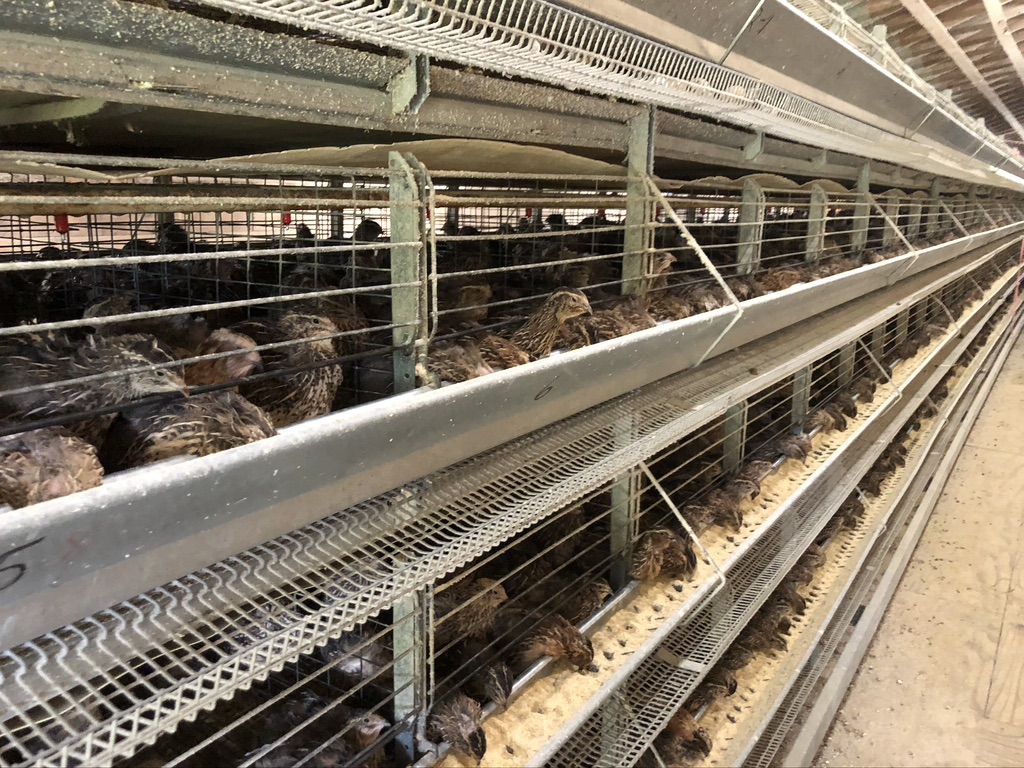
Prior to the pandemic, Cavendish faced another serious problem which they were able to overcome. Back in March 2013, there was a fire that destroyed their main building. They had to shut down their business for about 8 months, while they constructed a new building, pictured above. This building is where the breeders are kept, as well as those quail raised for their meat. It's the center of their business, with thousands of bird kept within it. 

Pre-Covid, about 90-95% of their business was with restaurants, and as Vermont is very seasonal, Rick also spent a lot of time developing markets in other states so that they could operate year round. About 85-90% of their quail meat was, and still is, boneless, as that is what the restaurants most wanted. Restaurants knew that most of their customers wouldn't want to extract small bones from their quail dinners.

Obviously, once the pandemic struck, restaurants temporarily closed, some for over a year and others permanently shut down. That devastated Cavendish as nearly all of their business was with restaurants. They began to pivot to retail, which took time to grow and certainly didn't provide the regularity of the former restaurant business. They sold quail and their eggs at local farmers markers and online, through Facebook Marketplace. 

These were difficult times and the survival of their business was in question. Fortunately, they were approached by someone who desired a new product that they were uniquely able to provide. 

In one of their Facebook Marketplace ads, they offered a variety package of duck and quail eggs for $25. One of the responses to their ad became a turning point. Rick was contacted by Thang Nyguyen, of Williston, Vermont, who owned a nail salon, and initially wanted quail eggs for his family and friends. In fact, he bought $300 of eggs in his first order! Quite a large order and then Thang made a few more orders. 

Obviously pleased with his purchases, Thang then approached Rick with a special request. Could he provide quail Balut? 

As I mentioned yesterday, Balut is basically an unhatched egg, which contains an embryo, and is most often a duck egg. The egg is hard boiled and then consumed out of the shell. In the Philippines, it acquired its name, Balut, and primary fame, although it's also found in a number of other Asian nations, from Cambodia to Vietnam. Quail Balut is much less common, and seems more of a Vietnamese delicacy. 

At first, Rick was leery of the idea, although he knew little about Balut, and declined Thang's request. It was an unusual request and Rick certainly never considered something like this. However, over time, Rick reconsidered the idea, especially as the business needed more revenue streams. So, he contacted Thang and stated he was willing to produce some Balut, an experiment for all involved. 

Rick needed to quickly learn more about Balut, and when he made his first delivery, Thang was very pleased with it, desirous of even more. Thang was essentially a wholesaler, selling the Balut to others across the country. 

Rick started shipping Balut around the country, and because it was so perishable, he needed to ship it by air, which also was less costly than other shipment methods. One day, while waiting in line at the airport to ship his next supply of Balut, he noticed that the Vietnamese man in front of him in line was also shipping Balut, chicken and duck. They got to talking and the man was very interested in quail Balut, soon after becoming another major customer for Cavendish. What were the odds of standing in line at the airport behind another Balut seller? 

Rick received great praise for his quail Balut, and this new business helped the Cavendish business survive and thrive. Combined with their new retail business, Cavendish did well, despite the pandemic. They now produce about 15,000 Balut eggs each week, and that will increase to 18,000-22,000 in the fall and winter. That's an astonishing amount of Balut! In addition, they sell about 1400-1700 duck Balut eggs each week. Nearly all of their Balut is consumed by various Vietnamese communities across the country. 

I didn't know that currently there was a quail shortage around the country, and Cavendish has even had to turn away some orders because they didn't have the capacity to fill the demand. At this time, they produce about 150,000-175,000 birds a year, and there's definitely room for growth. What is their farm like? What is the process of raising quails and their eggs?

Rick stated, “It all starts with the eggs.” They house about 6,000 hens in their main building, with about 14 quails per cage, meaning there are around 430 cages full of quail. As you can see, there is a very long line of cages down the building. Quails as far as your eye can see. Each cage has a section of feed, which a commercial feed that is an all-natural, high-protein blend of whole grains, and has no antibiotics or hormones. 

There is also a conveyor belt where the quail eggs end up before they are gathered, and the operation yields around 73% of usable eggs. There are employees who gather and examine the eggs each day, ensuring the eggs aren't cracked or deformed in any way. In addition, each egg is candled, which basically entails using a light to examine the egg, to guarantee it contains an embryo. 

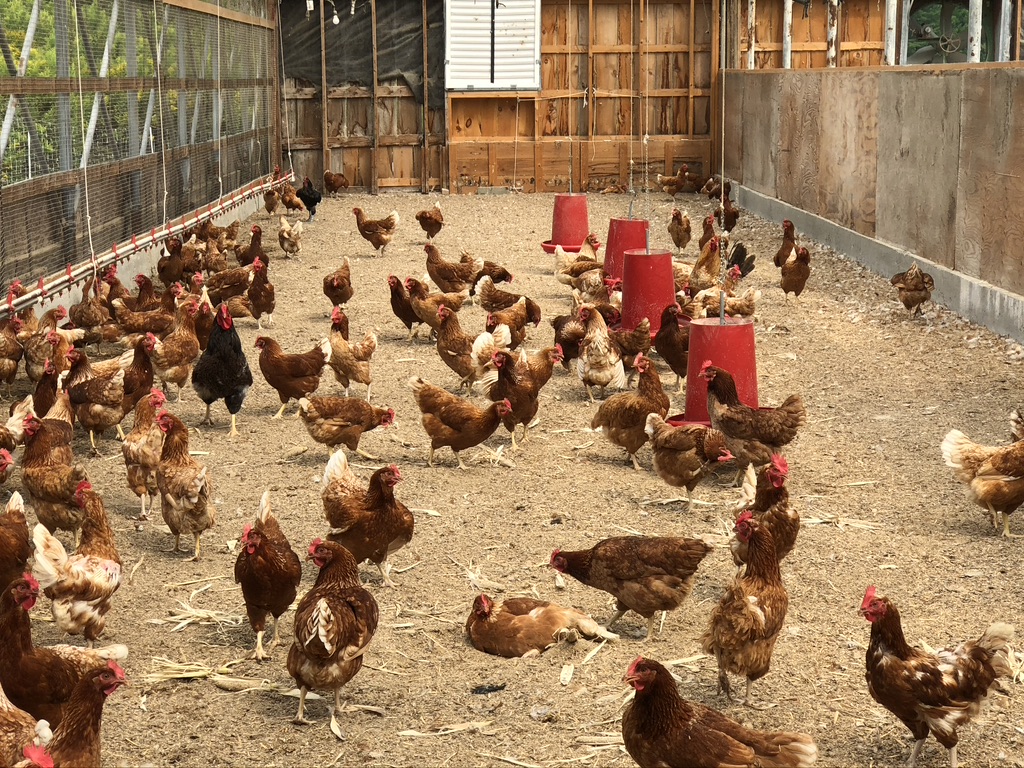
They considered raising their quail free range but they are not really conducive to such, especially on a larger scale. Rick stated that quail generally don't make nests, so their eggs would be scattered around, and as those eggs are small and fragile, collection would be quite difficult. They also don't do well with extreme temperatures. Plus, the quail, especially the chicks, would be vulnerable to predators, and have little means to protect themselves. 

It generally takes about three months for a quail to become a good breeder, and then they will breed for about eight more months. Once they are done breeding, as their meat is tough they wouldn't be good to sell to consumers or restaurants. So, Cavendish generally sells the breeders to local raptor centers as food. Their quails, which are raised for meat, are kept separately from the breeders, but in the same main building. They have their own processing facility, making it easier to monitor the quality of their product from start to finish. They care about their reputation, knowing it's protected by selling quality products. 

The newly hatched and youngest quail are kept in a separate building, pictured above, with the brand new chicks separated from the other young quails.
 

For the day-old chicks, there are heated, circular enclosures, where they can be carefully watched and protected. There weren't any chicks there on the day of our tour. 

The two youngest flocks of quail are kept in a special section and although they seem jammed together, they have more space to spread out but seem to choose to crowd together. It resemble a thick carpet of quail. The mortality rate of the quail is very low, and those that die are usually only 1-2 weeks old. The quail are hand-picked, to ensure their quality. A flock of quail will generally be slaughtered for meat when they are about six weeks old, but it can take two to three weeks to process an entire flock.

What does quail taste like?  It has a more delicate and slightly sweet taste, but is more flavorful than chicken, and there is a touch of a wild gaminess. It's a versatile poultry and can be prepared in a myriad of methods and recipes. It could be prepared any way you prepare chicken. Quail is delicious and you should add it to your menu. 

Each morning, they collect hundreds of the speckled quail eggs, some which will be sold as is to the retail or restaurant market. Other eggs will be placed into incubators, pictured above, either to produce chicks or to make Balut. 


The incubators can hold about 30,000 quail eggs, and the egg trays are in constant movement, turning the eggs each hour. For quail balut, they incubate the eggs for about 12 days, and for duck Balut, they incubate the eggs for about 18 days.  

Cavendish also raises chickens, although they are going to exit that market and raise more ducks. 

They raise about 1500 ducks, including two breeds, Golden 300 and White Layers, which are almost the same except for their color. 

These breeds were developed for egg production and they sell plenty of duck eggs, as well as making a small amount of duck Balut. 

Rick stated they want to grow their farm, especially to construct a new building so they can raise more quail. However, he doesn't want to increase the size of farm to something that is bigger than he can control. As he said, farming is more about the lifestyle and not the money. Before Covid, they weren't considering growth, but that has now changed. Rick also stated, “Your worst performance is when you are slow; when you are busy, you work at your peak." During the pandemic, despite business being slow, they had to work hard to save the farm, helping to make it even better. 

At the end of our tour, we stopped at Rick's house to sample some Balut. Interestingly, Rick previously had quail Balut only once, and never duck Balut. So this visit was an experience for him as well, as he would eat several Balut eggs. Rick stated that making Balut is simple as you just hard boil the eggs, and then can add whatever topping you want. As I mentioned yesterday, the Vietnamese commonly eat it with salt, pepper, and a side of rau răm, a Vietnamese green that resembles cilantro in some ways. 

We had a bowl full of quail Balut to sample, and though there were five of us, there was plenty to go around. Rick hardboiled the eggs and brought out a few condiments, including salt and pepper, soy sauce, oyster sauce, and hot sauce.

For my first taste of Balut, I tried it as is, without any condiments. First, a tiny hole was broken at the top of the egg and then I drank the "soup", which was very pleasing, almost like a savory chicken broth. Obviously, you only get a tiny portion although I wished I could have enjoyed even more of the soup.

Then, I took off more of the shell until I could remove the embryo and egg, and popped it into my mouth. It was tender and savory, with almost a consistency of liver. There was nothing off-putting about its taste at all, and there wasn't really a crunchy texture. Maybe if it were a larger duck egg, you might encounter a crunchier element, but not in the tiny quail eggs. 

I ate a few more eggs, trying a little salt and pepper, and once with some soy sauce, and those elements helped to elevate its taste. After I ate the Balut, my friends decided to try it as well, and no one found it off-putting. It wasn't like what they expected. 

Next, Rick fried up some of the Balut with oyster sauce, and it too was tasty, and might be an easier way for some people to try Balut. With the dark sauce on them, they don't look as much like a quail embryo. Balut are definitely an item where pre-conceptions prevent many people from sampling it, yet if they only tasted it, they might realize it isn't like what they think it is. It might not become one of your favorite dishes, but it also wouldn't be something you would refuse if offered.

If you're not up for Balut, then you could buy some of the quail meat sold by Cavendish, such as Whole Quail, Butterfly Quail, Semi-Boneless Quail, Boneless Quail, and Quail Legs. I got a package of Boneless Quail Breasts and some Quail Legs, hoping to prepare them soon for a dinner some night.

Rick also gave us a Duck to sample, and my friend Scott roasted it a few nights after we returned from Vermont. The skin was rubbed with a blend of fennel seed, black peppercorns, caraway seed, cinnamon, ginger, clove and honey. It was also stuffed with an orange, onion, basil and parsley. As you can see, it looks wonderful, with such a great color to the skin. 


There was plenty of meat, including some wings, and the duck was absolutely delicious, cooked just right, and the meat was tender and flavorful, with nicely crispy skin. Roasting a duck is relatively easy though it might seem daunting if you've never done it before. 

Cavendish Game Birds is a pandemic success story, pivoting from its primary business to something uniquely related, but which they never would have planned to do on their own. No one could have predicted that a Vermont farm would become well known for quail Balut. Besides the Balut, Rick and Bill produce high quality quail meat, and if you're in southern Vermont, you should stop by the farm to get some. They have a small farm stand outside the farm, where you can get quail eggs, quail meat, and some produce. 

Rick was a personable and interesting person, and the time just flew as we chatted. It's clear he's very passionate about his farm, and that quality is his ultimate objective, to produce exceptional quail and other game birds. I greatly appreciate the time he took to show us his farm, and for the chance to experience quail Balut. 

Readers, do you enjoy quail?

Tuesday, September 7, 2021

Some Balut History: Duck Eggs to Quail Eggs

Balut! For many non-Asian Americans, your sole experience with Balut might have been seeing it eaten on such reality shows as Fear Factor and Survivor.  If so, you probably have a negative view of this delicacy, as it was generally presented as something gross or disgusting to eat. Its cultural significance wasn't sufficiently discussed and although it might seem unusual, many Asians thoroughly enjoy this dish. 

On my recent journey to southern Vermont, I, and a few of my friends, had the opportunity to try Quail Balut, and we all did so. It actually was tasty and I suspect many more people would enjoy it, if they pushed aside their pre-conceptions and tried it. 

I'll discuss my own Balut experience further in another article tomorrow, but now, I want to discuss the idea of Balut and then provide a history of Balut mentions in U.S. newspapers, to learn how Americans have viewed it over the years. 

Balut is basically an unhatched egg, which contains an embryo, and is most often a duck egg. It's thought that it might have originated in China, where it traveled to the Philippines around the later part of the 19th century. In the Philippines, it acquired its name, Balut, and primary fame, although it's also found in a number of other Asian nations, from Cambodia to Vietnam. It's name, balut, .roughly translates as “wrapped”, referring to how the embryo is commonly wrapped in a whitish covering. 

Duck eggs are preferred for Balut as they have a stronger shell and shell membrane, much better than chicken eggs. The eggs are typically incubated for about 16-18 days, when the embryo is not yet fully developed. The longer the incubation period, the more developed the embryo so the bones and beak in older eggs might be crunchier. 

In the Philippines,  it's traditionally a street food, sold by vendors mainly during the evening, until dawn, and they often shout out an exaggerated "Balut" to draw in customers. The eggs are boiled and you're supposed to eat it out of the shell. First, you break open a small opening at the top of the egg and then drink the "broth" or "soup." Then, you crack the rest of the shell open and eat the embryo and yolk, often putting maybe a little salt or vinegar atop it. There is also a tiny part called the bato, or rock, attached to the embryo and yolk, which most people don't consume as it can be tough and difficult to eat. 

In Vietnam, they enjoy Balut as well and refer to is as trứng vịt lộn or hột vịt lộn, which roughly translate as “duck egg” or “duck flavor,” They commonly eat it with salt, pepper, and a side of rau răm, a Vietnamese green that resembles cilantro in some ways. The Vietnamese also enjoy Balut made from quail eggs, although duck eggs receive the vast majority of attention. 

Let's explore how the U.S. has perceived Balut over the years in the newspapers.

One of the first American newspaper references to Balut was in the Sioux City Journal (IA), June 6, 1910, in an article about Manila, Philippines. It stated, “As we passed out we noticed the refreshment vendors that lined the path to the street car, and especially the women by the score, who were selling eggs. We supposed they were ordinary boiled eggs, but we rode back to town by choice in a second class car with the natives and discovered our mistake. It seems the Filpinos take the eggs from under a hen or duck just before they are ready to hatch and boil them. They are called ‘balut,’ and form the great Filipino delicacy, the man on the seat next to me, who was contentedly eating one, informing me that six or eight would be a fair allowance for a man.” 

This is generally how many early newspaper references to Balut were presented, in travel accounts by those visiting the Philippines. It was seen as something exotic, a strange delicacy loved by Filipinos. And as we see, Balut has been known to Americans for over a hundred years. 

In the Lexington Herald (KY), February 24, 1919, there was a brief item about Balut, noting, “Over in the Philippine Islands the refreshment and lunch stands sell baluts as a great delicacy. Of course, the American reader never heard of a balut which looks like a hard boiled duck egg. However, these eggs have been boiled after the eggs have been incubated for 19 days. These cooked, unhatched, young ducks have a very agreeable flavor and are eagerly bought by the Filipinos.” 

This article was repeated in numerous other newspapers across the country, presenting one of the first Balut references that many Americans might have experienced. Although the idea of Balut might not have sounded palatable to Americans, it was presented in a positive manner so it might have intrigued some. 

The New Castle News (PA), April 24, 1924, presented an article titled, Half-Hatched Egg Filipino Delicacy. The article stated, “Baluts are half-hatched ducks’ eggs. They are sold by itinerant venders and are considered a great delicacy. The town of Pateros, near Manila, is engaged exclusively in the ‘balut’ industry.” Again, the article wasn't negative, although many Americans might have been squeamish about a half-hatched egg. 

The article then continued, quoting President Camilo Osias, of the National University, “Some foreigners laugh at baluts. Ignorant folks! They don’t know what they’re talking about. We, whose tastes have been educated, know better. Hermetically sealed, it is hygenic. The most perfect, and most complete, food packed in a small space—that is balut. It has soup, it has egg, it has meat, and it has bread. The balut makes a complete meal." More positivity.

There are two types of Balut, which were described in the Honolulu Star-Bulletin (HI), June 11, 1931, reprinting a clipping from a Manila newspaper. “There are two kinds of balut—The hairy one—And the juicy, cheesy brand. There are persons who are not particular as to what kind of balut they get, so long as they do not miss the chick either full-grown or half-grown. But the great majority of customers demand the cheesy brand, with the chick just about taking form, and well covered with a whitish substance that hides the feathers.” The cheesy type would likely be more amenable to non-Asians, who have never tried Balut. 

There was a brief mention in the Tucson Citizen (AZ), July 14, 1934, which printed, “...balut, a favored tid-bit of the Filipino which is a cross between a ten-year-old egg and a duckling. Duck eggs incubated for the hatching point are boiled and then laid away to age until mature enough for sale. They do not have an offensive odor, but most of us prefer younger eggs or older ducks.”

There was another brief mention in the Rayne-Acadian Tribune (LA), November 8, 1935. Unhatched ducklings, called baluts, are said to be a Philippine delicacy. They are eaten about ten days before their time to hatch if nature had been left to take its time-honored course. Eggs are hatched in sacks in the sun.”

How much for Balut? The Daily News (CA), July 2, 1949, mentioned, “A balut, it turns out, is a chicken or duck egg that has had the undivided attention of its mother for 14 days, or time for it to reach the embryo stage. Then it’s ready to eat. You can buy three for one peso or 50 cents American.” That would be nearly $6 in today's dollars. 

Balut and hot dogs? The Courier-Journal (KY), January 14, 1950, reported, “Balut is in brief an unhatched duckling relished by the people in and around Manila. These hard-boiled, about-to-hatch duck eggs are sold by peddlers along the streets, kept warm in well-covered baskets. When the Tagalogs eat Balut, ‘They crack the egg at one end, drink the juice, and then pick out the contents with their fingers.’ This dish is as popular as hot dogs here and is responsible for a flourishing duck-egg industry.”  Each culture has their own popular dishes. 

Balut and s spy scandal? In a lengthy article in the Daily World (LA), April 26, 1950, there was an intriguing article about how Balut vendors might be spies! The article began, “This may go on record as the year of the big ‘balut’ spy scare in Manila.” It then continued, describing Balut as “… an almost fully incubated but unhatched duck egg. Its contents are considered a delicacy by Filipinos and some foreigners but not by all foreigners. It goes well with beer, they say. Beer-and-egg, you understand, not egg-in-your-beer.” I wonder what other beverages might pair well with Balut.

Balut is commonly sold by street vendors and the article continued, “One of the familiar sounds in this capital of more than 1,000,000 potential egg eaters is the cry of the balut vendor making his rounds with a basket, in which the duck eggs are kept warm under a jute sack covering. Nobody knows how many balut vendors there are but they certainly number in the hundreds.” The vendors though were recently angry with the government. “These days the balut vendors are plenty annoyed. The police have been pulling them in by the dozens as spy suspects. The vendors even sent a delegation to detective headquarters to protest.”

Why were Balut vendors though to be spies? “The police can not be criticized for their security measures. Communist-inspired Huk outlaws have been battling government forces almost to the city limits and there have been strong indications of Huk infiltration into the capital.” The article also noted, “Somebody started a rumor that the Reds had sent their agents into Manila in the guise of balut salesmen. Not a bad idea, either, if true. The balut men are among the few who can roam the streets day and night without ordinarily arousing suspicion. They could give the town a good ‘casing.”; “Police suspicion was based partly on the fact that most balue venodrs work at night. The balut men explained that duck egg sales are better after dark.”

However, it was thought that the police should be more easily able to differentiate spies from authentic vendors. “To an impartial observer, it appears that the police could pick out the spies by their inexperienced balut calling. As in hog-calling, there is a big difference between a veteran balut-caller and a novice.” The article continued, “…the phony balut salesmen would have a tough tome imitating the lusty-lunged ‘baloooot’ or “bwoooot’ of the Tagalog tradesmen...If the caller hasn’t just the right baritone pitch, or if he pronounces the ‘oo’ like the ‘oo’ in toot rather than the ‘oo’ in foot, then there may be something more than just a red herring…” 

This is another article that was repeated in numerous other American newspapers, bringing attention to Balut to people all across the country.  

A Balut shortage? In a Balut article, the Spokane Chronicle (WA), May 31, 1951, first described it as, “Balut is made of duck eggs, ripened almost to hatching stage. These are cooked and pickled. Vendors have hawked them daily, shouting ‘B-A-A-A-L-U-U-U-T’ in every block.” However, it also noted, "Balut has an aroma stronger than limburger cheese.” There was a problem as the duck’s “favorite snail tidbits” were disappearing, and it was said, “No snails, no eggs.” The issue here was water pollution which was killing off some of the snails. 

An article in the Rocky Mount Telegram (ND), December 28, 1953, provided more details on the Balut industry.  In the Philippines, the Balut provided a livelihood for about 30,000 people, with an annual worth of about 6 ¾ million dollars. “Balut is eaten the year round by rich and poor, young and old, who consider it an appetizing, nutritious food. It has become an important item in the Filipino’s diet and is recommended, even by professional medical men, as an excellent bodybuilder.” 

How was Balut produced? “No costly modern machinery—only simple crude native bric-a-brac—is needed to produce balut.” The article continued, “A duck farm on a river or lake shoreline, bamboo enclosures for the birds, and a hut to house the balut ‘laboratory’ are all one needs to become a balut magnate.” And more, “Rows of big bamboo baskets and clay pots make up the lab. The baskets, where the eggs are placed for 15-18-day incubation, are submerged in rice husks which create and hold heat necessary for incubation. When the eggs have turned into two-thirds developed embryos, they are hard boiled.

An inexpensive activity. “Raising the ducks isn’t expensive either. They are penned in shallow parts of the river or lake close to the source of their food supply—small, fresh-water clams and snails.” And that is why a dearth of snails hurt the industry as it was one of the main foods of the ducks. 

The article concluded with information on enjoying Balut. “The egg is eaten warm. Its color is the same as any other duck egg, slightly gray-green. The Filipino gourmet cracks the shell at one end and sips out the juice. He then breaks away the rest, revealing a mixture of yolk and white, webbed with dark-red colored embryo.

Catnip? The Lincoln Star (NE), June 2, 1961, briefly stated, “It has medicinal properties—for a gentleman, balut is like catnip to a cat.” An intriguing analogy.

A religious controversy. The Charlotte News (NC), March 16, 1966, reported that the Vatican had recently ordered Philippine Catholics to stop eating meat on Fridays; “Under an old special church ruling, Filipino Catholics had been able to eat meat on Fridays if they wanted to.” The big question for Filipinos was then, is Balut meat or an egg? The Vatican was considering the issue but Rev. Bruno Arcenas, a young doctor of canon law at Bacolod Cathedral, stated that he believed it should be treated as an egg, and thus permissible to be eaten on Fridays. 

The Fort Lauderdale News (FL), March 14, 1971, reported that the duck egg industry in the Philippines was worth $10 million a year, with over 4.6 million ducks in the country. Prices for balut had been increasing, due to multiple reasons, including polluted rivers driving away snails and vendors being robbed. Over the years, Balut consumption has also been decreasing. Balut used to cost 20 centavos, but now they are 60 centavos, equivalent to a U.S. dime. The Balut industry was in danger, but would eventually rebound. 

During the 1990s, commercial duck feeds were introduced which helped solve the feed issue, where snails were dying off. This commercial feed also allowed duck farms to grow in size, to become larger-scale operations. No longer did duck farms need to be located next to a water source. They could be located almost anywhere, spreading the industry across the Philippines. 

Balut is currently available in the U.S. although it might take a little work to seek it out. 

Have you tasted Balut before? If so, what are your thoughts on it?

Monday, November 7, 2011

Rant: Where Is The Roast Chicken Love?

1990 was a pivotal year in the battle of beef versus chicken. It was the first year that Americans ate more chicken than beef, and that has continued to be the case to the present. From 1975-2009, the number of cattle slaughtered in the U.S. dropped by about 20% while the number of chickens killed increased by about 200%. Approximately ten billion animals are killed each year in the U.S., and almost nine billion of those are chickens.

So though it is clear that we are eating plenty of chicken, would you order Roast Chicken at a restaurant?

I have heard many people state they would not, and the primary reason seems to be because they can and do make roast chicken at home. Yet that seems a strange reason because those same people order plenty of other dishes which they make at home, from burgers to steaks, from chicken parmigiana to baked cod. So why should roast chicken be any different? Or is the true reason is because people assume roast chicken at restaurants is not an exciting or tasty dish?

It is rare for me to order roast chicken at a restaurant, and my reason is that there are often other choices on the menu which seem more exciting and/or exotic. But, I also have enjoyed some superb roast chicken dishes at local restaurants, which sometimes makes me rethink my choices. Roast chicken deserves more love and respect, and I encourage my readers to consider it the next time they dine out. I think you might be very pleasantly surprised and satisfied.

Most recently, I dined at Bergamot, one of my favorite restaurants, and as I perused the entrees, I finally settled on the Roasted Chicken with Potato Dauphinoise, Swiss Chard, Leeks, Truffles, and Chicken Jus. I have much faith in their kitchen, so I suspected they would deliver a top notch dish, even if it were only roast chicken, and I was not disappointed in the least. It was simply a perfect piece of chicken, moist, tender and flavorful with crispy skin. I have had roast chicken cooked by many people at their homes, and it rarely is ever as moist and tender as what Bergamot prepared. All of my dining companions were equally impressed with the chicken and I would order this dish again. Plus, the Potato Dauphinoise made a delectable side.

I also previously enjoyed a superb roast chicken dish at L'Espalier. Their Roasted Apple Street Farm Chicken, with hedgehog mushrooms, pommes puree and green peppercorn jus, was perfectly cooked, with an addictive crispy skin. The Apple Street Farm, located in Essex, is owned by Chef Frank McClelland, and the farm aims for sustainability. These are not the typical factory farm chickens.

That raises the point that maybe what differentiates some restaurant Roasted Chicken dishes may be the sourcing of their poultry. Rather than obtain their chickens from the dreaded huge, factory farms, certain restaurants seek more local poultry, from small family farms, and maybe even heirloom breeds. These chickens usually are far more flavorful, as well as probably healthier for you. They also may not be the type of chickens many people buy when they go shopping for their homes. So, if you order roast chicken at certain restaurants, then you may not actually be ordering something you may prepare at home. So the next time you dine out at a fine restaurant, consider ordering their roast chicken.

Have you had a delicious roast chicken dinner at some other restaurant?

Saturday, February 6, 2010

Hudson Valley Foie Gras

The Boston Wine Expo is not just about wine. It also showcases various foods, which are good on their own, as well as being a nice palate cleanser between glasses of wine. This year, the tastiest table was an easy pick, that which belonged to Hudson Valley Foie Gras.

I have made my love of foie gras and duck products well known. I have also posted a number of times on foie gras, including a review of The Foie Gras Wars (a fascinating book by Mark Caro), information about foie gras, a discussion of the debate, and information about ethical foie gras.

The Hudson Valley table had two types of foie, some duck prosciutto and sliced magret available for tasting. All of which were amazingly delicious. I could have stood by the table and just savored their food for hours. They sell a wide range of foie and duck products, including duck salami, duck prosciutto, smoked magret, duck leg confit, organs (such as hearts, gizzards, and kidneys), torchon of foie, terrine of foie, mousse of foie, parfait of foie, and more. Seems like almost every part of the duck is available.

You are also encouraged to visit their farm, to see how the ducks are raised and fed. They have no secrets, and want to be as transparent as possible. I really respect that position, and hope to make my own visit there this year. Before you claim foie gras is cruel, check out the Hudson Valley farm and see for yourself what is going on. Not all foie gras is raised in the same manner.

You might also want to check out a new article in Edible Hudson Valley: Taboo & Delicacy: The Ethics and Ethos of Foie Gras by Lisa M. Dellwo. It is well written and adds some thoughtful analysis to the foei gras controversy.

I could use a seared piece of foie right now.

Hudson Valley Foie Gras
80 Brooks Road
Ferndale, NY 12734
Phone: 845-292-2500

Thursday, September 24, 2009

Clio: Sunday Chicken

Starting this weekend, on September 27, Chef Ken Oringer plans to start opening the Clio dining room on Sundays, at 5:30pm. You can order off their regular menu of French-American cuisine but there is another intriguing option as well.

Chef Oringer is embracing Chicken! Each Sunday will present Ken’s Fried Chicken Sunday Supper, a prix fixe option for $35. Each Sunday, the chicken menu will vary, from Southern Fried to Garlicky Korean. Plus, there will be accompaniments like cornbread, greens and seasonal fruit crisps.

It will be intriguing to see what concoctions Chef Oringer creates, and the price seems very reasonable as well. If I stop by some Sunday, I will of course report back.

Clio
370 Commonwealth Ave.
Boston, MA
Phone: (617) 536-7200