Showing posts with label SSBA. Show all posts

Tuesday, February 24, 2015

Norwegian Skrei: Sustainable & Tasty Cod

Cod is tied very closely to the history of New England, as well as the histories of other countries, such as Portugal and England. Once, cod filled the waters off the New England coast, but that is no longer the case. Out of fears of dwindling stocks of cod, recent years have seen drastic cuts to cod quotas, meaning only a small amount of cod is now permitted to be caught. For example, starting May 1, the quota of cod that can be harvested from the Gulf of Maine will be slashed by 75%.

It seems clear that cod stocks in this region need to rebound and that means that the availability of local cod at restaurants and markets will be limited. As such, you need to consider other options, and you have a number of different choices. For those who still want to enjoy cod, let me offer an excellent option, though with the caveat that it only be available for a couple more months.

Consider Norwegian Skrei, a sustainable and tasty Northeast Arctic cod that lives in the Barents Sea. Skrei, which has been important to Norway for well over a thousand years, derives from a Norse word "skrida" which means "to wander or walk." Sea, When skrei reach maturity, at about five years old, they migrate in the winter, for spawning, to the Norwegian coast. From January to April, fishermen are able to catch these mature skrei, which are sometimes called Valentine's Fish because the fish are seeking a mate, and they are available around Valentine's Day.

The skrei fishing industry is considered one of the best-managed cod stocks in the world, and they have been regulating their industry for almost two hundred years, since 1816. Currently, Norway and Russia share responsibility for maintaining the sustainability of the skrei, and they have been very successful in their efforts. All skrei are also certified as sustainable by the Marine Stewardship Council.

For 2015, the cod quota in the Gulf of Maine will only be 386 metric tons while Norway's skrei quota will be 401,240 metric tons. That is a huge difference, and indicates skrei will be more readily available than local cod. It is also fascinating to consider that only about 10% of the skrei that migrate to the coast are permitted to be harvested, helping to maintain sustainability, as well as showing the great size of the skrei stocks. In 2014, Norway's exports of skrei have risen significantly since the prior year, 13% by volume and 25% by value.

Skrei possess some differences from Atlantic cod, including having a longer, more pointed shape and a lighter skin color. As they swim lengthy distances to spawn, their flesh tends to possess a firmer texture, and as they eat little during this travel, their flesh may also possess a cleaner taste. In addition, the skrei healthy for you, being rich in protein, Vitamin D and Omega-3 fatty acids. It might be more expensive than local cod, but you're getting a quality, tasty and sustainable fish.

How do Norwegians eat skrei? One of their traditional dishes is called mølje, which is made with cod, potatoes, cod liver and cod roe. Fishermen used to cook cod roe and potatoes in a pan filled with water, and then later add the liver and cod for a short simmer. Once it was all done, they would mix it up into a "mess" or mølje. Like Atlantic cod, skrei is very versatile and can be prepared in numerous ways, from fried to broiled.

I recently received a media invite from the Norwegian Seafood Council, in conjunction with Legal Sea Foods, to experience a dinner featuring skrei. The three-course dinner was held at Legal's Harborside location and the skrei impressed me. If you like cod, or fish in general, you'll love the skrei.    
For my first course, I had Shrimp Cocktail, five huge shrimp with cocktail sauce, set beneath a half globe of ice. It was a cool presentation, and the restaurant creates this effect by putting some water into a balloon, applying some liquid nitrogen and then freezing it. When they are ready to make this dish, they use a blow torch to burn off the balloon from the icy ball. The shrimp were meaty with a spicy sauce that enhanced their flavor.

The centerpiece of the dinner was Pan Roasted Skrei, with bacon lardons, leeks, golden russet apples, and smoked mussel chowder. The skrei has a firm texture, with flaky white flesh, and a clean taste. Simply a delicious piece of fish that will appeal to any seafood lover. The rest of the dish well complemented the skrei, from the smoky chowder to the slightly tart apples. The entire dish was well composed and balanced, and I would certainly order skrei again at a restaurant or the market. It reminded me of Atlantic cod in most ways, except it possessed a firmer texture.

The meal ended with Brûléed Chocolate Banana Tart, with coconut gelato, chocolate sauce, and toasted coconut anglaise. A sweet and pleasant ending to the dinner.

Though I often ask my readers to eat local seafood, as we eat far too much imported seafood, that doesn't mean I am completely against imported fish. Skrei is a very sustainable choice, and if you love cod, then it is a good alternative as there is so little sustainable cod available in our local waters. Give skrei a chance.

Have you eaten skrei? If so, what did you think of it?

Tuesday, February 17, 2015

Maine Scallops: Restrictions To Rebounding

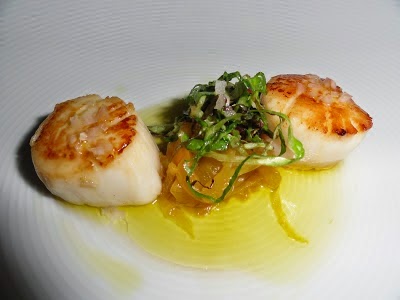
A perfectly seared Scallop is a work of culinary wonder.

Scallops are a meaty bivalve, which can be tender and sweet, and can be served in many different ways, from fried scallops to chowders. Approximately twenty years ago, the U.S. scallop industry was on the verge of collapse, so restrictive measures were instituted to protect and reinvigorate the industry. Fortunately, these measures were successful, and some of the restrictions were lifted, though others still exist to continue protecting this valuable species.

New Bedford is the center of the scallop industry, landing about 50 million pounds and constituting about 90% of all scallop landings in the U.S. It is also considered to be the most valuable scallop fishery in the entire world. Though New Bedford gets most of the attention, we should not ignore a much small scallop fishery, that of Maine.

A recent AquaCulture Directory article noted how the Maine scallop industry underwent a series of restrictive measures in 2008, which were initially met with anger from the fishermen. However, when those measures proved successful, the fishermen came around. The number of scallop fishermen has now tripled, to 420. It is said that these Maine scallop fishermen, usually using small boats, can deliver fresher scallops than many from New Bedford.

Further good news comes from a December article in the Bangor Daily News, reporting on the 2014-15 scallop season. Though the season had just started, fishermen were getting some of the highest prices ever on scallops, about $13-$14 per pound. Last season's average price had been $12.24, and that was a record amount. These scallops prices will become around $20 per pound at retail markets and shops. Yes, they are pricey, but a pound can feed several people, making it more economical, and you are also supporting small, local fishermen.

The article also notes the history of scallop landings in Maine, from 3.8 million pounds in 1981, down to a mere 33,000 pounds in the mid-2000s. Restrictive measures have helped landings to rebound so that last year, landings constituted almost 425,000 pounds. Compare that to the 50 million landed in New Bedford. This history extends to scallops prices too, as in 2004, fishermen received a record low of about $4 per pound, which doubled in the next five years. Since doubling, prices have been increasing each year by about a $1.

Restrictive measures on fisheries are necessary to protect species, but they are also intended to protect fishermen, to ensure their is an adequate supply for the future. Yes,such restrictions can be difficult at first, but their eventual success can lead to better prices for fishermen. And we need to support these local fishermen, especially the smaller ones, and pay them fair prices for their seafood. Scallops are delicious, well worth the price, and I recommend you purchase some Maine scallops.Maine fishermen will greatly appreciate it.

Tuesday, February 10, 2015

Red's Best Seafood: Local, Traceable & Flexible

Eat More Seafood. 
Eat Sustainable Seafood. 
Eat More Domestic Seafood. 

Last summer, I posted these 3 Rules Of Eating Seafood and they remain as important and relevant as ever. They are significant for so many reasons and our country would benefit greatly if more people followed these rules. I talked again about these points last week, when discussing Johnny's Luncheonette, and now I'm following up on that prior post, to discuss the seafood supplier, Red's Best, for that event.

As I mentioned, I recently received a media invite to attend a talk, Dishing About Fishing: What It Takes To Get New England Seafood Onto Our Local Tables, led by Jared Auerbach of Red's Best, a company located on the Boston fish pier near the No Name restaurant. Red's Best basically sells seafood for fishermen though it is so much more as well. Jared spoke about his company, seafood sustainability, the fishermen, and other related topics. There is passion there, and a strong concern for the economic well being of small, local fishermen.

After spending time as a fishermen in Massachusetts and Alaska, Jared started Red's Best in 2008, with a primary goal of helping local fishermen. He wanted to create a better and quicker way for seafood to get from the fishermen to the end consumer. In addition, he wanted to ensure traceability, that the fish sold at a market or restaurant could be definitively traced to the specific fishermen who landed it. Jared also wanted to work with smaller fishermen, those individual boats, rather than the large,commercial vessels that land many thousands of seafood each day.

They currently work with over 1,000 domestic fishermen, essentially all on the East Coast and many in the New England region. Jared stated that his job was "to match supply and demand.," to build an infrastructure to better move seafood. Their advantage isn't in distribution, but rather that Jared claims he can aggregate seafood better and faster than others. Using their special technology, they can streamline seafood transactions, saving time and money. Seafood can reach the end consumers quicker than under the traditional methods, such as seafood auctions, meaning the seafood is fresher.

Rd's Best uses a Traceability System to memorialize the journey from the fishermen to the end consumer. Besides noting the specifics of the fishermen, the boat and methods of catch., Red's Best also enters the chain of custody, taking possession of the seafood from the fishermen. While in their possession, they maintain the proper conditions to ensure the quality and integrity of the seafood. When Red's Best sells the seafood to wholesalers and distributors, the label comes marked with a special QR code that can be used to track back the seafood.

These QR codes are intended for the wholesalers and retailers, not the consumers, and provide them information they can share with their customers. Review this sample to see what you'll find when you check the QR code. There are listings for the name of the fisherman, the species of the seafood, the name of the fishing vessel, the gear type used, and the port where the seafood was landed. That is the type of information which helps people make determinations on sustainability. In addition, the QR code provides access to a PDF that contains all of that information and which can even be customized for a restaurant, market or store. This is a quick and easy way for retailers to have all of the relevant information concerning the source of their seafood.

Red's Best does not negotiate a price with the fishermen at the docks but rather pays them the fair market value they recover when they sell to their hundreds of wholesalers and distributors, including Sysco. That requires a level of trust on behalf of the fishermen, however considering the large number of fishermen that work with Red'ss Best, it seems their trust is well placed. Red's Best also sells to a few local fish markets and in time, they hope to start selling directly to consumers.

Part of what probably helps the fishermen's trust is that Red’s Best purchases whatever seafood the fishermen land, leading to a wealth of diversity. For example, in Massachusetts alone, they take in more than 60 different types of seafood, mostly wild except for some farmed shellfish. Jared stated that every day is a challenge as supply & demand always varies, and they are never sure what seafood species they will have available for sale. As such, Jared wants people to be more flexible in their seafood choices, and not to restrict themselves to the usual seafood preferences.

As such, Jared tries to get their customers to commit to a certain amount of seafood each week, without committing to specific species. That is kind of like a CSF (Community Supported Fishery) where a person commits to a share of seafood which is delivered on a regular basis, but never know what species they will receive. This flexibility helps keep the prices of the seafood down, promotes diversity, and benefits seafood sustainability.

In previous multiple posts, such as Boring Americans: The Seafood Edition and Rant: Stop Eating Cod, Tuna & Salmon, I've encouraged people to expand their palates, to enjoy different seafood species than what they are used to, to find new favorites. The majority of Americans generally only eat ten species of seafood, yet there are so many other delicious species available to them, In some circles, these species may be referred to as "trash fish," because so few people want to eat them, but they would be better referred to as "under-utilized fish." The reason these fish haven't been eaten more is due to ignorance rather than their lack of taste. If people blind-tasted these under-utilized species, they would likely enjoy them. Besides being delicious, these under-utilized species can be very sustainable choices, are usually less expensive, and help fishermen sell more seafood.

Is all of Red's Best seafood sustainable? That is a question where the answer depends on your own definitions and standards of "sustainable seafood." Jared states that all of their seafood is sustainable because their fishermen follow all of the strict government regulations on fishing quotas They feel that if the government permits the capture of certain levels of fish, then those fish are considered sustainable. Jared also noted that they report all of their catches to the government, to ensure they are following the regulations.

In 2012, Sam Rauch, the Acting Director of NOAA, gave a State Of Fisheries Address which echoes Jared's sentiment. Rauch claimed that when a fish is legally caught by a U.S. mandated fishery, then it is sustainable, considering the fact that the U.S. fishing industry is the most highly regulated in the world. Some fishermen think that the NOAA regulations go too far, and are not based on the best science. They want less regulations, and to be able to catch more seafood. These fishermen would agree that the seafood they legally catch is sustainable.

Not everyone agrees with this position, and you'll find some organizations whose positions on sustainability differ from that of Red's Best and NOAA. For example, Atlantic Cod and Blue Fin Tuna is permitted to be caught under NOAA regulations, though only in limited amounts. However, other organizations believe you shouldn't eat either of those two species because they are endangered. Some will say to totally Avoid these species, while others are a bit more measured, delineating specific instances, such as by the method of catch, where they are acceptable.

Who is correct? That is not an easy question to answer because of the complexities involved in the area of sustainability. We should be wary of making broad statements about sustainability but rather look carefully at the specifics involved, such as the species of fish, method of catch, geographic area, and much more. Knee jerk reactions need to be replaced with more measured reasoning.

In discussions of seafood sustainability, the element of social issues is becoming more and more important, which I've written about several times, including a few months ago.. We should be considering the plight of fishermen and seafood workers in our discussions on sustainability. That is an area of significance to Jared, supporting small, local fishermen, helping them make a sustainable living at fishing. With all of the quotas and catch restrictions, it has been a very tough economic situation for small fishermen, and Red's Best is working to helping those fishermen survive. This helps our local communities and is worthy of our support.

The philosophy of Red's Best fits my 3 Rules of Eating Seafood, promoting more seafood consumption, especially local and sustainable species. Red's Best also helps to promote the consumption of under-utilized species and support the economic well being of local fishermen. In addition, they are helping to make seafood more affordable for all. It was a pleasure to meet Jared, and I'm impressed with his company and its philosophy. You should support retailers which purchase their seafood from Red's Best.

Tuesday, February 3, 2015

Johnny's Luncheonette:Sustainable, Local Seafood

Eat More Seafood, Especially Local.

For years, I've been exhorting my readers to eat more sustainable seafood, especially domestic seafood. Sustainability is needed to protect seafood species and preserve the health of our oceans. Seafood tastes great but is also healthy, and can reduce your chance of heart disease by one-third. The U.S. imports about 91% of our seafood, and that is a shame and needs to be changed, to support our local and domestic fishermen. There is plenty of excellent, sustainable seafood found in U.S. waters, and our local fishermen need and deserve our support.

We also need to support those restaurants which sell sustainable, local seafood. I recently dined at an intriguing spot that impressed me with their commitment in this regard. I received a media invite to attend a talk, Dishing About Fishing: What It Takes To Get New England Seafood Onto Our Local Tables, led by Jared Auerbach of Red's Best (which I will write about in the near future). The talk took place at Johnny's Luncheonette, a diner-like restaurant in Newton, and we got to sample some of their fare.

Johnny’s Luncheonette was first opened over twenty years ago by John Furst and Neal Solomon, who wanted to create a traditional Jewish deli, Last March, the restaurant was sold to Karen and Kevin Masterson, who have about 30 years of experience in restaurants and most recently owned Nourish in Lexington. During the past year, the Mastersons have remained true to the roots of Johnny's, while introducing changes which they feel will make it even better. I met and spoke with Karen, a woman of sincerity, passion and realism.

The restaurant is open seven days a week, from 7am-9pm, except for Sundays when they are open from 8am--8pm. Breakfast is served all day, including such items as Crunchy French Toast, Jordan Marsh Blueberry Muffins, Pastrami Scramble, Matzoh & Eggs, and more. Most breakfast items are less than $10. For Lunch, there are a variety of sandwiches, from Reubens to Meatloaf, and burgers, again most items costing less than $10. There are also Dinner Appetizers and Entrees, from Macaroni & Cheese to Neal's Homemade Chopped Liver. They also serve Beer & Wine (and are currently working on improving the selections), $4 Mimosas, as well as tasty Mini Milkshakes.

All of these options are enhanced by the fact that the Mastersons are using plenty of local ingredients and seasonal produce. For example, some of their breads come from Iggy’s while the beef for their burgers comes from a small ranch in Maine. Karen's family in Alberta once owned a farm, so her concern for sourcing local fresh ingredients extends back many years. She also still grows some of her own fruit and vegetables. Besides the previous examples, Johnny's also sources much of their seafood from Red's Best, purchasing sustainable, local seafood. Though they only use about fifteen pounds of seafood each week, they hope to soon double this amount.

On their menu, you'll find seafood selections including Fried Fish Sandwich ($8.25), Fish & Chips ($12.95), Fish Tacos ($13.95), and Fresh Catch (1/2 pound of fish for $12.95). If you check the menu, you'll find that none of these seafood dishes mention the type of fish that will be served. That is an intentional omission because of their philosophy on the issue. Johnny's purchases whatever seafood is fresh and available from Red's Best, so their selection will vary each time. Johnny's is flexible in which seafood they will buy, which helps keep the prices down, and also supports local fishermen whose catch may vary. This is an excellent way to source one's seafood, one that more restaurants should follow.

This is not always an easy sell for customers, but presents an educational opportunity, a chance to expose their customers to different seafood, which tastes just as good as familiar seafood. Customers might want cod or haddock but only pollock is available, and most people would enjoy it just as much. Fortunately, this hasn't been a significant problem at Johnny's, whose customers are usually willing to try whatever seafood is available. Karen stated that Johnny's is not perfect in their sustainability, but she is realistic about the matters and sees it as a constant evolution, working towards becoming better all the time.

It is also very important to Karen that their food prices remain reasonable. She wants the fishermen and other food suppliers to be able to afford to dine at her restaurant. As you can see, their seafood dishes are very reasonably priced, and that makes it accessible to all of their customers. High-priced seafood is sometimes an obstacle to seafood consumption, but at Johnny's, they have kept the costs at a very manageable level, in part due to their flexibility in which species they purchase. Customers thus has plenty of reason to opt for seafood at Johnny's.

I got to taste several different items, from Portuguese Fish Stew to Fish Tacos, with seafood including monkfish, scup and pollock. The fish stew was delicious, with a delicious blend of spices and flavors, and tender pieces of monkfish. The breading on the fried seafood, such as in the fish tacos, was light and clean-tasting, and the fish itself was moist and tender. Both the scup and pollock were tasty, and would appeal to almost any consumer. I  didn't hear any complaints about the food from any of my dining companions. And I definitely want to return to Johnny's, to sample more of their selections.

Johnny's Luncheonette isn't trying to be a role model for other restaurants, but is simply doing what they believe is the best. They want to provide delicious and affordable food, much of it locally sourced, including sustainable seafood. However, other restaurants should take a lesson from Johnny's, especially concerning their approach to seafood. Sustainable seafood  doesn't have to be expensive, and people should be more flexible about the types of fish they are willing to eat. Check out Johnny's Luncheonette and enjoy one of their seafood dishes.

Johnny's Luncheonette on Urbanspoon

Tuesday, January 27, 2015

How To Cook Seafood, Vol.3

Are there reasons why you don't cook more seafood at home?
Do you have difficulty, or feel intimidated, preparing seafood at home?
Do you know how to best cook fish and shellfish?

As I have previously said, on repeated occasions, Americans don't eat enough seafood. You should eat seafood at least twice a week, garnering its significant health benefits. A significant reason why people don't eat enough seafood is that many are not comfortable cooking seafood at home. They feel intimidated, and don't want to potentially ruin an expensive piece of fish. I have found that even some of my more food-oriented friends still are not confident cooking seafood. So how do we change that? How do we give people more confidence in preparing seafood at home?

Welcome to the third edition of How To Cook Seafood series where I present advice and recipes for seafood from chefs. The advice is geared for home cooks, simple suggestions and recipes that most anyone can do at home. My hope is that it will spur on more people to cook seafood at home. If any chef is interested in participating in this series, please contact me.

For this edition, I am showcasing a few chefs who were featured at the Mohegan Sun WineFest. which was held this past weekend. They participated in free chef demonstrations held within the Grand Wine Tasting hall. With their seafood cooking advice presented here they are also providing a suggested wine pairing for their recipes.

Chef Michele Ragussis,, a native New Englander, has worked as a chef for more than 18 years, and uses the influences of her Greek and Italian heritage in her cooking. Her skills have been displayed on a number of television cooking shows, including Food Network Star, Chopped, Beat Bobby Flay, NBC's Food Fighters and Midnight Feast.  Michele states:

"My favorite Fish (Shellfish), all year round, is clams. I always have clams on one of my menus and consider them to be such a versatile food. In the winter, I love to make them a little heartier so I make a Steamed Littleneck dish with Portuguese Chourico, Kale and White Beans. It is almost like a hearty seafood stew. Growing up in New England, and living by the water clams, were a staple in my family and this is a recipe I love to make. Pair it with some crusty bread and you can’t go wrong."

Ingredients:
12 Littleneck or Cherrystone Clams
1 onion
2 cloves garlic
1/3 cup white beans
1 stick chourico
1 bunch kale
1 bottle of Portuguese Vinho Verde wine
1 bunch fresh flat leaf parsley
1 tablespoon butter
Salt & pepper

In a large Saute pan, add 1 teaspoon blended oil. On medium heat, add diced onion, garlic, and chourico, Cook for about three minutes, until the onions are slightly cooked and the chourico is rendered. Add the clams, chopped kale and white beans. Add salt & pepper and then a cup of the wine. Cover and let it steam until the clams open, which should take about 8-10 minutes. Then, add the butter and cover for another two minutes. Before you serve, add the parsley and get your crusty bread ready. With this dish, enjoy the same Vinho Verde wine that you used for cooking.

Chef Robert Sisca, a resident of Rjode Island and a graduate of Johnson & Wales, honed his culinary skills in New York City at One If By Land, Two If By Sea before becoming Sous Chef at the famed seafood restaurant, Le Bernardin. Currently, Chef Sisca is the Executive Chef Partner at Bistro du Midi, Robert states:

Cooking seafood at home can be a daunting task, but by following three simple rules it can a much more enjoyable experience.

1. Always buy fresh fish. Eric Ripert at Le Bernardin taught me that the #1 rule of cooking is that all starts with the ingredients. Make sure it is always fresh, and then just let the food be the superstar on the plate. Always ask your local fishmonger to smell the fish. If their product is top quality, they will be confident in what they are selling and should have no problem letting you do this.

2. Do not overcook your fish. This is one of the biggest pitfalls when it comes to cooking fish at home. Don’t be so afraid of cooking fish all the way through, this will most likely only lead to it being dry. The best method to cook fish properly is to temper it. Tempering the fish omits the possibility of the overcooking the outside and having a raw center. To temper the fish, first let it sit at room temperature for approximately 10-15 minutes. Second, use a cake tester or skewer to gauge the internal temperature. This is another trick of the trade that I learned from Chef Eric Ripert. During a regular service at Le Bernardin, we would cook anywhere from 800-1000 portions of fish and every piece had to be checked with a skewer. When you think the fish is cooked, simply put the skewer into the thickest part of fish. The skewer should not be hot or cold, hot means the fish is overcooked and cold means it is undercooked. It should be warm.

3. Consider the seasons and resources available to you when deciding to cook fish. Deciding how you want to cook your fish, before you decide what type of fish you will cook is always a great starting point. Different types of fish taste better utilizing various cooking methods such as grilled, baked, seared or poached. The best method depends on characteristics such as how much natural fat is in the fish.

Recipe: Pan-Roasted Monkfish with Grilled and Roasted Eggplant

Step One: Slice an Eggplant thin, about 1/4 inch, and then marinate in 50 grams of olive oil, 2 cloves of garlic and 1 spring of thyme, for up to 30 minutes. Grill each side, rotating 90 degrees once just long enough to create grill marks and set aside.
Step Two: Sweat 2 cloves of Garlic and 2.5 tablespoons of Olive oil in Sauté Pan until aromatic and slightly translucent. Add 500 grams of chopped canned whole tomatoes and cook for 15 minutes. Peel and dice two eggplants. In a second sauté pan add 2 cloves of Garlic and 2.5 tablespoons of Olive oil, and cook diced eggplant until tender. Combine Tomato and Eggplant into one pan add 1/2 bunch of sage, 1/2 bunch of basil, and 2 springs of thyme, and cook until desired consistency. When ready to plate add 10 grams of capers and 50 grams of tomato sauce and season well.
Step Three: Pre-heat oven to 475 degrees. Heat 3 tablespoons of blended oil in heavy bottomed oven safe sauté pan over med-high heat. Dust lightly one side of four, 5 ounce monkfish filets with flour (all-purpose or Wondra). Add fish to pan flour side down and immediately put in oven until internal temperature reaches 115 degrees for medium rare or 125-130 for more medium (cooked through). Remove from oven and rest fish with sear side up for additional minute or two. To slice, place on cutting board sear side down and slice ¾ inch slices.
Step Four: Place grilled eggplant slices on plate, spoon tomato and eggplant mixture onto sliced eggplant. Place monkfish on top of tomato and eggplant mixture. Season monkfish with salt and pepper and garnish with micro greens.

Tuesday, January 20, 2015

Seafood Expo North America: Reasons To Go

Thousands of creatures from the sea are going to descend on Boston in two months, A deluge of seafood which will make it one of the top events of the year. This epic event occurs each year and I'm planning to attend once again, and hope that you will do so too.

From March 15-17, the Seafood Expo North America (SENA) will return to Boston, probably the largest seafood event in the country. If you are a writer, from freelancer to a blogger, and cover any topics related to seafood, from recipes to sustainability, then I strongly encourage you to attend. As I have said repeatedly before, "the seafood show is fertile soil for a myriad of story ideas as each exhibit booth has its own unique and interesting story." Any writer who attends this show should easily find the seeds for at least a dozen stories, and likely many more. Last year, I wrote over 20 articles inspired by SENA.

SENA is a huge trade show, and there will be over 1000 exhibitors, from over 40 countries, showcasing a wide diversity of products and services. Even if you attend all three days, you still won't have enough time to visit all of the booths. This is an excellent opportunity to learn more about a myriad of seafood issues, to talk to numerous seafood businesses, to explore the seafood industry. You can discovery more about different countries, such as by visiting the pavilions for Japan or Iceland. In addition, the show is fun, with plenty of delicious seafood samples, from lobster to oysters. Ever had salmon bacon? Fried alligator? You never know what might be available to sample at SENA.

We all know that seafood is at the crux of some of the most important food issues in the world. The range of seafood topics touches on so many crucial matters, from sustainability to health. Not only is it delicious, but it provides numerous health benefits. It is integral to the economic health of many local businesses, from fishermen to restaurants. The potential extinction of certain fish species is a major concern that needs to be addressed. These are all issues which need more coverage by the media, and which you can make your own contributions.

Why do I care? First, I view our local writers and bloggers as a community and I believe we all benefit by helping each other, giving recommendations for excellent events. Second, I feel that seafood is a vital topic which more people need to write about so that we raise attention to all of its urgent issues. That will benefit all of us in many ways. It is with greater exposure and cooperative efforts that we can cause change in the seafood industry.

And as another incentive, SENA is also held in conjunction with the New England Food Show, where you will find a plethora of food and drink related products and services, from wine to cheese, spirits to locally produced foods. You can easily visit both shows, and the Food Show will give you fodder for even more stories. If you go to both of these shows, you won't be able to complain about writer's block for months at least.

So I hope to see you this year at the Seafood Expo North America. And if you want to read more about SENA, check out my posts from last year's show.

Tuesday, January 13, 2015

Sushi Titans Battle! The Results

The results can now be announced!

Back in September, I had the honor to be one of five judges presiding over an epic Sushi battle, pitting local Chef Tim Cushman, of O Ya Restaurant, against Chef Hisayoshi Iwa, of Sushi Iwa in Japan. The event was held at the Clarke Studio in Milford and was filmed for ABC Asahi Broadcasting, a national Japanese TV network, for a prime time cooking competition. You can read my previous article for more background and to learn more about my experience.

At that time, because of reasons of confidentiality, I couldn't reveal the judges' decision and tell you who won the competition. However, the television show has now aired in Japan so I'm now free to reveal the winner.

Before I mention the name of the winner, you might want to watch the show yourself and see who wins. The televised competition is available in two YouTube videos. On the first video, coverage of the Sushi contest begins around the 33 minute mark. The second video continues coverage, ending around the 25 minute mark.The videos are in Japanese, though if you listen very carefully, you will be able to hear some English in the background. The videographers taped much more content than is what is presented in these two videos. Plenty of coverage ended up on the cutting room floor.

The five of us judges didn't discuss who we each thought had won the competition. Our decisions were made on our own. Of the five judges, I first revealed the name of who I thought won the competition. However, this is what I said previously about my decision. "These were two very different experiences. Simplicity vs complexity. Subtlety vs boldness. Purity vs Harmony. Both experiences were equally compelling, but for different reasons. Trying to compare them is a formidable task. In some respects, it may devolve down to a matter of personal preference. In other respects, it may come down to the tiniest of differences. I certainly faced an enormous dilemma in trying to determine a winner, and my own difficulties were mirrored by the other judges. A winner had to chosen though."

In the end, I voted for Chef Iwa, opting for his purity of flavors. It was a damn difficult decision and Chef Cushman did a fantastic job. The next two votes from the judges were given to Chef Cushman, giving him a 2 to 1 lead. Then, the fourth judge voted for Chef Iwa, tying it up. The final vote, which decided the winner of the event, was for....Chef Iwa! The Japanese panel on the television show were on the edge of their seats as the votes were cast, eventually bursting forth in loud cheer when they learned Chef Iwa had won.

As I also said previously, "What I can say is that both of these chefs are winners, having created excellent dishes which any Sushi lover would thoroughly enjoy. They each gave it their all, valiant competitors who showcased their skills and experience. Each chef should be absolutely proud of their efforts and hold their head up high." It truly was an epic battle, and both skilled contenders put forth a championship effort.

If you ever visit Japan, you can visit Chef Iwa's sushi restaurant, and locally you should make a visit to O Ya and see Chef Cushman. Sushi is a versatile  dish, which can range from simple to complex, and as long as it is delicious, that is all that really matters.

Tuesday, January 6, 2015

Eating More Mussels

Make a New Year's resolution that you'll want to keep, a resolution that will improve your health in a most delicious way.

Eat More Mussels.

Last summer, I posted Want Cheap, Tasty, Healthy & Sustainable Seafood? Choose Musssels, explaining numerous reasons why you should eat more mussels. The title of that post sums it up well, though I should add that mussels are also easy to cook. Recent news articles I have been reading about mussels have been very positive and it seems that more people are enjoying mussels and I fervently hope that this trend continues.

SeafoodSource posted about the results of a Nielsen Perishables Group report, noting that "Average mussels dollar sales increased 5.4%", which is good to hear although there is more than ample room for growth. That same report also stated that "approximately 1.1% of households purchased mussels" which is far too low, and many more households need to embrace the tasty mussel. The peak time for mussel purchases were during the holiday weeks of Christmas and New Year's, showing that mussels are seen more as a holiday item. However, due to the low cost of mussels, they should not be seen as a holiday luxury, and more as a seafood to be consumed year round.

In my prior post on mussels, I stated that the U.S. imports most of their mussels,primarily from Canada and New Zealand. Within Canada, Price Edward Island (PEI) exports about 88% of all Canadian mussels, with Newfoundland and Nova Scotia occupying second and third place. U.S. mussel production is only about 700,000 pounds, the majority grown in Maine. I recommended that the U.S. should move forward to expand mussel aquaculture, and that now seems to be happening, which also makes me pleased.

The Journal Pioneer reported on new U.S. efforts to  expand mussel aquaculture into federal waters. Each state has jurisdiction over the waters up to three miles off their coast, and the federal government is responsible for the waters past that point. Until recently, there hadn't been any regulations concerning mussel aquaculture in these federal waters, but now an experiment is being conducted to assess its viability. The government issued a permit this past October to a shellfish farming operation which is located about 4 miles off of Cape Cod.

The Ellsworth American provided more details about this new mussel operation. The permit is for a 28.5-acre site, in 55-65 feet of water, and will consist of three suspended long-line units, each which can grow up to 10,000 pounds annually. The permit was issued to Santoro Fisheries Corp, which is based in Chatham, and if successful, the operation could eventually increase to 25 lines. Let's hope this operation succeeds, which will lead to even more mussel operations in federal waters, creating more local mussels.

Tuesday, December 30, 2014

Nova Scotia Seafood Chowder Recipe

As New Year's Day approaches, my family has decided to partake of a seafood dinner, including Seafood Chowder. As my wife's family is from Nova Scotia, then it's only natural that their recipe comes from that province. For much of its history, Nova Scotia's fisheries were at the heart of its economy and you can still find plenty of delicious seafood there. Even Rappie Pie, which we now make with chicken and pork, was once sometimes made with clams.Every time I visit Nova Scotia, I'll enjoy tasty lobster, fish & chips, fried clams and more.

Let me provide you one version of a recipe for Nova Scotia Seafood Chowder. There are plenty of alternative versions out there, and you can feel free to make any alterations you wish.

Ingredients
2 cups of Lobster meat
1 pound of White Fish fillets
1 pound of Scallops
1 pound of Clams or Mussels (or a combination)
4 cups of peeled & diced Potatoes
1/2 cup of chopped Onions
1/4 cup of Butter
2 tablespoons of Flour
1 cup of Water
1 cup of Dry Sherry
4 cups of Heavy Cream
3 cups of Milk
1 teaspoon of Salt
1 pinch of Cayenne Pepper

The listed seafood is only a recommendation and you can feel feel to change the amounts, omit certain seafood or add other types. The basic idea is to use a variety of seafood, providing a diversity of flavors and textures.

Directions:
1. Cut all of the seafood, if necessary, into bite-sized pieces.
2. In a large sauce pan, saute the onions in butter until they are tender. Then stir in the flour and cook for about a minute.
3. Add the potatoes and then enough water until they are covered. Bring that to a boil and continue to cook the potatoes under they are tender.
4. Add the white fish and scallops and simmer for 5 minutes.
5. Add the lobster, mussels/clams, sherry, cream, milk and salt & pepper. Stir well and simmer about 10 minutes.

Makes about 12 servings.

Tuesday, December 23, 2014

The Year In Seafood

"Ocean is more ancient than the mountains, and freighted with the memories and the dreams of Time."
--H. P. Lovecraft

Each year, I've been writing a number of Seafood-related posts, covering a wide range of topics, from sustainability to cooking, from health to the law. This year, I've written even more about seafood, with about 50 posts, and this past summer I decided to dedicate Tuesdays to a regular Seafood post. That regular Seafood article is also part of my involvement in the Sustainable Seafood Bloggers Assocation, a group of passionate writers who want to elevate the public's knowledge and appreciation of seafood.

In short, I want more people to consume seafood at least twice a week. Not only is it delicious, but it is scientifically proven to be healthy for you, especially in reducing your chances of cardiovascular disease. You should consume sustainable seafood, to protect the species and the environment, so the next generations will be able to enjoy the bounty of the sea too. You should eat more local seafood too, rather than eat so much imported seafood. That will help our local fishermen, our local communities, and has other benefits as well. You should support responsible aquaculture, as farmed seafood can be sustainable. Spend some time and learn more about seafood so you don't just accept negative media images.

To help my readers locate all of my Seafood articles of 2014, I figured I would compile links to those posts in this summary article. These 50 articles comprise a diverse selection of topics, and you will see that I have tried many times to help dispel some common seafood myths and misconceptions. The media presents about four times as many negative articles about seafood as positive articles, and that is unjustified. They know though that negative articles sell more newspapers and magazines than positive ones. As I said above, spend some time to learn the truth.

Once again, I attended the Seafood Expo North America (SENA), participating in the the 4th Annual iPura Tweet & Blogfest at #SENA14a special contest for Boston area bloggers in which they compete to offer the "Best Overall Coverage" of SENA. As the reigning champion, I tried to retain my crown, and I succeeded, winning with my extensive coverage of this fantastic seafood event. In addition, I also won FDA, FSMA & Imported Seafood Safety Prize, offered by ABC Research Laboratories for my coverage which best focused on "on the changing regulations for imported seafood in the United States, especially as it relates to products detained by the FDA and new regulations under the Food Safety Modernization Act (FSMA)."

Seafood Expo North America: Why You Should Go
SENA14: How Can we Increase Seafood Consumption in the US?
SENA14: Is Aquaculture Sustainable?
SENA14: Sustainable Caviar In Florida
SENA14: Maine Lobster from Trap to Table
SENA14: Estuario del Plata Caviar
SENA14: Updates From The Aquaculture Stewardship Council
SENA14: Verlasso Salmon: An Update
SENA14: Chilean Sea Bass--Back From The Brink
SENA14: Chefs For Seals
SENA14: FSMA & Imported Seafood
SENA14: Eleven Things You Need To Know
SENA14: Baja Seas: A New Yellowtail Aquaculture Project
SENA14: Food of Interest
SENA14: The Seven Keys of Sustainability
SENA14: How To Cook Seafood
SENA14: Pathways to Sustainability & Global Salmon Initiative
SENA14: Fish Fun & Photos
SENA14: Brief Items Of Interest
SENA14: Final Ponderings
The Fish Head Whisperer Reigns Supreme Once Again

And here are the rest of my Seafood posts from the past year, and you can be certain to look forward to plenty of seafood coverage in 2015 as well.

To Feed The World, We Need More Aquaculture
Seafood Mislabeling: How Prevalent?
Seafood Sustainability & Social Issues
Seafood: Fighting The Mercury Myth
Updated News on Seafood Consumption, Landings & Aquaculture
Americans, Don't Ignore Farmed Seaweed
The Origins of Ceviche, Tempura and Fish & Chips
The Largest Marine Reserve in the World
Sushi Titans Battle! O Ya vs. Sushi Iwa
Seafood Fear Mongering: The Mercury Myth
Cannonball Jellyfish: Eat Up Americans
Boring Americas: The Seafood Edition
Steal Scallops: Go To Prison
Lucky Peach: The Seashore Issue
The Endangered Vaquita: A Cautionary Tale
New MA Seafood Program: But What About Farmed Shellfish?
Consumers & Seafood Certification
Want Cheap, Tasty, Healthy & Sustainable Seafood? Choose Mussels
10 Suggestions For Less Expensive Seafood
The 3 Rules Of Eating Seafood
2012 Bodegas Martín Códax Albariño: A Seafood Companion
Announcing the Sustainable Seafood Bloggers Association
How To Cook Seafood, Vol.2
Pirate Fishermen: No Peglegs Nor Parrots
Miya's Sushi & Chef Bun Lai: Like A Haiku
Maine Lobsters: Endangered?
How To Cook Seafood, Vol.1
Rant: Seafood Sustainability Not As Important Now?
The Healthiest Food You Can Eat?

Tuesday, December 2, 2014

To Feed The World, We Need More Aquaculture

With our ever-growing population, we need to find ways to feed all of the new mouths during the next twenty years. And there seems to be little doubt that aquaculture is an essential element to feeding the world. As such, we need more aquaculture to ensure there is an adequate food supply in the future, and the U.S. needs to step up and promote more local aquaculture.

The United Nation Food & Agriculture Organization (FAO) has just released a new report, Economic analysis of supply and demand for food up to 2030 – Special focus on fish and fishery products, which was authored by Audun Lem, Trond Bjorndal, and Alena Lappo. The report projects the future food supply up to 2030, looking into supply and demand, and paying particular attention to seafood.

Though the rate of the world's population growth is expected to slow, it should still reach about 8.2 billion people by 2030, up from the current population of about 6/9 billion. "The main trends that will probably influence future food demand are food safety and health benefits, social concerns, production systems and innovations, sustainability and food origin." As such, there will be increased demands for sustainable seafood, especially due to its proven health benefits.

Seafood production across the world has experienced significant growth, primarily due to aquaculture as wild fisheries have seen, and continue to see, significant problems with resource depletion. Aquaculture currently accounts for about 43% of the total world seafood supply. Technology and scientific innovations have helped spur on the significant growth of aquaculture. It has become less costly to produce and operations have become more efficient. Within the next twenty years, all of this will only improve, making aquaculture a more appealing option. The report also addresses the problems which will affect agricultural production, causing its growth to slow, meaning it won't be able to meet the increased demands of a larger population.

I've discussed this issue multiple times before, stating the U.S. needs to increase its own aquaculture efforts, and for a few examples, check out U.S. Aquaculture Advocacy, Is Aquaculture Sustainable, and Updates From The Aquaculture Stewardship Council.  In 2012, the U.S. produced about 594 million pounds of aquaculture seafood, both freshwater and marine, valued at about $1.2 billion. However, the volume of aquaculture is only about 6% of the wild catch so there is much room for growth.

There are some promising signs in the Northeast region of the U.S., as noted in a recent Boston Globe article. Federal waters are starting to be opened up to aquaculture efforts. In October, the Army Corps of Engineers issued the first East Coast permit to grow mussels in federal waters. Federal waters present both challenges and opportunities, and could give a positive boost to aquaculture, and help boost the East Coast fishing industry. The article notes that the demand for mussels has nearly doubled in the last ten years, and my recent mussels article, Want Cheap, Tasty, Healthy & Sustainable Seafood? Choose Mussels, explains why they are such a great seafood choice.

There is hope, but we need to work harder to promote aquaculture. We need to pave the way for the future, for the greater population. Aquaculture can be sustainable and efficient, and the more progress that occurs, the better it will become. And the U.S. needs to make it a priority.

Tuesday, November 25, 2014

Seafood Mislabeling: How Prevalent?

When you go to the local butcher shop, and buy a steak, you'll most likely get exactly what you want. If you want beef, you''ll get it. The store wouldn't confuse the issue and mislabel pork or venison as beef. They wouldn't do it with poultry either, so if you want chicken, you'll get it and not duck or quail instead. However, when it comes to seafood, the issue is far from clear cut. There is the possibility you won't get the type of seafood you want to buy because the seafood has been mislabeled. There is some disagreement over the actual frequency of seafood mislabeling.

Sometimes a cheaper fish is mislabeled as a more expensive fish, cheating the customer. Mislabeling though can be more than an economic mistake. In fact, it can be deadly if someone happens to be allergic to the mislabeled seafood. Mislabeling can lead to other potential health problems as well, and thus efforts to reduce mislabeling are very important.

In recent years, a number of organizations have conducted their own mislabeling investigations, and their results have varied, though the amount of mislabeling has usually been seen as high. In response, the Food & Drug Administration (FDA) conducted their own investigation in 2012 & 2013, and recently issued a report on their findings. In their investigation, the FDA conducted three sampling efforts, a total of almost 700 DNA tests, from 14 different states, including Massachusetts. They primarily looked at fish which are thought to be at the highest risk of mislabeling, including basa, catfish, cod, grouper, haddock, snapper and swai.

The FDA investigation reached the conclusion that mislabeling occurred only in 15% of the cases, a far lower percentage than other studies concluded. In addition, the FDA found nearly all of the mislabeling occurred with snapper and grouper, which only account for less than 2% of seafood sales, and not all the other allegedly high-risk seafood. Their tests seem to indicate that mislabeling is far less an issue than others have reported. So who is correct? And how do we reduce mislabeling?

Currently, there are already laws against mislabeling, such as Section 403(a)(1) of the Federal Food Drug and Cosmetic (FD&C) Act (21 U.S.C. 343(a)(1)). The FDA has issued the Seafood List - FDA's Guide to Acceptable Market Names for Seafood Sold in Interstate Commerce, to provide the seafood industry information to prevent mislabeling. So is there really a need for more laws and regulations in this area, or should there simply be greater efforts involved in enforcing the existing laws and regulations? If seafood mislabeling is a smaller issue, as the FDA investigation concluded, then greater enforcement would probably be the better way to handle the situation.

Something needs to be done to reduce seafood labeling. What do you think is the best solution?

Tuesday, November 18, 2014

Seafood Sustainability & Social Issues

When discussions of seafood sustainability arise, they most often revolve around protection of seafood species as well as their environment. There might be talk of endangered fish populations, such as cod in the Gulf of Maine, or destruction of the sea bed from trawling. However, sustainability discussions have been expanding, and social issues have begun taking on more and more importance, as rightfully so.

When I wrote about the 2014 Seafood Expo North America (SENA) this spring, I posted about The Seven Keys of Sustainability, my own list of the most important aspects of seafood sustainability. A vital question raised during the conference was  "What is the next step beyond sustainability?" That referred to sustainability as mainly species and environmental issues. And as more and more fisheries became sustainable, that means it no longer provides as significant a competitive edge. So what would fisheries do to increase their competitiveness, as well as how would the definition of sustainability expand?

For me, the potential answer was inspired by a seminar with the Aquaculture Stewardship Council (ASC). The sustainability standards set by the ASC address social issues, such as the welfare of workers, a fair wage, safety, and much more. At the time of the Seafood Expo, the abuse of Thai seafood workers had been making headlines, and I predicted that social sustainability would likely be the next big step for the seafood industry. This seems like it is coming true.

The SeafoodSource reported about the recent Global Outlook for Aquaculture Leadership (GOAL) conference held in Ho Chi Minh City, Vietnam, in October. This conference is organized by the Global Aquaculture Alliance (GAA), a NGO which promotes responsible aquaculture practices. The SeafoodSource stated that discussions of social issues were prominent at GOAL and that social issues and environmental impacts "are now permanently intertwined."

It was also mentioned that there were significant discussions of "human rights and responsible treatment of workers on fishing vessels, on farms and in processing plants." Avoidance of these issues doesn't seem to be an issue. Much of this was spurred on by recent reports castigating the seafood industry for social abuses. This is a very positive sign, that a major international seafood conference would deal with these issues head-on.

The prominence of social issues and seafood sustainability will only increase in the next few years, with the seafood industry trying to correct past errors, and ensure such problems do not arise again. I suspect that next year's SENA will also address this issue in greater depth. You will see more articles about these social issues in the seafood media.

What is especially significant is how the seafood industry has addressed all of these issues in such a short time span, when other food industries seem to have dragged their feet. Maybe other industries should take lessons from the seafood industry and up their game.

Tuesday, November 11, 2014

Seafood: Fighting The Mercury Myth

Eat more seafood. Eat more seafood. Eat more seafood.

I repeat this sentiment frequently, encouraging people to eat one of the healthiest and tastiest foods that exists. However, one hurdle is consumer fears about the dangers of mercury in seafood. There are far too many articles that seek to scare the public, greatly exaggerating the risks of mercury. In September, I addressed this issue in Seafood Fear Mongering, and I;m back to touch on this controversy once again.

SeafoodSource held a webinar, Fighting The Mercury Myth: How To Reach Your Customers Through The Hysteria, which provided information to combat media fears. Sean Murphy, the Online Editor of SeafoodSource  moderated the webinar. The two speakers included Nicholas Ralston, Ph.D,, a scientist at the University of North Dakota, and Linda Cornish, the Executive Director of the Seafood Nutrition Partnership

Nicholas began the discussion, presenting scientific information on the risks of mercury, concentrating on the role of selenium. At times, his presentation got complex but there was plenty of interesting facts that could be gleaned. For example, he stated that the most dangerous element on the periodic table is actually oxygen, as it is the primary impetus as to why we age. The perils of mercury has been known as far back as the ancient Romans. However, it is crucial that people understand the role of selenium in its interactions with mercury.

The key is that selenium protects against mercury poisoning so that if a fish contains more selenium than mercury, then it is safe to eat and improves your protection against mercury toxicity. The seafood that possesses any type of mercury risk are those species with more mercury than selenium, such as shark, swordfish and pilot whale. As there is low amounts of selenium in some land areas, there could be potential issues with some freshwater fish too. Consumers need to understand that the amount of mercury in a fish does not indicate its potential danger. Instead, you must consider the ratio of mercury to selenium to properly determine any potential risks. Yet the negative media never seems to mention the role of selenium.

Linda then followed up, starting by mentioning how the FDA is working on creating new seafood safety guidelines for women. To Linda, the issue should be more than just a risk assessment but should also be a comparison to the potential benefits. All foods possess both benefits and risks, and the key is seeking balance. Consumers needs to understand the relative scale of risks vs benefits with seafood, and when they do, they'll know that the benefits of seafood consumption far outweigh any minor risks.

Approximately 84,000 deaths are attributable to low seafood consumption, and those are largely preventable deaths. Mothers should be eating 8-12 ounces of seafood each week, though the average mother is only eating about 1.8 ounces. That needs to change! Part of the people is that people are confused about seafood in general; and don't know much about mercury except they have heard it is a big risk with seafood. Linda believes that retailers need to engage their customers on seafood in general, and not just mercury. They need to establish a while dialogue about seafood, including all the potential benefits.

So let's keep the discussions about seafood going, engaging as many people as we can.

Tuesday, November 4, 2014

Updated News on Seafood Consumption, Landings & Aquaculture

I've been urging people to eat more seafood, and I've not been alone. There has been a significant number of people, groups, and companies which have been trying to get Americans to eat more seafood, especially because of its significant health benefits. The important questions is then, have people been listening?

The National Marine Fisheries Service (NMFS) has just released their annual yearbook of fishery statistics for the U.S. though they note that "Data in this publication are considered to be preliminary and are subject to revision as better information becomes available and updates are made by our regional partners." For our purposes, we'll accept the information as relatively accurate, and I will update matters if their information changes. The report is 130 pages long and contains numerous charts and data on all sorts of fishery items. I've gleaned plenty of interesting data from the report and want to discuss four key topics from it.

1) Seafood Consumption
Are Americans eating more seafood? Some of the statistics sound promising, or at least until you place them in context. In 2013, Americans ate 4.6 billion pounds of seafood, making the U.S. the third largest consumer of seafood in the world. That sounds great, but it doesn't tell the whole story. China and Japan occupy the top two spots, which isn't a surprise. When you break the U.S. numbers down, you find that the average American consumed only about 14.5 pounds of seafood in 2013. That figure is very close to the 2012 amount of 14.4 pounds. We can even determine where the tiny increase in seafood consumption originated. It seems there's been an increase in canned salmon consumption, partially due to a significant pink salmon harvest.

In comparison, average seafood consumption was 15.8 pounds in 2010, so consumers have been eating less seafood. And according to USDA Dietary Guidelines, Americans should be eating about 26 pounds of seafood. Americans apparently are not listening to those encouraging them to eat more seafood. That means more outreach is needed. We need more positive articles in the media espousing the health benefits of eating seafood. We need to overcome the obstacles that prevent people from consuming more seafood, such as its high cost and the difficulties many people have cooking seafood at home. We need to get Americans to eat more than another 10 pounds of seafood each year. It's a formidable goal, but it can be accomplished.

2) Imported Seafood
I previously noted my alarm at the increased amount of imported seafood that Americans have been consuming. In 2010, about 86% of the seafood Americans ate was imported and that even increased to 91% in 2011. I pleaded with people to support local fishermen, to eat more domestic seafood. Once again, it appears Americans are not listening. In 2013, it's estimated that Americans are now eating about 94% imported seafood, another significant increase. That must stop!

Now, NOAA acknowledges that their model may not be fully accurate, and that the percentage could be overestimated. However, even if the figure is off by as much as 10 percentage points, it would still be much too high. There are many reasons why you should be eating more domestic seafood, from supporting local economies to health reasons. It is easier to monitor domestic seafood than it is imported seafood. We need to demand that our seafood shops and restaurants sell and serve more domestic seafood. For example, they could buy more Gulf shrimp rather than Asian shrimp. We all must do our part.

3) Seafood Landings
How much seafood did U.S. fishermen catch in 2013? They landed nearly 10 billion pounds of seafood,worth about $5.5 billion, a small increase over 2012. While most of that was eaten as seafood, over 20% ended up as pet food, fish meal and oil. The top five states which landed the most seafood by volume include: Alaska, Louisiana, Washington, Virginia and California. The top five states which landed the most seafood by value include: Alaska, Massachusetts, Maine, Louisiana, and Washington. Alaska is the seafood king, landing over 50% of the nation's seafood by volume, and about 35% of the nation's seafood by value. It was good to see Massachusetts and Maine on the list too, showing the importance of the seafood industry in New England.

As for specific ports, Dutch Harbor in Alaska has the largest volume of seafood landings, and has held that spot for 17 consecutive years. Nearly 90% of those landings are from Alaskan pollock. As for the port with the highest value of seafood landings, Massachusetts can be proud that New Bedford occupies the top spot, for the 14th consecutive year. About 80% of that value comes from sea scallops.

4) Aquaculture
I've said that the U.S. needs to engage in more aquaculture, to produce more local, sustainable seafood for American consumption. In 2012, the U.S. produced about 594 million pounds of aquaculture seafood, both freshwater and marine, valued at about $1.2 billion. We have seen a steady growth in aquaculture since 2007, roughly 8% each year. However, the volume of aquaculture is only about 6% of the wild catch so there is much room for growth. Worldwide, aquaculture makes up about 50% of all seafood, and that figure continues to grow. The more aquaculture the U.S. conducts, then the more local seafood Americans can eat.

The top U.S. marine aquaculture species by volume was Atlantic salmon with oysters as a close second. By value though, oysters take the top spot with salmon in second. As for freshwater aquaculture, catfish firmly occupies the top spot by volume and value. Second place by volume and value goes to crawfish. We need more aquaculture in the U.S., to take advantage of our bountiful waters.

Let us hope that all of these statistics have significantly improve by the time the next annual report is released. 

Tuesday, October 21, 2014

Americans, Don't Ignore Farmed Seaweed

For most Americans, their sole familiarity with eating seaweed is when they dine at Japanese restaurants, from seaweed salads to sushi. Most non-Asian restaurants rarely use seaweed as an ingredient and it is also rare for Americans to purchase seaweed for home cooking. Why is that the case? Why isn't seaweed for popular, especially with current efforts to get people to eat more healthy vegetables and plants?

In the latest issues of the Global Aquaculture Advocate (Sept/Oct 2014), there is a fascinating article, Seaweeds: Top Mariculture Crop, Ecosystem Service Provider. Sure, the title might seem dull, but the points it makes are thought provoking. And there should be much more discussion in the seafood sustainability realm about seaweed.

Mariculture is a category of aquaculture where the species are raised in the open ocean, an enclosed section of the ocean, or in enclosed area which is filled with seawater. Since 2004, seaweed has been the most common mariculture species. In 2012, seaweed represented about 49% of all global mariculture. Nearly half! In comparison, mollusks (like oysters and clams) represented about 31% of mariculture while fin fish represented about 11% and crustaceans only 8%. In addition, nearly 96% of all seaweed comes from mariculture, so very little is wild harvested.

In 2012, seaweed production reached about 24 million metric tons, valued at $6.4 billion, and this total has an average annual growth of 7,7%. It is a huge business so why don't more Americans know about this seaweed production? The main answer is that over 96% of all seaweed production occurs in Asia, in six countries including China, Indonesia, the Philippines, Korea, Japan and Malaysia. As such, Americans rarely notice anything but the finished product that might show up on their plate at a Japanese restaurant.

Seaweed needs more respect in the U.S., as it is both good for the environment, the ecological weel being of the sea, as well as providing a nutritious and sustainable food choice. Kelp is very healthy for you, being gluten free and low in calories, carbohydrates and fat. It also is an excellent source of calcium, magnesium, phosphorus, potassium, and iron, as well as one of the few foods with the nutrient iodine, which is essential for hormone balance.

This past spring, I learned about one of the few seaweed farms in the U.S. Founded in Maine in 2006, Ocean Approved was the first kelp farm in the U.S. and they grow it sustainability in the cold, clean waters of Maine. They see kelp farming as an industry and not just something done by their own company, and in fact, even have a Kelp Farming Manual on their website.

I got to sample some of their kelp products and I found them tasty, from a Berry Kelp Smoothie to a Kelp Savory. As I have said before, we need to diversity the amount and type of seafood species we eat, to better protect our oceans and the life that inhabits it. Kelp and other seaweeds are species that we should be consuming far more, supporting those locals willing to take the risk on seaweed mariculture. We also need to encourage other Americans to invest in domestic seaweed aquaculture, to both help our oceans, our economy and to provide another sustainable choice.

Give these plants of the sea their due respect.

Tuesday, October 7, 2014

The Largest Marine Reserve In The World

One of the most powerful protections for the ocean and its ecology is the establishment of marine reserves, protected areas where generally no fishing, oil drilling or exploitation can occur. These reserves are different from marine protected areas (MPA), which prohibit certain activities but allow others. For example, they might prohibit drilling but permit commercial fishing. Unfortunately, the amount of marine reserves protecting the world oceans is relatively minuscule and even the amount of marine protected areas cover less than 3% of the oceans.

There are approximately 700,000 square miles of marine reserves around the world and until recently, the U.S. possessed 147,479 square miles of reserves. Many of the major ocean conservation groups have called for 10-40% of the oceans to be covered by a marine reserve or MPA, though it doesn't seem like that is going to occur any time soon. One of the greatest obstacles to the establishment of more zones is commercial fishing, which can possess great political clout and prevent governments from establishing these zones and preventing their fishing. That means that most of the zones, especially marine reserves, occur in area where little commercial fishing currently occurs, areas of little financial interest.  .

The U.S. has recently taken a positive step forward in this regard, establishing the largest marine reserve in the world, greatly expanding the size of an existing reserve. Back in 2006, President Bush established the Pacific Remote Islands Marine National Monument, using powers granted in the American Antiquities Act of 1906, This marine reserve covered about 140,000 square miles, and included areas surrounding seven different Pacific islands, all under the control of Hawaii, and the Midway Atoll. Within this reserve, commercial fishing, resource extraction (like oil drilling), and waste dumping were prohibited, though sport fishing was permitted.

Using the same Antiquities Act, President Obama wanted to significantly expand the size of this marine reserve, to about 782,000 square miles but he faced significant opposition primarily from the commercial tune fishing industry. In the end, giving in to that industry, Obama's plan was modified, down to 490,000 square miles, though that still makes it the largest marine reserve in the world, more than tripling the size of all U.S. marine reserves. Previously, the protection extended about 50 miles off the shores of the various islands, and Obama's has expanded that to 200 miles,which is the limit permitted by international law. The same prohibitions exist, and sport fishing is still be permitted. Essentially, only the size of the marine reserve has changed.

In the new areas covered by the marine reserve, there hasn't been any oil drilling or mining, and commercial fishing was very limited, mainly some tuna, so the impact of the reserve may not seem to be that meaningful. However, the new area under reserve contains a wealth of biodiversity, including numerous fish, marine mammals, coral, bird and plants, some which can't be found anywhere else. This also includes some endangered species, including the humphead wrasse and hawksbill sea turtle. In addition, the new reserve includes about 80 seamounts, a type of underwater mountain, which are known to possess great biodiversity. A number of studies have shown the efficacy of these reserves in protecting these species and ecology.

The greatest challenge facing the U.S. with this expanded marine reserve is in enforcing its prohibitions. Probably the greatest threat would be from illegal, unreported and unregulated (IUU) fishing. It is a huge area to  cover, expanding the responsibility of the U.S. Navy and Coast Guard, who patrolled the former area, though the Air Force engaged in a bit of patrolling as well. Additional resources and finances will need to be dedicated to enforcement, and the Obama administration has not yet determined or announced the necessary amount.

The administration though has stated that one of their goals is to get other countries united in efforts to prevent IUU fishing. The U.S. has been promoting the Port State Measures Agreement, an international treaty requiring member nations to prevent IUU fish from entering the market. The U.S. Senate ratified the treaty this year, but about another 14 nations need to ratify it before it becomes effective. This is an important element in protecting our marine reserves, though it is still but one element needed and other efforts are required too.

Kudos to the President for expanding this marine reserve, though much more still needs to be done, from enforcing the prohibitions of this reserve, to the establishment of other marine reserves. The important of the oceans to mankind's existence cannot be underestimated.