Showing posts with label quebec. Show all posts

Wednesday, June 19, 2013

Taste Camp: The Wine Industry of Quebec (Part 2)

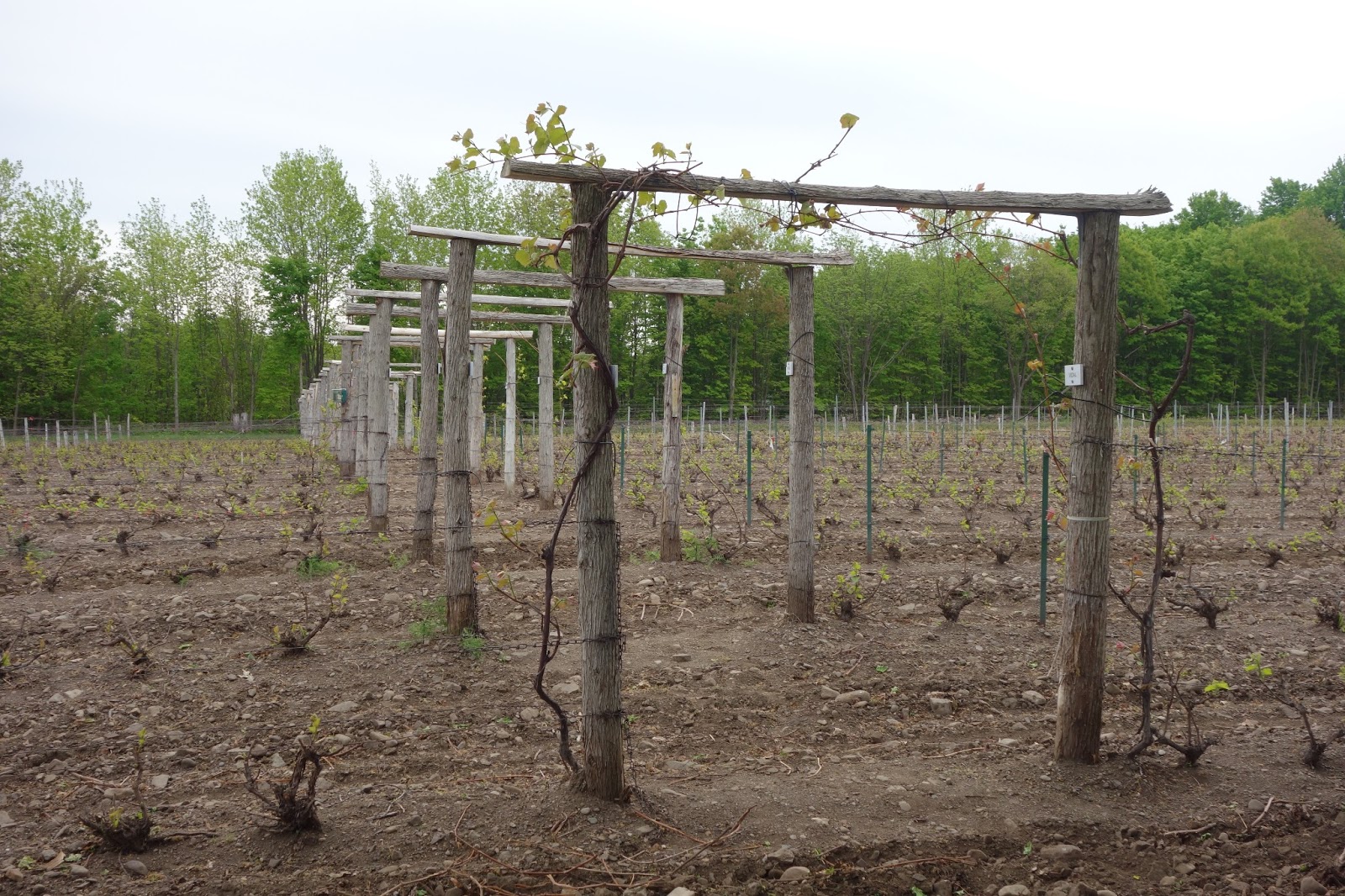
Vinifera are also important at Vignoble Les Pervenches. The vineyard was established in 1991, but the current owners, Michael Marler and Véronique Hupin, purchased it in 2000. The vineyard consists of three hectares, certified organic, and they grow hybrids and vinifera, though since 2003, they have only planted vinifera grapes. Their most planted grape is Chardonnay, and they possess some which is 22 years old. You'll also find grapes like Zweigelt, Pinot Noir, Marechal Foch, Seyval Blanc, and Frontenac. They plan on planting some Pinot Gris this year, planting a few rows to see how it does.

Michael, pictured above, informed us that for the last five years, they have been practicing Biodynamic viticulture though they are currently not Demeter certified. Their issue right now that that they have made some changes to their viticulture, due to difficulties with the laborious practice of stirring the waters for their Biodynamic preparations. To Michael, the only way to assess the efficacy of Biodynamics is to do it and check the results. He is still unsure if his results are due to Biodynamics or simply from being a conscientious farmer.

The winery produces about 15,000 bottles annually, with small increases each year. The cold, like for all of Quebec, is an issue and they cover their vinifera grapes with cloths to protect them, though that can also lead to mice and rabbits sometimes taking residence under the cloths.

We got to taste one of their recently released wines as well as a number of barrel samples. Their whites were definitely my favorites, especially their Seyval Blanc and Chardonnay wines. The 2012 Seyval Blanc & Chardonnay blend ($17) was bottled only 2 weeks ago. The blend consists of 85% Seyval and 15% Chardonnay, was barrel fermented and they used natural yeast. It had a clean, crisp, fruity taste, some delicious pear and apple. Based on my tastings, I think their concentration on white wines is a very good idea and I would recommend you check out their wines.

One of the most beautiful properties we visited was at L’Orpailleur, where we met founding member Charles-Henri de Coussergues. As I stated yesterday, they are now the largest winery in Quebec, producing around 160,000 bottles per year.

Their biggest challenge is to pass safely through the Quebec winters and pruning is a very important aspect in that regard. They conduct 3 main types of pruning, and each grape type has its preferred method of pruning. For example, Chardonnay has a more complicated pruning. They also practice hilling, putting sand or dirt over some of the vines as protection. Their oldest grapes are hybrids, sich as Vidal Blanc, Seyval Blanc, Marechal Foch while their newer grapes include Chardonnay, Riesling, and Gewurztraminer.

We started our visit with some bubbly, the NV Orpailleur Brut ($26), and several writers even got to saber open some bottles, using the blade pictured above. They first started producing this sparkling wine back in 1992, beginning with 2000 bottles, and they use the traditional Champagne method. The Brut is made from 100% Seyval Blanc, is aged for about 2 years and has an alcohol content of 11.5%. I was impressed with this Brut, which was crisp, clean and dry, possessed of some subtle and pleasant apple and melon notes. A hearty recommendation for this bubbly.


The winery also produced one of my favorite wines of the trip, the 2010 Cuvee Natashquan ($25), which is also made from 100% Seyval Blanc. It spends a year in French oak, 30% which are new, and it possessed an intriguing complexity, as well as a rich, savory mouth feel and nice citrus tastes. Each sip impressed and I seemed to find something else within it to enjoy. This may be made from a hybrid, but you wouldn't know it from the taste. You would just taste a delicious and compelling wine. Highly recommended.

At L’Orpailleur, after lunch, we had a tasting of wines from a number of other nearby wineries, and I wanted to highlight a few of my favorites.

The 2012 Val Caudalies Rosé ($17.50), a blend of Chambourcin, De Chaunac, Marshal Foch and Lucy Kuhlman, was crisp and dry, with subtle red fruit flavors that brought to mind a Provence Rosé. An excellent summer wine, as well as something that would be delicious year round. Their 2012 Vidal ($16.75) was very aromatic, with citrus, peach and floral notes. Another nice summer wine, something to sip on the front porch, in the backyard or at the beach.

Vignoble Gagliano made a delicious 2012 Frontenac Gris ($18) which had a complex melange of taste, with notes of honey, apricot, and lychee. It was crisp and smooth, with a very pleasing finish. Their 2011 Frontenac Noir ($25) was one of my favorite red wines, with rich red and black fruit flavors, hints of spice and a smooth, lingering finish.

The 2009 Domaine Les Brome Reserve Vidal ($24.50) was intriguing, with delicious citrus, peach, white flower and a backbone of minerality.

White hybrids and ice wine also impressed me at Vignoble Le Marathonien, which is owned by Jean Joly which ran some marathons when he was younger, hence the winery name.

Jean Joly, pictured above, led us on a tour of his 2 hectares of vineyards, which have a very stony soil that provide excellent drainage, and the rocks also maintain heat. The vineyard started in 1989, growing only hybrids, but they now grow a few vinifera, like Cabernet Franc and Merlot.

There are several goats on the property, and the baby goats were especially cute. They serve no larger purpose on the vineyard but they do make for a fascinating attraction for visitors.

The winery produces about 12K-15K bottles annually, including some compelling ice wines.

The NV Seyval Blanc ($12) is 100% Seyval Blanc, a blend of 80% from the 2011 vintage and 20% from the 2012 vintage. It was fresh, clean and crisp with bright fruit. Simple but not one-dimensional. An excellent value wine, pleasant enough to drink on its own or a nice accompaniment with food. The 2009 Boise d'Havelock ($13) is also 100% Seyval Blanc but is undergoes 6-8 months of oak aging. It had a richer, more complex taste and I found it very appealing. Of these two wines, each has their place, and it depends on your mood at the moment which you would prefer.

The 2011 Late Harvest ($28), made from Vidal, was delicious, with a pleasant sweetness, balanced by acidity, and flavors of honey, apricot and citrus. The most impressive wine though was their Ice Wine ($50), also made from Vidal. In 1994, they were the the first ice wine producer in Quebec. This ice wine had a bright golden color, and an alluring aroma of honey, flowers and dried fruit. Its richness caressed the tongue, yet possessed sufficient acidity to prevent it from being too cloying. A lengthy, satisfying finish helped to elevate this wine to the top of the charts. A killer wine and highly recommended.

Tuesday, June 18, 2013

Taste Camp: The Wine Industry of Quebec (Part 1)

Exploring emerging wine regions is always a fascinating endeavor even if their wines are not readily available outside of that region. It is an educational experience that can reflect the realities faced by many other emerging regions. It is also fascinating to witness the early growth of a wine region, to be one of the first to see their potential. During TasteCamp, our three-day exploration of the wines, beer and food of Quebec, we encountered one of these emerging regions, which has an approximately thirty year history, and an even shorter history with vinifera grapes.

Quebec's first winery, established in 1981, was Côtes d’Ardoise and it is still in existence. In 1982, the L’Orpailleur vineyard and winery was founded by four men, two from France and two from Quebec. These men purchased a 20-hectare farm not far from Côtes d’Ardoise and their winery is now the largest in Quebec, producing over 160,000 bottles of wine annually. Currently, there are over 100 wineries in Quebec, though there appears to be some contradictory information online, with a few sources claiming that there are only around 50 or so wineries. Nonetheless, Quebec has a small wine industry which continues to grow each year.

One of the biggest challenges facing Quebec wineries is the cold weather. It makes it difficult to grow vinifera grapes, and the frost can decimate much of your vineyard. If you lose 50% of your crop or more in a given year, that certainly makes it more difficult to turn a profit. That risk tends to lead to higher prices for vinifera wines, which can make them less of a value. Hybrid grapes, which can be much hardier, generally grow better in this climate yet some feel they don't possess a sufficient cachet, and won't put Quebec on a competitive level with the rest of the world. There is some validity to that argument as a significant number of wine lovers seem to have a prejudice against wines made from hybrid grapes. They shouldn't possess that prejudice, but we cannot deny it exists. If vinifera grapes don't grow well though, what should the wineries do?

This division of opinion as to what grapes should be planted in Quebec seems to extend to a greater division over many other issues. There are two winery organizations in Quebec, the older Association des Vignerons du Québec (AVQ) and the newer Vignerons Indépendants du Québec (VIQ). For a small wine industry, to have two such organizations working at cross purposes, may not be beneficial. At TasteCamp, we heard little about these organizations though we did hear about some of the differing opinions of winery owners and winemakers. These organizations should work together to benefit the entire Quebec wine industry, helping its growth.

Based on my own tasting experiences with the wines of Quebec, I felt that, in general, the white wines and ice wines were of better quality than the red wines. Some of my favorite wines were also made from hybrid grapes. None of that means they cannot make good red wines in Quebec, but I think it is going to take more time and experimentation to increase the overall quality of the reds. Due to the risks of the weather, price is going to be an important factor, meaning you might not find many value vinifera wines. One finds much passion in the winery owners and wine makers, pioneers who are working hard to produce wine in a less than ideal climate. Improvements in the Quebec wine industry will continue to come.

Located along the St. Lawrence River, our first winery visit was to Vignobles Carone, owned by Anthony Carone. The winery was established in 1997 by Anthony's father and originally grew only hybrid grapes, as that was all that was available. However, his father wanted to experiment with vinifera and starting bringing home grape vines from Italy in his luggage. Would you have ever imagined that anyone in Quebec would grow Italian grapes like Sangiovese and Nebbiolo?

Anthony, pictured above, has been following in his father's footsteps. The vineyard consists of 8 hectares which are broken into 3 lots and possesses 25-30K vines. Though they still grow some hybrids, such as Marquette and Frotenac, they have been slowly, taking baby steps, replacing their hybrids with vinifera such as Pinot Noir, Nebbiolo, and Sangiovese. In addition, Anthony has chosen to only produce red wines and his annual production is roughly 25K liters.

On his blog, Anthony has stated the reason for why he embraces vinifera. "I have always been an advocate that nature will always do a better job of creating new grape varieties than man. Hybrids are a creation of man and while useful in allowing the range of viticulture to be extended where natural varieties might not succeed, by definition this does not produce great wine." He also believes that "Hybrids are like Gerber’s baby food. It was fine for a while, but now the consumer wants and expects more."

Anthony keeps the vinifera vines low to the ground to provide them better protection from frost damage though that is not always successful. This year, they were devastated by a terrible black frost, which was worse than anything else they had sustained previously. There were two weeks of extremely hot temperatures which caused everything to bud early. Then the black frost arrived and Anthony lost 50-75% of his grapes, including about 75% of his Pinot Noir. How do you continue after such a catastrophic loss? For Anthony though, there was no question. He would continue, no matter how deep the loss. He has chosen a formidable challenge and his passion drives him despite adversity.

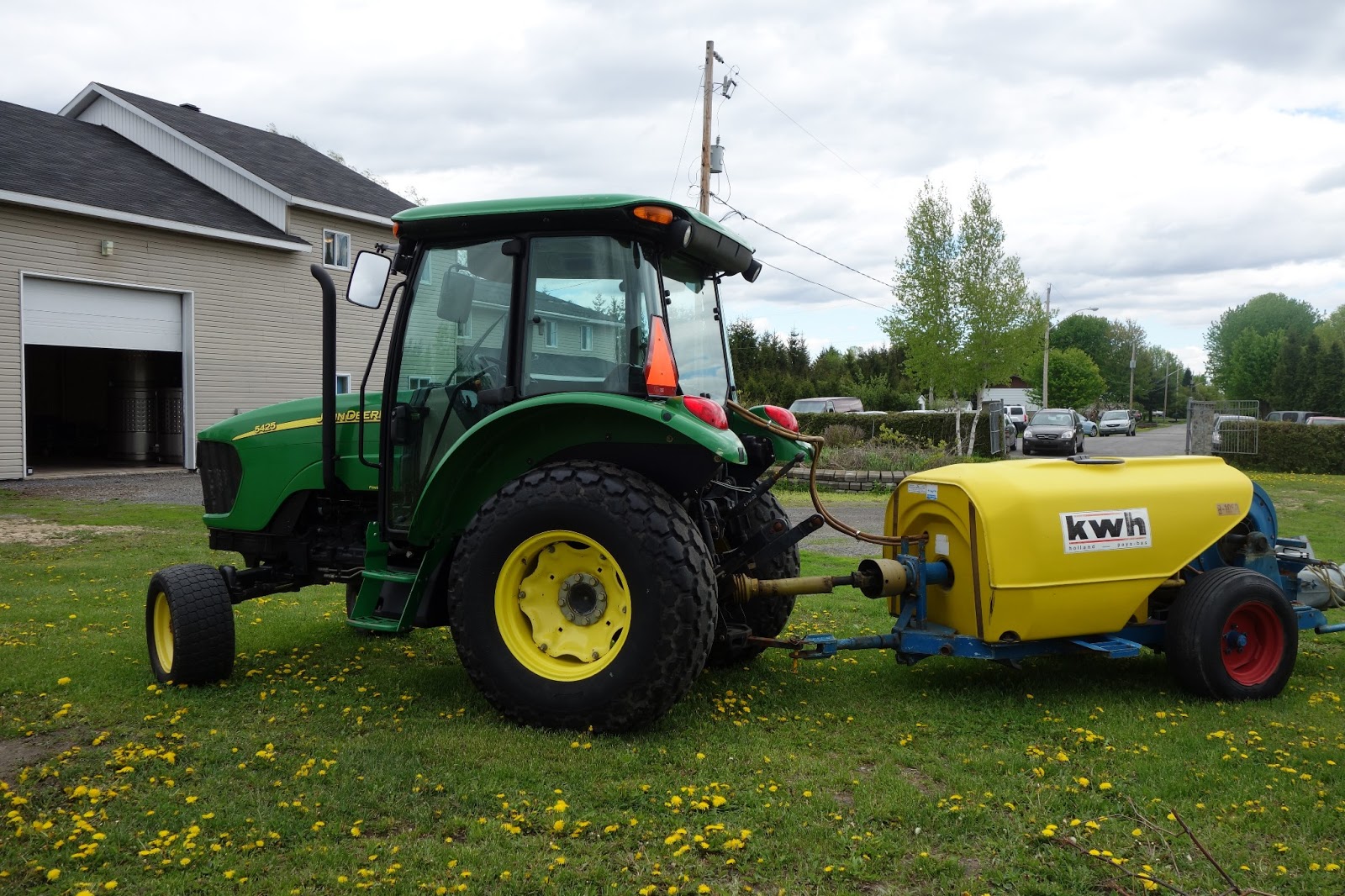
About 75%-85% of the vineyard operations, like pruning, are mechanized and Anthony owns a number of specialized tractors.

Anthony owns a two ton hydraulic press, which was originally designed for ice wine though works with red wines too. He uses both French and American oak barrels, usually a year old, and rotates them every three years. To produce white wines, Anthony would need different equipment, and he thinks reds are more interesting anyways.

I tasted four of the Carone wines and overall they were good, though I didn't find any of them especially impressive. They show promise and it would be interesting to see how the winery develops during the next five years.

The NV Rosso Classico ($18), a blend of Frontenac, Landot Noir, Landal Noir, and Cabernet Severyni, spent about three months in new American oak and has an alcohol content of 12.5%. This wine accounts for about 20% of their production and was a creation of Anthony's father. It was fruity and pleasant, though a bit simple, with a nice element of herbs and spice on the finish and hints of oak. An easy drinking wine, this would be a good burger or pizza wine.

The 2011 Venice Cabernet Severyni ($24), a blend of 90% Cabernet Severyni and 10% Frontenac, has an alcohol content of 13%. Anthony's father planted the Severyni because it reminded him of Barolo. This wine had some volatile acidity and tasted a bit unripe, a strong green aspect to it. The aroma seemed a bit chemical though the taste had more raspberry and spice notes. I would like to have tasted some other vintages to see if this wine was more an exception or not.

The 2010 Venice Pinot Noir ($35), a blend off 85% Pinot Noir and 15% Landot Noir, has an alcohol content of 12.5%. Anthony was the first producer of Pinot Noir in Quebec and loves growing the grape because it is such a challenge. In 2010, he produced about 2500 bottles. He blends in other grapes for more complexity, a greater bouquet and greater fruitiness. I found thus wine to have an interesting nose of herbs and spice, and on the palate those remained prominent, though nice red fruit tastes also came though. It was smooth and pleasant, with moderate complexity. If this were less expensive, I would more strongly recommend it.

The 2009 Double Barrel ($55), a blend of 92% Cabernet Severyni and 8% Sangiovese, has an alcohol content of 14.5% and only 1000 bottles were produced. A special yeast, imported from Italy, is used in fermentation. Its oak aging is more unique in that the wine is first aged in American oak for a year and then it is transferred into French oak for another four months. This wine avoided the negative aspects of the Venice Severyni, and presented lots of compelling fruit flavors up front with spicy edge on its finish. Its tannins were mild and the finish was relatively long and pleasant. This was a good wine, but I think it is pricey for what it delivers compared to similarly priced wines.

To Be Continued...

Thursday, June 13, 2013

Thursday Sips & Nibbles

I am back again with a new edition of Thursday Sips & Nibbles, my regular column where I briefly highlight some interesting wine and food items that I have encountered recently.
**********************************************************
1) Boston Chops, the new steakhouse in the South End, is debuting a new Brunch menu, held every  Saturday and Sunday, from 10am-3pm, including some elements of their Rarely Celebrated beef cuts. Their food menu is divided into the following sections: Raw, their full raw menu is available for brunch; Tossed, with three salads not available on the dinner menu, including Lobster Cobb Salad (grilled avocado along with the lettuces, ½ a lobster, sharp cheddar, egg and grilled bacon, $24). The Unnamed section of the menu features items such as Huevos Rancheros, with machaca beef cheeks, black beans, grilled avocado, and a tortilla ($14); Brisket Shank & Grilled Tongue "Hash" with a 2hr egg, frites, cheese curds and gravy ($14); Giannone Fried Chicken with biscuits, sawmill gravy, sausage, and pepper jelly ($19), Brunch Frites, bottomless frites with a selection of either grilled steaks (a choice of three 8oz cuts) or sandwiches (corned brisket & tongue reuben $14, burger with house bacon, BC sauce & cheddar, $15, croque monsieur $15) served with the choice of select sauces from the dinner menu. For Sides, try the House Made Pecan Sticky Buns ($7) or House Made Donuts with Chocolate Sauce ($7).

On the beverage menu, you will find Prime Bloodies, culinary infused Bloody Marys, a collaboration between the kitchen and the bar. All bloodies can be “cooked” to order: Rare – bold house made Bloody Mary mix, Medium– add spice to your life, Well Done– when you want to play with fire. Selections include: Pickled Mary with asparagus, green beans, frog balls, and cornichons – all pickled in house ($10); Smoked Kebab with speared bell peppers, pearl onions, and smoked beef tongue ($10); Charred Shishito with pepper jack cheese, grilled shishito pepper, and lemon ($10); Steak & Cheese with veal stock and blue cheese stuffed olives ($10).

2) The Beehive Restaurant's latest celebration will be “La Fête nationale du Québec” or “Quebec National Day” featuring an evening of food and live performance from award-winning singer-songwriters Isabelle Cyr and Yves Marchand on Monday, June 24, from 5pm-1am. In partnership with the Quebec Delegation of Boston and Svedka Vodka, The Beehive will be decked out representing our friends to the north in proper fashion as Cyr and Marchand perform original, well-known and traditional pieces from their Quebec and Acadian repertoire from 8pm-12am.

Highlighting the true friendliness of Quebec and its people, dinner will kick off at 5pm with a La Fête nationale du Québec specials menu in addition to The Beehive’s regular fare. The evening’s food will feature traditional Quebec fare such as: Smoked Trout Cakes with Horseradish & Cucumber Salad ($12), Foie Gras & Maple Crème Brulée ($14), Brome Lake Duck Breast Au Poivre with Sweet Potato Fries ($27), Québec style Lobster Spaghetti ($32), and Bleu berries pie with Maple syrup ice cream ($8).

In the mood for some Quebec cocktails why not try some of The Beehive’s fun featured cocktails for the evening such as the "Caribou de Ville” ($11.50) blending together red wine, American Honey Wild Turkey splashes of maple syrup, served on the rocks with a cinnamon stick, or the "Quebec Urbain" ($11.50) made with Svedka Clementie, blood orange juice and muddled fresh mint served on the rocks.

There is no cover charge for this event, but dinner reservations are highly recommended, so please call 617-423-0069.

3) The Grafton Inn introduces the first annual Grafton Food Festival, a celebration of local food and farms in Vermont, to be held June 22 and 23, from 10am-4pm, in Grafton Village. The event is presented by Northeast Flavor, a food and wine magazine focused on New England culinary pursuits. Celebrate Vermont’s “taste of place” and sample local food from more than 20 local food providers including Grafton Village Cheese, Side Hill Farm, Vermont Creamery, Blake Hill Preserves, Wright Orchard Sugarworks, Vermont Smoke and Cure and more. Additional food vendors, a bar and local farms will be set-up for purchased items, as well.

Guests will have the chance to enjoy cooking demonstrations each day featuring nationally recognized chefs including Susan Tuveson and Jean Kerr of Northeast Flavor, Jason Tostrup of the Inn at Weathersfield, Martin Schuelke of the Grafton Inn and more. One lucky attendee at each of the five cooking demonstrations will win the prepared food and sit at a special Chef’s Table at the event to enjoy it.

Cost is $10 per person; children under 12 are free. The Grafton Inn will offer specially priced farm-to-table dinner menus at the Old Tavern Restaurant on Friday and Saturday evening. Friday night is a Vegetarian themed tasting dinner (with a meat option) and Saturday night is a local Pasture to Plate tasting dinner. Reservations are necessary for each dinner. Additional activities in Grafton this weekend include guided wine and cheese hikes at Grafton Ponds Outdoor Center on Saturday and Sunday at 1:30 p.m. ($25 per person) and live music at Phelps Barn Pub on Friday and Saturday night at 8 pm (no cover). The Grafton Inn is offering a special Grafton Food Festival lodging package that includes two night’s lodging at the historic inn, breakfast each morning, entry to the Food Festival and a special Food Festival welcome bag for just $375.

For the complete event agenda and to book lodging or dinner reservations, visit GraftonFoodFestival.com or call 800-843-1801.

4) Beginning Sunday, June 9, TICO hosts a monthly Summer Patio Party with food, drinks, music, games, giveaways and fun. On Sunday, July 14, from 2pm-8pm, there will be an All-American BBQ. Technically it’s Bastille Day, but don’t tell that to TICO – they’re still celebrating the Fourth well into July with classic BBQ fare like burgers, dogs, ribs, cornbread; beer samples, giveaways from Patron Tequila, and music from DJ Jaz. On Sunday, August 11, from 2pm-8pm, there will be a Patio Pig Roast. Closing out the summer with another of TICO’s winning pig roasts, the patio will be rocking once more with all-you-can-eat porchetta from the rig roast, sides, beer samples, giveaways from Patron Tequila, and music from DJ Jaz.

COST: $20/person at the door includes all-you-can-eat food, beer & spirit tastings, giveaways and live music from DJ Jaz of the Boston Celtics

5) Bistro 5, a phenomenal Italian restaurant in Medford, is celebrating strawberries and local agriculture from June 13-June 29, with a special 5 Course Tasting Menu with Wine Pairings. 50% of their dessert sales will benefit the Federation of Massachusetts Farmers Market.

The Menu is:
Strawberry Thyme Chilled Soup (Port Wine Syrup, Mascarpone and Prosciutto)
2011 Aragosta, Vermentino, Sardegna
Scungilli (Thinly Sliced Conch, Green Strawberries and Spring Onion Vinaigrette)
2011 Loosen Bros "Dr .L" Riesling, Germany
Goat Cheese Ravioli (Strawberry Confetti and Shishito Peppers)
2009 Montaribaldi, Dolcetto d'Alba
Duck Milanese (Strawberry and Window Box Shiso, Rhubarb and Cherry Compote)
2009 Zenato, Valpolicella, Ripasso
Strawberry Shortcake (White Chocolate Mousse and Lemon Cloud)
2011 Elio Perrone 'Bigarò', Brachetto d'Aqui

Cost: Tasting Menu--Five Course: $68 per person or Three Course: $49 per person
Wine Pairing--Five Course: $25 per person or Three Course: $20 per person

For reservations, please call (781) 395-7464

6) Chef-owner Chris Douglass of Ashmont Grill is hosting four special dining events this summer. Prices and menus vary.

Monday, June 24 @ 6 PM 
Joel Gott Wine Dinner: Cost $65 inclusive for 5 courses of seasonal cuisine, served communally on the patio and paired with 5 wines from this white-hot winery. Gott’'s local representative will speak. Seating for this event limited to the first 25 people who call to reserve a space.
Sunday, July 14 @ 6 PM 
Pig Roast: This exciting outdoor pork-a-thon features a traditional pig roast with all the fixin’s plus selected beers and wines. Cost is $60 inclusive.
Sunday, August 11 @ 6 PM 
Lobstah Bake: New Englanders know that this feast always includes our favorite crustacean, plus local corn, potatoes, clams, hot dogs, watermelon and more. Act fast as seating is limited @ $60 inclusive.
Sunday, September 8 @ 6 PM 
Dueling Chefs of Dorchester: This exciting competition pits the kitchen teams of Ashmont Grill and Tavolo (our sister restaurant) against each other in an end-of-the-season patio party chock full of local farm fare, meats, fish, psta, homey desserts, wine and beer. $75 inclusive.

Rain dates for all four events will be posted online.

7) Joseph Cassinelli, Chef & Owner of the Alpine Restaurant Group, announced three new hires to his restaurant team. The Alpine Restaurant Group currently owns and operates Posto, Posto Mobile and The Painted Burro in Davis Square. These are some of my favorite restaurants. Alpine Restaurant Group has named two inaugural positions including: Alec Riveros as Director of Operations and Chef Robert Jean as the Culinary Director of the group. Additionally, Chef Wyatt Maguire joins as Executive Chef of Posto.

In 2010, Posto was one of the first restaurants to debut in the resurgence of the Davis Square restaurant scene,” says Joseph Cassinelli. “It is New England’s first Verace Pizza Napoletana certified pizzeria, but over time it has evolved to be much more. Under the direction of our new team, guests can now enjoy a dining experience that highlights the simplicity of Italian cuisine augmented with the New England bounty. An extensive antipasti program of small plates, handmade pasta dishes, and local grilled meats and fish are labors of love that we are all excited to share.”

The new menu at Posto showcases the simplicity of Italian cooking with a focus on artisan ingredients. The menu includes a new section of Stouzi (white bean puree with cauliflower giardinerre), Ensalate (string bean salad with fava, pea, sunchoke, Gaeta olive and pistachio pesto) and Primi (ciabatta with rosemary roasted peach, foie gras & lavender sea salt). The Pasta section features an expanded selection of hand made dishes such as a rabbit tagliatelle with peas, carrots, toasted garlic, farm egg & tarragon. The Pizza selections offer both rosso and bianco selections and continue to be made in the true Neapolitan spirit with “00” flour, San Marzano tomatoes, and house made fior di latte mozzarella. A new section of Carne e Pesce showcases wood roasted meat as well as an extended selection of seafood dishes such as whole roasted sea bass “cartocchio” with spicy pomodoro, fennel & saffron sea salt and brook trout with kale, chiogga beet, sweet onion & bone marrow “almondine.”

The beverage program at Posto has also been revamped. The cocktail list now includes a selection of Aperitivo such as Aperol Spritz which is available by the pitcher, Cocktails made with house infused spirits, house made limoncello and simple syrups, in addition to selections of local and international draft and bottled beer. The wine list features sparkling, rose, white and red wine selections available both by the bottle and by the glass. Posto’s beverage program also features an imported Italian wine preservation system called Enzo. Enzo’s extensive wine by the glass program allows guests to enjoy rare selections of reserve wines by the glass. I look forward to checking out all the changes.

Tuesday, June 11, 2013

Taste Camp: Apple, Strawberry & Honey Wines In Quebec

Wine doesn't have to be made from grapes to be delicious or interesting. During TasteCamp, our three-day exploration of the wines, beer and food of Quebec, this was made evident by numerous compelling wines made from apples, strawberries and honey. Some of these fruit wines were even better than some of grape wines we tasted. Quebec would be well served by continuing to showcase these delicious and intriguing fruit wines.

You may be familiar with Ice Wine, from Germany, Canada or elsewhere, but Quebec is the birthplace of Cidre de Glace, apple ice cider which is sometimes known as apple ice wine. Ice cider can be produced into two different ways, cryoextraction and cryoconcentration. In short, cryoextraction means that the apples are allowed to freeze on the tree before they are harvested, pressed and fermented. With cryoconcentration, the apples are harvested and pressed, and then the juice is allowed to freeze. What difference does this make for the resulting ice cider? In general, cryoextraction will produce more fresh fruit flavors, increased acidity and less oxidation. It is more expensive to produce though so many ice cider producers primarily use cryoconcentration.

Ice cider is growing in popularity in Quebec, and elsewhere, and Farm Credit Canada states that it accounts for 70% of sales in the Société Des Alcools du Québec (SAQ) local product section. About 1 million bottles are produced in Quebec each year, worth an estimated $20 million in retail. About 1/3 of the production is exported to Europe and Asia. Some ice cider is imported into the U.S. and you might know Neige, an ice cider produced by La Face Cachée de la Pomme, which I have I previously reviewed.

During our explorations, we visited with Christian Barthomeuf (pictured above), the owner of Clos Saragnatas well as the creator of ice cider. He was also one of the first men in Quebec to plant grape vines, back in 1979. Around 1989, he decided to produce something different, and created ice cider, though in the 1980s, no one wanted to hear about cider. The wine regulating bodies refused to recognize the designation of "ice cider" until ten years later. It was difficult during those ten years to market and sell ice cider, which had to be known by other common terms, which were not actually accurate terms.

Christian has consulted with other wineries and cideries, including what would eventually become La Face Cachée de la Pomme. In 2002, Christian and Louise Dupuis founded Clos Saragnat, which occupies about 35 hectares. Their apples are organically grown and they grow some other fruits as well. They produce their ice cider through cryoextraction, though it would cost them one-third less to use just frozen juice. An assemblage of apple types are used, and Christian wants to work with the fruit and nothing else, including wood. The cidery produces less than 10,000 bottles a year, largely dependent on the results of each vintage. It is a small, artisan operation and Christian's passion for ice cider was more than evident.

Currently, Christian is advocating for new regulations on ice cider, to make producers have to place on the label the method of production. He believes people should know whether the ice cider they are drinking derives from frozen apples or frozen juice. As there are clear differences in the resulting product from each different method, as well as differences in price, I agree with Christian that it would benefit consumers for this information to be required to be on the label.

We tasted two of their ice ciders, the 2009 Avalanche and the 2009 L'original, both sold in 200ml bottles. Both were excellent, complex, liquid ambrosia that seduced the palate. The Avalanche was less sweet, though still with honey notes, and possessed some tartness, good acidity and delicate floral notes. The L'original was sweeter, with a thicker and richer mouth feel, but still good acidity. It also had more dried fruit flavors and far fewer floral notes. Which is better? It all depends on your mood at the moment.

Christian's influence can be felt at La Face Cachée de la Pomme, which means the "hidden side of the apple." They have been producing ice cider since 1994 but only commercially since 1998. They prefer to refer to their produce as "apple ice wine" so they can avoid any confusion with other ciders. Their orchards extend over 50 hectares and they grow about 30 different types of apples, though the majority as McIntosh and Spartan. The McIntosh is the essence of their Neige Premiere and Bubbly.

They currently have two types of apple tree plantings, the classic and contemporary. The classic method generates less apples per acre and it takes much longer, 10-15 years, for the tree to mature properly. The contemporary method, which was inspired by the Netherlands, takes only about 5 years to mature properly, and an acre can produce significantly more apples. As all of their harvesting is done by hand, this method is also easier to harvest. The cidery is moving toward all contemporary plantings.

Unlike Christian, La Face Cachée primarily produces apple ice wine through cryoconcentration, about 90% of their production. They use cryoextraction for their Neige Winter Harvest. They export their apple ice wines to 20-25 countries, and California is their largest U.S. market, though they are also available in Massachusetts. Unfortunately, only two of their products, the Neige Premiere and Bubbly, are currently available in the U.S. It is interesting that because of U.S. law, the cidery is not permitted to place the vintage on their labels.

I was enamored with the 2011 Bulle Rose Sparkling Cider ($18), a blend of the Geneva and Honeygold apples. It acquires its pink color from the red/pink flesh of the Geneva apple, rather than from the skin. It only has a 6% alcohol content and is made in limited quantities once a year. The delicious sparkling cider was mostly dry, fresh, crisp and bursting with apple and and red berry flavors. An excellent summer drink, and very food friendly as well.    

The Neige Bubble ($15) is made from 100% McIntosh apples and I previously tasted and enjoyed at the Boston Wine Expo. Another fun sparkling cider, perfect for summer entertaining, or just relaxing. I am also a fan of the Neige Premiere, their basic apple ice wine.

The 2009 Neige Sur Lie ($26) is intriguing, having been left on the lees for about a year, and bottled unfiltered and without any sulfur. It has a darker amber color, with apple notes but deeper flavors of caramel, nuts and almost butterscotch. It is sweet, though with balanced acidity, and possesses a lengthy and complex finish. The Neige Winter Harvest is very thick, rich and sweet with a melange of complex tastes, including caramel, apricot, lychee and dried fruits. An amazing, well balanced elixir that delights the palate and mind.

Val Caudalies Vignoble produce ciders and wines, and their orchard are planted with about a dozen different varieties, with five usually primarily in their ciders. Their 2010 Cider Liquoreaux, made from Cortland, MacIntosh, Empire, Liberty and Spartan apples, is smooth, tart and tasty while the 2011 Apple Ice Cider Reserve, made from the same apples, is sweeter with a silky mouth feel and plenty of complexity. Both were fine examples of what Quebec is doing well.

Though Union Libre Cidre & Vin produces ice ciders and wines, they are also known for another unique product, Le Cidre de Feu, fire cider. Their Ice Cider ($24), made from an assemblage of Cortland, Empire, Spartan, & McIntosh apples, is made from cryoconcentration. It has a mild sweetness and a delicious crisp apple taste with elements of honey. A fine product.

Their Fire Cider ($26) is produced by fermenting a must, which has been heated and reduced by evaporation. This process takes several months of fermentation and then it is aged in oak barrels. It has an alcohol content of 16% and is sweeter, with more caramel, maple, and nutty elements complementing the apple foundation. Their 2004 Reserve Fire Cider ($28) is aged in Jack Daniel's whiskey barrels. It is similar to the basic Fire Cider, but with deeper flavors and the added element of a whiskey aroma and taste.

Strawberries! Ferme Guy Rivest produces two tasty wines made with strawberries including La Donzelle and Mistelle de Fraises. La Donzelle is a fortified wine made with strawberries and raspberries, and it is not too sweet, with nice acidity, and a smooth, pleasant flavor. It would made for a nice dessert wine. The Mistelle de fraises is a port style wine, also made with strawberries, and it is sweeter, with tasty notes of vanilla, spice and strawberry. Another good choice for a dessert wine.

As an interesting aside, they also produce Strawberry Pearls, which uses molecular gastronomy techniques to create little red pearls, resembling fish roe, but which burst in your mouth with a strong strawberry flavor.

Finally, at one of the large tastings, one of the most interesting wines was the Les Ruchers du Troubador Sparkling Honey Wine ($25), a vin de miel mousseux. It is organic, unfiltered and aged for three years prior to release. It is semi-sweet, with honey and floral notes, and an appealing earthiness elevating its complexity.

People sometimes get overly pretentious, feeling that only wine made from vitis vinifera grapes is worthy of attention. They show disdain for hybrid grapes, and out right hate for wines made from other fruits. They are wrong in their attitude and approach. Good wine can come from many different avenues and my experiences in Quebec have shown me high quality and delicious wines made from apples, strawberries and honey. I know others who visited Quebec who felt the same. That should be your main takeaway from this post, that you should be willing to explore wines beyond vitis vinifera. You never know what treasures you might discover.

Tuesday, May 21, 2013

Taste Camp Quebec: How I Survived A Beer Tasting

The Fifth Annual TasteCamp is now over, a three day visit to Quebec, tasting wines, ciders, beers and local foods. Approximately twenty five of us, bloggers and their significant others, journeyed to Montreal, our base for the trip. During the next couple weeks, I will be providing my thoughts about what I tasted in Quebec, both as part of TasteCamp and also what I did on my own. I have been to Montreal before, and think it is a great destination for those who love good food and drink, but I haven't previously explored much of the rest of Quebec.

For the first time, TasteCamp conducted a beer tasting, a walk around event where eight Quebec microbreweries presented a selection of their beers. For two hours, we got to sample what were probably at least 40 beers, and then there was an eight course meal afterward, each course paired with a different beer. Not my usual idea of fun as I have disliked about 99% of the beers I have previously tasted. I dislike the bitterness I find in beer, which seems due to the use of hops.

However, I bravely took my empty glass and went to the various tables, seeking a beer that I might like. Surprisingly, the results were much better than my usual average. I found two beers which were ok, which I might drink a glass or so under the right circumstances, such as with the proper meal. Then, I found two beers which I would drink on their own, including one which might be my most favorite beer ever. What a monumental discovery!

My discovery is illustrative of a greater principle, one which I have advocated for before, that you should continually taste wines, beers and spirits, even in categories which you might think you dislike. You should not write off an entire category, such as Chardonnay or Tequila, because you have disliked most of the items you have tasted. There is so much diversity in the alcohol world, that even if you dislike many items in a category, that doesn't mean you will dislike all of them. I have disliked a huge number of beers that I have previously tasted, but I keep trying them, and have found a few that I like. TasteCamp's beer tasting led me to find a couple more beers I liked. One should never give up on an alcohol category.

Le Castor is a microbrewery that produces organic beers. Their Grande Reserve Wee Heavy Bourbon is a Scottish ale, with an 11% ABV, that was aged in bourbon barrels. It had a prominent bourbon flavor as well as elements of malt, caramel and spice. On the finish, there was a touch of the beer bitterness I generally dislike, but it was mild enough that I could enjoy a glass with dinner. I know numerous other attendees who really enjoyed this brew.

The Brasseur de Montreal is a brewery and restaurant that produces about seven beers plus several seasonal ones. Their Chi is an unfiltered pale beer, with a 4.5% ABV, that is made from barley, wheat and rice malt and is also flavored with ginger, citronella and citrus. There was plenty of ginger flavor up front and then more citrus notes on the finish. It was light and crisp, though you better enjoy the taste of ginger. I would probably enjoy a glass of this with Asian food, maybe some spicy Thai.

One of the most popular tables at the tasting, as well as the one with the most beers, belonged to Trou du Diable, roughly translated as "The Devil's Hole." I loved the look of their labels, which showed very cool artwork. They also seem to have a diverse portfolio, with beers that will appeal to almost any palate. The Dulcis Succubus is a Saison, with a 7% ABV, that was aged for six months in botrytis dessert wine oak barrels. It is an intriguing and complex beer with floral, citrus, vanilla and spice notes. Like the legendary succubus, it is an alluring brew, one sure to captivate you with its sensual pleasures. This is a beer I could drink on a nice, summer day..

The overall best beer of my night was their La Grivoise de Noel, which roughly translates as "Ribald Christmas." This is a Belgian Strong Dark Ale, with a 7.5% ABV, and it is a seasonal beer, made for the Christmas season. However, it may actually taste better with some aging. This beer is a melange of alluring spices, from cinnamon to cardamom, with notes of caramel, dried fruit and nuts. There is a slight sweetness to this silky smooth brew, and none of the bitterness I dislike. In some ways, it reminded me of an aged Sherry. I drank a few glasses of this beer, and enjoyed each and every sip. This jumps to the top of my favorite beer list, which is rather small. For beer lovers, I think you would greatly enjoy the products of Trou du Diable. Their beers received many raves from the other attendees as well.

If you are not a big fan of beer, what beers have you enjoyed?