Showing posts with label wineries. Show all posts

Monday, April 28, 2025

Rant: Wine Travel For The Summer

The world is a book and those who do not travel read only one page.”
--St. Augustine 

As summer approaches, and you begin to make vacation plans, don't just make plans to visit the beach, to lay in the sun, relax and get a tan. Instead, why not visit a wine region, and immerse yourself in vineyards, grapes, fermentation, barrel rooms and wine tastings. When you return from a vacation of lying on a beach, you probably don't have many interesting stories to share. However, if you visit a wine region, you probably have much more to tell your friends and family about your experiences.   

There are various levels of understanding to all subjects, including wine. You may know little about wine, a moderate amount or be an "expert." Your wine knowledge may derive from a book, an instructor, numerous tastings, or a combination of elements. Another important source of information is travel to a wine region, which is an excellent way to gain further knowledge and understanding. 

Visiting a wine region will likely deepen your comprehension of wine. To meet the wine makers, to walk through their vineyards, to immerse yourself in the region's culture, all can contribute to a deeper appreciation and knowledge of the area and its wines. To have the opportunity to question the staff of the winery, to obtain answers to matters which might have previously confused or puzzled you, can be invaluable. A winery's website may present their brief history and philosophy, but that is most often only the bare bones. There is much richer detail to be found by speaking directly to the people of the winery.

One’s destination is never a place, but a new way of seeing things.”
--Henry Miller

I strongly encourage all wine lovers to visit wine regions, so that you can gain better comprehension and knowledge. Wine writers are especially urged to do so, to give you a better perspective. Travel can be a great experience for everyone, to broaden anyone's horizons. You could visit a Caribbean island, and sit on the beach all day relaxing. Or you could take a more educational vacation and visit places such as Spain, Oregon, Croatia, Paso Robles, Argentina, or Long Island, and explore their wines, cuisine, and more. If wine is your passion, then such a journey should call to your heart and soul.

Before you visit a wine region, be sure to do some prior research, so that you aren't a blank slate when you arrive. You can then arrive with more informed questions, ones that cannot be answered simply by visiting the winery's website. When you get to the region, be proactive, asking questions, participating in as much as you can. If you are offered the opportunity to experience something different, like harvesting grapes or tasting something unusual, then take it. Try new foods, learn local customs, and have fun. Seize the moment and squeeze every ounce of knowledge and experience out of your trip.

If you reject the food, ignore the customs, fear the religion and avoid the people, you might better stay at home.
--James Michener

If you can plan an international trip, there are many different options for wine regions, from Europe to South Africa, Argentina to Australia. Croatia, Portugal and Spain are three of my favorite wine regions to visit, offering excellent wine and food, culture and history. Although traveling to these countries can be great, I understand that not everyone can afford it.  

If your traveling budget is more limited, just seek out wine regions and wineries more local to you. Every state in the U.S. now produces wine, and you are likely within driving distance of a number of others. That will give you plenty of options, and then you can save up for a larger trip out of the country, or even just to a different state. 

For example, in New England there are said to be over 115 wineries, with about 55 of them located in Massachusetts. Did you realize that many wineries existed in Massachusetts? You could make a day trip and easily visit several local wineries, and during a weekend trip, you could visit even more. If you have several days, or even a week, available for a wine trip, you could instead drive to New York and visit wineries on Long Island, in the Finger Lakes or the Hudson Valley.  

Don't just hang on the beach this summer. Visit a wine region and have a fun and fascinating experience. A tan may last a month or so but the knowledge gained from visiting wineries will last throughout your life. And would you rather hear someone's story about how they acquired their tan, or about the wineries they visited? 

Monday, August 8, 2016

TasteCamp Vermont: History, Prohibition & Today

"Vermont winemaking offers an opportunity to participate in a modern economy with an artisan product that is true to an agricultural heritage and ethic of craftsmanship for which Vermont is widely recognized."
--Todd Trzaskos in Wines Of Vermont 

Vermont is well known for maple syrup and cheese, Bernie Sanders and Ben & Jerry's, skiing and leaf-peeping. However, its drinks industry, including wine, beer, cider and spirits, is lesser known for many people. Of all those drinks, its beers may have the greatest recognition beyond the state lines, though it is interesting that historically, there were few commercial breweries in Vermont. Currently though, you'll easily find over 40 commercial beer breweries in the state. Vermont entire drinks industry, though still relatively young in many respects, needs more recognition as there are a number of excellent producers worthy of your attention.

This past June, approximately 35 writers and their significant others, attended TasteCamp 2016, which was held in Vermont. TasteCamp was created by Lenn Thompson, of the New York Cork Report, back in 2009, and the concept is a weekend immersion into a wine region for a small group of wine writers. We have visited places such as Long Island, the Finger Lakes, Quebec, Virginia, and Niagara. This year, the TasteCamp attendees included people from both Canada and the U.S., with a couple people coming from as far away as California. It's great to see wine lovers willing to travel such a distance to explore a small region where most of their products aren't sold outside of the state.

"Wine offers Vermont the opportunity to blend the components of its geographic, agricultural and cultural past to enhance its evolving modern identity."
--Todd Trzaskos in Wines Of Vermont 

The TasteCamp group generally visits a variety of producers, tours vineyards, tastes dozens of wines, dines on local foods and holds a fun BYOB dinner. Over the years, the scope of the concept has evolved so that it is no longer limited to wine, and now also includes beers, ciders and spirits, noting how local regions have developed fascinating drinks industries. A key principle for TasteCamp is "drink local," consuming products that are locally produced, usually from local ingredients. There is little reason to limit ourselves to wine when local producers are making so many interesting and tasty beverages.  

Each TasteCamp has a limited number of sponsors and the attendees shoulder the lion's share of expenses for the trip, including their transportation, lodging and most meals. With its limited size, TasteCamp is a more intimate event, allowing you to get to know everyone in the group, reconnecting with old friends and meeting new ones too. The focus of the event is on tasting, both food and drink, and there aren't any seminars or events about writing, blogging, photography, or similar activities.

"Vermont winemaking is hard work but also an honor, an opportunity to commune with the land and to make something special."
--Todd Trzaskos in Wines Of Vermont 

TasteCamp is a curated event, intended to showcase some of the best of the region. This year, a huge debt is owed to Todd Trzaskos (pictured above atop the barrel), of Vermont Wine Media and author of the book Wines Of Vermont, for all his hard work and dedication in helping to plan, organize and curate TasteCamp Vermont. His efforts helped to make this one of the best TasteCamps ever. Lenn Thompson, Remy Charest and myself also contributed to the organization and planning of this event. The attendees learned much about Vermont, acquiring a new appreciation for this region, and spreading their new passion to others.

To understand the present, it can be worthwhile to understand something about the past, to see some of the origins of the drinks industry in Vermont. Almost two hundred years ago, Vermonters were drinking a significant amount of alcohol. "While estimates vary on daily consumption in the United States during this period, it is generally agreed that the average adult consumed around five gallons of spirits, a barrel’s worth of beer and untold amounts of hard cider over the course of a year. A simpler breakdown would be around seven drinks a day per man, woman and child." (Vermont Prohibition: Teetotalers, Bootleggers & Corruption by Adam Krakowski).

Around 1820, there were over 200 distilleries in Vermont (more than the number of towns in the state), and it is thought that Gin was the most widely produced spirit. Curiously, there were few beer breweries during this period, which was due in part because many people made beer (and cider) at home and they could even find beer recipes in local newspapers. However, the 1820s also saw the rise of the temperance movement, such as the founding of the Vermont Society for the Promotion of Temperance.

"Vermont's wines represent the unique qualities of place, the inspirations and aspirations of its people, and offer something that the world at large might enjoy."
--Todd Trzaskos in Wines Of Vermont 

The temperance movement was apparently quite influential in Vermont and in 1852, a state mandated prohibition on alcohol was passed, effective March 1853. Contrast that with Federal Prohibition which didn't begin until 67 years later, in 1920. The main focus of the Vermont prohibition was on distilled spirits, with lesser restrictions on fermented alcohol. For example, people were permitted to make their own fermented alcohol at home for their own consumption. There was also another law that people could consume alcohol at their home, provided it didn't cause intoxication. It seems the law was fascinated with the idea of intoxication as the only beers that were prohibited were those which were found to be "intoxicating" and there would eventually be legal cases on that very issues.

The production of hard cider was also permitted, for a number of reasons and with some restrictions. For example, you couldn't add any additional fermentable sugars to the cider. The government also felt that with the ease of cider production, and the myriad of apple trees in the state, that it would be impossible to enforce a prohibition on cider. Plus, cider provided important nutritional benefits as water consumption was still risky. Prohibition thus led to a surge in hard cider consumption, which eventually bothered the temperance movement which finally got hard cider production banned in 1880.

"When newcomers to Vermont wine realize where the wine in their glasses comes from, they may think that the people making it are crazy."
--Todd Trzaskos in Wines Of Vermont 

Like Federal Prohibition, Vermont prohibition was generally ineffective, especially considering their border with Canada. Plenty of illegal alcohol passed across the border and law enforcement seemed relatively useless in stopping the majority of the flow of this bootleg alcohol. Prohibition though did decrease revenue, from alcohol sales, for the state and it also decreased the amount of tourism, hurting many communities.

After prohibition ended, Vermont was not quick to rebound and it wasn't until approximately 30 years ago that the alcohol industry started to establish itself once again. As such, their drinks industry is still relatively new, in many aspects, yet they have come far in a short time. There is certainly plenty of room for growth but there is much to be proud about now, and is worthy of your exploration. 

"Winemaking in this place may be just a bit crazy, but it is more truly the mark of a certain kind of bravery (possibly fortified by wine), that emboldens growers, producers and supporters of the endeavor."
--Todd Trzaskos in Wines Of Vermont 

Since 2009, I've written a number of articles and reviews of Vermont wine, cider and spirits. In prior year's, I've attended the Vermont Cheesemakers Festival which not only offered an abundance of cheese but also presented some of the wines, ciders, beers and spirits of Vermont, from Boyden Valley Winery to Whistle Pig Distillery. Most recently, I've written about Mad River Distillers, more on Dave Pickerell & Whistle Pig, Eden Speciality Ciders, and Shacksbury CiderOver the years, I've seen a clear improvement and evolution of their wines, ciders and spirits. TasteCamp helped to solidify my positive impressions of the current status of Vermont's drinks industry.

In the coming weeks, I'll be sharing what I experienced in Vermont, highlighting plenty of interesting wines, ciders, and spirits, as well as some compelling food. This summer, as well as in the coming fall, you should visit Vermont to taste your own way through some of the best the state has to offer. It's only a short drive from Massachusetts and there is much to see and do in Vermont. It's certainly one of my favorite places to visit and in my subsequent articles, I'll give you more motivation to travel to Vermont as well.

I'll also be looking forward to next year's TasteCamp.

"This is just the beginning of history for the wines of Vermont."
--Todd Trzaskos in Wines Of Vermont 

Monday, February 2, 2015

Rant: More Local Wineries

Local wine continues to grow and grow, a positive sign that Americans are embracing more local wineries. Delicious wine is being produced all across the country, as well as in Canada and Mexico. I've long been advocating for local wine and I'm glad to see the latest statistics, showing significant growth. Let us hope that trend continues.

Wines & Vines recently posted an article citing the new statistics on winery growth across North America. In 2014, almost 600 new wineries opened in North America, with 525 in the U.S., a much higher growth rate than in 2013. The total number of wineries in North America is now 8,990, with 8,287 in the U.S. and the rest in Canada and Mexico. California remains the largest home for wineries, with 3,913 wineries, almost 50% of all wineries. There are now 15 U.S. states and Canadian provinces which have 100+ wineries, including states like Illinois, Missouri and North Carolina.

You should be exploring the wineries located in your own state, and I bet you'll be surprised by the quality your find. There are over 30 wineries in Massachusetts, from Travessia Urban Winery to Westport Rivers Winery, and you'll find even more wineries in the rest of New England. With the new Direct Wine Shipment law in Massachusetts, you will also be able to order wines from other states, to try more of the intriguing wines being made across our great country. Over at the Welllesley Wine Press, Robert Dwyer has provided an excellent list of the U.S. wineries which can currently ship to Massachusetts.

Though the list is dominated by California wineries, there is some interesting diversity as well. Some of the other wineries are from states including New York, Arizona, Colorado, North Carolina, Virginia, Oregon and Washington. Curiously, one of the license holders appears to be Nimrod Wines, which imports Hungarian wines, so I'm not sure how they qualified for a license. There are some excellent wineries on the list, and more wineries will be added in the future. I'm especially excited to see Abacela Veinyards on the list, an Oregon winery I've visited that uses numerous Spanish grapes, such as Tempranillo, I've already made my plea to MA wine lovers about what they can do to support the new shipment law. They need to contact their favorite wineries and ask them to get a license to ship to Massachusetts.

Wine lovers have much to be happy about, and let's hope it continues.

Monday, July 7, 2014

Rant: Caveats of Direct Wine Shipping

As I wrote in May, Direct Wine Shipments have been getting closer and closer to becoming a reality in Massachusetts. Previously, I noted that the Massachusetts House of Representatives submitted their proposal for the Fiscal Year 2015 Budget and it included an Amendment dealing with direct wine shipments. Since then, the Senate proposed their own Budget, which also included direct wine shipment language.

Then, a Conference Committee, with members of both the House and Senate, met and approved a compromise budget, reconciling the two different budgets and it included direct shipment language very similar to what was originally proposed by the House. That compromised budget has now been sent to Governor Deval Patrick, who has ten days to either approve the budget, or return it with vetoes. Later this week, the Governor's decision will be made and I'll note that the Governor has previously mentioned he would support direct wine shipment so there is reason for hope.

However, don't get too excited yet, thinking you'll soon be able to order wine from anywhere across the country. There are three important issues you need to understand, all matters which may serve to limit your ability to get wine delivered to you, despite this new law.

First, the new direct wine shipment law only applies to wineries and does not allow you to receive shipments of wine from out of state wine shops or online wine dealers. So forget ordering wine from those deal a day websites, or large online retailers. Only a winery, which manufactures, bottles or rectifies wine, can legally obtain a direct wine shippers license. Hopefully, we can hope that might change in the future, allowing Massachusetts residents to receive wine shipments from any wine retailer. For now though, the law will only affect wineries.

Second, any winery that wants to ship to Massachusetts must obtain a license to do so, which costs $300 for the first year, and $150 for each successive year. The winery must also follow all of the requirements within the law, such as annual reports and keep records to ensure resident receives more than 12 cases of wine each year. Not all wineries, especially the smaller ones, are going to obtain such a license. They might not see it as cost effective, or think that they are not going to do much business in Massachusetts. So don't assume that every winery is going to obtain a license to ship to Massachusetts. Your favorite out of state winery might just not participate.

Third, there is a serious issue as to whether shippers such as UPS and Fedex will ship wine from another state. For example, on the UPS website, it currently states: "UPS does not accept shipments containing wine to or from Massachusetts." If Massachusetts passes a direct wine shipment law, then both carriers will need to make changes, and that may cost them monies to license their own trucks to carry wine. And they must separately license each and every truck, instead of just acquiring a single blanket license. This could be a costly endeavor for them. What happens if they don't obtain the licenses, or only a few? That could cause problems with getting wine shipped to you. And it will also entail the wineries making agreements with the carriers too, additional work for those wineries. This is an issue that really needs to be worked out.

If the direct wine shipment law is passed, it will be a major step forward for Massachusetts wine consumers, but it is not a complete solution. There are still concerns that need to be addressed, so be happy, but it should be a measured happiness.

Thursday, January 30, 2014

Thursday Sips & Nibbles

I am back again with a new edition of Thursday Sips & Nibbles, my regular column where I highlight some interesting wine and food items that are upcoming.
**********************************************************
1) On February 15, at 7pm, Aura at The Seaport Hotel will host a wine dinner with Bonny Doon Vineyard as part of the 23rd annual Boston Wine Expo, one of the country’s biggest and most respected celebrations of wine, food and culture. This California-based vineyard produces premium wines from both domestic and old world vineyards with distinctive yet expressive flavors. Aura will team up with Bonny Doon’s chief winemaker, Randall Grahm, to host a four-course dinner featuring signature cuisine paired with Randall’s selections from the Bonny Doon winery.

The menu will be presented as follows:

FIRST COURSE
Arugula Salad (Fig Jam, Spiced Almonds, Asiago Cheese, Seaport Honey Vinaigrette)
-or-
Oysters 3 Ways (Baked With Basil Sabayon, Fried with Sesame & Wakame, Raw with Pomegranate Granite)
2012 Bonny Doon, Albarino
SECOND COURSE
Shellfish Panache (Curry, Coconut, Little Neck Clams, Mussels, Baby Shrimp)
-or-
Lobster & Asparagus Risotto
2011 Bonny Doon, Le Cigare Blanc
THIRD COURSE
Roast Poussin (Butternut and Caramelized Onion Sformato, Charred Cauliflower)
-or-
Roasted Beef Tenderloin (Herbed Spaetzle, Baby Carrots, Bleu Cheese)
2008 Bonny Doon, Le Cigare Volant
DESSERT COURSE
Chocolate Ganache Cake with Crème Pistachio and Candied Black Pepper Pistachios
2011 Vol des Anges, Late Harvest

COST: $85 per person (excludes tax & gratuity)
Reservation required by calling Aura at 617-385-4300.

2) On Saturday, February 1, from 10am-2pm, the Wayland Winter Farmers' Market will hold their 4th annual Massachusetts Farm Wineries Day. Eight farm wineries from throughout the state will be there.There will also be 40 food vendors at the market. I went to last year's event, and it was an excellent event, with plenty of interesting food and wine. Highly recommended.

The wineries will include:
Carr's Ciderhouse, Hadley
Coastal Vineyards<, South Dartmouthbr /> Green River Ambrosia Meadery/Artisan Beverage Cooperative, Greenfield
Mill River Winery, Rowley
Still River Winery, Harvard
Turtle Creek Winery, Lincoln
Westport Rivers Vineyard & Winery, Wesrport
Zoll Cellars, Shrewsbury

3) On Thursday, February 6, starting at 7pm, there will be a compelling Sherry Tasting Seminar at Taberna De Haro in Brookline. The event is titled, Comparing Styles of Emilio Lustau, and each course will offer two different styles of the same wine, all made in the winery of Emilio Lustau, a place blessed with old stocks and progressive talent. I have visited the Lustau winery, and can vouch for the quality and diversity of their Sherry.

Chef Deborah Hansen will pair herries like the straightforward Manzanilla Papirusa and the Manzanilla Pasada Cuevas Jurado so you can contrast the fresh, bristling notes of the first with the mellower, nuttier aspects of the second. The Fino course will consist of a Fino from el Puerto de Santa Maria, something rather scarce in this market, next to a Fino en Rama (unfiltered) from the same little town - something scarcer still. The Amontillado Los Arcos will be juxtaposed with the Rare Amontillado Almacenista Escuadrilla, illustrating the effect of the long, careful aging. Oloroso Don Nuño will be tasted with the Oloroso Emperatriz Eugenia, a supple and regal oloroso that everyone adores. It will finish with the yet-to-be-released Brandy de Jerez Solera Reserva! Coming soon to Massachusetts - be the first to taste it!

First Course
Manzanilla Papirusa
Manzanilla Pasada Cuevas Jurado
Bienmesabe (marinated fried haddock)
Jamón serrano con cebollita al azafrán (jamón-wrapped honey-spiced little onion)
Second Course
Fino Puerto Fino
Fino 3 en Rama El Puerto de Santa Maria
Sepia a la plancha (griddled cuttlefish with black allioli)
Patatas gaditanas (potatoes with picadillo & cured tuna)
Third Course
Amontillado Los Arcos
Rare Amontillado Escuadrilla
Gallina frita y cocida (golden braised hen)
Habitas (fava beans w mint and Andaluz extra virgin olive oil)
Fourth Course
Oloroso Don Nuño
Oloroso Emperatriz Eugenia
Berengena rellena (stuffed eggplant w moorish spices)
Buñuelos de payoyo (andalusian cheese fritters w honey syrup)
Fifth Course
Brandy de Jerez Solera Reserva

Cost: $60 (plus tax and gratuity)
Reservations and pre-payment required, so please call 617-277-8272

4) On Sunday, February 2 and Monday, February 3, the Beacon Hill Hotel & Bistro will serve crepe specials in honor of Le Jour des Crêpes (also known as la Chandaleur), a French holiday honoring the end of the Christmas season. Guests can indulge in a variety of Executive Chef Josh Lewin’s sweet and savory crepes being offered during dinner on Sunday and during breakfast, lunch and dinner on Monday including specials such as jamon mangalica and béchamel, butternut squash and sage, as well as raspberry sauce and spiced pecans.

While celebrated differently in many cultures, la Chandaleur always takes place 40 days after Christmas on February 2nd. In France it’s tradition to eat crepes after 8PM, and it is said that if a cook holds a coin in one hand and successfully tosses a crepe with a frying pan in the other, the household will be prosperous throughout the year.

Reservations are recommended and can be made by calling 617-723-7575.

MENU:
Sunday February, 2:
Dinner (small plate), $10:
Smoked ricotta and brown butter
Or
Jamon mangalica and béchamel
Monday February, 3:
Breakfast, $8
Raspberry sauce and spiced pecans
Lunch (with salad), $12
Ham and cheese
Or
Butternut squash and sage
Dinner (small plate), $10:
Smoked ricotta and brown butter
Or
Jamon mangalica and bechamel

5) For Valentine’s Day, consider going to Coppa where chefs Ken Oringer and Jamie Bissonnette have put together a special 3-course tasting menu, priced at $55 per person, and $35 extra for wine pairings. For each course, you will have a choice of five options, and these options can be quite compelling.

Some of the courses include
--“Lady and the Tramp” Spaghetti and Meatballs
--Seared Foie Gras with tamarind and persimmon
--Uove e Indivia: Soft poached-breaded fried egg, caviar crème fraiche, endive, candied walnut, meyer lemon black pepper vinaigrette
--Pancetta di Malale: Pork belly, black tahini, black lime roasted carrots, pickled ramps
--Aragosta la Pizza: Tempura fried lobster, fried lemon rings, aioli
--Forno Anatra Arrosto: Wood oven roasted duck leg confit, pomegranate molasses glaze, pig’s foot baked beans, herbs
--Banana and Nutella Bread Pudding

Call Coppa to make reservations at (617) 391-0902

Tuesday, October 22, 2013

Ten Things You Should Know About Southern Oregon (Part 2)

(Continued from Part 1)

5) Southern Oregon lacks a singular grape/wine identity.
The Willamette Valley is best known for Pinot Noir but Southern Oregon is still seeking what will be their signature grape or wine. They currently grow at least 70-80 different grapes and the region's climate and soils allow them to grow nearly any grape that exists. About 70% of the grapes they grow are red, with some of their top planted grapes including Pinot Noir (about 20%), Syrah (about 11%), Merlot (about 11%), Pinot Gris (about 10%) and Cabernet Sauvignon (10%).

Two of the more exciting grapes making their mark in this region are Viognier and Tempranillo, which a couple winemakers told me should be the signature grapes of Southern Oregon. However, those two grapes currently constitute only 3% and 4% of plantings, respectively, so they still have a long ways to come before becoming signature grapes. Plantings of different grapes continue, and currently Rhone grapes are starting to become more popular. One problem is that though the wine makers often chat and cooperate on an individual level, there really isn't a large, industry based group which would meet to discuss regional issues, such as what might best be a signature grape.  

6) Southern Oregon has numerous microclimates.
Though Southern Oregon is generally considered a warm-climate region, it possesses about 70 microclimates, and includes cool-climate areas. It occupies a similar latitude as sections of northern Spain, including parts of Ribera del Duero and Rioja, which probably is a reason why Tempranillo does so well here. The region also has four distinct viticultural zones, including Northern Umpqua Valley, Umpqua Valley, Rogue Valley and Illinois Valley. Much of the region has large diurnal to nocturnal temperature changes, which is good for certain grapes. Those grapes don't metabolize acid as quickly, as the cold temperatures help to shut down that process. Vintage variation is also significant in this region, and an important factor that winemakers must address each year. It is something that consumers need to realize as well, that vintage will play a far greater role in Southern Oregon than it usually does in California.

7) Greg Jones is one of Southern Oregon's most valuable assets.
Greg Jones, a professor and climatologist at Southern Oregon University, has been a valuable asset to the wineries of Southern Oregon. In 2009, he was listed as one of Decanter's most influential wine persons and that honor is well deserved. He has consulted all around the world, including a terroir assessment of the Douro in Portugal. In Oregon, he helped to create the Southern Oregon AVA and conducted extensive grower surveys from 1998-2001. Then, in 2003, he established a presence at 29 Southern Oregon wineries to monitor climate, phenology, yield, fruit sampling, and much more. These surveys and studies have greatly benefited the region, providing much valuable information for the wineries, allowing them to better understand their terroir. His invaluable assistance has been instrumental in the growth of the Southern Oregon wine industry. His family is also involved in the region, owning the Abacela Winery. More wine regions need someone as passionate, dedicated and intelligent as Greg Jones.

8) Southern Oregon has plenty of sustainable vineyards.
Oregon has a long history of sustainable agriculture and is even the center for Demeter USA, the Biodynamic certification organization. About 47% of Oregon's vineyards are certified sustainable, and that number is growing, which you can also compare to the only 12% of California vineyards. Supporting Oregon wineries is thus good for the environment too. About 5% of Oregon wineries are certified Biodynamic, though only one winery in Southern Oregon, Cowhorn Vineyards, is so certified. It seems likely that other Southern Oregon wineries will eventually move to Biodynamic as it is a growing, albeit slowly, trend in Oregon. A concern for the environment extends to most, if not all, of the wineries in Southern Oregon.

9) Wine tourism in Southern Oregon needs assistance.
One obstacle to making Southern Oregon wines more popular is that wine tourism is not fully supported by the region. The primary problem lies with restrictive laws which severely limit what wineries can construct on their property. As these wineries and vineyards are considered by law to be farmland, it is extremely difficult for them to add a restaurant or inn to their property. These laws probably hurt the region far more than they help, by limiting wine tourism which would bring more income to the area. Look at most wine region destinations around the world, and restaurants and hotels/inns at the wineries contribute to their popularity. It can even be a safety issue, where tourists who taste wines at several wineries, and could possibly be intoxicated, would be able to dine at a restaurant, or get a room at the winery rather than drive elsewhere to seek them.

10) Southern Oregon needs more wines under $15.
In general, Oregon wineries focus on producing higher end wines, costing $20 and over. As such, a significant number of consumers find Oregon wines to be too expensive for every day consumption. For Southern Oregon, which currently lacks the fame or singular identity of the Willamette Valley, it thus becomes much harder to penetrate the market. Fortunately, at least a few producers in the Southern Oregon region are starting to address that issue by producing wines that cost less than $15, catering to maybe the largest consumer market. For example, the Valley View Rogue Red, pictured above, is a red blend that sells for around $10 a bottle. Hopefully, we shall see more value priced wines from Southern Oregon, as well as the rest of Oregon too.

Monday, October 21, 2013

Ten Things You Should Know About Southern Oregon (Part 1)

The "3 Ps" of Oregon are Portland, Precipitation & Pinot Noir.

Greg Jones, a climatologist at Southern Oregon University, made the above statement, stating it was a common belief in Oregon. Pinot Noir and Oregon is such a famous combination, a singular identity that is known across the world, elevating the Willamette Valley to being the most recognizable American Viticultural Area (AVA) in Oregon. With over 300 wineries and 610 vineyards, accounting for nearly 75% of Oregon's wine production, the Willamette Valley seems to get almost all of the attention and publicity.

Most consumers probably couldn't identify another Oregon AVA besides Willamette. They might not even realize that there is Oregon wine made outside of the Willamette. However, consumers should learn about the other Oregon's AVAs, especially Southern Oregon, which has much to offer outside of the realm of Pinot Noir.

Recently, I traveled to Oregon, as part of a journalist trip sponsored by the Oregon Wine Board, and was accompanied by two other wine writers, Erin Guenther and Michael Cervin. From Medford to Portland, we visited both Southern Oregon and the Willamette Valley, tasting plenty of wine, meeting numerous wine makers, and enjoying the bounty of local cuisine. It was harvest time at most of the wineries, one of the earliest harvests in years, so it was a great time to visit, to see the wineries in operation. It was also an extremely busy time for the wineries, and my gratitude goes out to all of those who took some of their precious time to meet with us. Though I knew the Southern AVA existed before I journeyed there, my experience with the wines from this region was very limited so I was eager to learn more about this area and to sample the wines they produce.

The Southern Oregon AVA has five sub-AVAs, including Rogue Valley, Umpqua Valley, Red Hill Douglas County, Applegate Valley and Elkton. Though Southern Oregon is generally a warm-climate region, it possesses about 70 microclimates, and includes cool-climate areas. The region has over 65 wineries and 230 vineyards, and its history with wine extends back over 150 years. In fact, Southern Oregon is the locale of several vinous firsts for Oregon, including the first grape vineyards, the first Pinot Noir plantings, and the first commercial winery. Willamette Valley may be more famous, but the importance of Southern Oregon to the wine industry should not be forgotten.

Around 1847, Henderson Luelling, a horticulturist from Indiana (who also spent ten years in Iowa), moved to the Rogue Valley in Oregon and planted the first grapes, as well as numerous other fruits. When he initially departed for the Oregon Territory, he took with him around 700 fruit trees and berry bushes, hoping to eventually plant them in the Oregon soil. That was quite a large burden to transport across half the country and he ended up losing about half of them on route. However, he had enough trees and plants left to successfully plant a number of orchards, including apples, cherries and pears. As there were few other orchards in Oregon at that time, Luelling eventually became wealthy due to his plantings. It is also interesting to know that Luelling's brother, Seth, developed the Bing Cherry.

Luelling and his son-in-law, William Meek, planted the Isabella grape in Oregon, an American hybrid grape that may have been developed in South Carolina in 1816, though there is some disagreement over its actual origin. It is alleged that Leulling and Meek won a medal for one of their Isabella wines at the California State Fair in 1859. That might be the first Oregon wine to win a medal at any wine competition, and it might not have been until 1904 that another Oregon wine would win a competition medal.

In the 1850s, Peter Britt, a Swiss immigrant and photographer, came to the Oregon Territory because of gold fever. Though his primary income was through photography, he tried his hand at mining as well. A man of eclectic interests, he also was intrigued by horticulture and took time to plant orchards, such as pears and peaches, and eventually even grapes. He planted his own vineyards in the Rogue Valley, also eventually establishing, in 1873, the first commercial winery, the Valley View Vineyard, in Jacksonville.

In 1859, Oregon became an official state and took a census the next year, noting that annual wine production was approximately 2,600 gallons, or roughly 1000 cases, though that probably includes both fruit and grape wines. About twenty years later, Peter Britt alone would be producing 1000-3000 gallons of wine, which he sold locally for only 50 cents a gallon. Britt is also responsible for planting over 200 types of grapes, both vinifera and labrusca, in the Rogue Valley, experimenting with their suitability to the region. He might have even been the first person to plant Pinot Noir in Oregon.

Unfortunately, in 1916, Oregon instituted Prohibition, four years prior to the federal ban, and it would last until 1933. In essence, it destroyed the burgeoning wine industry and it would take nearly thirty years after the lifting of Prohibition before the industry started to rebound. In the late 1950s, Richard Sommer, a UC Davis graduate and often referred to as the "Father of Oregon wine," established the HillCrest Vineyard in the Umpqua Valley. In 1961, he planted the first documented Pinot Noir vines in Oregon, releasing his first Pinot Noir wine in 1967. The first Pinot Noir vines wouldn't be planted in the Willamette Valley until 1965. Sommer planted other grapes too, including Cabernet Sauvignon, Chardonnay, Gewürztraminer, Riesling, Sauvignon Blanc, Semillon, and Zinfandel. This would herald the start of the modern wine industry in Oregon.

However, the main interest for vineyards and wine production seemed to now center in the Willamette Valley, forged by pioneers such as David Lett, Charles Coury, and Dick Erath, who planted their vineyards in the 1960s. During the 1970s, new vineyards were established in the Rogue Valley though growth was relatively slow. By 1987, there were only 5 wineries and 38 vineyards in the Southern Oregon region though by 2009, there were over 40 wineries, with 113 vineyards.

In 1984, the Umpqua Valley was the first region in Southern Oregon to be declared an AVA. This was the same year that the Willamette Valley was declared an AVA. The Rogue Valley would become an AVA in 1991, though both the Umpqua and Rogue would be subsumed in 2004 under the larger Southern Oregon AVA. The newest sub-AVA in Southern Oregon is Elkton, which was declared in 2013.

My understanding of Southern Oregon has been expanded and enhanced through my visit to this region. At this time, I want to present a list of Ten Things You Should Know About Southern Oregon, to give you a foundation of some important items so that you can better understand this largely under-appreciated region and its wines. I would also recommend that if you travel to Oregon that you should take some time to visit Southern Oregon, and don't just spend all your time in the Willamette Valley.

1) Southern Oregon is breathtaking.
Upon my arrival in Medford, Oregon, and throughout my time in Southern Oregon, I was struck by its natural beauty, the landscape largely dominated by mountains and forests. Majestic mountains, thrusting high into the clouds, and lush wooded areas that seemed to extend to the horizon. It invokes a sense of serenity and wonder, inflaming a passion for nature. And as we drove through the area, we saw plenty of animals being raised, including horses, cows, sheep, goats, llamas and emus. There are also many wild animals in the region, including bears, mountain lions, deer, turkeys and more. We onlu saw some turkeys. You'll feel a real connection to nature in Southern Oregon and that alone makes a visit to this region worthwhile.

2) The Southern Oregon wine industry is still relatively young.
Despite its lengthy history, with several vinous firsts, the modern wine industry in Southern Oregon is still relatively young, especially when compared to the Willamette Valley. There is only a small number of wineries, though some of the wines they are producing are excellent. Talking to a number of wine makers, it seems clear that many are still trying to work out which grapes work best, what type of wines to create, and more. It is a time of experimentation, discovery and learning. There is much potential here and continued growth is probably a given. They have only scratched the surface with their vineyards, and up to another 250,000 acres could possibly be planted. I love the excitement and passion of new wine regions, and I foresee Southern Oregon gaining much respect in the near future.

3) Southern Oregon wineries are small operations.
The 40+ wineries in this region are generally small, many producing less than 5000 cases and those few wineries producing around 20,000 cases feel that they are large, though most others outside the region wouldn't. Because of their small size, it can be difficult to find their wines outside of Oregon. As they lack the cachet of Willamette Valley, these wines are much more of a handsell, and require a large investment of time and effort for marketing and sales by the winery, especially outside of Oregon. Not all wineries can afford that time and effort, so they concentrate their efforts just within the state. In time, if these wineries grow larger, then maybe it would be worthwhile for more of them to market to areas outside off Oregon. So if you want to experience their wines, you generally need to visit the region.

4) There are plenty of passionate wine people in Southern Oregon.
I met such a diversity of people involved in the wine industry Southern Oregon, from enthusiastic young people to older people who also possessed great enthusiasm. A number of them were transplants, from other states or even countries, who sought out Oregon for their wine careers. Others were starting second careers, having retired from a range of other occupations, and a number of them had never worked in wine before. What brought them all to Southern Oregon was a passion for wine. They certainly weren't there to make a fortune, and they generally seemed satisfied to make an adequate living from their wineries. There is a lack of pretension in this region, and there is also a sense of collaboration between the wineries, that they are friends rather than competitors. It is a real pleasure to meet and chat with these fine people.

To Be Continued...

Wednesday, June 19, 2013

Taste Camp: The Wine Industry of Quebec (Part 2)

Vinifera are also important at Vignoble Les Pervenches. The vineyard was established in 1991, but the current owners, Michael Marler and Véronique Hupin, purchased it in 2000. The vineyard consists of three hectares, certified organic, and they grow hybrids and vinifera, though since 2003, they have only planted vinifera grapes. Their most planted grape is Chardonnay, and they possess some which is 22 years old. You'll also find grapes like Zweigelt, Pinot Noir, Marechal Foch, Seyval Blanc, and Frontenac. They plan on planting some Pinot Gris this year, planting a few rows to see how it does.

Michael, pictured above, informed us that for the last five years, they have been practicing Biodynamic viticulture though they are currently not Demeter certified. Their issue right now that that they have made some changes to their viticulture, due to difficulties with the laborious practice of stirring the waters for their Biodynamic preparations. To Michael, the only way to assess the efficacy of Biodynamics is to do it and check the results. He is still unsure if his results are due to Biodynamics or simply from being a conscientious farmer.

The winery produces about 15,000 bottles annually, with small increases each year. The cold, like for all of Quebec, is an issue and they cover their vinifera grapes with cloths to protect them, though that can also lead to mice and rabbits sometimes taking residence under the cloths.

We got to taste one of their recently released wines as well as a number of barrel samples. Their whites were definitely my favorites, especially their Seyval Blanc and Chardonnay wines. The 2012 Seyval Blanc & Chardonnay blend ($17) was bottled only 2 weeks ago. The blend consists of 85% Seyval and 15% Chardonnay, was barrel fermented and they used natural yeast. It had a clean, crisp, fruity taste, some delicious pear and apple. Based on my tastings, I think their concentration on white wines is a very good idea and I would recommend you check out their wines.

One of the most beautiful properties we visited was at L’Orpailleur, where we met founding member Charles-Henri de Coussergues. As I stated yesterday, they are now the largest winery in Quebec, producing around 160,000 bottles per year.

Their biggest challenge is to pass safely through the Quebec winters and pruning is a very important aspect in that regard. They conduct 3 main types of pruning, and each grape type has its preferred method of pruning. For example, Chardonnay has a more complicated pruning. They also practice hilling, putting sand or dirt over some of the vines as protection. Their oldest grapes are hybrids, sich as Vidal Blanc, Seyval Blanc, Marechal Foch while their newer grapes include Chardonnay, Riesling, and Gewurztraminer.

We started our visit with some bubbly, the NV Orpailleur Brut ($26), and several writers even got to saber open some bottles, using the blade pictured above. They first started producing this sparkling wine back in 1992, beginning with 2000 bottles, and they use the traditional Champagne method. The Brut is made from 100% Seyval Blanc, is aged for about 2 years and has an alcohol content of 11.5%. I was impressed with this Brut, which was crisp, clean and dry, possessed of some subtle and pleasant apple and melon notes. A hearty recommendation for this bubbly.


The winery also produced one of my favorite wines of the trip, the 2010 Cuvee Natashquan ($25), which is also made from 100% Seyval Blanc. It spends a year in French oak, 30% which are new, and it possessed an intriguing complexity, as well as a rich, savory mouth feel and nice citrus tastes. Each sip impressed and I seemed to find something else within it to enjoy. This may be made from a hybrid, but you wouldn't know it from the taste. You would just taste a delicious and compelling wine. Highly recommended.

At L’Orpailleur, after lunch, we had a tasting of wines from a number of other nearby wineries, and I wanted to highlight a few of my favorites.

The 2012 Val Caudalies Rosé ($17.50), a blend of Chambourcin, De Chaunac, Marshal Foch and Lucy Kuhlman, was crisp and dry, with subtle red fruit flavors that brought to mind a Provence Rosé. An excellent summer wine, as well as something that would be delicious year round. Their 2012 Vidal ($16.75) was very aromatic, with citrus, peach and floral notes. Another nice summer wine, something to sip on the front porch, in the backyard or at the beach.

Vignoble Gagliano made a delicious 2012 Frontenac Gris ($18) which had a complex melange of taste, with notes of honey, apricot, and lychee. It was crisp and smooth, with a very pleasing finish. Their 2011 Frontenac Noir ($25) was one of my favorite red wines, with rich red and black fruit flavors, hints of spice and a smooth, lingering finish.

The 2009 Domaine Les Brome Reserve Vidal ($24.50) was intriguing, with delicious citrus, peach, white flower and a backbone of minerality.

White hybrids and ice wine also impressed me at Vignoble Le Marathonien, which is owned by Jean Joly which ran some marathons when he was younger, hence the winery name.

Jean Joly, pictured above, led us on a tour of his 2 hectares of vineyards, which have a very stony soil that provide excellent drainage, and the rocks also maintain heat. The vineyard started in 1989, growing only hybrids, but they now grow a few vinifera, like Cabernet Franc and Merlot.

There are several goats on the property, and the baby goats were especially cute. They serve no larger purpose on the vineyard but they do make for a fascinating attraction for visitors.

The winery produces about 12K-15K bottles annually, including some compelling ice wines.

The NV Seyval Blanc ($12) is 100% Seyval Blanc, a blend of 80% from the 2011 vintage and 20% from the 2012 vintage. It was fresh, clean and crisp with bright fruit. Simple but not one-dimensional. An excellent value wine, pleasant enough to drink on its own or a nice accompaniment with food. The 2009 Boise d'Havelock ($13) is also 100% Seyval Blanc but is undergoes 6-8 months of oak aging. It had a richer, more complex taste and I found it very appealing. Of these two wines, each has their place, and it depends on your mood at the moment which you would prefer.

The 2011 Late Harvest ($28), made from Vidal, was delicious, with a pleasant sweetness, balanced by acidity, and flavors of honey, apricot and citrus. The most impressive wine though was their Ice Wine ($50), also made from Vidal. In 1994, they were the the first ice wine producer in Quebec. This ice wine had a bright golden color, and an alluring aroma of honey, flowers and dried fruit. Its richness caressed the tongue, yet possessed sufficient acidity to prevent it from being too cloying. A lengthy, satisfying finish helped to elevate this wine to the top of the charts. A killer wine and highly recommended.

Tuesday, June 18, 2013

Taste Camp: The Wine Industry of Quebec (Part 1)

Exploring emerging wine regions is always a fascinating endeavor even if their wines are not readily available outside of that region. It is an educational experience that can reflect the realities faced by many other emerging regions. It is also fascinating to witness the early growth of a wine region, to be one of the first to see their potential. During TasteCamp, our three-day exploration of the wines, beer and food of Quebec, we encountered one of these emerging regions, which has an approximately thirty year history, and an even shorter history with vinifera grapes.

Quebec's first winery, established in 1981, was Côtes d’Ardoise and it is still in existence. In 1982, the L’Orpailleur vineyard and winery was founded by four men, two from France and two from Quebec. These men purchased a 20-hectare farm not far from Côtes d’Ardoise and their winery is now the largest in Quebec, producing over 160,000 bottles of wine annually. Currently, there are over 100 wineries in Quebec, though there appears to be some contradictory information online, with a few sources claiming that there are only around 50 or so wineries. Nonetheless, Quebec has a small wine industry which continues to grow each year.

One of the biggest challenges facing Quebec wineries is the cold weather. It makes it difficult to grow vinifera grapes, and the frost can decimate much of your vineyard. If you lose 50% of your crop or more in a given year, that certainly makes it more difficult to turn a profit. That risk tends to lead to higher prices for vinifera wines, which can make them less of a value. Hybrid grapes, which can be much hardier, generally grow better in this climate yet some feel they don't possess a sufficient cachet, and won't put Quebec on a competitive level with the rest of the world. There is some validity to that argument as a significant number of wine lovers seem to have a prejudice against wines made from hybrid grapes. They shouldn't possess that prejudice, but we cannot deny it exists. If vinifera grapes don't grow well though, what should the wineries do?

This division of opinion as to what grapes should be planted in Quebec seems to extend to a greater division over many other issues. There are two winery organizations in Quebec, the older Association des Vignerons du Québec (AVQ) and the newer Vignerons Indépendants du Québec (VIQ). For a small wine industry, to have two such organizations working at cross purposes, may not be beneficial. At TasteCamp, we heard little about these organizations though we did hear about some of the differing opinions of winery owners and winemakers. These organizations should work together to benefit the entire Quebec wine industry, helping its growth.

Based on my own tasting experiences with the wines of Quebec, I felt that, in general, the white wines and ice wines were of better quality than the red wines. Some of my favorite wines were also made from hybrid grapes. None of that means they cannot make good red wines in Quebec, but I think it is going to take more time and experimentation to increase the overall quality of the reds. Due to the risks of the weather, price is going to be an important factor, meaning you might not find many value vinifera wines. One finds much passion in the winery owners and wine makers, pioneers who are working hard to produce wine in a less than ideal climate. Improvements in the Quebec wine industry will continue to come.

Located along the St. Lawrence River, our first winery visit was to Vignobles Carone, owned by Anthony Carone. The winery was established in 1997 by Anthony's father and originally grew only hybrid grapes, as that was all that was available. However, his father wanted to experiment with vinifera and starting bringing home grape vines from Italy in his luggage. Would you have ever imagined that anyone in Quebec would grow Italian grapes like Sangiovese and Nebbiolo?

Anthony, pictured above, has been following in his father's footsteps. The vineyard consists of 8 hectares which are broken into 3 lots and possesses 25-30K vines. Though they still grow some hybrids, such as Marquette and Frotenac, they have been slowly, taking baby steps, replacing their hybrids with vinifera such as Pinot Noir, Nebbiolo, and Sangiovese. In addition, Anthony has chosen to only produce red wines and his annual production is roughly 25K liters.

On his blog, Anthony has stated the reason for why he embraces vinifera. "I have always been an advocate that nature will always do a better job of creating new grape varieties than man. Hybrids are a creation of man and while useful in allowing the range of viticulture to be extended where natural varieties might not succeed, by definition this does not produce great wine." He also believes that "Hybrids are like Gerber’s baby food. It was fine for a while, but now the consumer wants and expects more."

Anthony keeps the vinifera vines low to the ground to provide them better protection from frost damage though that is not always successful. This year, they were devastated by a terrible black frost, which was worse than anything else they had sustained previously. There were two weeks of extremely hot temperatures which caused everything to bud early. Then the black frost arrived and Anthony lost 50-75% of his grapes, including about 75% of his Pinot Noir. How do you continue after such a catastrophic loss? For Anthony though, there was no question. He would continue, no matter how deep the loss. He has chosen a formidable challenge and his passion drives him despite adversity.

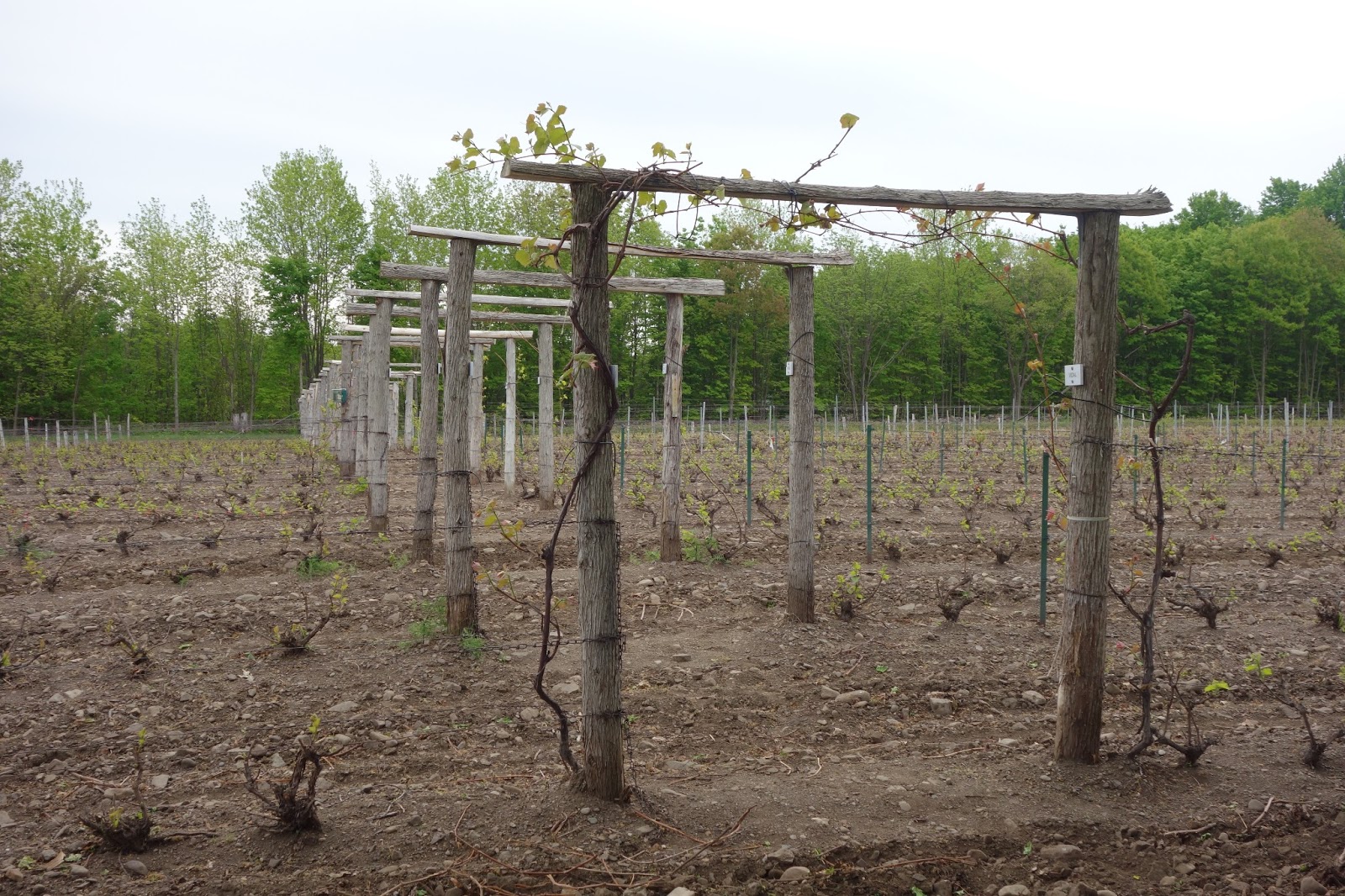
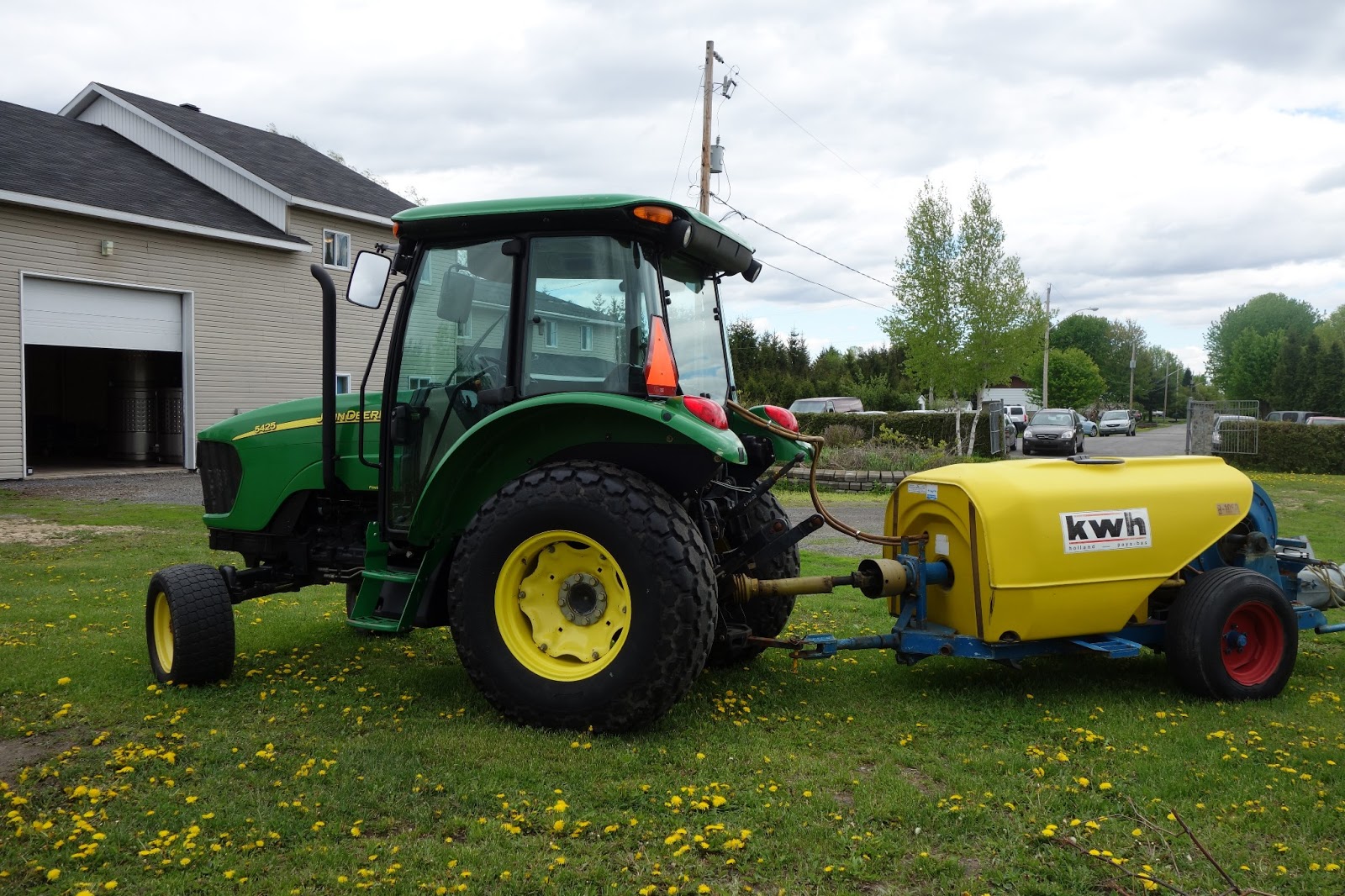
About 75%-85% of the vineyard operations, like pruning, are mechanized and Anthony owns a number of specialized tractors.

Anthony owns a two ton hydraulic press, which was originally designed for ice wine though works with red wines too. He uses both French and American oak barrels, usually a year old, and rotates them every three years. To produce white wines, Anthony would need different equipment, and he thinks reds are more interesting anyways.

I tasted four of the Carone wines and overall they were good, though I didn't find any of them especially impressive. They show promise and it would be interesting to see how the winery develops during the next five years.

The NV Rosso Classico ($18), a blend of Frontenac, Landot Noir, Landal Noir, and Cabernet Severyni, spent about three months in new American oak and has an alcohol content of 12.5%. This wine accounts for about 20% of their production and was a creation of Anthony's father. It was fruity and pleasant, though a bit simple, with a nice element of herbs and spice on the finish and hints of oak. An easy drinking wine, this would be a good burger or pizza wine.

The 2011 Venice Cabernet Severyni ($24), a blend of 90% Cabernet Severyni and 10% Frontenac, has an alcohol content of 13%. Anthony's father planted the Severyni because it reminded him of Barolo. This wine had some volatile acidity and tasted a bit unripe, a strong green aspect to it. The aroma seemed a bit chemical though the taste had more raspberry and spice notes. I would like to have tasted some other vintages to see if this wine was more an exception or not.

The 2010 Venice Pinot Noir ($35), a blend off 85% Pinot Noir and 15% Landot Noir, has an alcohol content of 12.5%. Anthony was the first producer of Pinot Noir in Quebec and loves growing the grape because it is such a challenge. In 2010, he produced about 2500 bottles. He blends in other grapes for more complexity, a greater bouquet and greater fruitiness. I found thus wine to have an interesting nose of herbs and spice, and on the palate those remained prominent, though nice red fruit tastes also came though. It was smooth and pleasant, with moderate complexity. If this were less expensive, I would more strongly recommend it.

The 2009 Double Barrel ($55), a blend of 92% Cabernet Severyni and 8% Sangiovese, has an alcohol content of 14.5% and only 1000 bottles were produced. A special yeast, imported from Italy, is used in fermentation. Its oak aging is more unique in that the wine is first aged in American oak for a year and then it is transferred into French oak for another four months. This wine avoided the negative aspects of the Venice Severyni, and presented lots of compelling fruit flavors up front with spicy edge on its finish. Its tannins were mild and the finish was relatively long and pleasant. This was a good wine, but I think it is pricey for what it delivers compared to similarly priced wines.

To Be Continued...