Friday, August 17, 2012

Two If By Sea Cafe: Compelling Croissants

It took us about 12 hours to drive to Nova Scotia, a lengthy ride through the dark night, some fog, construction delays, and more. We journeyed there to attend a family wedding and stayed for five nights, at a hotel in Dartmouth near the waterfront. Though the hotel provided a continental breakfast, it certainly was not exciting. But culinary deliverance was just around the corner, at the Two If By Sea Cafe.

The Cafe, which also has a location in Halifax, is owned by Zane Kelsall and Tara MacDonald and opened in November 2009. Zane is the coffee expert while Tara is the baking genius, and used to sell her baked goods at local farmers' markets. It is a medium-sized shop with tables inside as well as several tables outside on the sidewalk. It has a hip and casual coffee shop feel, a fine place to while away a part of your morning or afternoon.

The menu is relatively small, drinks and baked goods, but that is a strength as they can concentrate their efforts onto those items. To drink, you can choose coffee, tea, hot chocolate, hot cider and more. Their coffee apparently receives raves though as I am not a coffee drinker, I did not partake. But I had some iced tea, which is freshly brewed and they will make iced tea from any of their teas, from black tea to white tea. It comes in a mason jar, with plenty of ice, and was quite refreshing and tasty.

Their baked goods include muffins, scones, cookies, bagels and croissants (amazing!) though they limit the amount of each they bake. At the time of one of my visits, there were only two muffins ($3), including Mixed Berry and Carrot & Spice and two scones ($3), the Roasted Pepper & Basil and Lemon Poppy Seed. The flavors change frequently, considering what is in season, and they are all large, making them a good value. Though the muffins and scones were enticing, it is the croissants which stole my heart and I do miss them.

They serve several types of croissants, including Plain ($3), Chocolate ($3.50), Almond ($4), Prosciutto & Cheese ($5) and their Special of the Week ($5). Like the other baked goods, these are big croissants, large enough that two people might even want to split one. They are heavier than the usual croissant, containing far more layers, and probably weigh at least twice as much than the usual croissant. Yet they remain flaky and soft throughout the croissant, each bite a pure delight. I fell in love with their croissants, and stopped there every morning to buy one or two.

The plain croissants have a delicious buttery taste but the prosciutto & cheese was my favorite. The prosciutto added a salty flair to the croissant, and some of the ham that stuck out the ends was satisfyingly crispy. A perfect combination of ham, cheese and flaky bread. This is one of the best croissants I have ever tasted, putting to shame so many meager ham & cheese croissants.

One of the Special croissants of the week was the Ain't Life Peachy, which contained peaches, vanilla, sugar, and toasted coconut. Another delicious choice, though I would have liked to see a few more peaches inside it. But the flavor combination worked very well, and it was not overly sweet. Another good choice.

If you are in Dartmouth or Halifax, then you must stop by Two If By Sea Cafe for their croissants. They are well worth the stop and I bet you will love them as much as I did. When I return to Nova Scotia, they will be at the top of my list. Highly recommended!

Two If By Sea Cafe on Urbanspoon

Thursday, August 16, 2012

Thursday Sips & Nibbles

I am back again with a new edition of Thursday Sips & Nibbles, my regular column where I briefly highlight some interesting wine and food items that I have encountered recently. **********************************************************
1) BOKX 109 American Prime, a steakhouse at Hotel Indigo in Newton, announces the appointment of Stephen Coe as Executive Chef. A seasoned professional with over 20 years of restaurant industry experience, Coe excitedly joins the culinary team at BOKX 109 American Prime for the second time in his career.

"A Massachusetts native, Coe was born into the culinary world and was filling doughnuts at his grandfather’s shop by the age of eight. Coe’s passion was quickly realized and he began competing on the junior culinary circuit for five years. Coe graduated from Johnson & Wales University (Providence, RI) in 2000 earning a Bachelors Degree in Culinary Arts, Pastry Arts and Nutrition and an Associates Degree in Culinary Arts and Business Management for Hotel Restaurants. Upon graduating, Coe brought his near-perfect GPA to The Country Club (Brookline, MA) where he delved further into his budding career doubling as the banquet sous chef and a la carte chef de cuisine. After four years, Coe assumed the position of pastry chef and sous chef at the seasonal five-star, five-diamond Topper’s at the Wauwinet (Nantucket, MA), a Relais Chateau Luxury Resort. During the off season, Coe was employed as private chef for The Chef’s Table (Pembroke, MA) where he was responsible for a myriad of tasks including menu development, servicing a celebrity clientele and business administration. In 2008, Coe became part of the BOKX 109 American Prime (Newton, MA) team as the sous chef under former executive chef Evan Percoco where he was an integral part of the seasonal menu development and nightly execution. Coe left BOKX 109 American Prime to open a 22 acre non-profit training and research bee farm, Hollow Tree Farm (Plymouth, MA). In the last five years, Coe also held executive chef positions at Alba (Quincy, MA) and Patrizia’s Trattoria (Plymouth, MA). Most recently, Coe has taken the food truck world by storm serving as a consultant for Food Truck Nation where he was responsible for conceptualizing and overseeing four trucks and three culinary concepts including Italian Street Food, Lobsta Lova and two Grilled Cheese Nations. To date, Coe has worked in 143 restaurant lines and credits stints in France and California as major inspirations for his aggressive style of cooking and intricate technique."

At the BOKX 109 American Prime, Coe says, “In revamping the menu at BOKX 109, my goal is to appeal to our guests by offering new spins on classic American fare. I’m excited to be back and am anxious to get into the kitchen with the team so we can start pumping out some truly memorable meals.”

Highlights from Coe’s updated menu include: Smoke Show! (pear and mascarpone sacchetti, mustard fruit, chive cream); Wood Grilled Octopus Carpaccio (arugula, picked red onion, tarragon, lemon vinaigrette); Grilled Oyster (pancetta, chive, fennel pollen, oreganata, chive fondue); Sesame Tuna Nachos (sriracha sour cream, wakame, pickled ginger, crispy wontons); Duck Fat Poached Sweet Breads (sorrel puree, frisee, crispy apple); Rabbit Trio (confit leg, bacon-wrapped loin, French rack, stewed butter beans, peperonata); Tournadoes Rossini (Marsala glazed filet, seared foie gras, confit Yukon potato, haricot vert); and, Brick Chicken Tagine (curried cous cous, almonds, apricots, dates, raisin agro dolce). Coe has also developed some sweets including: Frozen Lemon Semi Freddo (Pop Rocks, raspberry leather, blueberry soda); Levitate! (flourless chocolate cake, chocolate mousse funnel, tuille cookie, caramel popcorn); and, Smoke! (freestanding marshmallow crème brûlée, honey nougat, Graham cracker cookie, chocolate sorbet, cinnamon fire). Coe will also continue to dish out BOKX 109 American Prime’s signature cuisine including BOKX Cuts (the restaurant’s a la carte Brandt Beef selections, numbered by the sub-primal part of the animal they come from) and an array of Surf, Turf & Farm options.

2) On Saturday, August 18th, celebrate the kick-off of the second annual North Shore Wine Week at the Wine ConneXtion located in North Andover. From 12pm-5pm, sample wines specially paired with cuisine from participating North Shore Wine Week restaurants Oregano Pizzeria and Ristorante and Chama Grill.

Mix and mingle at this complimentary event while sampling local culinary treats. Sponsored by Northeast FLAVOR magazine, in conjunction with NECN’s “TV Diner” and the Merrimack Valley Chamber of Commerce, North Shore Wine Week seeks to celebrate the North Shore as a premier destination for great wine and food. North Shore Wine Week will run from Sunday, August 19 through Sunday, August 26.

RSVP to VIP@northshorewineweek.com

3) "No matter how you shuck it, nothing compliments the subtle nuanced flavors of an oyster like a crisp glass of champagne." As a toast to this classic food and wine pairing, Central Bottle is reveling in the final days of summer with a special wine bar event: Bubbles + Bivalves.

The team at Central Bottle will be shuckin’ the ICOs (Island Creek Oysters, of course) and serving up a bubbly flight of Jean Vesselle Champagne and Movia Puro Rosato, a one of a kind Italian rosé rarely available outside of restaurant wine lists.

COST: $48 per person for a dozen oysters and ample amounts of champagne
WHEN: Thursday, August 23, 5:00 – 9:00 PM
TICKETS: Please visit http://bubblesbivalves.eventbrite.com/

Wednesday, August 15, 2012

The Origins of Port: Part 4

"Sip your spirits and cure your cold, but I will take Port that will cure all things, even a bad character. For thee was never a Port drinker who lacked friends to speak for him.”
--William Makepeace Thackery

--19th century

Despite the change in the balance of power, English demand for Port continued into the 19th century, though the amount of wines imported from Portugal decreased. Between 1807-1816 AD, about 50% of the wines imported into England were from Portugal. This was a major decrease from when imports once reached around 66%.

War soon came to Portugal. In 1806 AD, Napoleon Bonaparte, the Emperor of France, issued the Berlin Decree, forbidding the importation of British goods into any European nation either allied with or dependent upon France. This was the opening move of Napoleon's Continental System, a plan to isolate his enemy England. England responded in kind, with the Orders of Council of 1807 AD, forbidding trade with France. Portugal refused to follow the Continental System, choosing to continue trade with England, which greatly angered France.

In 1807 AD, France crossed through Spain and invaded Portugal, thus beginning the Peninsular War. In November 1807 AD, the French army marched into Lisbon, reaching Oporto two years later. But, they were ousted from Oporto only three month later. France also eventually chose to attack their ally Spain, while England supported its ally Portugal. Fortunately, damage to the vineyards in the Douro was minimal as they were located in difficult terrain, not easily accessible to a marching army. France was eventually completely ousted out of Portugal and the Peninsular War would officially end in 1814.

Napoleon's great defeat would come soon after at the hands of Arthur Wellesley, the Duke of Wellington, at the Battle of Waterloo in 1815. It is claimed that the Duke enjoyed some Port prior to the Battle of Waterloo, and as he was victorious the name of the 1815 Port vintage, which was an exceptional year, has become known as Waterloo 1815.

As an aside, the noted wine lover Thomas Jefferson drank Port, but he preferred his Port to not have any added brandy. As a consequence, as nearly all Port possessed added brandy, then Jefferson probably bought and consumed very little Port.

The Douro Wine Company, which had broken the English control of the Port industry, continued to operate until 1833 AD, though it was reinstated for ten year from 1843-1853 AD. Port production in the early 1840s reached a high of 100,000 pipes, with about 25% being exported to England. The Company's  monopoly on Port though started to irritate even the Portuguese so it was about time for a change.

In 1852, the Douro region was seized by Miguelites, who were loyal to the former King of Portugal, Dom Miguel. Dom Miguel had lost in a civil war and been exiled from Portugal in 1834. Yet he still had supporters within the country. The Miguelites held this region for about 18 months, destroying a brandy storage depot which also set fire to some Port warehouses as well. It is estimated that about 27,000 pipes of Port were destroyed, much of which flooded the streets and poured into the Douro river. The Douro Wine Company was broken up and other organizations took over its powers and responsibilities.

It was also in 1852, that odium, powdery mildew, started to affect the vineyards in the Douro, leading to decreased yields. Almost ten years later, potentially as early as 1863 though maybe as late as 1868, the devastating phylloxera arrived. Fortunately, the American root stock was introduced soon enough before too significant of damage could occur. Portugal weathered these adversities and the Port industry continued to supply Britain and other countries.

--20th century

It is interesting that during the late 19th and early 20th centuries, it was common for people to drink sweet wines, such as Port, with their meals and rather than just before or after dinner. That eventually fell out of fashion, though there are reasons why maybe it should come back, or at least be considered for some dinners.

The etiquette for drinking vintage port is also intriguing. Because of the likely sediment in the bottle, the Port is decanted, and many fancy decanters have been created for Port. The host will then first offer to pour a glass for his principal guest, who sits to his right. Next, the host fills his own glass and then offers to fill the glass of his guest on his left. The decanter then gets passed to the left, and each guest is expected to continue passing the decanter once they fill their own glass. If they fail to do so, they might be asked "Do you know the Bishop of Norwich" or "Do you know Jones of the sixtieth?" No one seems to know the origin of these questions but their purpose is to notify the person that they are supposed to pass the decanter.

The years directly after World War I were some of the best for Port. In Britain, Port demand was huge, with Port & Lemonade being the favored drink in many pubs. As an example, in 1919 AD, England imported a record of 7 million cases of Port. During the late 1930s, after Prohibition, U.S. started to become a market for Port while French demand was starting to increase significantly. But World War II changed everything, almost bringing the Port trade to a stop, and even after the war it took many years for the Port industry to rebound. In 1946 AD, England imported only 2 million cases of Port, a drastic reduction from its post-World War I levels.

As I noted in the first part of this series, in 2010, about 6.7 million cases of Port were produced, an amount which has been in decline. France is now the top importer, buying 28.5% while the U.S. only purchases about 3.9%, and it too has been in decline. It is time for Port to make a comeback, for a resurgence in popularity. It is time to consider Port as a wine for pairing with dinners, and not just chocolate and blue cheese. It is time to savor the delights of aged Port, from Vintage to Colheitas, from 20 Year Old to 40 Year Old. It is time to shatter the myths concerning Port and embrace this historic and delicious fortified wine.

Part 1
Part 2
Part 3

Tuesday, August 14, 2012

The Origins of Port: Part 3

"Port is not for the very young, the vain and the active. It is the comfort of age and the companion of the scholar and the philosopher."
--Evelyn Waugh

--17th to 18th century

As relations between England and Portugal grew even closer, England began to acquire significant concessions from Portugal to help maintain good trade relations. This created an imbalance of power, allowing England to dictate many terms to Portugal. As an example, the Commonwealth Treaty, which was established in 1654 AD gave English merchants greater power in the the city of Oporto than even the native Portuguese. For one thing, the treaty stated that no Englishman in Portugal could be tried by a Portuguese court, effectively placing them outside of the law.

It is also during this century that some of the oldest Port houses were established, mainly by Englishmen. It is fascinating though that the earliest Port house was founded by a German and not an Englishman. In 1638 AD, Christiano Kopke of Germany formed CN Kopke & Ca Lda. It would not be until over thirty years later, in 1670 AD, that the Englishmen William Burgoyne and John Jackson founded Burgoyne & Jackson, which later would become known as Warre's. In 1678 AD, Mr. Croft from Yorkshire founded Phayre & Bradley (the name of its partners), later to be known simply as Croft.

During the final quarter of the 17th century, Port first started to become a fortified wine, similar to what we now know it to be. It is alleged that in 1678 AD, at a monastery in Lamego, a village in the Douro, monks first began adding brandy to their wine. This brandy helped to stabilize and protect the wine during shipping and was sometimes known then as "priest-Port." This should not surprise anyone as monks have made huge contributions to the creation of some of the world's best wines, from Bordeaux to Champagne.

The location of Lamego is also significant as that was where Afonso Harique's men first declared him to be King and he proclaimed Portucale to be a separate kingdom. Though some Douro wines would now start being fortified, it would still take a number of years before it became the norm. In addition, England still currently preferred French wines over Portuguese wines, though that would soon change.

In 1678 AD, England, despite its close ties to Portugal, was only importing about 108,000 gallons of Portuguese wine, compared to over 3.7 million gallons of French wine. That imbalance would drastically change during the next few years. Starting in 1679 AD, because of years of constant conflict between England and France, England decided to ban the import of French wines. This was partially in retribution for an earlier French policy that that had effectively closed French markets to English cloth. Bad news for France, as well as French wine lovers in England, but it would be great news for Portugal.

The initial ban of French wine remained in effect until 1683 AD and was then reinstated from 1689-93 AD. As a substitute for those French wines, England looked toward Portugal for replacement wines. So, in 1679 AD, England imported about 252,000 gallons of wine from Portugal, more than twice the amount of imports from the prior year. From 1682-85, total imports of Portuguese wines were over 3.5 million gallons, a huge increase. Even when the ban was lifted once again in 1693, a heavy tariff was still placed upon French wines, giving a significant advantage to Portuguese wines. It also helped that England was now acquiring Port, heavier red wines which met English tastes, and which they sometimes referred to as "blackstrap."

Thus, as the 18th century began, Port was becoming extremely popular in England and it would be a golden century for Port. The Methuen Treaty of 1703 between England and Portugal, a commercial and military treaty, helped to spur on the demand for Port. The treaty was signed during the War of the Spanish Succession, when England, Portugal and other countries united against a possible unification between Spain and France under the rule of a French king. The treaty lowered tariffs on Portuguese wine, as well as English textiles, mainly wool, and made it much easier for the English to acquire Portuguese wine while England was at war with France. But even when hostilities ceased, the treaty continued to provide those same low tariff benefits, making Portuguese wines more enticing.

The English power over the Port trade continued, and they used this power to control prices. In 1727 AD, English merchants formed a trade association and constructed the Factory House, also known as the British Association House, in Oporto. This was not an actual factory but a private gentlemen's club, where the merchants would meet to discuss how to control the wine trade. As one extreme example, it was said that some Portuguese growers, in an attempt to obtain good prices, had to prostitute their daughters to the English shippers.

During the period of 1717-1777 AD, Portugal shipped about 10-12,000 barrels of wine to England each year, constituting about 2/3 of all the wine imported by England. Spain was another significant supplier, constituting almost 25%. England only imported about 4% of their wine from France. So it is easy to see how much Portuguese wine was consumed in England, especially Port.

It became a sign of manliness of how many bottles of Port you could drink in one sitting, or during a day. It was a sign of pride to be a "three-bottle man," able to consume three bottles of Port at one time. There were even a smaller number of "six-bottle men." At an extreme, the classical scholar Dr. John Porter was said to drink thirteen bottles of Port every day. We should note though that port bottles were smaller then, had less alcohol, and usually plenty of sediment at the bottom of each bottle. As for alcohol levels, in the early 1700s, only about 3% brandy was added to Port though that percentage increased over time so that by 1820 AD, it had risen to about 22%.

Obviously Portugal was displeased with the power imbalance and would eventually find a way to wrest control back from England. Those changes had their origins in 1750 AD, when Sebastião José de Carvalho e Melo, the Marques de Pombal, returned to Portugal after having spent time as the Portuguese ambassador to London. Upon his return, Portugal King José I rewarded Pombal for all his good work, making him Minster of the Kingdom, essentially a Prime Minister. Pombal's position gave him much power, and used it for the benefit of the country in many ways, from abolishing slavery to significant economic reforms. In addition, he helped to bring about major changes in the wine industry. Obviously, not everything he did was welcomed or considered positive, but his impact cannot be ignored.

Because England wanted so much Port, the producers found themselves unable to meet the demand. Thus, some unscrupulous producers began to adulterate their wines, creating false Port, to meet the demand. Elderberry juice was a common additive. The English were smart enough to realize they were being scammed and there was much tension. Pombal knew that he had to remedy this problem and to do so, in 1756 AD, he formed the Companhia Geral da Agricultura e Vinhos do Alto Douro ("General Company of Agriculture of the Wines of the Upper Douro"), which was more commonly known as the Douro Wine Company.

The purpose of this company was to regulate the Port industry, to guarantee the quality of the wine, as well as to wrest control of the industry out of the hands of the English. The company also established the geographical boundaries for the Douro region, making it the third oldest protected wine region in the world after the Tokaj-Hegyalja region in Hungary and Chianti in Italy. But, it may be the first actual wine appellation, as unlike the other two regions, the Douro was also subject to government rules and regulations.

The regulations touched on many different aspects. For example, it helped delineate which areas could not produce grapes, generally those lands which were needed to grow corn, a vital food crop. The rules prohibited the addition of elderberry juice, or other adulterants, to Port and even required that all elderberry plants had to be destroyed in the Douro. Vineyards were divided into two main types: vinhos do ramo and vinhos da feitoria. Vinhos do ramo means "branch wine" and refers to the tradition of identifying taverns by seeing a branch hung outside of them. These are wines primarily intended for domestic consumption. The vinhos da feitoria were the higher quality wines, those destined for export, mainly to England.

All of the company's regulations helped to give Portugal back most of the control of the wine industry, which angered England yet there was not much they could do about it. They still possessed a great desire for Port so they dealt with the situation as best as they could.

Part 1
Part 2
Part 4

Monday, August 13, 2012

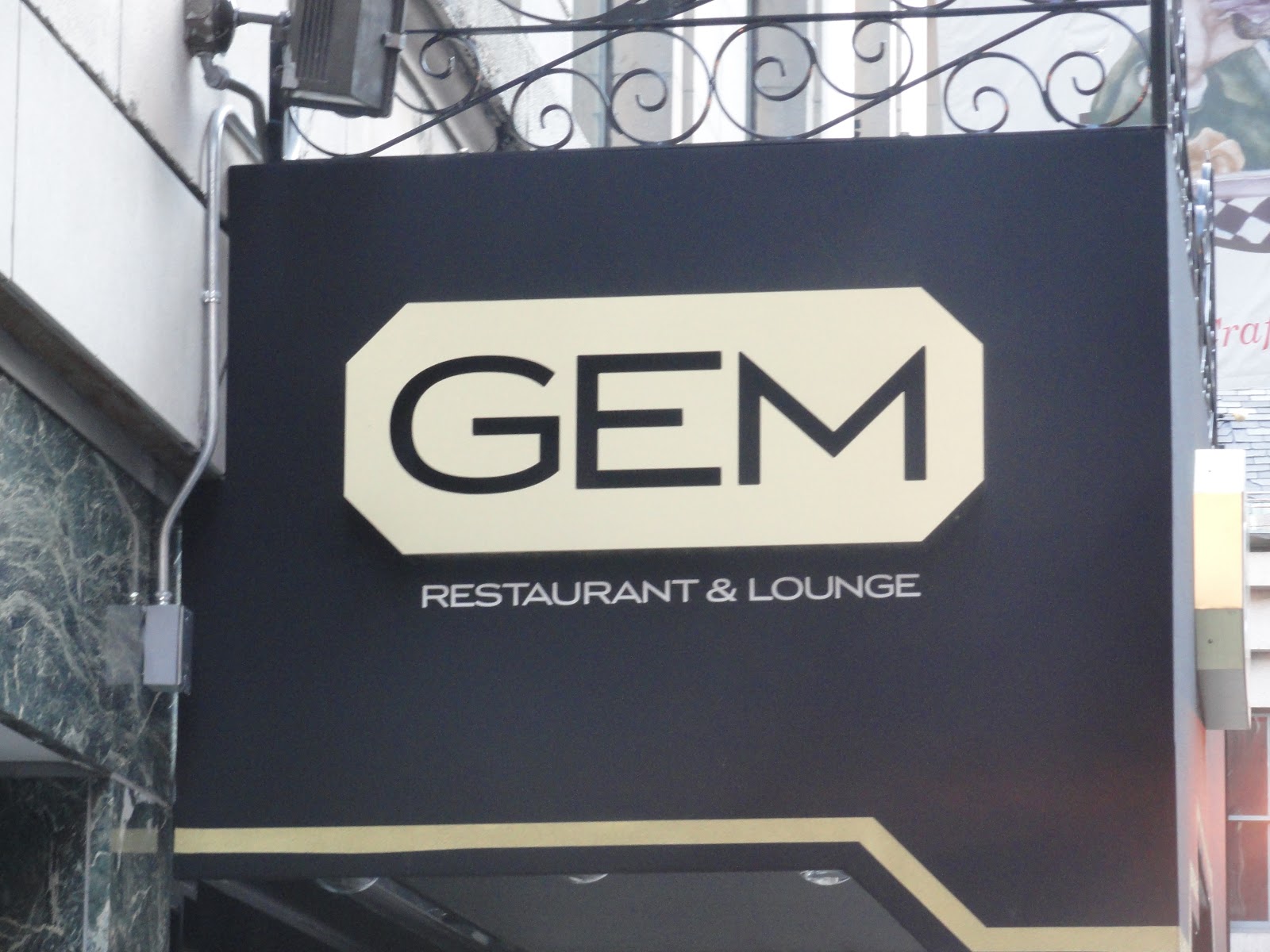
Gem: Sophisticated Comfort Food?

Chef Kevin Long impressed me with his efforts at Red Lantern, an Asian restaurant and bar on Stanhope Street. So, when I and a guest received an invite to check out one of Chef Long's newest endeavors, GEM Restaurant & Lounge, I was intrigued.

GEM, located downtown in the Jeweler’s District next to Sam La Grassa's sandwich shop, opened in March and is part of the Big Night Entertainment Group, which includes other restaurants such as Empire, Shrine, and more. GEM is self-described as a "fusion of gastro-lounge and ultra exclusive supper club." It is supposed to possess the ambiance of a "private dining supper club" and provide a "sophisticated take" on comfort food. To me, this creates certain expectations about the cuisine, that it will be above average in quality and execution.

The dining room is small, possessing only 36 seats, and it is reservation only. It is elegant and possesses an appealing, old-fashioned and intimate feel. It would be perfect for a romantic date or an elegant dinner. For a "private dining supper club," I think the room does seem special and provides the right vibe. On a Wednesday evening, it was relatively quiet, with only a few tables occupied.

The wine list is relatively small, with about 25 wines by the bottle and 15 by the glass. The least expensive bottle is $50, with 10 bottles over $100, and glasses generally run $11-$14, though you can also order a glass of Dom Perignon Champagne for $45.

Cocktails and martinis generally range from $12-$18. I tried the Province St. Smash ($12), a blend of Maker's Mark, ginger beer and peach bitters, and was impressed, especially as it was not overly sweet and had a balanced taste of vanilla, peach and ginger. It is a cocktail I would order again. I also had a Hurrikane ($12), made with 10 Cane Rum, Myer's Dark, orgeat, pineapple and orange. This will remind you of a Mai Tai, and tends to be a bit sweet and fruity.

The food menu is essentially plenty of comfort foods, with 10 Firsts (appetizers) priced $9-$18, 7 Mains priced $15-$31, 4 Sides priced $6-$8, and 3 Bar Bites priced $5-$6. There were also a few Specials on the evening I dined there. My dining companion has some food allergies and called the restaurant ahead to make them aware of it. When we arrived, the restaurant was quick to raise the issue, pointing out which dishes to avoid, while also noting that the chef could revise some of the dishes to avoid the allergy ingredients. They deserve kudos for their attentiveness to this significant issue.

I began my meal with the New England Lobster Chowder ($16) which is topped by a large shrimp tempura. The chowder was very creamy, spiced well, and bursting with flavors including a nice smokiness. There was lots of bacon within it and the tempura was good, though the coating lying in the chowder lost its crispiness. The chowder was also perfect for dipping my bread. Excellent comfort food with a sophisticated twist, the type of dish I would expect to find here and a good start to the meal.

We also began with the Salumi Board ($15), though I will note that we did not get the usual pork rillette because of my companion's allergies. Unfortunately, most of the charcuterie is not done in house, except the rillette though they do rehydrate their figs and peaches. The various meats were tasty, as well as spicy, but this is the same type of dish you can find in many other restaurants. It would have been much better if all of it was made in house. There was nothing wrong with the taste, but it is just an average and commonplace dish, lacking a sophisticated twist.

A similar problem plagued my entree, the Penne Bolognese ($23). I am a huge fan of Bolognese so figured I had to try it here, especially as the ragu included beer and wild boar. It was good, with plenty of tender meat, but nothing special, and I wasn't keen on the apparent slices of zucchini in it. Plus, some of the pasta seemed a bit overcooked, not al dente enough. I have had much better Bolognese in many other places. Again, it was an ok dish, but it lacked anything to elevate it beyond the commonplace. I would not be motivated to order it again or recommend it to others.

The Roasted Sea Bass ($31) is made with white miso and soy, and its flavor was superb. Just the right amount of sweetness, offset by the salty umami of the soy, and the fish was cooked perfectly. This dish comes with only some pea shoots, and I feel the price is a bit high for the quantity of food you receive.

For sides, I tried the Mac & Five Cheese Gratin ($8) which might have been my favorite dish of the night. Cooked perfectly, with a crispy top of buttered breadcrumbs and rich, cheesy noodles, this was the perfect comfort food, elevated to a high level. Nice levels of flavor, this bests many other mac n' cheese dishes you will find elsewhere. This dish gets my highest recommendation and I would probably order it every time I visited GEM.

The House Fries ($8) are made with truffle butter, Piave and herbs and should have been good but most of the fries were tiny pieces, as if they were the remnants of a batch. They were not the typical length fries you get elsewhere, which are easy to pick up with your fingers. The taste was there, but failed in the execution.

From the Bar Bites, we chose the Warm Potato Chips ($5), which come with a caramelized onion dip. But we didn't need the dip, savoring the warm chips on their own. They reminded me of the home made chips I had in my home when I was a child. Great crispness, lots of flavor, and they were not greasy. Another winning dish.

For dessert, there is usually only a single, rotating option and on the night of my visit, it was an Irish Whiskey Tiramisu, which we didn't choose to order. Instead, they gave us some macerated fruit with a balsamic and Kahlua reduction, and it was pleasant.

I have mixed feelings about GEM, especially as it has been open long enough to have worked out its initial kinks. I feel the menu and some of the dishes need some work. For an "ultra exclusive supper club" with a "sophisticated take" on comfort food, I have certain expectations that the cuisine should be elevated above merely average. Plus, at their price points, you expect something special. A few of the dishes met this high standard, but others failed. If I desire high quality comfort food, I want something more unique, a reason to choose one restaurant over another. GEM has potential, but it has not yet realized its full potential.

GEM Restaurant and Lounge on Urbanspoon