Showing posts sorted by date for query cachaca. Sort by relevance Show all posts

Tuesday, November 30, 2021

Pammy's: A Compelling Restaurant of Creative Simplicity

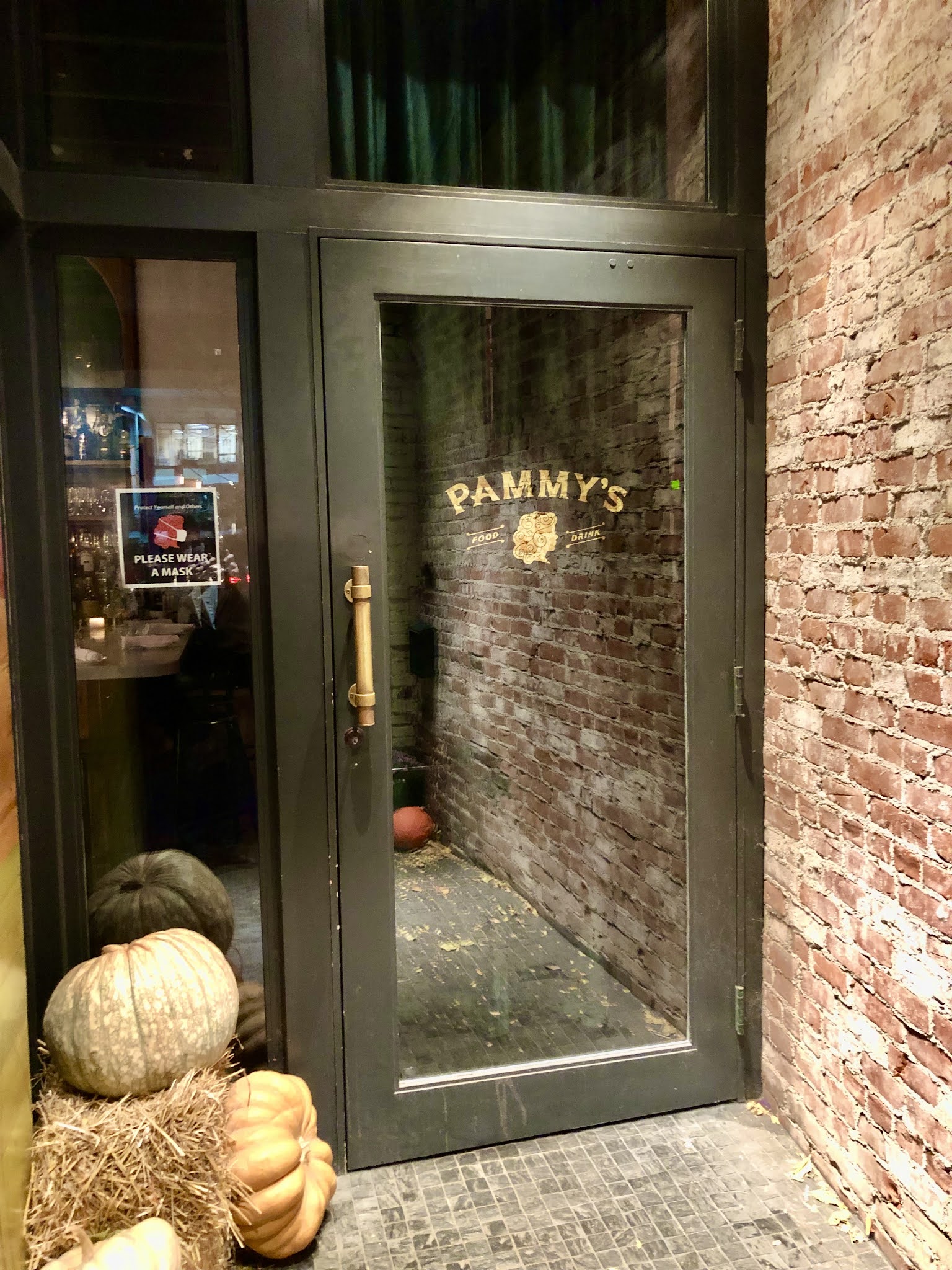
With so many restaurants open, a sheer myriad of available options, and also due to the pandemic, I haven't always dined at all of the places I wish I could. I'm making an effort now to visit some of these spots, and one of my most recent explorations was at Pammy's in Cambridge, located not too far from Harvard Square. I'd previously heard many raves about Pammy's and it certainly lived up to my expectations. I want to provide my initial impressions of the restaurant, and I'm sure I'll be returning again to sample more of their menu. 

Pammy's was opened in July 2017 by Chris & Pam Willis, husband and wife, and their website states it's "a New American restaurant inspired by the feel of an Italian neighborhood trattoria." Their website also states, "In defining his approach to food at Pammy’s, Chris believes in power of simplicity. Showcase just a few star ingredients in a dish and allow the care, knowledge and skill to shine through. Together, Chris and Pam’s goal is to serve unfussy, great food and channel their natural knack for hospitality." 
 
The restaurant is very cozy, with such a welcoming ambiance. There are a couple tables next to a fireplace, which certainly would be great spots for a date or special occasion. There's also a 14-foot long communal table, various smaller tables, and larger booths. We sat at the communal table, which gave us a central location in the restaurant.   

Currently, the restaurant serves a prix-fixe menu, where you select any 3 dishes from their menu for $69. Their bar and lounge serves an A La Carte version of their menu. Their menu has about 14 different options, and there were also two specials on the night I dined there. In addition, you could get the addition of Black Burgundy Truffles atop any dish for an additional $35. There's plenty of diversity on the menu, from vegetables to seafood, pasta to poultry. And as you select your own 3 items, you can create any type of dinner you desire. You could opt for all seafood, three pasta dishes, or just vegetable dishes.  

Their wine list is intriguing, with plenty of excellent options, especially more organic/sustainable options from small wineries around the world. There are about 14 wines available by the glass, including Sparkling, Rosato, and Orange wines. Their wine list by the bottle has plenty of options, with many priced under $70. You'll find primarily wines from Italy, but there are other fascinating wines from places including Vermont and Maryland, Oregon and California, and more.

We began our dinner with a glass of the 2020 Marangona Chiaretto Rosato, a delicious blend of Groppello, Marzemino, Barbera, & Sangiovese. It was fresh, dry and crisp with tasty red fruit flavors. And it went well with our initial food dishes. Next, we ordered a bottle of Palmento Costanzoa Etna Bianco 'Mofete', a blend of Carricante (70%), Catarratto (25%), Minnella & Trebbiano (5%). An excellent white wine, with great acidity, and a complex melange of peach and pear flavors, strong minerality, and some floral notes.   

Onto the food...

The meal began with some sliced bread and olive oil, and I just wish the bread had been served warm, although that's more a personal preference. The fresh bread has a crustier exterior with a soft interior with a firm texture, great for dipping into various dishes like the mussels.

Shaved Brussel Sprouts, with honey crisp apple, tonnato, and tonkatsu. It's not my type of dish, but my dining companion loved it! A fine blend of sweet and bitter, with some crisp textures. A great elevation for this vegetable. 

Lobster Biscotto, with Rose Harissa and Pugliese crouton. There was plenty of plump, sweet lobster in a tasty broth, with floral notes and spices. The broth wasn't too thick and was bursting with flavor. On a chilly evening, this was a nice way to begin the evening. 

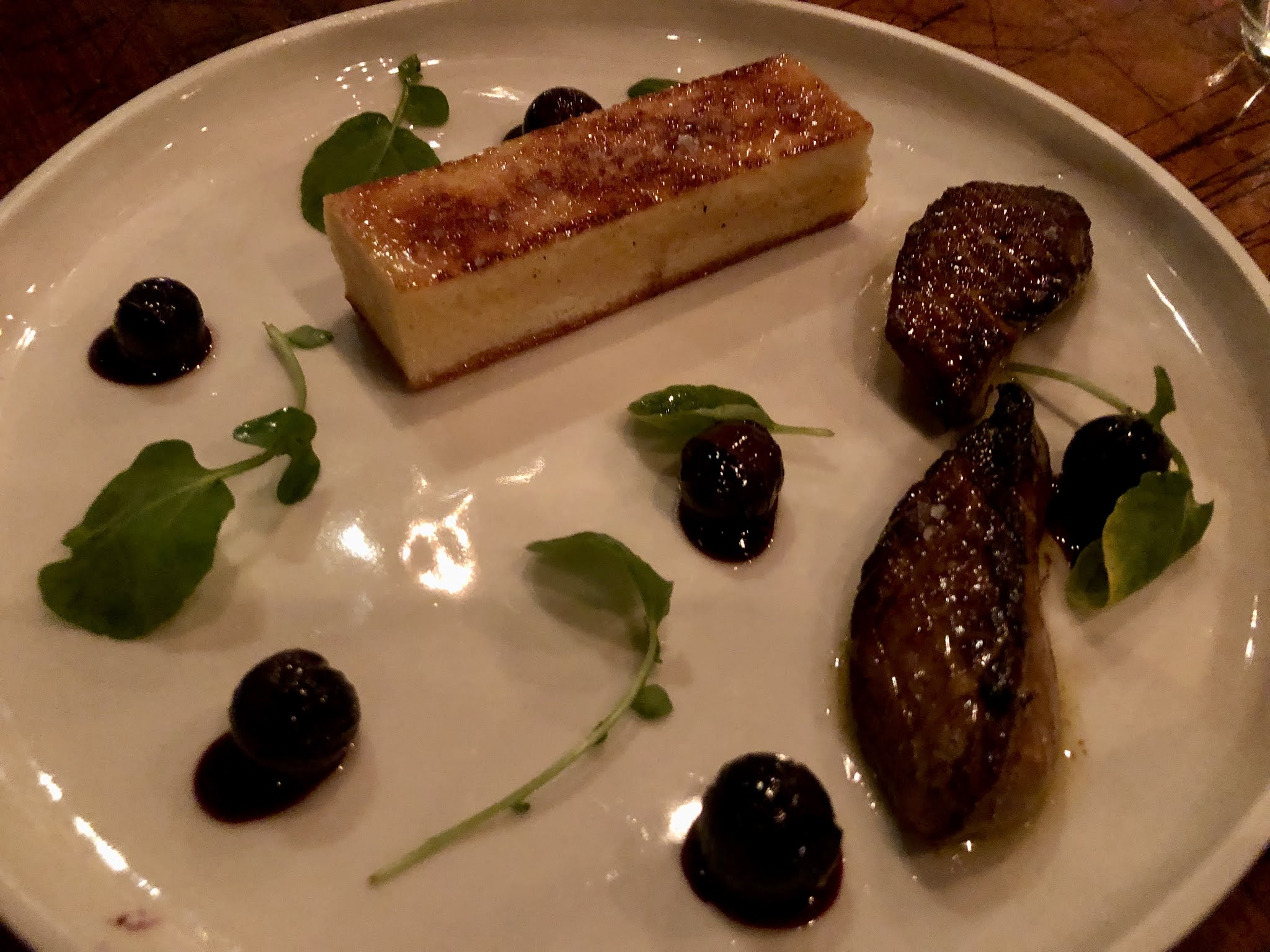
Seared Foie Gras, with Concord Grapes and Milk Bread ($8 supplement). The decadent Foie was everything you want, being silky rich and flavorful. The Milk Bread was a nice addition, almost like a soft French Toast, and the fruit added some acidity to help cut through the rich Foie. A dish sure to please. 

Lumache, with Bolognese sauce and Gochujang. This is a famed Pammy's dish which has received many accolades, and rightfully so. Gochujang is a Korean condiment, which is sweet, spicy and savory with a strong umami component. It works so well with the Bolognese, raising the spicy element, and upping the umami game. The Lumache pasta was perfect for this dish, and cooked just right. A beautifully composed dish and highly recommended. 

Sea Scallops, with Grilled Avocado and 'Nduja Vinaigrette. Plump, sweet scallops, seared perfectly,  were complemented well by the 'Nduja Vinaigrette. Another excellent dish.

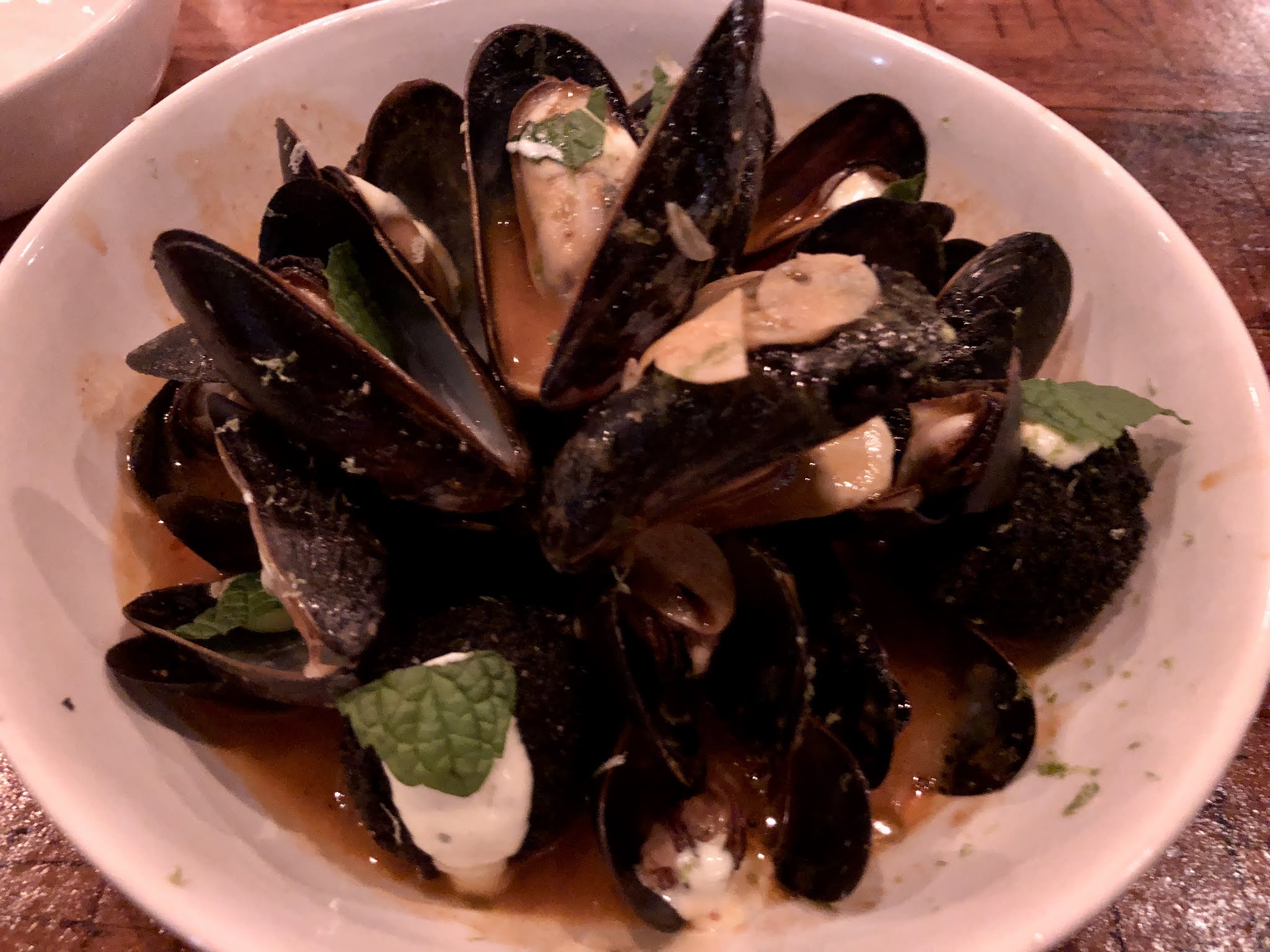
Marshall Cove Mussels (grown in the waters of Maine), with Squid Ink Arancini and Lime Leaf Aioli. Delicious plump mussels in a compelling broth, excellent for dipping in bread. The Arancini were an excellent addition, a black, fried rice ball, with a pleasing savoriness and hints of the sea. The Arancini alone could have made a fine appetizer. 

Rather than dessert, we opted for after dinner cocktails. The Gin & Juice ($14) is made with summer gin, salted watermelon, serrano and lime. It was refreshing, well-balanced and tasty with a nice blend of herbs, citrus and heat. 

The Fevre Dream ($15) is composed of tequila, cachaca, passionfruit, coconut and Thai chili.  It was also well-balanced with a tropical flair, a hint of heat, and a noticeable bite of tequila. 

I was impressed with my dinner at Pammy's, from the wine to food, and I understand the reasons for all its raves. Service was excellent, I loved the ambiance, and the idea of choosing any three dishes for your meal is very cool. The Lumache was my favorite dish although all of the dishes were excellent. I highly recommend you check out Pammy's. 

Friday, December 15, 2017

2017: Favorite Spirits, Sake, Cocktails & Drink-Related Items

What were some of my favorite spirits and drink-related items of the past year?

Let me continue the lists of my best recommendations and favorites of 2017. I have already posted my Top Wine lists as well as Favorite Wine-Related Items. This post will now concentrate on some of my Favorite Spirits, Sake, Cocktails & Drink-Related Items. This is certainly not a complete list but it is more a sampling of compelling and memorable matters I have experienced and posted about over the past year.

This is also a purely subjective list, based on my own preferences, and makes no claims about being the "best" of anything. But all of the items here have earned my strong recommendations and I hope you will enjoy them as well. For more spirits, Sake, cocktails and drink-related items, you can just search my blog posts for the past year.

Favorite Achievement in Spirits Writing: This year, I'm especially proud of my article, An Expanded History of Pechuga Mezcal, where my research uncovered a wealth of documented references to Pechuga Mezcal, a type of mezcal that has been flavored with meat, as well as maybe some fruits and spices. Prior to my article, there were bottles from the 1930s that were labeled Pechuga but there was no known documentary evidence prior to that time. However, I found over 30 different written references to Pechuga before the 1930s, extending as far back as 1864. There is still more research needed in this area, but I was pleased to contribute my efforts to expanding the known history of this fascinating type of Mezcal.

Favorite Whisky Dinner: A great theme, killer whisky, and delicious food all combined to make the  Robert Burns Scotch Dinner at Civic Kitchen & Drink a wondrous experience. It was my first Burns Night celebration and I marveled at the ritual, the toasting, and the intriguing food, including Haggis, which I actually enjoyed very much. There was plenty of Scotch, each unique in its own right, and all quite tasty and complex. The crowd was fun and it was more than just a simple dinner, but an intriguing experience and the memories will remain for a very long time.

Favorite Blended Scotch Whisky: This year, I've attended two Compass Box tasting events, though I've only written about one of them so far. However, it is clear to me that Compass Box and its owner John Glaser are producing some excellent blended Scotches. I've enjoyed most of the portfolio that I've tasted and am impressed with the diversity of their whiskies. Their limited edition Double Single thoroughly impressed it, a silky smooth, complex and well-balanced whisky with a fascinating melange of flavors. There were hints of vanilla and caramel, berries and tropical fruit, herbs and spices. Each sip seemed to bring something new to my palate. Highly recommended.

Favorite Irish Whiskey: Tullamore DEW, the "official Irish whiskey" of the Boston Red Sox, is offered at the Tully Tavern, in Fenway Park, especially in the Monster Mule, a variation of the Moscow Mule that is made with 1 part Tullamore DEW, 4 parts Ginger Beer, and lime juice. They have a nice portfolio of whiskies, but my favorite was the Tullamore DEW 14 Year Old Single Malt which is matured in the usual three types of barrels, but then also spends a little time in Port and Madeira casks. On the nose, there are pleasant notes of apple and tropical fruit, and the palate also presents this fruit flavors, accompanied by a complex mix of vanilla, spice and caramel, with an elegant creaminess that caresses your palate. The finish lingers for quite a time and I can easily see myself sipping this all evening.

Favorite Whisky Rant: It is an issue which deserves attention but seems unlikely it will acquire what is needed. In my Rant, Whisky, Sherry Barrels & A Lack Of Transparency, I discuss how a number of whiskey producers are using Sherry-style barrels, from outside the legal Sherry region, but those barrels are still be labeled as Sherry barrels. Sherry is a protected term and it should be respected and honored yet some whiskey producers are failing to do so. We need more people to know that this problem exists and then hopefully a united effort and get whiskey producers to change their ways on this issue.

Favorite Spanish Whisky: Have you ever tasted whisky from Spain? Spain isn't a significant producer of whisky but you may hear more about Spain in the near future if whisky like the Navazos Palazzi Malt Whisky becomes more well known. Produced from malted barley grown in Spain, the whisky spends about four to six years aging in Palo Cortado Sherry casks, which is definitely a rarity in the whiskey industry. This whisky presents with a nice, dark amber color and its complex aroma is enticing, a blend of harmonious fruits and spices. You could easily sit and enjoy the diverse nose of this whiskey for quite some time before taking a sip. Your palate will be seduced by the complex, and sometimes subtle, melange of flavors that caress and tantalize. It is sweet, briny and savory, with plenty of fruit, from apples to raisins, as well as lots of spicy notes. Honey, caramel, and malt with clear Sherry notes and a long and lingering finish that satisfies to the last wispy taste. It is elegant and compelling, unique and delicious, a well-balanced whiskey that will surprise and delight.

Favorite Unique Whiskey: At The Townshend in Quincy, Palmer Matthews, their Bar Manager, introduced me to Dry Fly Distilling Straight Triticale Whiskey, which might be the only straight Triticale whiskey in the world. Triticale is a hybrid of rye and wheat which was created in Scotland in the late 19th century. I enjoyed a shot, chilled by a single large chunk of ice, and found the whiskey to be intriguing, with a nice spicy kick up front, which then became soft and almost sweet. As I love Rye whiskey, I savored the spicy element of the Triticale, but also liked how the wheat softened it more on the finish. If you want something more unusual, but still quite tasty seek out this Triticale.

Favorite Maryland Rye Whiskey: During a visit to the Tenth Ward Distilling Company, I had the chance to taste a few of their products and I was most taken with their Lindsay Stunkle Rye Whiskey which is named after a famous Prohibition-era bootlegger from Frederick, Maryland. This limited-release whiskey is made from a mashbill of 80% malted rye and 20% malted barley, and comes in at a whopping 120 proof. It is released twice a year, in June and November, and is intended for home aging. It is spicy and potent, enhanced by the addition of a little water, and will definitely appeal to rye lovers. There is complexity to its taste and a lengthy finish, and I would love to see this aged in the barrel for a number of years.

Runner-Up Favorite Maryland Rye Whiskey: Also from the Tenth Ward Distilling Company, a more unique Rye whiskey is the White Caraway Rye, which is made from a mashbill of 80% malted rye and 20% malted barley, and comes in at 95 proof. The spirit is mashed with caraway seed so it is intended to taste more like rye bread, though it may also remind you of Scandinavian Akvavit. I was captivated by the intriguing flavors of this spirit, as it certainly reminded me of spicy rye bread, with a hint of mint. Though you could drink this on its own, I think it would be best used in creating some fascinating cocktails.

Favorite Gin: As I've said before, I'm not usually a fan of gin, disliking the over-powering juniper flavor I find in many, but I have enjoyed some that I felt were more well-balanced. Certainly a more unique gin, the Pierde Almas 9+ Botanicals is actually a hybrid Mezcal/Gin, using Mezcal as the base spirit and then adding nine botanicals, including juniper, coriander, star anise, fennel seed, orange peel, cassia bark, angelica root, orris root, and nutmeg. On the nose, the piney aroma of juniper is dominant though beneath that aroma were more subtle herbal notes. Once you taste it, the Mezcal elements make themselves known, and it is an intriguing and complex spirit. There are plenty of citrus notes up front, with an interesting melange of spices and herbs, as well as a smoky edge, especially on the finish. The piney notes of the juniper became much more integrated into the whole, and the other botanicals joined the complex mix. This is definitely a sipping spirit, which is quite enjoyable neat, and each sip seems to bring new flavors to your palate.

Runner-Up Gin: From the McClintock Distilling Co. in Maryland, their Forager Gin is a vapor infused New-World style gin using about 18 botanicals inspired by native herbs found in the Appalachian wilderness. On the nose, there is a strong juniper aroma with subtle hints of other botanicals in the background. On the palate, the botanical mix is more balanced, and the complex melange of flavors delights the mouth. There are elements of fruit, mainly citrus, and floral flavors, with a sprinkle of spice elements. The gin should be served chilled, and would be delicious on its own, or used in cocktails.

Favorite Rum: Rum actually has a lengthy history in the Oaxaca region, a place best known for Mezcal. However, little Oaxacan rum makes it out of Mexico, which is a shame. One of the recent exports is the stellar Paranubes Rum, brought to you by the good people of Mezcal Vago. Made from sugar cane juice, and not molasses, the Paranubes is made in a very traditional manner, the current producer being at least the 3rd generation in his family to produce this rum. Its aroma is very funky and prominent, with a saline character that reminds me of the smell of the ocean or an olive tapenade. The aroma doesn't follow through much on the palate, which instead brings a mild sweetness, a touch of grassiness, and some citrus and tropical fruit flavors. It is more light and elegant, with a lengthy and pleasing finish. It reminds me of a Rhum Agricole, and its distinctive and unique aroma and taste certainly sets it apart. The Paranubes can be consumed on its own though it also would work well in a variety of cocktails.

Favorite Unique Rum:
From Navazos Palazzi, which also made the Spanish whiskey I previously mentioned, comes another unique spirit, a Cask Strength Rum, aged in Sherry barrels. The base rum had been distilled in the Antilles, where it aged for five years in ex-Bourbon barrels, and then given to a Spanish Sherry bodega, where the rum further aged in Oloroso barrels for 10 years. The color of this rum was deep and dark, though with some translucence, reminding me in some ways of an aged Oloroso Sherry. I was enamored with the complex aromas that wafted up, seducing my nose. There was fruit and spice, nuts and chocolate, and it was a pleasure just to sit and enjoy the aromas. On the palate, I was initially pleased with the relative dryness of the rum. It wasn't one of the prominent sweet rums but rather its sweetness was of a more subtle nature, with underlying caramel, vanilla and molasses flavors. And the complexity of the nose was duplicated on the palate, such a compelling melange of flavors that seemed to present something new each sip I took. There was a certain nutty and saline character that reminded me of Sherry, but also bright citrus and plum notes. There were plenty of spicy elements, with a backbone of umami, and hints of leather. Elegant and fascinating, this rum had a pleasing, lengthy finish.

Favorite Mezcal: Pierde Almas, which made the Mezcal/Gin hybrid mentioned above, is primarily a Mezcal producer and they have an amazing portfolio. My current favorite is their  Maguey de Lumbre Mezcal, made from a rare and little-known agave. The aroma is more subtle, with hints of citrus and smoke, and the first taste is pure gustatory pleasure, a hedonistic revel in the complexities and flavors of the Mezcal. This was a compelling Mezcal and once I started looking deeper, it only became even more intriguing. Citrus notes dominated the flavor profile but there was much complexity providing harmony to the spirit. There was also a mild smokiness, subtle herbal accents, and wispy spice notes. Just sit and sip it and you'll realize the fascinating complexity of this spirit. The taste was clean and smooth, an elegant pleasure, something to slowly savor on a summer evening, though you could certainly enjoy this year round.

Favorite Pechuga Mezcal: Pierde Almas also produced my current favorite Pechuga Mezcal, the Mezcal de Conejo, which is produced using a rabbit. Pechuga is a type of mezcal that has been flavored with meat, as well as maybe some fruits and spices. Once I tasted this Pechuga, I was immediately struck by the anise notes in this Mezcal and then I could detect the ripe fruit flavors, especially pineapple, a mild smokiness, and a touch of a more wild and gamey element. It was complex and intriguing, a unique melange of flavors which should please any Mezcal lover. You wouldn't know this Mezcal was made with rabbit, but it still would make for an interesting addition to your Easter dinner.

Favorite Shochu: Shochu, a distilled spirit made in Japan, can be made from many different ingredients though sweet potato is considered one of the best choices. While dining at Tori Shin in New York City, I thoroughly enjoyed a glass of Shochu, the Tenshi no Yuwaku, which is a sweet potato Shochu that was fermented in Sherry casks for about 10 years. This is a more unique Shochu as few are ever aged this long. It's name translates as "Angel's Temptation," a reference to the Angel's Share, the amount of spirit that evaporates over time while it ages in a barrel. I enjoyed it neat, finding it rich and creamy, with intense Sherry notes, hints of sweetness, and plenty of complexity.

Favorite New Liqueur: A collaborative effort between companies in Britain & France, the Escubac seems to have its roots in Ireland. It is a "juniper-free botanical spirit," made from a base of neutral sugar beet alcohol with the addition of 14 botanicals. After it is distilled, they infuse it with saffron and sweeten it with raisins, vanilla, and sugar. The Escubac has some sweetness up front but it wasn't cloying or overly sweet, and it was complemented with a mix of citrus and herbal notes, with intriguing spice notes and a touch of bitterness. I was pleased with its complex and intriguing melange of flavors, and it can easily be used in a variety of cocktails.

Favorite Baijiu: With many Americans, the Chinese spirit Baijiu suffers an image problem, often considered to have a terrible, off-putting taste. Though there are some Baijiu with very strong aromas and tastes, others have much lighter and appealing flavors and are worthy of attention. Made in New Zealand, Taizi Baijiu, the creation of two Chinese brothers, would be a great introduction to Baijiu for anyone. With its clear color, the Baijiu has an intriguing nose of berries and licorice, and on your palate, the berry flavors are very prominent upfront with more licorice notes on the finish. It has a slightly oily texture, but drinks very smooth and balanced, and you wouldn't realize its high alcohol content. There is an underlying complexity, more subtle notes, including some herbal elements, accenting the Baijiu. One of the best Baijiu I've ever tasted, I highly recommend it.

Favorite Chicago Bars: On a whirlwind visit to Chicago, I was fortunate to visit two cool and compelling bars, including Income Tax and Estereo. Income Tax, which has been open for a year, is cozy and elegant, with a lengthy bar and a casual, welcoming vibe. Their drinks list is diverse and interesting, and they carry some Sherry by the glass. Their food is also quite tasty, and is great for pairing with a glass of wine or a cocktail. Service is excellent as well, and it is the type of neighborhood bar you really should frequent. Estereo is also a neighborhood bar, specializing in spirits from Mexico, Central America, and South America such as Cachaca, Pisco, Mezcal, Tequila, Sotol and more. Great cocktails, incredible diversity in their spirits, knowledgeable staff, and a fun & lively atmosphere make this a great place to drink.

Favorite Sherry Bar: Taberna de Haro wins this category hands-down, once again, as there is no other local restaurant which comes close. With over 60 Sherries, including some rarer bottlings, Chef/Owner Deborah Hansen has compiled an amazing Sherry list, offering a good number by the glass. The Sherries pair very well with her Spanish cuisine and I could easily sit at the bar all night sampling different Sherries, from a bone dry Fino to a sublime aged Palo Cortado. If you are ever in the area, you must stop here and try some Sherry.

Favorite Restaurant Cocktail: The Schrodinger's Coupe is available at Sumiao Hunan Kitchen, which makes several other Baijiu cocktails too. The Coupe is made with Baijiu, curaçao, grapefruit, lime and plum bitters. It's Baijiu taste was accompanied by some sour fruit flavors with a hint of grapefruit. It wasn't overly sweet and was a refreshing summer drink.

Favorite Restaurant Hot Cocktail: While at a Burns Night dinner at Civic Kitchen & Drink, we began the evening with the Ginger Rabbie, a hot cocktail, made with Towiemore Classic Scotch, tea, molasses, and ginger. It was similar in some respects to a hot toddy, only mildly alcoholic, lightly sweet, and with a pleasing taste of tea and spice. Great for the winter.

Favorite Daiginjo Sake: The Kirin-Zan Junmai Daiginjo, which comes in a cool pentagonal blue bottle, is a superb Sake, elegant and complex, with such an alluring taste. It is clean and bright, with subtle citrus notes, some peach and melon, and a lengthy, pleasing finish. It is said to be "reminiscent of a clean mountain stream," and it possesses such a sense of purity, a Sake that pairs perfectly with nigiri. This is a Sake which impresses and I highly recommend it. Find it locally at Pabu Boston.

Favorite Junmai Ginjo Sake: I was impressed with the unique Hakkaisan Snow-Aged Junmai Ginjo, which spends three years in an insulated storage room chilled only by 1000 tons of snow! It is a Genshu, undiluted by water, and has a high acidity. I found the Hakkaisan to have a more subtle aroma and on the palate presented an elegant, deep complexity with hints of melon and a touch of anise. It was full-bodied and smooth with rich, savory umami. A hedonistic pleasure that is extremely food friendly. It can be found locally at Reliable Market.

Runner-Up Favorite Junmai Ginjo Sake: While dining at Torishin, a killer Yakitori restaurant in New York City, I ordered a carafe of Fukuju Junmai Ginjo and it was so delicious I had to order a second carafe. The Sake was simply superb, with a dry, clean and elegant taste with plenty of fruit notes. It was silky smooth, drank so easily, and I could have sat all night savoring this Sake. Highly recommended.

Favorite Kimoto/Yamahai Sake: The Suehiro Densho Yamahai Junmai Sake is produced from Gohyakumangoku rice, and is a typical Yamahai Sake, with delicious earthy notes, high acidity and plenty of umami. It is easy drinking, smooth, and complex with a hint of citrus, smoke, and sweetness. Simply a delicious Sake, which will pair well with many different foods, from mushroom risotto to a grilled steak.

Runner-Up Favorite Kimoto/Yamahai Sake: The Sohomare Tokubetsu Kimoto Sake has a high acidity and it was quite compelling, a mellow and smooth-drinking Sake with plenty of delicious umami. It has a richness to the mouthfeel, a lengthy and satisfying finish, and is something I could sit and drink all day. There is a mild earthiness to the Sake which enhances the totality. A well-made and delicious Sake, it would be an excellent pairing with umami dishes, especially mushroom or truffle-based ones, and would also go well with various meats.

Favorite Sake Store: It is difficult to find a local wine shop that carries a large and diverse Sake selection. However, Reliable Market, in Union Square, Somerville, has been enlarging their selection, and stock many of their Sake in refrigerated cases. You'll find plenty of Sake, of all types, in regular-sized bottles as well as half-bottles, at a range of price points. They also carry both local Sakes, Dovetail (from Waltham) and Blue Current (from Kittery, Maine). Reliable Market probably has the best and largest Sake selection in the Boston-area and you should check it out.

Favorite Sake News: Back in April 2015, I posted an article, An Expanded History of Sake Brewing in the U.S., which discussed the early history of Sake breweries in the U.S. My research for this article included combing through hundreds of old newspapers, picking out tidbits of information that hadn't been previously collected into a single resource. It was a fascinating exploration, expanding my knowledge of this topic, and revealing intriguing facts which contradicted what many previously believed. This year, a Japanese man, who runs a packaging company, wrote an article for a Japanese Sake journal based upon my article and I wrote out it in My History of U.S. Sake Breweries Inspires A Journal Article. And fortunately, I got to meet the author last month when he visited Boston, and we drank plenty of Sake together.

Least Favorite Sake News: In Ugh! More Stinkin' Scores For Sake From Wine Advocate, I express my displeasure at the Wine Advocate for continuing to provide "scores" for Sake. I've been ranting about this issue since 2013 but it is more recently that the Wine Advocate has started providing Sake scores on a more regular basis. Their main effect seems to be raising prices and they don't seem to be sparking much discussion or interest on Sake. Even on the Robert Parker bulletin boards, Sake discussion is all but nonexistent. The scores aren't really helping anyone, and are probably hurting more, so they should be eliminated.

Favorite Beer: I dislike most beer, as I am very sensitive to the bitterness of hops and that taste turns me off. Every once in a while though, I find a beer that does appeal to me. This year, I was impressed with the The Flying Dog "Heat Series" Shishito Rice Ale. This beer is brewed with Shishito peppers, a generally sweet Asian pepper where about one in ten is spicy. I found this beer to be light, crisp and refreshing, lacking bitterness and with just a whisper of spicy heat, mainly on the finish. There are some subtle malty undertones and a couple hints reminding me of a Sake. It would be an excellent beverage on a hot, summer day.

Favorite Cider: From the Asturian region of Spain, the 1947 Sidra de Nueva Expresion is
is a Petillant Semi-Dry Cider, produced from a blend of 14 apple varieties, all from their own orchards, with a rough breakdown of about 75% sharp, 15% bitter-sharp and the rest bitter-sweet. Fermentation occurs in an open chestnut vat, with wild yeasts, and I was quite surprised that they also allow it to mature in the open vat for about 12 months! The vats are old, some being as much as a hundred years or more, and are quite large, about 15,000 liters. It possesses a strong, appealing apple aroma and on the palate, it presents as mostly dry and crisp, with strong apple flavors and only the slightest hint of sweetness. It also has a  mild effervescence, enough to be a nice palate cleanser and excellent for food pairings, and a lengthy pleasing finish.

Favorite Pear Cider: For the second year in a row, this Asturian pear cider, the Viuda de Angelón Sidra de Pera is the winner. The pear trees are wild, organic and over 70 years old. Once the pears are picked, they are first fermented in stainless steel, with wild yeasts, and then mature for about four months in chestnut vats. Then, they undergo a second fermentation in the tank. This is an impressive Perry, with a harmonious blend of earthiness with subtle pear flavor and a mild effervescence. It is dry and refreshing, with lots of depth. It would be excellent on its own or paired with food, especially something with umami.

Favorite Non-Alcoholic Cocktail: At Sumiao Hunan Kitchen, they have several cocktails, and I was impressed with their Sumiao Citrus, which is made with white grapefruit juice, lemon, simple syrup, blood orange puree, and orange garnish. This was an interesting concoction, not overly sweet, and was quite refreshing. The fruit flavors blended well together, presenting a tasty melange of flavors. If you aren't drinking something alcoholic with your meal, then this would be a good option.

Favorite Non-Alcoholic Drink: Switchel used to be popular in New England in the 17th century, and now seems to be making a bit of a comeback. At Russell Orchards in Ipswich, I bought their version of Switchel, which is made from with apple cider vinegar, apple cider, maple syrup, ginger and water, with the vinegar and cider made on their premises. It is unpasteurized so needs to be refrigerated. The Switchel possesses a distinctive ginger aroma and it is prominent on the palate too. It is dry with a prominent vinegar aspect, subtle apple notes, and a ginger backbone. It is refreshing and I see how it can be quite refreshing on a hot day. Plus, it makes for a great cocktail ingredient.

Favorite Canned Non-Alcoholic Drink: At Gre.co, a fast-casual Greek restaurant on Newbury Street in Boston, they have a few canned drinks including the Tuvunu Greek Mountain Tea, which is made from Sideritis, an indigenous perennial. The tea is flavored with brown cane sugar, wild blossom honey, and fresh squeezed lemon juice. It was delicious, with only a mild sweetness, and pleasing tea notes and an herbal backbone. It is refreshing and you could easily drink can after can without feeling bloated or overwhelmed by sugar as you can be with soda.

What were some of your favorite spirits and drink-related items this year?
Wednesday, October 11, 2017

Eating & Drinking in Chicago: Income Tax to Estereo

While shopping at a wine & spirits store in Chicago, we received a recommendation for a nearby wine bar & restaurant, Income Tax, which was only a couple buildings away. Although we already had dinner plans elsewhere, we had a little free time before our reservation so we chose to stop by Income Tax for a drink and a quick bite. We were very fortunate that we made that stop as Income Tax turned out to be an impressive spot.

Located in the Edgewater neighborhood, Income Tax is less than a year old, having opened last December. The restaurant is owned by Nelson Fitch, who is joined by Collin Moody, General Manager, and Chef Ryan Henderson. Interestingly, Nelson is the husband of Veronica Roth, author of the dystopian Divergent series, which was turned into a film series. During our visit, as we sat at the bar, we met Collin, who was personable and knowledgeable.

The restaurant is cozy and elegant, with a lengthy bar and a casual, welcoming vibe. We sidled up to the bar and checked out the drinks menu, which immediately impressed with its diversity. There were seven wines by the glass ($11-$14), almost all French wines, and included a Pet-Nat. There were also four Sherries by the glass ($9-$14) and four Georgian wines that were on special. The bottle list has plenty of interesting choices from all over the world, most sure to interest wine lovers, including many classics but also some hot, new wines, and most were reasonably priced from $50-$100.

They also have a diverse list of Beers and 13 Ciders, including Spanish, French, German and U.S. ciders. Their Spirits list is also diverse and fascinating, and you won't find many of the usual suspects but rather you'll find more small production, artisanal and unique bottlings. You'll also find several Vermouth cocktails as well as other intriguing cocktails. There is so much on their drinks menu to interest an imbiber.

I began with a glass of the Emilio Hidalgo La Panesa Especial Fino Sherry ($14), an amazingly delicious and interesting Fino which is an average of 15 years old. As it has undergone a slight oxidation, the color is more golden. It was rich and full bodied, with a saline element as well as notes of brioche and almonds. During our time at the bar, Collin also offered us complimentary tastes of two other Sherries, the Yuste Manzanilla and the González Byass Tio Pepe En Rama, 2016. Both were delicious in their own right, thrilling a Sherry lover like myself. I also later ordered a glass of the Navazos-Palazzi Ron Oloroso Cask ($16), which I've previously reviewed.

The Food Menu is small but varied, touching on various European cuisines, from Spain to Alsace. The Menu is divided into Bites (4 choices, $4-$10), from Marinated Olives to Strangolapreti (spinach & ricotta dumplings); Jars (3 choices, $10-$12), from Boquerones to Rillettes; Cheese (3 choices, $6-$8); Appetizers (5 choices, $6-$15), from Flammenkuchen to Tortilla Espanola;
and Entrees (5 choices, $15-$25), from Trout Meuniere to Coq au Vin. Much of this is excellent bar food, a fine accompaniment to their varied drinks.

We ordered the Pan Con Tomate ($6), a traditional Spanish dish, made with Saffron toast and Fino Sherry. There was a tomato gelatin-like topping and overall, the dish worked very well, a nice blending of soft and crusty bread with the bright acidity of the tomatoes and the subtle saffron elements. And with a glass of Sherry, it was a superb pairing.

We also opted for a Jar of the Whipped Chèvre ($10), made with sun gold tomatoes and tarragon, and accompanied by home-made bread. As an ardent bread lover, this fresh and soft bread, was delicious and I could have enjoyed it on its own. But, the whipped chèvre was creamy and flavorful, enhanced by the tomatoes, and made for a great spread. It was the type of tasty item which makes you want to lick the jar clean.

These were both relatively simple dishes, but they were executed perfectly, indicative of a skilled kitchen. They certainly made me crave to try some of their entrees, to see that culinary skill on a grander scale. I'd also love to return to try more items from their drinks menu. This is the type of neighborhood spot I would become a regular if it were located close to me. It earns a high recommendation.

Collin of Income Tax also highly recommended that we later check out Estereo, a bar in the Logan Square region, and his recommendation was spot on. During the day, the bar serves coffee and snacks, but at night, it is a full-scale bar, specializing in spirits from Mexico, Central America, and South America. We visited the bar after our dinner. The bar is triangular shaped, open to the street, and Latin American music sets up the lively atmosphere.

The Drinks menu was fascinating and compelling, offering more varieties of Mexican, Central American, and South American spirits than I have ever seen elsewhere. The lengthy list of Pisco, Cachaca, Tequila, Mezcal, and Rum, was mind-boggling. I could spend many a night exploring this list, gaining a deeper appreciation for these spirits. I've never seen another bar with over 25 Pisco on their list. And there was so much wonderful Mezcal!

Of course they create a variety of cocktails ($9-$12) from all of these spirits, such as the Pisco, made with Seedling Farms Rhubarb, Cocchi Americano, Lime, Pina Bitters and Force Carbonated; Agricole, made with Agricole Coconut, Passion Fruit, Absinthe, Lime and Blackstrap; and Rum, made with Paranubes Auguardiente de Cana, Klug Farms Blueberrt, house Falernum, Lime and Frutabomba Bitters. We began the evening with a few cocktails, and they were all delicious, well balanced, and had interesting flavor combinations.

The bartenders were personable, knowledge and very helpful, answering any questions and providing recommendations. So, it was a great place not only to enjoy a great drink but to learn something as well.

At the end of our evening, as we prepared to leave, one of the bartenders came over and offered us a complimentary drink of Mezcal Vago Tobala en Barro, a rare and superb Mezcal, which was distilled in olla de barro, clay pots. This was an especially nice gesture and the Mezcal was a fantastic way to cap the evening.

If you love Pisco, Cachaca, Tequila, Mezcal, or Rum, then this is the bar you need to visit. If you just love intriguing and quality spirits and cocktails, then this is the bar you need to visit. This is a bar where passion is more than evident and it is also simply a fun place to drink and hang out. Highly recommended.

Monday, October 9, 2017

Rant: Planning Ahead & Being Spontaneous

If you're traveling to another city, do you plan ahead, researching the restaurants, bars, wine shops, bakeries, and other such places that you want to visit? Or do you prefer to be spontaneous and simply wander around, hoping to find places of interest? I know travelers on both sides of this issue though my own position is closer to a middle ground, trying to avoid the disadvantages of each choice while gaining the benefits of both.

For example, last week I traveled to Chicago, for the first time in over twenty years, for a couple of days with a very good friend. As it was a short trip, I knew we needed to pack as much as possible into our brief time. For me, that entailed researching Chicago, learning the names of some of the most interesting restaurants, bars, and such. With that information, I had a solid foundation for the exploration of Chicago, having located places which appealed to our interests and preferences. Chicago is a very big city so we would never have just stumbled upon all of those places on our own.

We had lots of luck with the places I researched and then visited, from QXY Dumplings, a killer soup dumpling spot, to Motomaro, an amazing Japanese restaurant. And with my preplanning, we were able to set up a restaurant crawl for one evening, dining at three restaurants for dinner, each place about a block or so away from each other. Simply wandering around might not have led us to these three restaurants.

However, some spontaneity and flexibility was warranted as well. We didn't preplan every minute we'd be in Chicago, leaving open time to explore the city. After enjoying a delightful lunch at QXY Dumplings, we wandered around Chinatown and stumbled upon a bakery that sold Pork Belly Cookies! I never saw anything in my researches about those cookies in Chicago. Later, we stopped at a wine & spirits store and received a recommendation to check out a nearby wine bar & restaurant, Income Tax, which turned out to be a very cool spot. And at Income Tax, we received another excellent recommendation, to Estereo, a great bar with plenty of Pisco, Mezcal, Cachaca, Tequila and other similar spirits.

If we had been rigid in our plans, we never would have encountered those spots. And only a balanced approach, of both prior research & planning, mixed with some spontaneity, would have led to the best results. I spoke to someone else who was visiting Chicago at the same time as us, and they were amazed at all the places we had visited, places she knew nothing about. Her own experiences, which seemed based almost entirely on spontaneity without any preplanning, weren't as successful.

We had an amazing time in Chicago, filling both days with lots of incredible food and drink. In the near future, I will be writing much more detail about my travels to Chicago. If you travel, I highly recommend you do your research first, and then ensure you allow time to be spontaneous, to wander around seeing what you might find.

Friday, April 18, 2014

Friday Sips & Nibbles

I am back with a special Friday edition of Sips & Nibbles, my regular column where I highlight some interesting wine and food items that are upcoming. **********************************************************
1) The Wine ConneXtion is bringing the Kentucky Derby to North Andover. On Saturday, May 3, guests are invited to The Wine ConneXtion to celebrate the annual ”Running of the Roses” with a complimentary wine tasting of Rosés from 1pm-5pm. Rosés have finished last in the past when the wine market was flooded with White Zinfindel look-a-likes, but they are making a comeback, as savvy wine lovers have discovered that these light-bodied and delicately flavored wines are the sophisticated summer sister of their favorite red varietals.

At this special Saturday tasting, The Wine ConneXtion staff will be dressed to the nines in spring attire and traditional derby hats. Guests will have the opportunity to participate in Wine ConneXtion’s own competition as they cast their vote for which will be named crowd favorite. Guests must be 21+ and walk-ins are welcome all day. Hats and traditional derby dress is encouraged.

2) On May 6, at 6:30pm, Legal Sea Foods in Park Square will host a wine dinner with Penner-Ash Wine Cellars. This winery embodies the spirit and passion of small producers focusing on Pinot Noir in the heart of Oregon’s northern Willamette Valley. Since its inception 1998, the family-owned winery has achieved impressive growth and are well-known for their deep berry notes and cherry aromas in their distinctive Pinot Noirs. Legal Sea Foods will team up with Founder and Winemaker, Lynn Penner-Ash, to host an exclusive four-plus-course dinner featuring signature cuisine paired with her selections from the Penner-Ash’s vine.

The menu will be presented as follows:

HORS D’OEUVRES
Apple Smoked Bacon-Wrapped Scallops, Pear Balsamic Reduction
Farmer Cheese Mini Pie, Thyme Apple Jam
Lobster Gorditas, Grilled Sweet Pepper Relish
Penner-Ash Viognier, Oregon, 2012
FIRST COURSE
Roasted Chicken Rolletini (Wild Mushrooms, Marsala Sauce)
Penner-Ash Pinot Noir, Willamette Valley, 2011
SECOND COURSE
Mahi Mahi En Papillote (Aromatic Basmati Rice, Cherry Tomato Jam)
Penner-Ash “Dussin Vineyard” Pinot Noir, Willamette Valley, 2011
THIRD COURSE
Cedar Plank Salmon (English Pea Risotto, Chanterelle Mushroom Ragout)
Penner-Ash “Shea Vineyard” Pinot Noir, Willamette Valley, 2011
Penner-Ash “Pas de Nom” Pinot Noir, Willamette Valley, 2011
CHEESE COURSE
Vermont Ayr, Grafton Aged Cheddar, Boggy Meadow Fiddlehead Tomme (Strawberry-Rhubarb Jam, Grilled Francese)
Penner-Ash Syrah, Oregon, 2011

COST: $85 per person (excludes tax & gratuity)
Reservation required by calling 617-530-9397

3) Give Mom a rest this Mother’s Day and treat her to a special meal at Tryst. Tryst will be serving Mother’s Day brunch from 10am-2:30pm on Sunday, May 11, featuring a special two course, prix fixe brunch menu including a complimentary mimosa or a non-alcoholic beverage.

Chef Paul Turano will be serving an exclusive brunch menu throughout the day where guests will enjoy items such as Kale & Brussels Sprout Salad with toasted hazelnuts, parmesan & Verjus vinaigrette, Artichoke & Roasted Pepper Tart, Steak & Eggs, grilled steak, two eggs, crispy potatoes & hollandaise, and Brioche French Toast with cinnamon date butter & maple syrup. Each two course brunch order is accompanied by a mimosa or complimentary non-alcoholic beverage of choice.

If Mom would rather sleep in, Tryst will be serving Mother’s Day dinner from 4:30pm-9pm featuring favorites such as Prosciutto Flatbread with whipped ricotta, fresh mozzarella, zucchini & herb oil ($11), Beet & Ricotta Ravioli with pistachio & crispy kale ($12/$19), and Crispy Pork Shank with stir fried vegetables, quinoa & sweet chili glaze ($21).

Finish the night toasting mom with Tryst’s classic cocktails, including the Black Raspberry Caipirinha, Cachaca, Blackberry Moonshine, muddled raspberries, lime and mint ($12), and the Basil Cucumber Lemonota made with Ketel One Citroen, muddled basil, cucumber and lime ($12).

Thursday, November 21, 2013

Thirst Boston: Terroir & Merroir

"Terroir," a sense of place, is a hot word in the wine world, however it applies elsewhere as well, such as food. Honey, cheese, mushrooms and more can possess a unique sense of place. We can even extend the concept to merroir, the effect of the ocean on seafood like oysters. Besides food and wine, you can even find some spirits which possess the potential for terroir, being reflective of a specific place. At Thirst Boston, one of their seminars dealt with some of these issues.

The seminar, Location, Location, Location: Terroir & Merroir, was held at the Island Creek Oyster Bar and led by Tom Schlesinger-Guidelli, the General Manager at Island Creek, and Misty Kalkofen, a noted mixologist and the Brand Ambassador for Del Maguey Mezcal. They led us through a discussion of terroir and merroir, as well as a tasting of wine, rhum agricole, mezcal, coffee, chocolate and oysters. Tom and Misty were informative and fun, the seminar was well attended,and the setting of the restaurant was a nice touch.

Terroir was said to include vintage, land, air, water, and temperature though there was a disagreement between the two presenters whether the human element should be considered part of terroir or not. Misty felt that it should though Tom had some doubts. For myself, I believe that it includes the human aspect, though that is probably too complicated and lengthy of a discussion for now. Tom and Misty also mentioned that "terroir is an opportunity," indicating that choices in the production of food or drink can obscure and eliminate terroir. Not all wines indicate terroir and that is largely due to the choices made during the wine making process, such as whether heavy intervention is conducted. So, though we may not agree that the human element is part of terroir, it is clear that human intervention can obscure terroir.

A limited number of spirits were said to have an opportunity for terroir, including Brandy, Cognac, Armagnac, Rhum Agricole, Scotch, Mezcal and Tequila. Personally, I would add that other spirits may have that potential as well, including even something like Vodka. For example, I believe that Karlson's Vodka, an unfiltered, Swedish vodka that is made from several different varieties of virgin potatoes, and grown in a specific area of Sweden, can show terroir. However, most other vodkas probably do not show terroir.

As for food, we enjoyed a couple Island Creek Oysters, from the waters off Duxbury, which possess a briny flavor that is indicative of the ocean where they are grown. The water's temperature, salinity, mineral components, and more all contribute to the taste of an oyster so that oysters grown in different parts of the ocean will possess unique tastes.

We also snacked on some Taza Chocolate Cacao Puro Chocolate Mexicano, which is made from a single origin Dominican cacao and organic raw sugarcane. An entire seminar could be devoted to the differences of cacao from various regions.  

There was even one nonalcoholic drink tossed into the mix, coffee from Jim's Organic Coffee. Tom mentioned that the lighter the roast, the more likely the coffee will possess terroir. The coffee that was provided was a Guatemalan Atitlan, an organic single origin coffee. Coffee is another beverage which may or not show terroir, dependent on numerous factors of how it is produced.

I've visited the Collio region of Italy, located in the northeast and bordering on Slovenia. At one point on my trip, I ascended a mountain on the border and as I traveled up the windy path, I passed in and out of Italy and Slovenia. I could even stand and have a foot in both countries. The land on both sides is similar and the estate of the Movia Winery actually occupies land in both Slovenia and Italy. As the winery is physically in Slovenia, the wines receive the appellation of Brda, and not Collio. The estate was purchased in 1820 by the Kirstancic family, and it is currently run by Ales Kirstancic. Ales produces "natural" wines, wines intended to reflect terroir, and you will find them very different from many other wines you are used to. I've had Movia wines before and I am a fan of their unique style. At the terroir seminar, we tasted two Movia wines, each intriguing and tasty.

The 2005 Movia "Puro" Rosé Sparkling Wine is made from 100% Pinot Noir, spending four years in large Slovenian oak barrels and two years in the bottle. Interestingly, the wine still contains the lees and you must disgorge the bottle on your own. Nearly every other sparkling wine in the world is already disgorged before the bottle is offered for sale. For Ales though, he feels that the wine is alive, and should continue to develop in the bottle until that last moment when you open it. It doesn't contain any preservatives, but the lees and natural yeast are supposed to give this wine longevity. In the picture above, you can see Tom disgorging the bottle. I have disgorged a sparkling wine before, and it is not that easy if you have never done it before but I appreciate and respect the intent behind this wine. The wine is delicious, with crisp acidity, a light effervescence, clean red fruit flavors and hints of a briny finish.

The 2008 Movia Sivi Pinot is made from 100% Pinot Gris, which has aged for 18 months in large French oak. It was an intriguing white wine, with crisp, clean flavors and touches of peach and citrus, minerality and a light smokiness. A richer wine with plenty of complexity and a lengthy finish. Would be a great wine for Thanksgiving.

We next moved onto Rhum Agricole, a type of rum from the French West Indies that is distilled from sugar cane juice rather than molasses. That makes it more similar to Cachaca rather than Rum. The island of Martinique has an AOC (Appellation d'Origine Contrôlée), the only one of its kind, and that tends to support that terroir is potentially involved.

In 1887, Homere Clement, a physician and mayor, purchased a 43 hectare sugar plantation, Domaine De L'Acajou, and transformed it into a Rhum producer, Clement Rhum. We tasted their Première Canne, which was fairly smooth with an interesting herbal taste and a bit of sweetness. It seemed a bit simple though.

On the other hand, Rhum J.M., which was founded in 1845 on Martinique, produced a more complex Rhum Agricole Blanc, with an intriguing and layered blend of herbal, tropical fruit and citrus flavors. I was also introduced to a new tasting term, hogo, which roughly means "high taste" and refers to a certain funky flavor of rum and Rhum that is reminiscent of roasted game meat or something fermented. I didn't think this Rhum possessed hogo, but others might find that flavor there.

From sugarcane to agave. I feel that Mezcal is under appreciated and that Tequila gets all of the positive press, despite the fact they both are agave products. Mezacl, derived from a Nahuatl word meaning "cooked agave," is produced from the pina, the heart of the agave plant. Unlike Tequila, Mezcal can be made from over 30 types of agave, though the most commonly used is the espadin. There are Mezcal distilleries in most of the states of Mexico, and it is often hand crafted by small producers, known as palenques. Known as the "slow food of distilled spirits" as agave takes so long to mature, the pinas are roasted in the earth and the type of wood, from mesquite to oak, used will impart flavor to the mezcal. Because of this roasting Mezcal also always possesses a smoky aspect.

Del Maguey, founded in 1995, produces 100% certified organic single village Mezcal using traditional methods and made by individual family producers. For Mezcal, apparently altitude of the agave leads to significant differences in taste. We began with the Chichicapa, from a low altitude, that had a mild, smoky taste with a little sweetness while the Tobala, from a higher altitude, was smokier and less sweet, with tropical fruit flavors on the finish. The Tobala also possessed more complexity and a greater depth of flavor. Drink more mezcal.

Wednesday, March 20, 2013

Rodizio Grill in Braintree

If you dine at a churrascaria, a Brazilian grill where you can eat all you want, and you have room for dessert, then you just didn't try hard enough. When that parade of enticing meats on skewers marches by your table, you can't help but taste a bit of everything until your belly cries surrender.

Last week, I dined, as a media guest, at a new churrascaria, the Rodizio Grill, which is now open at the South Shore Plaza in Braintree. The Rodizio Grill is part of a chain, currently located in ten states, and it was established in 1995 by Ivan Utrera, a native of Brazil. This is their first restaurant in Massachusetts and as it is brand new, some leeway needs to be granted to them in my review, to give them time to work out any initial kinks. Overall, I enjoyed my dinner and believe it has potential to become a popular destination.

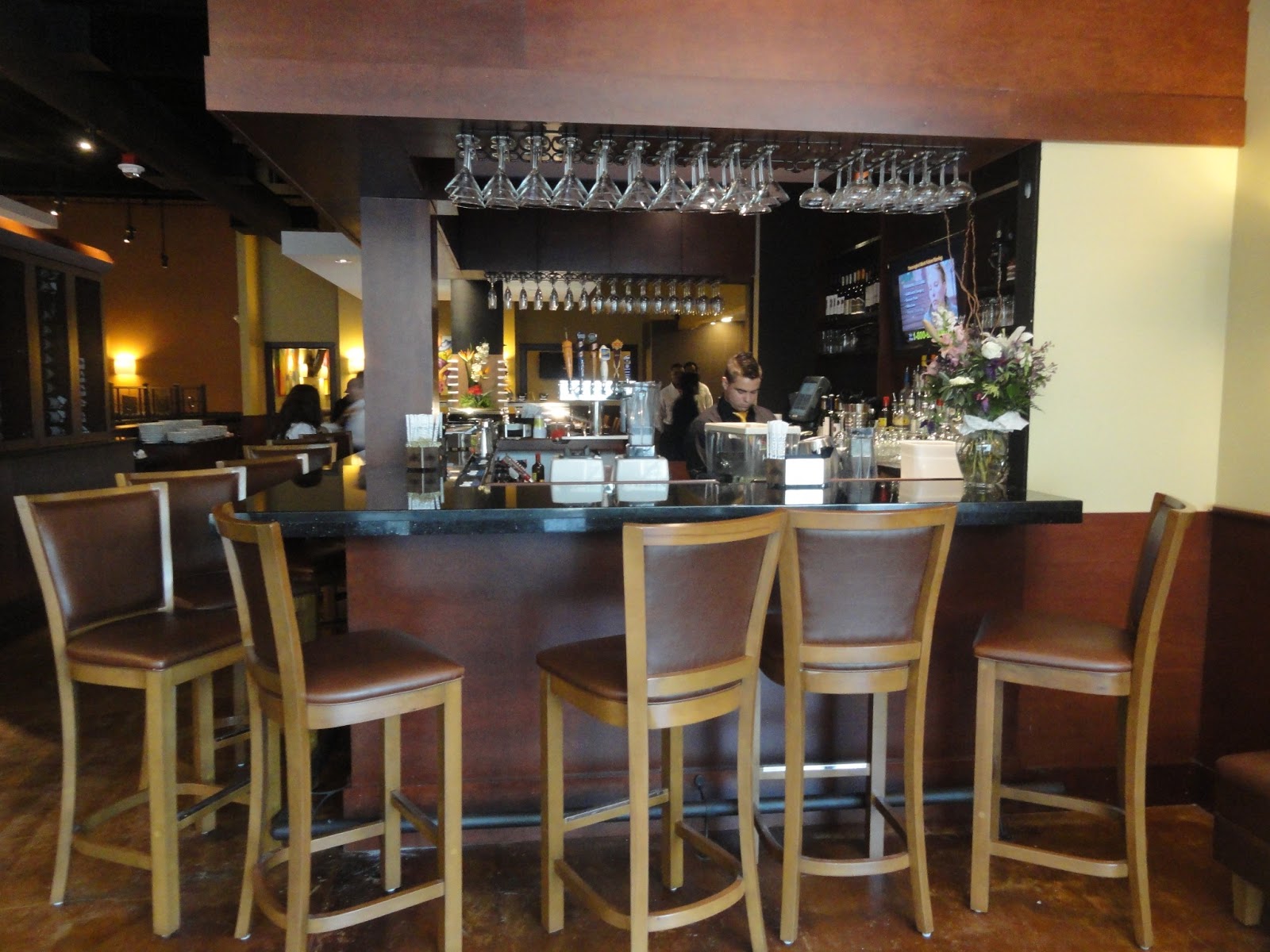
As you enter the restaurant, the fully stocked bar is right in front of you, with a couple of televisions behind the bar.

The dining room is medium-sized, simply decorated and with a casual elegance to it. It has an appealing ambiance to it, and even when the restaurant was fairly full, the noise level was manageable.

I like the interesting pictures on the wall, lots of colors and with a cartoon-like style. They help to brighten up the restaurant.

The grilling area is fully open so you can watch them preparing the various meats, or the pineapple, as pictured above. You only have two choices for the menu, either the Full Rodizio (dinner $34.99/lunch $22.99) or Salads Only (dinner $22.99/lunch $12.99), and children under 12 have different, lower rates.
Both choices are all-you-can-eat options.

There is a fully stocked bar though the wine list seemed rather ordinary, and did not have any Brazilian wines, though I liked the fact they have the Taylor Fladgate 10 & 20 Year Old Ports. You might instead want to try one of their eight specialty cachaca cocktails, such as the famed Caipirinha. I decided to try the Caipituba ($8.95), which is basically a caipriniha with the addition of Ubatuba Guarana, a carbonated beverage made from the Guarana plant. The drink was effervescent, not too sweet and you could not taste the alcohol. A fine summer sipper.

Before you go to the salad bar, you are brought three different appetizers, which are also all-you-can-eat. There are Polenta fries, a nice crunchy treat, and Pao de Queijo, a cheese bread made with yucca flour. The bite-sized breads were best when they were warm, with a dominant cheese-flavored interior.

You also receive a plate of Banana Frita, basically sweet fried bananas covered with sugar. Though I liked these, with a fine crunch to the exterior and a creamier, banana inside, I thought they might be more appropriate as a dessert because of all the sugar.

The Salad Bar is a large rectangle, with tons of dishes available, from rice to black beans, from parmesan cheese to slices of bread. One long side has a myriad of salad vegetables so that you can make your own salad. The veggies looked clean and fresh.

The other lengthy side contained a number of prepared salads, such as Artichoke salad, Roasted Edamame salad, and Garbanzo salad. Again, the dishes all looked fresh and appealing. If you only ordered the Salads Only option, you would have plenty of choices on the salad bar. For me, I chose to only sparingly select anything here as I wanted to save room for all of the meats to come. My dining companion though felt that the Couve, sauteed collard greens & bacon, were amazing, some of the best she has ever had.

The Gauchos then began to bring their skewers of meat to our table, slicing off our choices. As the restaurrant is new, the servers were a bit inexperienced, not as polished as you might find elsewhere. They were courteous, pleasant and eager to please, but a little bit raw. I am sure that will change with time as they grow more confident and experienced in their roles. If you like your meat cooked a certain way, such as rare or well done, they will ensure they bring it to you.

On your table, you have an hourglass-like block that is colored green on one side, and red on the other. If you stand it up with the green at the top, the Gauchos will continue stopping by your table with meat. If you need a rest, just turn the red side up and they will pass you by until you turn it back to green. Once you are fully done, you turn it onto its side. This is an excellent way to control the pace of your dinner.

Overall, I was impressed with their meats, which were tender, juicy, and cooked just right. I have been to other churrascaria where the meats were overcooked and dry. Generally, the meats were also seasoned properly, without an overabundance of salt, like some other churrascaria do. Plus, there is a good variety to the meat selection, with maybe 16+ options available each night. Despite the newness of the restaurant, they are on the top of their game with their grills.

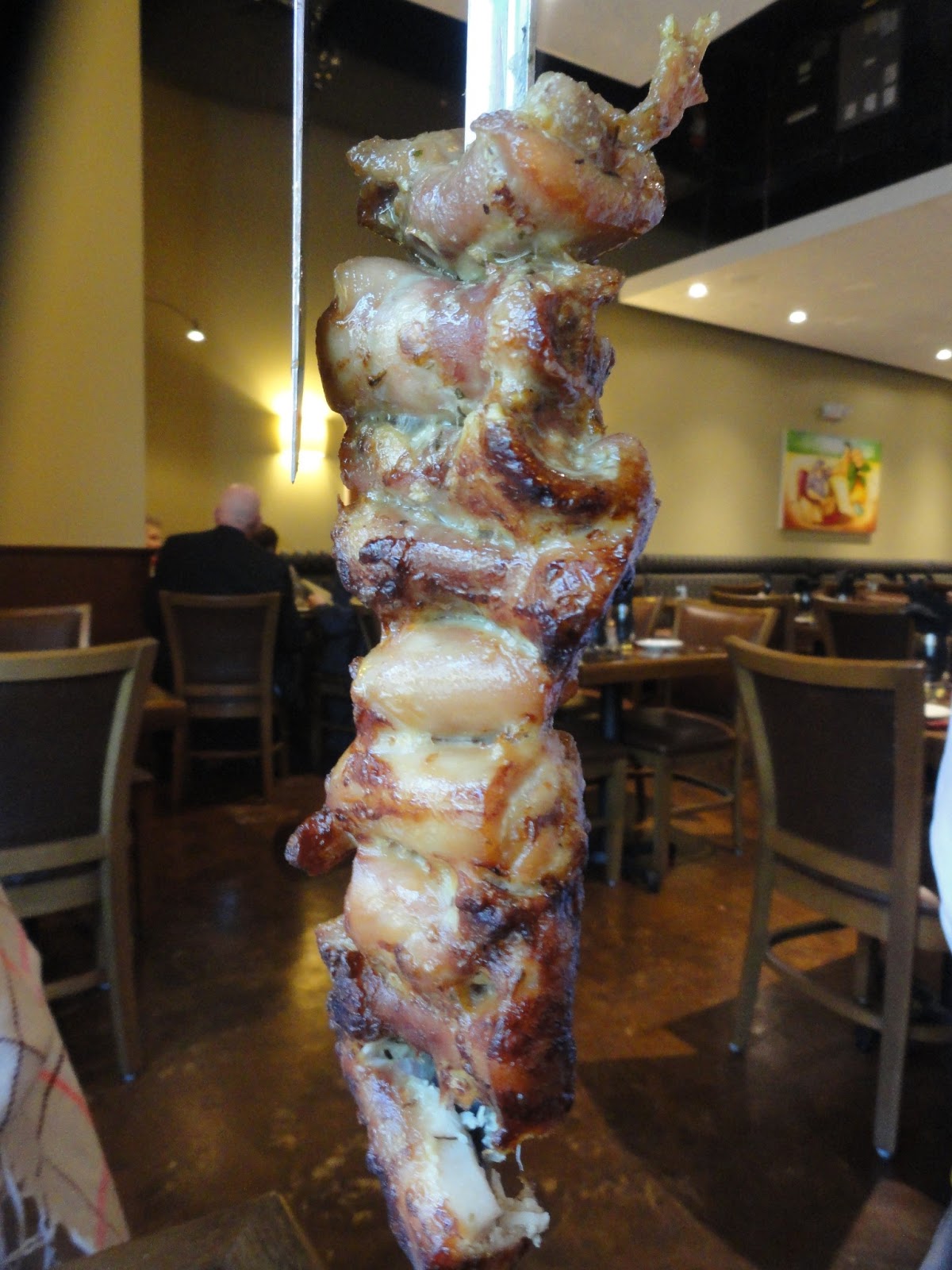
Above, is a picture of a skewer of Sobre Coxa, marinated & seasoned chicken, which was quite good.

A skewer of Paiche, a South American freshwater fish, one of the largest freshwater fish in the world. This fish is just starting to be seen on American menus and it has a nice white texture with a more subtle flavor. It reminded me a little of cod and was cool to see it on their menu.

They serve several types of beef, like this Fraldinha, a tenderloin. You will also see choices such as the Picanha, top sirloin, and the Bife Com Alho, garlic beef. The Garlic Beef may have been my favorite of the night, and I had several slices of it. The smell alone was alluring, though the taste was superb as well, with plenty of garlic on the exterior of the beef.

The Frango Agri-Doce, sweet and spicy chicken, definitely has a hot, spicy kick that is balanced with the sweetness. The marinade is delicious, and I loved the heat on the finish.

One of the few items not on a skewer is the Assado, a Brazilian pot roast with potatoes and veggies. Yes, it was tasty too, with tender meat, basically falling apart.

The Linguica were juicy and flavorful.

Some of the other meats included the Lombo, marinated pork loin; Peru Com Bacon, turkey wrapped in bacon; and Coracao, chicken hearts with a twist of lime. All were very good and even the chicken hearts, which sometimes can be tough, were relatively tender.

Besides the meats, there are a couple other grilled treats which you will enjoy. The Tomate Grelhado Com Parmesao, grilled tomato with melted Parmesan cheese, was good but my favorite was the Abacaxi, grilled glazed pineapple, The pineapple slices were still juicy and with only a mild sweetness. You might not think grilled pineapple is that good, but this is compelling and you will want to enjoy more than a single slice.

I didn't have any room for dessert though they looked appealing. The Brigadeiro Royal Banana Sundae is a chocolate cake topped with ice cream, sliced bananas, Brigadeiro sauce, whipped cream, chocolate sprinkles and a cherry.

This is the Rabanada, a warm cinnamon pastry with a creamy center, served with vanilla ice cream and laced with caramel sauce.

The Rodizio Grill has made a very good showing during its initial opening and has potential. The most important aspect, their grilled meats, are already impressive and the rest will hopefully shake out during the next couple months. Come here and bring your appetite as there will be plenty you want to try. Don't load up too much on the salads, saving space for all of the grilled meats, as well as the delicious grilled pineapple.

Rodizio Grill on Urbanspoon