Showing posts with label scotch. Show all posts

Tuesday, February 10, 2026

Glenmorangie Extremely Rare 18 Year Old Single Malt Scotch: Winter Tranquility

I greatly enjoy the various Scotches produced by the Glenmorangie Distillery, which is located north of Inverness, about half a mile from Tain, in the Highlands of Scotland. In Gaelic, Glenmorangie means "Valley of Tranquility." It's the smallest distillery in the Highlands and was founded in 1843 by a farmer, William Matheson, who bought a couple of ex-gin stills in England to start producing scotch. These stills were over 16 feet tall, the tallest in Scotland, and the distillery now possess 24 stills. The height provides a higher distillate, which ends up being lighter and smoother than some smaller stills. Glenmorangie is currently owned by Moët Hennessy-Louis Vuitton (LVMH).

Glenmorangie possesses their own water source, the Tarlogie Springs, including approximately 100 acres around it, to ensure the purity and quality of their water. Their barley is sourced only from Scotland. As I've mentioned before, the oak barrel is one of the most significant aspects of whiskey production, providing 60%-70% of the flavor and all of the color. Glenmorangie contracts with loggers in the Ozark Mountains for American white oak and then have the barrels constructed from the finest wood. They then lend the barrels to two American bourbon and whiskey distilleries for aging. After the barrels are used, they are then disassembled and sent to Scotland, to be reassembled and used to age Glenmorangie. They only use their barrels twice, as opposed to some other distilleries which may use them five or six times.

Dr. Bill Lumsden, the Director of Distilling, Whisky Creation, and Whisky Stocks, is a pioneer in the use of double maturation and the distillery is also well known for its experimentation. Their tagline is "unnecessarily well made," Their Scotch tends to be a lighter, ethereal, and layered style, which can be more consumer friendly than some other scotches. Yet it's far from simple, indicating the complexity and flavors possible within single malts. In addition, it's very food friendly, although not enough people consider pairing Scotch with dinner. 

The signet found on every bottle of Glenmorangie has its roots in the ancient past. At the end of the 8th century, the native Picts carved a huge stone, the Cadboll Stone, which eventually became the oldest recorded archaelogical find in Scotland. Though the Stone was eventually relocated to the National Museum in Scotland, Glenmorangie commissioned a stone replica which was eventually placed on its original location. The signet on their bottles is one of the carvings on this Stone.

The Glenmorangie Extremely Rare 18 Year Old Single Malt ($120-$150), with a 43% ABV, was matured for 15 years in American white oak, ex-bourbon casks, with 30% finished in Spanish Oloroso Sherry casks for three years. On the nose, there were more subtle and complex aromas of caramel, honey, and floral accents. On the palate, the Scotch was complex and compelling, smooth and ethereal,  with an intriguing melange of flavors, including dried fruits, caramel, figs, salted nuts, and a touch of citrus. It possessed a lengthy and satisfying finish, emphasizing the Oloroso elements. An excellent sipping whiskey, especially on a chilly winter night, providing a sense of tranquility and pleasure. It's also something best shared, with good friends or family, which would enhance the experience. Highly recommended.

Thursday, April 30, 2020

GlenDronach Scotch: Compelling Sherry Maturated Whisky

With the pandemic and social distancing, there aren't any wine dinners, tastings, seminars or similar such offline events. So, some companies are getting more creative, with virtual events, often using Zoom. Recently, the GlenDronach Distillery hosted a virtual Scotch dinner, inviting several writers to participate. Each writer was sent a dinner from The Haven, a Scottish tavern in Jamaica Plain, as well as two bottles of GlenDronach Scotch. Then, we dined and drank together on Zoom, as we learned more about GlenDronach from Rebecca Gardiner, their Boston Brand Ambassador.

Let's begin with a little history of the GlenDronach Distillery. The Aberdeen Journal (Scotland), April 27, 1853, reported the passing of James Allardes (also known as James Allardice), who was 82 years old. In the 1790s, Allardes started his career as a farmer in the Forgue region, part of the Aberdeenshire. The obituary also stated, "In the year 1825, the Glendronach distillery, whose mellow spirit has rendered the name familiar to all ears, was set on foot, mainly through the active cooperation of Mr. Allardes;..." Thus, GlenDronach is one of the oldest legal distilleries in Scotland.

This announcement, from the Aberdeen Journal (Scotland), September 6, 1826, is one of the earliest notices from the distillery concerning their Whisky for sale.

The Aberdeen Journal (Scotland), March 21, 1827, presented some statistics on Scotch distilleries, noting the total gallons of proof spirits made from malt only from January 5, 1826 to July 5, 1826. During this period, Glendronach produced 17,728 gallons. The Aberdeen Journal (Scotland), August 13, 1828, presented similar statistics, for the period from October 10, 1826 to October 10, 1827, and Glendronach produced 31,329 gallons.

The Caledonian Mercury (Scotland), February 27, 1830, reported there was a significant fire at the GlenDronach distillery, which began in the still-house. "The fire baffled every attempt to extinguish it, and in a short time completely destroyed the principal building, with the stills, utensils, and stock in it, leaving only the bare walls." The distillery was rebuilt, only slowed down a bit, and there was still plenty of stock for sale.

One of the first ads in the U.S. for GlenDronach was in the Daily News (NY), November 26, 1935. The ad noted that the Scotch was over 7 years old, and originally priced at $3.60 but on sale for $2.79. In the second half of the 1930s, other ads also popped up in both Massachusetts and Texas. This may have been the initial period when GlenDronach first started getting exported to the U.S.

The GlenDronach distillery is located in the Valley of Forgue, deep in the East Highland hills, and was named after the Dronac burn, a river that flows through the property. It's a very old-style distillery, and it's said they "run on GlenDronach time," a much more relaxing pace. For example, they own four huge pot stills with saxophone-like necks, and those necks take more time, slowing down the entire production process. And that is what GlenDronach prefers.

Over the course of the event, Rebecca Gardiner led us through the tasting, telling us the history and philosophy of GlenDronach. Her passion and knowledge were quite clear, and she also possessed a fine sense of humor. She made it fun, while also ensuring it was informative. At one point, she said that "Scotch is the Shakespeare of spirits." For some people, they get snobby about whisky and other people tend to avoid and fear it. Glendronach wants to make Scotch more approachable, to break down those artificial barriers and share it with everyone.

One of the ways they seek to make Scotch more accessible is through the use of maturation in Sherry barrels. Allardice himself used Oloroso Sherry barrels for aging, and the distillery eventually added, during the 1920s, the use of Pedro Ximénez (PX) barrels. Currently, they are the biggest user of PX barrels in the Scotch industry. Rather than just use Sherry barrels for finishing aging, they choose to use Sherry barrels for the entire length of maturation, which most other distilleries don't. These barrels are expensive, far more expensive than used bourbon barrels which are the norm, but GlenDronach is more concerned about the quality than the cost.

As I've previously discussed, I'm passionate that whisky producers should not place the term "Sherry" on their labels unless they are using authentic Sherry barrels, from the Jerez-Xérès-Sherry DO. "Sherry," like the term "Scotch Whisky," is a Protected Geographical Indication (PGI), worthy of respect and legal protection. Some whisky producers use barrels acquired from Sherry-style producers outside of the Jerez-Xérès-Sherry DO, and they wrongfully refer to them as "Sherry" barrels. That use violates the law and it shows a lack of transparency on behalf of the producer who is concealing the true nature of the barrels they used.

I asked about the sourcing of GlenDronach's Sherry barrels and I was pleased and impressed that all of their barrels are authentic Sherry barrels from the Jerez-Xérès-Sherry DO, and each barrel is traceable to its bodega in Jerez. This is very important to me, and GlenDronach is definitely a leader in this regard, respectful of the Sherry PGI and concerned about the true nature of the barrels they use for their maturation. Kudos to GlenDronach!

The Master Blender at GlenDronach is the famed Rachel Barrie, who has been in the whisky business for about 25 years, having begun her long career at Glenmorangie. In 2017, she became the Master Blender at the BenRiach Distillery Company, responsible for three distilleries, including BenRiach, Glenglassaugh and Glendronach.

Rather than call herself a Master Distiller, she prefers the term Master Blender, as she feels it is more reflective of her actual work. And as she has nosed and tasted over 150,000 whiskies, she brings an immense wealth of knowledge to her position. As I've long said, the art of blending doesn't always receive adequate appreciation, despite its importance to so many alcoholic beverages. It takes great skill and knowledge to be a proper blender, creating exactly what flavor profile is desired.

In many respects, GlenDronach flies under people's radar, especially as its production is relatively low, roughly 145,000 cases annually. The big names in the Scotch industry commonly produce millions of cases of whisky, so they get far more attention that a small distillery like GlenDronach. However, they recently received some serious attention, which may cause many Scotch lovers to start seeking out GlenDronach. At the San Francisco World Spirits Competition, held in March 2020, the GlenDronach Revival 15 Year Old Scotch won for "Best In Show Whiskey." Quite an honor.

Rebecca mentioned that "Scotch is very subjective," that different people will smell and taste different elements within the same Scotch. She also advised that you shouldn't add ice to your Scotch as it tends to dilute the whisky and freeze the Sherry aspect. Adding a little water is fine, but you might want to avoid ice. In addition, Rebecca stated that different foods bring out different flavors in Scotch, which can be fun to experiment with, to try out different pairings. And those pairings don't have to be fancy, like caviar and oysters, but can be simple, like a tasty fish & chips. I fully support these ideas, and have mentioned before that spirit-paired dinners can be fun and delicious.

The food provided by The Haven was tasty, and appealed to me enough that I want to dine at the restaurant once our current situation changes. I'm a big fan of Scotch Eggs, and the allspice in the coating around the eggs helped to bring out the allspice flavors on the Scotch.

The Fish & Chips offered a nice, flaky piece of white fish, with a pleasing batter, and large potato slices. As Oloroso Sherry often pairs well with fried items, the Scotch, matured in Oloroso barrels, benefited from that pairing. Now I'd like to pair that Scotch with fried clams from the Clam Box in Ipswich.

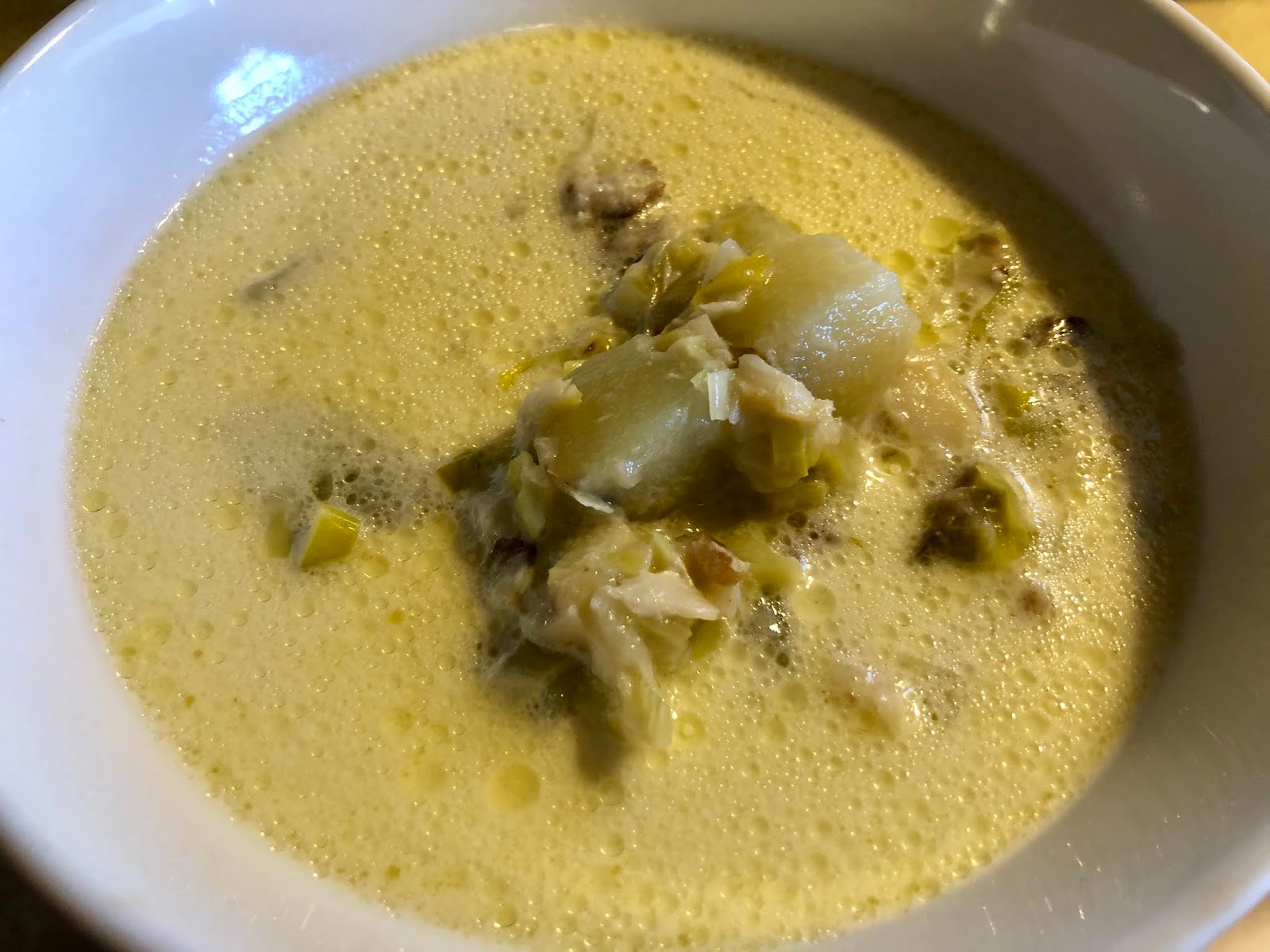
The Fish Chowder was tasty too, with plenty of fish and potatoes, and a savory and buttery broth, which also was intriguing with the Scotch. And it was true that each of these dishes brought something different out of the Scotch.

The creamy Haddie Spread, with Oatcakes, was flavorful as well, and the oatcakes also made for an excellent palate cleanser.

Scotch and cheese? Yes, this was a fine pairing too. With the Dubliner, we paired the 12 Year Old, and the sharpness of the cheese helped to bring out vanilla notes and creaminess in the Scotch. The butteriness of the cheese also drew out the Oloroso notes. With the Gorgonzola, we paired the 18 Year Old, and the mild sweetness of the Scotch contrasted well with the pungency of the cheese. Port and Blue Cheese has always been one of my favorite pairings, but I think I need to explore more Scotch and Blue cheese pairings.

The GlenDronach 12 Year Old Single Malt Scotch ($62.99) was aged in a combination of Pedro Ximénez (PX) and Oloroso Sherry casks and has a 43% ABV. It's important to note that GlenDronach doesn't add any caramel coloring to their whiskies, and that their color is all natural, imparted only by the barrel maturation. With a light amber color, this whisky presented with an intriguing nose that would remind you of Sherry, with some sweet, raisiny notes of PX and the nuttiness of an Oloroso. On the palate, the Scotch was smooth, creamy, dry and full-bodied, with a complex melange of flavors, including vanilla, dried fruits, hints of citrus, spice notes, and plump raisins. The finish was lengthy and pleasing, with the Oloroso elements becoming even more prominent. Overall, a delicious and compelling whisky, which would make for an excellent introduction for those new to Scotch, but which would also please Scotch lovers.

The GlenDronach Allardice 18 Year Old Single Malt Scotch ($179.99) was aged solely in Oloroso Sherry casks and had a 46% ABV. Rebecca stated this was her favorite, and that sipping it brought her home. She also recommended that you should let this Scotch breathe for about 20 minutes before drinking, to bring out its best aromas and flavors. It had a darker amber color than the 12 year old, and its nose was complex and alluring, with plenty of spice, chocolate notes, and nutty elements. The Oloroso aspect was noticeable and pleasing, especially to a Sherry lover like myself.

When I tasted this Scotch, I was immediately enamored with its complexity and fine taste. It was silky smooth, seductive on the palate, and each sip brought different notes to my mind. There were baking spices and salted nuts, chocolate notes and ripe fruit notes, honey and vanilla, sweet and bitter, and so much more. The finish was incredibly long, extremely satisfying, and beckoned you like a Siren to sip more. I loved this Scotch and its Oloroso notes, and continued sipping it long after the tasting event concluded. Highly recommended, and well worth the splurge.

GlenDronach makes other whiskies as well, including the Parliament 21 Year Old, the Cask Strength Batch 8, and the Grandeur Batch 10 (a 27 Year Old Scotch). I have great respect for the whisky-making philosophy of GlenDronach, especially concerning their use of only authentic Sherry barrels. And their Scotches are delicious and complex, compelling spirits which are worthy of much more attention than they receive. Their 18 Year Old Scotch is a rock star, and has become one of my new favorite whiskies.

Monday, December 2, 2019

Nomad Whiskey: A Marriage of Scotland & Spain

There are numerous wines and spirits which possess names which are worthy of protection, indicative of a specific place of origin which cannot be adequately replicated elsewhere. Some examples include Champagne, Port, Bourbon, and Cognac. Scotch Whisky is another example and the term is a Protected Geographical Indication (PGI), meaning it can only be produced in Scotland according to UK rules. No other distillery in any other country can claim to produce 'Scotch Whisky,' and if they tried, there are legal remedies to stop them from doing so.

What boggles my mind though is that some Scotch distilleries have chosen to ignore one of the Protected Geographical Indication of another country, Spain. Two years ago, I wrote, Rant: Whisky, Sherry Barrels & A Lack Of Transparency, detailing how some Scottish distilleries used the term 'Sherry' on their bottles, describing the type of barrels used for aging, when those barrels weren't actually from the Jerez-Xérès-Sherry DO. In its most simplistic, they use 'fake' Sherry barrels. For unknown reasons, this doesn't seem to be a significant matter though it certainly should be.

As such, I'm always pleased to find a whiskey that uses authentic Sherry barrels, like the Nomad Outland Whisky ($49.99). This whiskey is an intriguing partnership between Richard Patterson, the famed Master Blender, with over 50 years of experience, of Whyte & Mackay and Antonio Flores, the Master Blender of González Byassan esteemed Sherry House. As the whiskey is aged in both Scotland and Spain, it was given the name 'Nomad,' indicative of its travels.

The base is a blended whiskey, at 41.3% ABV, produced from a melange of over 30 different malt and grain whiskies, each 5-8 years old, from the Speyside and Highlands regions. This blend is then aged in González Byass Pedro Ximénez Sherry barrels for three years. They had previously experimented with a variety of Sherry barrels, including Fino and Oloroso, but they ultimately selected Pedro Ximénez as best for their vision.

What then makes this whiskey more unique, is that it is then transported to Spain, to the city of Jerez, where it continues to age for another year, in the San Fernando cellar of González Byass, in old Pedro Ximénez Sherry barrels. This adds an intriguing element to the whiskey, aging in a vastly different climate than Scotland.

With a rich amber color, the Nomad has an appealing nose which definitely reminded me of Pedro Ximénez sherry, combined with a spicy undertone and subtle malt notes. The taste is compelling and complex, a wondrous melange of flavors of both whiskey and sherry. It is smooth and elegant, with a bold spicy aspect, and notes of vanilla, salted nuts, raisins, honey, and dried fruit. It is more dry, not sweet, despite the raisin and honey notes. The pleasing finish simply lingers and lingers within your mouth, and it beckons you toward another sip. Well-balanced, delicious, and unique. Highly recommended!

Tuesday, January 8, 2019

Rebel's Guild: The Glenlivet Dinner

I've previously said, on multiple occasions, that there aren't enough Whiskey pairing dinners in the local area. With the diversity of whiskey now available, there are plenty of food-friendly options for a creative chef. Thus, I was intrigued to learn that Rebel's Guild, a Revolutionary War themed restaurant/bar at the Revere Hotel, was instituting a series of monthly whiskey dinners.

Rebel's Guild, which serves English-style pub fare, opened in April 2018 and is led by Executive Chef Sean Dutson. Dutson, a graduate of Johnson & Wales University, has plenty of varied experience, from front of house management and executive chef roles in both independent restaurants and large-scale urban hotels. "His philosophy is to create a menu that is both balanced and diverse, that offers flavors to excite and delight every guest."

The restaurant serves breakfast, lunch and dinner, and on the dinner menu you'll find items including Crispy Buffalo Oysters, Smoked Duck Breast Crostini, Lobster Fritters, Short Rib Ravioli, Berkshire Blue Burger, Brick Pressed Chicken, Meatloaf, and Old School Prime Rib. Dinner entrees range from $19-$34.

I was fortunate to attend, as a media guest, their first monthly Scotch dinner, a collaboration with The Glenlivet. During the course of this dinner, we enjoyed a Scotch cocktail and four different Glenlivet Scotches, all paired with food prepared by Executive Chef Sean Dutson. This was my first visit to Rebel's Guild and I was impressed by the cuisine, and the pairings worked very well. I've long enjoyed Glenlivet Scotch so it was a treat to have several different bottlings paired with various dishes.

Overall, it was a fun and tasty evening, made even more special because I finally got to meet, in person, Frederick Wright, who has commented on my blog far more than anyone else. It was a chance meeting as I had no idea he would be attending this dinner. We enjoyed plenty of interesting conversation over the course of the evening, and it was such a pleasure to finally dine with and raise a glass with him. Thanks to Frederick for all your fine comments over the years and thanks also for making the Glenlivet dinner even more fun.

The evening began with a cocktail made with The Glenlivet Founders Reserve Scotch, Madagascar infused vanilla, Kleos Mastiha liqueur (Greek), and sour cherries. Such an interesting taste, a nice balance of sweet and sour, with an intriguing spice element. I need to return to check out more of their cocktail program as it sounded fascinating from what I heard at this dinner.

Accompanying the cocktail was a series of tasty and plentiful hors d'oeuvres. The Applewood Smoked Bacon Deviled Eggs put a nice twist on the traditional deviled eggs, adding a bacon element. The creamy filling had a delightful smoky aspect, and just enough bacon taste, without overwhelming the dish. Frankly, these were some of the best deviled eggs I've tasted in quite some time.

These Skewers were stacked with beef, goat cheese and two types of beets. The meat was tender and flavorful, and the goat cheese creamy, enhanced by a touch of balsamic.

The Almond Stuffed Dates were a simple but delicious item, a nice blend of flavors and textures.

There were also Artichoke and Boursin Fritters, which the others at the dinner stated they enjoyed. I'm not a fan of artichokes.

My personal favorite of the hors d'oeuvres were the Pulled Pork & Cornbread Shooters, made with pulled pork, corn bread and topped with coleslaw. The cornbread was moist and delicious, with plenty of tender, savory pulled pork. A fine combination and I had several of these shooters, refraining from more so I would have room for the rest of my dinner. Highly recommended!

After all of that food, the four-course dinner began, opening with a Apple & Butternut Squash Bisque, topped by creme fraiche and spiced pecan dust. The velvety smooth bisque had plenty of apple flavor, with a little bit of sweetness, balanced by the creme fraiche. A fine start to the meal, and it would pair well with our opening Scotch too.

The Glenlivet Distillery, which was founded in 1823, was the first distillery to receive a commercial license to distill. They sell about 6 million bottles each year, and produce at least a dozen different bottlings, which includes a number of limited releases. The Glenlivet representative opened with some important advice, that you can drink your whiskey how ever you like it. You can add water, ice, or even Red Bull if that is your preference. That is sage advice with which I fully agree, and also shows that Glenlivet isn't trying to be pretentious, and tell people exactly how they should consume their Scotch.

Our first Scotch was The Glenlivet Founders Reserve Scotch ($35), a non-aged Scotch that generally is comprised of a blend of whiskies that are aged from 6 to 18 years. It is aged primarily in ex-bourbon casks, has a 40% ABV, and is one of their newer releases from the last 5 years. It is considered to be a good introduction for newcomers to Scotch and I would agree with that sentiment. The Founders Reserve is light and dry, with nice flavors of citrus, hay, and vanilla. It drinks easily and worked well with the bisque, cutting through its creaminess.

The next dish was Confit Poutine, the chef's own twist on a classic dish, using pulled duck, sweet potato wedges, cranberries, sage gravy, and cheese curds. This was pure comfort food, an excellent and seasonal blend of moist, flavorful duck with savory gravy, slightly and crisp sweet potatoes and squeaky curds. The addition of the curds helps to root this dish in the classic, and this would certainly warm and please your belly all winter.

Our next Scotch paring was The Glenlivet 12 Year Old ($35), which is the #1 selling Scotch in the U.S. and is said to be responsible for the promotion of the single malt category. It too is light and dry, but with more complexity and depth of flavor, as well as some bright fruit notes, including a touch of pineapple. There are also touches of vanilla, honey, and caramel notes in this whiskey. Elegant and delicious, this is a very good value, which is probably the major reason it is a top seller.

Our last savory course was an ample plate of Pork Belly & Sea Scallop, with sugar pumpkin risotto, caramelized brussel sprouts, and a wild berry compote. The scallops were seared perfectly and were sweet and tender, the pork belly was crisp and tasty, and the risotto was sweet and creamy. More excellent comfort food, perfect for the season.

This course was paired with The Glenlivet 15 Year Old ($65), which is aged in ex-bourbon casksand then finished in French Limousin oak barrels. This is a more delicate and elegant whiskey, with intriguing and complex flavors, including salted nuts, citrus, caramel and a spicy backbone. Such a delicious Scotch, which also possesses appealing aromatics. An excellent value at this price.

Dessert was one of my favorite dishes, a Cinnamon & Apple Bread Pudding, accompanied by a scoop of vanilla ice cream. We need more Bread Pudding in the Boston+ area, and it was good to hear that Rebel's Guild usually as a bread pudding on their dessert list as Chef Dutson is a huge fan of this dish. I loved his version, moist and flavorful, with just the right balance of flavors. I would stop here just to have this dessert.

The final Scotch was The Glenlivet 18 Year Old ($100-$125), which is aged in a combination of ex-Bourbon barrels and ex-Sherry casks. I'll note that they only use authentic Sherry casks, which certainly matters to me. At a 43% ABV, I found this to be a superb Scotch, and at this price, for an 18 Year Old, this is a very good value. The whiskey contains a complex and enticing blend of tastes of figs, raisins, citrus, red fruits, baking spices, and a hint of chocolate. There is so much going on in this elegant but powerful whiskey. A superb sipping Scotch, though it also went well with the Bread Pudding. Highly recommended.

This Scotch dinner was $75 per person and that was certainly a bargain for all of the food and drink, especially considering the quality of it all. Chef Dutson prepared plenty of delicious comfort food and I certainly want to return to try more of his menu. And the Scotch pairings were interesting and worked well. I highly recommend you check out Rebel's Guild and look out for their next whiskey dinner.

Tuesday, September 4, 2018

Sia Blended Scotch: Finding Your Passion

The fascinating story behind Sia Blended Scotch Whisky touches on some universal and important themes, from following your passion to refusing to judge a category by one or two examples. Plus, the Sia is also delicious, a whiskey that could convert non-whiskey drinkers.

I received a bottle of the Sia as a birthday gift from good friends Rob & Laura Ciampa. Of course I needed to learn all that I could about the Sia, especially as I wasn't familiar with the brand. The founder of Sia is Carin Luna-Ostaseski, a native of Miami, Florida, who worked for about 17 years as a Marketing Creative Director for major news outlets and numerous California start-ups. There was a point in time where Carin disliked whiskey, though that was primarily based on a very limited sampling.

One night, while out with some friends and co-workers, one of those co-workers convinced Carin to try some whiskey, hoping to find one that would appeal to her preferences. Carin was willing to take a chance, tasting five different whiskies, and became an instant fan of the Oban 14 Year Old. This brought her the realization that you can't judge a category by only a few samples. There is so much diversity in whiskey and other spirits that there is almost always something for everyone. It is just a matter of finding a whiskey that will appeal to your own preferences. This is true for all alcohols, from Sake to Wine.

Carin began tasting more whiskies, and after a break-up, she began collecting whiskey, eventually accumulating about 300 different bottles. A passion for whiskey can taken hold and she continued to increase her knowledge and experience with whiskey. In time, this led Carin to the idea of creating a new blended Scotch, something to be accessible and affordable. This entailed lots of work in finding partners in Scotland who could source and blend the whisky. Carin decided on the name "Sia," which means the "number six," which is also the date of her birthday. In 2012, Carin eventually decided to run a Kickstarter to raise the funds needed to launch her new brand. With a goal of $39,000, she eventually raised over $45,000, making the campaign a success.

The Sia Blended Scotch Whisky ($49.99) is a blend of 60% grain and 40% malt, sourced 50% from Speyside, 40% Highland, and 10% Islay. It has an ABV of 43% and is imported into the U.S by Spirits Imports, Inc.  It is also important to know that 1% of sales are donated to charities that help women start and grow their businesses.

The nose of the Sia is intriguing, with touches of vanilla, spice, caramel and a tiny waft of smoke. On the palate, it is silky smooth, lacking the burn you find in some other Scotches. You'll find a melange of pleasing flavors, including caramel and vanilla, a strong spicy backbone, and more subtle hints of citrus, smoke, and toffee. It possesses a touch of sweetness and has a lengthy, satisfying finish. It certainly accomplishes its goal of being approachable and accessible. A family member, who generally dislikes whiskey, tasted it and was surprised at how much she liked it. The Sia earns a hearty recommendation.

Thanks to Rob & Laura for introducing me to this tasty whisky,

Friday, December 15, 2017

2017: Favorite Spirits, Sake, Cocktails & Drink-Related Items

What were some of my favorite spirits and drink-related items of the past year?

Let me continue the lists of my best recommendations and favorites of 2017. I have already posted my Top Wine lists as well as Favorite Wine-Related Items. This post will now concentrate on some of my Favorite Spirits, Sake, Cocktails & Drink-Related Items. This is certainly not a complete list but it is more a sampling of compelling and memorable matters I have experienced and posted about over the past year.

This is also a purely subjective list, based on my own preferences, and makes no claims about being the "best" of anything. But all of the items here have earned my strong recommendations and I hope you will enjoy them as well. For more spirits, Sake, cocktails and drink-related items, you can just search my blog posts for the past year.

Favorite Achievement in Spirits Writing: This year, I'm especially proud of my article, An Expanded History of Pechuga Mezcal, where my research uncovered a wealth of documented references to Pechuga Mezcal, a type of mezcal that has been flavored with meat, as well as maybe some fruits and spices. Prior to my article, there were bottles from the 1930s that were labeled Pechuga but there was no known documentary evidence prior to that time. However, I found over 30 different written references to Pechuga before the 1930s, extending as far back as 1864. There is still more research needed in this area, but I was pleased to contribute my efforts to expanding the known history of this fascinating type of Mezcal.

Favorite Whisky Dinner: A great theme, killer whisky, and delicious food all combined to make the  Robert Burns Scotch Dinner at Civic Kitchen & Drink a wondrous experience. It was my first Burns Night celebration and I marveled at the ritual, the toasting, and the intriguing food, including Haggis, which I actually enjoyed very much. There was plenty of Scotch, each unique in its own right, and all quite tasty and complex. The crowd was fun and it was more than just a simple dinner, but an intriguing experience and the memories will remain for a very long time.

Favorite Blended Scotch Whisky: This year, I've attended two Compass Box tasting events, though I've only written about one of them so far. However, it is clear to me that Compass Box and its owner John Glaser are producing some excellent blended Scotches. I've enjoyed most of the portfolio that I've tasted and am impressed with the diversity of their whiskies. Their limited edition Double Single thoroughly impressed it, a silky smooth, complex and well-balanced whisky with a fascinating melange of flavors. There were hints of vanilla and caramel, berries and tropical fruit, herbs and spices. Each sip seemed to bring something new to my palate. Highly recommended.

Favorite Irish Whiskey: Tullamore DEW, the "official Irish whiskey" of the Boston Red Sox, is offered at the Tully Tavern, in Fenway Park, especially in the Monster Mule, a variation of the Moscow Mule that is made with 1 part Tullamore DEW, 4 parts Ginger Beer, and lime juice. They have a nice portfolio of whiskies, but my favorite was the Tullamore DEW 14 Year Old Single Malt which is matured in the usual three types of barrels, but then also spends a little time in Port and Madeira casks. On the nose, there are pleasant notes of apple and tropical fruit, and the palate also presents this fruit flavors, accompanied by a complex mix of vanilla, spice and caramel, with an elegant creaminess that caresses your palate. The finish lingers for quite a time and I can easily see myself sipping this all evening.

Favorite Whisky Rant: It is an issue which deserves attention but seems unlikely it will acquire what is needed. In my Rant, Whisky, Sherry Barrels & A Lack Of Transparency, I discuss how a number of whiskey producers are using Sherry-style barrels, from outside the legal Sherry region, but those barrels are still be labeled as Sherry barrels. Sherry is a protected term and it should be respected and honored yet some whiskey producers are failing to do so. We need more people to know that this problem exists and then hopefully a united effort and get whiskey producers to change their ways on this issue.

Favorite Spanish Whisky: Have you ever tasted whisky from Spain? Spain isn't a significant producer of whisky but you may hear more about Spain in the near future if whisky like the Navazos Palazzi Malt Whisky becomes more well known. Produced from malted barley grown in Spain, the whisky spends about four to six years aging in Palo Cortado Sherry casks, which is definitely a rarity in the whiskey industry. This whisky presents with a nice, dark amber color and its complex aroma is enticing, a blend of harmonious fruits and spices. You could easily sit and enjoy the diverse nose of this whiskey for quite some time before taking a sip. Your palate will be seduced by the complex, and sometimes subtle, melange of flavors that caress and tantalize. It is sweet, briny and savory, with plenty of fruit, from apples to raisins, as well as lots of spicy notes. Honey, caramel, and malt with clear Sherry notes and a long and lingering finish that satisfies to the last wispy taste. It is elegant and compelling, unique and delicious, a well-balanced whiskey that will surprise and delight.

Favorite Unique Whiskey: At The Townshend in Quincy, Palmer Matthews, their Bar Manager, introduced me to Dry Fly Distilling Straight Triticale Whiskey, which might be the only straight Triticale whiskey in the world. Triticale is a hybrid of rye and wheat which was created in Scotland in the late 19th century. I enjoyed a shot, chilled by a single large chunk of ice, and found the whiskey to be intriguing, with a nice spicy kick up front, which then became soft and almost sweet. As I love Rye whiskey, I savored the spicy element of the Triticale, but also liked how the wheat softened it more on the finish. If you want something more unusual, but still quite tasty seek out this Triticale.

Favorite Maryland Rye Whiskey: During a visit to the Tenth Ward Distilling Company, I had the chance to taste a few of their products and I was most taken with their Lindsay Stunkle Rye Whiskey which is named after a famous Prohibition-era bootlegger from Frederick, Maryland. This limited-release whiskey is made from a mashbill of 80% malted rye and 20% malted barley, and comes in at a whopping 120 proof. It is released twice a year, in June and November, and is intended for home aging. It is spicy and potent, enhanced by the addition of a little water, and will definitely appeal to rye lovers. There is complexity to its taste and a lengthy finish, and I would love to see this aged in the barrel for a number of years.

Runner-Up Favorite Maryland Rye Whiskey: Also from the Tenth Ward Distilling Company, a more unique Rye whiskey is the White Caraway Ryewhich is made from a mashbill of 80% malted rye and 20% malted barley, and comes in at 95 proof. The spirit is mashed with caraway seed so it is intended to taste more like rye bread, though it may also remind you of Scandinavian Akvavit. I was captivated by the intriguing flavors of this spirit, as it certainly reminded me of spicy rye bread, with a hint of mint. Though you could drink this on its own, I think it would be best used in creating some fascinating cocktails.

Favorite Gin: As I've said before, I'm not usually a fan of gin, disliking the over-powering juniper flavor I find in many, but I have enjoyed some that I felt were more well-balanced. Certainly a more unique gin, the Pierde Almas 9+ Botanicals is actually a hybrid Mezcal/Gin, using Mezcal as the base spirit and then adding nine botanicals, including juniper, coriander, star anise, fennel seed, orange peel, cassia bark, angelica root, orris root, and nutmeg. On the nose, the piney aroma of juniper is dominant though beneath that aroma were more subtle herbal notes. Once you taste it, the Mezcal elements make themselves known, and it is an intriguing and complex spirit. There are plenty of citrus notes up front, with an interesting melange of spices and herbs, as well as a smoky edge, especially on the finish. The piney notes of the juniper became much more integrated into the whole, and the other botanicals joined the complex mix. This is definitely a sipping spirit, which is quite enjoyable neat, and each sip seems to bring new flavors to your palate.

Runner-Up Gin: From the McClintock Distilling Co. in Maryland, their Forager Gin is a vapor infused New-World style gin using about 18 botanicals inspired by native herbs found in the Appalachian wilderness. On the nose, there is a strong juniper aroma with subtle hints of other botanicals in the background. On the palate, the botanical mix is more balanced, and the complex melange of flavors delights the mouth. There are elements of fruit, mainly citrus, and floral flavors, with a sprinkle of spice elements. The gin should be served chilled, and would be delicious on its own, or used in cocktails.

Favorite Rum: Rum actually has a lengthy history in the Oaxaca region, a place best known for Mezcal. However, little Oaxacan rum makes it out of Mexico, which is a shame. One of the recent exports is the stellar Paranubes Rum, brought to you by the good people of Mezcal Vago. Made from sugar cane juice, and not molasses, the Paranubes is made in a very traditional manner, the current producer being at least the 3rd generation in his family to produce this rum. Its aroma is very funky and prominent, with a saline character that reminds me of the smell of the ocean or an olive tapenade. The aroma doesn't follow through much on the palate, which instead brings a mild sweetness, a touch of grassiness, and some citrus and tropical fruit flavors. It is more light and elegant, with a lengthy and pleasing finish. It reminds me of a Rhum Agricole, and its distinctive and unique aroma and taste certainly sets it apart. The Paranubes can be consumed on its own though it also would work well in a variety of cocktails.

Favorite Unique Rum:
From Navazos Palazzi, which also made the Spanish whiskey I previously mentioned, comes another unique spirit, a Cask Strength Rum, aged in Sherry barrels. The base rum had been distilled in the Antilles, where it aged for five years in ex-Bourbon barrels, and then given to a Spanish Sherry bodega, where the rum further aged in Oloroso barrels for 10 years. The color of this rum was deep and dark, though with some translucence, reminding me in some ways of an aged Oloroso Sherry. I was enamored with the complex aromas that wafted up, seducing my nose. There was fruit and spice, nuts and chocolate, and it was a pleasure just to sit and enjoy the aromas. On the palate, I was initially pleased with the relative dryness of the rum. It wasn't one of the prominent sweet rums but rather its sweetness was of a more subtle nature, with underlying caramel, vanilla and molasses flavors. And the complexity of the nose was duplicated on the palate, such a compelling melange of flavors that seemed to present something new each sip I took. There was a certain nutty and saline character that reminded me of Sherry, but also bright citrus and plum notes. There were plenty of spicy elements, with a backbone of umami, and hints of leather. Elegant and fascinating, this rum had a pleasing, lengthy finish.

Favorite Mezcal: Pierde Almas, which made the Mezcal/Gin hybrid mentioned above, is primarily a Mezcal producer and they have an amazing portfolio. My current favorite is their  Maguey de Lumbre Mezcal, made from a rare and little-known agave. The aroma is more subtle, with hints of citrus and smoke, and the first taste is pure gustatory pleasure, a hedonistic revel in the complexities and flavors of the Mezcal. This was a compelling Mezcal and once I started looking deeper, it only became even more intriguing. Citrus notes dominated the flavor profile but there was much complexity providing harmony to the spirit. There was also a mild smokiness, subtle herbal accents, and wispy spice notes. Just sit and sip it and you'll realize the fascinating complexity of this spirit. The taste was clean and smooth, an elegant pleasure, something to slowly savor on a summer evening, though you could certainly enjoy this year round.

Favorite Pechuga Mezcal: Pierde Almas also produced my current favorite Pechuga Mezcal, the Mezcal de Conejo, which is produced using a rabbit. Pechuga is a type of mezcal that has been flavored with meat, as well as maybe some fruits and spices. Once I tasted this Pechuga, I was immediately struck by the anise notes in this Mezcal and then I could detect the ripe fruit flavors, especially pineapple, a mild smokiness, and a touch of a more wild and gamey element. It was complex and intriguing, a unique melange of flavors which should please any Mezcal lover. You wouldn't know this Mezcal was made with rabbit, but it still would make for an interesting addition to your Easter dinner.

Favorite Shochu: Shochu, a distilled spirit made in Japan, can be made from many different ingredients though sweet potato is considered one of the best choices. While dining at Tori Shin in New York City, I thoroughly enjoyed a glass of Shochu, the Tenshi no Yuwaku, which is a sweet potato Shochu that was fermented in Sherry casks for about 10 years. This is a more unique Shochu as few are ever aged this long. It's name translates as "Angel's Temptation," a reference to the Angel's Share, the amount of spirit that evaporates over time while it ages in a barrel. I enjoyed it neat, finding it rich and creamy, with intense Sherry notes, hints of sweetness, and plenty of complexity.

Favorite New Liqueur: A collaborative effort between companies in Britain & France, the Escubac seems to have its roots in Ireland. It is a "juniper-free botanical spirit," made from a base of neutral sugar beet alcohol with the addition of 14 botanicals. After it is distilled, they infuse it with saffron and sweeten it with raisins, vanilla, and sugar. The Escubac has some sweetness up front but it wasn't cloying or overly sweet, and it was complemented with a mix of citrus and herbal notes, with intriguing spice notes and a touch of bitterness. I was pleased with its complex and intriguing melange of flavors, and it can easily be used in a variety of cocktails.

Favorite Baijiu: With many Americans, the Chinese spirit Baijiu suffers an image problem, often considered to have a terrible, off-putting taste. Though there are some Baijiu with very strong aromas and tastes, others have much lighter and appealing flavors and are worthy of attention. Made in New Zealand, Taizi Baijiu, the creation of two Chinese brothers, would be a great introduction to Baijiu for anyone. With its clear color, the Baijiu has an intriguing nose of berries and licorice, and on your palate, the berry flavors are very prominent upfront with more licorice notes on the finish. It has a slightly oily texture, but drinks very smooth and balanced, and you wouldn't realize its high alcohol content. There is an underlying complexity, more subtle notes, including some herbal elements, accenting the Baijiu. One of the best Baijiu I've ever tasted, I highly recommend it.

Favorite Chicago Bars: On a whirlwind visit to Chicago, I was fortunate to visit two cool and compelling bars, including Income Tax and Estereo. Income Tax, which has been open for a year, is cozy and elegant, with a lengthy bar and a casual, welcoming vibe. Their drinks list is diverse and interesting, and they carry some Sherry by the glass. Their food is also quite tasty, and is great for pairing with a glass of wine or a cocktail. Service is excellent as well, and it is the type of neighborhood bar you really should frequent. Estereo is also a neighborhood bar, specializing in spirits from Mexico, Central America, and South America such as Cachaca, Pisco, Mezcal, Tequila, Sotol and more. Great cocktails, incredible diversity in their spirits, knowledgeable staff, and a fun & lively atmosphere make this a great place to drink.

Favorite Sherry BarTaberna de Haro wins this category hands-down, once again, as there is no other local restaurant which comes close. With over 60 Sherries, including some rarer bottlings, Chef/Owner Deborah Hansen has compiled an amazing Sherry list, offering a good number by the glass. The Sherries pair very well with her Spanish cuisine and I could easily sit at the bar all night sampling different Sherries, from a bone dry Fino to a sublime aged Palo Cortado. If you are ever in the area, you must stop here and try some Sherry.

Favorite Restaurant Cocktail: The Schrodinger's Coupe is available at Sumiao Hunan Kitchen, which makes several other Baijiu cocktails too. The Coupe is made with Baijiu, curaçao, grapefruit, lime and plum bitters. It's Baijiu taste was accompanied by some sour fruit flavors with a hint of grapefruit. It wasn't overly sweet and was a refreshing summer drink.

Favorite Restaurant Hot Cocktail: While at a Burns Night dinner at Civic Kitchen & Drink, we began the evening with the Ginger Rabbie, a hot cocktail, made with Towiemore Classic Scotch, tea, molasses, and ginger. It was similar in some respects to a hot toddy, only mildly alcoholic, lightly sweet, and with a pleasing taste of tea and spice. Great for the winter.

Favorite Daiginjo Sake: The Kirin-Zan Junmai Daiginjo, which comes in a cool pentagonal blue bottle, is a superb Sake, elegant and complex, with such an alluring taste. It is clean and bright, with subtle citrus notes, some peach and melon, and a lengthy, pleasing finish. It is said to be "reminiscent of a clean mountain stream," and it possesses such a sense of purity, a Sake that pairs perfectly with nigiri. This is a Sake which impresses and I highly recommend it. Find it locally at Pabu Boston.

Favorite Junmai Ginjo Sake: I was impressed with the unique Hakkaisan Snow-Aged Junmai Ginjo, which spends three years in an insulated storage room chilled only by 1000 tons of snow! It is a Genshu, undiluted by water, and has a high acidity. I found the Hakkaisan to have a more subtle aroma and on the palate presented an elegant, deep complexity with hints of melon and a touch of anise. It was full-bodied and smooth with rich, savory umami. A hedonistic pleasure that is extremely food friendly. It can be found locally at Reliable Market.

Runner-Up Favorite Junmai Ginjo Sake: While dining at Torishin, a killer Yakitori restaurant in New York City, I ordered a carafe of Fukuju Junmai Ginjo and it was so delicious I had to order a second carafe. The Sake was simply superb, with a dry, clean and elegant taste with plenty of fruit notes. It was silky smooth, drank so easily, and I could have sat all night savoring this Sake. Highly recommended.

Favorite Kimoto/Yamahai Sake: The Suehiro Densho Yamahai Junmai Sake is produced from Gohyakumangoku rice, and is a typical Yamahai Sake, with delicious earthy notes, high acidity and plenty of umami. It is easy drinking, smooth, and complex with a hint of citrus, smoke, and sweetness. Simply a delicious Sake, which will pair well with many different foods, from mushroom risotto to a grilled steak.

Runner-Up Favorite Kimoto/Yamahai Sake: The Sohomare Tokubetsu Kimoto Sake has a high acidity and it was quite compelling, a mellow and smooth-drinking Sake with plenty of delicious umami. It has a richness to the mouthfeel, a lengthy and satisfying finish, and is something I could sit and drink all day. There is a mild earthiness to the Sake which enhances the totality. A well-made and delicious Sake, it would be an excellent pairing with umami dishes, especially mushroom or truffle-based ones, and would also go well with various meats.

Favorite Sake Store: It is difficult to find a local wine shop that carries a large and diverse Sake selection. However, Reliable Market, in Union Square, Somerville, has been enlarging their selection, and stock many of their Sake in refrigerated cases. You'll find plenty of Sake, of all types, in regular-sized bottles as well as half-bottles, at a range of price points. They also carry both local Sakes, Dovetail (from Waltham) and Blue Current (from Kittery, Maine). Reliable Market probably has the best and largest Sake selection in the Boston-area and you should check it out.

Favorite Sake News: Back in April 2015, I posted an article, An Expanded History of Sake Brewing in the U.S., which discussed the early history of Sake breweries in the U.S. My research for this article included combing through hundreds of old newspapers, picking out tidbits of information that hadn't been previously collected into a single resource. It was a fascinating exploration, expanding my knowledge of this topic, and revealing intriguing facts which contradicted what many previously believed. This year, a Japanese man, who runs a packaging company, wrote an article for a Japanese Sake journal based upon my article and I wrote out it in My History of U.S. Sake Breweries Inspires A Journal Article. And fortunately, I got to meet the author last month when he visited Boston, and we drank plenty of Sake together.

Least Favorite Sake News: In Ugh! More Stinkin' Scores For Sake From Wine Advocate, I express my displeasure at the Wine Advocate for continuing to provide "scores" for Sake. I've been ranting about this issue since 2013 but it is more recently that the Wine Advocate has started providing Sake scores on a more regular basis. Their main effect seems to be raising prices and they don't seem to be sparking much discussion or interest on Sake. Even on the Robert Parker bulletin boards, Sake discussion is all but nonexistent. The scores aren't really helping anyone, and are probably hurting more, so they should be eliminated.

Favorite Beer: I dislike most beer, as I am very sensitive to the bitterness of hops and that taste turns me off. Every once in a while though, I find a beer that does appeal to me. This year, I was impressed with the The Flying Dog "Heat Series" Shishito Rice Ale. This beer is brewed with Shishito peppers, a generally sweet Asian pepper where about one in ten is spicy. I found this beer to be light, crisp and refreshing, lacking bitterness and with just a whisper of spicy heat, mainly on the finish. There are some subtle malty undertones and a couple hints reminding me of a Sake. It would be an excellent beverage on a hot, summer day.

Favorite Cider: From the Asturian region of Spain, the 1947 Sidra de Nueva Expresion is
is a Petillant Semi-Dry Cider, produced from a blend of 14 apple varieties, all from their own orchards, with a rough breakdown of about 75% sharp, 15% bitter-sharp and the rest bitter-sweet. Fermentation occurs in an open chestnut vat, with wild yeasts, and I was quite surprised that they also allow it to mature in the open vat for about 12 months! The vats are old, some being as much as a hundred years or more, and are quite large, about 15,000 liters. It possesses a strong, appealing apple aroma and on the palate, it presents as mostly dry and crisp, with strong apple flavors and only the slightest hint of sweetness. It also has a  mild effervescence, enough to be a nice palate cleanser and excellent for food pairings, and a lengthy pleasing finish.

Favorite Pear Cider: For the second year in a row, this Asturian pear cider, the Viuda de Angelón Sidra de Pera is the winner. The pear trees are wild, organic and over 70 years old. Once the pears are picked, they are first fermented in stainless steel, with wild yeasts, and then mature for about four months in chestnut vats. Then, they undergo a second fermentation in the tank. This is an impressive Perry, with a harmonious blend of earthiness with subtle pear flavor and a mild effervescence. It is dry and refreshing, with lots of depth. It would be excellent on its own or paired with food, especially something with umami.

Favorite Non-Alcoholic Cocktail: At Sumiao Hunan Kitchen, they have several cocktails, and I was impressed with their Sumiao Citrus, which is made with white grapefruit juice, lemon, simple syrup, blood orange puree, and orange garnish. This was an interesting concoction, not overly sweet, and was quite refreshing. The fruit flavors blended well together, presenting a tasty melange of flavors. If you aren't drinking something alcoholic with your meal, then this would be a good option.

Favorite Non-Alcoholic Drink: Switchel used to be popular in New England in the 17th century, and now seems to be making a bit of a comeback. At Russell Orchards in Ipswich, I bought their version of Switchel, which is made from with apple cider vinegar, apple cider, maple syrup, ginger and water, with the vinegar and cider made on their premises. It is unpasteurized so needs to be refrigerated. The Switchel possesses a distinctive ginger aroma and it is prominent on the palate too. It is dry with a prominent vinegar aspect, subtle apple notes, and a ginger backbone. It is refreshing and I see how it can be quite refreshing on a hot day. Plus, it makes for a great cocktail ingredient.

Favorite Canned Non-Alcoholic Drink: At Gre.co, a fast-casual Greek restaurant on Newbury Street in Boston, they have a few canned drinks including the Tuvunu Greek Mountain Tea, which is made from Sideritis, an indigenous perennial. The tea is flavored with brown cane sugar, wild blossom honey, and fresh squeezed lemon juice. It was delicious, with only a mild sweetness, and pleasing tea notes and an herbal backbone. It is refreshing and you could easily drink can after can without feeling bloated or overwhelmed by sugar as you can be with soda.

What were some of your favorite spirits and drink-related items this year?

Thursday, November 9, 2017

Thursday Sips & Nibbles

I am back again with a new edition of Thursday Sips & Nibbles, my regular column where I highlight some interesting, upcoming food & drink events.
**********************************************************
1) On Thursday, November 16, from 6pm-pm, check out the 8th Annual Raise Your Glass for Jimmy beer and wine tasting fundraiser will benefit the Jimmy Fund and cancer research & care at Dana-Farber Cancer Institute. The Jimmy Fund solely supports Boston’s Dana-Farber Cancer Institute, raising funds for adult and pediatric cancer care and research to improve the chances of survival for cancer patients around the world. It is an official charity of the Boston Red Sox, as well as the official charity of the Massachusetts Chiefs of Police Association, the Pan-Mass Challenge, and the Variety Children's Charity of New England. Since 1948, the generosity of millions of people has helped the Jimmy Fund save countless lives and reduce the burden of cancer for patients and families worldwide.

Guests will experience more than 25 beverage selections from six wineries and three breweries, including a variety of craft beers and local brands.
--Wine selections include: August West, Fit Vine West, Gordon’s Wine, M.S. Walker, Masciarelli, & Plymouth Bay Winery
--Beer selections include: Anheuser Busch, Down the Road Brewery, and Alltech Lexington Brewing & Distilling Co.

The event will also feature seasonal hors d’oeuvres and desserts from Prince Street Catering. Guests will enjoy music by The Diplomats of Funk and attendees can also participate in a silent auction.

The event is presented by the Dana-Farber Leadership Council (DFLC), a network of dedicated professionals, entrepreneurs, and community leaders whose mission is to advance Dana-Farber Cancer Institute and the Jimmy Fund’s lifesaving work in cancer research and patient care through financial support and advocacy.

COST: Tickets cost $60 per person. For more information or tickets, please visit: www.jimmyfund.org/raiseyourglass
WHERE: Eaton Vance, 2 International Place, 13th Floor

2) On Wednesday, November 15 at B3 Restaurant, Boston's top chefs will go head-to-head in the ultimate holiday showdown. From 5:30 to 7:30 p.m., chefs will compete in a holiday cook-off benefiting Share Our Strength's No Kid Hungry Campaign, which aims to eradicate childhood hunger across the nation.

Tickets cost just $25 and include unlimited bites from the competing chefs and two complimentary drinks. For more information, please visit https://ce.nokidhungry.org/events/boston-holiday-food-fight. For more information about Share Our Strength’s No Kid Hungry Campaign, please visit: https://www.nokidhungry.org/about-us.

3) Restauranteur Kathy Sidell’s MET Restaurant Group (MET Back Bay, Saltie Girl, MET Bar & Grill and MET on Main) is bringing back its iconic “Boston Hot Chocolate Experience” just in time for the holiday season. From November 25, 2017 through February 14, 2018, the Boston Hot Chocolate Experience is presented in a flight of four miniature glasses and hosts four distinct flavors for chocolate lovers including: Classic Hot Chocolate, featuring Vanilla Chocolate, whipped cream and mini toasted marshmallows, Espresso with an almond biscotti garnish, Caramel Sea Salt with whipped cream and caramel drizzle and finally, White Chocolate Peppermint Hot Chocolate featuring white chocolate, crushed peppermint stick, vanilla cream & candy cane.

To elevate the experience this season, the team at MET Back Bay (only) has added Tableside S’mores, letting guests toast and roast from the comforts of their own table with extra-large marshmallows, graham crackers, white chocolate, milk chocolate and dark chocolate.

Each flavor can be upgraded to an “adult version” with additions like, Bailey’s, Galliano Ristretto, Caramel Vodka and Peppermint Liquor. If hot cocoa lovers find that they are in the mood for just one, MET Restaurant Group has that covered. Customers can order any flavor as the “One Big One” presentation.

For more information or to make a reservation visit www.metbackbay.com or www.metbarandgrill.com.

4) Chef Daniel Bruce and the team at Boston Harbor Hotel invite guests to experience the best of Glenmorangie Highland Single Malt Scotch Whisky with a reception and three-course dinner in Rowes Wharf Bar.

On Wednesday, November 15, at 6:30pm, whisky lovers can embrace the crisp fall air and indulge in four varieties of Glenmorangie alongside a three-course dinner prepared by renowned Chef Daniel Bruce.

The full menu for the evening is as follows:
Reception
Glenmorangie The Original 10 Year
Maple Smoked Salmon, Whiskey Fritters, Black Salt Aioli
First Course
Glenmorangie The Quinta Ruban
Char Grilled Jumbo Sea Scallops and Foie Gras Toasted Barley, Melted Leeks, Black Kale Purée
Second Course
Glenmorangie The Nectar D’OR
Wood Grilled Prime Petit Filet, Crispy Wild Oyster Mushrooms, Roasted Pumpkin, Melted Cheddar Sauce
Third Course
Glenmorangie Extremely Rare 18 Year
Citrus Cake with Lychee Sorbet, Honey Cremeux, Grapefruit Curd

Tickets can be purchased on Eventbrite for $125 per person (including tax and gratuity). This is a 21+ event.

5) On Tuesday, November 14, at 6:30pm, Legal Sea Foods will host a wine dinner with selections from Concha y Toro Estates’s extensive portfolio of wines. Concha y Toro Estates is known for its French grape varieties made throughout the Chilean region. The plentiful sunshine and terrain in Chile paired with French winemaking techniques creates the premium homegrown taste of Concha y Toro Estates’ wines. Its wine portfolio includes icons such as Don Melchor and Almaviva, its emblematic Casillero del Diablo brand, as well as Trivento wines from Argentina, and Fetzer and Bonterra from California.

Legal Sea Foods will team up with Concha y Toro Estates’ wine expert Italo Jofré to host a four-plus-course dinner featuring signature cuisine paired with his selections from the Concha y Toro’s collection of wines.

The menu will be presented as follows:

HORS D’OEUVRES
Halibut Ceviche, Crispy Tostada
Squid Salad, Sesame-Lime Dressing, Wonton Cup
Prosciutto-Wrapped Sea Scallop, Béarnaise Sauce
Terrunyo “Los Boldos Vineyard, Block 5” Sauvignon, Casablanca Valley, 2016
FIRST COURSE
Lobster Empanada (creamed corn, thyme sauce)
Marques de Casa Concha Chardonnay, Limari, 2016
SECOND COURSE
Herb Roasted Swordfish (lemon caper sauce, kale & wild mushroom risotto)
Terrunyo “Peumo Vineyard, Block 27” Carménère, Cachapoal Valley, 2015
MAIN COURSE
Herb Crusted Rack of Lamb (gorgonzola & onion stuffed portobello mushrooms, watercress & beet salad)
Marques de Casa Concha Cabernet Sauvignon, Puente Alto, Maipo Valley, 2015
Don Melchor Cabernet Sauvignon, Puente Alto, Maipo Valley, 2010
CHEESE COURSE
Aged Gouda, Brillat-Savarin, Aged Cheddar (mushroom escabeche, rosemary focaccia)
Don Melchor Cabernet Sauvignon, Puente Alto, Maipo Valley, 2013

COST: $105 per person (excludes tax & gratuity)
MORE INFO: Reservation required by calling 617-530-9397

Wednesday, October 4, 2017

Compass Box: Blending Whisky Like An Italian Chef

How do you blend Whisky like an Italian chef? That might seem to be an odd comparison but once you understand it, you'll embrace the concept.

Compass Box Whisky, established in 2000, produces and bottles a wide range of blended Scotch whiskies. At a recent tasting class at Redstone Liquors, two representatives of Compass Box Whisky led us through a tasting of 6 whiskies, explaining about the company and its philosophy. The representatives included Scott Ellis, the U.S. Western Regional Manager, and Kerrin Egalka, the U.S. Northeast Regional Manager. It was a fun, educational and tasty event, presenting a compelling comparison tasting, topped off by one of their high-end, limited edition offerings.

Compass Box was founded by an American, John Glaser, who once worked for Johnnie Walker. Glaser felt that too many Scotch companies were operating in the same way and he wanted to do something different, choosing to reach into the past and emulate some of the old whisky blending houses. Compass Box remains a small company, with only about 15 employees, and purchases high-quality distillates from numerous Scotch distilleries, blending the distillates as well as sometimes aging them further.

The company has five core beliefs which guide their operations and production. First, "Blending is a platform for creativity. A well-made Scotch whisky blend, made from excellent component whiskies, is something no single distillery can create, and can rival the complexity of the very best of single malt whiskies." Scott Ellis stated that their blending is conducted as if they were an Italian chef, meaning that they use only a small amount of high-quality ingredients, blending them carefully so that you can detect each component in the whole. Compass Box commonly blends only 2-4 high-end whiskies rather than dozens of different ones, so you can discern the individual characteristics of each specific whisky.

I've long said that blending is an art form, and that blenders, in both the wine and spirits worlds, don't receive as much attention or kudos as they deserve. It is also compelling to see the efforts of Compass Box as akin to an Italian chef. If you've been to Italy, you know that many of their best dishes are simply prepared, using the highest quality ingredients, and such dishes can taste amazing. This whisky blending isn't like the preparation of many stews and soups, where a large assortment of ingredients are added, and often using just what is available, even if it isn't high quality. Give me simplicity and high quality any time.

Second, "Good oak rules. Up to 70% of the flavour in mature Scotch whisky comes from the interaction of the spirit with the cask it is aged in. You can only create a great whisky when you use great wood." The barrel is twice as important as the base spirit, and is truly the "unsung hero" of the production process. That again is something I have written about before, emphasizing the integral nature of barrels. Compass Box takes great care to purchase only the best barrels, to ensure their final product is excellent. It is also why they have chosen to undergo a second maturation, a finish barrel, for some of their whisky.

Third, "Good whiskies don’t need age statements. We believe whisky quality is determined by flavour and character, not by an age statement. There is no short-hand for quality in Scotch. Age statements can be a red herring." Some people certainly fall into the assumption that older Scotch is better, but that certainly is not the case. The taste of the Scotch should be the definitive factor, not merely its age.

Fourth, "Whisky should be bottled without chill-filtering and at its natural colour. Unlike most Scotch whisky producers, we see no reason to artificially colour our whiskies, or to strip away mouthfeel by chill-filtration. These are cosmetic steps we never take." This is a position I've started to see more and more with some of the smaller whisky producers, trying to maintain the natural nature of the whisky, without doing anything to its color or mouthfeel.

Fifth, "Drink good whisky any way you like. No rules. Good whisky can be enjoyed neat, with water, ice, mixers, in a culinary cocktail or paired with foods. There are no rules. Simply share and enjoy." This is another issue I fully agree with, and have written as much previously. Simply enjoy whisky as you life as we all have our personal preferences. Don't let someone else tell you how you must enjoy your Scotch.

Compass Box makes three different types of blends, Blended Scotch Whisky, Blended Malt, and Blended Grain, and their portfolio is basically broken down into the Signature Range, Great King Street, and Limited Editions. The Great King series was inspired by recipes from 19th century distillers, and includes two whiskies, the Artist's Blend and Glasgow Blend. It was the Artists Blend which was the focal point of our tasting, the control for our experimental tasting.

The Artists's Blend is the base whisky for their new Marrying Cask program the pilot which launched last year in Massachusetts. Using the Artists' Blend, they did a second maturation, a marrying of sorts, in four different types of barrels. One whisky with five different expressions. Only three barrels of these casks were imported into the U.S. and Massachusetts is the only state which received all four marrying casks. Other states only received one or two different types, so we were very lucky to have the opportunity to sample all four.

The base Artist's Blend is a blend of 46% Lowland Single Grain Whisky, 29% Northern Highland Single Malt, 17% of a different Northern Highland Single Malt, and 8% Speyside Single Malt. It was also matured in 75% First Fill American Oak barrels, 17% New French Oak, and 8% First Fill Sherry Butt. (Note: The "Sherry" butts come from Bodegas José y Miguel Martin, located in Huelva, which is actually located outside the legal Sherry region. As such, their products are not technically Sherry.)

The Artist's blend is bottled at 43% ABV and uses about 50% malt whisky, which is higher than the 30% that many other blends use. Grain whisky is inexpensive so the large producers tend to use more grain than malt, which also diminishes the character of the whisky which comes more from the malt. I found the Artists's Blend to be a pleasing blend of fruit, spice and a touch of smoke, more apple pie and fall spices with hints of vanilla and cinnamon. Easy drinking and it would do well on its own or in a cocktail.

We then proceeded to taste the four different Marrying Casks ($49.99/bottle), each which uses the Artist's Blend and simply ages it for a second maturation in a different type of barrel. Despite the fact that each uses the same whisky, they are distinctively different, the second maturation, about 6-12 months, bringing out a significant change in the flavor profile of the whisky. It was a fascinating comparison tasting, and all of the attendees had their own personal favorite.

The first marrying cask involved a barrel which previously stored Lowland Grain Whisky. This created a lighter style whisky, more elegant and delicate, with a lightly sweet taste and vanilla accents.

The next marrying cask used barrels which had previously aged Highland Malt Whisky. This whisky had a strong, fruity nose with lots of berries and tropical fruit on the palate. There were vanilla accents and subtle spice notes but this whisky was all about the fruit. Quite delicious!

The third marrying cask used "Sherry" butts which previously had aged Highland Malt whisky.  This whisky though did evidence some typical Sherry aromatics, as well as some saline notes on the palate. There were some red fruit notes as well, a mild sweet tang, and a lengthy finish. Very tasty.

The final marrying cask was conducted in a barrel previously used to age the Oak Cross Malt blend, a type of hybrid barrel with both French and American oak. This whisky had a fruity aroma but on the palate, it was more spice and cream, with subtle hints of berries and vanilla. It wasn't as fruity as the second marrying cask but delicious in its own way

Overall, all four marrying casks were compelling for their unique flavor profiles and which will appeal to you depends on your own personal preferences. The second marrying cask might have squeaked out as my personal favorite, but it probably would depend on my mood on any specific day.

Finally, we tasted one of their limited edition, higher-end whiskies, the Double Single ($152-$175). The concept of this whisky was to "find complexity within simplicity." As such, it is a blend of only two whiskies, 72% Glen Elgin Single Malt (aged in re-charred hogshead bourbon barrels) and 28% Girvan Single Grain (aged in re-charred bourbon barrels). This is the third time this whisky, with a 46% ABV, has been released, and only about 5800 bottles were produced and bottled in March 2017.

The Double Single was superb, a silky smooth, complex and well-balanced whisky with a fascinating melange of flavors. There were hints of vanilla and caramel, berries and tropical fruit, herbs and spices. Each sip seemed to bring something new to my palate. Ellis mentioned it reminded him of Werther's Original candies and I could see the connection. This is definitely a whisky that probably is best served on its own and not mixed in a cocktail, where it may lose some of its complexity. If you want a superb whisky, then you won't go wrong buying a bottle of the Double Single.

Overall, Compass Box Whisky is producing plenty of delicious and intriguing blended whiskies. The company has an excellent philosophy and I love the idea of them equating their blending to that of an Italian chef. With a range of price points, you should be able to find something from their portfolio that appeals to your preference and wallet/pocket book.