Friday, January 8, 2021

New Sampan Article: Peking Duck Delights & Some History

The most interesting feature of Chinese life to me was that on board their boats, or sampans, as they are called....Upon these boats live whole families of three and even four generations."
--The Fall River Daily Herald, November 20, 1888

As I've mentioned previously, I've a new writing gig, contributing to Sampan, the only bilingual Chinese-English newspaper in New England. I've previously written thirteen articles for Sampan, including:


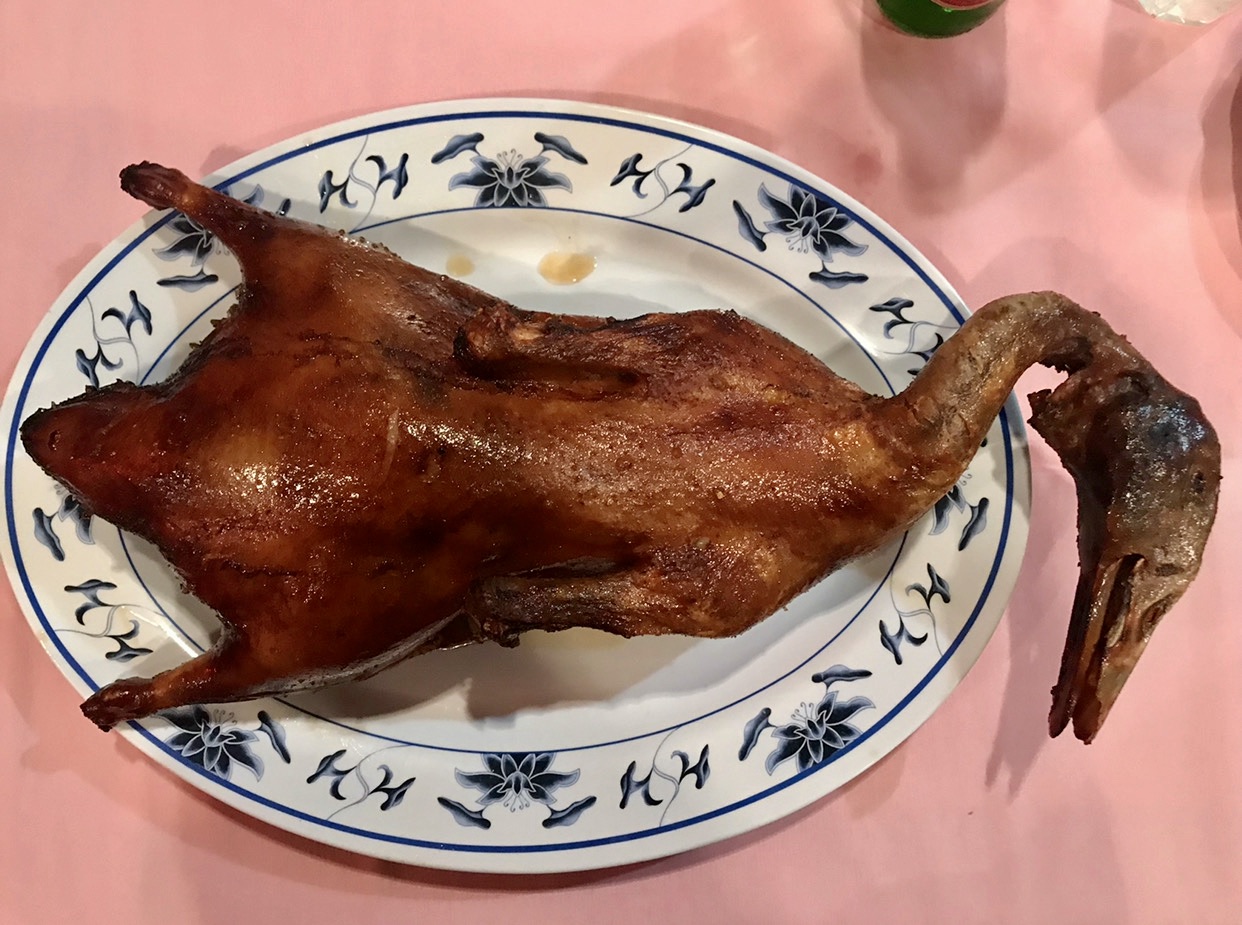
My newest article, Peking Duck Delights & Some History, is now available in the new issue of Sampan. Who doesn't love this famous Mandarin dish, with its delightful crispy skin and tender meat. Delve into the history of Peking Duck in the U.S., from its first references in 1900, to its first appearance in a Boston area restaurant in 1958. Joyce Chen was the first to bring Peking Duck to the Boston area. The article also discusses China King, owned by Doris Huang, who made one of the best Peking Duck dishes in Chinatown. Unfortunately, China King closed at the end of 2020, but I've heard that Doris intends to relocate her restaurant and bring her famous Peking Duck back to the area. 

I'm currently working on a new article for the Sampan. 

What is a "sampan?" The newspaper's site states, "A sampan is a popular river boat in traditional China. This small but useful vessel, by transporting cargo from large boats to the village ports, creates a channel of communication among villages." And like that type of boat, Sampan delivers news and information all across New England, and "acts a bridge between Asian American community organizations and individuals in the Greater Boston area."

Sampan, which was founded in 1972, is published by the nonprofit Asian American Civic Association, "The newspaper covers topics that are usually overlooked by the mainstream press, such as key immigration legislation, civil rights, housing, education, day-care services and union activities. These issues are crucial to the well-being of Asian immigrants, refugees, low-income families as well as individuals who are not proficient in the English language."

There is plenty of interest in Sampan which will appeal to all types of readers, from restaurant reviews to historical articles, from vital news stories to travel items. In these current days when racism and prejudice against Asians and their restaurants is high, it's more important than ever that accurate information about the Asian community is disseminated and promoted. We need to combat the irrational prejudices that some possess, and support our Asian communities just as we would support any other element of our overall community. We are all important aspects of a whole, and we need to stand together.

Support Sampan!

Thursday, January 7, 2021

The Origin of Chinese Duck Sauce: Did Boston "Invent" It?


If you dine at local Chinese restaurants, you’ve probably been served a container of duck sauce, a versatile sweet and sour sauce that is commonly used for dipping fried foods, from eggrolls to chicken fingers, fried wontons to crab rangoon. You might also pour some duck sauce on your fried rice or dip your pork strips in it. If you order take-out, you might receive a small plastic tub of duck sauce or maybe you’ll get tiny, rectangular plastic packets of duck sauce.

It has become such a familiar sauce that you can find it at non-Chinese restaurants too. For example, at sub shops and roast beef joints, it’s a common accompaniment for chicken fingers. At many general grocery stores, jars of duck sauce are readily available for sale, and you don’t need to go to a specialty Chinese shop. The Chinese refer to "duck sauce" by various names, including so moue jeung, soo moy jung, su-moi-jung, soo-moy ding, and shuen moy jeung.

What is the origin of this curious sauce?

It doesn’t appear anyone can definitely provide its origin story, though theories abound, most believing it acquired its name in the U.S. Many believe the sauce was possibly plum or hoisin sauce, which was renamed "duck sauce" in the U.S. because the sauces were originally a Chinese accompaniment for duck. Some theories are more specific, stating duck sauce was originally the sauce used for Peking Duck. Americans allegedly loved Peking Duck, becoming familiar with this sauce, which was renamed to make it easier for them to pronounce or understand. It's also possible that duck sauce was an American variation of plum or hoisin sauce. 

Let’s see if we can clear up some of the confusion, and locate more details of its possible origins. And could Chinese restaurants in Boston have been the first to use the term “duck sauce?”


Going back in history, we can see that plum sauce existed in the U.S., and not one based on the Chinese version. One of the earliest newspaper references was in the Buffalo Daily Republic (NY), August 29, 1849, where a family was poisoned by a plum sauce. A German silver spoon, which shouldn’t have been used, had stirred the plum sauce while it was cooking. The problem was that the mix of the silver spoon and a sour substance caused issues “as the arsenic, of which the ware is in part composed, is acted upon by the acid and dissolved, thus filling the substance with poison.

There were additional, albeit brief, mentions of plum sauces in the Marshall Statesman (Michigan), December 9, 1857, Wellsboro Agitator (PA), February 12, 1862, Ottowa Free Trader (Iowa), January 10, 1863, Brooklyn Daily Eagle (NY), January 11, 1869, and Logansport Pharos Tribune (IN), October 3, 1893. None of these references were connected to Chinese plum sauce.

One of the earliest references to Chinese plum sauce was in the Bloomington Leader (IL), January 29, 1894, in an article on the Chinese New Year. The article described a Chinese feast including “…dried mushrooms, shark’s fin, dried oysters in the shell with seaweed flavor, plum sauce, betel nuts, peanut oil which is used like olive oil, cuttle fish,..” Curiously, there was no mention of duck so maybe the plum sauce was also used for other dishes.

The Buffalo Evening News (NY), January 5, 1900, briefly mentioned a non-Chinese dinner menu that included Roast Wild Duck and plum sauce. So, some Americans were combining duck and plum sauce before the Chinese version became commonplace.

The San Francisco Call (CA), February 9, 1908, was the first newspaper to mention the specific uses of Chinese plum sauce, stating, “…sweet plum sauce, into which the Chinese dip their fish and meat,..” It obviously wasn’t restricted to using only for duck, and seemed to be a much more versatile and widely used sauce. Could plum sauce be the origin of "duck sauce?"

It’s fascinating that the first newspaper reference I found concerning Chinese “duck sauce” was in the Boston Herald, January 15, 1927. The paper mentioned a dinner at an unnamed Chinese restaurant on Hudson Street which served “sauces of soy, sauces of mustard and duck sauce.” Did the term “duck sauce” thus originate in Boston and spread from there? Very possible! It's also interesting to see duck sauce and mustard mentioned together, as it would continue to be paired together often in future references. 

Unfortunately, no details or explanation were provided on the nature of this duck sauce. It seemed that the article assumed people already knew about duck sauce. Was it a renamed plum sauce? Or hoisin sauce? Or was it a variation of one of these existing Chinese sauces? 

********************


Hoisin sauce is commonly used with Peking Duck, but it doesn’t seem a likely candidate for being “duck sauce.” From my prior history of Peking Duck, we know that Peking Duck was a rarity in the U.S. during the 1920s. It wasn’t until 1958 that the first Chinese restaurant in the Boston area served Peking Duck. So, it makes no sense that the duck sauce mentioned in Boston had anything to do with Peking duck. Nearly all of the Chinese restaurants established in the U.S. from the 19th century to the 1920s were Cantonese, and they didn’t serve Peking duck.

Peking Duck was originally created for the elite classes in the north of China while the Cantonese had their own version of roast duck, and it was popular with the common people. Cantonese roast duck was served in American restaurants, including in Boston’s Chinatown, at least as far back as the late 19th century. Plum sauce was used with Cantonese duck, so it seems a far more likely candidate for “duck sauce” than hoisin sauce.

In general, plum sauce was made from plums, sugar, vinegar, salt, and ginger but there were acceptable variations, which might include other fruits, like apricots, as well as garlic, soy sauce or other items. American Chinese restaurants might have purchased plum sauce from Chinese grocery stores, or they might have made their own, and their versions might differ from other such Chinese restaurants. So, "duck sauce" could easily be a variation of plum sauce. 

********************

The next reference to Chinese “duck sauce” appeared seven years later, in Rhode Island. The Evening Bulletin (RI), October 5, 1934, posted the above advertisement for a new Chinese-American restaurant, Hon Hong. The ad stated, "We Specialize Chinese Dishes (Boston Chinatown style) and Chinese Roast Pork Strips, Hot Mustard or Duck Sauce." As they apparently replicated what could be found in Boston's Chinatown, it makes sense that is where they also found "duck sauce." And seven years is certainly long enough for the idea of duck sauce to have spread from Boston's Chinatown to Rhode Island. 

The Evening Bulletin (RI), April 11, 1935, presented an ad for another new Chinese-American restaurant, Chen's Restaurant, and it too offered "Chinese Roast Pork Strips with Hot Mustard and Duck Sauce."

Three years later, there's the first known appearance of duck sauce in New York. The Brooklyn Daily Eagle (NY), September 19, 1938, noted that Chinese foods were becoming popular and stated that “... another favored dish is barbecued roast pork in duck sauce served with white meat chicken balls, dipped in rice flour batter and fried with black and white mushrooms, pimientos, bamboo sprouts and water chestnuts.” More duck sauce with roast pork.

Although plum sauce was used with roast duck, it wasn’t restricted to that use. The Chinese also used plum sauce with roast meats, such as pork, and that obviously carried through in their American restaurants. In fact, in many later American newspaper references, duck sauce was more often mentioned in connection with roast or barbecued pork than with duck. It actually wouldn’t have surprised me if duck sauce had been called “pork sauce” instead, as Americans were using it for pork far more than duck. In addition, duck sauce would become a common dipping sauce, accompanied by hot mustard, for egg rolls.

Returning to the theory that the name "duck sauce" originated in Boston's Chinatown,  we see that it appears to be the first documented reference of that term. Second, there wasn't another documented reference for another seven years. Why was there such a lengthy gap? That second reference was in Rhode Island, and it's easy to believe the term had spread there from Boston during that 7 year period. Plus, it then spread to New York about 11 years after its appearance in Boston. 

Other writers have thought that the term probably originated on the East Coast as it seems far less prevalent on the West Coast, and a Boston origin fits in with that belief. This is all only circumstantial evidence, but it's persuasive in some respects, especially as there isn't any evidence to the contrary. 

September 1938 also saw the publication of Cook at Home in Chinese by Henry Low (pictured above). Henry, with forty years of cooking experience in Chinese restaurants in the U.S., had been the head chef at the Port Arthur Chinese Restaurant at 7-9 Mott Street in New York City. He also may have been the inventor of the Egg Roll, the Tchun Guen (of which there is a recipe in his cookbook). During the 1930s, various newspapers stated Henry was the best Chinese cook in the country.

Low’s cookbook briefly mentioned “duck sauce” though it didn’t provide a recipe. The book stated, “Duck Sauce* (so moue jeung) A kind of chutney good with any kind of duck.” The asterisk mentioned it “May be bought at a Chinese grocery store.” So, it appears that "duck sauce" was the American name for a common Chinese ingredient and not the name for an American variation of a Chinese same. Only the name was different. Based on its Chinese name, this duck sauce also seems to be plum sauce. 

Interestingly, the book also mentioned, “Plum Sauce (hoy seen jeung) Nice to serve on plate with mustard. Good for everything.” However, the Chinese name refers to Hoisin sauce, and not what we usually think of as plum sauce. This is more evidence that duck sauce is not Hoisin sauce, or some variation of such.

During the 1940s, duck sauce started becoming mentioned a bit more, expanding to Florida, Washington D.C., Virginia, Texas, Arizona and even to Montreal, Canada. As I mentioned previously, it was being used primarily for other foods instead of duck. 

The Berkshire County Eagle (MA), May 8, 1940, printed an advertisement for The China Clipper restaurant which offered a dinner special, Barbecued Chinese Roast Pork with Duck Sauce, for 50 cents. Again, we see roast pork and duck sauce. 

The Providence Sunday Journal (RI), September 1, 1940, ran an ad for the Pagoda Restaurant, and it mentioned "Egg Rolls, Pagoda Style, Duck Sauce," for 35 cents. This might be the first mention of Egg Rolls combined with Duck Sauce, but it would later become a common pairing. 

Duck sauce in Florida! The Fort Pierce Tribune (FL), December 24, 1941, ran an ad for the Castaways' Club, which offered some Chinese specials, including "Big Boy Butterfly Shrimp with Duck Sauce and Mustard."

The Boston Globe, July 13, 1942, printed a request from a reader who was seeking a recipe for Chinese Duck Sauce. 

The Washington Daily News (D.C.), May 22, 1943, provided a "Food Tip for Hot Weather," mentioning items available at the local Ruby Foo's. The Tip was "Egg roll, sub gum (pimento, green peppers, water chestnuts, bamboo shoots, celery, mushrooms, fried noodles, cashews) with duck sauce and Chinese mustard sauce..."

The Norfolk Virginian-Pilot (VA), September 5, 1945, printed an ad for the San-Gai Chinese-American Restaurant, which stated, "Try Our Barbecue Spare Ribs and Delicious Shrimp Egg Roll. Dip with Chinese Duck Sauce and Mustard."

The Houston Chronicle (TX), January 20, 1946, also had a restaurant ad, which mentioned the dish Chin Kin, Crisp Egg Rolls with duck sauce. The ad states, “This is a delicacy that was impossible to prepare during war years due to lack of quality ingredients.” 

The Gazette (Montreal, Canada), October 8, 1947, wrote about a discussion with Chef Peter Wei, who worked at the local Ruby Foo restaurant, and he mentioned “Egg roll dipped in Chinese mustard and Chinese duck (plum) sauce...” Duck sauce in Canada? It makes sense as the Ruby Foo restaurants generally copied most of the menu items from the Boston location of Ruby Foo. 

The Arizona Republic (AZ), September 3, 1948, posted an advertisement for Cafe Virvival, which specialized in "Authentic Chinese Food Delicacies." This included "Tasty Egg Rolls (Choon Guen) with English Mustard and Duck Sauce."

Another restaurant, also in Texas, advertised in the Gladewater Daily Mirror (TX), May 15, 1949, and their menu included “Chinese Roast Pork with Hot Mustard and Duck Sauce; Chinese Barbecued Spare Ribs, Hot Mustard, and Duck Sauce; Chinese Egg Roll with Hot Mustard, and Duck Sauce.” Once again, duck sauce was used for other dishes besides duck.

It would be in the 1950s when mentions of duck sauce seemed to explode across the country. The Minneapolis Star (MN), July 12, 1950, discussed a New York City Chinese restaurant where “Chinese delegates to the United Nations, who told me that the cold roast pork with duck sauce was as fine as that served in Peking.” The Johnson City Press (TN), September 27, 1951, stated that the “soy, oyster, duck and plum sauce produced here are said to equal the imported varieties in flavor.” This article differentiated between duck and plum sauce, although they might have meant hoisin sauce rather than plum sauce.

The Evening Bulletin (RI), January 10, 1952, ran an ad for a grocery store, Wilson's Chief Market, and one of the items in their ad included "Chinese Pride" Duck Sauce, a jar for 35 cents. Back in Boston, the Boston Traveler, January 16, 1952, advertised about Ruby Foo’s Chinese foods, which included a new item, Chinese Duck Sauce. It was a “Sparkling new condiment for use on meats, fish, poultry” and sold for 59 cents for a 12 ounce container.

The first newspaper recipe for Duck Sauce also apparently appeared in the Boston Globe, February 6, 1952. The ingredients included consomme, onion, green pepper, mushroom, tomato, vinegar, sugar, soy sauce, ginger root, and broth. Other duck sauce recipes would appear in other newspapers, though this was a more unique recipe, unlike the others which would later be published. It was also mentioned in this Globe article that the Chinese serve duck sauce at their restaurants with pork or barbecued spareribs. Once again, its use with duck wasn't mentioned. 

The Brooklyn Daily Eagle (NY), May 1, 1952, published an article mentioning that duck sauce is “frequently mixed with hot mustard to use with shrimp as well as other dishes.”

Also that year, a Chinese cookbook was published with a duck sauce recipe. The Chicago Tribune (IL), July 13, 1952, noted that The Chinese Cook Book, a new book by Wallace Yee Hong, contained a recipe for duck sauce. The recipe for Duck Sauce (Soo-Moy Ding) called for 4 cups fresh plums (skins and stones removed, mashed), 3 cups fresh or dried apricots, 2 cups apples, pears, pineapples, strawberries or peaches; 1 cup of vinegar, 2 cups of sugar, and 1 cup chopped pimentos. The recipe stated, “Note: Duck sauce is a kind of chutney, used especially for roast duck. It was used for pork in the old times. Now it is used for any kind of meat or salad, also with rice.

Another recipe was provided in the Boston Traveler, September 9, 1952, for “Plum or ‘Duck Sauce.’ The ingredients were very different from the earlier Boston Globe recipe. The ingredients included 1 cup plum jelly, ½ cup chutney, 1 tablespoon vinegar; and 1 tablespoon of sugar. It was said to be served with egg rolls, shrimp, lobster, barbecued spareribs, and Chinese roast pork.

Next, the Chicago Tribune (IL), October 24, 1952, printed that “Oriental duck sauce is what the Chinese people call ‘soo moy jung’ and use to enhance the flavor of their poultry, meats and fish. The sauce is a sweet and pungent condiment, a cross between chutney and thick plum jam in flavor. Serve this sauce and a hot mustard sauce in two small dishes accompanying egg rolls, fantail shrimps, and other Chinese favorites. It’s good with spareribs and hamburgers, too.” Once again, duck isn’t one of the recommendations.

Some more brief mentions occurred in other newspapers. The Petoskey News-Review (Michigan), January 22, 1953, stated, “But most tempting were tidbit strips of pork broiled over charcoal and dipped in hot mustard and then in duck sauce.” The Brooklyn Daily Eagle (NY), May 21, 1953, mentioned, “Duck sauce, sometimes called plum sauce, so frequently served at Chinese restaurants is a popular item.”

Duck sauce was becoming so popular that non-Chinese Americans started getting into its creation. The New York Post (NY), May 21, 1953, noted that an American company was producing a new sauce, called Sparib, for barbecued meats that resembled Chinese Duck Sauce. It was said to be made with a "varied spice fruit base, the predominating flavor of which is apricot." The article also mentioned "The new sauce has many uses besides the primary one for which its name indicates it was developed." The Sparib sauce sold for about 45 to 49 cents for a 10 ounce jar.. 

The San Antonio Express (TX), July 7, 1955, published a grocery store advertisement for Sparib, noting, “Sparib Sauce (Duck Sauce) for indoor and outdoor cooking. Sparib adds that ‘very special touch’ to hamburgers, hot dogs, dish, fowl and spare ribs, too!” 

Duck sauce and egg rolls was a common combination during this time period. The Evening Star (DC), June 30, 1954, mentioned that one of their readers was seeking a recipe for duck sauce, which was often served with mustard sauce for egg rolls at Chinese restaurants.

The Fort Worth Star-Telegram (TX), May 5, 1955, provided a recipe for “Plum or Duck Sauce” from the The House of Chan Cookbook by Sou Chan, which was to be served “... with egg rolls, shrimp, barbecued spareribs and other Chinese dishes.” The recipe called for 1 cup plum jelly. ½ cup chutney (chopped very fine), 1 tablespoon vinegar, and 1 tablespoon sugar. The ingredients were then beat together until smooth. This same recipe was presented in the Staten Island Advance (NY), June 9, 1955, but the article didn't mention the source being the cookbook. 

The Houston Chronicle (TX), December 12, 1955, presented a different recipe for Duck Sauce, also called Plum Sauce. The recipe was a response to a reader's request for that recipe.

A little more definition for duck sauce was provided in the Evening Star (DC), April 12, 1956. In an article on Chinese condiments, it stated, “Su-moi-jung (duck sauce) has no connection with duck per se, but it is a favorable condiment for Chinese roast duck. It’s a blend of sweet and sour, and flavored with the aromatic juice of peaches and apricots.

Finally, duck and duck sauce. The Berkshire Eagle (MA), July 24, 1956, discussed the Chinese roast duck at the China Clipper Restaurant. The servers brought large bowls of duck sauce and hot mustard, which were to be mixed together so people could then dip their duck.

The Boston American, December 2, 1956, published a recipe for Chinese Egg Rolls, noting they were served with “Plum Sauce (also called Duck Sauce).”

The Daily Times (MD), March 29, 1957, printed an ad for Cantwell’s Oriental Foods, noting they sold Su-Moi-Jung, Chinese Duck sauce. 

The Boston American (MA), March 14, 1958, noted that "Chinese duck sauce, a popular accompaniment for a roast duck, .... is a kind of chutney which was served in olden days with pork." A recipe for Duck sauce was then provided. This recipe calls for more fruits than prior recipes. 

The Commercial Appeal (TN), November 27, 1964, noted that "Duck sauce is a dipping sauce well known to Americans, for it is served in Chinese restaurants to accompany egg roll." It also noted that hot mustard is paired with duck sauce for egg rolls. 

The Kansas City Star (MO), April 3, 1967, discussed duck sauce. “It is really a kind of chutney, which may be thinned down to suit, a sweet-sour sauce used originally for duck—hence its name—now used with pork and other meats, with the egg rolls or even over plain rice.” It is also known as soo-moy-ding and shuen moy jeung.

An interesting origin story was presented in the San Francisco Chronicle (CA), July 17, 1972. It stated, “Duck sauce is a common but incorrect spelling of Chinese Duk Sauce, which is a rather sweet sauce made of peaches, apricots, vinegar, sugar and spices. It is usually served in small dishes and often is accompanied by hot mustard.” This was the only mention I found though to "Chinese Duk Sauce.

The Alton Evening Telegraph (IL), July 21, 1971, discussed the Chinese and plums. “The Chinese have a centuries-old romance going with the plum. The first wild plums were found growing in China over 2,000 years ago, and in the years intervening, this luscious fruit has been used both in the finest Chinese art and in the finest of Chinese cuisine.” The article continued, “One of the most famous sauces of all time is Chinese Plum Sauce, used in exquisite oriental recipes for duck and pork.” So, it seems possible that duck sauce could have just as easily ended up being called pork sauce. 

During the 1970s and 1980s, a few companies, like Kari-Out (based in New York), W.Y Industries (based out of New Jersey) and Yi Pin Food Products (based out of New York), sprouted up, producing plastic packets of duck sauce. Kari-Out, founded by Howard Epstein in 1964, first started making plastic packets of soy sauce, though they initially had trouble breaking into the market. With air travel in the 1970s becoming affordable, Epstein provided soy sauce for a number of airlines, and he was also able to travel across the country and find other customers.

In 1972, Kari-Out added packets of duck sauce to their portfolio, and currently, they are one of the main producers across the country. Their orange colored duck sauce packets are ubiquitous at Chinese restaurants from coast to coast. If you examine one of their packets, you’ll see their ingredients include water, high fructose corn syrup and/or sucralose, corn starch modified, apricot (sulfited), salt, vinegar, citric acid, caramel color, 1/10 of 1% sodium benzoate, FD&C Yellow #5, #6, and FD&C Red #40.

************
We have more clarity on the origins of "duck sauce" though a definitive answer is still elusive. It seems that "duck sauce" is probably another term for plum sauce, and was used at least as far back as 1927 in Boston. Plus, it's possible that the first use of the term "duck sauce" may have originated in Boston's Chinatown, and spread across the East Coast and then westward. In the U.S., the basic plum sauce recipe may have been adapted at times, maybe because of ingredient availability or to appeal to American tastes. Duck sauce remains as popular as it ever has been, and it would be fascinating if Boston's Chinatown played a part in its creation.

(This article was Revised/Expanded on October 8, 2025.)
Wednesday, January 6, 2021

2020: Favorite Wine, Spirit, Sake and Drink-Related Items

What were some of my favorite Wine, Spirit, Sake and Drink-related related items of the past year?

Let me continue the lists of my best recommendations and favorites of 2020. I've already posted my, My Favorite RestaurantsMy Favorite Food-Related Items, and My Favorite Wines. It's time now to cover my Favorite Wine, Spirit, Sake and Drink-Related Items. As I said before, these Favorite Lists will be different, and smaller, from prior years due to the pandemic. However, there are still items deserving of being highlighted, and I will endeavor to showcase them. 

This is certainly not a complete list but it is more a sampling of compelling and memorable matters I have experienced and posted about over the past year. This is also a purely subjective list, based on my own preferences, and makes no claims about being the "best" of anything. But all of the items here have earned my strong recommendations and I hope you will enjoy them as well. For more wine related items, you can just search my blog posts for the past year.

Favorite Discount Wine Stores: Consumers always want bargains, excellent value wines which won't stretch their wallets. You can buy the cheap, mass-produced commercial wines which can be found in almost any wine store or instead, you can seek out excellent, value wines which put to shame those cheap wines. Certain discount wine stores provide not only excellent prices but also an interesting selection and good service. I want to highlight three such stores which continue, year after year, to do an especially good job, places where I go to seek bargains: Bin Ends in Braintree & Needham, Wine Connextion in North Andover, and Rapid Liquors in Stoneham. Shop at any of those stores and you won't be disappointed.

Favorite Wine Stores: This is a small list of wine stores which consistently impress me with their selection and service. Each shop is worthy of your patronage and wine lovers should make the effort to visit these places if you have not done so yet.
Lower Falls Wine Company in Newton Lower Falls
Wine-Sense in Andover
Wine Press in Brookline and Wine Press in the Fenway
Streetcar Wines in Jamaica Plain
Marty's Fine Wines in Newton
Bauer's Wine & Spirits in Boston

Favorite Wine Dinner: Each year, the Boston Wine Festival holds a series of interesting, high-end wine dinners and I attended the Wine & Soul dinner in 2020. Wine & Soul, a Portuguese winery which was founded in 2001, is owned by a husband-and-wife team, Jorge Serodio Borges and Sandra Tavares DaSilva. Sandra presided over the dinner and was personable and charming, humble and knowledgeable. They are very concerned about producing wines that reflect the terroir of their vineyards. Three of their wines from this dinner ended up on my list of Favorite Wines of 2020. In addition, Chef Daniel Bruce created a compelling dinner, from Slow Braised Pork Belly to Char-Grilled Colorado Lamb T-Bone. A great marriage of food and wine. 

Favorite Spirit Dinner: A virtual Scotch dinner? Rebecca Gardiner, the Boston brand ambassador, presided at a GlenDronach Scotch dinner over Zoom. The participants were sent samples of the Scotch and food was supplied by The Haven in Jamaica Plain. The Scotch was excellent, especially the 18 Year Old, and they were truly aged in Sherry barrels (which makes a significant difference to me). The food, from the Scotch Eggs to Fish & Chips, was delicious, and went well with the Scotch. Rebecca did a great job explaining about the distillery and its products. Overall, the event was fun, educational and very tasty. 

Favorite New Wine ListKrasi, a new Greek restaurant in Boston; opened early in 2020 and has an extensive, all-Greek wine list, with over 180 selections. It is a phenomenal list, showcasing some of the best Greece has to offer, as well as presenting many unique wines. Even the most adventurous wine lover will find wines made from indigenous Greek grapes they have never tasted before. In addition, the wines are generally more natural, often certified organic or Biodynamic. Krasi's Wine Director, Evan Turner, recently won the 2020 Iron Sommelier competition for his curated list of Greek wines.

Favorite Restaurant Wine Lists: I want to highlight several restaurants which this year offered some intriguing and excellent wine lists. 
     A Tavola: They have a small, well-curated all-Italian wine list and their wine buyer, Lynsey Robbie,  participated in my Mind of a Sommelier Interview. Some of their wines I enjoyed this year include
2016 Pietra Pinta Nero Buono, 2015 Duca di Salaparuta Lavico Nerelo Mascalese, 2014 Lorenzo Mattoni Montefalco Sagrantino, and 2016 Colombera & Garella Bramaterra
     Coach Grill: This suburban steak house has many of the typical steak house wines, as well as some more unique wines. In general, the list is reasonably priced, better than you will find at many similar steak houses. This year, I enjoyed the compelling 2017 Haute Pierre Delas Châteauneuf-du-Pape, which sold for  $97. As this wine usually sells at retail for $55-$60, the mark-up was very reasonable, and even could be considered a bargain. 
     Island Creek Oyster Bar: Laura Staley, the wine director at Island Creek, has created a fascinating wine list, with many more unique choices, and there is always something intriguing for adventurous wine lovers. This year, I was greatly pleased with the 2016 Andrew Rich Marine Sedimentary Pinot Noir from the Willamette Valley, Oregon. Pure pleasure on the palate.
     Frank: In Beverly, Chef Frank McClelland's new restaurant is one year old, and their relatively small wine list, about 35 choices by the bottle, includes Sparkling, White, Red, Rose, and Orange wines. It is fascinating list for wine lovers with lots of great choices, especially many more natural wines. I sipped the 2019 Frank Cornelisson Etna Rosato "Susucaru", which was an excellent food wine.

Favorite Cocktail Spot: Besides its impressive Peruvian cuisine, Tambo 22 also makes impressive cocktails, often using Peruvian ingredients. The Bloody Mary con Rocoto (a South American chili pepper) is delicious with a pleasing spicy kick. The 22 Old Fashioned is made with Four Roses Bourbon, Salted Honey, Peruvian Chuncho Bitters, Orange, and a Bourbon Soaked Cherry. The Chuncho Bitters are produced from a combination of over 30 peels, herbs, roots, barks and flowers from the Peruvian forest. Tasty, not overly sweet, with a nice touch of salinity and intriguing herbal notes. They make an excellent Pisco Sour, and one of their Pisco Sour variation adds Chicha Morada, a purple corn-based drink, which added a tasty, almost red berry flavor to it.

Runner-Up Favorite Cocktail Spot: Ellis Square Social also has an excellent cocktail program, presenting plenty of inventive and intriguing cocktails The Proper Mai Tai is made with a rum blend, house made orgeat, and clement shrub, and was a fruity and tasty drink. The Ellis Square Manhattan, made with a house solera bourbon, sweet vermouth, and bitters, was well-made and an excellent accompaniment with BBQ. The DB Cooper, made with white and dark rum, white peach, fassionola, honey, and grapefruit bitters, was complex and delicious.. 

Favorite Spirit/Cocktail Histories: This year, I wrote three fascinating historical articles which touched on spirits and/or cocktails. 
     Moonshine? A History of Sotol in the U.S.: Was Sotol ever legally distilled in the U.S.? Although some claim that occurred, the evidence is to the contrary, with definitive evidence that Sotol distillation, to produce alcohol for consumption, was illegal. Sotol was illegally distilled in Texas, which isn't a surprise, but legal production didn't exist. 
     Historical Tidbits About Shochu in the U.S.: Shochu, a distilled beverage from Japan, is a niche spirit in this country, although American newspapers have been writing about it for over 130 years. Check out numerous American references to Shochu, and learn more of its intriguing history.
      A History of the Sherry Cobbler (2 parts): What was the origin of the Sherry Cobbler? I present much of the history of this delicious cocktail, including a discussion of some of its origin tales. And what is Dolly Madion's connection to Sherry Cobblers?

Favorite Sparkling Sake: Produced by a female Toji, the Fukucho "Seaside" Junmai Sparkling Sake, which underwent a secondary fermentation in the bottle, had a fruity nose, especially citrus notes, with a touch of the scent of fresh bread. On the palate, it was lightly bubbly and very dry, with a complex melange of flavors, especially lemon, lime, green apple, melon, and pear. A pleasing and well balanced fruit salad, accented by a mild rice taste. It was also very crisp and fresh, a fine accompaniment to seafood, from oysters to lobster. 

Favorite Daiginjo Sake: The Nanbu Bijin "Southern Beauty" Shinpaku Junmai Daiginjomade with Yamada Nishiki rice, was an elegant, aromatic and complex Sake, with a compelling melange of flavors, including melon, strawberry, peach, and lychee, with some underlying minerality and whispers of intriguing spices. It was medium-bodied, luscious on the palate, and with a lingering finish. There was a hint of sweetness in this well balanced Sake, though overall it presented as dry. Plus, it was very reasonably priced for a Daiginjo.

Favorite Honjozo Sake: The Tensei "Endless Summer" Tokubetsu Honjozo Sake was rich and full-bodied, said to be from the high mineral content in the water used in brewing, and possessed delicious flavors of melon and pear, with an underlying salinity to it. It was essentially a briny melon, mouth-watering and compelling, and a perfect summer beverage. And its rich, bull-bodied nature also mad it a nice pairing for grilled foods.

Favorite Junmai Sake: The Takahiro Nagayama "Noble Arrow" Namazake Tokubetsu Junmai was a fascinating and complex Sake, aromatic and rich in flavor, with creamy notes and an underlying minerality. Its higher acidity was clear, providing a delightful crispness to its taste. There were flavors of melon and green apple, with a mild minty note on the finish. It reminded me of some mineral-driven French white wines, though you won't forget it was Sake. As such, it was delightful on its own, but would pair well with foods that those French whites do, such as oysters and other raw seafood.

Favorite Namazake: Produced by a 400+ year old brewery, the Ryujin "Dragon God" Junmai Daiginjo Namazume Sake undergoes a single pasteurization rather than the usual two. It is pasteurized before it undergoes a year of aging, skipping the pasteurization that commonly occurs just prior to bottling. This was a compelling and delicious Sake, with an alluring aroma of white flowers and citrus. On the palate, it was bright and fresh, with a hint of sweetness and flavors of citrus and pineapple. It was silky and light, complex and intriguing. This Sake could easily be enjoyed on its own, although it would also pair well with a variety of foods, from seafood to chicken dishes.

Favorite Sake Educational Resource: For some of the latest and most fascinating current information about Sake, you need to read the Sake Industry News by John Gauntner. It just celebrated its first anniversary, and each twice-monthly issue contains numerous intriguing news articles, sure to interest all Sake lovers, and with information you would be hard pressed to find elsewhere. I've learned plenty from this newsletter and eagerly look forward to each new issue. There's not enough Sake news available out there, and Gauntner is filling a much-needed niche. If you're interested in Sake, you definitely should subscribe. 

Favorite Drinks Book: Published in September, The Japanese Sake Bible by Brian Ashcraft, provides a comprehensive introduction for neophytes, but there is plenty more for existing Sake lovers too. Besides basic articles, there are other articles touching on Sake subjects rarely touched on by other Sake books, from seasonality to regionality. It also contains a buying guide with notes on 100 Sakes, including Sakes produced by non-Japanese breweries. This is certainly the best Sake book published in recent years.

Favorite Beer: Nashua, New Hampshire has at least a couple beer breweries and I visited a couple this past year. My favorite beer was the Mixed Berry Entanglement from Spyglass Brewing Company, This was a Kettle Soured Ale, made with raspberries, blueberries, and blackberries. A Kettle soured beer is made in stainless steel, rather than in a wooden barrel like a traditional sour, and is a much quicker process. I very much enjoyed this beer, with a delicious melange of fruit flavors, a pleasant tartness, and a clean, refreshing taste. I really liked the addition of the blueberry flavor. 

Runner-Up Favorite Beer: Also in Nashua, White Birch Brewing, produces some Berliner Weisse-style beers, which they describe as a "German style sour wheat ale." Their Berliner Weisse beers are traditionally made, as well as unfiltered and unpasteurized. My favorite was the Squeeze My Berries, made with blackberry and raspberry, and I'll note that this beer was almost named Tickle My Berries. The tasty berry flavors were bright and there was almost a bit of pulp in it. Very refreshing for the summer. 

What were some of your favorite Wine, Spirit, Sake & Drink-related items this year?

Tuesday, January 5, 2021

2020: My Favorite Wines

What were some of my favorite wines of the past year?

As 2021 has arrived, it's time to reflect upon the past year, to remember and savor pleasant memories. I've already posted a couple of my annual Favorite Lists, My Favorite Restaurants and My Favorite Food-Related Items, and it's time now to cover my Favorite Wines. As I said before, these Favorite Lists will be different, and smaller, from prior years due to the pandemic. However, there are still items deserving of being highlighted, and I will endeavor to showcase them. 

Usually, I have three lists of my Favorite Wines, divided by price point. This year, I will only have a single list, including wines at all price points. This list includes wines that not only I enjoyed, but which I also found to be particularly compelling for various reasons. They might be especially delicious, something more unique or just excellent values for the price. They all stand out, for some particular reason, above the other wines that I've tasted this past year.

This is a purely subjective list, based on my own preferences, and makes no claims about being the "best" wines out there. It is primarily the wines which spoke to me the loudest, even when they were subtle wines. These are all wines that I strongly recommend and which I believe many other wine lovers would also enjoy.

The wines are not listed in any particular order and each choice is linked to my more detailed prior review. All of these value wines are worth your consideration but please also note that the prices are approximations and the actual price may vary in your area. In addition, some of the wines might not be available in your local region, though you might be able to order them from the winery or an online store, dependent on your state's shipping laws.

Wines Under $20

1) 2016 K7 Plavac Mali ($19)
This wine was a joint effort from 7 wineries in the Komarna region of Croatia. Made from 100% Plavac Mali, it's certified organic, has a 14.5% ABV, and was aged for 24 months in a combination of Croatian, American and French oak barrels. It possessed a medium-red color, slightly translucent, and the initial aromas included black fruit and subtle spice. This wine presented an interesting complex melange of flavors, including blackberry, plum, blueberry, black pepper, hints of vanilla, and a touch of chocolate. It also possessed a lengthy, satisfying finish, pure deliciousness. The tannins were moderate, and it was a wine that's probably best accompanied with food, something hearty, a juicy steak or even just a burger. This wine was a very good value and an excellent introduction to Croatian wines and the Plavac Mali grape. 

2) 2018 Yamhill Valley Vineyards Rosé of Pinot Noir ($16-$18) 
This Oregon wine was fermented in stainless steel, and then aged for three months, 95% in stainless steel and 5% in neutral oak. With a 13.8% ABV, this wine had a rich pink color and a pleasing nose of red fruits. On the palate, it was dry and crisp, with delicious and complex strawberry, watermelon, cherry and mild citrus flavors, and a hint of herbal notes. It was fresh and clean, with a satisfying finish, and would be excellent on its own or paired with food. This would be great with seafood, pizza or even hamburgers. 

3) 2016 Karabunar "Bulgarian Heritage" Dimyat ($12-$15)
An intriguing Bulgarian wine, made with 100% Dimyat, an indigenous grape, and with a 13% ABV. On the nose, there were intriguing spice notes that reminded me a little of Gewurtztraminer. There were also some notes of pear and citrus. On the palate, I was again reminded in part of a Gewurtztraminer, with a nice spice element, along with tasty notes of pear, citrus and toasted nuts. Very crisp and with a moderate richness, it was a pleasant and refreshing wine. At this price, it's an excellent value, over-delivering for this price point.

4) NV Keush Origins Brut ($19.99)
An Armenian Sparkling wine made from two indigenous grapes, 60% Voskehat and 40% Khatouni. It was produced by the Méthode Traditionelle, aged for at least 22 months on the lees, and had a 12% ABV. When you taste this bubbly, it will remind you of Champagne. This was a serious sparkling wine. It was dry, fresh and crisp, with a complex melange of flavors, including peach, pear, citrus, white flowers and a touch of brioche. It had a creamy and rich texture, pure pleasure on the palate. It had a lingering and clean finish and over delivered at this price point.

5) 2019 Oenops Apla Dry Rosé ($14.99)
From Greece, this Rosé is a blend of indigenous grapes, 50% Xinomavro, 30% Limniona, and 20% Mavroudi, all from sustainable vineyards which are 15-45 years old. The grapes were fermented in concrete tanks and the wine wass aged on the lees for about four months before bottling. This Rosé was easy drinking, though it was far from simple, being fairly complex, especially at its low price point. With a 12.8% ABV, this Rosé had a rich pink color and an appealing nose of red fruits and citrus, and a savory hint. On the palate, it was crisp and dry, with delicious flavors of strawberry, cherry and hints of savory, almost a touch of tomato. The finish pleasantly lingered and it was a nicely balanced wine. 

Wines From $20 to $50

1) 2018 Amity Vineyards White Pinot Noir
($25)
Another Oregon wine, this Pinot Noir was lightly pressed, fermented in stainless steel and then aged sur lie for a time. At 13.9% ABV, this wine had a light pink color, almost like a Rosé, and on the nose, there was a blend of white fruit flavors, including tropical notes. Take a sip and you'd be impressed with its complex melange of rich fruit flavors, including melon, pear, pineapple and a hint of cherry. There was so much happening in your glass. Everything was well balanced and it was pure delicious, definitely excellent on its own though it would pair well with food too. Good acidity, a lengthy, pleasing finish, and you'll crave a second, and third, glass. 

2) 2017 Hyland Estates Old Vine Pinot Noir ($45)
Also from Oregon, this Pinot Noir, with a 13.3% ABV, spent about 9 months in French oak. With a medium red color, it possessed an appealing aroma of red fruits and subtle spice notes. On the palate, it was compelling and elegant, complex and silky, with delicious flavors of cherry and raspberry, with a mild spiciness, balanced acidity, well integrated tannins, and a touch of earthiness. The lengthy finish was satisfying and alluring, and beckoned for you to take another sip. 

3) 2018 Wine & Soul Guru Branco (about $35)
From the Douro region of Portugal, this compelling white wine was produced from a field blend, from a 60 year old vineyard, which is approximately 25% Viosinho, 25% Rabigato, 25% Codega do Larinho and 25% Gouveio. The wine was fermented and aged in French barriques for about seven months. With a 12.5% ABV, this wine was fresh, crisp and delicious, with a complex blend of flavors, including peach, grapefruit, mineral notes, and a touch of oak. Medium-bodied, it possessed a pleasing finish and a nice elegance. Would love to pair this wine with seafood, from oysters to cod.

4) 2014 Yamhill Valley Vineyards Pinot Noir Reserve ($40) 
Once again, an Oregon wine hits this list. This Pinot was a select barrel blend, aged for sixteen months in French oak, about 20% new. With a 14.3% ABV, it had a light ruby red color, with an alluring aroma of red fruits and subtle spices. On the palate, it presented a complex melange of flavors, bright cherry, a touch of vanilla, a mild, spicy backbone, and a hint of clove. The finish was lengthy and pleasing, with a bit more spice. Medium-bodied, interesting and delicious. 

5) 2018 Hamilton Russell Pinot Noir ($42)
South Africa can produce excellent Pinot too. The wine was aged for about ten months, in a variety of French oak barrels, and was a pleasant red wine to drink and you can easily have a second, or even third glass over the course of an evening. With a dark red hue, though still partially opaque, the wine had an alluring nose of red fruits and spice, a mild floral note and a hint of earth. On the palate, it was smooth and silky, with an intriguing complex melange of flavors, including strawberry, cherry and plum, mild spice notes (including a peppery aspect), and a subtle, underlying earthiness. Nice acidity, a clean taste, and a lengthy, satisfying finish. Simply delicious.

6) 2019 Greek Wine Cellars Flowers Assyrtiko (about $25)
A Greek white wine, it had a 13% ABV with a pleasing aroma of citrus. From your first sip, you would be entranced by its freshness, crisp acidity, lemon and apple notes, and its mineral backbone. There was an interesting complexity to the wine as well, elevating it above some of the simple Assyrtiko you might find. All of its elements worked harmoniously together and it was simply delicious and refreshing, a great choice for seafood or other light fare. 

7) 2018 Éric Teixer Chat Fou Côtes du Rhône (about $23)
This French Rhône wine was a blend of 85% Grenache and 15% white grapes, including Clairette, Viognier, and Chasselas. The grapes were fermented with native yeasts in concrete tanks, and it then was aged for a year in concrete. The wine was certified organic, unfiltered, unfined, and had a 13% ABV.  The wine was intended to be fresh and light, and it certainly accomplished that objective. It had an alluring fruity nose, with hints of spice. If you took a few moments to ponder over the wine, you would realize it offered some intriguing complexity. It was an easy drinking wine but it was far from simple. Besides the delicious red fruit flavors, cherry and raspberry, there were spice notes as well as a subtle minerality. It was a well balanced wine with a very pleasing finish, excellent acidity.

Wines Over $50

1) 2017 Wine & Soul Pintas (about $90)
The grapes for this Portuguese wine were foot-trodden, and the wine aged for 22 months in French barriques. With a 13.7% ABV, this wine first evidenced a seductive aroma, subtle and complex, drawing you into its beauty. On the palate, there was an intriguing and absolutely delicious melange of complex flavors, such as ripe plum, blackberry, blueberry, mild spice notes, a few floral hints, and a touch of earthiness. Full-bodied and bold, yet elegant, with well-integrated tannins and a delightfully lengthy finish. Well-balanced and compelling, this was a superb wine, certainly evidence that Portugal can make world-class wines. It was an amazing pairing with lamb. This is also a wine that should age well for many years to come, something definitely you should add to your wine cellar. It earns my highest recommendation.

2) 2017 Wine & Soul 10 Year Old Tawny Port ($55)
Also from Wine & Soul, this Port was aged closer to 15 years, spending time in 50+ year old, 630 liter, chestnut barrels. At 19.5% ABV, its nose was compelling, with a subtle sense of sweetness amidst dried fruit and nut notes. On the palate, the Port was more dry, with only a hint of sweetness, and possessed a complex and beguiling flavor profile, with elements of dried fruit, cherry, salted nuts, honey, caramel, earthiness, and more. It drank more like a 20 year-old Port, being well balanced and well integrated, and I could have sat there all evening just sipping this Port. I can easily understand how this Port could convince more people to drink it, especially as it was more dry than sweet. This Port also earns my highest recommendation. 

3) 2014 Dominio Fournier Reserva ($50)
This Spanish wine, made from 100% Tinta del Pais, was fermented in stainless steel and wooden vats, and aged in French oak barrels for at least 18 months. With a 15% ABV, this wine had a dark red, nearly black, color with an intriguing aroma of black fruit, intense spice, and a touch of smokiness. On the palate, it was a powerful wine, yet with restraint, as the tannins weren't overpowering and it possessed a complex and concentrated melange of flavors, including plum, black berry, dark spices, a little earthiness, and more. Well-balanced, a lengthy, satisfying finish, and nice acidity. This was a wine best paired with a juicy steak, or similar hearty dish. 

************

Nine countries/regions made the list this year, and Oregon took the lead with four spots with Portugal a close second with three spots. Greece came in third with two spots, while Croatia, Bulgaria, Armenia, South Africa, France, and Spain all had a single spot. As for wine types, the list is also broken down into two Rosé, four Whites, seven Reds, one Sparkling, and one Fortified. I have other wine recommendations on my blog and you just have to search for them. 

If you have some of your own recommendations for excellent wines you've enjoyed, please add them to the comments.

Monday, January 4, 2021

Rant: Forget Useless Predictions


It's now 2021 and you'll hear plenty of predictions for this New Year, but not from me.

Predictions for the New Year are basically useless. At the end of the year, nearly all of those predictions will have failed to come to fruition and even those that did are probably due more to luck than any actual ability to predict the future. You would have just as much success by reading tea leaves or the entrails of goats. I know that if I devised my own predictions, they too would probably fail. 

We all hope that 2021, once we get a better handle on battling the pandemic, will usher in positive changes to the local food & drink industry. Instead of offering any predictions, I'm going to provide a list of ten of my desires, those trends, issues and items which I would love to see step forward and take precedence in 2021, though I'm not predicting they will actually come to fruition. Some of these items I've been wanting for many years to happen and they still haven't become a trend. I think we would all benefit if any of these desires were fulfilled.

We possess the ability to make these desires come true. They pose valuable opportunities for entrepreneurs and others to step up and make their mark. They are matters we can demand and promote, matters we can hound restaurant owners, legislators and others to pursue. We can make our future become a reality.

1) More Bread Pudding  
Bread pudding is relatively easy to make and can be inexpensive as it can be made with day old bread. Plus, it is a diverse dish that can be made in a wide variety of flavors, with different sauces, and accompaniments. I've had some superb bread puddings at local restaurants, and would like to see more restaurants offering it on their dessert menus. However, I also think there is a great opportunity for an enterprising baker to open a Bread Pudding Bakery. They exist in other parts of the country so why not in the Boston area? Skip opening another damn cupcake bakery, think outside the box, and opt for a bread pudding bakery instead. I've been pushing for this for several years and it still hasn't caught on. Why not?

2) Less Powdered Sugar
Stop using so much powdered sugar, covering pancakes and French toast, adding even more sweetness to sweet desserts. It doesn't make those dishes look more appealing to have a plain white powder on them. In fact, it acts to hide the natural look of the desserts, concealing their true nature. And adding it to sweet desserts is unnecessary as they are already sweet enough. It's overkill. Yet chef after chef still uses it and that needs to stop, especially its use on pancakes and French toast. Find other ways to make your food look better. Find a better way to make your desserts sweeter if that is what you really want to do..   

3) More Breakfast Pizza
A breakfast pizza, such as with potatoes, bacon, cheese and a fried egg, can be absolutely delicious. It isn't a difficult dish to create yet you won't find it available on many menus. Think of all the pizza joints you know and then consider which ones make a breakfast pizza. You might know one or two, at best. So why isn't it more popular and available? It is puzzling to me and it seems such a no-brainer. People love pizza so why wouldn't they also love a breakfast pizza? This too seems to be a missed opportunity for many so I hope more restaurants decide to add these to their menu.

4) More Duck Wings
Chicken wings get all the attention and you can find them in many different restaurants, often as an appetizer. There are even restaurants that specialize in chicken wings. Part of the reason for their ubiquity is likely that they are usually inexpensive. However, duck wings can be so much tastier than chicken wings, yet it is very difficult to find restaurants which offer them. Let's see more restaurant start offering duck wings on their menu, showing their taste and versatility. 

5) More Filipino Restaurants & Dishes
This is another matter I've been ranting about for several years. There is a dearth of Filipino cuisine both locally as well throughout the U.S., though a few regions seem to be opening several new Filipino restaurants. With only a few Filipino restaurants in the Boston area, there is a huge opportunity here for more Filipino spots. Or if even not an entire restaurant, maybe we could see more Filipino inspired dishes on other menus. This is also applicable to a number of other cuisines of which Boston doesn't have enough representation, like Peruvian, Croatian and Georgian. 

6) More Local Seafood
Something is seriously wrong as the U.S. imports over 90% of their seafood. Where is the love for domestic seafood? There is plenty of sustainable and delicious domestic seafood available and more of it needs to be served at restaurants and eaten at homes. For example, why serve Asian shrimp, especially considering problems such as the Thai slavery scandal, when Gulf shrimp can be just as good? We should support local fishermen and our local economy by buying more local seafood. Local seafood is also more traceable, so you know where it has been counter to imported seafood which can have a much murkier origin. Price alone shouldn't be the reason to opt for imported seafood.

7) More Sake At Non-Asian Restaurants
In the Boston area, Sake is largely confined to Asian restaurants and there is no reason why that should be the case. Sake pairs well with all sorts of cuisines, from Italian to French, Barbecue to Burgers. I've previously written about The Science of Sake & Food Pairings, explaining reasons why it pairs so well with varied cuisines. For Sake to become more popular and mainstream, we need more restaurants to carry and promote Sake. Tasting Counter is one of the courageous outliers, a non-Asian restaurant with multiple Sakes on their menu. Sake is not just for Sushi!

8) More Love For Niche Wines
So many excellent wines get largely ignored by the general public, and even by a significant number of wine lovers. I want to see more people willing to expand their palates and explore these niche wines, from Sherry to Georgian wines, from Crémant d'Alsace to Croatian wines, from Port to Greek wines. Why do you restrict your drinking when you could be sampling all of the world's wine bounty? We need more restaurants adding these niche wines to their lists, and then promoting them to their customers. We need more wine bloggers to write about these wines, persuading their readers to check out these niche wines. You'll find so many interesting and delicious wines if you break out of your usual drinking patterns and try something new.

9) More Food Pairings With Bubbly
Sparkling wine actually pairs well with numerous food dishes yet most people drink it only as a celebratory wine or as an aperitif. More people should try pairing sparkling wine with a variety of dishes, to learn how well it can pair with their dinner. We also need restaurants and wine sommeliers to start making recommendations for sparkling wine for various menu items. Whenever I've sought a wine recommendation from a sommelier, only rarely have they have offered a Sparkling wine recommendation. Sparkling wine even pairs well with simple foods, like potato chips! Why not set up a Sparkling Wine tasting with various flavored potato chips. 

10) More Mezcal Bars
There are plenty of Tequila bars in the Boston area, and even those which do not specialize in Tequila often carry a significant selection of Tequilas. However, there are only a handful of Mezcal bars, places which carry at least 20 different Mezcals. Mezcal is the ancestor to Tequila, but Tequila somehow receives most of the attention. With about 100 different bottlings available in Massachusetts, there are plenty of Mezcal options for bars and restaurants to carry. Mezcal is often traditionally produced, can be made from numerous types of agave, and can be complex and delicious, unique and compelling. Mezcal needs far more attention and consumers will embrace it once they realize its wonders.

What food & drink trends would you like to see in 2021?