"We are not so much using Hamilton Russell Vineyards to make Pinot noir and Chardonnay as we are using Pinot noir and Chardonnay to express the beauty and personality of Hamilton Russell Vineyards. Our terroir, in effect, "chose" these varieties as its most individual and beautiful expression.”
--Anthony Hamilton Russell
When wine lovers think about the grapes of South Africa, they usually first think of Chenin Blanc, Pinotage, and Shiraz. They might then consider Cabernet Sauvignon and Chardonnay, Merlot and Sauvignon Blanc. Pinot Noir generally is not one of the grapes that quickly comes to mind, but maybe it should as there are South African wine regions which produce high quality Pinot Noir, though they don't often receive the attention they deserve.
It's believed that Pinot Noir was first planted in South Africa in 1927, in the Stellenbosch region, but it wouldn't be until the 1970s and 1980s that the true potential of Pinot Noir began to become realized. Currently, only a little over 1% of the vineyards in South Africa are planted with Pinot Noir so it remains more of a niche grape, but that doesn't mean it should be ignored. And Hamilton Russell Vineyards produces one of the best Pinot Noir wines in South Africa.
Hamilton Russell Vineyards was founded in 1975 by Tim Hamilton Russell, who purchased 170, undeveloped hectares in the Walker Bay region. Tim sought out a cool climate, southerly site, desirous of planting Pinot Noir. Hamilton Russell is currently the most southerly winery in South Africa as well as the closest to the sea, only about 3 kilometers. The cool breezes that come in off the ocean make this the coolest region in South Africa.
This wine region is now known, since 2006, as Hemel-en-Aarde (which means "heaven and earth" in Afrikaans), and there are three wards within this area. This region, because of its closeness to the sea, has a maritime climate, and Pinot Noir and Chardonnay thrive here. Hamilton Russell is within the Hemel-en-Aarde Valley ward, and they were the first winery established within this region, with their first vintage in 1981.
Tim's son, Anthony Hamilton Russell, took over the reins of the winery in 1991, now working with his wife, Olive, winemaker Emul Ross and viticulturist Johan Montgomery. The winery only makes estate wines from Pinot Noir and Chardonnay, though they have a couple other labels for other grapes. I've been a fan of their Pinot Noir for over 12 years, though it hasn't always been easy to find it on the shelves of local wine shops.
I recently received a media sample of then 2018 Hamilton Russell Pinot Noir ($42) and I was impressed with it, as I've long been with their other vintages. The wine was aged for about ten months, in a variety of French oak barrels, including 35% 1st fill, 47% 2nd fill, and 18% 3rd fill, of various toast levels. With only a 13.5% ABV, this is a pleasant red wine to drink and you can easily have a second, or even third glass over the course of an evening. With a dark red hue, though still partially opaque, the wine has an alluring nose of red fruits and spice, a mild floral note and a hint of earth.
On the palate, it's smooth and silky, with an intriguing complex melange of flavors, including strawberry, cherry and plum, mild spice notes (including a peppery aspect), and a subtle, underlying earthiness. Nice acidity, a clean taste, and a lengthy, satisfying finish. Simply delicious. This Pinot Noir can compete with wines made in any other region of the world. I paired this wine with salmon, in a garlic-teriyaki sauce, and it was an excellent pairing. This wine is certainly ready to drink now, though I'd love to see it with some age too.
Hamilton Russell Pinot Noir remains one of my favorite Pinot Noir producers and you really need to taste their wines and understand how South African Pinot Noir can excel.
For Over 18 Years, and over 5600 articles, I've Been Sharing My Passion for Food, Wine, Saké & Spirits. Come Join Me & Satisfy Your Hunger & Thirst.
Monday, May 4, 2020
Thursday, April 30, 2020
GlenDronach Scotch: Compelling Sherry Maturated Whisky
With the pandemic and social distancing, there aren't any wine dinners, tastings, seminars or similar such offline events. So, some companies are getting more creative, with virtual events, often using Zoom. Recently, the GlenDronach Distillery hosted a virtual Scotch dinner, inviting several writers to participate. Each writer was sent a dinner from The Haven, a Scottish tavern in Jamaica Plain, as well as two bottles of GlenDronach Scotch. Then, we dined and drank together on Zoom, as we learned more about GlenDronach from Rebecca Gardiner, their Boston Brand Ambassador.
Let's begin with a little history of the GlenDronach Distillery. The Aberdeen Journal (Scotland), April 27, 1853, reported the passing of James Allardes (also known as James Allardice), who was 82 years old. In the 1790s, Allardes started his career as a farmer in the Forgue region, part of the Aberdeenshire. The obituary also stated, "In the year 1825, the Glendronach distillery, whose mellow spirit has rendered the name familiar to all ears, was set on foot, mainly through the active cooperation of Mr. Allardes;..." Thus, GlenDronach is one of the oldest legal distilleries in Scotland.
This announcement, from the Aberdeen Journal (Scotland), September 6, 1826, is one of the earliest notices from the distillery concerning their Whisky for sale.
The Aberdeen Journal (Scotland), March 21, 1827, presented some statistics on Scotch distilleries, noting the total gallons of proof spirits made from malt only from January 5, 1826 to July 5, 1826. During this period, Glendronach produced 17,728 gallons. The Aberdeen Journal (Scotland), August 13, 1828, presented similar statistics, for the period from October 10, 1826 to October 10, 1827, and Glendronach produced 31,329 gallons.
The Caledonian Mercury (Scotland), February 27, 1830, reported there was a significant fire at the GlenDronach distillery, which began in the still-house. "The fire baffled every attempt to extinguish it, and in a short time completely destroyed the principal building, with the stills, utensils, and stock in it, leaving only the bare walls." The distillery was rebuilt, only slowed down a bit, and there was still plenty of stock for sale.
One of the first ads in the U.S. for GlenDronach was in the Daily News (NY), November 26, 1935. The ad noted that the Scotch was over 7 years old, and originally priced at $3.60 but on sale for $2.79. In the second half of the 1930s, other ads also popped up in both Massachusetts and Texas. This may have been the initial period when GlenDronach first started getting exported to the U.S.
The GlenDronach distillery is located in the Valley of Forgue, deep in the East Highland hills, and was named after the Dronac burn, a river that flows through the property. It's a very old-style distillery, and it's said they "run on GlenDronach time," a much more relaxing pace. For example, they own four huge pot stills with saxophone-like necks, and those necks take more time, slowing down the entire production process. And that is what GlenDronach prefers.
Over the course of the event, Rebecca Gardiner led us through the tasting, telling us the history and philosophy of GlenDronach. Her passion and knowledge were quite clear, and she also possessed a fine sense of humor. She made it fun, while also ensuring it was informative. At one point, she said that "Scotch is the Shakespeare of spirits." For some people, they get snobby about whisky and other people tend to avoid and fear it. Glendronach wants to make Scotch more approachable, to break down those artificial barriers and share it with everyone.
One of the ways they seek to make Scotch more accessible is through the use of maturation in Sherry barrels. Allardice himself used Oloroso Sherry barrels for aging, and the distillery eventually added, during the 1920s, the use of Pedro Ximénez (PX) barrels. Currently, they are the biggest user of PX barrels in the Scotch industry. Rather than just use Sherry barrels for finishing aging, they choose to use Sherry barrels for the entire length of maturation, which most other distilleries don't. These barrels are expensive, far more expensive than used bourbon barrels which are the norm, but GlenDronach is more concerned about the quality than the cost.
As I've previously discussed, I'm passionate that whisky producers should not place the term "Sherry" on their labels unless they are using authentic Sherry barrels, from the Jerez-Xérès-Sherry DO. "Sherry," like the term "Scotch Whisky," is a Protected Geographical Indication (PGI), worthy of respect and legal protection. Some whisky producers use barrels acquired from Sherry-style producers outside of the Jerez-Xérès-Sherry DO, and they wrongfully refer to them as "Sherry" barrels. That use violates the law and it shows a lack of transparency on behalf of the producer who is concealing the true nature of the barrels they used.
I asked about the sourcing of GlenDronach's Sherry barrels and I was pleased and impressed that all of their barrels are authentic Sherry barrels from the Jerez-Xérès-Sherry DO, and each barrel is traceable to its bodega in Jerez. This is very important to me, and GlenDronach is definitely a leader in this regard, respectful of the Sherry PGI and concerned about the true nature of the barrels they use for their maturation. Kudos to GlenDronach!
The Master Blender at GlenDronach is the famed Rachel Barrie, who has been in the whisky business for about 25 years, having begun her long career at Glenmorangie. In 2017, she became the Master Blender at the BenRiach Distillery Company, responsible for three distilleries, including BenRiach, Glenglassaugh and Glendronach.
Rather than call herself a Master Distiller, she prefers the term Master Blender, as she feels it is more reflective of her actual work. And as she has nosed and tasted over 150,000 whiskies, she brings an immense wealth of knowledge to her position. As I've long said, the art of blending doesn't always receive adequate appreciation, despite its importance to so many alcoholic beverages. It takes great skill and knowledge to be a proper blender, creating exactly what flavor profile is desired.
In many respects, GlenDronach flies under people's radar, especially as its production is relatively low, roughly 145,000 cases annually. The big names in the Scotch industry commonly produce millions of cases of whisky, so they get far more attention that a small distillery like GlenDronach. However, they recently received some serious attention, which may cause many Scotch lovers to start seeking out GlenDronach. At the San Francisco World Spirits Competition, held in March 2020, the GlenDronach Revival 15 Year Old Scotch won for "Best In Show Whiskey." Quite an honor.
Rebecca mentioned that "Scotch is very subjective," that different people will smell and taste different elements within the same Scotch. She also advised that you shouldn't add ice to your Scotch as it tends to dilute the whisky and freeze the Sherry aspect. Adding a little water is fine, but you might want to avoid ice. In addition, Rebecca stated that different foods bring out different flavors in Scotch, which can be fun to experiment with, to try out different pairings. And those pairings don't have to be fancy, like caviar and oysters, but can be simple, like a tasty fish & chips. I fully support these ideas, and have mentioned before that spirit-paired dinners can be fun and delicious.
The food provided by The Haven was tasty, and appealed to me enough that I want to dine at the restaurant once our current situation changes. I'm a big fan of Scotch Eggs, and the allspice in the coating around the eggs helped to bring out the allspice flavors on the Scotch.
The Fish & Chips offered a nice, flaky piece of white fish, with a pleasing batter, and large potato slices. As Oloroso Sherry often pairs well with fried items, the Scotch, matured in Oloroso barrels, benefited from that pairing. Now I'd like to pair that Scotch with fried clams from the Clam Box in Ipswich.
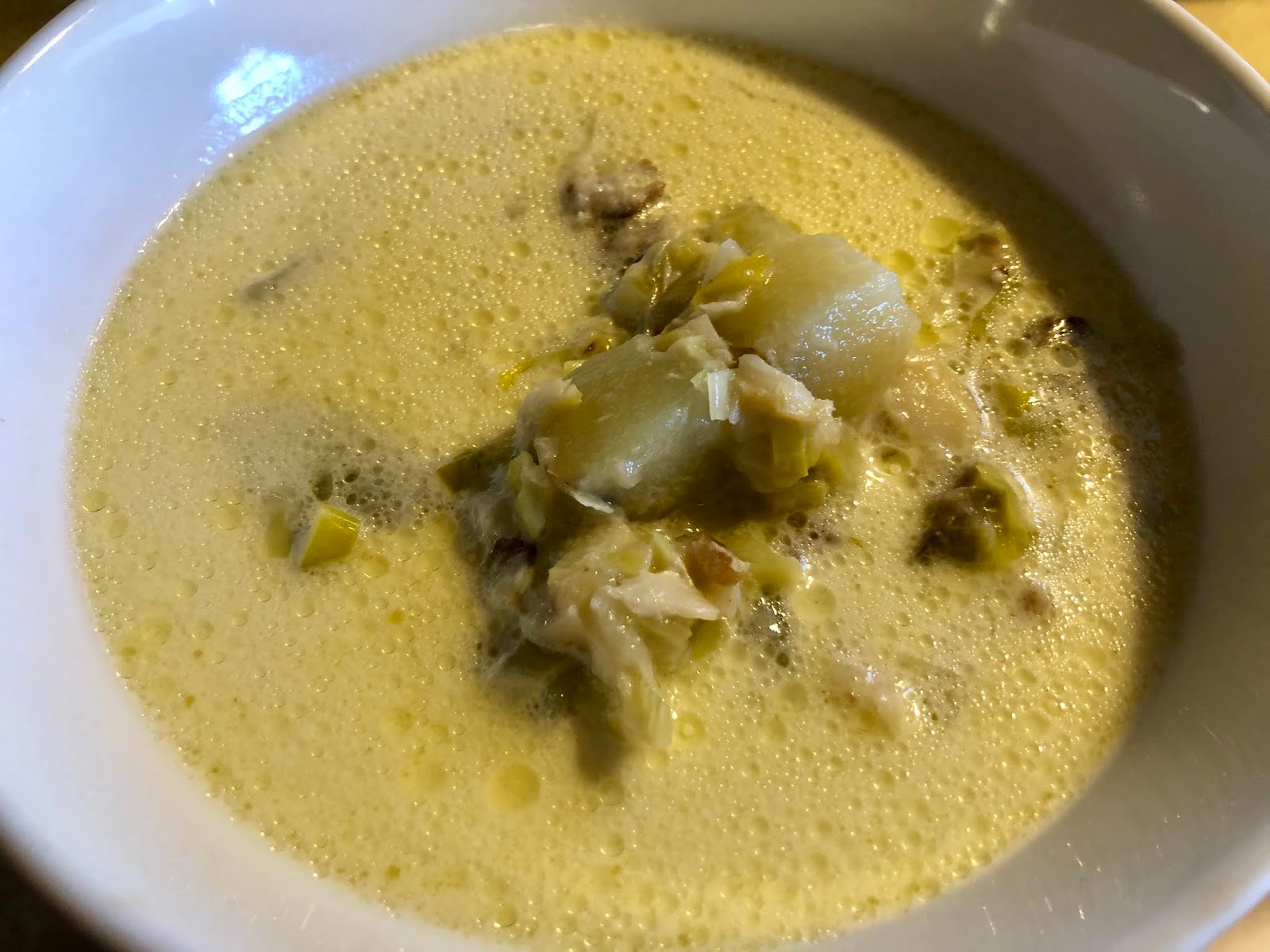
The Fish Chowder was tasty too, with plenty of fish and potatoes, and a savory and buttery broth, which also was intriguing with the Scotch. And it was true that each of these dishes brought something different out of the Scotch.
The creamy Haddie Spread, with Oatcakes, was flavorful as well, and the oatcakes also made for an excellent palate cleanser.
Scotch and cheese? Yes, this was a fine pairing too. With the Dubliner, we paired the 12 Year Old, and the sharpness of the cheese helped to bring out vanilla notes and creaminess in the Scotch. The butteriness of the cheese also drew out the Oloroso notes. With the Gorgonzola, we paired the 18 Year Old, and the mild sweetness of the Scotch contrasted well with the pungency of the cheese. Port and Blue Cheese has always been one of my favorite pairings, but I think I need to explore more Scotch and Blue cheese pairings.
The GlenDronach 12 Year Old Single Malt Scotch ($62.99) was aged in a combination of Pedro Ximénez (PX) and Oloroso Sherry casks and has a 43% ABV. It's important to note that GlenDronach doesn't add any caramel coloring to their whiskies, and that their color is all natural, imparted only by the barrel maturation. With a light amber color, this whisky presented with an intriguing nose that would remind you of Sherry, with some sweet, raisiny notes of PX and the nuttiness of an Oloroso. On the palate, the Scotch was smooth, creamy, dry and full-bodied, with a complex melange of flavors, including vanilla, dried fruits, hints of citrus, spice notes, and plump raisins. The finish was lengthy and pleasing, with the Oloroso elements becoming even more prominent. Overall, a delicious and compelling whisky, which would make for an excellent introduction for those new to Scotch, but which would also please Scotch lovers.
The GlenDronach Allardice 18 Year Old Single Malt Scotch ($179.99) was aged solely in Oloroso Sherry casks and had a 46% ABV. Rebecca stated this was her favorite, and that sipping it brought her home. She also recommended that you should let this Scotch breathe for about 20 minutes before drinking, to bring out its best aromas and flavors. It had a darker amber color than the 12 year old, and its nose was complex and alluring, with plenty of spice, chocolate notes, and nutty elements. The Oloroso aspect was noticeable and pleasing, especially to a Sherry lover like myself.
When I tasted this Scotch, I was immediately enamored with its complexity and fine taste. It was silky smooth, seductive on the palate, and each sip brought different notes to my mind. There were baking spices and salted nuts, chocolate notes and ripe fruit notes, honey and vanilla, sweet and bitter, and so much more. The finish was incredibly long, extremely satisfying, and beckoned you like a Siren to sip more. I loved this Scotch and its Oloroso notes, and continued sipping it long after the tasting event concluded. Highly recommended, and well worth the splurge.
GlenDronach makes other whiskies as well, including the Parliament 21 Year Old, the Cask Strength Batch 8, and the Grandeur Batch 10 (a 27 Year Old Scotch). I have great respect for the whisky-making philosophy of GlenDronach, especially concerning their use of only authentic Sherry barrels. And their Scotches are delicious and complex, compelling spirits which are worthy of much more attention than they receive. Their 18 Year Old Scotch is a rock star, and has become one of my new favorite whiskies.
Let's begin with a little history of the GlenDronach Distillery. The Aberdeen Journal (Scotland), April 27, 1853, reported the passing of James Allardes (also known as James Allardice), who was 82 years old. In the 1790s, Allardes started his career as a farmer in the Forgue region, part of the Aberdeenshire. The obituary also stated, "In the year 1825, the Glendronach distillery, whose mellow spirit has rendered the name familiar to all ears, was set on foot, mainly through the active cooperation of Mr. Allardes;..." Thus, GlenDronach is one of the oldest legal distilleries in Scotland.
This announcement, from the Aberdeen Journal (Scotland), September 6, 1826, is one of the earliest notices from the distillery concerning their Whisky for sale.
The Aberdeen Journal (Scotland), March 21, 1827, presented some statistics on Scotch distilleries, noting the total gallons of proof spirits made from malt only from January 5, 1826 to July 5, 1826. During this period, Glendronach produced 17,728 gallons. The Aberdeen Journal (Scotland), August 13, 1828, presented similar statistics, for the period from October 10, 1826 to October 10, 1827, and Glendronach produced 31,329 gallons.
The Caledonian Mercury (Scotland), February 27, 1830, reported there was a significant fire at the GlenDronach distillery, which began in the still-house. "The fire baffled every attempt to extinguish it, and in a short time completely destroyed the principal building, with the stills, utensils, and stock in it, leaving only the bare walls." The distillery was rebuilt, only slowed down a bit, and there was still plenty of stock for sale.
One of the first ads in the U.S. for GlenDronach was in the Daily News (NY), November 26, 1935. The ad noted that the Scotch was over 7 years old, and originally priced at $3.60 but on sale for $2.79. In the second half of the 1930s, other ads also popped up in both Massachusetts and Texas. This may have been the initial period when GlenDronach first started getting exported to the U.S.
The GlenDronach distillery is located in the Valley of Forgue, deep in the East Highland hills, and was named after the Dronac burn, a river that flows through the property. It's a very old-style distillery, and it's said they "run on GlenDronach time," a much more relaxing pace. For example, they own four huge pot stills with saxophone-like necks, and those necks take more time, slowing down the entire production process. And that is what GlenDronach prefers.
Over the course of the event, Rebecca Gardiner led us through the tasting, telling us the history and philosophy of GlenDronach. Her passion and knowledge were quite clear, and she also possessed a fine sense of humor. She made it fun, while also ensuring it was informative. At one point, she said that "Scotch is the Shakespeare of spirits." For some people, they get snobby about whisky and other people tend to avoid and fear it. Glendronach wants to make Scotch more approachable, to break down those artificial barriers and share it with everyone.
One of the ways they seek to make Scotch more accessible is through the use of maturation in Sherry barrels. Allardice himself used Oloroso Sherry barrels for aging, and the distillery eventually added, during the 1920s, the use of Pedro Ximénez (PX) barrels. Currently, they are the biggest user of PX barrels in the Scotch industry. Rather than just use Sherry barrels for finishing aging, they choose to use Sherry barrels for the entire length of maturation, which most other distilleries don't. These barrels are expensive, far more expensive than used bourbon barrels which are the norm, but GlenDronach is more concerned about the quality than the cost.
As I've previously discussed, I'm passionate that whisky producers should not place the term "Sherry" on their labels unless they are using authentic Sherry barrels, from the Jerez-Xérès-Sherry DO. "Sherry," like the term "Scotch Whisky," is a Protected Geographical Indication (PGI), worthy of respect and legal protection. Some whisky producers use barrels acquired from Sherry-style producers outside of the Jerez-Xérès-Sherry DO, and they wrongfully refer to them as "Sherry" barrels. That use violates the law and it shows a lack of transparency on behalf of the producer who is concealing the true nature of the barrels they used.
I asked about the sourcing of GlenDronach's Sherry barrels and I was pleased and impressed that all of their barrels are authentic Sherry barrels from the Jerez-Xérès-Sherry DO, and each barrel is traceable to its bodega in Jerez. This is very important to me, and GlenDronach is definitely a leader in this regard, respectful of the Sherry PGI and concerned about the true nature of the barrels they use for their maturation. Kudos to GlenDronach!
The Master Blender at GlenDronach is the famed Rachel Barrie, who has been in the whisky business for about 25 years, having begun her long career at Glenmorangie. In 2017, she became the Master Blender at the BenRiach Distillery Company, responsible for three distilleries, including BenRiach, Glenglassaugh and Glendronach.
Rather than call herself a Master Distiller, she prefers the term Master Blender, as she feels it is more reflective of her actual work. And as she has nosed and tasted over 150,000 whiskies, she brings an immense wealth of knowledge to her position. As I've long said, the art of blending doesn't always receive adequate appreciation, despite its importance to so many alcoholic beverages. It takes great skill and knowledge to be a proper blender, creating exactly what flavor profile is desired.
In many respects, GlenDronach flies under people's radar, especially as its production is relatively low, roughly 145,000 cases annually. The big names in the Scotch industry commonly produce millions of cases of whisky, so they get far more attention that a small distillery like GlenDronach. However, they recently received some serious attention, which may cause many Scotch lovers to start seeking out GlenDronach. At the San Francisco World Spirits Competition, held in March 2020, the GlenDronach Revival 15 Year Old Scotch won for "Best In Show Whiskey." Quite an honor.
Rebecca mentioned that "Scotch is very subjective," that different people will smell and taste different elements within the same Scotch. She also advised that you shouldn't add ice to your Scotch as it tends to dilute the whisky and freeze the Sherry aspect. Adding a little water is fine, but you might want to avoid ice. In addition, Rebecca stated that different foods bring out different flavors in Scotch, which can be fun to experiment with, to try out different pairings. And those pairings don't have to be fancy, like caviar and oysters, but can be simple, like a tasty fish & chips. I fully support these ideas, and have mentioned before that spirit-paired dinners can be fun and delicious.
The food provided by The Haven was tasty, and appealed to me enough that I want to dine at the restaurant once our current situation changes. I'm a big fan of Scotch Eggs, and the allspice in the coating around the eggs helped to bring out the allspice flavors on the Scotch.
The Fish & Chips offered a nice, flaky piece of white fish, with a pleasing batter, and large potato slices. As Oloroso Sherry often pairs well with fried items, the Scotch, matured in Oloroso barrels, benefited from that pairing. Now I'd like to pair that Scotch with fried clams from the Clam Box in Ipswich.
The Fish Chowder was tasty too, with plenty of fish and potatoes, and a savory and buttery broth, which also was intriguing with the Scotch. And it was true that each of these dishes brought something different out of the Scotch.
The creamy Haddie Spread, with Oatcakes, was flavorful as well, and the oatcakes also made for an excellent palate cleanser.
Scotch and cheese? Yes, this was a fine pairing too. With the Dubliner, we paired the 12 Year Old, and the sharpness of the cheese helped to bring out vanilla notes and creaminess in the Scotch. The butteriness of the cheese also drew out the Oloroso notes. With the Gorgonzola, we paired the 18 Year Old, and the mild sweetness of the Scotch contrasted well with the pungency of the cheese. Port and Blue Cheese has always been one of my favorite pairings, but I think I need to explore more Scotch and Blue cheese pairings.
The GlenDronach 12 Year Old Single Malt Scotch ($62.99) was aged in a combination of Pedro Ximénez (PX) and Oloroso Sherry casks and has a 43% ABV. It's important to note that GlenDronach doesn't add any caramel coloring to their whiskies, and that their color is all natural, imparted only by the barrel maturation. With a light amber color, this whisky presented with an intriguing nose that would remind you of Sherry, with some sweet, raisiny notes of PX and the nuttiness of an Oloroso. On the palate, the Scotch was smooth, creamy, dry and full-bodied, with a complex melange of flavors, including vanilla, dried fruits, hints of citrus, spice notes, and plump raisins. The finish was lengthy and pleasing, with the Oloroso elements becoming even more prominent. Overall, a delicious and compelling whisky, which would make for an excellent introduction for those new to Scotch, but which would also please Scotch lovers.
The GlenDronach Allardice 18 Year Old Single Malt Scotch ($179.99) was aged solely in Oloroso Sherry casks and had a 46% ABV. Rebecca stated this was her favorite, and that sipping it brought her home. She also recommended that you should let this Scotch breathe for about 20 minutes before drinking, to bring out its best aromas and flavors. It had a darker amber color than the 12 year old, and its nose was complex and alluring, with plenty of spice, chocolate notes, and nutty elements. The Oloroso aspect was noticeable and pleasing, especially to a Sherry lover like myself.
When I tasted this Scotch, I was immediately enamored with its complexity and fine taste. It was silky smooth, seductive on the palate, and each sip brought different notes to my mind. There were baking spices and salted nuts, chocolate notes and ripe fruit notes, honey and vanilla, sweet and bitter, and so much more. The finish was incredibly long, extremely satisfying, and beckoned you like a Siren to sip more. I loved this Scotch and its Oloroso notes, and continued sipping it long after the tasting event concluded. Highly recommended, and well worth the splurge.
GlenDronach makes other whiskies as well, including the Parliament 21 Year Old, the Cask Strength Batch 8, and the Grandeur Batch 10 (a 27 Year Old Scotch). I have great respect for the whisky-making philosophy of GlenDronach, especially concerning their use of only authentic Sherry barrels. And their Scotches are delicious and complex, compelling spirits which are worthy of much more attention than they receive. Their 18 Year Old Scotch is a rock star, and has become one of my new favorite whiskies.
Wednesday, April 29, 2020
All About Boston's Chinatown, Chinese Restaurants & Cuisine
What was the first Chinese restaurant in Boston's Chinatown?
That question intrigued me and I wasn't satisfied with the answer I found through some quick Googling. So, I engaged in my own intensive research seeking an answer, poring through thousands of old newspapers and books. As I delved into that rabbit hole, I uncovered so much fascinating information about the history of Chinatown and its restaurants. Eventually, I decided to write a five-part series of articles about what I found, as well as providing some answers to my original question. These articles contained an abundance of references, especially to many old newspapers.
Even after completing this initial series of articles, I continued my research as I kept finding new and interesting information. Eventually, I began expanding and revising my original articles as well as writing additional historical articles, on a variety of related topics, from the first Chinese restaurants outside Boston to a history of Dim Sum in the U.S. Many of these articles were completed and/or expanded/revised during the first third of 2020, and consist of over 100,000 words, the size of a book, so there's plenty to read if you're so inclined.
To help bring more visibility to all of these posts, and to make it easier to find these articles, I've compiled all of the links into this single post. It will be a repository for all of these articles, and I'll update it when I write a new article. This should be helpful to my readers who want to delve deeper into the fascinating stories of the history of Boston's Chinatown, its restaurants, and related matters.
In some respects, these articles can be considered works in progress, as I try to update them whenever I engage in new research. I've written some of the most extensive articles you'll find about the history of Chinatown and its restaurants, and I'm always trying to improve and expand them. Plus, I'm working on other historical topics for future articles. I hope you enjoy and would love to hear feedback.
The First Restaurants In Boston's Chinatown
Check out Part 1, covering the 18th & 19th centuries
Check out Part 2, covering the years 1901-1920
Check out Part 3, covering the 1920s.
The First Chinese Restaurants Outside Boston:
Check out Part 1-Cambridge & Fitchburg
Check out Part 2-Pittsfield & Malden
Check out Part 3-Springfield
Check out Part 4-Fall River
Check out Part 5-Lowell & Lynn
Check out Part 6-Quincy
Check out Part 7-North Adams & Brockton
The First Chinese Restaurants in Connecticut
Check out Part 1: New Haven
Check out Part 2: Hartford & Bridgeport
Check out Part 3: New Britain, New London, Stamford, and Waterbury
Assorted Articles
The Origins of American Chop Suey (Expanded/Revised)
Origins Of The Chop Suey Sandwich: A New England Invention?
What's A Chop Suey Sundae?
Origins Of The St. Paul Sandwich: A Missouri Invention?
Origins of Crab Rangoon
That question intrigued me and I wasn't satisfied with the answer I found through some quick Googling. So, I engaged in my own intensive research seeking an answer, poring through thousands of old newspapers and books. As I delved into that rabbit hole, I uncovered so much fascinating information about the history of Chinatown and its restaurants. Eventually, I decided to write a five-part series of articles about what I found, as well as providing some answers to my original question. These articles contained an abundance of references, especially to many old newspapers.
Even after completing this initial series of articles, I continued my research as I kept finding new and interesting information. Eventually, I began expanding and revising my original articles as well as writing additional historical articles, on a variety of related topics, from the first Chinese restaurants outside Boston to a history of Dim Sum in the U.S. Many of these articles were completed and/or expanded/revised during the first third of 2020, and consist of over 100,000 words, the size of a book, so there's plenty to read if you're so inclined.
To help bring more visibility to all of these posts, and to make it easier to find these articles, I've compiled all of the links into this single post. It will be a repository for all of these articles, and I'll update it when I write a new article. This should be helpful to my readers who want to delve deeper into the fascinating stories of the history of Boston's Chinatown, its restaurants, and related matters.
In some respects, these articles can be considered works in progress, as I try to update them whenever I engage in new research. I've written some of the most extensive articles you'll find about the history of Chinatown and its restaurants, and I'm always trying to improve and expand them. Plus, I'm working on other historical topics for future articles. I hope you enjoy and would love to hear feedback.
Check out Part 1, covering the 18th & 19th centuries
Check out Part 2, covering the years 1901-1920
Check out Part 3, covering the 1920s.
Check out Part 4, covering 1930-1959
Check out Part 5, covering the 1960s
Check out Part 6, the tale of Ruby Foo.
Check out Part 7, the tale of Anita Chue
Check out Part 8, the tale of Mary Yick
Check out Part 9, a Deeper Look into Two Restaurants
Check out Part 6, the tale of Ruby Foo.
Check out Part 7, the tale of Anita Chue
Check out Part 8, the tale of Mary Yick
Check out Part 9, a Deeper Look into Two Restaurants
Check out Part 10: Sam Wah Kee: From Chinatown's Most Wealthy Merchant to Wanted Fugitive
Check out Part 11: An Early History of Chinese Herbalists in Boston
Check out Part 12: Dr. Ensang Chang: Boston's First Chinese Licensed Physician
Check out Part 13: A Historic Look at Chinese New Year in Boston (1870-1890)
Check out Part 14: An Early History of Christmas in Chinatown
Check out Part 15: Chinatown, Little Syria & Its Restaurants
Check out Part 16: The Chinese Shoe Makers of North Adams
Check out Part 17: A History of Henry Wong & Shanghai Printing
Check out Part 18: A History of Boston's Chinatown and Its Restaurants: 1970-1974
Check out Part 19: A History of Boston's Chinatown and Its Restaurants: 1975-1979
The First Chinese Restaurants Outside Boston:
Check out Part 1-Cambridge & Fitchburg
Check out Part 2-Pittsfield & Malden
Check out Part 3-Springfield
Check out Part 4-Fall River
Check out Part 5-Lowell & Lynn
Check out Part 6-Quincy
Check out Part 7-North Adams & Brockton
The First Chinese Restaurants in Connecticut
Check out Part 1: New Haven
Check out Part 2: Hartford & Bridgeport
Check out Part 3: New Britain, New London, Stamford, and Waterbury
Assorted Articles
The Origins of American Chop Suey (Expanded/Revised)
Origins Of The Chop Suey Sandwich: A New England Invention?
What's A Chop Suey Sundae?
Origins Of The St. Paul Sandwich: A Missouri Invention?
Origins of Crab Rangoon
Blob Joints: A History of Dim Sum in the U.S.
Tuesday, April 28, 2020
Yamhill Valley Vineyards: Pinot Blanc, Rosé & Pinot Noir
As Spring progresses, and the weather gets warmer and warmer, many people start craving more White wines, Rosés, and lighter Reds. Oregon is an excellent region to find such wines, from Pinot Blanc to Pinot Noir. One of the compelling wineries in Oregon, located in the Willamette Valley, is the Yamhill Valley Vineyards. I received media samples of a few of their wines and was impressed with their taste and quality.
Yamhill Valley Vineyards was established in the foothills of Oregon’s Coast Range Mountains, in 1983, by Denis Burger, Elaine McCall, and David Hinrichs, and they initially bought 34 acres, planting it with Pinot Noir. Over time, they purchased additional land, until they now own 150 acres, and have planted other grapes, including Chardonnay, Pinot Blanc, Pinot Gris and Riesling. They have a current capacity of about 15,000 cases, growing, producing and bottling all of their wines on their estate.
In 2005, the McMinnville AVA, a subappellation of the Willamette Valley AVA, was established, and Yamhill Valley Vineyards fell within this new AVA, making them the oldest winery in that region. The McMinnville AVA currently has about 16 vineyards and about 750 acres of vineyards. Making McMinnville more unique, it's one of few AVAs that is designated in part based on elevation. Vineyards in this AVA must be located between 200 and 1,000 feet above sea level, and their soil is also different from much of the rest of the area. The soil is mostly uplifted marine sedimentary loams and silt.
The 2016 Yamhill Valley Vineyards Pinot Blanc ($25) was fermented in stainless steel, and then aged for seven months, 97% in stainless steel and 3% in neutral oak. With a 13.5% ABV, this wine has a compelling nose of stone fruits and floral accents, and on the palate, it is juicy and crisp, with delicious flavors of peach, melon, pineapple and nutty hints. Easy drinking but with a nice complexity and a lengthy finish. Very food friendly, this would work well with seafood to chicken, salads to soups. Or you could just sit outside and sip a glass on its own.
The 2018 Yamhill Valley Vineyards Rosé of Pinot Noir ($16-$18) was fermented in stainless steel, and then aged for three months, 95% in stainless steel and 5% in neutral oak. With a 13.8% ABV, this wine has a rich pink color and a pleasing nose of red fruits. On the palate, it is dry and crisp, with delicious and complex strawberry, watermelon, cherry and mild citrus flavors, and a hint of herbal notes. It is fresh and clean, with a satisfying finish, and is excellent on its own or paired with food. This would be great with seafood, pizza or even hamburgers. You should definitely stock up on this Rosé, as it will please yourself, as well as any guests you invite over.
The 2014 Yamhill Valley Vineyards Pinot Noir Reserve ($40) is a select barrel blend, aged for sixteen months in French oak, about 20% new. With a 14.3% ABV, it has a light ruby red color, with an alluring aroma of red fruits and subtle spices. On the palate, it presents a complex melange of flavors, bright cherry, a touch of vanilla, a mild, spicy backbone, and a hint of clove. The finish is lengthy and pleasing, with a bit more spice. Medium-bodied, interesting and delicious. This is a type of Pinot Noir which I enjoy, and which should please any Pinot lover.
Check out the wines of Yamhill Valley Vineyards. It's the perfect time to experience the wines of Oregon.
Yamhill Valley Vineyards was established in the foothills of Oregon’s Coast Range Mountains, in 1983, by Denis Burger, Elaine McCall, and David Hinrichs, and they initially bought 34 acres, planting it with Pinot Noir. Over time, they purchased additional land, until they now own 150 acres, and have planted other grapes, including Chardonnay, Pinot Blanc, Pinot Gris and Riesling. They have a current capacity of about 15,000 cases, growing, producing and bottling all of their wines on their estate.
In 2005, the McMinnville AVA, a subappellation of the Willamette Valley AVA, was established, and Yamhill Valley Vineyards fell within this new AVA, making them the oldest winery in that region. The McMinnville AVA currently has about 16 vineyards and about 750 acres of vineyards. Making McMinnville more unique, it's one of few AVAs that is designated in part based on elevation. Vineyards in this AVA must be located between 200 and 1,000 feet above sea level, and their soil is also different from much of the rest of the area. The soil is mostly uplifted marine sedimentary loams and silt.
The 2016 Yamhill Valley Vineyards Pinot Blanc ($25) was fermented in stainless steel, and then aged for seven months, 97% in stainless steel and 3% in neutral oak. With a 13.5% ABV, this wine has a compelling nose of stone fruits and floral accents, and on the palate, it is juicy and crisp, with delicious flavors of peach, melon, pineapple and nutty hints. Easy drinking but with a nice complexity and a lengthy finish. Very food friendly, this would work well with seafood to chicken, salads to soups. Or you could just sit outside and sip a glass on its own.
The 2018 Yamhill Valley Vineyards Rosé of Pinot Noir ($16-$18) was fermented in stainless steel, and then aged for three months, 95% in stainless steel and 5% in neutral oak. With a 13.8% ABV, this wine has a rich pink color and a pleasing nose of red fruits. On the palate, it is dry and crisp, with delicious and complex strawberry, watermelon, cherry and mild citrus flavors, and a hint of herbal notes. It is fresh and clean, with a satisfying finish, and is excellent on its own or paired with food. This would be great with seafood, pizza or even hamburgers. You should definitely stock up on this Rosé, as it will please yourself, as well as any guests you invite over.
The 2014 Yamhill Valley Vineyards Pinot Noir Reserve ($40) is a select barrel blend, aged for sixteen months in French oak, about 20% new. With a 14.3% ABV, it has a light ruby red color, with an alluring aroma of red fruits and subtle spices. On the palate, it presents a complex melange of flavors, bright cherry, a touch of vanilla, a mild, spicy backbone, and a hint of clove. The finish is lengthy and pleasing, with a bit more spice. Medium-bodied, interesting and delicious. This is a type of Pinot Noir which I enjoy, and which should please any Pinot lover.
Check out the wines of Yamhill Valley Vineyards. It's the perfect time to experience the wines of Oregon.
Monday, April 27, 2020
Sake Industry News: John Gauntner's Latest Educational Endeavor
Even though Sake continues to grow in popularity every year, there still is only a small collection of sources for information about this fascinating and delicious beverage. There are less than 20 books available about Sake and most of the articles in the mainstream media are rather basic and introductory. Few articles dive deeper into the Sake industry, providing the type of stories which are readily found in the wine, beer and spirits world.
One of the exceptions has long been John Gauntner, the famed Sake expert and Sake Dendoushi ("Evangelist"). I've previously raved about some of his Sake books, such as Sake Confidential, and for many years he's published a free Sake newsletter, Sake World, which has always been informative and interesting. Most recently, he's been publishing a more specialized newsletter, Sake Industry News, and if you love Sake, if you want to dive deeper into compelling Sake industry, then you should subscribe.
The first issue of the Sake Industry News was released in September 2019, and it's now a twice-monthly newsletter, released on the first and 15th of each month. As their website states, you'll "get news from the sake industry in Japan – including trends, business news, changes and developments, and technical information on sake types and production methods that are well beyond the basics." Each issue contains about 6-8 articles on Sake, some with information that has only previously been disseminated in Japan. It would be difficult for most Americans to find these articles in any other way.
I've been subscribing to the Sake Industry News since the beginning, and I've been impressed with the range and diversity of information that has been featured. It's been an excellent way to learn more about the world of Sake, to acquire deeper information than what has been previously available. It's the type of industry intelligence that I can easily find for many other drinks, from wine to whiskey, but which has been unfortunately lacking in the Sake world.
If we just look at the last three issues, #12-#14, we can see the diversity of the Sake articles, as well as plenty of interest. For example, in issue #12, there were details about a new Sake brewery opening in Hawaii as well as some intriguing statistics about Sake exports. There was also a lengthier article about ethyl caproate and its effect on Sake. Though that sounds like an overly technical article, it actually was very approachable and utterly fascinating as it has to do with why certain Sakes possess certain types of flavors.
Some of the articles in Issue #13 touched on a new Sake rice, the revival of a Sake brand, and the planned opening, in the near future, of Kato Sake Works in Brooklyn, New York. There was also a lengthier profile of a specific Kura, Sake brewery, named Miyoshikiku Shuzō. Some of the articles in Issue #14 touched on a new Sake yeast strain, a Sake region acquiring Geographical Indication status, and a fascinating article on rice milling.
I've learned plenty from reading these newsletters and eagerly look forward to each new issue. They fill a niche that has long been missing in the Sake world, and hopefully it will encourage other publications to consider publishing more in-depth articles about Sake, and not just some introductory piece. I strongly encourage everyone interested in Sake in subscribing to Sake Industry News.
The cost for a one-year subscription (24 issues, delivered to your email inbox on the 1st and 15th of each month) is $100, or if you prefer to subscribe month to month, it's $10 a month. When you sign up as a paid subscriber you'll get a 31 day free trial and you also have access to all the archives of the past issues. This is a very reasonable price for the value of the Sake information you'll find in these newsletters.
You can subscribe here. and read some prior newsletters here. I'm looking forward to the next issue, which should be out this Friday, May 1.
Kanpai!
One of the exceptions has long been John Gauntner, the famed Sake expert and Sake Dendoushi ("Evangelist"). I've previously raved about some of his Sake books, such as Sake Confidential, and for many years he's published a free Sake newsletter, Sake World, which has always been informative and interesting. Most recently, he's been publishing a more specialized newsletter, Sake Industry News, and if you love Sake, if you want to dive deeper into compelling Sake industry, then you should subscribe.
The first issue of the Sake Industry News was released in September 2019, and it's now a twice-monthly newsletter, released on the first and 15th of each month. As their website states, you'll "get news from the sake industry in Japan – including trends, business news, changes and developments, and technical information on sake types and production methods that are well beyond the basics." Each issue contains about 6-8 articles on Sake, some with information that has only previously been disseminated in Japan. It would be difficult for most Americans to find these articles in any other way.
I've been subscribing to the Sake Industry News since the beginning, and I've been impressed with the range and diversity of information that has been featured. It's been an excellent way to learn more about the world of Sake, to acquire deeper information than what has been previously available. It's the type of industry intelligence that I can easily find for many other drinks, from wine to whiskey, but which has been unfortunately lacking in the Sake world.
If we just look at the last three issues, #12-#14, we can see the diversity of the Sake articles, as well as plenty of interest. For example, in issue #12, there were details about a new Sake brewery opening in Hawaii as well as some intriguing statistics about Sake exports. There was also a lengthier article about ethyl caproate and its effect on Sake. Though that sounds like an overly technical article, it actually was very approachable and utterly fascinating as it has to do with why certain Sakes possess certain types of flavors.
Some of the articles in Issue #13 touched on a new Sake rice, the revival of a Sake brand, and the planned opening, in the near future, of Kato Sake Works in Brooklyn, New York. There was also a lengthier profile of a specific Kura, Sake brewery, named Miyoshikiku Shuzō. Some of the articles in Issue #14 touched on a new Sake yeast strain, a Sake region acquiring Geographical Indication status, and a fascinating article on rice milling.
I've learned plenty from reading these newsletters and eagerly look forward to each new issue. They fill a niche that has long been missing in the Sake world, and hopefully it will encourage other publications to consider publishing more in-depth articles about Sake, and not just some introductory piece. I strongly encourage everyone interested in Sake in subscribing to Sake Industry News.
The cost for a one-year subscription (24 issues, delivered to your email inbox on the 1st and 15th of each month) is $100, or if you prefer to subscribe month to month, it's $10 a month. When you sign up as a paid subscriber you'll get a 31 day free trial and you also have access to all the archives of the past issues. This is a very reasonable price for the value of the Sake information you'll find in these newsletters.
You can subscribe here. and read some prior newsletters here. I'm looking forward to the next issue, which should be out this Friday, May 1.
Kanpai!
Subscribe to:
Posts (Atom)